Mechho Bhoot

Tradition / Region:  Bengali Mythology
Alternate Names: Mecho Bhoot
Category: Spirit, Ghost


The Myth

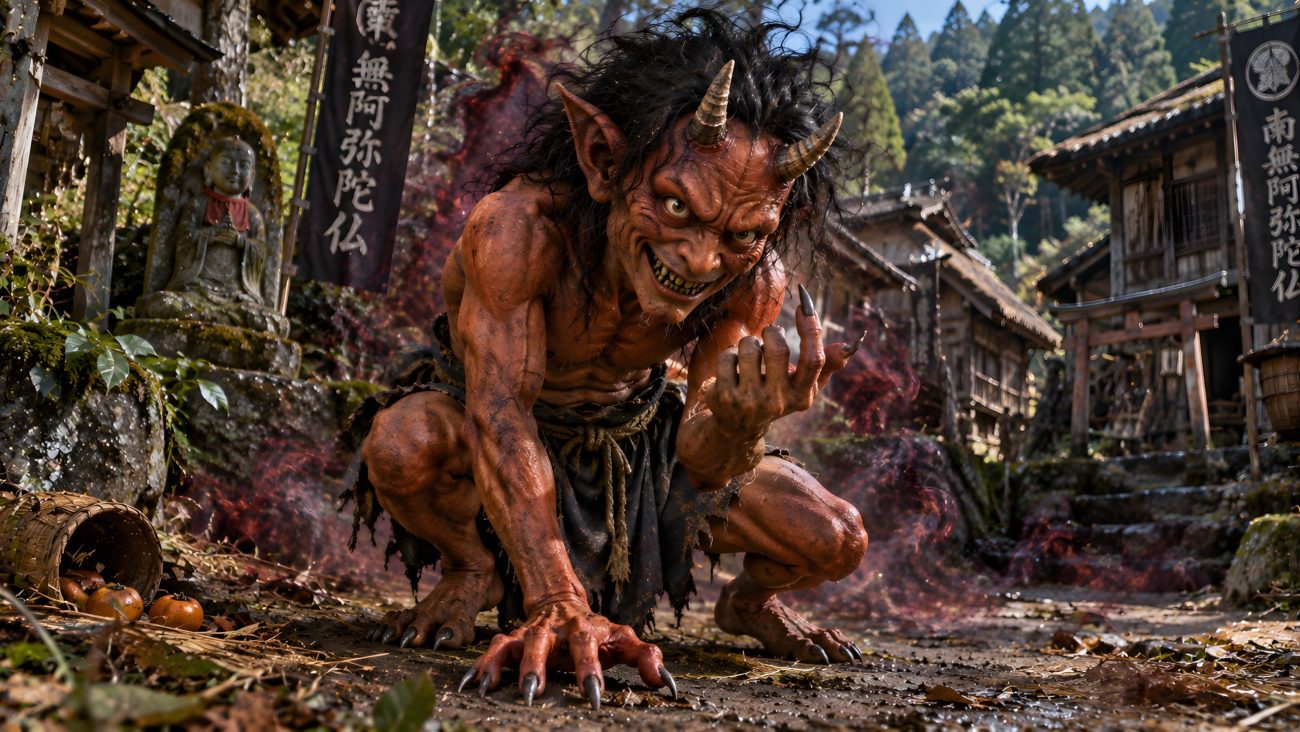
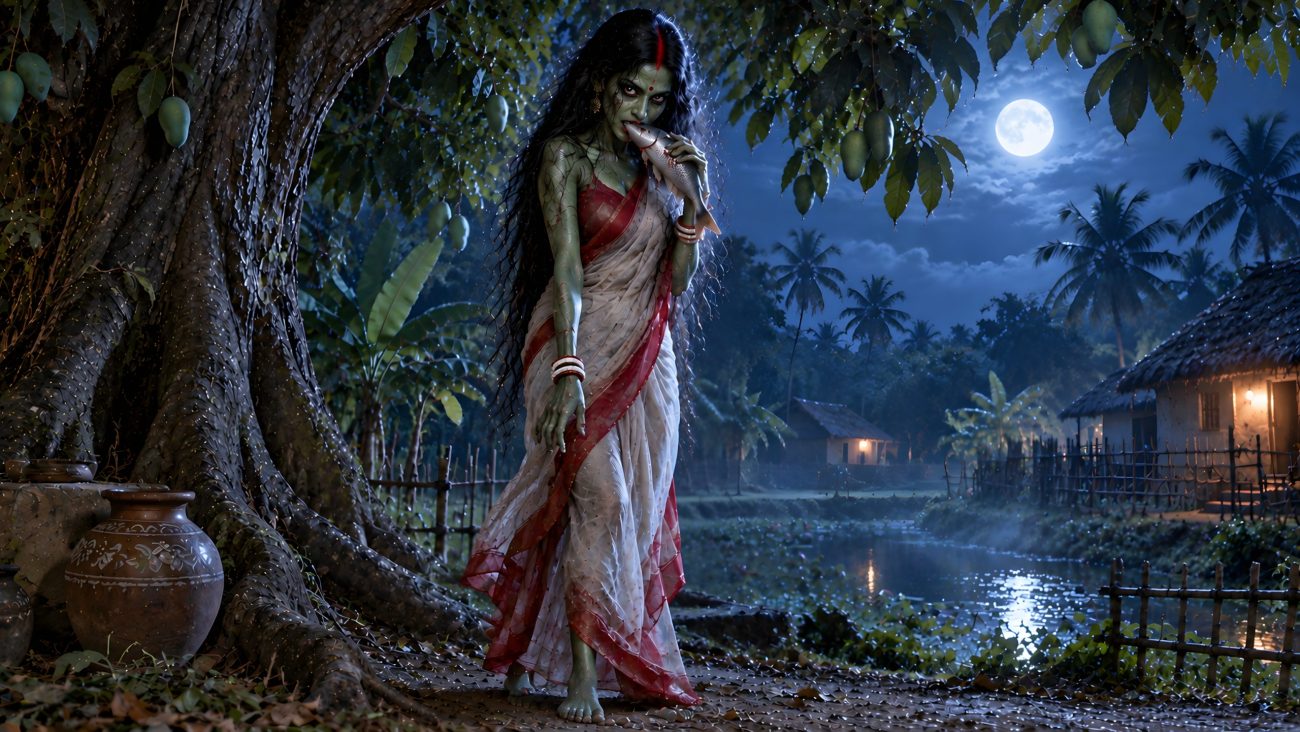
The Mechho Bhoot is a spirit from Bengali folklore associated with fish, rivers, ponds, and lakes. Its name comes from the Bengali word machh, meaning “fish,” reflecting the ghost’s well-known obsession with them. According to folklore, people who drown while fishing or die in the water may return as Mechho Bhoots, unable to leave behind their attachment to fish and the waterways where they died.

These spirits are believed to haunt village ponds, riverbanks, marshes, and fishing areas, especially after dark. They are known for stealing fish from fishermen, kitchens, or marketplaces, and many old stories describe fish mysteriously disappearing during the night as the work of a Mechho Bhoot. Because fishing has always been central to life in Bengal and Bangladesh, stories about these spirits became common in riverside villages.

The Mechho Bhoot is usually described as a ghostly human figure connected to water and darkness. Though sometimes portrayed as mischievous rather than openly violent, it is still feared because of its association with drowning and isolated waters at night. Villagers often warned children and fishermen to stay cautious around ponds and rivers after sunset, when spirits like the Mechho Bhoot were believed to wander.

Unlike many malevolent ghosts in Bengali folklore, the Mechho Bhoot is remembered mainly for its endless craving for fish and its lingering attachment to the waters where it died.


Sources

Wikipedia contributors. (n.d.). Ghosts in Bengali culture. In Wikipedia, from https://en.wikipedia.org/wiki/Ghosts_in_Bengali_culture


Boba

Tradition / Region: Bengali Mythology, Indian Mythology
Alternate Names: Boba Jinn, Bobay Dhora
Category: Demon, Spirit


The Myth

Boba is a terrifying nocturnal spirit from Bengali folklore, feared for attacking people while they sleep. The name Boba means “mute” or “speechless,” referring to the helpless condition its victims experience during an encounter. In many traditions, the entity is described as a type of jinn or malevolent spirit that preys upon sleeping humans, especially those lying flat on their backs during the night.

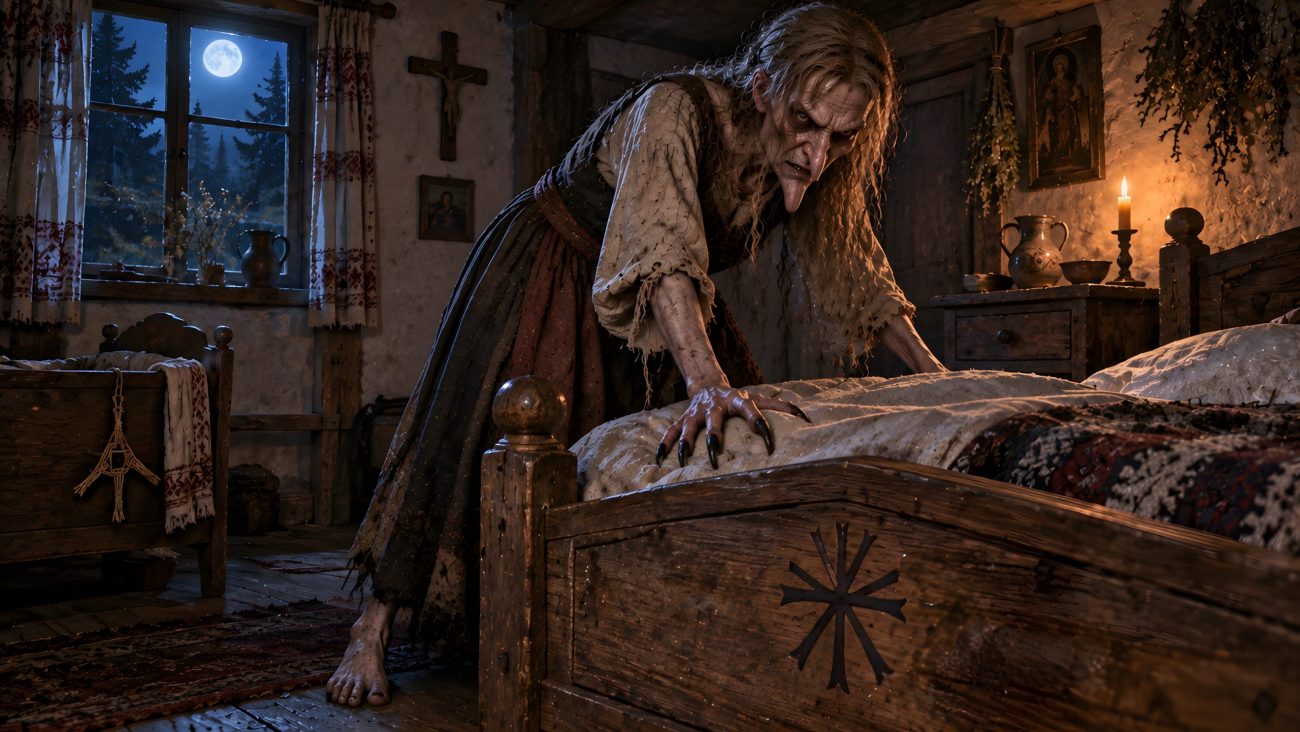
According to the legend, Boba attacks silently in the deepest hours of darkness. Victims suddenly awaken but find themselves completely unable to move, speak, or cry for help. They remain conscious while an invisible force pins them down. Many report feeling immense pressure on their chest, as though something heavy is crushing them, making breathing extremely difficult. The experience is accompanied by overwhelming terror and the sensation of being strangled.

Although the spirit is not always fully visible, witnesses often describe seeing a shadowy figure sitting on their chest or crouching nearby in the darkness. Some accounts portray Boba as a dark humanoid being with glowing eyes, while others describe it only as a suffocating presence lurking in the room. The victim may hear whispers, breathing, footsteps, or strange sounds while remaining unable to move even a finger. In some stories the spirit leans close to the victim’s face, watching silently while choking them.

The attack usually ends suddenly. After several moments — or what feels like an eternity — the pressure disappears and the victim regains the ability to move and speak. Many people are left shaken for hours afterward, convinced they narrowly escaped death. Because the experience feels completely real, belief in Boba became deeply rooted in Bengali culture, particularly in rural areas where stories of nighttime attacks were passed down for generations.

The phenomenon is commonly called Bobay Dhora, meaning “being seized by Boba.” Traditional beliefs warn people against sleeping alone, sleeping on their back, or falling asleep in spiritually unclean places. Some families recite prayers, verses, or protective rituals before bed to ward the spirit away. In certain stories, repeated attacks by Boba are believed to weaken a person physically and spiritually over time.

Unlike many monsters that haunt forests or rivers, Boba invades the safety of the home itself. It attacks in silence, during the most vulnerable moment of human weakness — sleep — turning the darkness of the bedroom into something terrifying and inescapable.


Sources

Wikipedia contributors. (n.d.). Ghosts in Bengali culture. In Wikipedia, from https://en.wikipedia.org/wiki/Ghosts_in_Bengali_culture


Nishi Daak

Tradition / Region: Bengali Mythology, Indian Mythology
Alternate Names: Nishir Daak, Nishi
Category: Ghost, Spirit


The Myth

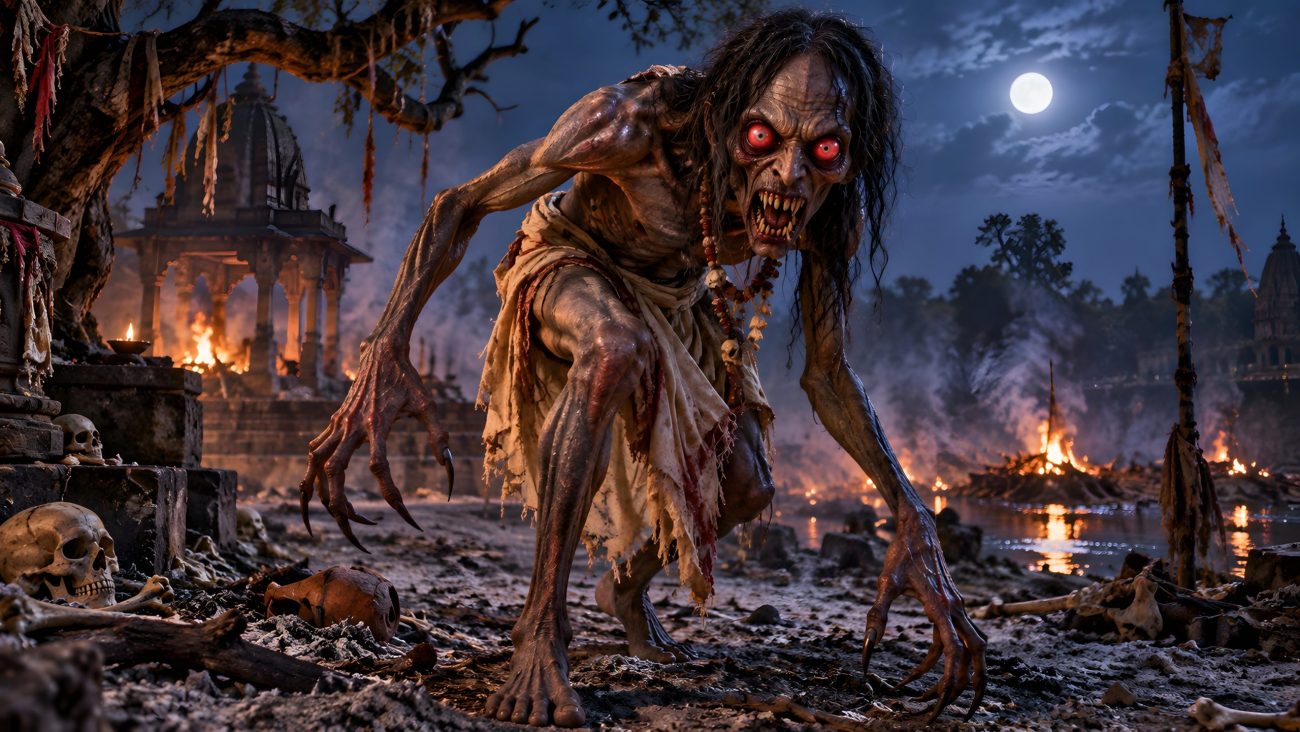
The Nishi Daak is a feared nocturnal spirit from the folklore of eastern India, especially Bengal, Bihar, and Jharkhand. Its name means “Call of the Night,” and it is known for luring people away in darkness by mimicking the voice of someone they trust. The Nishi is rarely seen clearly. Most descriptions portray it as a distant, shadow-like figure that remains just beyond sight, hidden by fog, darkness, or trees. Sometimes it appears in the form of a familiar person, while other stories describe glowing red eyes and a twisted, unnatural face revealed only at the final moment before death.

The spirit hunts primarily at night, especially during moonless evenings or in heavy mist. It calls out softly to its victim using the voice of a loved one — often a parent, spouse, friend, or even a dead relative. The voice sounds completely real, which makes the spirit especially dangerous. Once the victim answers or begins following the voice, they gradually fall into a trance-like state. People under the Nishi’s influence become detached from reality and continue following the spirit no matter how far it leads them. Legends say victims can suddenly gain unnatural strength, forcing their way through obstacles or resisting anyone who tries to stop them.

The Nishi usually leads people into isolated places such as forests, abandoned roads, swamps, riverbanks, or mist-covered fields. Many stories claim the victim simply disappears forever without leaving behind a body or trace. In other tales, victims are later discovered dead, unconscious, or mentally broken after encountering the spirit. Some survivors are said to remain permanently traumatized after seeing the Nishi’s true appearance. Witnesses describe its eyes as burning like red embers and its presence as deeply unnatural and terrifying.

According to local beliefs, Nishis are often the restless souls of people who died violently, were abandoned without proper funeral rites, or failed to attain peace after death. In some traditions, entire families are cursed by such spirits, with the Nishi returning repeatedly over months or years to lure relatives to their deaths one by one. It is also believed that people killed by a Nishi may themselves become wandering night spirits if the proper rituals are not performed for them afterward.

Because of these stories, many villages developed strict warnings about answering voices after dark. People are told never to respond if someone calls their name from outside at night unless they can clearly see the caller. A familiar voice heard near lonely roads, forests, or fields is considered especially dangerous, since it may not belong to a living person at all.


Sources

Wikipedia contributors. (n.d.). Ghosts in Bengali culture. In Wikipedia, from https://en.wikipedia.org/wiki/Ghosts_in_Bengali_culture


Habetrot

Tradition / Region: English Mythology, Scottish Mythology
Alternate Names: Habitrot, Habtrot, Habbitrot
Category: Cave dweller


The Myth

Habetrot is an ancient and mysterious figure tied to spinning, cloth-making, and the hidden world beneath the earth. She is described as an old, deformed woman who lives underground, surrounded by other spinsters like herself—women whose bodies have been twisted and marked by endless years of spinning thread.

These women bear the physical cost of their craft. Some have flattened thumbs, others misshapen feet, and many have long, distorted lips from constantly wetting thread as they worked. Their appearance reflects both dedication and burden—beings shaped by labor to the point of becoming something almost inhuman.

Despite this unsettling form, Habetrot is not malevolent.

In the most well-known tale, she comes to the aid of a young woman who refuses or is unable to spin—an essential skill expected of women. Instead of punishing her, Habetrot secretly spins the yarn for her. When the girl later marries, Habetrot reveals herself (or is revealed) to the husband, showing the consequences of a life spent spinning.

Seeing the deformities of Habetrot and her companions, the husband is horrified and declares that his wife must never spin, sparing her from the same fate. In this way, Habetrot acts as both helper and warning—protecting the girl while embodying the extreme outcome of relentless labor.

Beyond this tale, Habetrot’s name appears in darker beliefs.

In border folklore, there were fears tied to stepping on “unchristened ground,” places where unbaptized or stillborn children were buried. Those who did were said to fall ill with a strange affliction—burning skin, trembling limbs, and difficulty breathing. This condition could not be cured by ordinary means.

The only remedy required an object of great purity and effort: a linen garment made under strict conditions—grown, spun, and crafted through a chain of honest and untouched processes. Crucially, the thread itself had to be spun by Habetrot.

This suggests that her work carried a special, almost sacred quality. Though she lived in darkness and appeared deformed, the products of her labor held protective and healing power.

Habetrot exists at the intersection of hardship and necessity. She is both a relic of relentless work and a quiet guardian who intervenes when needed—never fully kind, never truly cruel, but bound to the rhythms of labor, fate, and tradition.


Sources

Wikipedia contributors. (n.d.). Habetrot. In Wikipedia, from https://en.wikipedia.org/wiki/Habetrot


Cat Witch of Heist op den Berg

Tradition / Region: Belgian Mythology
Alternate Names:
Category: Cat, Witch


The Myth

During the time of Napoleon I, a Belgian soldier was returning home from war, passing through a Prussian village.

As he walked through the town, he noticed a woman sitting outside her house. She was smoking a pipe, but something about her seemed wrong—on her backside there was a dark, unnatural stain. The soldier immediately suspected that she was a witch.

Without hesitation, he took his rifle from his shoulder, loaded it with a consecrated bullet, and fired—just grazing her.

He then continued his journey back to Belgium, where he was required to stay for several days.

There, he encountered a woman who bore strange signs: she had a black patch at the back of her skirt and a wound on her nose that refused to heal. The injury lingered unnaturally, as if it could not recover.

It became clear that this was the same being he had shot before.

The wound remained open because it had been inflicted by a consecrated bullet—something believed to harm witches in a way that could not be undone.


Sources

de Cock, A. (1921). Vlaamsche sagen uit den volksmond. In Amsterdam: Maatschappij voor goede en goedkoope lectuur, from https://www.dbnl.org/tekst/cock001vlaa01_01/colofon.php p. 37.


Jushkaparik

Tradition / Region: Armenian Mythology
Alternate Names: Vushkaparik, Ass-Pairika
Category: Horse, Demon


The Myth

The Jushkaparik is a strange and unsettling creature from Armenian folklore, described as a hybrid being that exists between human and beast, spirit and monster.

It is most often portrayed as a half-human, half-animal entity—commonly with the body or form of a donkey. In some traditions, it appears as a demonic female spirit, a pairika, known for seductive and dangerous tendencies. In others, it is a grotesque fusion: part man, part ass, sometimes even described with unnatural features such as a metallic or brass-like mouth.

The Jushkaparik is not a creature of open lands or civilization.

It inhabits abandoned places—ruins, empty landscapes, and desolate areas where human life has faded. These forgotten spaces are said to belong to such beings, where they linger unseen, emerging only when approached or disturbed.

Its nature is ambiguous and shifting.

At times, it is described as a deceiver or tempter, taking on forms that confuse or mislead those who encounter it. In other accounts, it is simply a presence—something unnatural that inhabits the edges of the human world, neither fully animal nor fully spirit.

Because of its hybrid form and unclear nature, the Jushkaparik is often grouped with other chimerical beings—creatures that blur boundaries and resist clear definition. It is neither fully demon nor fully beast, but something in between, shaped by both.

Encounters with it are rare and unclear, but always unsettling.

It belongs to the category of beings that do not openly attack or hunt, but whose very presence signals that one has crossed into a place where normal rules no longer apply.


Sources

Ananikian, M. H. (1925). Armenian Mythology. In The Mythology of All Races, Vol. 7. New York. Compiled by Bedrosian, R., p. 91-92.


Patupaiarehe

Tradition / Region: Māori Mythology, New Zealand Mythology
Alternate Names: Pakehakeha
Category: Fairy


The Myth

Patupaiarehe are mysterious, otherworldly beings said to live deep within the forests, mountains, and mist-covered hills of New Zealand. They are described as pale-skinned, often with light or reddish hair, and resemble humans in form—yet they are not human.

They belong to the hidden world.

Their homes are said to exist in remote, elevated places—mountain peaks, dense bush, and ridges shrouded in fog. Though they live in communities, their dwellings cannot be seen by ordinary people. They are most active in mist, darkness, or overcast conditions, avoiding sunlight, which is believed to weaken or even destroy them.

Their presence is rarely seen—but often heard.

On foggy days or in the quiet of the night, people may hear beautiful, haunting music drifting through the hills. The sound of flutes and soft singing is said to belong to the patupaiarehe, whose music is more enchanting than anything humans can create. This is often the only sign that they are near.

They are not friendly to intruders.

Those who wander into their territory risk encountering them—and such encounters can be dangerous. Patupaiarehe may lure people deeper into the forest, confuse them, or punish them for trespassing. In some stories, entire groups who disturbed their lands met sudden and violent ends.

One tale tells of hunters who took an object hanging in a forest—unaware it belonged to the patupaiarehe. Strange obstacles appeared, their food turned to nothing, and one by one they were taken and killed, dragged away by unseen forces.

Yet they are not purely hostile.

There are rare stories of interaction and even connection between patupaiarehe and humans. In one, a patupaiarehe woman lived among humans and shared knowledge—teaching weaving—but when tricked into staying beyond dawn, she fled back to the mountains, vanishing into mist.

In another story, a man encountered them at night while they were fishing. When they realized he was human, they fled immediately, unwilling to be seen.

They exist parallel to the human world—close, but separate.

They eat raw food, avoid fire and steam, and live according to their own rules. They can speak with humans, but only under certain conditions, and never fully belong to the same world.

To encounter them is to step outside ordinary reality—into a place governed by mist, silence, and unseen boundaries.


Sources

Wikipedia contributors. (n.d.). Patupaiarehe. In Wikipedia, from https://en.wikipedia.org/wiki/Patupaiarehe


Xunantunich

Tradition / Region: Belize Mythology
Alternate Names: Stone Woman
Category: Ghost


The Myth

At the ancient ruins of Xunantunich, there are whispers of a silent figure known as the Stone Woman.

She appears without warning.

Dressed entirely in white, with glowing red eyes, she manifests near the great pyramid known as El Castillo. Witnesses say she does not speak or acknowledge those who see her. Instead, she moves slowly and deliberately—ascending the stone steps as if following a path known only to her.

At the top, she does not stop.

She reaches the upper structure and simply passes into it—disappearing into a solid wall, vanishing as if she were never there at all.

She does not chase, attack, or interact.

But her presence is deeply unsettling. She appears, performs the same motion, and disappears—an endless repetition tied to the ruins themselves, as if bound to that place.

No one knows who she was.

Only that she remains.


Sources

Belize Travel Blog contributors. (2016, November). Belize Folklore Legends – Finados Edition. In Belize Travel Blog, from https://belize-travel-blog.chaacreek.com/2016/11/belize-folklore-finados/


Mokele-Mbembe

Tradition / Region: Congo Mythology, Bantu Mythology
Alternate Names: Mokèlé-mbèmbé
Category: Lizard, Lake dweller


The Myth

Deep within the rivers, swamps, and dense jungles of the Congo Basin, there are stories of a powerful and mysterious being known as Mokele-Mbembe. It is said to dwell in remote waterways—hidden lakes, slow-moving rivers, and thick marshlands where the water is dark and the vegetation nearly impenetrable.

The creature is described as enormous, with a body comparable in size to an elephant or hippopotamus. Its form is unlike any ordinary animal: a heavy, muscular body, a long flexible neck, a small head often compared to that of a snake, and a long tail that moves through the water with great force. Its skin is smooth and dark, usually said to be reddish-brown or gray.

Mokele-Mbembe is not just large—it is territorial and feared.

It is said to guard certain stretches of river and will attack intruders, especially boats or canoes that pass too close. Those who encounter it risk being overturned into the water, where they may drown or disappear entirely. In many accounts, the creature destroys vessels without consuming the people, suggesting that its aggression is not driven by hunger but by dominance over its domain.

Unlike typical monsters, it is often described as herbivorous. It feeds on vegetation growing along riverbanks—particularly certain plants with large leaves or white blossoms. Despite this, it reacts violently to disturbance, making it one of the most feared beings of the waterways.

Mokele-Mbembe is said to live in deep, hidden places—caves carved into riverbanks or secluded bends in the water where the current slows. It moves between land and water, sometimes emerging during the day to feed, leaving behind paths where vegetation has been trampled or pushed aside.

Its presence is rarely seen directly. Instead, it is known through signs: massive disturbances in the water, sudden waves in otherwise still areas, broken plants along the shore, or the feeling that something enormous is moving just beneath the surface.

In some traditions, it is described almost like a guardian spirit of the river—an embodiment of its danger and power. It does not hunt humans for food, but it enforces boundaries. Those who respect the river may never encounter it. Those who intrude carelessly may not return.


Sources

Wikipedia contributors. (n.d.). Mokele-mbembe. In Wikipedia, from https://en.wikipedia.org/wiki/Mokele-mbembe


Drache am Hirschensprung

Tradition / Region: Swiss Mythology
Alternate Names: Dragon of Hirschensprung
Category: Dragon


The Myth

In the narrow pass known as the Hirschensprung, where the land road is forced between steep rock faces to avoid the flood-prone Rhine plain, an old legend tells of a monstrous dragon that once lived among the cliffs.

The place itself already carried a name tied to danger and escape. It was said that a stag, hunted and cornered, once leapt across the chasm to evade its pursuers—an impossible jump that gave the site its name: Hirschensprung, the “stag’s leap.”

But long after that, something far worse inhabited the pass.

A dragon took up residence among the rocks, a grotesque and terrifying creature that threatened everything living in the area. It haunted the narrow route, making travel dangerous and filling the surrounding lands with fear. Neither man nor beast could pass safely while it remained.

The local farmers, unable to endure the threat any longer, devised a practical but brutal solution. Rather than confronting the creature with weapons, they used cunning.

They heated a ploughshare—an iron blade used for cutting earth—until it glowed red-hot. Then, approaching the dragon, they provoked it into opening its jaws. At the right moment, they hurled the burning iron straight into its mouth.

The dragon, driven by its insatiable hunger, swallowed it instantly.

Moments later, the heat consumed it from within. After a brief but violent death struggle, the creature perished.

Yet the story does not end with its death.

The dragon, according to local belief, still remains at Hirschensprung—but no longer alive. Its body turned to stone in the place where it died. Even now, people claim that its form can be seen in the rock itself: its head and gaping jaws protruding from the cliff face, while its tail stretches across the landscape toward the pass.

The position of the stone formation suggests that, in its final agony, the dragon twisted violently before becoming fixed forever in the mountain.


Sources

sagen.at contributors. (n.d.). Der Drache am Hirschensprung. In sagen.at, from https://www.sagen.at/texte/sagen/schweiz/st_gallen/hirschensprung.html