Drache am Hirschensprung

Tradition / Region: Swiss Mythology
Alternate Names: Dragon of Hirschensprung
Category: Dragon


The Myth

In the narrow pass known as the Hirschensprung, where the land road is forced between steep rock faces to avoid the flood-prone Rhine plain, an old legend tells of a monstrous dragon that once lived among the cliffs.

The place itself already carried a name tied to danger and escape. It was said that a stag, hunted and cornered, once leapt across the chasm to evade its pursuers—an impossible jump that gave the site its name: Hirschensprung, the “stag’s leap.”

But long after that, something far worse inhabited the pass.

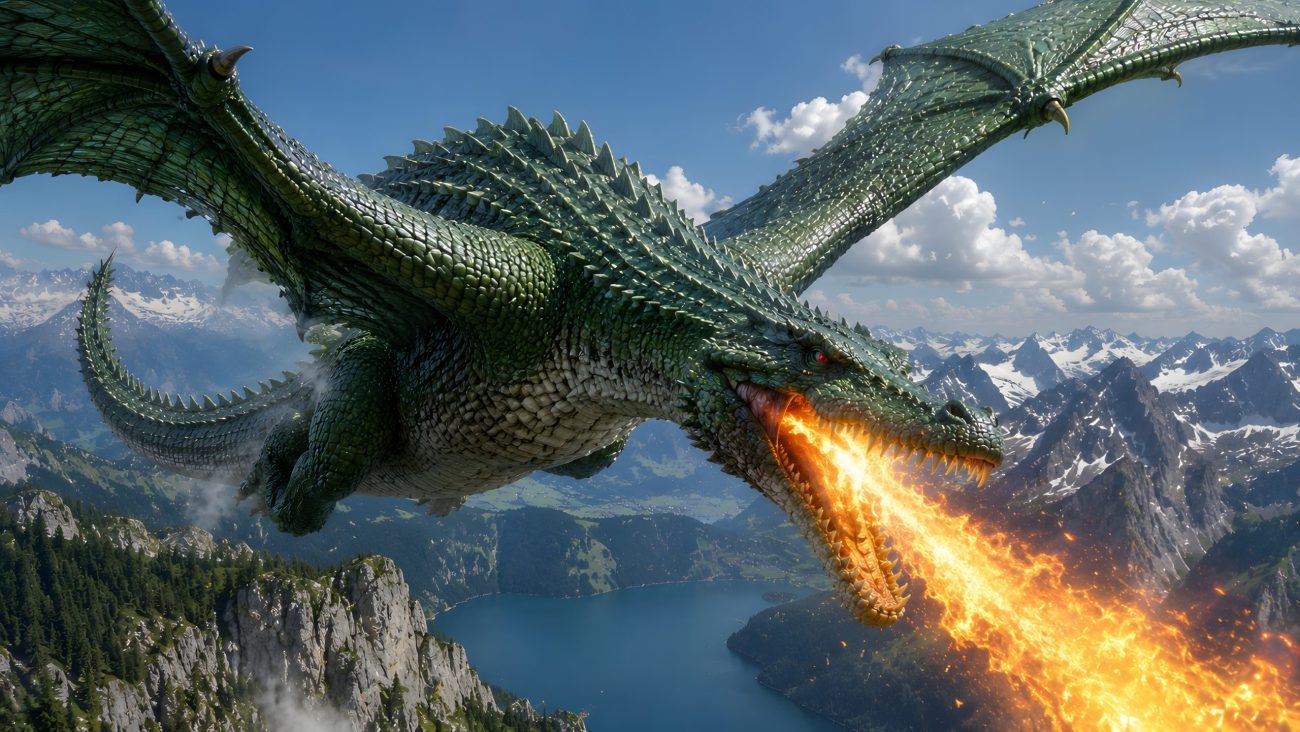
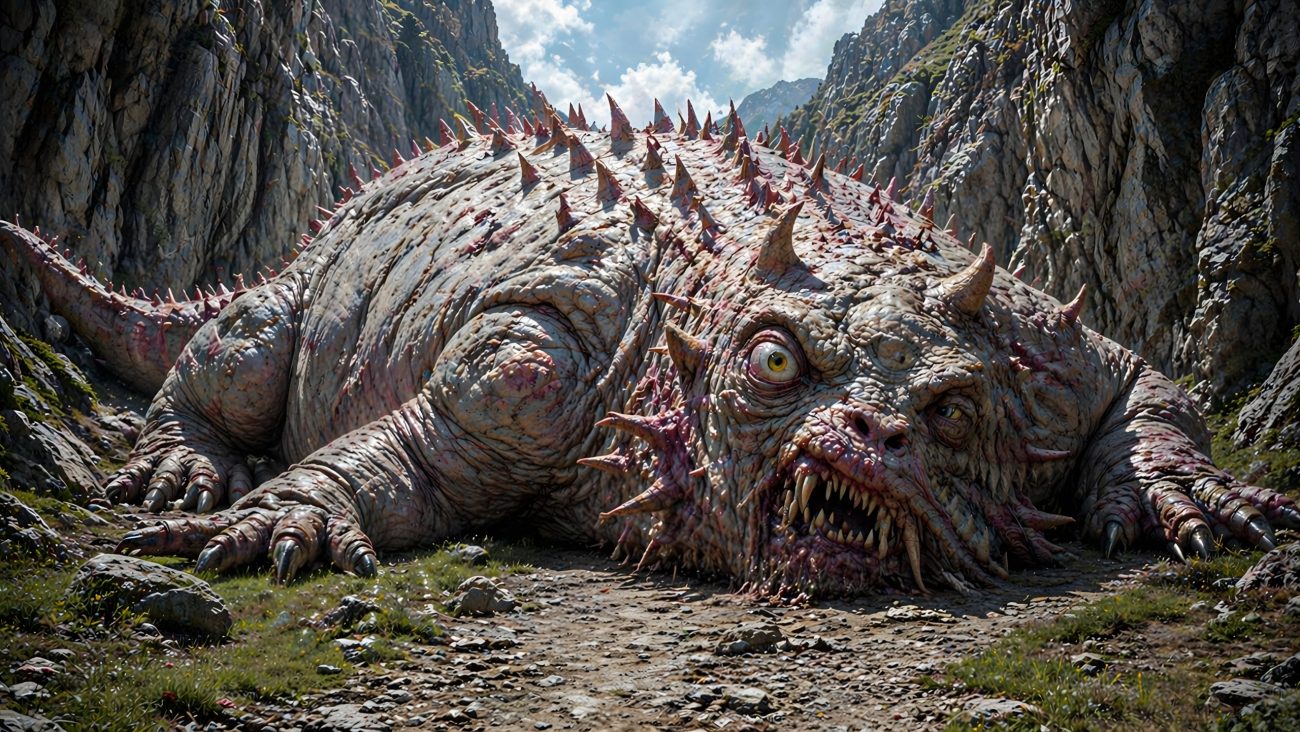
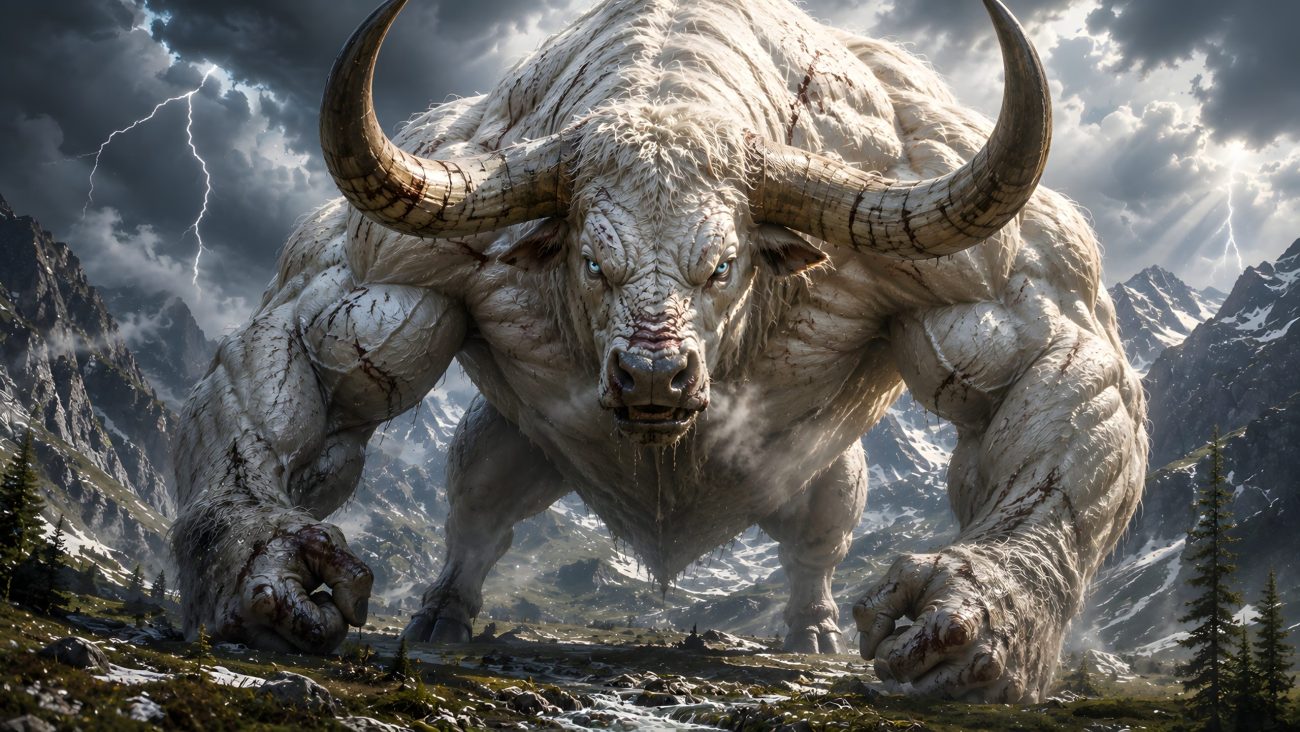
A dragon took up residence among the rocks, a grotesque and terrifying creature that threatened everything living in the area. It haunted the narrow route, making travel dangerous and filling the surrounding lands with fear. Neither man nor beast could pass safely while it remained.

The local farmers, unable to endure the threat any longer, devised a practical but brutal solution. Rather than confronting the creature with weapons, they used cunning.

They heated a ploughshare—an iron blade used for cutting earth—until it glowed red-hot. Then, approaching the dragon, they provoked it into opening its jaws. At the right moment, they hurled the burning iron straight into its mouth.

The dragon, driven by its insatiable hunger, swallowed it instantly.

Moments later, the heat consumed it from within. After a brief but violent death struggle, the creature perished.

Yet the story does not end with its death.

The dragon, according to local belief, still remains at Hirschensprung—but no longer alive. Its body turned to stone in the place where it died. Even now, people claim that its form can be seen in the rock itself: its head and gaping jaws protruding from the cliff face, while its tail stretches across the landscape toward the pass.

The position of the stone formation suggests that, in its final agony, the dragon twisted violently before becoming fixed forever in the mountain.


Sources

sagen.at contributors. (n.d.). Der Drache am Hirschensprung. In sagen.at, from https://www.sagen.at/texte/sagen/schweiz/st_gallen/hirschensprung.html


Cheval Gauvin

Tradition / Region: French Mythology, Swiss Mythology
Alternate Names: Gauvin Horse, Gauvain Horse, tchevâ Gâvïn
Category: Horse


The Myth

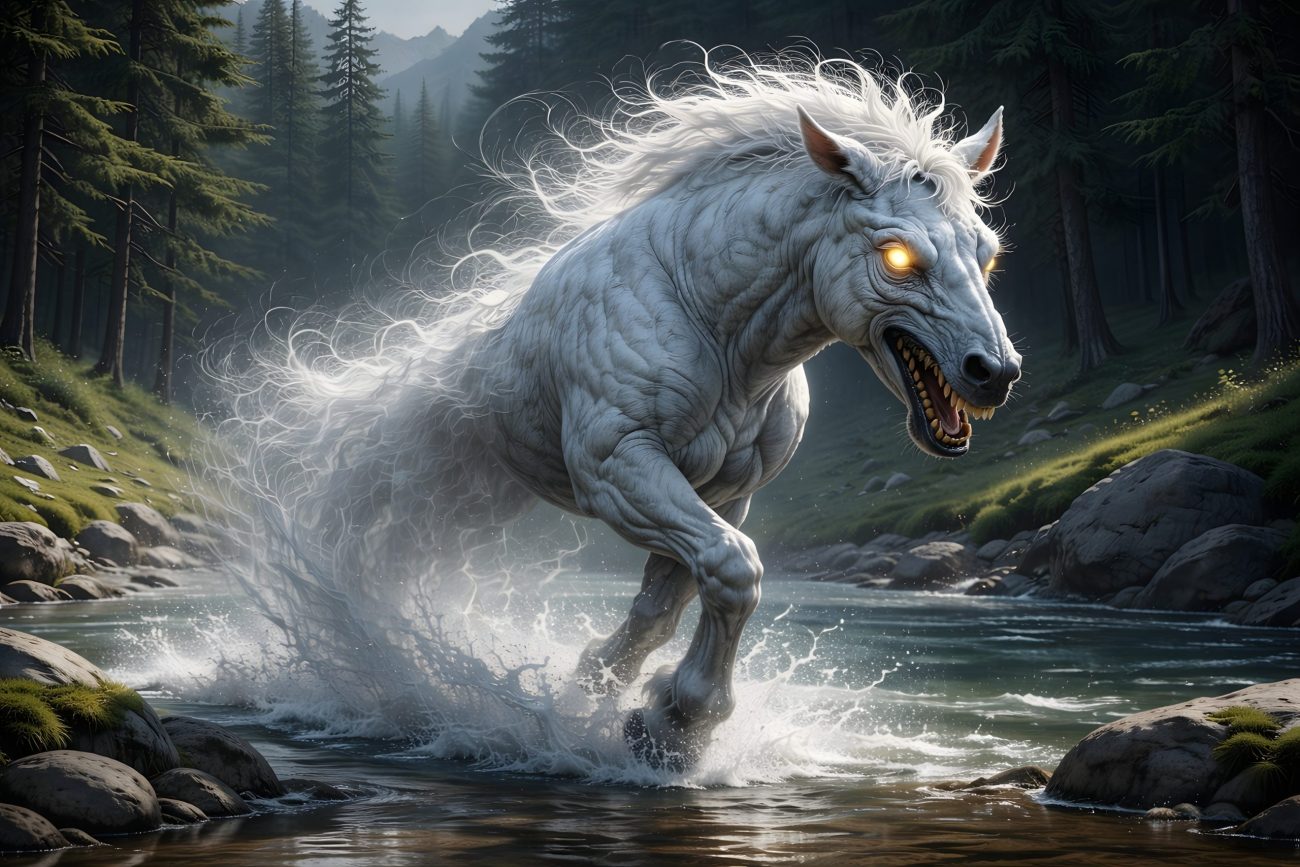
The Cheval Gauvin is a malevolent supernatural horse from the folklore of eastern France and western Switzerland, particularly the Jura region. It is described as a wandering entity that appears near rivers, forests, graveyards, and isolated paths.

Unlike ordinary animals, the Cheval Gauvin actively seeks human victims. It lures people—especially travelers—into mounting it, only to kill them afterward. Its methods vary: it may throw riders into abysses, drag them into deep waters to drown, or carry them away to their deaths. In Swiss variations, it is said to abduct young girls as it runs through villages.

The creature is strongly associated with death and misfortune. Encounters with it are often interpreted as omens, and its presence signals danger or impending doom. Because of this, it functioned in folklore as a warning figure, particularly used to frighten children away from dangerous places.

Historically, the legend was first formally recorded in 1854 by Désiré Monnier, though similar stories existed across multiple towns such as Chamblay, Montbarrey, Dole, and into the Swiss Jura. The consistency of the myth across regions suggests a deeply rooted shared tradition.

Some versions link the horse to Amauri III de Joux, portraying it as his cursed or spectral mount. Others interpret it as a transformed goblin or hobgoblin, placing it within a broader category of shapeshifting or deceptive spirits.


Sources

Wikipedia contributors. (n.d.). Cheval Gauvin. In Wikipedia, from https://en.wikipedia.org/wiki/Cheval_Gauvin


Witch as Fox

Tradition / Region: Swiss Mythology
Alternate Names: Fox-Witch, Witch in Fox Form
Category: Fox, witch


The Myth

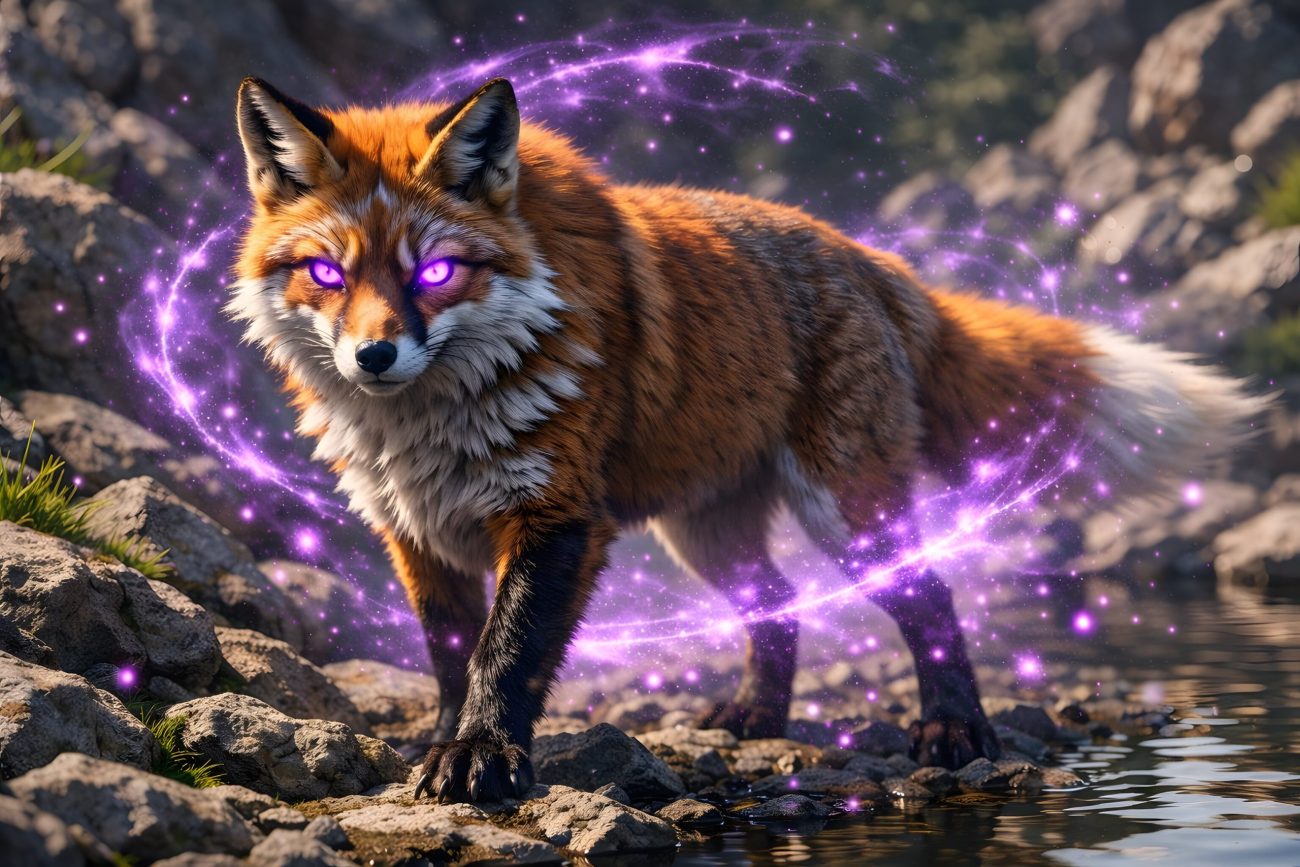
Hunters in the mountains often warned that not every fox in the snow was truly an animal.

Once, several hunters from Reutte went together to the Fuchspasse on the heights between Reutte and Heiterwang. They had neglected to bless their weapons before setting out. After a long search they finally saw a fox and fired at it. The shot struck true, and the fox fell, but it soon leapt up again and fled.

The hunters followed its trail in the snow. At first the prints were clearly those of a fox, but as they continued, the tracks grew larger. Soon they began to resemble human footprints, and at last they looked like the marks of slippers.

Realizing something was wrong, the hunters followed the trail until it led to a house in the upper part of Reutte. Inside lay an old woman in bed, wounded by a gunshot.

Another tale tells of a hunter from Betzigau who chased a fox for a long time through the fields. Each time he fired, the fox ignored the shots and even seemed to mock him. The hunter then suspected the creature was no ordinary animal. He took his rosary, cut the cord, and used one of its beads in place of a bullet.

When he fired again, the fox was struck at once. It fled, bleeding heavily, and the hunter followed the trail. The tracks led him to a house, where he learned that the woman of the house lay in bed with a badly injured foot.

From such stories people said that witches sometimes took the form of foxes to wander the night. And if a hunter wounded such a fox, the mark would be found later on the body of the witch who had worn its shape.


Sources

SAGEN.at. (n.d.). Die Garmina-Hexen. Retrieved March 1, 2026, from https://www.sagen.at/texte/sagen/schweiz/st_gallen/garmina_hexen.html.


Garmina Witches

Tradition / Region: Swiss Mythology
Alternate Names: Witches of Oute Garmina
Category: Sheep


The Myth

On the mountain path that runs from Vättis to Untervatz, across the Owaggis and Salatz Alps, there was once said to be a lonely place called Oute Garmina. There, long ago, three witches lived together.

A young hunter from Vättis often roamed the Calanda mountains and passed that way on his hunts. Several times he encountered the sisters, yet they could not harm him. He was said to wear “clean shoes,” and because of this, their magic failed against him.

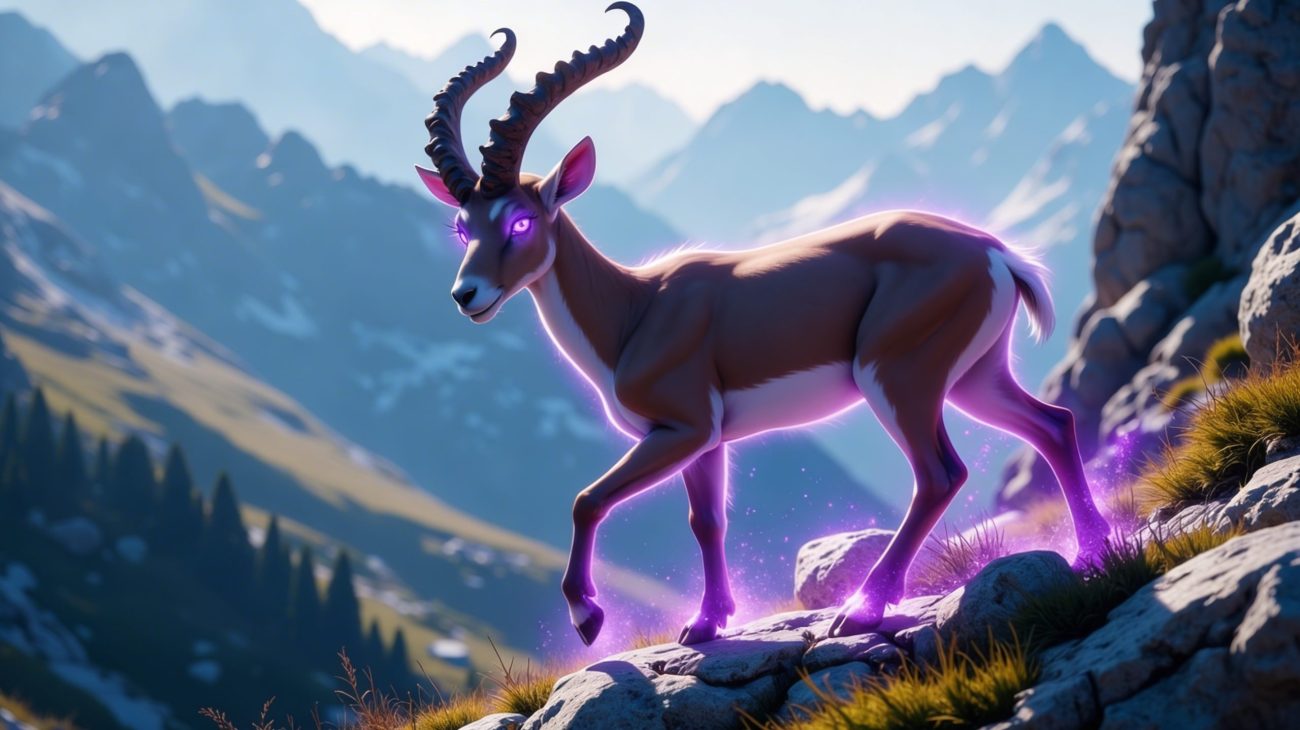
Unable to touch him directly, the witches tried another trick. They transformed themselves into chamois and appeared on the slopes, hoping to lure him into danger. One day, as he crossed the Alp Gwaggis, he saw three chamois grazing peacefully on a grassy ledge. Thinking them ordinary game, he raised his gun and fired. Yet every shot missed.

Suddenly the animals sprang toward him. Sensing danger, he threw himself flat to the ground, and the attack failed. Later, an old man from Vatz told him the truth: the chamois were not beasts, but the witches of Garmina. He instructed the hunter how to defeat them.

The hunter followed his advice. He mixed Trinity-blessed salt into his powder and loaded a consecrated silver bullet. The next time he saw the chamois, he fired again. This time his aim did not fail. One of the animals was struck and fell from the rocks, tumbling down the cliff.

The hunter went at once to Garmina. There he found that he had indeed slain one of the witches, killed by a shot through the head.

And so the story remained among the mountain people, who remembered that on the high paths of Garmina, even grazing animals might hide something far more dangerous.


Sources

SAGEN.at. (n.d.). Die Garmina-Hexen. Retrieved March 1, 2026, from https://www.sagen.at/texte/sagen/schweiz/st_gallen/garmina_hexen.html.


The Silver Tree

Tradition / Region: Swiss Mythology
Alternate Names: Silver Mountain Tree
Category: Plant, treasure tree, hidden wonder


The Myth

On the steep rock face above the valley between Bärschis and Tscherlach, where the cliff falls sheer into the depths below, there runs a narrow line of damp stone. From a crevice on the western side of the wall, water sometimes seeps out, leaving a long, dark trail down the rock.

Long ago, a traveler from Venice passed along Lake Walen on his way from Weesen. Seeing the strange mark upon the cliff, he stopped and took out a mountain mirror. For a long time he studied the rock face through it, watching the place where the water emerged.

At last he lowered the mirror and spoke with certainty. Behind that wall, he said, not far from where the water flows, there stands a gigantic tree made entirely of pure silver. Whoever could reach it and claim it would gain immeasurable wealth.

Yet the cliff is steep, the way uncertain, and the place difficult to reach. No one has ever found the path that leads behind the stone. And so the silver tree is said to remain there still, hidden within the mountain, waiting for the one who dares to seek it.


Sources

SAGEN.at. (n.d.). Der silberne Baum. Retrieved March 1, 2026, from https://www.sagen.at/texte/sagen/schweiz/st_gallen/silberne_baeume.html


Augenbrand

Tradition / Region: Swiss Mythology
Alternate Names:
Category: Dog


The Myth

In the legends of the Jura region of Switzerland, people once spoke of a black dog known as Augenbrand.

He was said to haunt the area near the old bridge at Soyhières over the river Birs. The bridge has long since vanished, but the stories of the creature that wandered there remained. Augenbrand was described as a large black dog with burning, fiery eyes whose glow could be seen in the dark from far away. It was from these blazing eyes that he took his name.

The spirit was believed to be bound to the fate of his master, Count Rodolphe de Sogren, lord of the nearby castle. The count had been murdered in the year 1233, and after his death the dog was said to roam the countryside, searching endlessly for him.

Travelers passing the bridge or nearby roads at night sometimes claimed to see the glowing-eyed hound moving through the darkness. Others felt they were being followed, hearing movement behind them on the path. Those who strayed too far or wandered uncertainly were said to be pursued by the creature as it searched the land for the master it had lost.

Stories from the region tell that strange sounds were often heard near the castle grounds in summer nights — and among these tales was the recurring sight of the fiery-eyed dog wandering restlessly below the ruins.

Thus Augenbrand was remembered as a ghostly hound of Jura, forever roaming the place of his lord’s death, his burning eyes searching the night for the master he would never find again.


Sources

Wikipedia contributors. (n.d.). Augenbrand. In Wikipedia, from https://en.wikipedia.org/wiki/Augenbrand


Night Folk of the Mountain

Tradition / Region: Swiss Mythology
Alternate Names:
Category: Mountain dweller, Ghost


The Myth

High above the village of Flumserberg, in the dark forests and shadowed slopes of the mountain, there dwelt the Night Folk.

They were seen only at certain times.

When someone in the village lay upon their deathbed, watchers would sometimes glimpse a strange procession descending from the mountain heights. A multitude of black figures moved silently in a long line. Among them strode a towering white man, conspicuous and pale, wearing a wide, floppy hat. He walked at their center, taller than all the rest.

The procession did not enter the village openly. Instead, it halted at an old, crumbling house near the former town hall. There the figures would gather, as if conferring among themselves. From that place came a low, far-reaching murmur—an eerie sound that drifted through the air but could not be understood.

They lingered for a time.

Then, just as silently, the Night Folk turned and made their way back up the mountainside. One by one they disappeared into the darkness of the forest, until no trace of them remained.

Soon after, word would spread that the dying villager had passed.

Because of this, when a body from Flumserberg was carried to burial, the funeral procession would always stop at the old town hall. There the priest would come out to meet it, as though acknowledging the unseen procession that had already come down from the mountain and returned to its hidden realm.


Sources

sagen.at contributors. (n.d.). Nachtvolk vom Berg. In sagen.at, from https://www.sagen.at/texte/sagen/schweiz/st_gallen/nachtvolk_berg.html


Barbegazi

Tradition / Region: Swiss Mythology
Alternate Names:
Category: Gnome


The Myth

High in the Alps, beyond the tree line and close to the snow-buried peaks, live the Barbegazi. They are beings of winter alone, creatures who belong to blizzards, avalanches, and frozen heights. When summer comes and the mountains soften, they vanish into deep hibernation within their hidden tunnels. Only when the cold returns do they stir again.

The Barbegazi dwell in networks of caves beneath the highest ridges, their entrances concealed by ice and drifting snow. They thrive only in extreme cold. In winter storms they emerge, moving easily across slopes where humans struggle to stand. Their enormous feet act like skis or snowshoes, letting them glide effortlessly over deep snow. Some say they delight in riding avalanches, laughing as they race the falling mountainside.

They are masters of snow. If buried, they can vanish beneath it in seconds or dig themselves free no matter how deep the drift. Their beards and hair hang stiff with ice, forming thick icicles that glitter in the cold. When the ice melts, ordinary hair lies beneath, but such warmth rarely touches them.

Though secretive, the Barbegazi are not cruel. Travelers tell that before an avalanche strikes, strange whistles or hollow hooting sounds echo across the peaks. These noises are said to be the Barbegazi, warning hikers away from danger. Others claim they have seen small figures digging frantically in the snow after storms, freeing trapped people or guiding lost sheep back toward safety.

Yet they are uneasy around humans. No Barbegazi is ever seen in mild weather, and none appear below the forests. Those rare stories of captured Barbegazi all end the same way: once removed from the cold, the creature weakens and dies within hours, as if winter itself were its lifeblood.

Thus the Barbegazi remain spirits of ice and altitude—helpers and watchers of the high mountains, fleeting as snowstorms, and gone as soon as the cold loosens its grip.


Sources

Fandom contributors. (n.d.). Barbegazi. In Cryptidz Wiki – Fandom, from https://cryptidz.fandom.com/wiki/Barbegazi