Simurgh

Tradition / Region: Persian Mythology, Iranian Mythology
Alternative names: Senmurv; Simorgh; Simurg; Simoorg; Simorq; Simourv
Category: Bird, Dog


The Myth

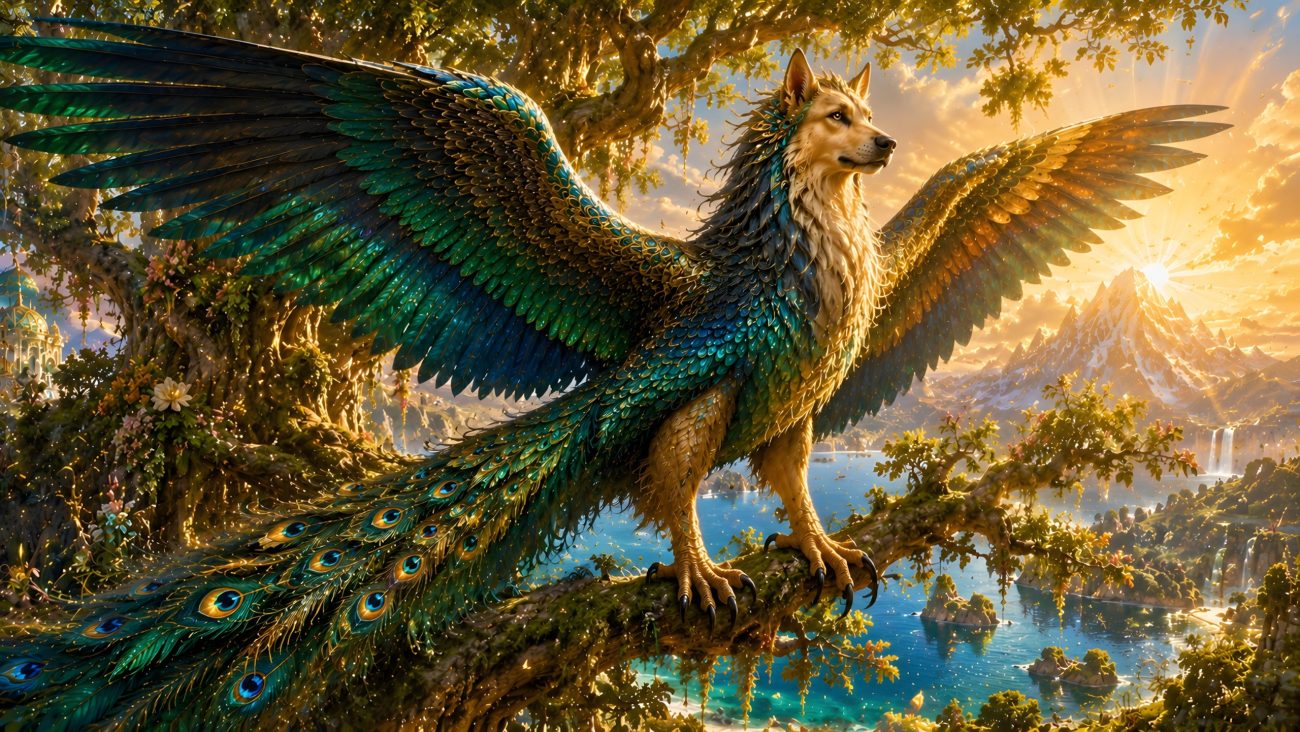
The Simurgh is a colossal and benevolent bird of Persian mythology, dwelling upon the Tree of Life that stands in the middle of the cosmic sea. Enormous enough to carry away an elephant, it is commonly described as having the body of a peacock, the head of a dog or human, the claws of a lion, and copper-colored feathers. Ancient beyond measure, the Simurgh is said to have witnessed the destruction of the world three times and possesses the wisdom of every age. When it takes flight from the Tree of Life, the seeds of every plant scatter across the world, bringing healing and fertility to the earth.

The Simurgh is best known for raising the abandoned prince Zal. Rejected at birth because of his white hair, Zal was left upon Mount Alborz, where the compassionate bird found him, nurtured him as her own, and taught him great wisdom. When he was grown, she returned him to humanity but gave him three golden feathers, telling him to burn one whenever he needed her aid. Later, when Zal’s wife Rudaba faced certain death in childbirth, the Simurgh answered his call and instructed him in performing a successful cesarean section, saving both mother and child. That child grew up to become the legendary hero Rostam.

The Simurgh later came to Rostam’s aid as well, healing both him and his horse Rakhsh after they were wounded in battle. She also revealed the only way to defeat the invincible prince Esfandiyār, instructing Rostam to fashion a double-headed arrow from a tamarisk branch. Although the Simurgh warned that killing Esfandiyār would bring lasting sorrow, Rostam followed her counsel, and the enchanted arrow ended the prince’s life, fulfilling the bird’s prophecy.


Sources

Wikipedia contributors. (n.d.). Simurgh. In Wikipedia. Retrieved June 29, 2026, from https://en.wikipedia.org/wiki/Simurgh


Furari-bi

Tradition / Region: Japanese Mythology
Alternative names: Wandering Fire; Burari-bi
Category: Bird, Dog


The Myth

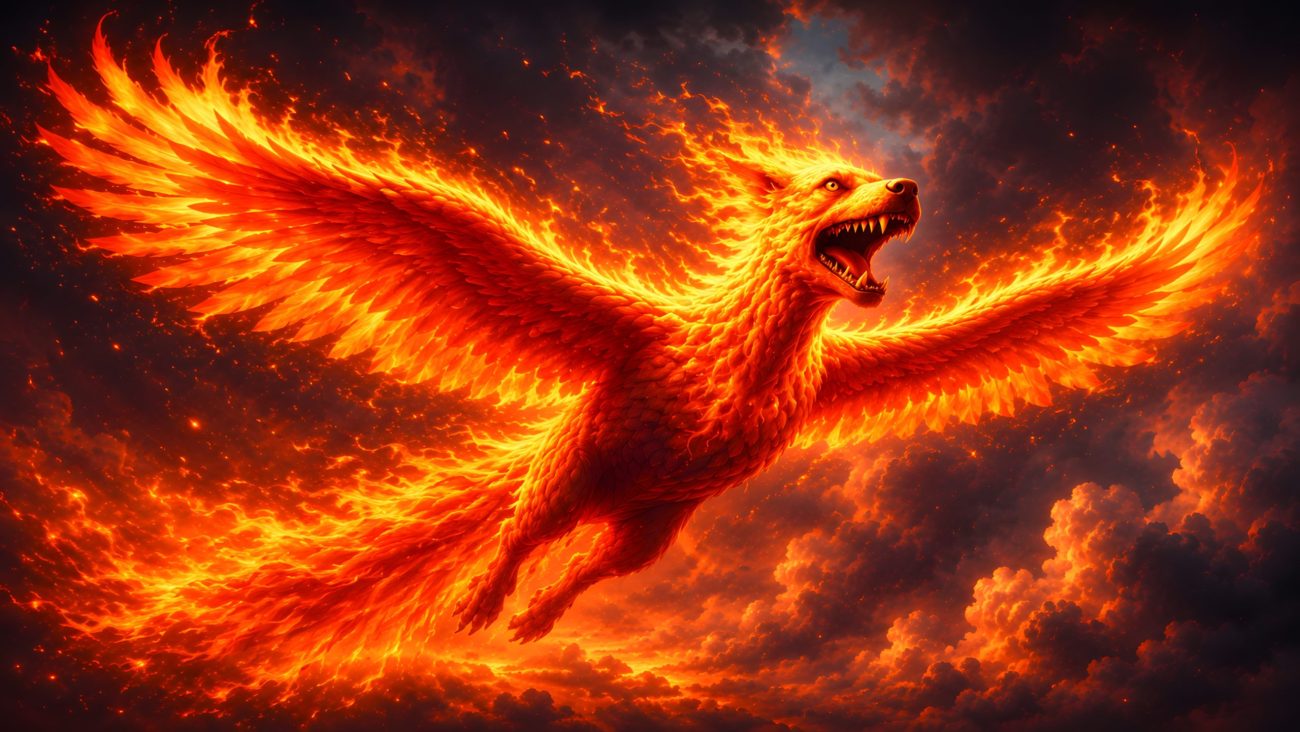
The Furari-bi (“Wandering Fire”) is a mysterious yokai depicted as a bird surrounded by flames. In some Edo-period illustrations, it has a bird’s body with a dog-like face emerging from the center of the fire, while in others it appears as a more conventional flaming bird. Another illustrated tradition refers to the same creature as Burari-bi.

Unlike many yokai, the Furari-bi is known almost entirely from illustrated monster scrolls, including the Hyakkai Zukan, Gazu Hyakki Yagyō, and the Hyakki Yagyō Emaki. These works portray it as a wandering mass of living fire in avian form, but they provide no accompanying story or explanation of its behavior.

Because the Furari-bi appears only in these illustrations, no traditional legend describing its origin or powers has survived. Modern interpretations of the yokai are therefore considered later speculation rather than part of the original folklore.


Sources

TYZ. (2016, May 21). 雉子娘 (Kiji Musume). In 新版TYZ 妖怪図鑑. Retrieved June 29, 2026, from https://tyz-yokai.blog.jp/archives/1057632664.html


Šungalvis

Tradition / Region: Lithuanian Mythology
Alternative names: Šungalviai (plural), Dog-Headed One
Category: Dog


The Myth

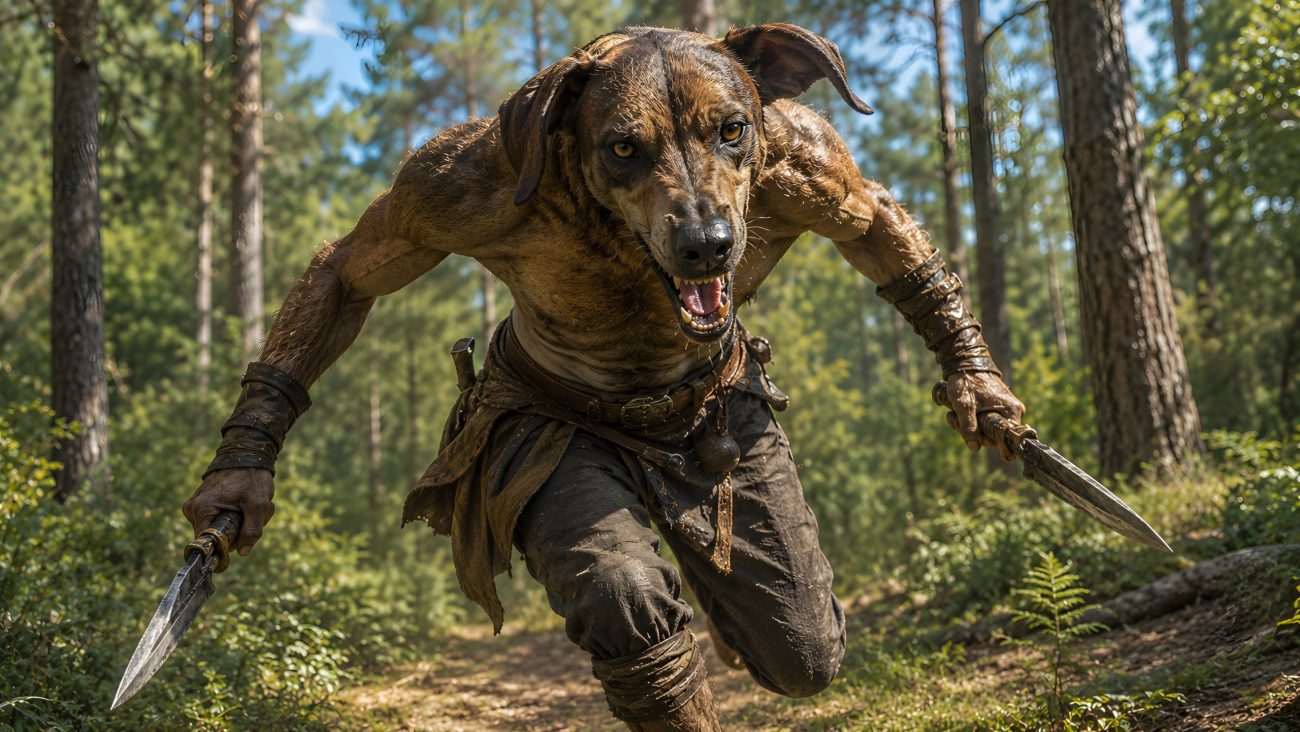
The Šungalvis is a fearsome dog-headed creature of Lithuanian folklore, half man and half dog. In ancient times, before Death existed, these monsters were said to serve as living weapons, hunting and devouring people.

The Šungalvis possesses an extraordinary sense of smell. It can track any person by scent, but there is one way to escape: quickly put your shoes on backwards. The creature follows footprints, and reversed shoes confuse its tracking, causing it to lose its prey.

One folktale tells of a Šungalvis that entered a house and sat in the doorway, trapping a woman inside. Unable to escape, she tipped a cauldron of boiling water over the creature’s head. The scalding water burst its eyes, killing the monster.


Sources

Bestiary.us. (n.d.). Shungalvis. In New Bestiary: Encyclopedia of Imaginary Beings. Retrieved June 29, 2026, from https://www.bestiary.us/shungalvis


Penilased

Tradition / Region: Estonian Mythology
Alternative names:
Category: Dog


The Myth

The Penilased are a strange race mentioned in the Estonian national epic Kalevipoeg. They are described as beings with the bodies of dogs and the heads of humans, each with a long dog’s tail.

When Kalevipoeg and his companions sailed north aboard the Airplane, they reached the land of the Penilased. The inhabitants refused to let the travelers come ashore, provoking Kalevipoeg into battle. He attacked the Penilased and slew them in great numbers.

During the fighting, Kalevipoeg’s horse stumbled and died. Enraged, he seized a great oak club and began tearing up the surrounding fields and pastures. A local wise man stopped him, reproached him for destroying the land, and showed him the proper path home. He also warned Kalevipoeg of a hidden gate that led not to the end of the world, but to hell. Following the sage’s guidance, Kalevipoeg continued his voyage back toward Lindanisa Bay.


Sources

Wikipedia contributors. (n.d.). Penilased. In Vikipeedia. Retrieved June 29, 2026, from https://et.wikipedia.org/wiki/Penilased


Iron-Toothed Dog

Tradition / Region: Moldova Mythology
Alternative names: Little Dog with Iron Teeth and Steel Claws
Category: Dog


The Myth

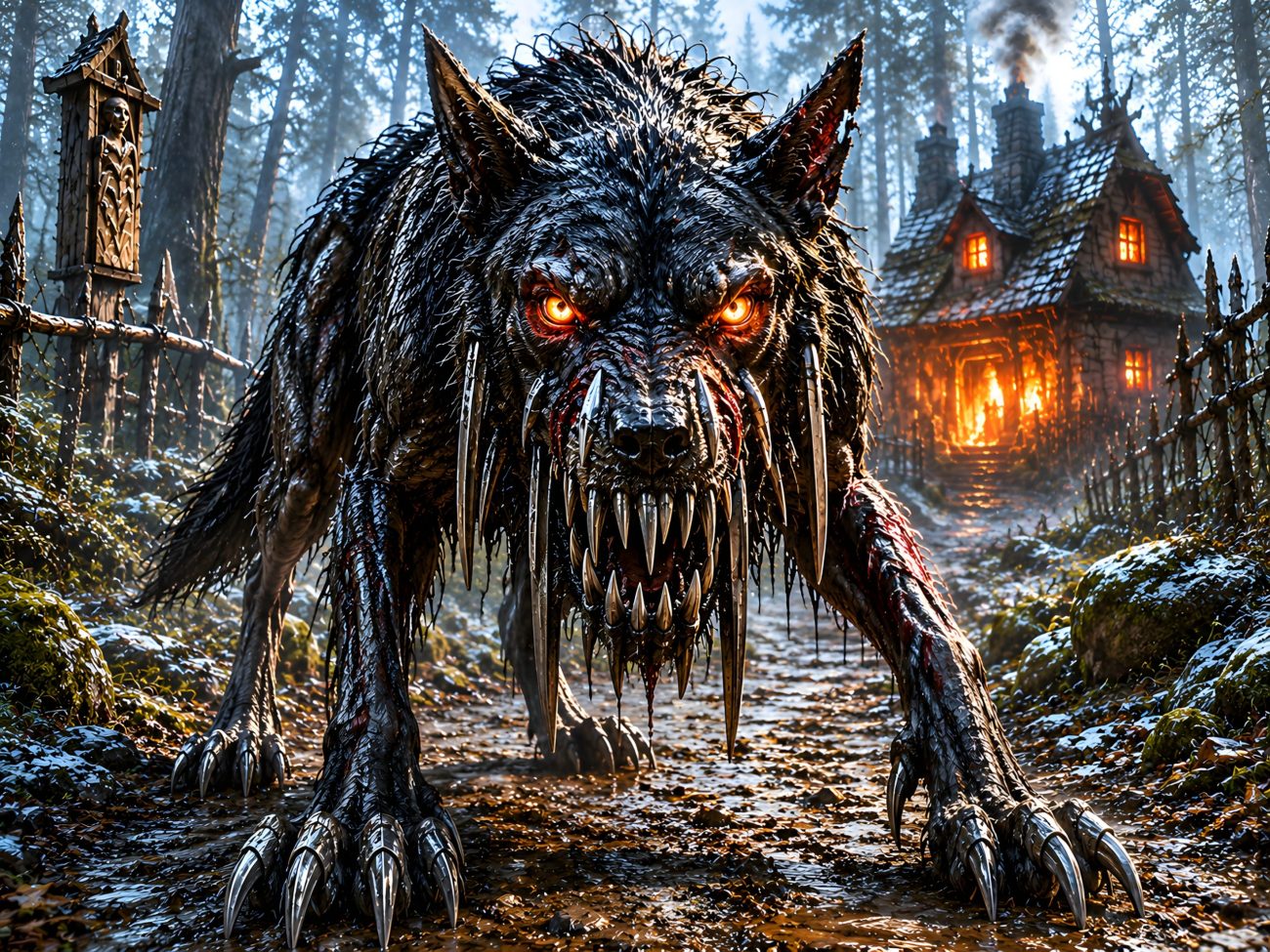
The Iron-Toothed Dog is a supernatural guardian creature from Moldovan folklore, remembered as a small but terrifying magical hound with iron teeth and steel claws. Though not large in size, it was feared as a deadly protector capable of tearing intruders apart.

The creature lived beside an old woman deep within the wilderness beyond forests and mountains. Her cottage was surrounded by a fence so tightly built that even the wind could not pass through it. Travelers who approached the house were warned immediately about the dog.

The old woman would call out from inside:

“If you are a good man, open the gate and come in, but if you are bad, go away and do not come near my cottage, because I have a little dog with iron teeth and steel claws, and he will tear you to pieces if he sees you.”

The dog served as a supernatural judge of character. When the hero Aliman arrived during his journey to the Red King’s realm, the creature immediately recognized that he was good-hearted. Instead of attacking him, the iron-toothed dog became gentle and affectionate toward him “as if he were his master.”

The old woman herself was no ordinary human. She was Holy Wednesday, mistress of wolves, foxes, bears, hedgehogs, and wild beasts of the forest. The iron-toothed dog guarded her isolated home and protected the boundary between the human world and the dangerous supernatural wilderness around it.

Unlike many monstrous hounds in folklore, the Iron-Toothed Dog was not evil by nature. It attacked only the wicked and recognized goodness instinctively, acting as both guardian and judge for those who crossed into the enchanted forest.


Sources

Botezatu, G. (1986). Moldavian folk-tales (2nd rev. & enl. ed.). Kishinev: Literatura Artistikă.


Mawiang

Tradition / Region: Indoniesian Mythology
Alternative name:
Category: Dog


The Myth

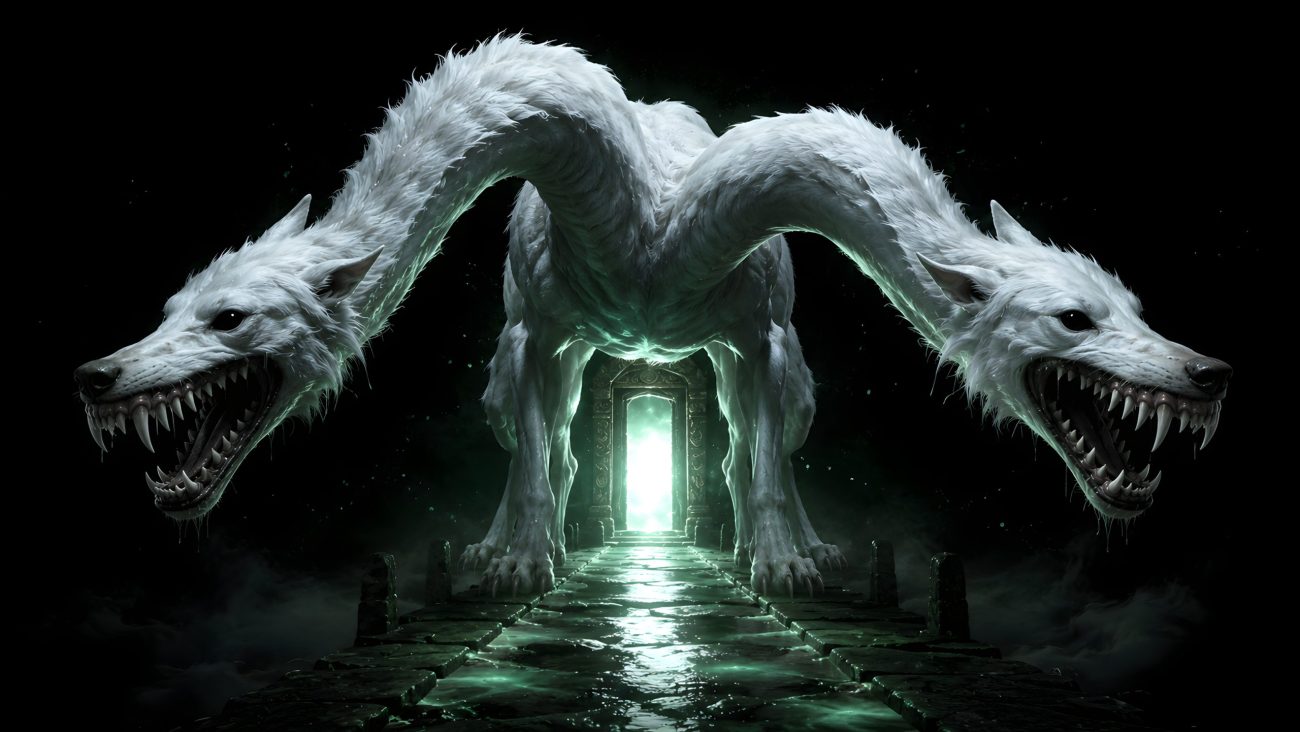
In the traditional beliefs of the Malanau people of Borneo, Mawiang is a terrifying double-headed dog that guards the narrow road leading to the afterlife. The creature stands watch at the entrance to the land of the dead and prevents souls from passing unless they offer a valuable bead as payment.

The Malanaus believed in another world that closely resembled the human world, with rivers, mountains, seas, and sago plantations. Above all spirits stood a supreme deity named Ipu. After death, souls were guided by a beautiful female spirit called Balu Adad, who escorted the dead to their future home only after funeral feasts and cockfighting ceremonies had ended.

Before a soul could reach paradise, it had to pass Mawiang. To ensure safe passage, families tied a precious bead to the right arm of the deceased before burial. Corpses were also buried with gold ornaments, weapons, gongs, and fine clothing so the dead could use them in the next world.

Older traditions claimed that slaves were sometimes tied near the tombs of important dead nobles and left to die so their spirits could continue serving their master in the afterlife.

The Malanaus also believed that those who died violently entered a different afterlife from people who died naturally. After living a long existence in the spirit world, the dead were believed to die again and later return as worms or caterpillars living in the forest.

Their spiritual world contained many dangerous beings besides Mawiang. Forests, rivers, seas, and the sky were inhabited by spirits connected to disease, storms, and misfortune. Rituals meant to calm these spirits included hanging plants around houses, floating miniature boats made of sago pith down rivers, and ceremonies involving gongs, feasting, and shamans performing rituals through the night.

Among all these beings, Mawiang remained one of the most feared, standing as the final guardian between the world of the living and the realm of the dead.


Sources

de Crespigny, Lieut. (1876). On the Milanows of Borneo. In The Journal of the Anthropological Institute of Great Britain and Ireland, 5. from https://doi.org/10.2307/2841361


Black Guardian

Tradition / Region: Czech Mythology
Alternate Names:
Category: Dog


The Myth

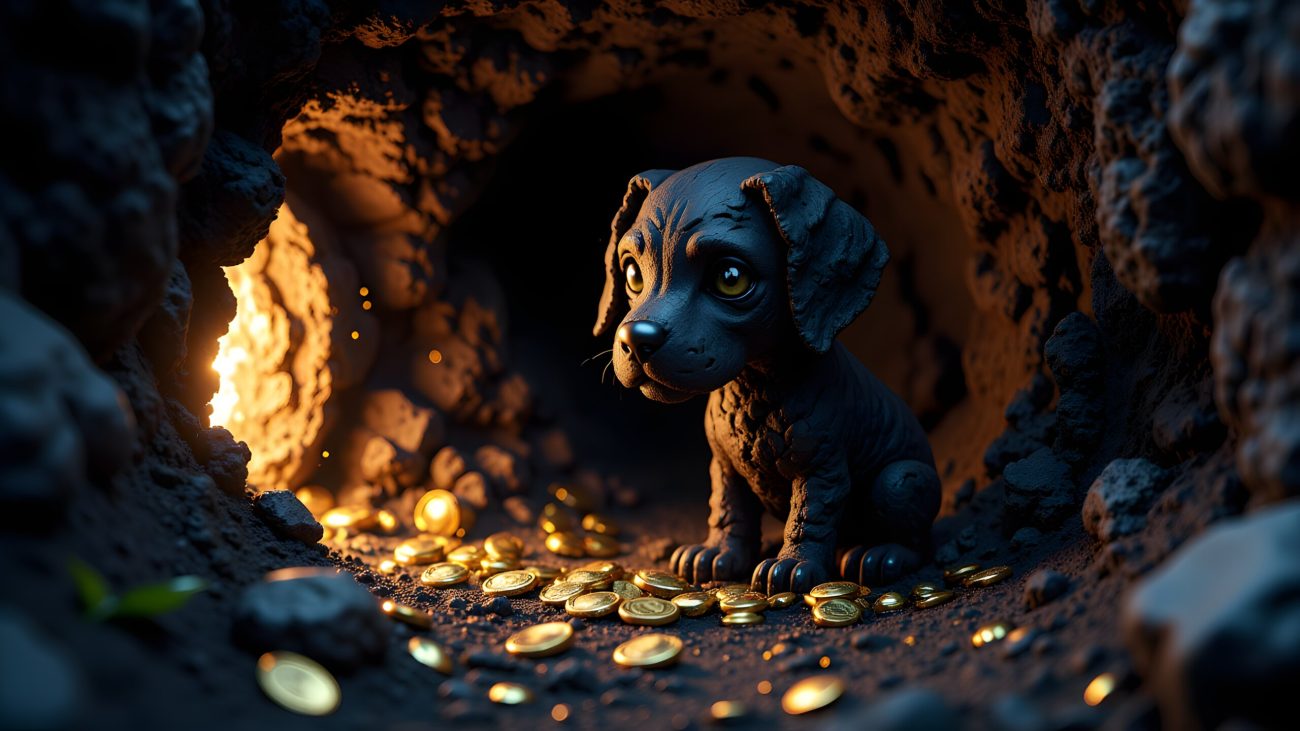
The Black Guardian appears in Czech folklore as a small black dog connected to hidden treasure. It is not merely an animal, but often understood as a suffering or enchanted soul bound to guard riches beneath the beneath the earth.

In one tale, a herdsman driving his cattle on Palm Sunday saw a tiny flame burning near a roadside cross. Digging at the spot, he uncovered a pot filled with ancient coins. Beneath it lay a small black dog, which leapt out joyfully, wagging its tail and affectionately looking at him.

The herdsman, however, cared only for the treasure. He pushed the dog away and cursed it. Instantly, the dog vanished as if swallowed by the earth, and the treasure sank back into the ground. It is said that had he shown kindness—such as kissing the dog—he would have freed a tormented soul and gained the treasure.

In another account, a traveler noticed a blue flame by the roadside and used it to light his pipe. Later, when he emptied the pipe, an old coin fell out, suggesting a link between ghostly fire and hidden wealth.

The Black Guardian thus represents both a protector of treasure and a test of human character: greed leads to loss, while compassion could bring both riches and redemption.


Gallery


Sources

SAGEN.at. (n.d.). Brennende Schätze. Retrieved March 1, 2026, from https://www.sagen.at/texte/sagen/tschechien/watzlik/brennendeschaetze.html.


Interpretive Lenses

Religious Readings
  • Christian Ascetic Deep Dive
Philosophical Readings
  • Nietzschean Deep Dive
Psychological Readings
  • Jungian Deep Dive
Esoteric Deep Dive
  • Hermetic Deep Dive
Political / Social Readings
  • Marxist Deep Dive

St. Mamerten Hound

Tradition / Region: Liechtenstein Mythology
Alternate Names:
Category: Dog


The Myth

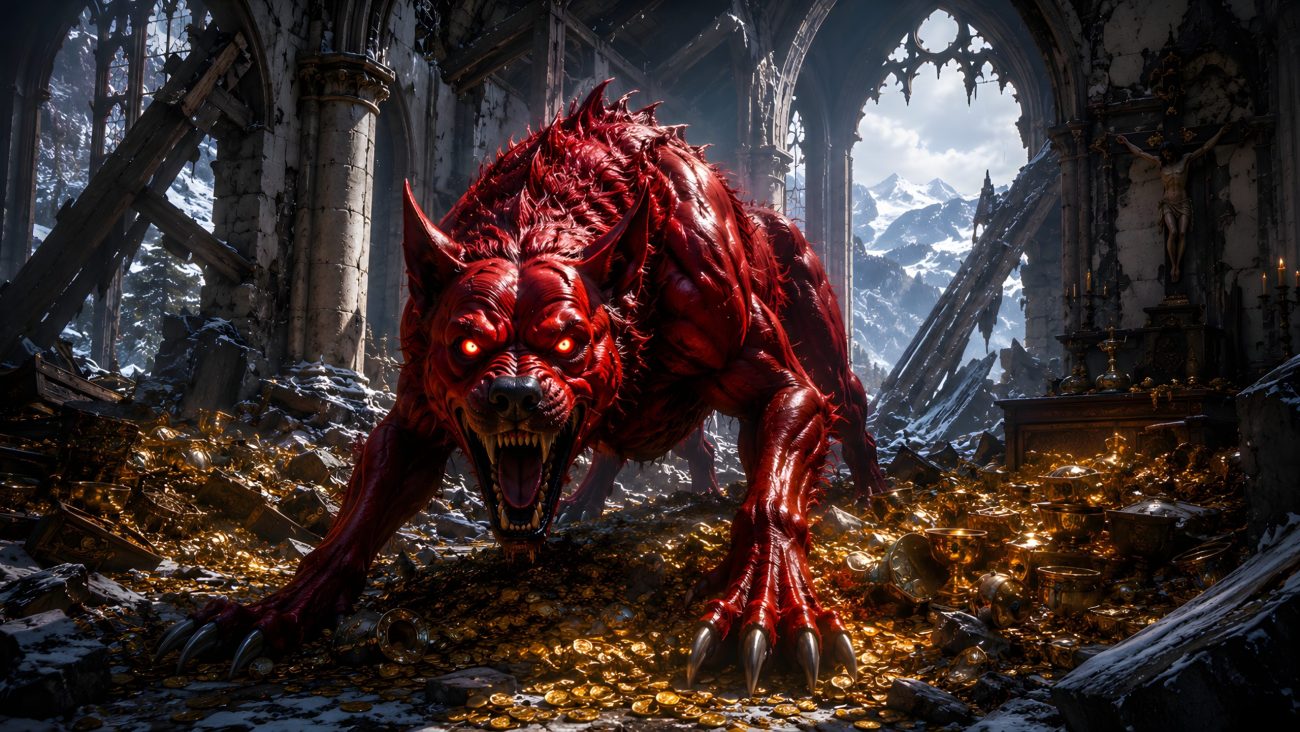
The St. Mamerten Hound appears as a dog with fiery eyes that sits upon a chest of gold inside the church of St. Mamerten, preventing it from being taken.

One evening, a young man from Triesen went into the church of St. Mamerten to pray. Suddenly, a spirit appeared to him and said that if he wanted to become rich, he should return at midnight with two other young men. He would see a chest full of gold, and on it would sit a dog. If they threw the dog down, all the gold would belong to them.

The next evening, the young man returned with two friends, and they knelt one behind the other in the pews. When the church bell struck midnight, the chest with the dog appeared. The young man in the front pew stood up and tried to throw the animal down, but it leaped up, stared at him with fiery eyes, barked and howled, and jumped from one side of the chest to the other. He called for help, and the second came, but he also failed. They then called the third, but he said in a trembling voice that he was afraid.

At that moment, they heard a piercing scream, and the dog and the chest disappeared. The spirit that had first appeared returned, wept, and cried out that he must now wait another hundred years before he could ask someone for help again.

It became completely dark in the church, and the friends could not move and had to remain inside until the sexton came to ring the morning bell.


Sources

SAGEN.at. (n.d.). Der Schatz von St. Mamerten. In SAGEN.at – Traditionelle Sagen. Retrieved May 23, 2026, from https://www.sagen.at/texte/sagen/liechtenstein/seger/mamerten.html


Kintakakō

Tradition / Region: Japanese Mythology
Alternate Names:
Category: Dog


The Myth

In the Saigo region of Miyazaki Prefecture, people once believed that certain invisible spirits could possess human beings. Among these were snake gods, Inari spirits, dog spirits, and a more powerful presence known as the Kintakakō.

Dog spirits in the region were thought to be unseen by ordinary eyes. Some said they appeared like rats, snakes, or dogs with forked tails. These spirits could be sent against a person out of jealousy, hatred, or rivalry. Those who were weak in body or spirit — the elderly, the sick, or pregnant women — were especially vulnerable.

When such a spirit entered someone, the person might suddenly lose their senses while walking along the road. They would shout strange words, speak wildly, or collapse before recovering as if nothing had happened. Others suffered joint pain, fever, or lingering illness. People believed these afflictions were the work of dog spirits directed by hostile families.

The Kintakakō were said to be similar to these dog spirits but of higher rank and greater power. They were feared because they were said to bite their victims. A person possessed by one was called a kazemochi. The condition was believed to run in families, passed down through bloodlines. Children under the influence of a Kintakakō were said to speak boldly and strangely, uttering words no child should know.

In nearby districts, certain priests known as Hijirigami were believed able to drive these spirits away. Some people described the possessing being as a small animal the size of a kitten. A household that secretly kept such a creature might prosper, for it was believed to harm enemies and steal fortune from others on behalf of its master.

Thus the Kintakakō was feared both as a curse and as a dangerous blessing — an unseen dog spirit whose bite could bring madness, illness, or hidden wealth, depending on whose command it obeyed.


Sources

Tyz-Yokai Blog. (n.d.). Kintakakou. Retrieved March 1, 2026, from https://tyz-yokai.blog.jp/archives/1085598002.html


Inugami Myōjin

Tradition / Region: Japanese Mythology
Alternate Names: Inugami, Inuzuka, Loyal Dog
Category: Dog


The Myth

Across Japan there are many stories of loyal dogs who sacrifice themselves to save their masters, and in some places these dogs are worshipped as gods under the name Inugami Myōjin.

One ancient tale tells of a hunter who lived by the Shirajiya River. He hunted constantly in the mountains, killing deer and wolves without prayer or remorse. His only companion was a faithful hunting dog named Koshiromaru.

One day, the hunter entered the forest with his dog and was caught far from home when night fell. Uneasy, he took shelter beneath a rotten tree and prepared to sleep. As darkness deepened, Koshiromaru suddenly began barking wildly at him, leaping and circling in agitation. The hunter tried to quiet him, but the dog would not stop. Angered and thinking the dog had gone mad, the hunter drew his sword and cut off its head.

In that instant the severed head leapt into the hollow of the tree and clamped its jaws onto a giant snake that had been hiding there, ready to swallow the hunter whole. The head continued biting until the serpent died.

Realizing that his dog had tried to save him, the hunter was overcome with grief and remorse. To honor Koshiromaru’s loyalty, he built a shrine on that very spot and began worshipping the dog’s spirit as a deity. The shrine came to be known as Inugami Myōjin, and the region itself took its name from the dog’s sacrifice.

Another old story tells of a hunter in Mutsu who kept many dogs and often slept in the mountains with them. One night a single dog woke and barked fiercely, leaping at its master. Thinking it had turned savage, the man tried to strike it down. But when he stepped aside, the dog sprang into the hollow tree where the man had planned to sleep and attacked a massive snake hidden within. The hunter then understood the dog’s warning and killed the serpent. This time the dog survived, and the man returned home deeply grateful for its devotion.

In some darker versions, the master kills the dog in suspicion, only to be slain by the snake afterward. In others, the regretful master is reborn as a bird, forever crying out the dog’s name.

Because of these tales, loyal dogs who died protecting their masters came to be honored throughout Japan. Shrines, mounds, and place names commemorate them, and their spirits are believed to guard the living. Thus the faithful dog, once a humble companion, is remembered as Inugami Myōjin — a protector whose loyalty transcends death.


Sources

Tyz-Yokai Blog. (n.d.). Inugami Myōjin. Retrieved March 1, 2026, from https://tyz-yokai.blog.jp/archives/1069534939.html