Tradition / Region:Iranian Mythology, Persian Mythology Alternative names: Gopatshah, Gopadshah Category:Cow
The Myth
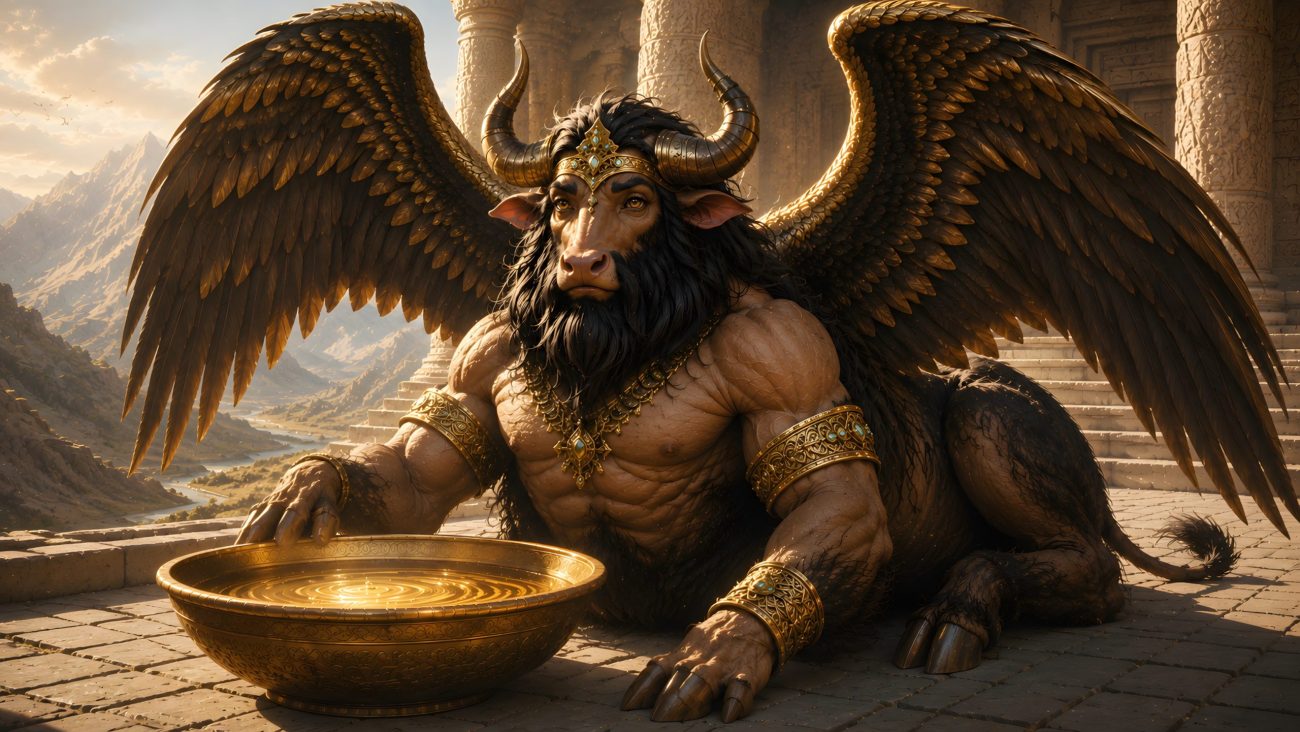
Gopatshah is a royal bull with the torso of a human and the body of a bull. He is associated with Eranvez, the promised land of Iranian mythology, in the region of Hvaniras. He is described as a powerful sacred being who serves the gods along the coast.
Gopatshah is associated with several primordial and legendary figures. He is equated with Gayomarth, the primordial man, as well as Gilshah, the clay king of the earth, and Garshah, the mountain king. He is also identified with Agrerata, the legitimate brother of Afrasiaba.
The figure of Gopatshah reflects the importance and reverence given to the bull in ancient Iranian tradition.
Sources
“Gopatshah.” Wikipedia: Die freie Enzyklopädie (German Wikipedia). Wikimedia Foundation. Accessed August 15, 2026. https://de.wikipedia.org/wiki/Gopatshah
Tradition / Region: Persian Mythology, Iranian Mythology Alternative names: Senmurv; Simorgh; Simurg; Simoorg; Simorq; Simourv Category:Bird, Dog
The Myth
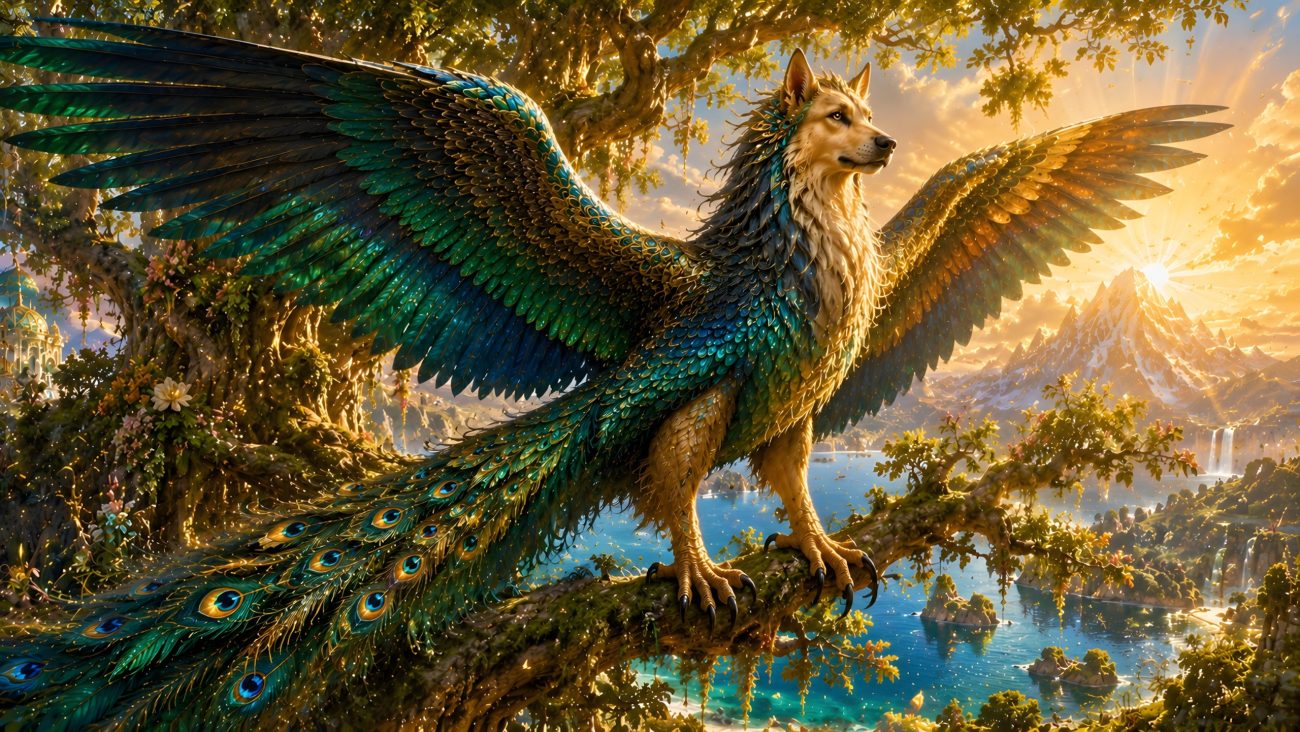
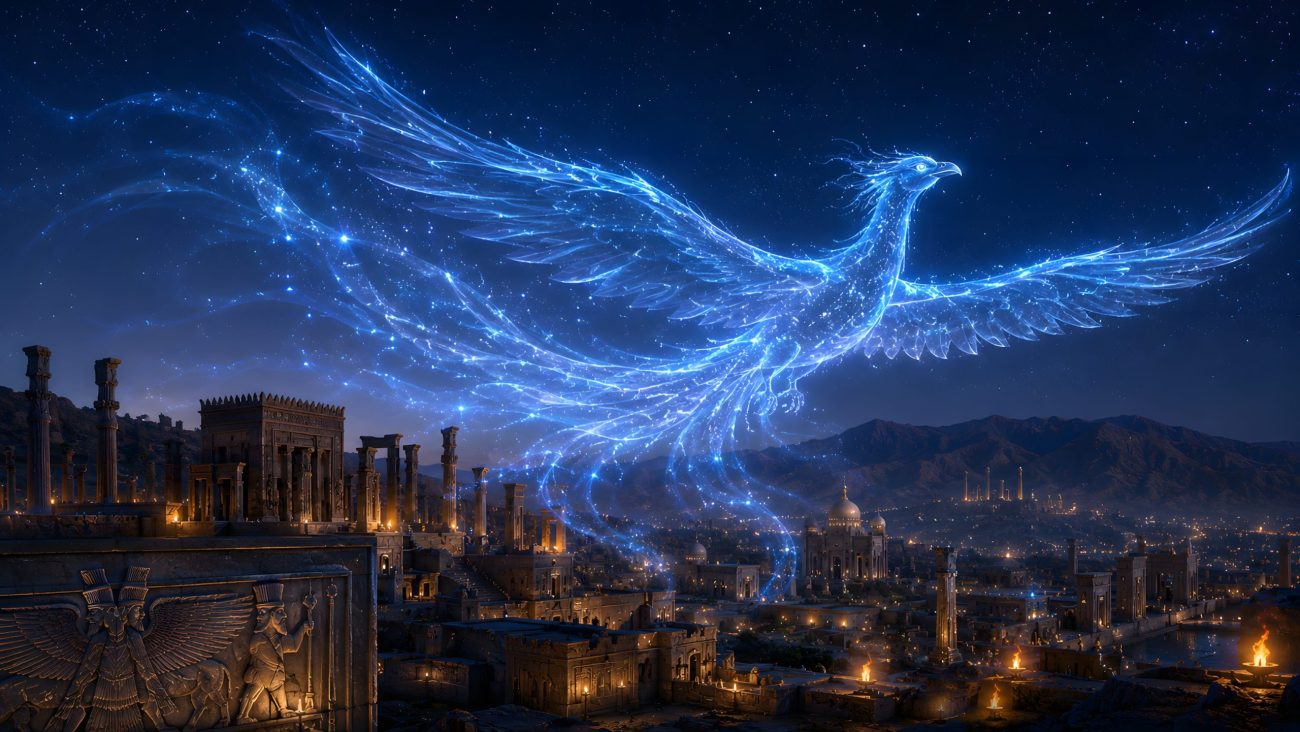
The Simurgh is a colossal and benevolent bird of Persian mythology, dwelling upon the Tree of Life that stands in the middle of the cosmic sea. Enormous enough to carry away an elephant, it is commonly described as having the body of a peacock, the head of a dog or human, the claws of a lion, and copper-colored feathers. Ancient beyond measure, the Simurgh is said to have witnessed the destruction of the world three times and possesses the wisdom of every age. When it takes flight from the Tree of Life, the seeds of every plant scatter across the world, bringing healing and fertility to the earth.
The Simurgh is best known for raising the abandoned prince Zal. Rejected at birth because of his white hair, Zal was left upon Mount Alborz, where the compassionate bird found him, nurtured him as her own, and taught him great wisdom. When he was grown, she returned him to humanity but gave him three golden feathers, telling him to burn one whenever he needed her aid. Later, when Zal’s wife Rudaba faced certain death in childbirth, the Simurgh answered his call and instructed him in performing a successful cesarean section, saving both mother and child. That child grew up to become the legendary hero Rostam.
The Simurgh later came to Rostam’s aid as well, healing both him and his horse Rakhsh after they were wounded in battle. She also revealed the only way to defeat the invincible prince Esfandiyār, instructing Rostam to fashion a double-headed arrow from a tamarisk branch. Although the Simurgh warned that killing Esfandiyār would bring lasting sorrow, Rostam followed her counsel, and the enchanted arrow ended the prince’s life, fulfilling the bird’s prophecy.
Sources
Wikipedia contributors. (n.d.). Simurgh. In Wikipedia. Retrieved June 29, 2026, from https://en.wikipedia.org/wiki/Simurgh
Tradition / Region: Persian Mythology, Iranian Mythology Alternative names: Peri; Pari Category:Bird
The Myth
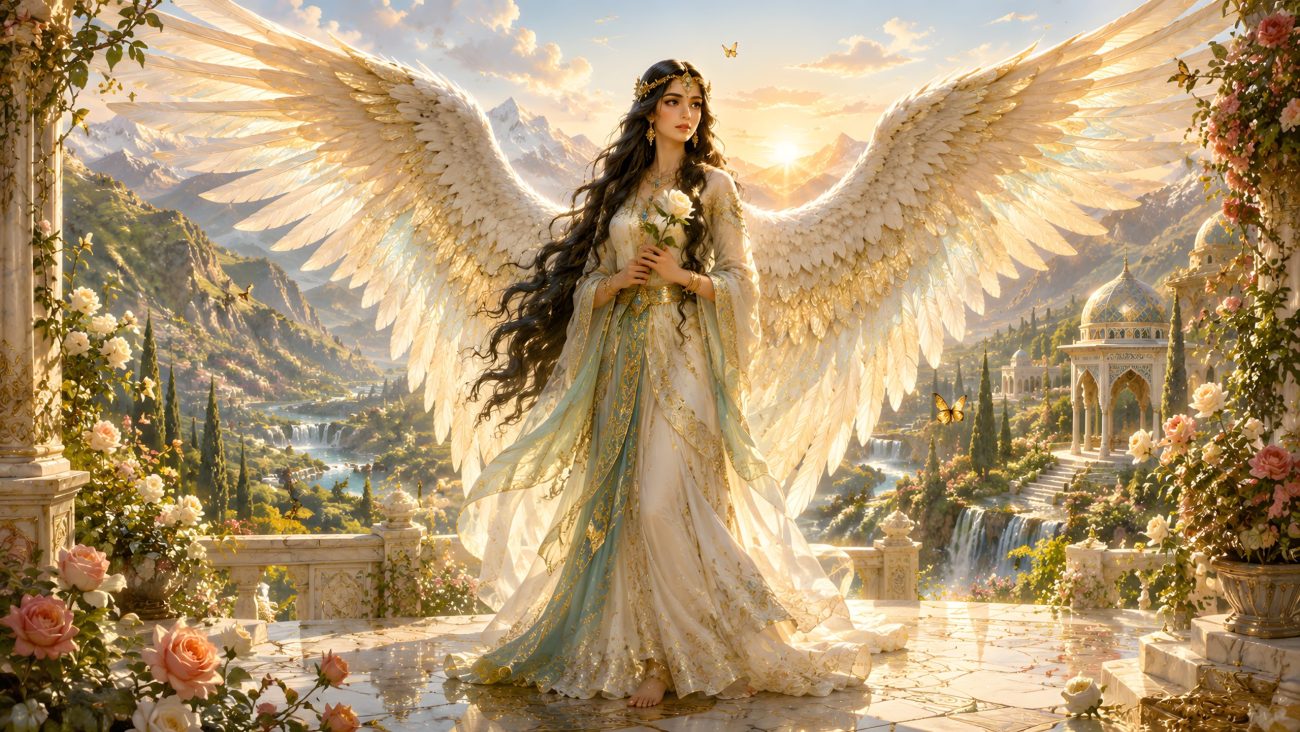
The Parī is a beautiful supernatural being often depicted with magnificent wings and a radiant human appearance. They dwell in Parīstān, their own enchanted realm, where they live in societies much like those of humans. Although renowned for their grace and beauty, the Parīs possess powerful magic and can travel freely between their world and that of mortals.
In ancient Persian tradition, the Parīs were once regarded as malevolent spirits, but later legends transformed them into noble and generally benevolent beings. They are often portrayed as the eternal rivals of the hideous Dīvs, standing in opposition to these monstrous creatures. In many tales, Parīs aid heroes, offer magical gifts, or marry worthy mortals, though they remain beings of immense supernatural power.
Despite their kindness, the Parīs are not without danger. They are said to enchant humans with their beauty, abducting them to Parīstān or carrying them away to witness weddings and celebrations in the fairy realm. Some people never return, while others awaken believing they have spent time among the winged beings. Those who offend or disrespect the Parīs may also suffer their magical punishment, making them both admired and feared throughout Persian folklore.
Sources
Wikipedia contributors. (n.d.). Parī. In Wikipedia. Retrieved June 29, 2026, from https://en.wikipedia.org/wiki/Par%C4%AB
Tradition / Region:Iranian Mythology, Persian Mythology Also Known As: Azhdahak, Ezhdeha, Azhdar Category:Dragon
The Myth
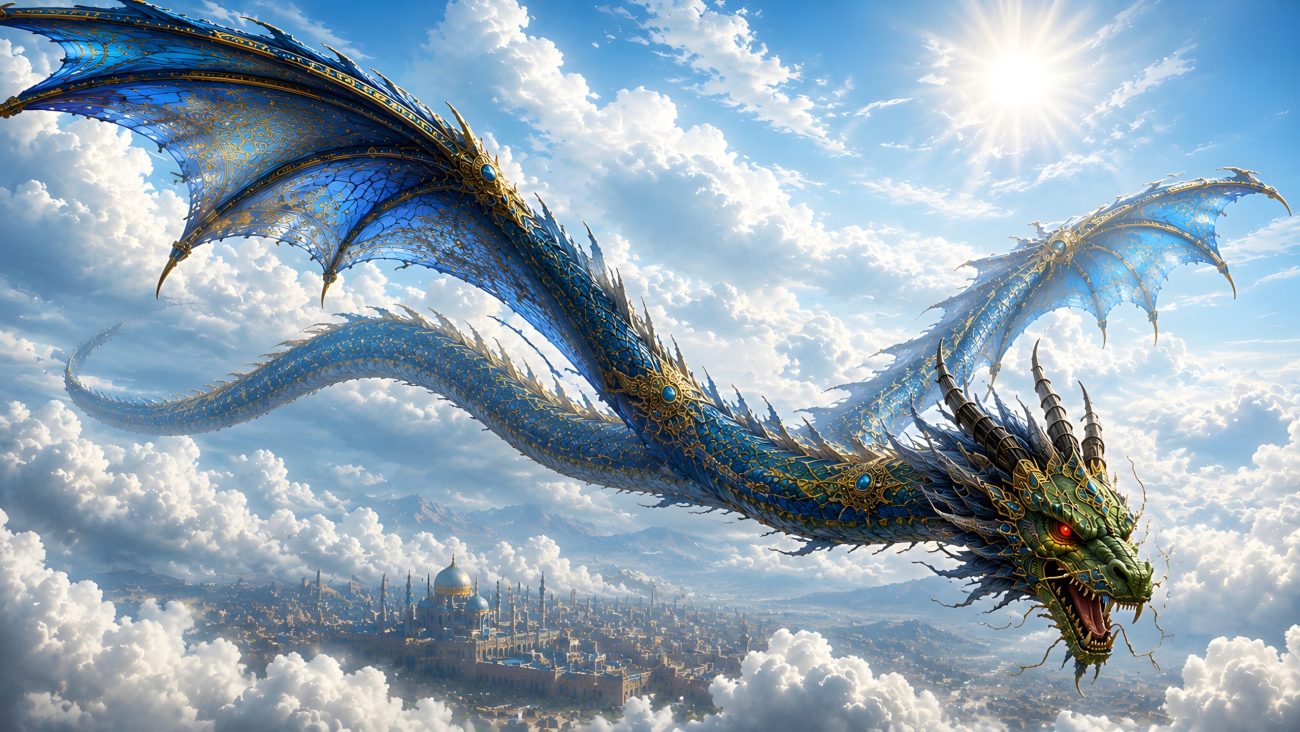
The Azhdaha is a dragon-like creature from Iranian mythology, often described as a gigantic serpent with an enormous body, blazing eyes, huge jaws, and countless teeth. In Persian legends, azhdahas could live in the sea, on land, or in the sky, and some were said to possess wings or fin-like appendages.
The creature appears throughout Persian epic literature, especially in the Shahnameh, where heroic warriors such as Rostam, Esfandiar, and Sām battle and slay monstrous azhdahas during their legendary quests.
In later Islamic-era traditions, the azhdaha was sometimes said to begin life as an ordinary snake. After living for hundreds of years and growing to an unnatural size, the serpent became violent and destructive. Because of the chaos it caused, God cast it into the sea. There the creature continued to grow even larger, developing fins or wings and creating massive waves with its movements.
Some medieval Persian accounts claimed that the heart of an azhdaha granted courage and bravery to whoever consumed it. Its skin was believed to possess healing properties, while its buried head was said to fertilize the earth.
The azhdaha became one of the most feared monsters in Persian mythology, representing destruction, chaos, and the dangerous power of nature.
Sources
Wikipedia contributors. (n.d.). Azhdaha. In Wikipedia. Retrieved May 10, 2026, from https://en.wikipedia.org/wiki/Azhdaha
Tradition / Region: Iranian Mythology, Persian Mythology Alternative Name: Mantichore, Martichora Category:Lion
The Myth
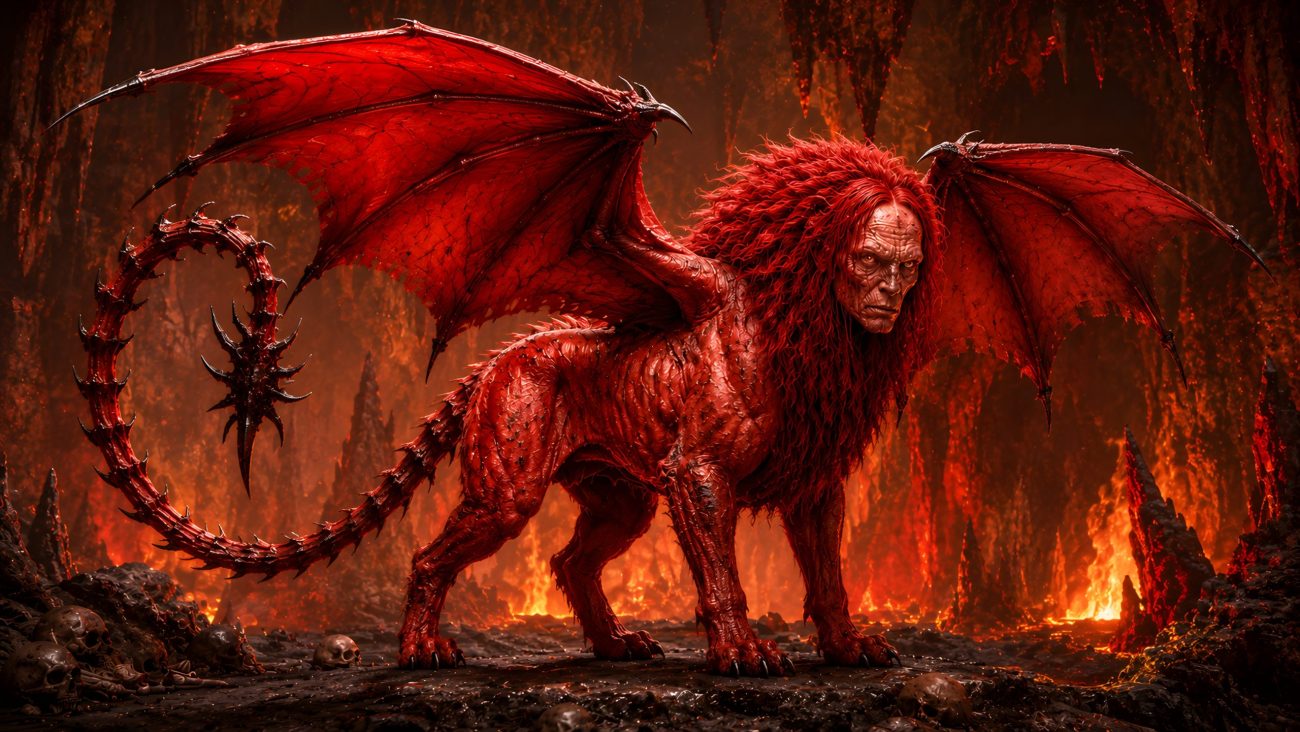
The Manticore is a monstrous creature from Persian mythology later adopted into Greek and medieval European legends. Its name means “man-eater,” reflecting its terrifying appetite for human flesh.
The creature is most commonly described as having the body of a lion, the face of a human, and the tail of a scorpion. Some legends describe the tail as being covered in venomous spines or quills that can be launched like arrows at enemies. It was also said to possess three rows of teeth and a powerful voice resembling a trumpet or pipe.
Ancient writers claimed the manticore lived in India or the distant eastern lands beyond Persia. It was feared as a swift and aggressive predator capable of overpowering humans and animals alike. According to the earliest stories, the beast would devour its victims entirely, leaving no bones behind.
Greek physician Ctesias recorded one of the earliest descriptions of the creature after hearing stories from Persian sources during the Achaemenid Empire. Later Roman writers such as Pliny the Elder repeated and expanded the legend, helping spread the manticore throughout medieval Europe.
During the Middle Ages, the manticore became a common creature in bestiaries and medieval art. Illustrations often portrayed it with a human-like face, massive claws, a lion’s body, and a deadly spiked tail. Some depictions gave it wings or exaggerated monstrous features, though these additions varied between manuscripts.
The manticore eventually became a symbol of savagery, hidden danger, and insatiable hunger in folklore and literature.
Sources
Wikipedia contributors. (n.d.). Manticore. In Wikipedia. Retrieved May 10, 2026, from https://en.wikipedia.org/wiki/Manticore
Tradition / Region:Iranian Mythology, Persian Mythology Alternative Name: – Category:Bird
The Myth
The Huma is a legendary bird from Persian mythology said to live its entire life flying high above the earth without ever landing. In many legends, the bird is invisible to humans and is believed to never touch the ground.
The Huma is often described as a bird of fortune and divine blessing. Seeing its shadow or catching even a brief glimpse of it is believed to bring happiness, luck, or greatness for the rest of a person’s life. In some traditions, the bird’s shadow falling upon someone foretells that they will become a ruler or king.
Certain legends describe the Huma as similar to a phoenix, burning itself in fire after many centuries before rising again from its ashes. Some stories also say the creature possesses both male and female qualities within a single body.
In Persian and Sufi traditions, the Huma became a symbol of spiritual elevation, destiny, and unreachable perfection. The bird was believed to be impossible to capture, and legends warned that anyone who killed a Huma would die within forty days.
The Huma later appeared in Ottoman, Mughal, and Central Asian traditions, where it continued to symbolize kingship, fortune, and heavenly blessing.
Sources
Wikipedia contributors. (n.d.). Huma bird. In Wikipedia. Retrieved May 10, 2026, from https://en.wikipedia.org/wiki/Huma_bird
Tradition / Region: Arabic Mythology, Persian Mythology Alternate Names: Caspilli; Neemora (Persian) Category: Fish
The Myth
Sailors of the warm seas spoke of a fish both terrible and marvelous, known among the Arabs as the Caspilly and among the Persians as the Neemora. It was said to dwell in the Arabian Gulf and the wider Indian Ocean, feared by all who sailed those waters.
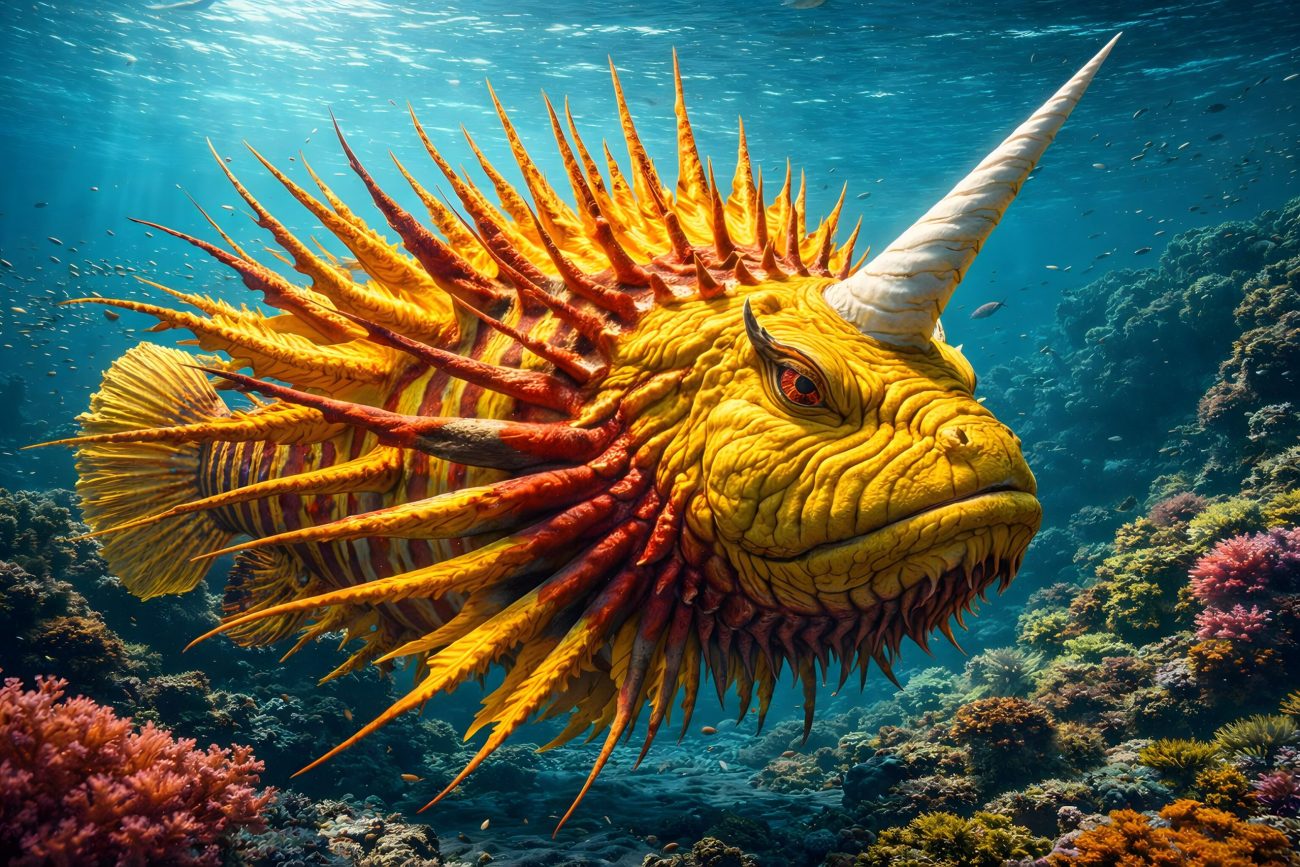
The Caspilly was described as almost as wide as it was long, yet no more than two feet in length. Its body bore no scales; instead, its skin was rough, spiked, and barbed like that of a shark. From its forehead grew a long, lancet-shaped horn, sometimes said to be longer than a man’s arm. When not in use, this horn lay folded back along its neck.
When hunger seized it, the Caspilly attacked the first creature it encountered. With a sudden thrust, it drove its horn into the belly of its prey, leaving it to bleed to death in the water. Its teeth were venomous, and even a single bite meant certain death. Yet paradoxically, the body of a dead Caspilly, laid upon such a wound, was said to draw out the poison and save the victim. Its horn was prized above all, believed to hold powerful medicinal virtues.
Another tale spoke of a similar fish in the seas near Peru, bearing a sword-like horn three feet long. This creature was said to hunt whales. It would slip beneath the great beast, stab it in the navel, and retreat while the wounded whale thrashed in agony, sometimes capsizing nearby ships. Only once the whale was dead would the fish return to feed at its leisure.
In later tellings, these stories were woven together. The Caspilly grew even more fearsome, its horn stretching to four feet in length, and its appetite expanding to make it the terror of the Arabian seas. Sailors claimed that local hunters pursued it with giant hooks baited with camel meat. When the Caspilly struck, it would exhaust itself fighting the line, allowing the hunters to shoot it with arrows, haul it aboard, and beat it to death.
Its flesh was said to be edible, and its horn—called caspilly alicorn—was believed to rival the unicorn’s horn in its power to counter venom.
Thus the Caspilly lived on in sailors’ lore: a spined, horned killer of fish and whales alike, born from the dangers of the sea and the fearful imagination of those who crossed it.