Tradition: Frankish mythology, French Mythology Alternative names: Quinotaurus Category:Cow, Fish
The Myth
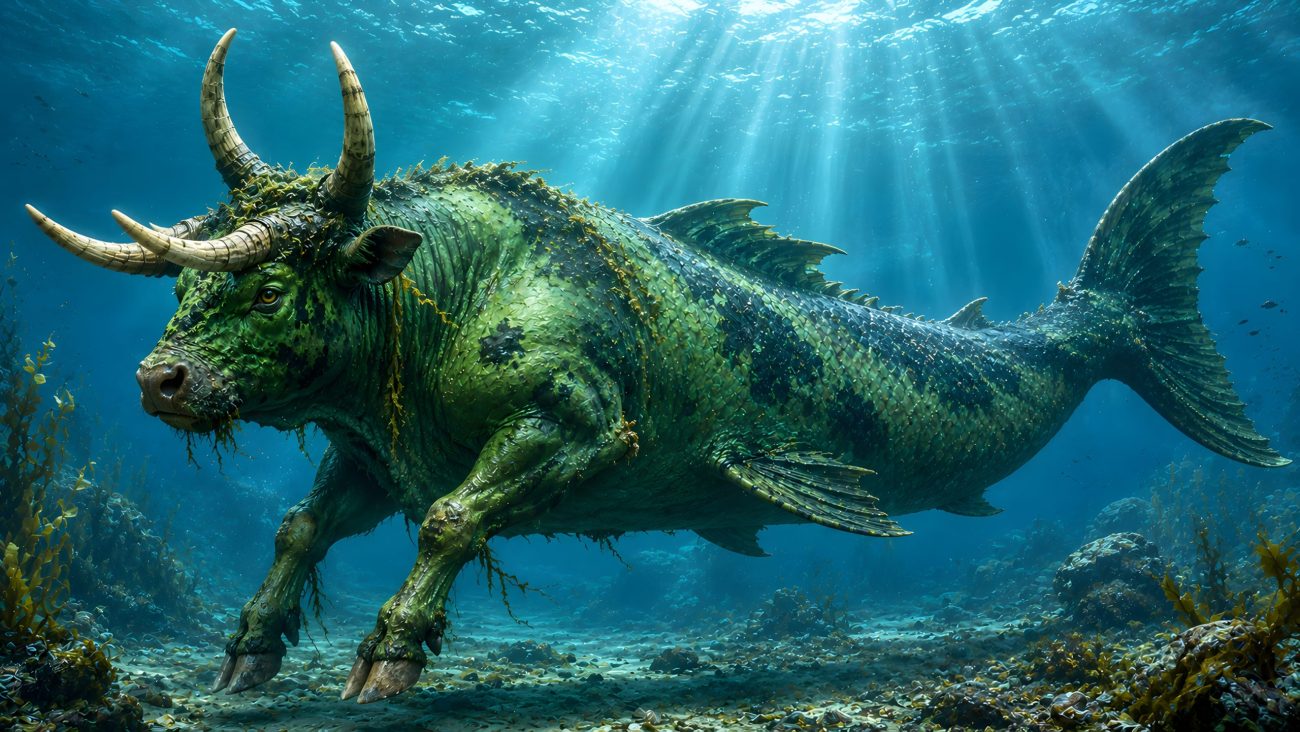
The Quinotaur was a mythical sea creature mentioned in the 7th-century Chronicle of Fredegar. It was described as a beast of Neptune resembling a bull with five horns, combining a taurine form with a connection to the sea.
According to the legend, the creature attacked the wife of the Frankish king Chlodio and fathered Meroveus. Through Meroveus, the Quinotaur was therefore said to have sired the line of Merovingian kings.
The creature was associated with both Neptune and the Minotaur because of its two defining characteristics: it was a bull-like creature connected with the sea. The surviving account does not make clear whether the Quinotaur was originally a genuine Frankish mythological being or whether some of its characteristics were shaped or elaborated by the Christian authors who recorded the story.
The name Quinotaurus is Latin, and its precise original meaning is uncertain. The surviving sources do not establish whether it translated an earlier Frankish name for the creature or was itself a later scholarly or clerical creation.
The story has also been compared with other ancient myths involving bulls, water, fertility, and divine ancestry. In Greek mythology, for example, Zeus took the form of a bull when he carried Europa across the sea to Crete, while the Minotaur was born from the union of Pasiphaë and a divine white bull associated with Poseidon.
The Quinotaur is therefore preserved primarily as a legendary ancestor of the Merovingian dynasty, rather than as a creature with a large independent body of mythology.
Sources
“Quinotaur.” Wikipedia: The Free Encyclopedia. Wikimedia Foundation. Accessed August 29, 2026. https://en.wikipedia.org/wiki/Quinotaur
Three hundred li east of the previous region lies Root Mountain, a strange place filled with rivers but lacking plants and trees.
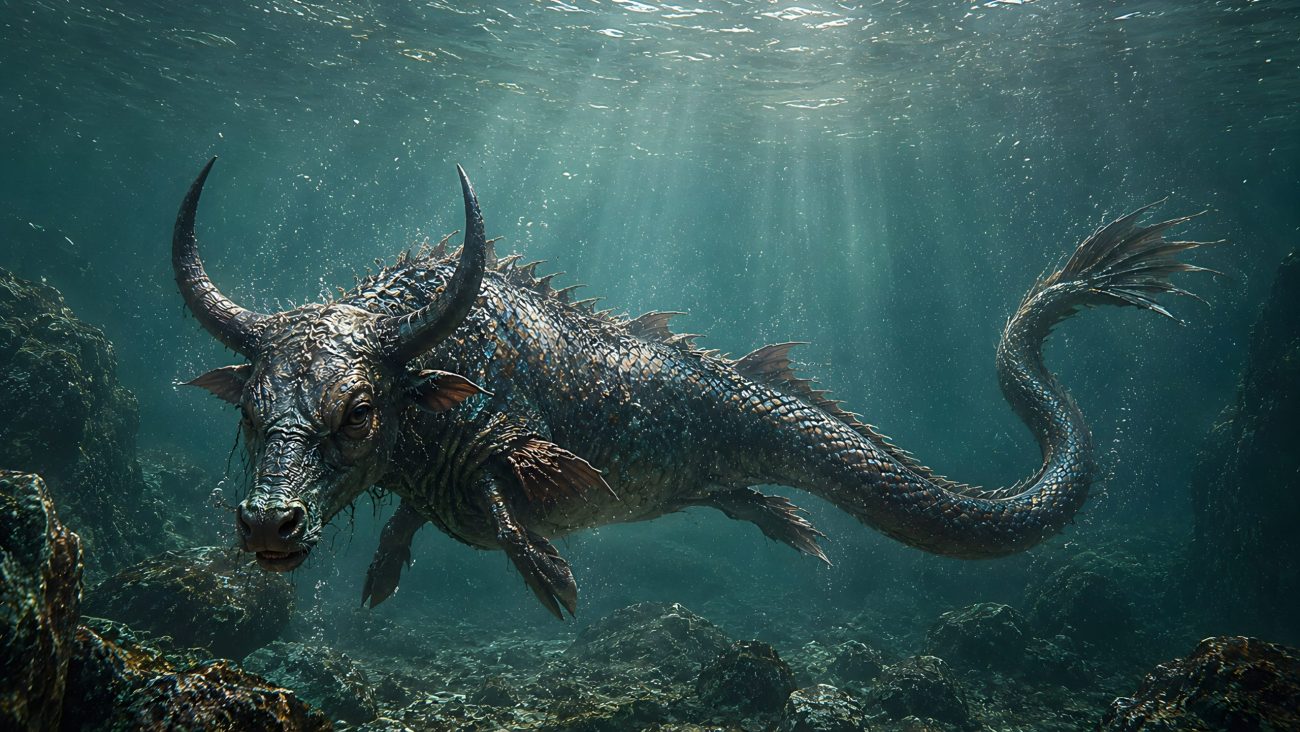
A peculiar creature lives there called the Liu. Although it is a fish, its body resembles an ox. It lives among the hills and possesses a snake’s tail, while wings and feathers grow along its ribs.
The Liu makes a sound resembling that of the Lingering-Ox and has a remarkable seasonal existence. It appears during summer and dies during winter, leading the ancient commentator Guo Pu to suggest that this description might refer to a form of hibernation.
The Liu also possesses medicinal properties. Eating it is said to prevent swellings.
Sources
Strassberg, Richard E., ed. and trans. A Chinese Bestiary: Strange Creatures from the Guideways Through Mountains and Seas. Berkeley: University of California Press, 2002.
Tradition / Region:Greek Mythology Alternative names: Aigipan, Goat-Pan, Aegocerus Category:Sheep, Deity, Fish
The Myth
Aegipan (Greek: Aigipan, meaning “Goat-Pan” or “All-Goat”) is a goat-legged rustic deity closely associated with Pan, though ancient traditions disagree on whether he was Pan himself, Pan’s father, or an entirely separate god. He is best known as the divine Sea Goat, whose image became the constellation Capricorn.
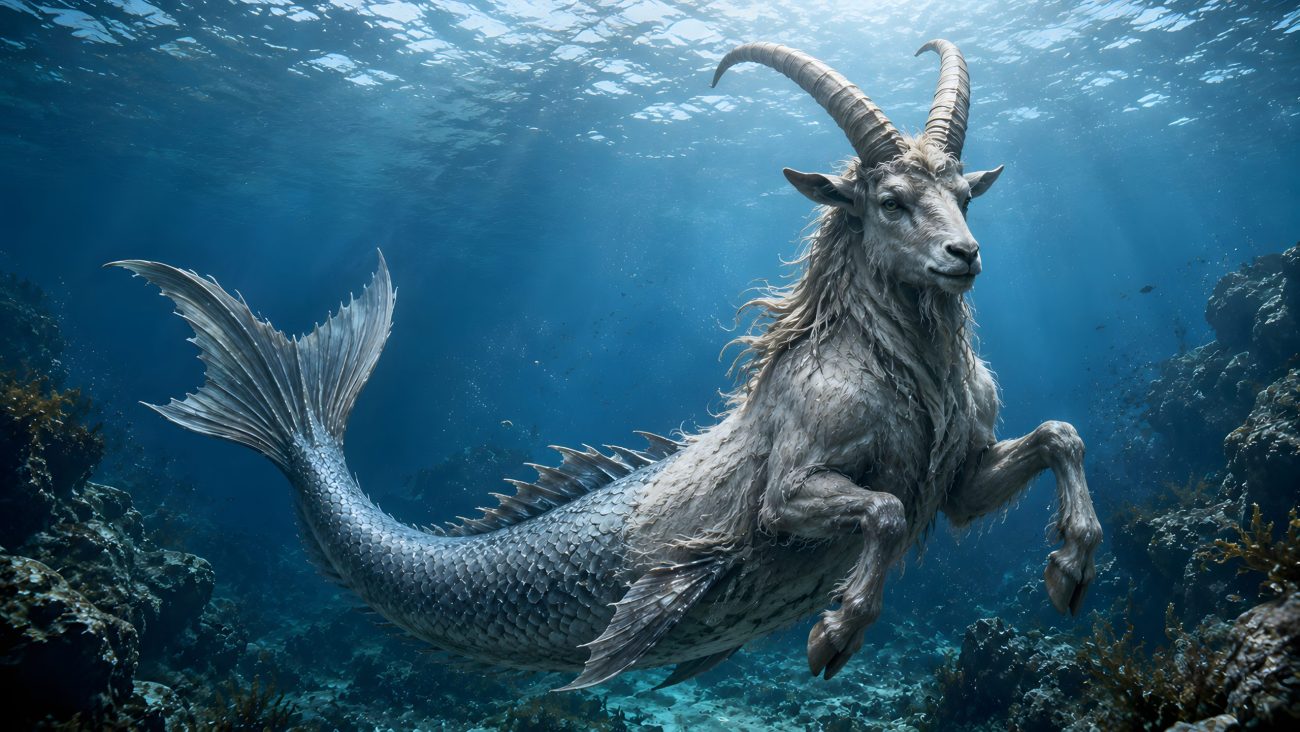
Most depictions portray Aegipan with the upper body of a horned, bearded goat-man and the tail of a fish, allowing him to move freely across both mountains and seas. In some traditions he possessed the terrifying ability to inspire panic among armies, giving rise to the word “panic” itself.
His greatest role came during the war between Zeus and the monstrous Typhon. After Typhon defeated Zeus by cutting the sinews from his hands and feet and hiding them in the Corycian Cave, where they were guarded by the dragon-woman Delphyne, Aegipan joined Hermes on a daring rescue mission. Together they secretly recovered Zeus’s stolen sinews and restored them to his body, enabling the king of the gods to continue the battle and ultimately defeat Typhon.
Another tradition tells that Aegipan helped destroy Typhon through cunning rather than strength. He lured the monster from its hiding place with the promise of a feast of fish, bringing Typhon into the open where Zeus struck him down with thunderbolts.
During Typhon’s assault on the gods in Egypt, many Olympians transformed themselves into animals to escape. Aegipan leapt into a river, changing his lower half into the tail of a fish while retaining his goat-like upper body. Zeus admired both his cleverness and his loyalty, placing his image among the stars as the constellation Capricorn, forever commemorating the Sea Goat in the heavens.
Ancient authors also give conflicting accounts of Aegipan’s parentage. Some describe him as the son of Zeus and the she-goat Aega (or Boetis), while others make him the son of Hermes, or even the father of Pan himself. Regardless of his origins, Aegipan consistently appears as a loyal ally of Zeus and one of the heroic figures responsible for preserving the rule of the Olympian gods.
Sources
Atsma, A. J. (n.d.). Aigipan (Aegipan) – Greek goat-fish sea god. In Theoi Greek Mythology. Retrieved June 28, 2026, from https://www.theoi.com/Georgikos/Aigipan.html.
Wikipedia contributors. (n.d.). Aegipan. In Wikipedia. Retrieved June 28, 2026, from https://en.wikipedia.org/wiki/Aegipan
Tradition / Region: Ghana Mythology Alternative names: Obonto Ta, Obonto Ya Category: Fish
The Myth
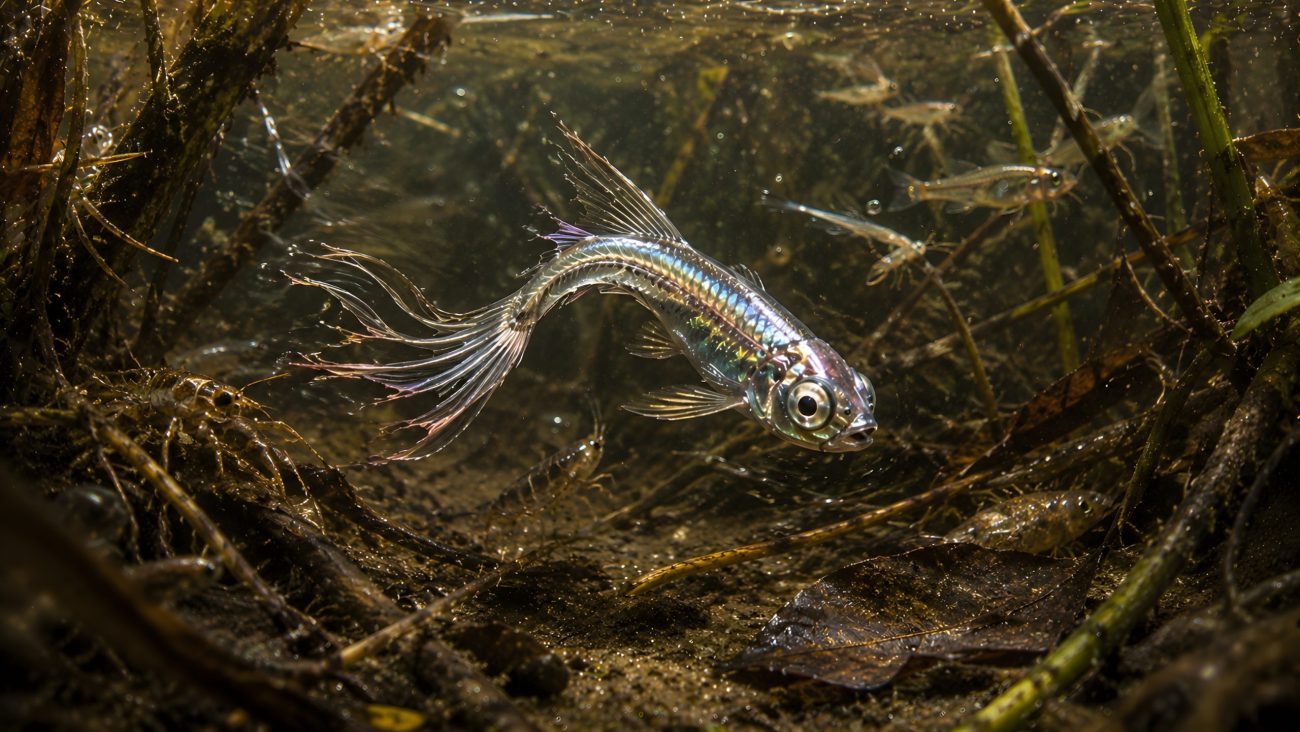
Obonto Ya was a tiny water creature, usually described as a minnow or very small fish. In Akan folklore she became known for deceit, shame, and restless wandering through rivers and streams.
The story tells of an old grandmother whose property mysteriously disappeared. She believed one of the water creatures had stolen it, so all the creatures of the water gathered together to discover the thief. A crab proposed a test: a brass pan would be brought forward, and every creature would cry into it. Whoever could not produce tears would be revealed as the guilty one.
One after another the creatures came forward. The crab cried and filled the pan with tears. The eel cried. The shrimp cried. Every water creature managed to fill the brass pan with tears from their eyes.
At last Obonto Ya stepped forward. But no tears came from her eyes at all. Immediately the other creatures realized she was the thief who had stolen the grandmother’s belongings.
The water creatures became furious because Obonto Ya had disgraced them all. They beat her severely for bringing shame upon the creatures of the water. Afterward, the old grandmother spared her life, but she cursed her forever, declaring that Obonto Ya would endlessly wander through the water and that nobody would ever truly wish to associate with her again.
Because of this curse, people said the tiny fish could always be seen darting nervously and aimlessly through streams and rivers, wandering from place to place without rest.
Sources
Rattray, R. S. (1930). Akan-Ashanti folk-tales. Oxford: Clarendon Press.
Tradition / Region: Comoros Mythology Alternative names: The Eel of Sima, The Eel Guardian Category: Fish
The Myth
The Eel Spirit of Sima is a supernatural being associated with the coastal waters of Anjouan. She is described as a radiant eel with shimmering, iridescent skin that glides through the ocean with unnatural grace. In village traditions, the spirit is believed to guard the balance between the people of Sima and the sea that sustains them.
According to legend, the spirit first revealed herself after a violent storm struck the coast of Sima. When the sea finally calmed, villagers discovered a strange eel trapped in a shallow tide pool. Unlike ordinary eels, its body reflected brilliant colors beneath the sunlight, and its movements seemed almost magical.
The elders argued over whether the creature was a blessing or a curse. A fisherman named Hamadi eventually brought the eel home and prepared it as food. The taste was said to be unlike anything known before — rich, tender, and deeply nourishing. Soon the eel became highly valued among the people of Sima and was regarded as a sacred gift from the ocean itself.
Over time, stories spread that the eel was connected to a powerful spirit living beneath the sea. The Eel Spirit was said to appear during nights of the full moon, moving silently through the waters while blessing fishermen with calm seas and plentiful catches.
The villagers believed the spirit demanded balance and respect. Those who took only what they needed were rewarded with prosperity. But greed and wastefulness were believed to anger her.
One famous story tells of a fisherman named Mwana who ignored the warnings of the elders and tried to catch enormous quantities of eel for profit. As his nets overflowed, the sea suddenly became unnaturally silent. A glowing figure emerged from the water — the Eel Spirit herself.
She asked Mwana why he had taken more than he needed and warned him that the eel was meant for survival and cultural harmony, not greed. Terrified, Mwana begged forgiveness and released most of his catch back into the sea.
Afterward, the elders declared that the eel must always be harvested with restraint and gratitude. Ceremonies and festivals were held in honor of the spirit, and the eel became a sacred symbol of Sima’s identity and connection to the ocean.
Today, the legend of the Eel Spirit remains tied to ideas of respect for nature, sustainability, and the spiritual bond between coastal communities and the sea. In local tradition, the shimmering figure of the spirit can still sometimes be seen beneath the moonlit waters near Sima, silently watching over her people.
Sources
Hichamou, P. (n.d.). Prince tales of the Comoros: Legends, mysteries & enchantments from the Isles of the Moon.
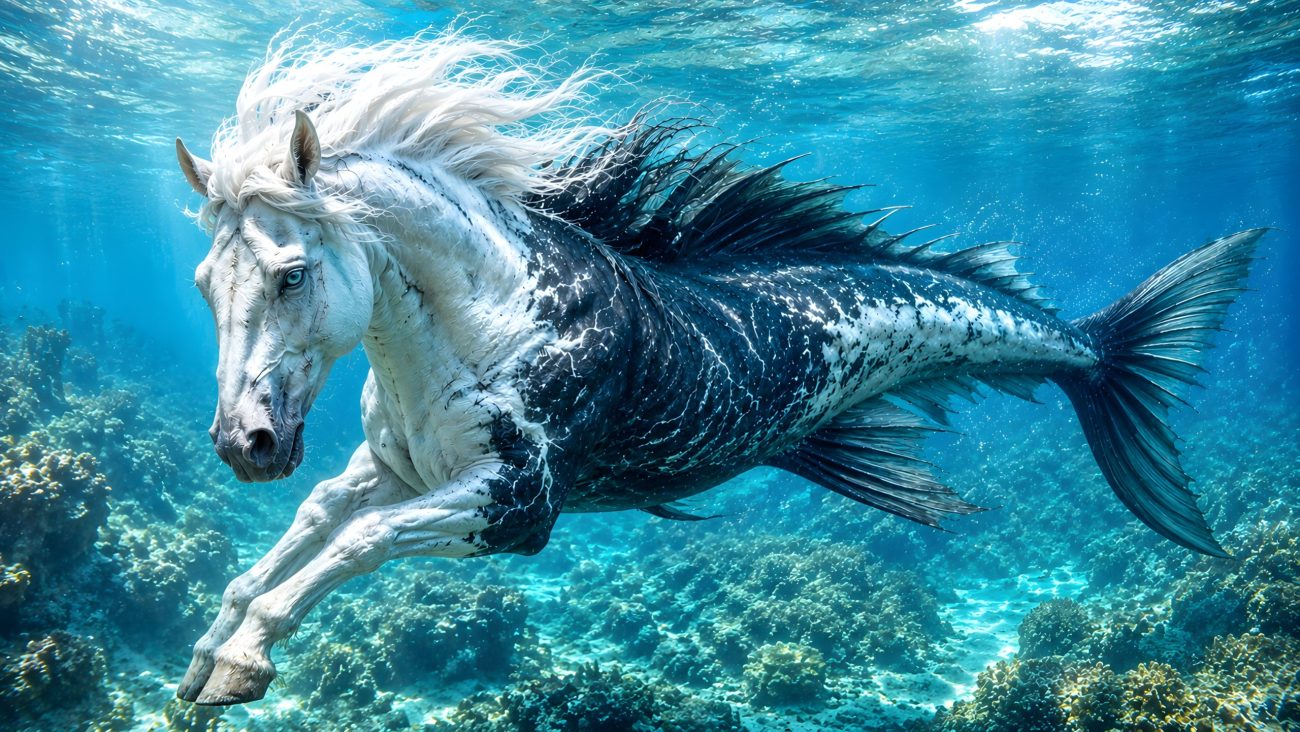
Peixe Caball is a strange sea creature from the folktales of Cape Verde, especially stories collected from the islands’ Lob and Tubinh trickster tradition.
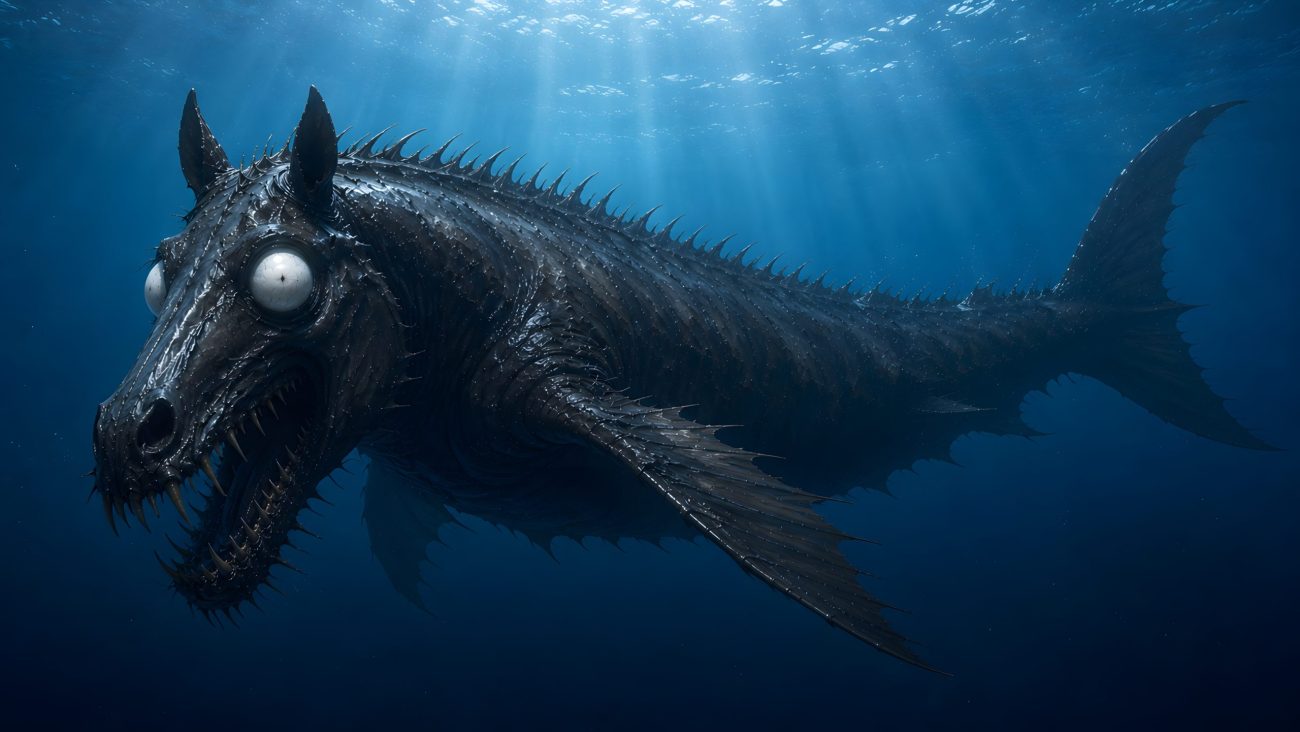
The creature is described as a fish with the head or upper body of a horse and the tail of a fish. In the tales, Peixe Caball lives in the sea and possesses intelligence, emotion, and supernatural strength.
One famous story tells how Lob, a greedy and cruel wolf-like trickster, became stranded on an island after borrowing feathers from birds to attend a dance. During the celebration, Lob insulted each bird one after another until they angrily reclaimed their feathers and abandoned him.
As Lob cried alone on the island, Peixe Caball appeared from the sea and asked what had happened. Feeling pity for him, the creature agreed to carry him safely back across the water.
While riding on Peixe Caball’s back, Lob secretly admired the creature’s large breasts and planned to tear one off once they reached shore. The moment they arrived on land, Lob attacked the creature and ripped away one of its breasts before fleeing.
Wounded and crying on the beach, Peixe Caball later encountered Tubinh, Lob’s clever nephew and enemy. Tubinh promised revenge and tricked Lob into returning to the shore by pretending the stranded creature was a giant cow. When Lob approached to kill it, Peixe Caball seized him and dragged him deep beneath the ocean.
At first Lob laughed and told his wife the creature was only “playing.” But Peixe Caball continued diving deeper and deeper until Lob finally realized he was about to die. The Horse-Fish drowned him beneath the sea, ending the tale.
Peixe Caball is unusual among Atlantic African folk beings because it combines traits of a mer-creature, sea spirit, and monstrous animal. Despite its frightening strength, the creature is not evil by nature. In the story, it acts more as a supernatural being capable of both mercy and vengeance, punishing betrayal and cruelty.
Sources
Parsons, E. C. (1917). Ten folk-tales from the Cape Verde Islands. The Journal of American Folklore, 30(116), 230–238.
Tradition / Region:Qatari Mythology Alternate Names: None Recorded Category:Fish
The Myth
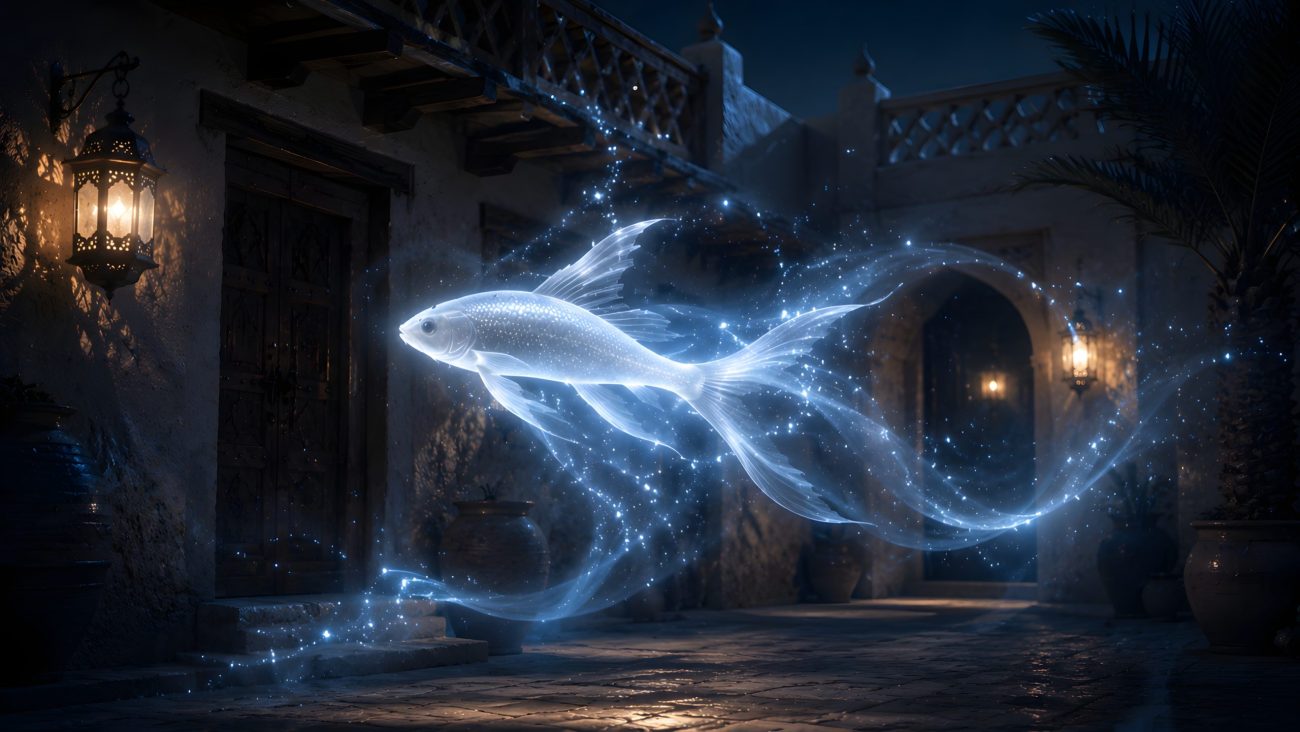
The Helpful Fish is a magical talking fish from Qatari folklore that appears in a Cinderella-like tale. Unlike dangerous sea spirits found in Gulf legends, the Helpful Fish is a benevolent creature connected to kindness, fortune, and reward. It lives in the sea and possesses supernatural powers, helping those who show it mercy. The fish is especially associated with granting food, wealth, fine clothing, jewelry, and good fortune to the innocent.
The story tells of a girl named Fsaijrah who lived under the cruelty of her stepmother. One day her stepmother ordered her to clean several fish by the seashore for dinner. As Fsaijrah prepared to cut the final small fish, it suddenly spoke and begged her not to kill it, promising to make her rich if she released it. Though afraid of angering her stepmother, Fsaijrah allowed the fish to escape back into the sea.
When she returned home and admitted one fish had escaped, her stepmother punished her by refusing her food. Later that night Fsaijrah was sent to throw fish bones into the sea, where the Helpful Fish appeared again. Waiting for her at the shore, it had prepared a tray of delicious food for her, rewarding her kindness.
Some time later a drums celebration was held. The stepmother dressed her own daughter in beautiful clothing and forbade Fsaijrah from attending. After they left, the Helpful Fish appeared carrying magnificent clothes, jewelry, and diamond slippers for the girl so she could secretly attend the celebration herself. Nobody recognized the beautifully dressed stranger as Fsaijrah.
As she rushed home before her stepfamily returned, one of her slippers fell into a well. The next day a shaikh discovered the glittering slipper and declared he would marry whichever woman it fit. The stepmother’s daughter failed to wear it, but when Fsaijrah tried it on, the slipper fit perfectly.
Before the wedding, the Helpful Fish returned one final time and dressed Fsaijrah in her most beautiful garments yet, covering her with pearls and red coral. Through the aid of the magical fish, the mistreated girl rose from suffering to wealth and marriage, while her stepmother’s daughter was left without the fortune she desired.
Sources
Taibah, N. J., & MacDonald, M. R. (n.d.). Folktales from the Arabian Peninsula: Tales of Bahrain, Kuwait, Oman, Qatar, Saudi Arabia, the United Arab Emirates, and Yemen. In World Folklore Series.
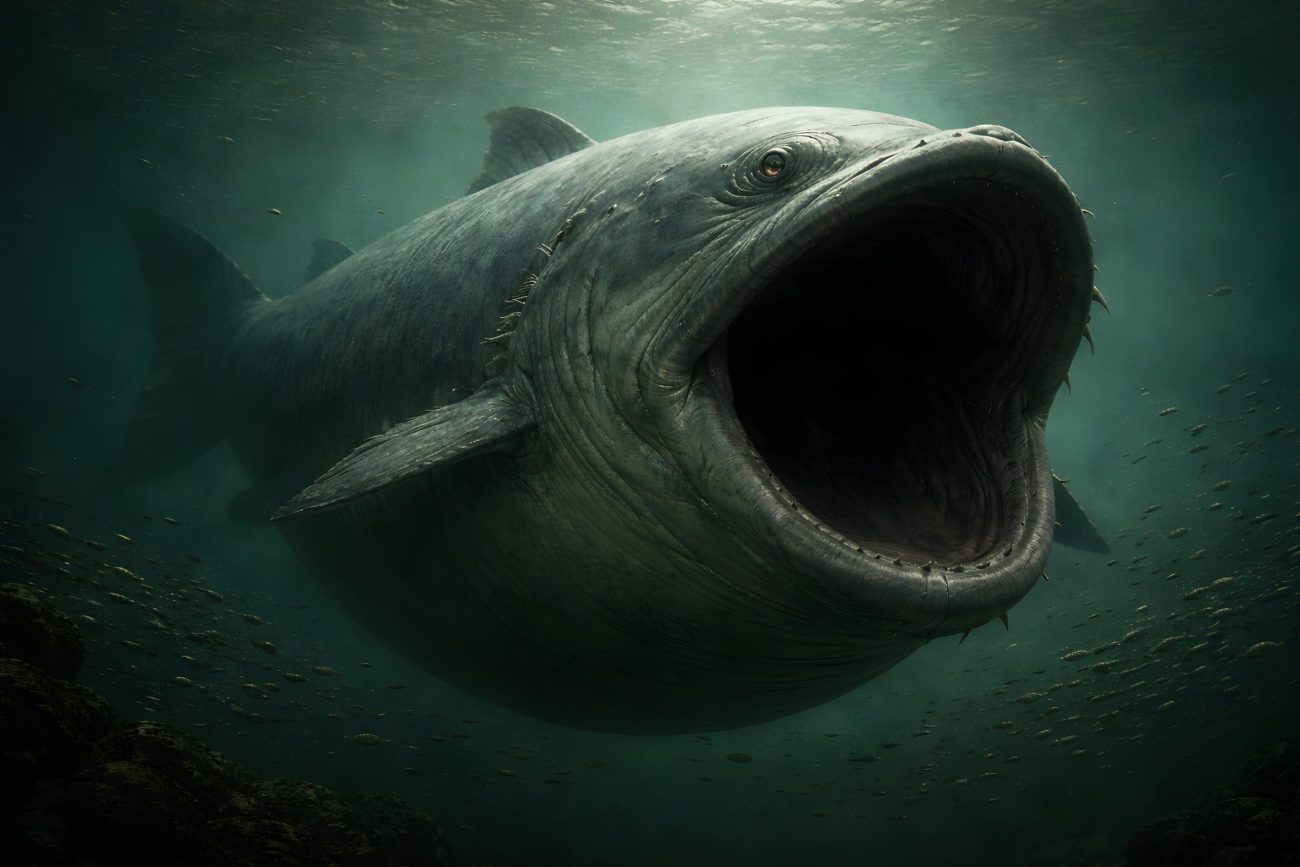
In the rivers and bays of the south lives Chipfalamfula, the River-Shutter—an enormous being whose true shape is uncertain, said by some to be a whale and by others a colossal catfish. It rules the waters completely, opening and closing them at will, bringing floods or drought as it pleases. Its body is so vast that its belly is a world of its own, filled with fertile land, cattle, and people who live there in peace, lacking nothing.
Once there was a girl named Chichinguane, the youngest daughter of Chief Makenyi. She was dearly loved by her father and bitterly hated by her older sisters. One day, when the sisters went to the river to gather clay, the eldest ordered Chichinguane to climb down into the pit and pass the clay up to her. Chichinguane obeyed, but when the tide rose, her sister abandoned her, leaving her to die in the flooding pit.
As Chichinguane lost hope, Chipfalamfula surfaced beside her and opened its immense mouth. Gently it spoke, telling her to come inside, promising safety and comfort. Chichinguane entered its body and lived there for many years, sharing in the abundance of the world within the River-Shutter.
Time passed, and one day the daughters of Makenyi came again to the river, singing as they carried water. Among them was a new youngest daughter, now treated with the same cruelty Chichinguane had once suffered. When the girl wept by the riverbank, Chichinguane emerged from the water, her body transformed and covered in shining silver scales. Angry at the song that told of her murder, she struck the girl, but seeing that the child did not recognize her, she relented and helped her carry the water. Then she returned to the river.
The two sisters met secretly after that, and Chichinguane finally revealed who she was. The youngest told their mother, who came to the river and tried to embrace her lost child. Chichinguane warned her not to hold her, for she now belonged to the water, and slipped from her grasp like an eel, vanishing beneath the surface.
Though she longed for her family, Chichinguane could not return until Chipfalamfula allowed it. At last, the River-Shutter released her and gave her a magic wand for protection. She returned home, and as she stepped onto land her silver scales fell away and became silver coins. She told her family of her betrayal and of the rich world inside Chipfalamfula.
Chichinguane pleaded for mercy for her eldest sister, but the woman soon betrayed her again, abandoning Chichinguane and the youngest sister in a tree. When monstrous ogres began cutting it down, Chichinguane used the wand to heal the tree again and again until the ogres grew tired. The sisters escaped and fled to the river, where Chichinguane struck the water with the wand and commanded Chipfalamfula to shut it. The river parted, and they crossed safely. When the ogres followed, the waters closed and drowned them.
The sisters returned home laden with riches taken from the ogres’ cave. But treachery could not be undone, and despite Chichinguane’s pleas, the eldest sister was put to death.
Thus Chipfalamfula remains in the deep—guardian, devourer, and master of water—opening and closing the river as fate demands.
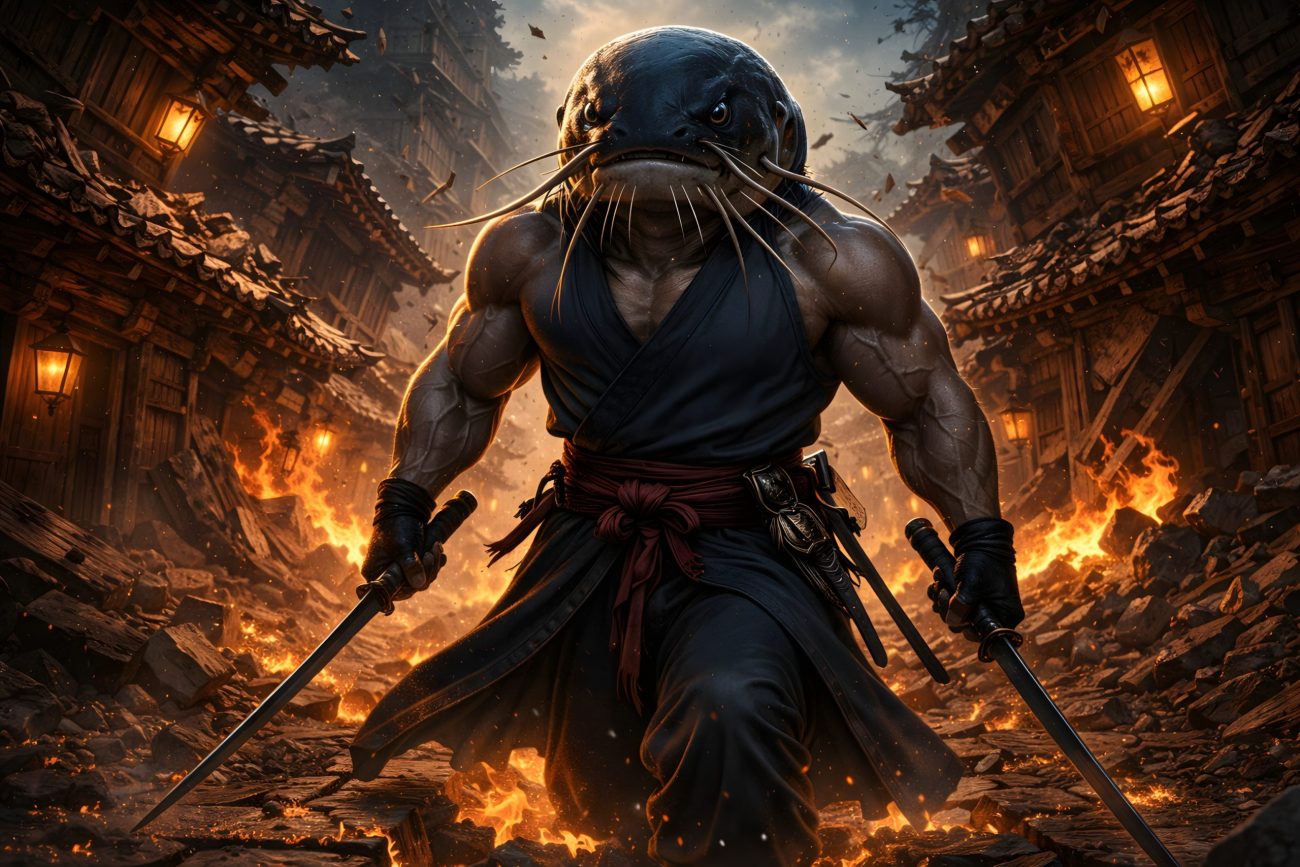
One night, during the Ansei era, a wandering rōnin arrived at a guardhouse in Edo and begged for shelter and food. He was tall, powerfully built, and strange in appearance, like a man hardened by severe training. The guards refused him, saying the guardhouse was not a place for lodging, and told him to seek an inn elsewhere.
At this, the man’s face grew pale.
He declared, “I am Tenchishindousai. There is none who does not know my name. Yet because the land has been calm for many years, people have grown contemptuous. They catch my kin, roast them, stew them, and kill them without cause. I have come to avenge them.”
He spoke of his journey: how he had shaken people to death at temple gatherings, how he had passed through province after province—mountains, capitals, and ports—causing the earth to tremble beneath his feet. Now, he said, he had arrived in Edo.
When the guards realized he claimed to be the Earthquake itself, they tried to seize him. Enraged, Tenchishindousai vanished on the spot.
At once, heaven and earth roared. The ground convulsed violently. Houses collapsed, storehouses fell, fires erupted across the city, and countless people were crushed or burned. Amid the devastation, Tenchishindousai spoke again, saying that the gods were absent from the land—and that if the deity who pins the earth were to arrive, the destruction would grow even greater.
With that, he fled north.
Those who saw his true form said his face was that of a giant catfish, the ancient creature that writhes beneath the land and shakes the world when angered. Thus the people believed the great earthquake was not chance, but revenge—carried out by Tenchishindousai, the living will of the trembling earth.