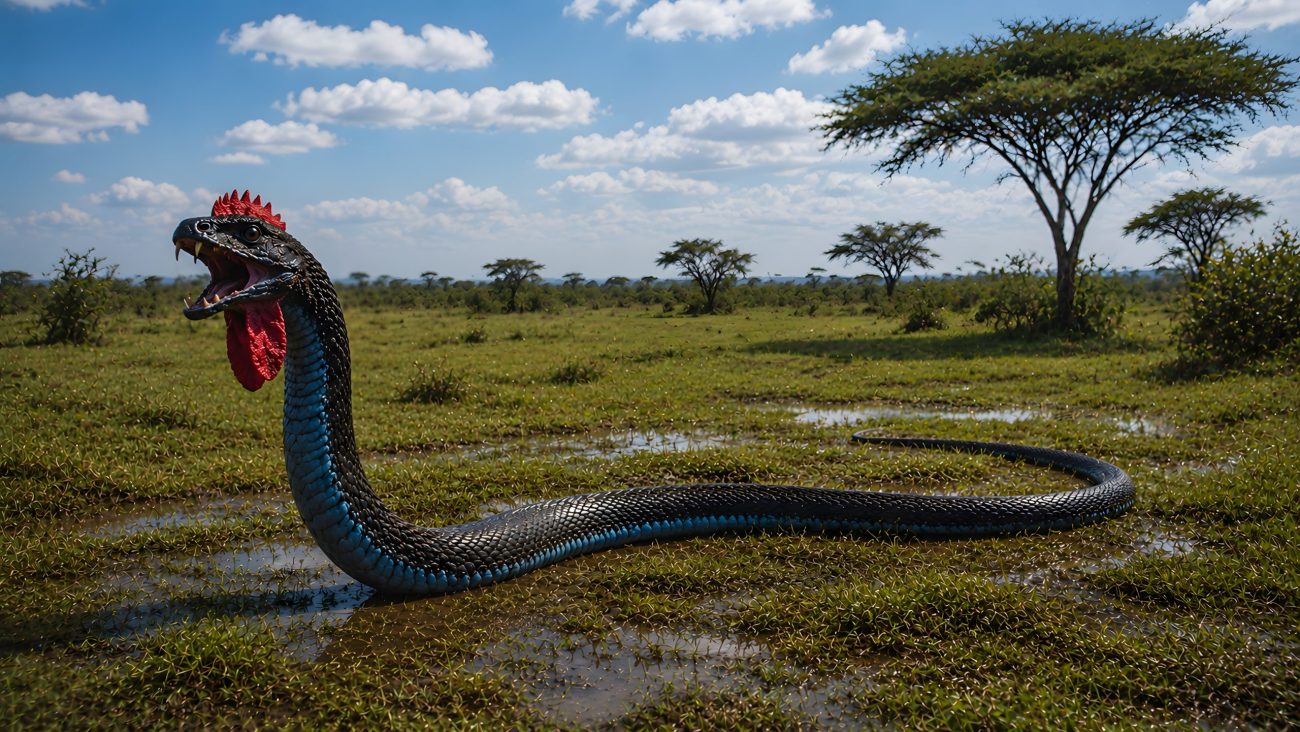
Crowing Crested Cobra

Tradition / Region: Botswana Mythology, Malawi Mythology, South African Mythology, Kenyan Mythology, Mozambique Mythology
Also Known As: Njoka Tambala, Bubu, Hongo, Indlondlo, Inkhomi, Kovoko, Limba, Nguluka, Ngoshe, Noga-putsane, Songo, Songwe
Category: Snake


The Myth

The Crowing Crested Cobra is a legendary serpent found throughout East African folklore. It is usually described as a huge venomous snake resembling a cobra but distinguished by a fleshy crest on its head, sometimes accompanied by rooster-like wattles. Unlike ordinary snakes, it is said to make strange animal sounds, especially crowing like a rooster, though some traditions describe bell-like cries, clucking noises, or even goat-like bleating.

Stories portray the creature as extremely dangerous. It hides in trees, near paths, or in tall grass, striking travelers without warning. Some legends describe it attacking several people in succession before retreating into holes or dense vegetation. The serpent is often said to move with unnatural speed and to climb trees with ease.

In parts of Mozambique, the creature was known as the Bubu, a massive dark snake marked with red growths resembling a rooster’s comb. Other traditions describe male snakes crowing loudly while females cluck softly. Some accounts claim the creature kills indiscriminately and is associated with sorcery, witchcraft, and powerful magical medicines.

Across East Africa, related serpent legends appear under many names. Some versions possess feather-like crests, others have birdlike traits, and certain stories even describe snake creatures whose cries lure victims toward them at night.

The creature became one of the most widespread serpent legends in African folklore, blending features of deadly snakes, birds, and supernatural omens into a single feared being.


Sources

A Book of Creatures. (2021, June 25). Crowing crested cobra. Retrieved May 10, 2026, from https://abookofcreatures.com/2021/06/25/crowing-crested-cobra/


Chipfalamfula

Tradition / Region: Bantu mythology, Mozambique Mythology
Alternate Names: River-Shutter
Category: Fish


The Myth

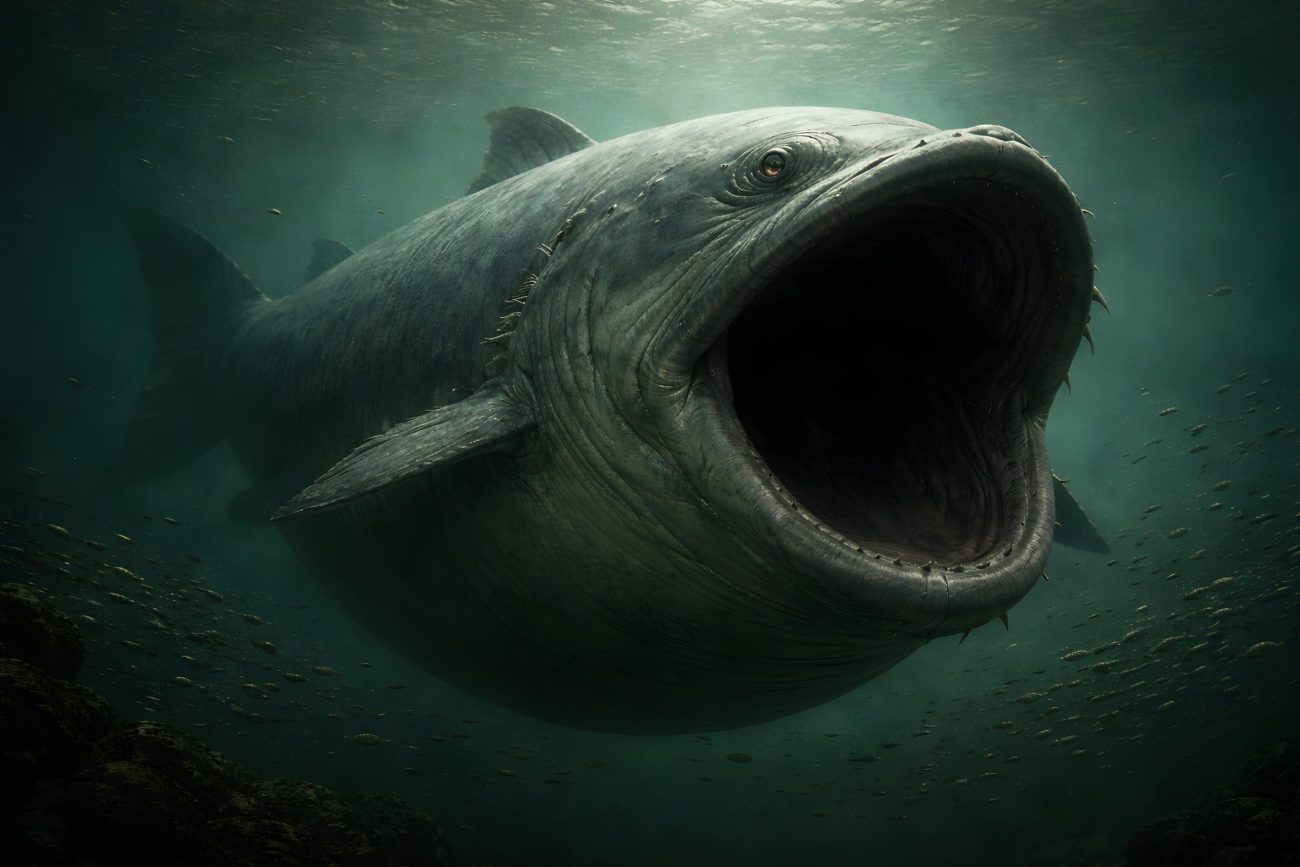
In the rivers and bays of the south lives Chipfalamfula, the River-Shutter—an enormous being whose true shape is uncertain, said by some to be a whale and by others a colossal catfish. It rules the waters completely, opening and closing them at will, bringing floods or drought as it pleases. Its body is so vast that its belly is a world of its own, filled with fertile land, cattle, and people who live there in peace, lacking nothing.

Once there was a girl named Chichinguane, the youngest daughter of Chief Makenyi. She was dearly loved by her father and bitterly hated by her older sisters. One day, when the sisters went to the river to gather clay, the eldest ordered Chichinguane to climb down into the pit and pass the clay up to her. Chichinguane obeyed, but when the tide rose, her sister abandoned her, leaving her to die in the flooding pit.

As Chichinguane lost hope, Chipfalamfula surfaced beside her and opened its immense mouth. Gently it spoke, telling her to come inside, promising safety and comfort. Chichinguane entered its body and lived there for many years, sharing in the abundance of the world within the River-Shutter.

Time passed, and one day the daughters of Makenyi came again to the river, singing as they carried water. Among them was a new youngest daughter, now treated with the same cruelty Chichinguane had once suffered. When the girl wept by the riverbank, Chichinguane emerged from the water, her body transformed and covered in shining silver scales. Angry at the song that told of her murder, she struck the girl, but seeing that the child did not recognize her, she relented and helped her carry the water. Then she returned to the river.

The two sisters met secretly after that, and Chichinguane finally revealed who she was. The youngest told their mother, who came to the river and tried to embrace her lost child. Chichinguane warned her not to hold her, for she now belonged to the water, and slipped from her grasp like an eel, vanishing beneath the surface.

Though she longed for her family, Chichinguane could not return until Chipfalamfula allowed it. At last, the River-Shutter released her and gave her a magic wand for protection. She returned home, and as she stepped onto land her silver scales fell away and became silver coins. She told her family of her betrayal and of the rich world inside Chipfalamfula.

Chichinguane pleaded for mercy for her eldest sister, but the woman soon betrayed her again, abandoning Chichinguane and the youngest sister in a tree. When monstrous ogres began cutting it down, Chichinguane used the wand to heal the tree again and again until the ogres grew tired. The sisters escaped and fled to the river, where Chichinguane struck the water with the wand and commanded Chipfalamfula to shut it. The river parted, and they crossed safely. When the ogres followed, the waters closed and drowned them.

The sisters returned home laden with riches taken from the ogres’ cave. But treachery could not be undone, and despite Chichinguane’s pleas, the eldest sister was put to death.

Thus Chipfalamfula remains in the deep—guardian, devourer, and master of water—opening and closing the river as fate demands.


Gallery


Sources

A Book of Creatures contributors. (n.d.). Chipfalamfula. In A Book of Creatures, from https://abookofcreatures.com/2017/02/20/chipfalamfula/


Interpretive Lenses

Religious Readings
  • Christian Ascetic Deep Dive
Philosophical Readings
  • Nietzschean Deep Dive
Psychological Readings
  • Jungian Deep Dive
Esoteric Deep Dive
  • Hermetic Deep Dive
Political / Social Readings
  • Marxist Deep Dive
Other
  • How to Invite The Chipfalamfula