Mokele-Mbembe

Tradition / Region: Congo Mythology, Bantu Mythology
Alternate Names: Mokèlé-mbèmbé
Category: Lizard, Lake dweller


The Myth

Deep within the rivers, swamps, and dense jungles of the Congo Basin, there are stories of a powerful and mysterious being known as Mokele-Mbembe. It is said to dwell in remote waterways—hidden lakes, slow-moving rivers, and thick marshlands where the water is dark and the vegetation nearly impenetrable.

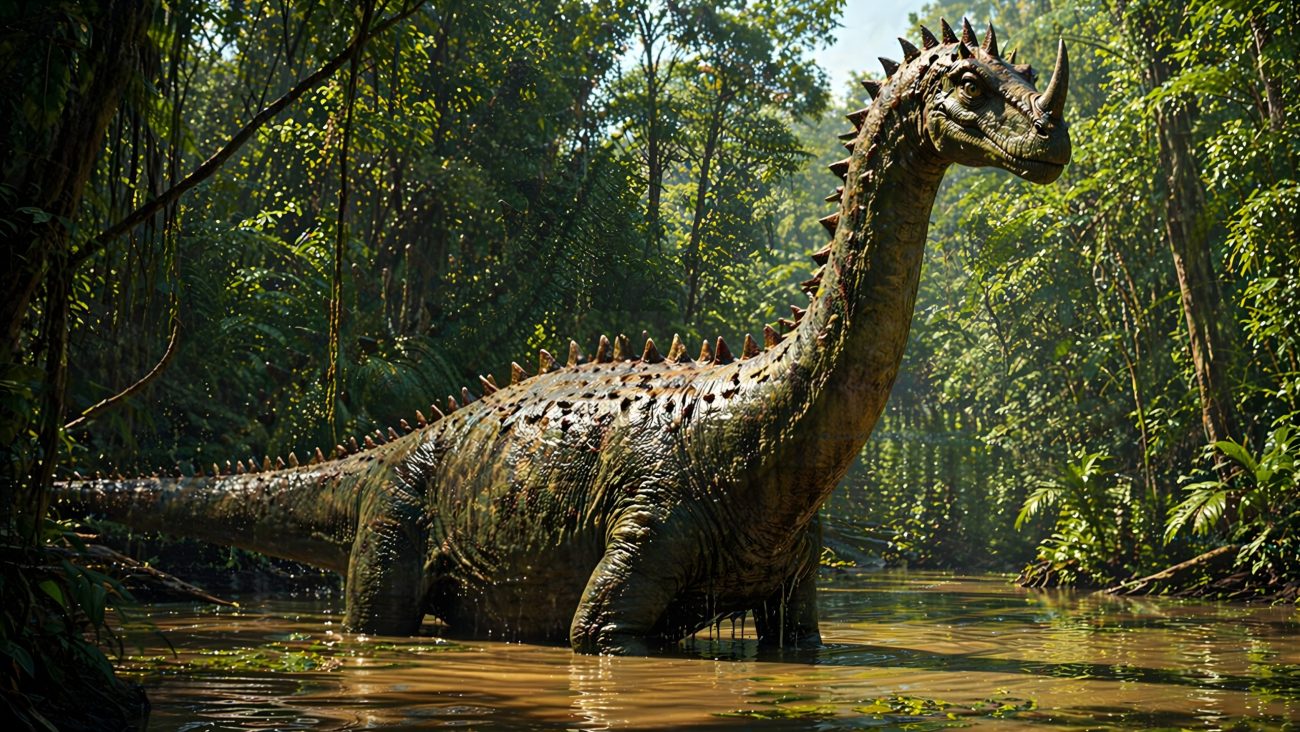
The creature is described as enormous, with a body comparable in size to an elephant or hippopotamus. Its form is unlike any ordinary animal: a heavy, muscular body, a long flexible neck, a small head often compared to that of a snake, and a long tail that moves through the water with great force. Its skin is smooth and dark, usually said to be reddish-brown or gray.

Mokele-Mbembe is not just large—it is territorial and feared.

It is said to guard certain stretches of river and will attack intruders, especially boats or canoes that pass too close. Those who encounter it risk being overturned into the water, where they may drown or disappear entirely. In many accounts, the creature destroys vessels without consuming the people, suggesting that its aggression is not driven by hunger but by dominance over its domain.

Unlike typical monsters, it is often described as herbivorous. It feeds on vegetation growing along riverbanks—particularly certain plants with large leaves or white blossoms. Despite this, it reacts violently to disturbance, making it one of the most feared beings of the waterways.

Mokele-Mbembe is said to live in deep, hidden places—caves carved into riverbanks or secluded bends in the water where the current slows. It moves between land and water, sometimes emerging during the day to feed, leaving behind paths where vegetation has been trampled or pushed aside.

Its presence is rarely seen directly. Instead, it is known through signs: massive disturbances in the water, sudden waves in otherwise still areas, broken plants along the shore, or the feeling that something enormous is moving just beneath the surface.

In some traditions, it is described almost like a guardian spirit of the river—an embodiment of its danger and power. It does not hunt humans for food, but it enforces boundaries. Those who respect the river may never encounter it. Those who intrude carelessly may not return.


Sources

Wikipedia contributors. (n.d.). Mokele-mbembe. In Wikipedia, from https://en.wikipedia.org/wiki/Mokele-mbembe
Devouring Gourd

Tradition / Region: Bantu Mythology, Congolese Mythology
Alternate Names: Man-Eating Gourd, Usambara Gourd
Category: Plant


The Myth

In some lands it is said that when a powerful sorcerer or ogre dies, the earth where they fall may grow strange plants. From that soil can rise gourds and pumpkins that are no longer harmless crops, but living beings with hunger and will.

One such gourd once grew in Usambara. A group of boys playing nearby noticed it swelling larger and larger. One of them laughed and said, “Look at how big that gourd is getting!”
To their shock, the gourd answered, “If you pluck me, I’ll pluck you!”

The boys fled and told their mother, but she did not believe them. Their sisters went to see for themselves and repeated the same words. This time the gourd remained silent, and the girls returned home mocking their brothers.

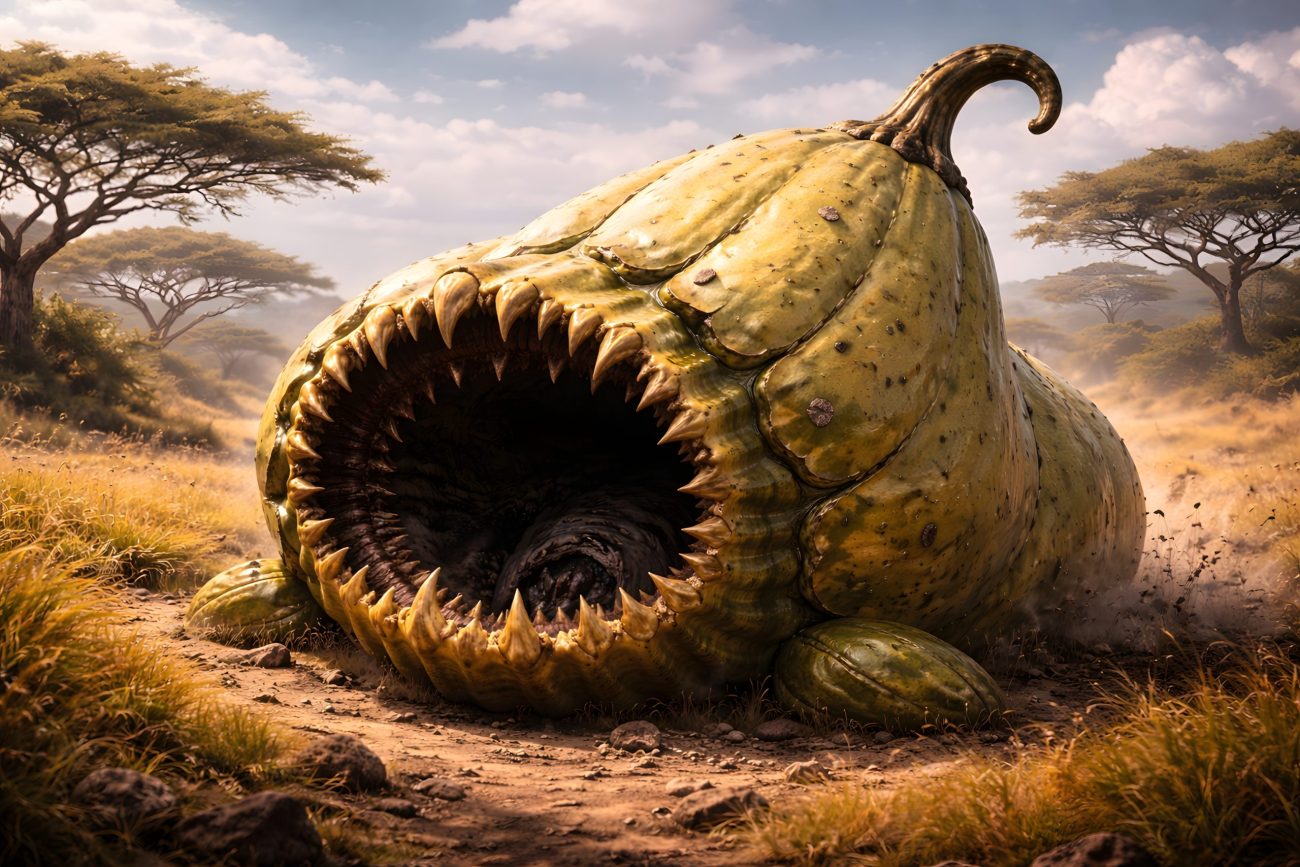
Since no one dared pick it, the gourd kept growing. It swelled until it was as large as a house. Then one day it tore itself free from the earth and began to move. Rolling through the village, it swallowed everyone it found, devouring men, women, and children alike. When no one remained, it rolled into a nearby lake and settled beneath the water.

Only one woman survived, and she was with child. She gave birth to a son, and the two lived alone among the empty huts. When the boy grew older, he asked about his father. His mother told him that the man had been swallowed by the great gourd now lying in the lake.

The boy vowed to avenge him. He went to the shore, where parts of the monster could be seen above the water, and shouted insults to provoke it.

“Gourd, come out!”

Angered, the creature rose from the lake and rolled toward him. But the boy was ready. He shot arrow after arrow into its body. When the tenth arrow struck, the gourd gave a thunderous roar that echoed across the land and fell dead. The boy cut it open, and all the villagers came out alive from inside it. In time he became a great leader among his people.

Other tales speak of similar plants. A pumpkin once grew over the grave of a wicked shapeshifter and echoed every word spoken to it until it swallowed those who came to cut it down. Among the Ronga, poisonous fruits are said to walk with arms and legs, carrying spears and shields.

Thus in these stories, the quiet plants of the earth may hide something terrible — and when they grow from places touched by evil, they may rise not to feed people, but to devour them.


Gallery


Sources

A Book of Creatures. (n.d.). Devouring Gourd. Retrieved March 1, 2026, from https://abookofcreatures.com/?s=Devouring+Gourd


Interpretive Lenses

Religious Readings
  • Christian Ascetic Deep Dive
Philosophical Readings
  • Nietzschean Deep Dive
Psychological Readings
  • Jungian Deep Dive
Esoteric Deep Dive
  • Hermetic Deep Dive
Political / Social Readings
  • Marxist Deep Dive

Chipfalamfula

Tradition / Region: Bantu mythology, Mozambique Mythology
Alternate Names: River-Shutter
Category: Fish


The Myth

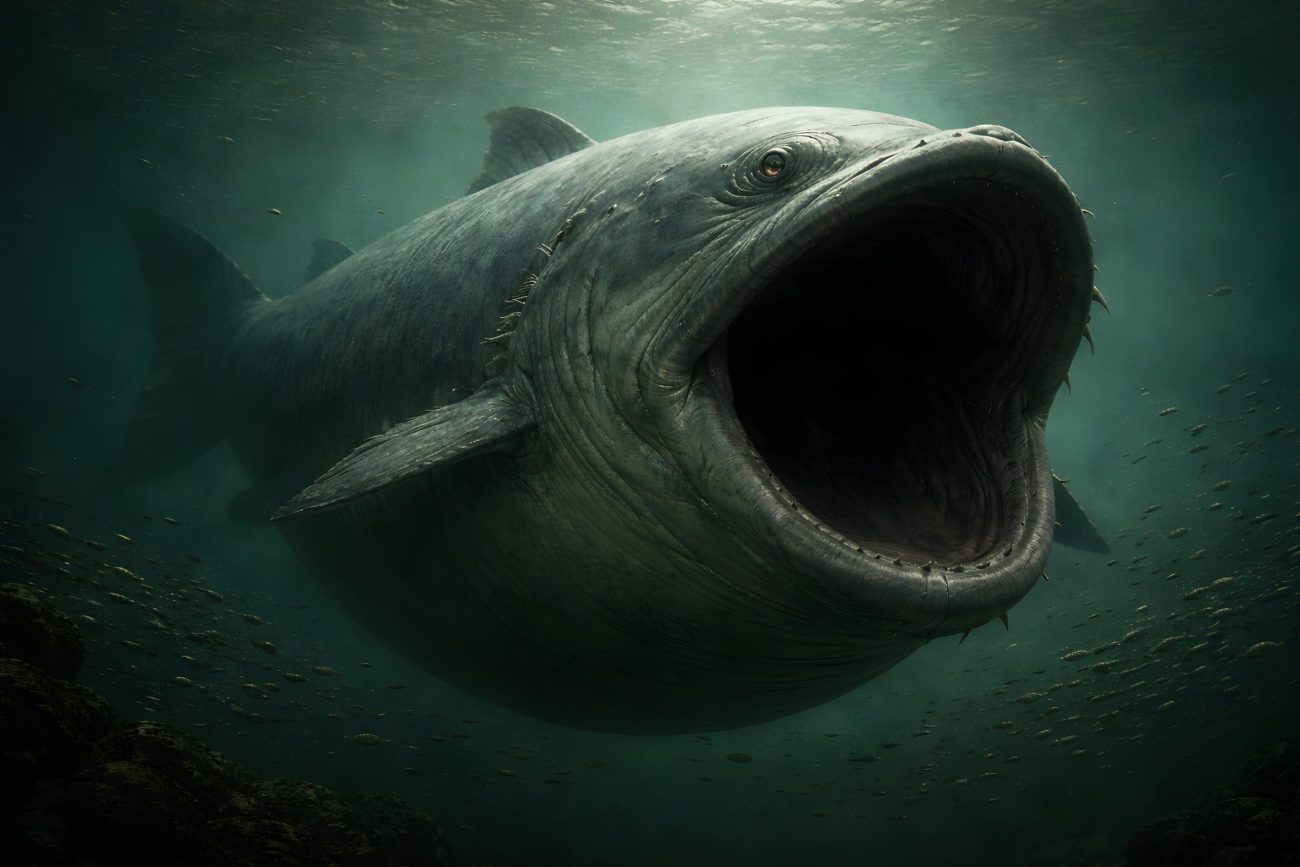
In the rivers and bays of the south lives Chipfalamfula, the River-Shutter—an enormous being whose true shape is uncertain, said by some to be a whale and by others a colossal catfish. It rules the waters completely, opening and closing them at will, bringing floods or drought as it pleases. Its body is so vast that its belly is a world of its own, filled with fertile land, cattle, and people who live there in peace, lacking nothing.

Once there was a girl named Chichinguane, the youngest daughter of Chief Makenyi. She was dearly loved by her father and bitterly hated by her older sisters. One day, when the sisters went to the river to gather clay, the eldest ordered Chichinguane to climb down into the pit and pass the clay up to her. Chichinguane obeyed, but when the tide rose, her sister abandoned her, leaving her to die in the flooding pit.

As Chichinguane lost hope, Chipfalamfula surfaced beside her and opened its immense mouth. Gently it spoke, telling her to come inside, promising safety and comfort. Chichinguane entered its body and lived there for many years, sharing in the abundance of the world within the River-Shutter.

Time passed, and one day the daughters of Makenyi came again to the river, singing as they carried water. Among them was a new youngest daughter, now treated with the same cruelty Chichinguane had once suffered. When the girl wept by the riverbank, Chichinguane emerged from the water, her body transformed and covered in shining silver scales. Angry at the song that told of her murder, she struck the girl, but seeing that the child did not recognize her, she relented and helped her carry the water. Then she returned to the river.

The two sisters met secretly after that, and Chichinguane finally revealed who she was. The youngest told their mother, who came to the river and tried to embrace her lost child. Chichinguane warned her not to hold her, for she now belonged to the water, and slipped from her grasp like an eel, vanishing beneath the surface.

Though she longed for her family, Chichinguane could not return until Chipfalamfula allowed it. At last, the River-Shutter released her and gave her a magic wand for protection. She returned home, and as she stepped onto land her silver scales fell away and became silver coins. She told her family of her betrayal and of the rich world inside Chipfalamfula.

Chichinguane pleaded for mercy for her eldest sister, but the woman soon betrayed her again, abandoning Chichinguane and the youngest sister in a tree. When monstrous ogres began cutting it down, Chichinguane used the wand to heal the tree again and again until the ogres grew tired. The sisters escaped and fled to the river, where Chichinguane struck the water with the wand and commanded Chipfalamfula to shut it. The river parted, and they crossed safely. When the ogres followed, the waters closed and drowned them.

The sisters returned home laden with riches taken from the ogres’ cave. But treachery could not be undone, and despite Chichinguane’s pleas, the eldest sister was put to death.

Thus Chipfalamfula remains in the deep—guardian, devourer, and master of water—opening and closing the river as fate demands.


Gallery


Sources

A Book of Creatures contributors. (n.d.). Chipfalamfula. In A Book of Creatures, from https://abookofcreatures.com/2017/02/20/chipfalamfula/


Interpretive Lenses

Religious Readings
  • Christian Ascetic Deep Dive
Philosophical Readings
  • Nietzschean Deep Dive
Psychological Readings
  • Jungian Deep Dive
Esoteric Deep Dive
  • Hermetic Deep Dive
Political / Social Readings
  • Marxist Deep Dive
Other
  • How to Invite The Chipfalamfula