Viesulis

Tradition / Region: Latvian Mythology
Alternate Names: Whirlwind Spirit
Category: Spirit


The Myth

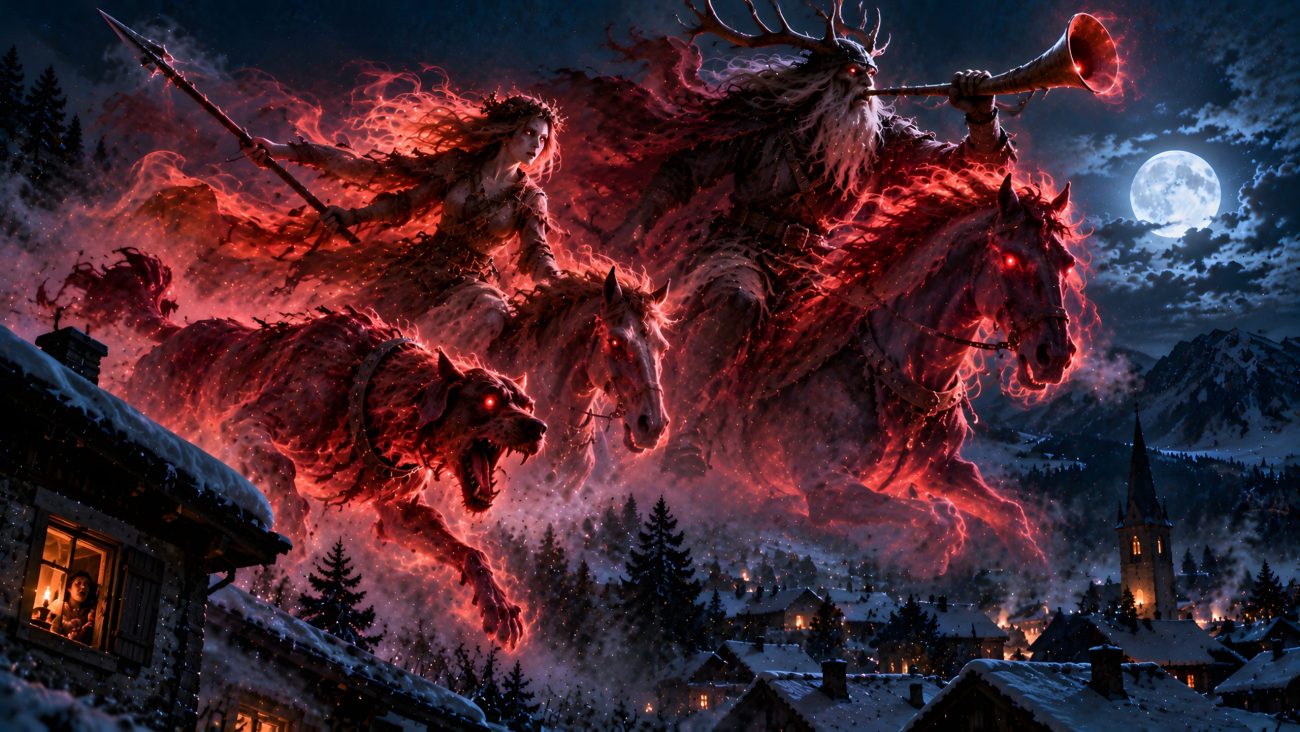
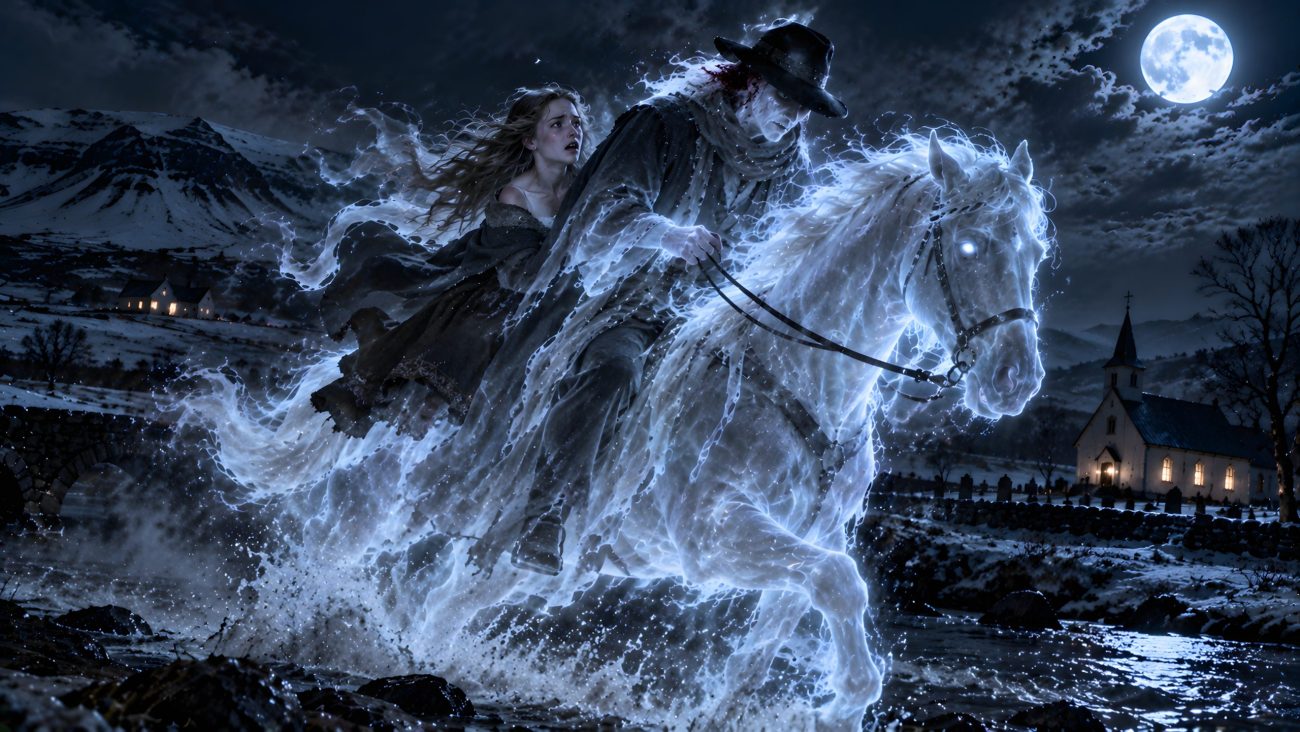
Viesulis is a destructive whirlwind entity from Latvian epic tradition, most notably appearing in the works of Andrejs Pumpurs. It is not merely natural wind, but a supernatural force associated with chaos, divine conflict, and demonic influence.

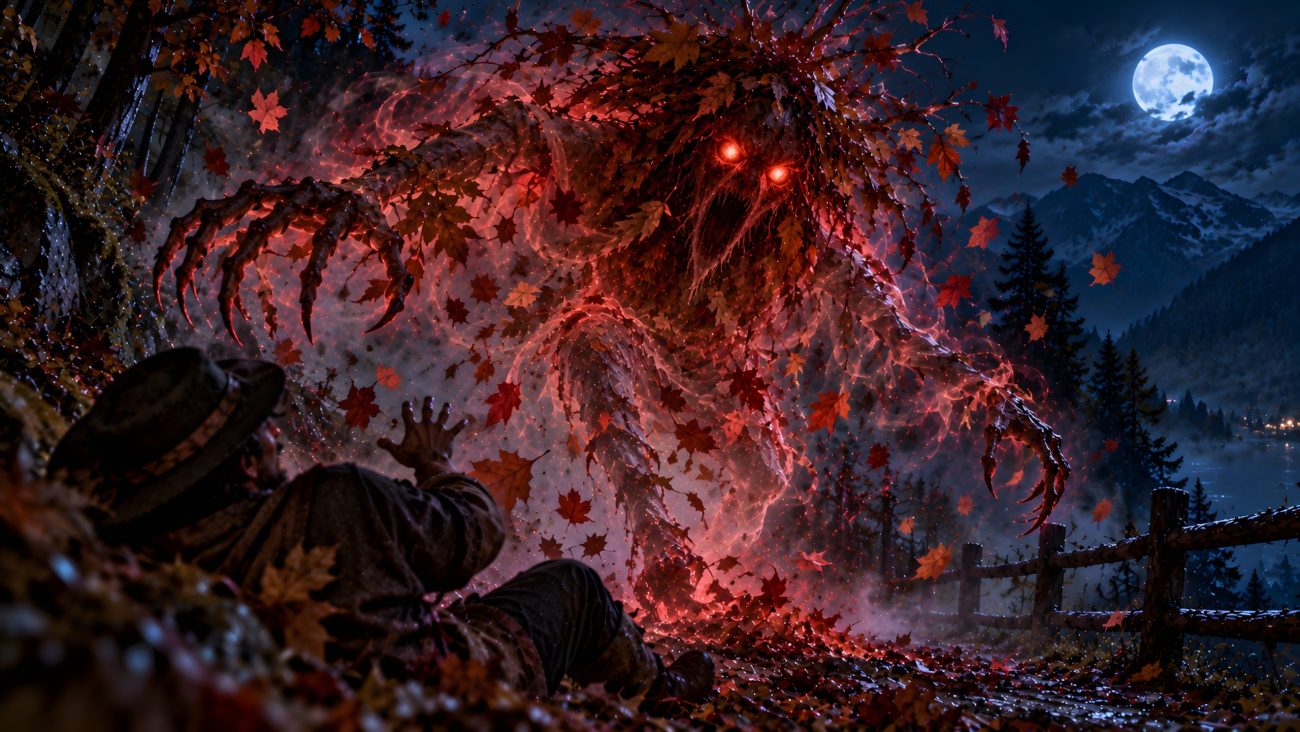
Viesulis manifests as a violent, living storm — a spiraling whirlwind capable of reshaping the land. In the myth, it is sent by dark forces (the devil or opposing powers) as a weapon, descending from the sky with destructive intent. It is not random: it acts with purpose, targeting specific places.

When it appears, it brings catastrophic consequences. In one account, a whirlwind descends upon the Burtnieki lands, and through human interference and misjudgment, it causes a lake to collapse into the earth, burying a castle beneath it. This shows that Viesulis is not only destructive by nature, but also amplifies the consequences of human actions.

Unlike witches or sorcerers, Viesulis does not speak, scheme, or deceive. Its power lies in raw force — wind, pressure, and motion — acting as an instrument of higher supernatural will rather than an independent thinker.

Viesulis exists between natural and supernatural realms, embodying the idea that storms are not just weather, but manifestations of unseen powers. It represents sudden disaster, divine punishment, or chaos unleashed upon the world.


Sources

AILAB contributors. (n.d.). Pumpurs – Lāčplēsis (3. daļa). In AILAB, from https://web.archive.org/web/20060131100844/http://www.ailab.lv/Teksti/Senie/Pumpurs/3.dala.html

Pumpurs, A. (1888). Lāčplēsis (Bearslayer), III Song: Kangar and Dieterich – The War with the Estonians – The Sunken Castle of the Witches. In Latvian national epic poetry.


Līkcepure

Tradition / Region: Latvian Mythology
Alternate Names: Nagcepure
Category: Sorcerer


The Myth

Līkcepure is described as the chief of witches, a powerful supernatural figure distinguished by a crooked hat with a brim made from human cut nails, and referred to as lame.

In the story, during the witches’ gathering inside the devil’s pit, Līkcepure appears after the others have performed their rituals. He emerges hissing and is identified as the leader among the witches. He asks whether everything is prepared, and upon confirmation, strikes a block with an axe. The room fills with fire, and the block transforms into a golden chariot, while the axe becomes a dragon harnessed to it.

He rides with the old witch and takes part in the gathering where the dragon breathes sparks and smoke. When a man named Kangars is brought before him, Līkcepure declares that his time has come and orders that he be thrown into the dragon’s throat. After Kangars begs for more time, Līkcepure offers to spare him if he agrees to certain conditions. Kangars accepts, and Līkcepure grants him additional years.

After this, Līkcepure announces that the matter is finished, departs with the witch, and disappears as fire fills the chamber again.


Sources

AILAB contributors. (n.d.). Pumpurs – Lāčplēsis (2. daļa). In AILAB, from https://web.archive.org/web/20060131100630/http://www.ailab.lv/Teksti/Senie/Pumpurs/2.dala.html

Pumpurs, A. (1888). Lāčplēsis (Bearslayer), II Song: The Bear-World’s First Heroic Deed. In Latvian national epic poetry.


Uguns pūķis

Tradition / Region: Latvian Mythology
Alternate Names:
Category: Dragon


The Myth

The Uguns pūķis appears as a fire-associated dragon connected to witches and magical activity, seen carrying goods through the night.

In the story, as Lāčplēsis follows Spīdola and enters the dark supernatural setting, dragons with tails are seen moving through the night. These dragons carry money and belongings while flying, and fiery sparks come from them as they move. They appear together with witches and other supernatural beings in the same environment.

Later, a dragon is also seen in connection with the witches’ gathering, where it is bound to a transformed object and breathes out sparks and smoke. It remains present as part of the witches’ actions and surroundings.


Sources

AILAB contributors. (n.d.). Pumpurs – Lāčplēsis (2. daļa). In AILAB, from https://web.archive.org/web/20060131100630/http://www.ailab.lv/Teksti/Senie/Pumpurs/2.dala.html

Pumpurs, A. (1888). Lāčplēsis (Bearslayer), II Song: The Bear-World’s First Heroic Deed. In Latvian national epic poetry.


Giant Bat

Tradition / Region: Latvian Mythology
Alternate Names:
Category: Bat


The Myth

The Giant Bat appears in the underworld setting of the Devil’s Pit, where unnatural creatures inhabit a dark subterranean space entered by Lāčplēsis while following witches.

As Lāčplēsis descends into the pit, deep darkness surrounds him and large bats fly around his head. They move through the air within the underground space together with other creatures such as snakes, owls, and toads. The bats remain present in the smoky, dimly lit environment as he continues deeper into the place where the witches gather.


Sources

AILAB contributors. (n.d.). Pumpurs – Lāčplēsis (2. daļa). In AILAB, from https://web.archive.org/web/20060131100630/http://www.ailab.lv/Teksti/Senie/Pumpurs/2.dala.html

Pumpurs, A. (1888). Lāčplēsis (Bearslayer), II Song: The Bear-World’s First Heroic Deed. In Latvian national epic poetry.


Ördög

Tradition / Region: Hungarian Mythology
Alternate Names: Ürdüng (Old Hungarian)
Category: Demon


The Myth

The Ördög is a shape-shifting demonic being in Hungarian mythology, representing dark and destructive forces. In earlier traditions, he was not purely identical to the Christian devil, but after Christianization he became directly associated with the concept of Satan.

In some accounts, the Ördög even plays a role in the creation of the world, acting as a helper or counterpart to God. This reflects an older dualistic belief system where opposing forces both contributed to existence.

He is commonly described as a humanoid creature with goat-like features: horns, cloven hooves, and a tail, resembling a satyr or faun. His body is often depicted as black, and he may carry a pitchfork. However, he is not limited to this form and is known for his ability to shapeshift.

When appearing among humans, the Ördög may take the form of a fox, a dark flame, or even a human—often a shepherd with unsettling, glowing eyes. He is said to hide within walls, making strange, high-pitched noises to disturb or influence people.

The Ördög is strongly associated with the underworld, known as Pokol, where he stirs a great cauldron filled with the souls of sinful humans. However, this idea may be influenced by later Christian beliefs, as earlier traditions did not necessarily describe the underworld strictly as a place of punishment.

A defining trait of the Ördög is his tendency to make bargains or bets with humans. Through these deals, he attempts to corrupt individuals and claim their souls. His ultimate goal is the accumulation of human souls, making him a persistent and dangerous adversary in Hungarian folklore.


Sources

Wikipedia contributors. (n.d.). Ördög. In Wikipedia, from https://en.wikipedia.org/wiki/%C3%96rd%C3%B6g


Tündér

Tradition / Region: Hungarian Folklore
Alternate Names:
Category: Fairy


The Myth

The tündér is a supernatural being in Hungarian folklore, often appearing as a beautiful woman with magical abilities, including granting wishes.

A poor couple lived together and loved each other, but they were very poor and sometimes argued because of it. One evening, the husband returned home and told his wife that on the road he had encountered a beautiful woman sitting in a golden carriage pulled by black dogs. The carriage had been stuck in the mud, and he helped her out. The woman then revealed that she was a tündér and promised to grant three wishes to his wife.

At home, the husband told his wife to try wishing for something. She wished for a sausage, and immediately a large sausage appeared in a pot from the chimney. They were happy and began planning how to use the remaining wishes wisely. While preparing to eat, the husband accidentally knocked the pot into the fire. The wife, upset, wished that the sausage would grow onto her husband’s nose. At once, the sausage appeared hanging from his nose.

They argued about what to do. The husband did not want to cut it off, and after a long dispute, they used their final wish to return the sausage to the pot. With this, all three wishes were gone, and they remained as poor as before.

They ate the sausage and realized that their arguing had caused them to waste the wishes. After that, they decided to live in peace and stopped quarreling. Over time, through work and thrift, they improved their lives.


Sources

László, B. (ed.). (1982). Hungarian Folktale Catalog 3: Types of Hungarian legendary tales (AaTh 750–849). In Budapest: MTA Ethnographic Research Group.


Sárkány

Tradition / Region: Hungarian Mythology
Alternate Names:
Category: Dragon


The Myth

The sárkány is a large and powerful mythical creature, typically described as a reptilian being with magical or spiritual properties. In Hungarian tradition, it may also appear as a humanoid figure and often has multiple heads.

Creatures identified as dragons appear in many cultures and likely do not share a single origin. Similar beings are found in ancient mythologies such as Mesopotamian and Akkadian traditions, where serpent-like or dragon-like creatures already existed. In European and Persian traditions, dragons are generally hostile, while in other cultures they may be benevolent.

In Hungarian belief, the meaning of the word sárkány changed over time. During earlier periods it could refer to a title or role, but later became associated with the monstrous dragon known from Western-Christian traditions.

In folklore and fairy tales, the sárkány is commonly a dangerous, multi-headed enemy. It is often connected with storms or whirlwinds and may appear together with violent weather. Many stories describe encounters between humans and such creatures, where the sárkány proves deadly and difficult to defeat.


Sources

Wikipedia contributors. (n.d.). Sárkány (mitológia). In Wikipedia, from https://hu.wikipedia.org/wiki/S%C3%A1rk%C3%A1ny_%28mitol%C3%B3gia%29


Vadleány

Tradition / Region: Hungarian Mythology
Alternate Names: Wild Maiden
Category: Nymph


The Myth

The Vadleány is a mysterious and dangerous forest spirit from Hungarian folklore, closely related to nymphs or dryads. Her name literally means “wild girl,” reflecting her untamed and primal nature.

She is described as a nude female being with extremely long hair and elongated fingernails, embodying the raw and uncontrolled forces of the wilderness. Her appearance is both alluring and unsettling, placing her between beauty and threat.

The Vadleány is known for seducing wanderers, especially men who venture too deep into the forest. Rather than killing immediately, she drains their strength or vitality, leaving them weakened or doomed. Her method is subtle, relying on attraction and enchantment rather than brute force.

Her presence can often be detected through unnatural rustling in the trees, even in still air. This serves as a warning sign that the forest itself is no longer safe.

Despite her danger, folklore suggests she can be captured through trickery. If someone places a single boot along her path, her curiosity may lead her to try fitting both feet into it, allowing her to be restrained. This detail highlights a recurring theme in folklore — that even powerful spirits can be outwitted under the right circumstances.

The Vadleány represents the seductive danger of the wild: a force that attracts, deceives, and ultimately punishes those who underestimate nature.


Sources

Wikipedia contributors. (n.d.). Vadleány. In Wikipedia, from https://en.wikipedia.org/wiki/Vadle%C3%A1ny


Golden-Horned Deer

Tradition / Region: Georgian Mythology
Alternate Names: Silver-Horned Deer (variant descriptions)
Category: Deer


The Myth

The Golden-Horned Deer is a legendary and highly dangerous creature from Georgian mountain folklore, particularly associated with hunting traditions in regions such as Svaneti.

This extraordinary beast is described as a white deer whose antlers are adorned or formed from gold and silver. Its radiant horns are not merely decorative — they symbolize its supernatural nature and may possess protective or enchanted qualities. The creature is often portrayed as nearly invincible, capable of resisting or deflecting attacks that would kill ordinary animals.

The deer inhabits remote wilderness areas, far from human settlements, and is rarely encountered. However, when it is, the encounter is almost always fatal for the hunter. Many skilled and experienced hunters have attempted to kill it, yet none returned, reinforcing its reputation as a deadly and near-mythical adversary.

One well-known tale tells of a hunter named Khukhu, whose father had previously been killed by this same creature. Determined to avenge him, Khukhu tracks the deer to its resting place. Unlike others, he succeeds — after a direct confrontation, he manages to shoot and kill the beast. This victory is exceptional and highlights both the creature’s lethality and the rarity of overcoming it.

The Golden-Horned Deer represents more than just a dangerous animal. It embodies the ultimate test of a hunter’s skill, courage, and fate. Its shining horns and deadly nature place it at the boundary between the natural and supernatural world — a creature that punishes hubris and challenges those who dare to pursue it.


Sources

Tsanava, A. (1992). ქართული მითოლოგია [Georgian Mythology]. In Tbilisi: Merani P. 40.


Invisible Horse

Tradition / Region: Georgian Mythology
Alternate Names:
Category: Horse


The Myth

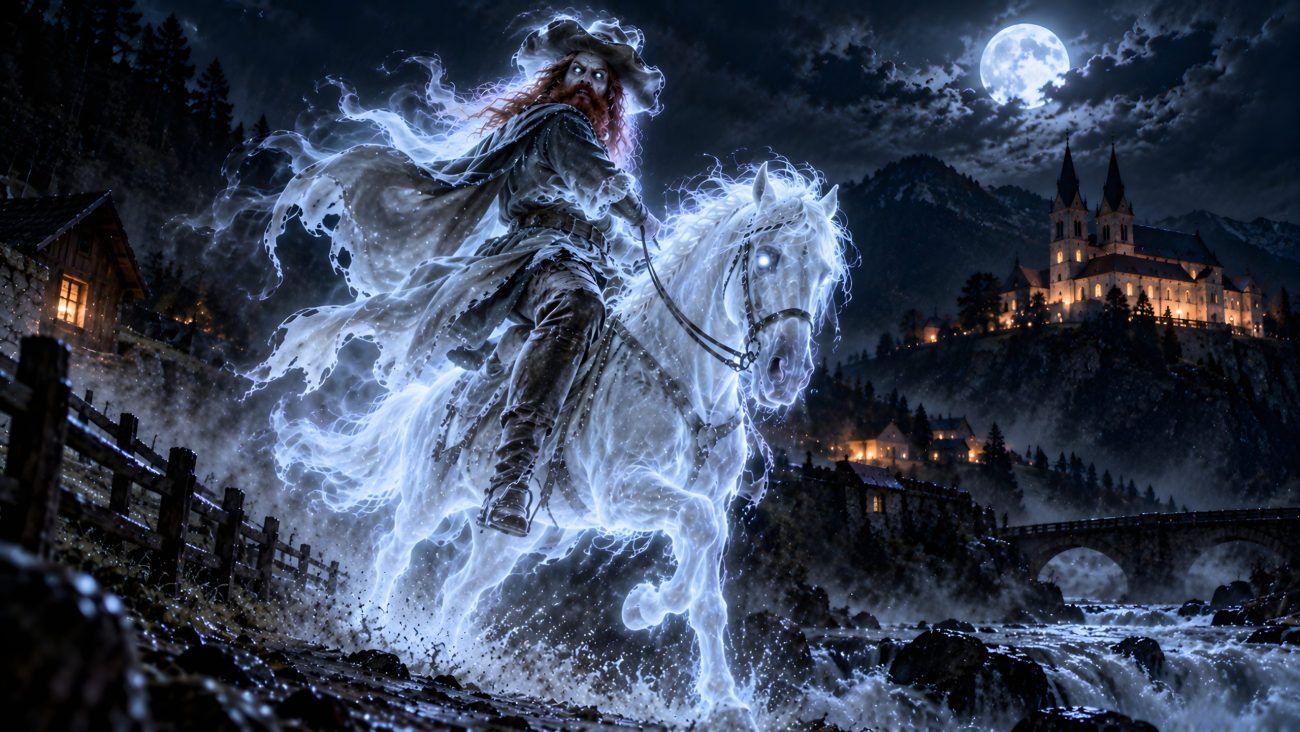
The Invisible Horse is a supernatural mount belonging to divine beings, particularly associated with the sacred figure known as Lashari’s Cross (ლაშარის ჯვარი). It is described as completely unseen to ordinary people, visible only to select individuals such as seers or spiritual intermediaries (ქადაგი).

According to tradition, this horse possesses a striking but rarely witnessed appearance: it is said to have a dark or bluish body with a mane like black jet. It moves with unnatural speed, likened to a hawk in motion, and is accompanied by mist or fog as it travels.

The horse serves as a divine instrument, assisting sacred forces in moments when direct intervention is required. It can arrive swiftly to aid followers or carry out the will of higher powers, often appearing only when needed and vanishing just as quickly.

Its invisibility emphasizes its supernatural nature — it exists between the physical and spiritual realms. Only those with special perception or divine connection are capable of seeing or recognizing it, reinforcing its role as a sacred and exclusive entity within Georgian myth.


Sources

Tsanava, A. (1992). ქართული მითოლოგია [Georgian Mythology]. In Tbilisi: Merani P. 34.