Tradition / Region: Bulgarian Mythology
Alternative names: Krivlyo / The Lame Wolf / The Crippled Wolf
Category: Wolf
The Myth
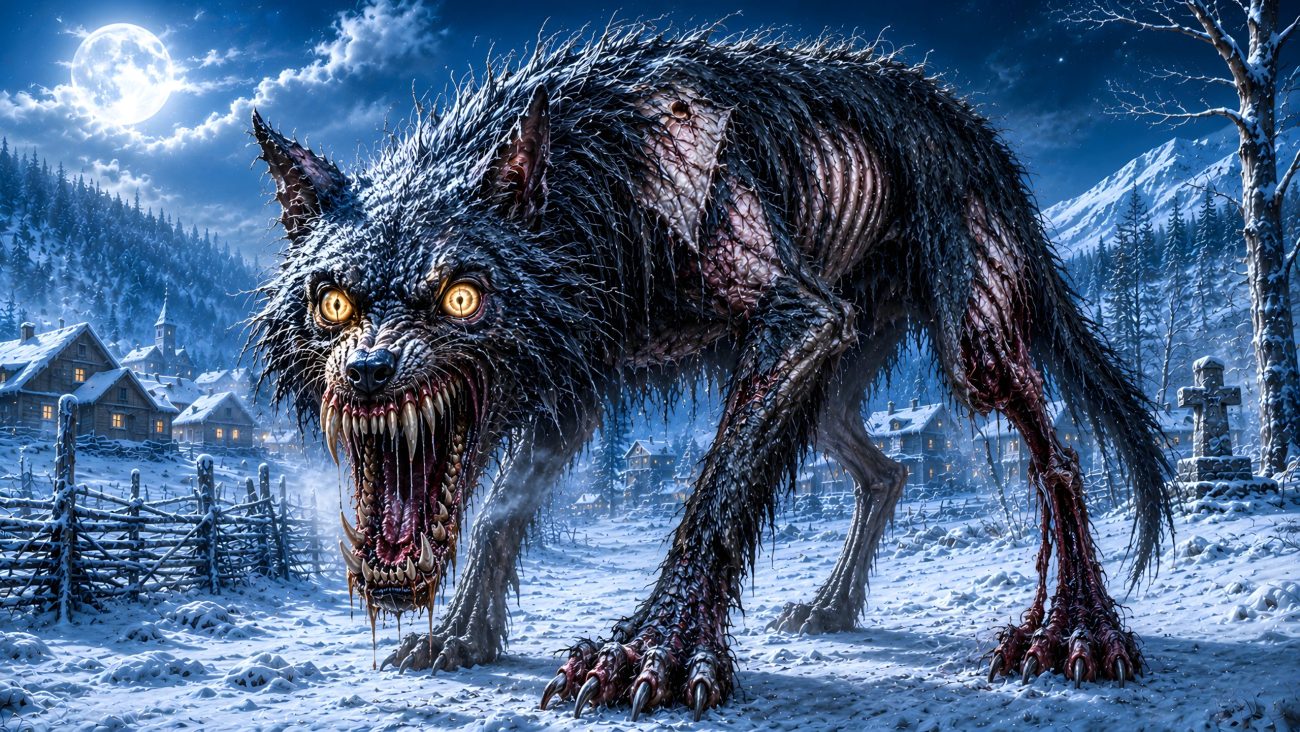
Koutsoulan was the most feared of all wolves in Bulgarian folklore — a supernatural lame wolf believed to roam during the dangerous winter “wolf days” between late autumn and early winter. Unlike ordinary wolves, Koutsoulan was seen as a monstrous spirit-beast connected to darkness, demons, and the border between the human and supernatural worlds.
The creature was described as crippled, lame, or twisted in form, which gave it its names Koutsoulan (“cripple”) and Krivlyo (“crooked one”). Though injured in appearance, it was believed to be far more dangerous than any normal wolf. It wandered alone and attacked both people and livestock, especially those who violated sacred taboos during the wolf feast days.
Bulgarian legends connected the wolf itself to the Devil. In one tale, the Devil created the wolf from clay but could not bring it to life. When the wolf finally awakened, it immediately attacked its creator and crippled him, which is why evil spirits in folklore were sometimes imagined as lame or one-legged. Koutsoulan inherited this supernatural deformity and became the most terrible of wolves.
During the wolf days, people avoided spinning wool, sewing, cutting cloth, or even speaking the wolf’s name aloud. It was believed that wolves could smell garments made during forbidden days and would hunt down the wearer. One story tells of a woman who mocked the lame wolf after finishing a sleeve during the forbidden period. Later the wolf attacked her husband, who escaped only by throwing away the cursed sleeve.
Many magical rituals were used against Koutsoulan. Villagers tied scissors shut to “seal the wolf’s mouth,” locked chains with padlocks to “bind its jaws,” and placed clay on doors to “blind the wolf’s eyes.” Charms were repeated aloud calling for thorns in its eyes, bullets in its liver, and stakes in its body.
Despite its terrifying nature, the wolf also possessed supernatural power against evil beings. Wolves were believed to attack vampires and tear demons apart. In some traditions they were creatures chosen by God to destroy devils hiding in the world. Because of this, the wolf existed in folklore as both a feared destroyer and a savage guardian against darker forces.
Sources
Georgieva, I. (1985). Bulgarian mythology. Sofia: Svyat Publishers.