Koutsoulan

Tradition / Region: Bulgarian Mythology
Alternative names: Krivlyo / The Lame Wolf / The Crippled Wolf
Category: Wolf


The Myth

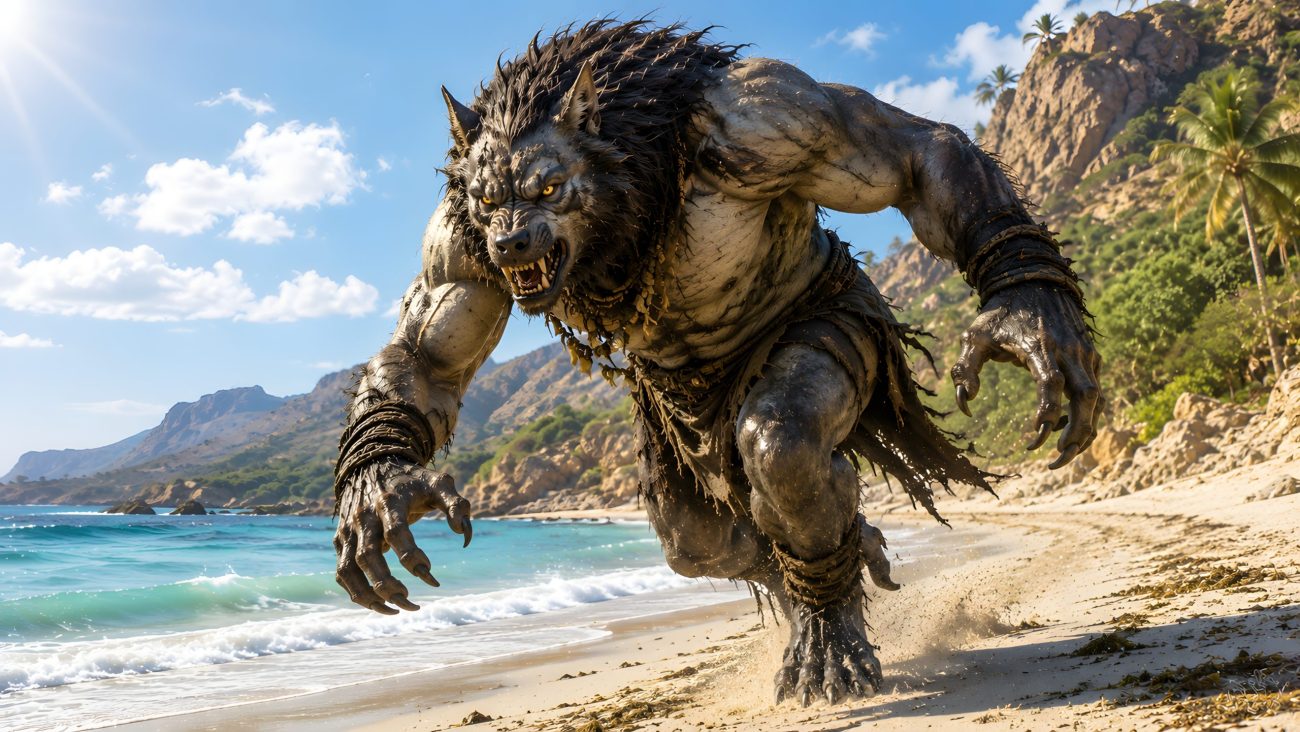
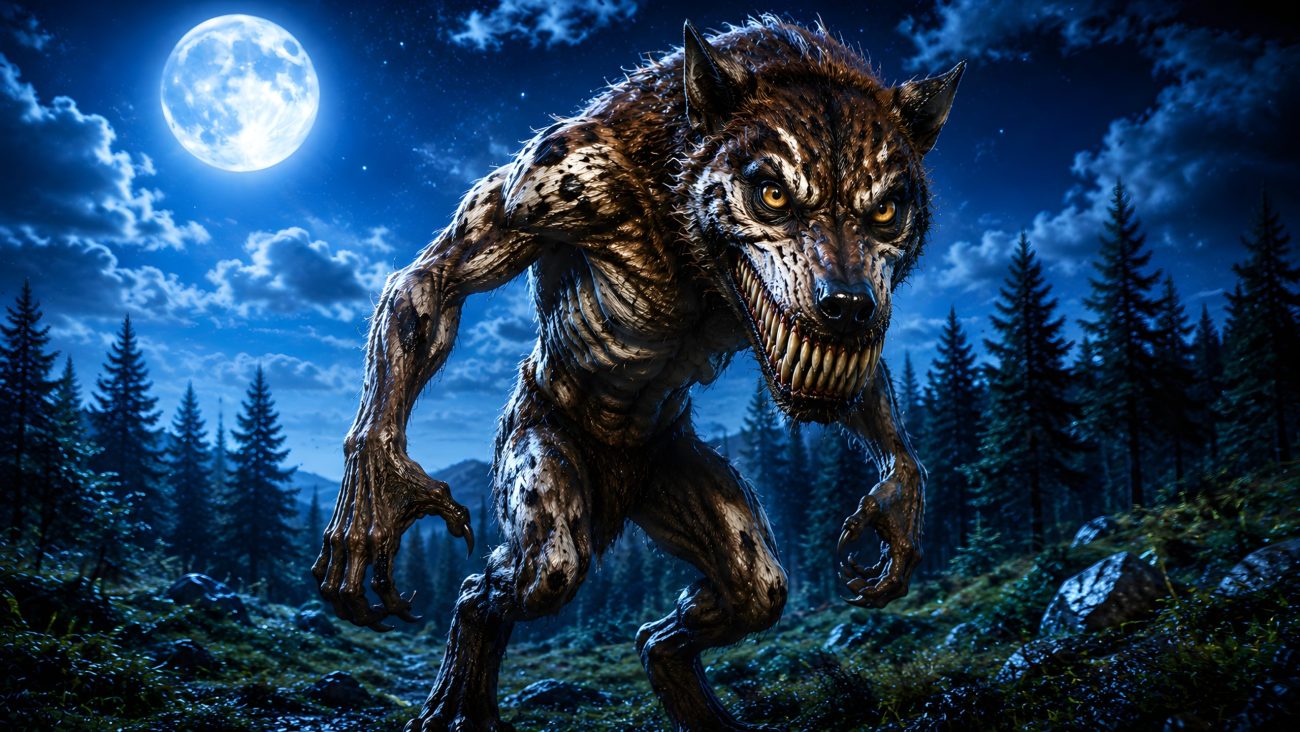
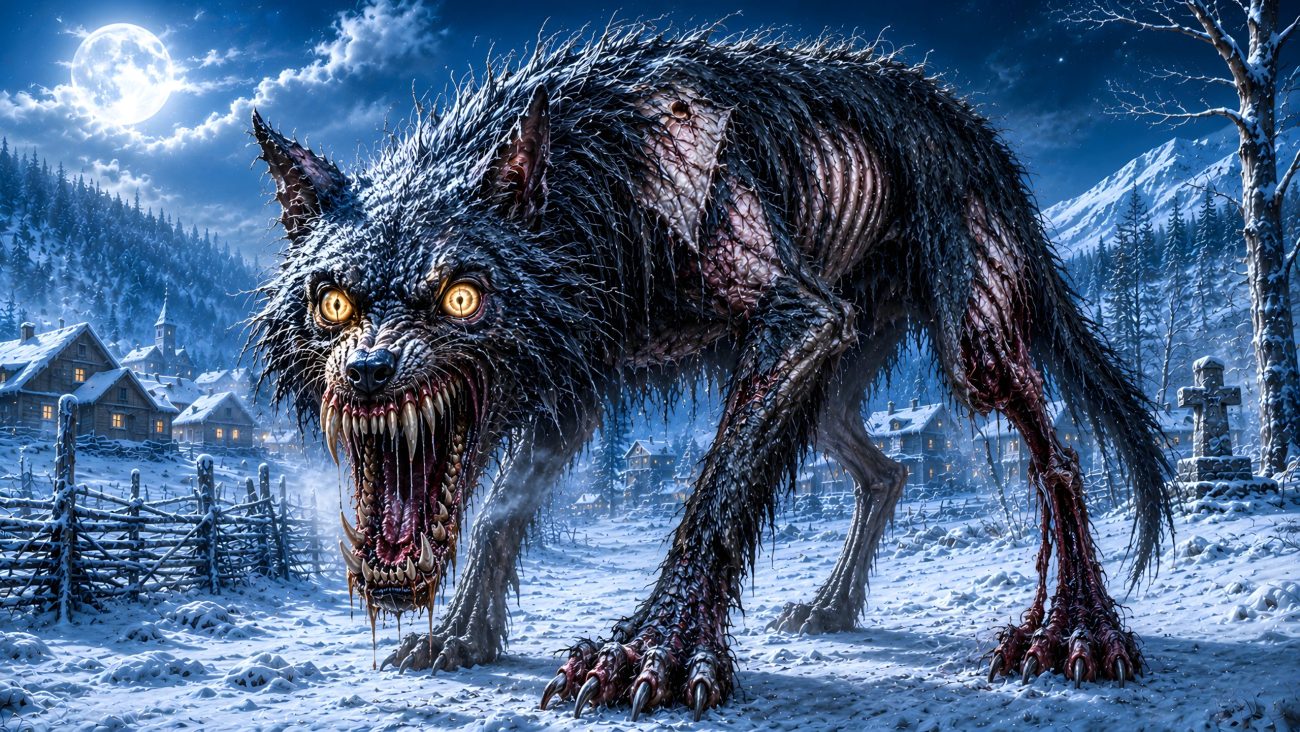
Koutsoulan was the most feared of all wolves in Bulgarian folklore — a supernatural lame wolf believed to roam during the dangerous winter “wolf days” between late autumn and early winter. Unlike ordinary wolves, Koutsoulan was seen as a monstrous spirit-beast connected to darkness, demons, and the border between the human and supernatural worlds.

The creature was described as crippled, lame, or twisted in form, which gave it its names Koutsoulan (“cripple”) and Krivlyo (“crooked one”). Though injured in appearance, it was believed to be far more dangerous than any normal wolf. It wandered alone and attacked both people and livestock, especially those who violated sacred taboos during the wolf feast days.

Bulgarian legends connected the wolf itself to the Devil. In one tale, the Devil created the wolf from clay but could not bring it to life. When the wolf finally awakened, it immediately attacked its creator and crippled him, which is why evil spirits in folklore were sometimes imagined as lame or one-legged. Koutsoulan inherited this supernatural deformity and became the most terrible of wolves.

During the wolf days, people avoided spinning wool, sewing, cutting cloth, or even speaking the wolf’s name aloud. It was believed that wolves could smell garments made during forbidden days and would hunt down the wearer. One story tells of a woman who mocked the lame wolf after finishing a sleeve during the forbidden period. Later the wolf attacked her husband, who escaped only by throwing away the cursed sleeve.

Many magical rituals were used against Koutsoulan. Villagers tied scissors shut to “seal the wolf’s mouth,” locked chains with padlocks to “bind its jaws,” and placed clay on doors to “blind the wolf’s eyes.” Charms were repeated aloud calling for thorns in its eyes, bullets in its liver, and stakes in its body.

Despite its terrifying nature, the wolf also possessed supernatural power against evil beings. Wolves were believed to attack vampires and tear demons apart. In some traditions they were creatures chosen by God to destroy devils hiding in the world. Because of this, the wolf existed in folklore as both a feared destroyer and a savage guardian against darker forces.


Sources

Georgieva, I. (1985). Bulgarian mythology. Sofia: Svyat Publishers.


Lob

Tradition / Region: Cape Verde Mythology
Alternative names: Nho Lob, Ti’ Lob
Category: Wolf


The Myth

In the folktales of Cape Verde, Lob is a large wolf-like being who constantly falls victim to the tricks of his clever nephew Pedr, also called Tubinh or Subrinh.

Lob is powerful but foolish, greedy, boastful, and easily deceived. Nearly every tale involving him ends in humiliation, injury, or death.

During a terrible famine, Lob agrees to sell his own mother for sacks of corn after Pedr convinces him to do so. Pedr secretly tells his own mother to escape before reaching the market, but Lob truly loses his. Later, Pedr tricks Lob into pulling buried donkey tails from river mud. Lob believes the donkeys are trapped underwater and pulls with all his strength until he falls into the river and nearly drowns.

In another story, Lob borrows feathers from birds so he can attend a dance on an island. But once there, he insults every bird in mocking songs. Furious, the birds each reclaim their feathers and abandon him stranded on the island.

A supernatural sea creature called Peix’ Caball eventually rescues him by carrying him across the water. Yet Lob immediately betrays her kindness by tearing off one of her breasts when they reach shore. Later the creature drags him into the sea to drown him in revenge.

Many of Lob’s stories involve absurd acts of gullibility. Pedr convinces him to hold up a cave roof for three entire days because he falsely claims the cave is collapsing. In another tale, Pedr pours molasses over his head and pretends someone struck him with an axe, causing sweetness to flow from the wound. Lob foolishly orders his wife to strike his own head with an axe so the same thing will happen to him.

In one of the cruelest stories, Pedr is captured for theft and tied up for punishment. He tricks Lob into believing the punishment is actually part of a feast. Excited by the promise of food, Lob takes Pedr’s place and is tortured with red-hot iron while Pedr watches from a hilltop singing mockingly.

Throughout the tales, Lob represents uncontrolled greed, appetite, vanity, and stupidity. Though physically strong and intimidating, he is repeatedly defeated by intelligence and cunning.

The stories belong to a wider Afro-Atlantic trickster tradition descended partly from West African folklore, where large predatory beasts are often humiliated by smaller but cleverer animals.


Sources

Parsons, E. C. (1917). Ten folk-tales from the Cape Verde Islands. The Journal of American Folklore, 30(116), 230–238.


Valravn

Tradition / Region: Danish Mythology
Alternate Names: Valravnen
Category: Bird, Wolf


The Myth

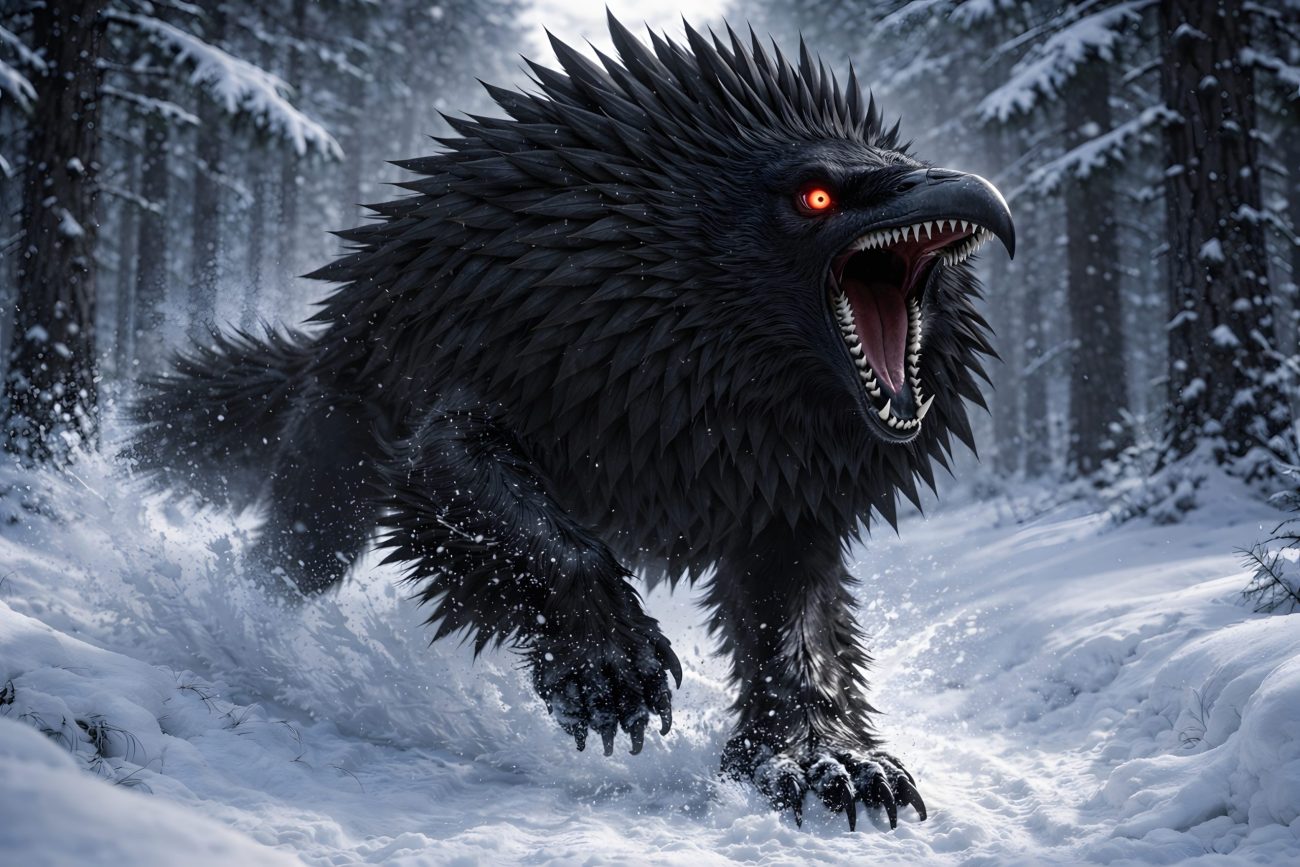
The Valravn is a supernatural raven connected with death, transformation, and dark power. It is often described as either a human turned into a raven or a raven that gains human nature through consuming the dead.

In the central ballad tradition, the Valravn appears as a cursed knight in raven form. He encounters a maiden and offers to carry her to her betrothed, but demands a price: the first son she will bear. The woman accepts, and after she is reunited and later gives birth, the raven returns to claim the child.

No bargain or wealth can stop him. When the child is brought forth, the Valravn pierces the boy and drinks his heart’s blood. Through this act, the curse is broken—the raven transforms back into a human knight.

After the transformation, the child is restored to life, and the danger passes. Yet the event reveals the cost of the change: the Valravn’s return to humanity requires blood and sacrifice.

Another tradition presents a different origin. Ravens that feed on the bodies of fallen kings or warriors—especially consuming the heart—gain human intelligence and supernatural abilities. These creatures can harm people, alter forms, and possess unnatural strength.

The Valravn represents a darker transformation motif:
a being caught between animal and human, whose return to humanity is achieved through violence, death, and the crossing of natural boundaries.


Sources

Wikipedia contributors. (n.d.). Valravn. In Wikipedia, from https://en.wikipedia.org/wiki/Valravn


El Vell Llop

Tradition / Region: Andorran Mythology
Alternate Names: Rei dels animals
Category: Wolf


The Myth

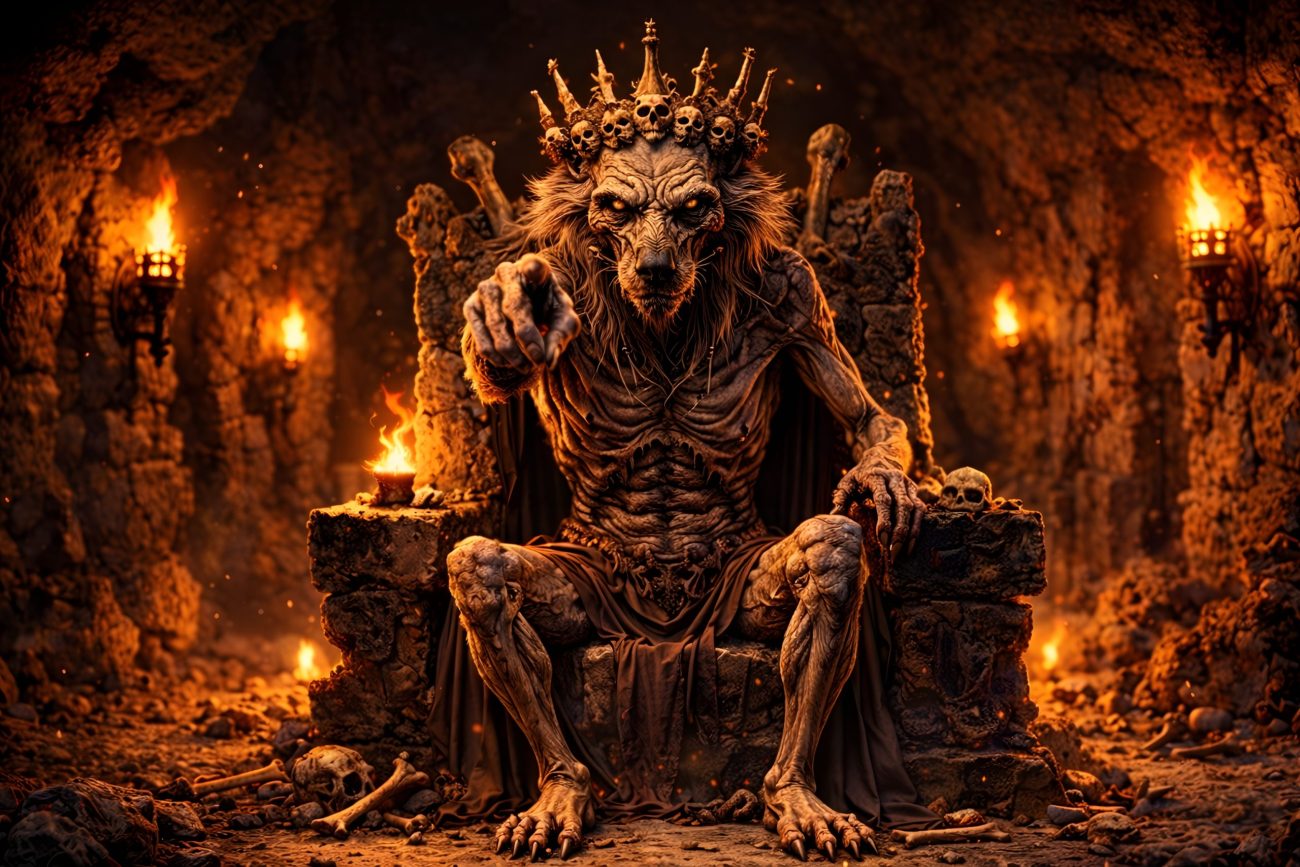
The Old Wolf is portrayed as the wise and aging king of all animals, ruling over them in a time when beasts could speak and live in organized society. As he sensed his death approaching, he gathered all the animals of the land to decide who would succeed him as ruler.

Each animal proposed a successor from its own kind, but no agreement could be reached, as every species favored itself. Faced with this division, the Old Wolf chose to decide the matter himself. He called witnesses and formally declared his final will before withdrawing to await death.

After he died, the animals assembled again and read his testament. In it, the Old Wolf declared that the true heir to his kingdom would not be one of the animals, but a mysterious and superior being of the mountains known as the tamarro.

The tamarro was described as the most clever, brave, and intelligent of all beings, yet no human had ever managed to see or capture it. Because of this, it remained an almost mythical presence, existing beyond reach.

In the end, the Old Wolf’s decision emphasized that true superiority does not belong to those who argue for power, but to that which remains unseen, elusive, and beyond ordinary understanding.


Sources

Valls, À., & Carol, R. (2023). Llegendes d’Andorra. In Encamp-Montellà: Anem Editors p. 97.


Daigo Hakurō

Tradition / Region: Japanese Mythology
Alternate Names:
Category: Wolf


The Myth

In the mountains of Daigo in Yamashiro Province, many wolves were said to roam, troubling travelers and woodcutters who entered the forests.

One day a young boy went into the mountains to gather firewood. As he worked, a wolf suddenly appeared, seized him, and carried him deep into the wilderness. When the wolf reached a grassy place, it set the boy down. Realizing he could not escape by force, the boy pretended to be dead.

The wolf clawed open the earth and dug a large pit. It pushed the boy into the hole and buried him beneath the soil. Yet each time the boy tried to move, the wolf returned to sniff the ground, guarding its hidden prey. At last, when the wolf seemed satisfied and went away, the boy dug himself free and climbed a tall tree nearby, hiding among the leaves to watch.

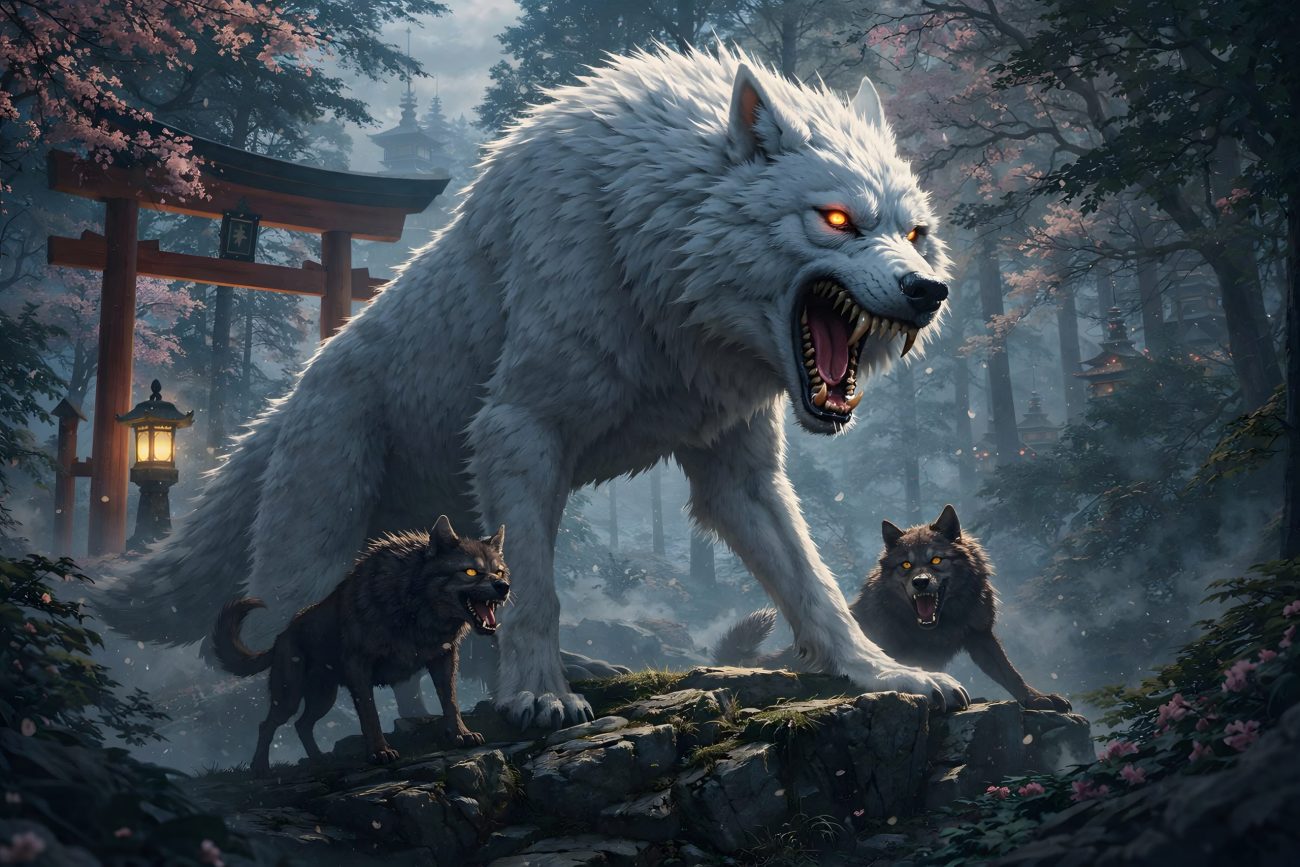
After some time, the wolf returned — this time accompanied by a great white wolf, far larger than the first. Together they dug open the pit, only to find it empty. The first wolf ran about in agitation, howling in anger, never suspecting the boy above them. At length it lowered its ears, bowed its head, and crouched before the great white wolf as if in shame.

The white wolf stood still for a time. Then it rose and struck the other wolf upon the head with its paw.

The punished wolf remained crouched and motionless. Evening fell, and the boy stayed in the tree through the night. By morning, passing woodcutters came near, and the boy cried out to them, asking for rescue and warning that a wolf sat below.

The men rushed forward with axes and blades, but the wolf did not move. When they approached, they found it already dead. Its skull had been crushed, and its head lay broken open.

When the boy told what he had witnessed, everyone was astonished. They praised his quick thinking and spoke of the strange justice of wolves, recalling the old saying that even tigers and wolves possess a sense of duty.

Thus the tale was told as proof that even among beasts, there can be order, judgment, and punishment.


Sources

Tyz-Yokai Blog. (n.d.). Daigo Hakurō. Retrieved March 1, 2026, from https://tyz-yokai.blog.jp/archives/1074589299.html
Shōben-no

Tradition / Region: Japanese Mythology
Alternate Names:
Category: Wolf


The Myth

In Kotonan Town of Kagawa Prefecture, charcoal burners working deep in the mountains lived in simple huts far from villages. At night they relieved themselves in buckets kept as makeshift toilets beside the huts.

Yet many mornings the buckets were found strangely empty.

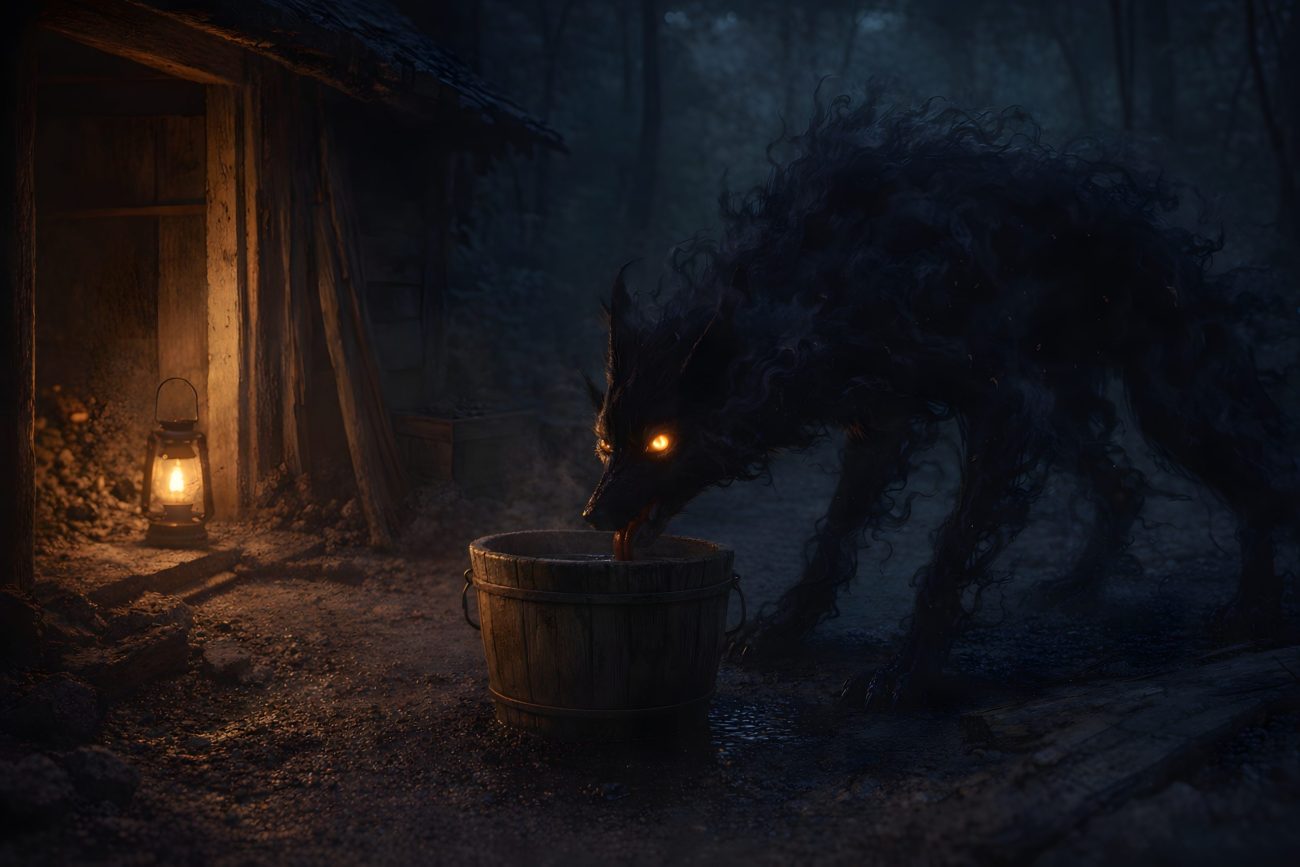
People said that in the dark hours a creature known as the Shōben-no- came creeping out of the forest. Silent and unseen, it approached the huts and drank the urine left in the containers. No one ever clearly saw it, but its presence was taken for certain, for the buckets never remained full overnight.

Some believed the being was not a yokai at all, but a wolf in disguise. Wolves, it was said, craved salt, and the taste of urine drew them from the mountains. Across the region stories spread of wolves licking urine barrels or creeping near homes in search of the salty liquid.

To keep the creature away, some people moved their toilets indoors or placed them in courtyards. Others left salt outside in hopes of satisfying the animal before it came closer to the house.

In some places it was said that wolves which drank urine became dangerous and might attack people. In others, they were believed to do so only when sick, seeking the liquid as a cure. One tale tells that when a wolf repeatedly came to drink from a household’s bucket, the family prayed to the deity Gion-san, and after the prayers the visits ceased.

Thus the Shōben-no- remained a shadow of the mountains — perhaps a yokai, perhaps a wolf — known only by the emptied buckets it left behind.


Sources

Tyz-Yokai Blog. (n.d.). Shoben-no. Retrieved March 1, 2026, from https://tyz-yokai.blog.jp/archives/1010654291.html


Hati Hróðvitnisson

Tradition / Region: Norse Mythology
Alternate Names: Hati, Mánagarmr, Moon-Hound, Moon’s Dog
Category: Wolf


The Myth

Hati Hróðvitnisson is one of the monstrous wolf-sons of Fenrir, born of a giantess who dwells in the dark forest of Járnviðr, east of Midgard. From that wild place came many wolves, but Hati became one of the most feared.

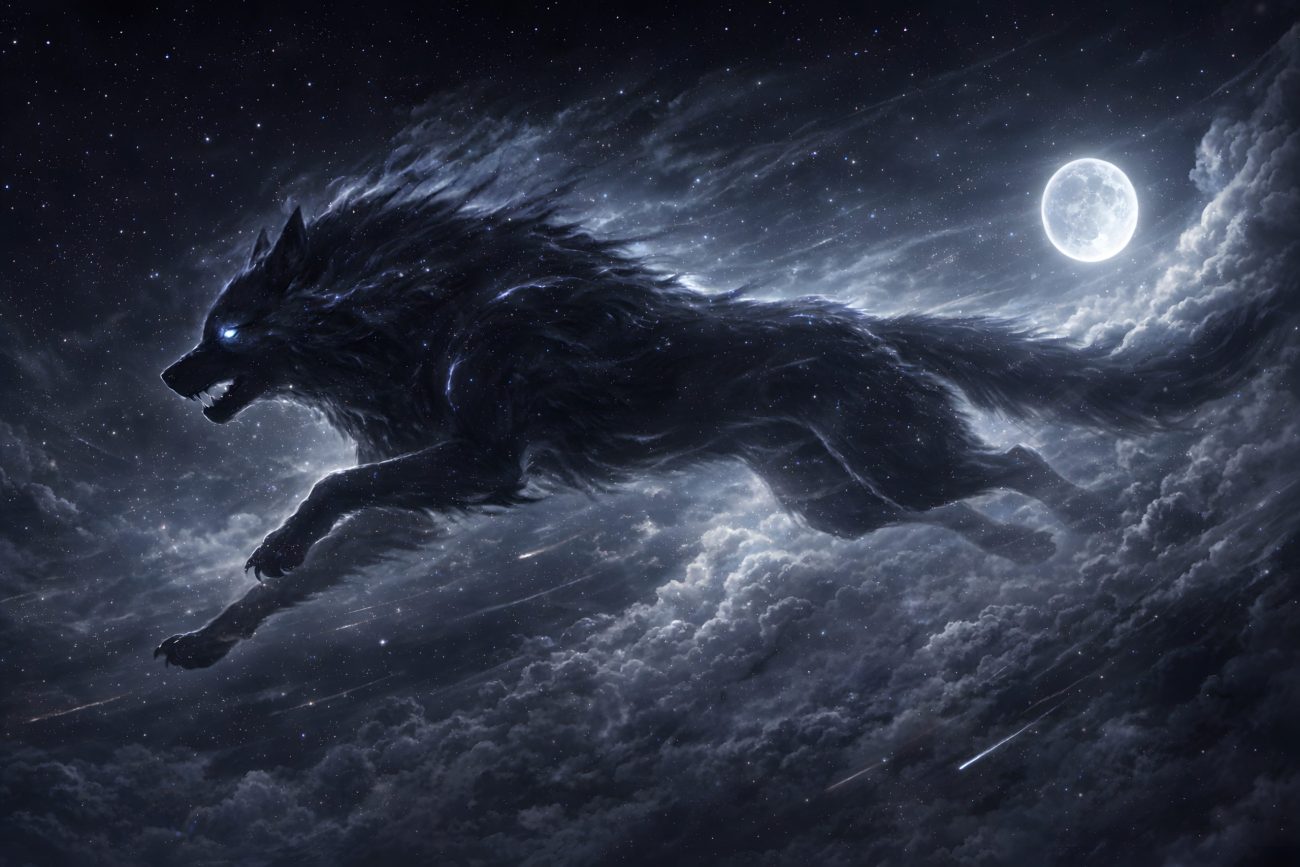
While his brother Sköll hunts the Sun across the sky, Hati pursues the Moon. Each night he runs beneath the heavens, chasing the chariot of Máni, never resting, never turning aside. The Moon flees endlessly before him, and the night sky moves in constant motion because of the wolf’s pursuit.

Prophecy says this hunt will not last forever. When Ragnarök arrives and the world begins to break apart, Hati will finally catch his prey. He will seize the Moon and swallow it whole, darkening the sky and casting the world into chaos.

Some tales say that this same wolf, called Mánagarmr, will grow fat on the flesh of the dead before the end of days. When the final battles begin, he will rush across the heavens, staining the sky with blood as the order of the cosmos collapses.

Until that destined hour, Hati runs through every night — the unseen hunter whose shadow follows the Moon.


Gallery


Sources

Wikipedia contributors. (n.d.). Hati Hróðvitnisson. In Wikipedia. Retrieved March 1, 2026, from https://en.wikipedia.org/wiki/Hati_Hr%C3%B3%C3%B0vitnisson


Interpretive Lenses

Religious Readings
  • Christian Ascetic Deep Dive
Philosophical Readings
  • Nietzschean Deep Dive
Psychological Readings
  • Jungian Deep Dive
Esoteric Deep Dive
  • Hermetic Deep Dive
Political / Social Readings
  • Marxist Deep Dive

Sköll

Tradition / Region: Norse Mythology
Alternate Names: Skoll, Skǫll
Category: Wolf, Celestial Beast, Apocalyptic Pursuer


The Myth

Sköll is one of the great wolves born of Fenrir, the monstrous son of Loki. From the beginning of the world, he was set upon a relentless hunt across the sky.

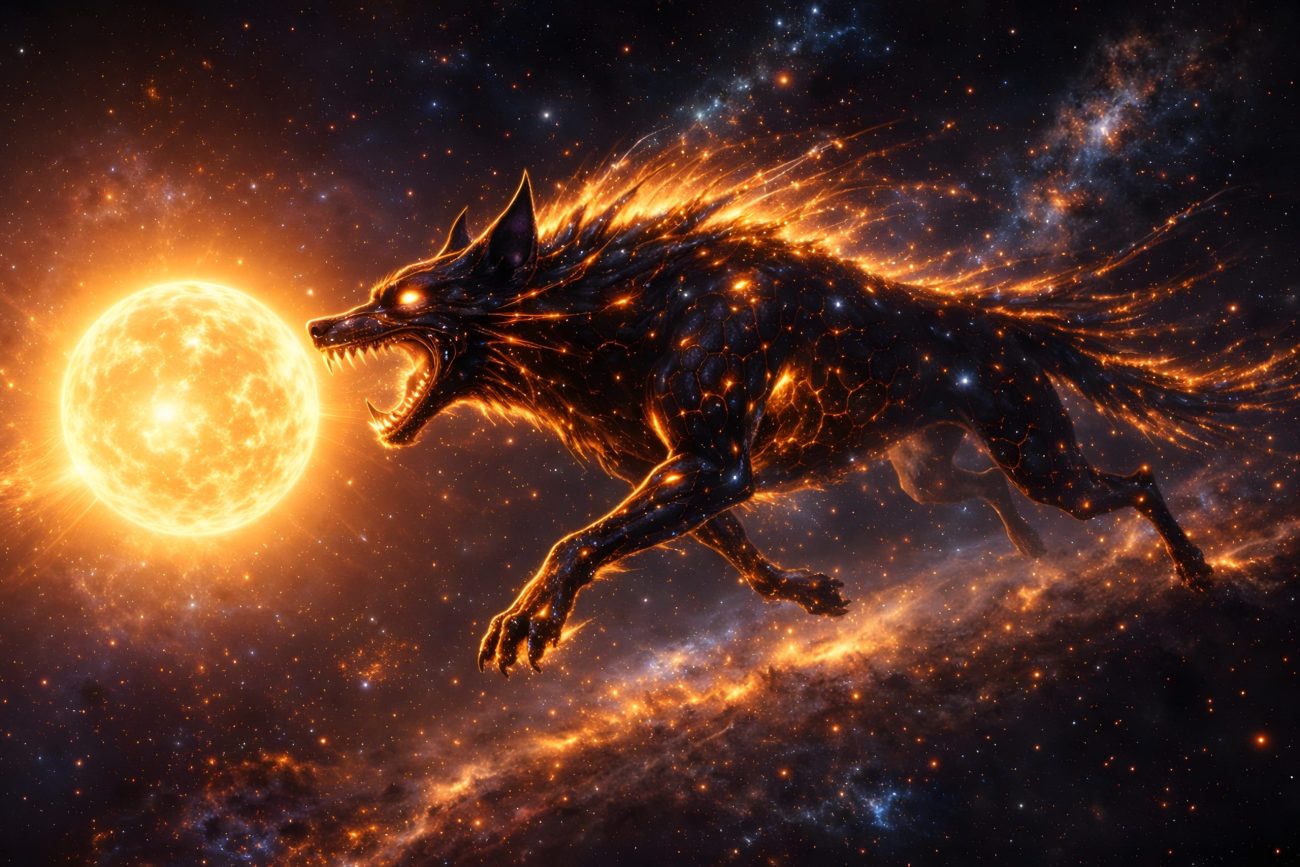
Each day, the goddess Sól drives the chariot of the Sun through the heavens, pulled by shining horses. Behind her races Sköll, a vast and tireless wolf. He runs with jaws open, always gaining, always threatening to catch her. The Sun moves swiftly, but never fast enough to escape him forever.

At night, his brother Hati hunts the Moon, pursuing Máni across the darkness in the same unending chase. Thus the sky is never still, for the wolves are always running.

This pursuit is fated to last until the end of the world. When Ragnarök comes, the order of the cosmos will fail. On that final day, Sköll will at last overtake the Sun and devour her, plunging the world into darkness. His brother will seize the Moon, and the heavens will collapse into chaos as the stars vanish from the sky.

So long as the Sun rises and sets, Sköll still runs — an eternal hunter racing toward the doom of gods and men alike.


Gallery


Sources

Wikipedia contributors. (n.d.). Sköll. In Wikipedia. Retrieved March 1, 2026, from https://en.wikipedia.org/wiki/Sköll


Interpretive Lenses

Religious Readings
  • Christian Ascetic Deep Dive
Philosophical Readings
  • Nietzschean Deep Dive
Psychological Readings
  • Jungian Deep Dive
Esoteric Deep Dive
  • Hermetic Deep Dive
Political / Social Readings
  • Marxist Deep Dive

Fenrir

Tradition / Region: Norse Mythology
Alternate Names: Fenrisúlfr, Hróðvitnir, Vánagandr
Category: Wolf


The Myth

Fenrir is the monstrous wolf born to the trickster god Loki and the giantess Angrboða. He is the brother of the world-serpent Jörmungandr and Hel, ruler of the dead. From the moment of his birth, prophecies foretold that he would bring ruin to the gods.

Because of this, the gods took Fenrir into their own realm and raised him among them, hoping to control his fate. Yet the wolf grew at an unnatural speed, becoming larger and more terrifying with each passing day. Of all the gods, only Týr had the courage to approach him and feed him.

Fearing the prophecy, the gods decided to bind Fenrir before he became unstoppable. They forged a massive chain called Leyding and challenged him to test his strength. Fenrir allowed himself to be bound, but with a single effort he shattered the chain.

They forged a second, stronger fetter called Dromi, and again Fenrir agreed to be bound so his strength might win fame. This too he broke with ease, and the gods grew afraid.

Finally, Odin sent for the dwarfs to create a magical binding. They forged a silken ribbon named Gleipnir, made from impossible things: the sound of a cat’s footsteps, a woman’s beard, the roots of a mountain, the sinews of a bear, the breath of a fish, and the spittle of a bird. Though it looked soft and harmless, it was stronger than any iron.

The gods brought Fenrir to the island Lyngvi and asked him to test this ribbon. Suspicious of trickery, Fenrir demanded a pledge of good faith. He agreed only if one of the gods would place a hand inside his mouth while the fetter was tied.

None dared, except Týr. He stepped forward and placed his right hand between the wolf’s jaws.

When Fenrir struggled, Gleipnir tightened and held him fast. Realizing he had been deceived, Fenrir bit down and tore off Týr’s hand. The gods chained the ribbon to a stone buried deep in the earth and forced a sword into Fenrir’s mouth to hold his jaws open. From his drooling rage flowed the river Ván. There he remained bound, howling, until the end of the world.

At Ragnarök, when the bonds of the world break, Fenrir will finally be freed. He will stride across the land with flames in his eyes, his upper jaw scraping the sky and his lower jaw the earth. In the final battle he will confront Odin himself and swallow the All-Father whole.

But Odin’s son Víðarr will avenge him. With a mighty step he will force Fenrir’s jaws apart and tear the wolf asunder, bringing about the fall of the monster and the turning of the age.


Gallery


Sources

Wikipedia contributors. (n.d.). Fenrir. In Wikipedia. Retrieved March 1, 2026, from https://en.wikipedia.org/wiki/Fenrir


Interpretive Lenses

Religious Readings
  • Christian Ascetic Deep Dive
Philosophical Readings
  • Nietzschean Deep Dive
Psychological Readings
  • Jungian Deep Dive
Esoteric Deep Dive
  • Hermetic Deep Dive
Political / Social Readings
  • Marxist Deep Dive

Wepwawet

Tradition / Region: Egyptian Mythology
Alternate Names: Upuaut, Wep-wawet, Wepawet, Apuat, Ophois
Category: Wolf


The Myth

Wepwawet is one of the oldest gods of ancient Egypt, known as the “Opener of the Ways.” He was worshiped at Asyut, a city the Greeks later called Lycopolis — the City of Wolves — and he was seen as a divine scout who clears paths for gods, kings, and the dead.

He is most often depicted as a wolf or jackal standing at the front of a procession or at the prow of the sun-boat of Ra, forever leading the way forward. In war he marches ahead of the army, opening the road to victory. In royal rituals he appears on the first standard, guiding the other sacred banners behind him and symbolizing the divine authority of the pharaoh.

The Pyramid Texts declare that the face of the king is the face of Wepwawet, for the god protects the ruler’s rise to power and accompanies him on the hunt and in battle. One inscription even proclaims that Wepwawet “opens the way” to victory itself.

Over time, his role as a war-scout expanded into the realm of death. Just as he clears the path for armies, Wepwawet also opens the roads of the Duat, the Egyptian underworld. He guides souls through the dangerous passages beyond death and stands beside funerary rites, helping the dead begin their journey into the afterlife. Because of this role, he became closely associated with Anubis and was sometimes considered his brother.

Different traditions tell of his birth in sacred places: some say he emerged from the holy shrine of the goddess Wadjet, while others claim he sprang from a tamarisk bush. In later texts he is even linked to the rising sun itself, opening the sky at the horizon as Ra ascends.

Whether leading armies, guiding kings, or escorting the dead, Wepwawet stands forever at the front — the divine pathfinder who walks first into every unknown road.


Gallery


Sources

Wepwawet.Wikipedia, The Free Encyclopedia. Retrieved March 1, 2026, from https://en.wikipedia.org/wiki/Wepwawet.


Interpretive Lenses

Religious Readings
  • Christian Ascetic Deep Dive
Philosophical Readings
  • Nietzschean Deep Dive
Psychological Readings
  • Jungian Deep Dive
Esoteric Deep Dive
  • Hermetic Deep Dive
Political / Social Readings
  • Marxist Deep Dive