Wasgo

Tradition / Region: Haida Mythology, Canadian Mythology
Alternate Names: Sea Wolf
Category: Wolf


The Myth

Along the stormy Pacific coast of what is now Canada, the Haida told of a powerful creature called Wasgo, the Sea Wolf. He belonged to both the ocean and the land, and could move between them by changing his shape.

In the sea he appeared like an orca, swift and strong beneath the waves. When he came ashore he became a great wolf, roaming forests and beaches with the same power he held in the water. Because of this, people believed he ruled the boundary between sea and land, and that neither world was safe when he was near.

Wasgo was feared as a dangerous being, one who could strike from either realm. Hunters and travelers along the coast spoke of him with caution, knowing that a shape glimpsed in the surf or a shadow in the trees might be the same creature watching them from two different worlds.


Gallery


Sources

Wikipedia contributors. (n.d.). Gonakadet. In Wikipedia, from https://en.wikipedia.org/wiki/Gonakadet


Interpretive Lenses

Religious Readings
  • Christian Ascetic Deep Dive
Philosophical Readings
  • Nietzschean Deep Dive
Psychological Readings
  • Jungian Deep Dive
Esoteric Deep Dive
  • Hermetic Deep Dive
Political / Social Readings
  • Marxist Deep Dive

Akh’lut

Tradition / Region: Inuit Mythology, Canadian Mythology
Alternate Names: Kăk-whăn’-û-ghăt kǐg-û-lu’-nǐk
Category: Wolf


The Myth

Among the Inuit of the Bering Sea coast there is said to live a fierce creature of both sea and land, known as the Akh’lut. In the water it appears as a killer whale, powerful and swift, ruling the cold ocean depths. But when it comes ashore, it transforms into a wolf and roams across the land.

Hunters spoke of finding wolf tracks that led across the ice and ended suddenly at the sea, or began at the water’s edge and continued inland. These signs were taken as proof that the akh’lut had shifted its shape, leaving the ocean to hunt on land or returning again to the waves.

The creature was feared for its ferocity. Whether in the form of whale or wolf, it was said to attack and kill humans who crossed its path. Thus the akh’lut was remembered as a being that moved freely between two worlds — sea and shore — belonging fully to neither.


Gallery


Sources

Wikipedia contributors. (n.d.). Akhlut. In Wikipedia, from https://en.wikipedia.org/wiki/Akhlut


Interpretive Lenses

Religious Readings
  • Christian Ascetic Deep Dive
Philosophical Readings
  • Nietzschean Deep Dive
Psychological Readings
  • Jungian Deep Dive
Esoteric Deep Dive
  • Hermetic Deep Dive
Political / Social Readings
  • Marxist Deep Dive

Asena

Tradition / Region: Turkic Mythology
Alternate Names: Bozkurt
Category: Wolf


The Myth

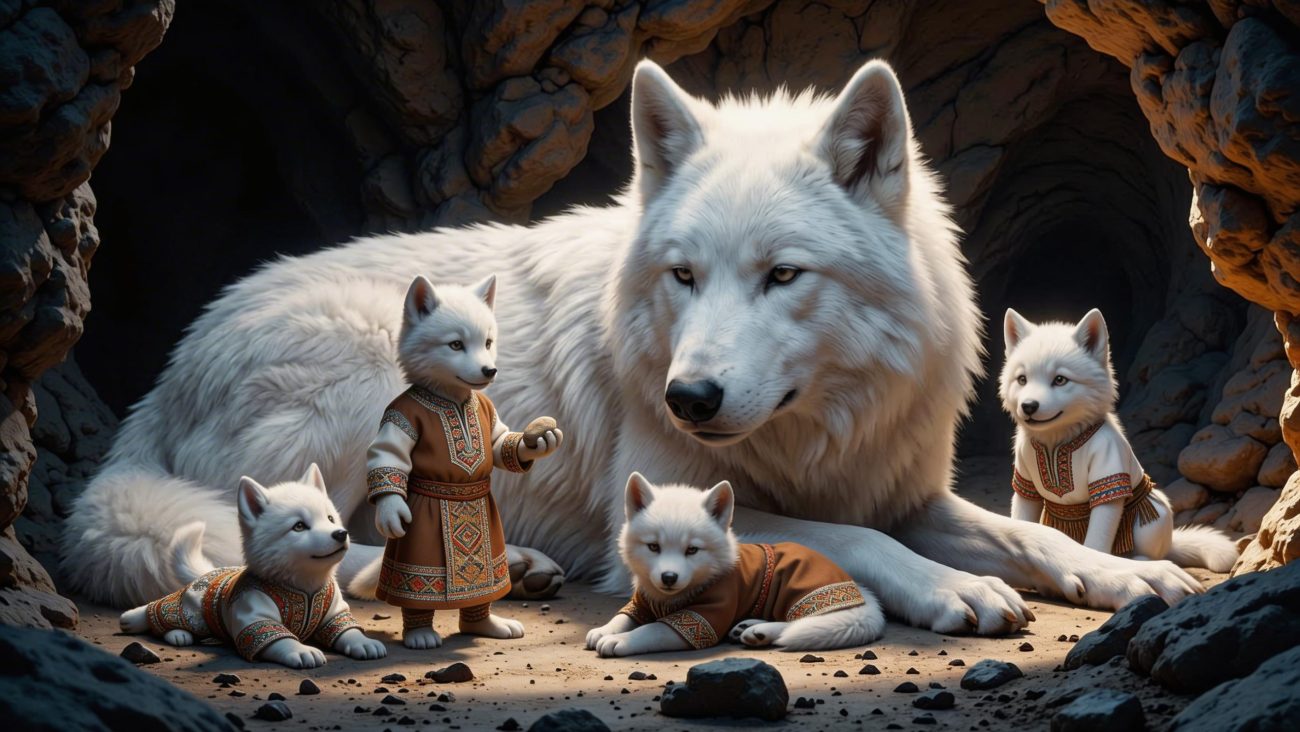
Asena is the legendary she-wolf tied to the foundation myth of the Göktürks. After a massacre, a lone surviving boy is found and nursed back to health by a she-wolf. She later bears ten half-wolf, half-human sons, one of whom becomes the ancestor of the Ashina clan, founders of the Göktürk ruling line.

In later traditions the wolf ancestor is linked with the symbol of the Bozkurt (“Gray Wolf”), an emblem of origin, protection, and leadership among Turkic peoples.


Gallery


Sources

Wikipedia contributors. (n.d.). Asena. In Wikipedia, from https://en.wikipedia.org/wiki/Asena


Interpretive Lenses

Religious Readings
  • Christian Ascetic Deep Dive
Philosophical Readings
  • Nietzschean Deep Dive
Psychological Readings
  • Jungian Deep Dive
Esoteric Deep Dive
  • Hermetic Deep Dive
Political / Social Readings
  • Marxist Deep Dive

Lupeux

Tradition / Region: French Mythology
Alternate Names:
Category: Wolf, Swamp dweller


The Myth

The Lupeux is a sinister folkloric being said to haunt the ponds and marshlands of the Brenne region in Berry. Unlike many wolf-creatures, it is rarely seen — it is known almost entirely by its voice.

At night, travelers may hear a soft, human-like laugh drifting across the water:
“Ah… ah… ah…”

Locals know never to answer the sound more than twice. Speaking a third time invites disaster.

The lupeux is believed to have the head of a wolf, though its form varies in different tellings. What never changes is its talent for manipulation. When someone responds to it, the creature begins speaking in a warm, friendly, persuasive voice. It tells gossip, secrets, romantic promises, and scandalous stories tailored to the listener’s desires and fears.

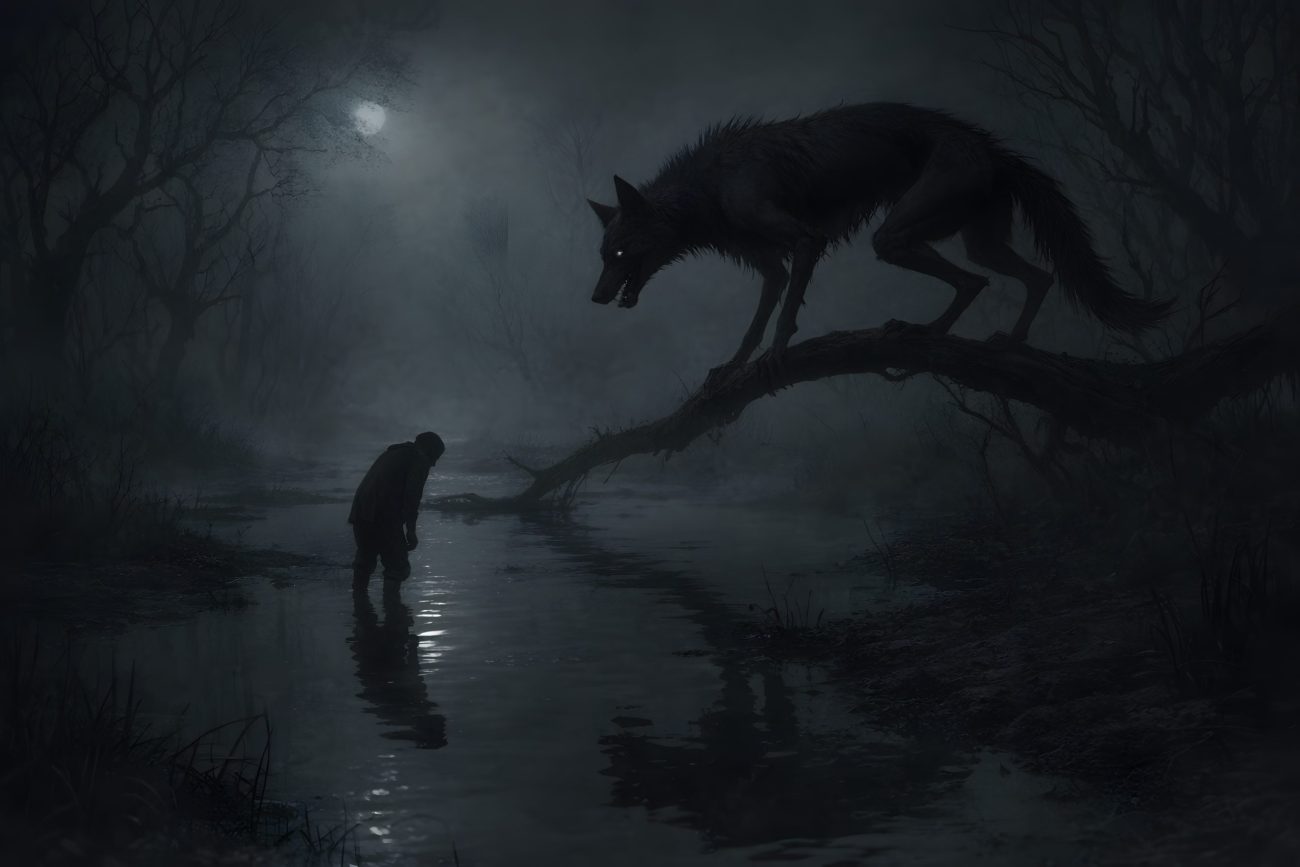
Victims become entranced, following the unseen voice deeper into the marshes or woods. Eventually they are led to a still pool or pond. As they lean over the water — distracted by the thoughts the lupeux has planted in their mind — the creature pushes them in.

The victim drowns while the lupeux watches from a branch, laughing softly.

The tale functions as both a marshland warning legend (don’t wander near water at night) and a moral story about temptation and curiosity: the danger lies not only in the creature, but in the victim’s willingness to listen.


Sources

A Book of Creatures. (2017, January 30). Lupeux. From https://abookofcreatures.com/2017/01/30/lupeux/


Beast of Gévaudan

Tradition / Region: French Mythology
Alternate Names: La Bête du Gévaudan
Category: Wolf


The Myth

The Beast of Gévaudan is the name given to a mysterious predatory animal — or animals — responsible for a long series of brutal attacks in southern France between 1764 and 1767.

The killings occurred mainly in the mountainous region of Gévaudan (modern Lozère). Between 88 and 124 people are believed to have died, many of them children or young women. The attacks were unusually violent, often involving throat wounds and partial consumption of the victims, which helped fuel fear and superstition.

At the time, explanations varied wildly. Some thought the Beast was a giant wolf, others believed it was an exotic animal, a trained killer beast, or even a supernatural creature immune to bullets. The bishop of Mende interpreted it as divine punishment, while rumors of sorcery spread across the countryside.

In 1765, a massive wolf was killed by royal huntsman François Antoine and displayed at Versailles, leading many to believe the terror had ended. However, attacks resumed. Finally, in June 1767, a local hunter named Jean Chastel shot another large wolf-like animal. After this, the killings stopped.


Sources

Wikipedia contributors. (n.d.). Bête du Gévaudan. In Wikipedia, from https://fr.wikipedia.org/wiki/B%C3%AAte_du_G%C3%A9vaudan


Pricolici

Tradition / Region: Romanian Mythology
Alternate Names:
Category: Wolf, Vampire


The Myth

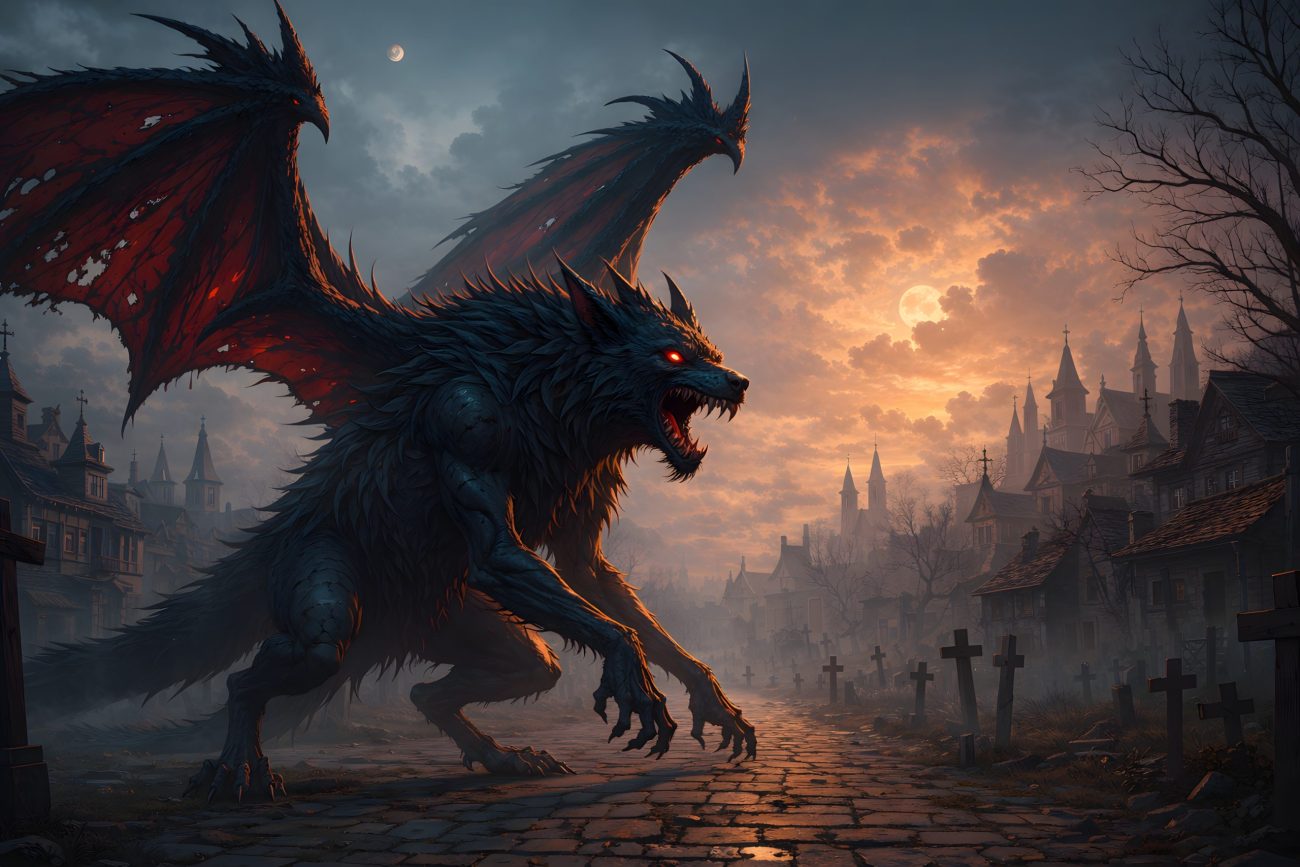
The Pricolici is a terrifying undead creature in Romanian folklore — a being that combines traits of werewolf, vampire, and restless spirit.

It is often said to arise from a malicious or violent person after death, returning to the world in the form of a wolf-like monster in order to continue harming the living. In some traditions, a child improperly weaned or breastfed too long could also be fated to become a pricolici later in life.

Unlike the strigoi, which keeps a human-like form, the pricolici almost always appears as a wolf, dog, or wolf-human hybrid. It may also take human form or disguise itself as other animals. In some stories it walks upright on two legs, making it more uncanny than an ordinary wolf.

Many folktales treat the pricolici as the final stage of a werewolf: a person cursed in life becomes a werewolf, and after death returns as a vampire-like wolf spirit. Because of this, the creature helped shape Romanian beliefs about vampires transforming into nocturnal animals such as wolves, dogs, bats, or owls.

Even into modern times, some rural communities explained mysterious wolf attacks as the work of pricolici — not natural predators, but revenants returning from the grave to hunt humans.

The pricolici therefore stands as one of the most unsettling figures of Romanian folklore: not merely a monster, but a dead soul that refuses to stop preying on the living.


Sources

Wikipedia contributors. (n.d.). Pricolici. In Wikipedia, from https://en.wikipedia.org/wiki/Pricolici


Beast of the Lyonnais

Tradition / Region: French Mythology
Alternate Names: Lyonnais Beast, Beast of Savigny, Ferocious Beast of Lyonnais
Category: Wolf


The Myth

The Beast of the Lyonnais was a terrifying man-eating predator — or possibly several animals — blamed for a wave of attacks in eastern France between 1754 and 1756.

The first recorded victim was a devoured boy discovered in August 1754 near Luzinay. Several more attacks quickly followed, prompting the provincial governor to organize a massive hunt involving around 2,000 men from 26 villages. The hunt failed, and instead the killings spread to new areas.

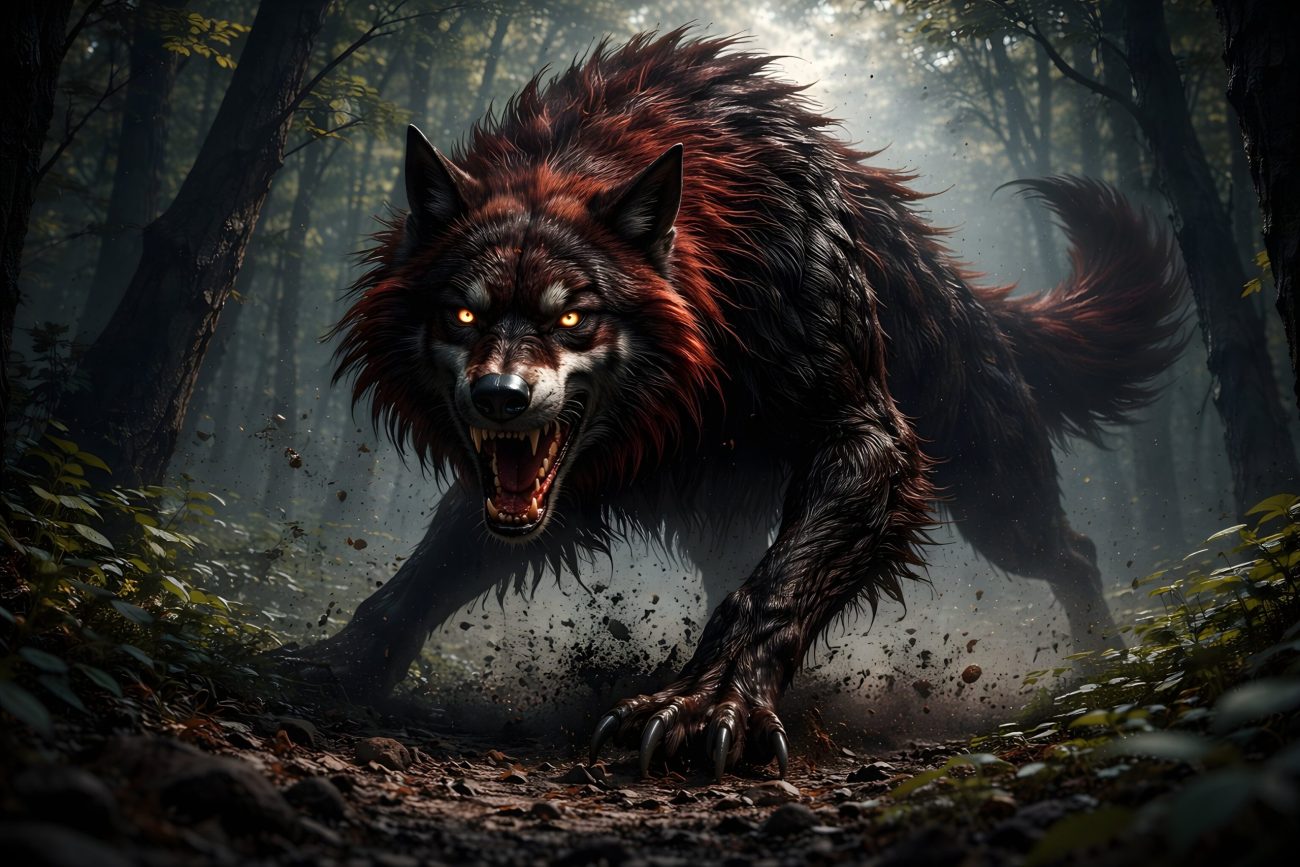
By 1755, the attacks had shifted toward the Savigny and L’Arbresle regions, where deaths occurred almost monthly. Victims were mostly children and young shepherds. Witnesses eventually described two beasts, one reddish and wolf-like with a short tail, the other larger with a long tail and pale underside.

Contemporary explanations varied widely. Some believed the attackers were unusually large wolves or wolf packs that had developed a taste for human flesh. Others suggested exotic animals such as a hyena. The werewolf theory was also widespread among villagers, though officials tried to suppress this belief and insisted the animals were ordinary predators.

After the final recorded killing in November 1756, the attacks suddenly stopped. No confirmed culprit was ever identified. The mystery ensured that the Beast of the Lyonnais became part of France’s long tradition of legendary man-eating wolves, remembered alongside other infamous predator tales of the 18th century.


Sources

Wikipedia contributors. (n.d.). Bête du Lyonnai. In Wikipedia, from https://fr.wikipedia.org/wiki/B%C3%AAte_du_Lyonnai


Primarette Beast

Tradition / Region: French Mythology
Alternate Names: Beast of Primarette, Carnivorous Wolf of Primarette
Category: Wolf


The Myth

The Primarette Beast was a fearsome devouring creature blamed for a series of deadly attacks in the Dauphiné region of France between 1747 and 1752. Contemporary records describe it as a wolf, though some sources also compared it to a lynx.

The terror began in May 1747, when a child was seized at the door of his home during church hours. Witnesses tracked the blood trail into the woods and found scattered body parts. Parish records confirm multiple similar killings over the following years, most of them involving children taken near homes or fields.

The local priest noted that villagers believed the attacks were not ordinary wolves. Some claimed they were werewolves or supernatural beasts permitted by divine will. Others suggested they were unusually large or aggressive wolves. The priest himself tried to dismiss these beliefs, yet he illustrated the death records with drawings of wolf heads, reflecting how deeply the fear marked the community.

By 1752, after at least seven victims, the killings ceased. No confirmed explanation was ever given. Whether the culprit was a pack of wolves, a single abnormal predator, or something more mysterious, the Primarette Beast entered regional folklore as one of Europe’s many legendary man-eating wolves.


Sources

Wikipedia contributors. (n.d.). Bête de Primarette. In Wikipedia, from https://fr.wikipedia.org/wiki/B%C3%AAte_de_Primarette


Waterwolf

Tradition / Region: Dutch Mythology
Alternate Names: None recorded
Category: Wolf

The Myth

The Waterwolf is a dangerous spirit said to appear in the form of a wolf adapted to life in the water. Unlike a normal wolf, its body is covered in scales, over which moss and water plants such as algae and weeds have grown. It moves silently through rivers, marshes, and flooded lands, propelled by two large fins that allow it to glide swiftly and almost invisibly beneath the surface.

The creature is feared as a predator of humans, especially children. According to the stories, it lurks near banks and shorelines, dragging the unwary into the water where they disappear without a trace.

Like many Dutch water legends, the Waterwolf reflects anxieties about the dangers of marshes, floods, and deep water, giving those natural threats a monstrous, animal form.


Sources

Abe de Verteller. (n.d.). Van aardmannetje tot zwarte juffer: Een lijst van Nederlandse en Vlaamse elfen en geesten. From https://abedeverteller.nl/van-aardmannetje-tot-zwarte-juffer-een-lijst-van-nederlandse-en-vlaamse-elfen-en-geesten/


Korenwolf

Tradition / Region: Dutch Mythology
Alternative name: –
Category: Wolf


The Myth

The Korenwolf or Roggewolf is not a literal wolf but the spirit believed to dwell within grain fields. It lives especially in the last sheaf left standing during harvest, and when that final bundle is cut, the spirit is thought to be captured.

Because of this belief, the last reaper was sometimes jokingly or ritually called “the wolf,” as if they had caught — or temporarily embodied — the field spirit.

The Korenwolf is invisible and can only be sensed through the strange rippling of grain in the wind, as if something unseen moves through it. When calm, it brings fertility to the fields; when angered, it may strip the ears from the grain and ruin the harvest.

It also serves as a warning figure in folklore. Children were told not to wander into the fields, since the Korenwolf might seize or devour them.

Some stories describe the spirit as having six legs, marking it as unnatural — a being of the harvest rather than an ordinary animal.


Sources

Abe de Verteller. (n.d.). Van aardmannetje tot zwarte juffer: Een lijst van Nederlandse en Vlaamse elfen en geesten. From https://abedeverteller.nl/van-aardmannetje-tot-zwarte-juffer-een-lijst-van-nederlandse-en-vlaamse-elfen-en-geesten/