Lampir

Tradition / Region: Bosnian Mythology
Alternate Names: Lampiger, Lampijer, Lampijerović, Lepir, Tenac, Vukodlak
Category: Vampire


The Myth

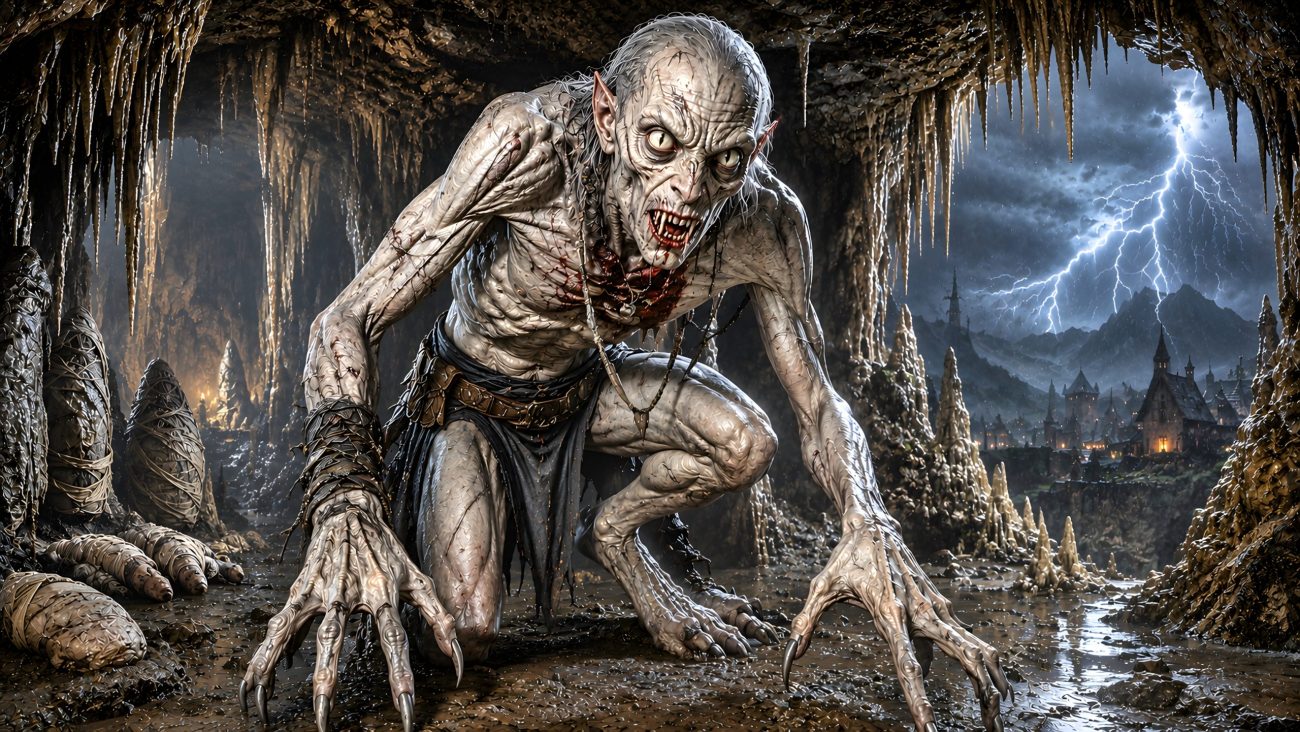
The Lampir is a vampiric revenant believed to arise from the first person who dies during an epidemic or plague. Because of this origin, it is closely associated with death spreading through communities, making it a feared figure during times of disease.

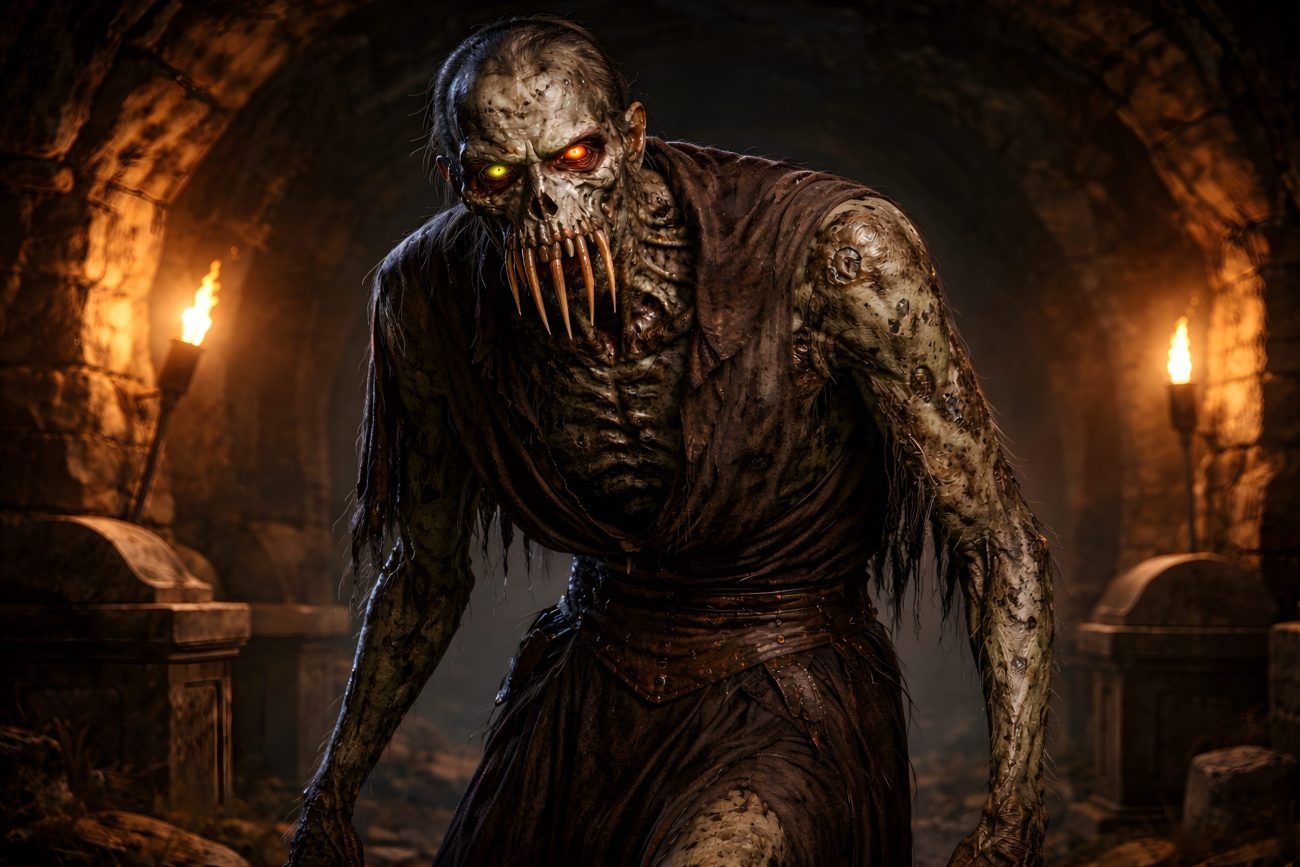
After death, the Lampir returns from the grave as an undead being that feeds on the living. Unlike some other vampires, it is said to attack by biting a small hole into the chest using its distinctive multiple fangs, draining blood directly from the body.

Its curse is contagious in a delayed way: a person who survives an encounter will not immediately turn, but after their natural death they will rise again as a Lampir. This creates a chain of transformation linked to mortality rather than immediate infection.

There are also darker traditions stating that a person could deliberately become such a creature by consuming the flesh of an executed individual, suggesting that the Lampir is tied not only to plague but also to taboo acts and impurity.

To destroy a Lampir, villagers would exhume the corpse during daylight and burn it completely, ensuring that no part of the body remained to rise again.

The Lampir represents a classic Balkan fear:
a disease-bringing undead, where death itself does not end suffering but spreads it further through both body and spirit.


Sources

Bane, T. (2010). Encyclopedia of Vampire Mythology. In McFarland (p. 93).

Vampires Fandom contributors. (n.d.). Lampir. In Vampires Fandom, from https://vampires.fandom.com/wiki/Lampir


Nhang

Tradition / Region: Armenian Mythology
Alternate Names: —
Category: Water spirit, Demonic being


The Myth

The Nhang is a malevolent water spirit in Armenian mythology, associated with rivers and deep waters. Although the word originally meant “crocodile,” it came to refer to a supernatural being believed to inhabit certain waterways.

These spirits were said to dwell in specific rivers, including the Euphrates and the river Aragani, where they remained and caused harm. They were regarded as incorporeal beings rather than ordinary animals.

The Nhang could take different forms. At times it appeared as a woman in the water, resembling a mermaid-like figure. At other times it took the shape of a seal-like creature that attacked swimmers, seizing them by the feet and dragging them beneath the surface.

It was also said to prey on animals, feeding in a blood-drinking manner and leaving them dead afterward.

Its nature was not clearly defined in tradition, as some described it as a beast while others considered it a type of Dev.


Sources

Ananikian, M. H. (1925). Armenian Mythology. In The Mythology of All Races, Vol. 7. Published by the Archaeological Institute of America p. 89-90.


Pricolici

Tradition / Region: Romanian Mythology
Alternate Names:
Category: Wolf, Vampire


The Myth

The Pricolici is a terrifying undead creature in Romanian folklore — a being that combines traits of werewolf, vampire, and restless spirit.

It is often said to arise from a malicious or violent person after death, returning to the world in the form of a wolf-like monster in order to continue harming the living. In some traditions, a child improperly weaned or breastfed too long could also be fated to become a pricolici later in life.

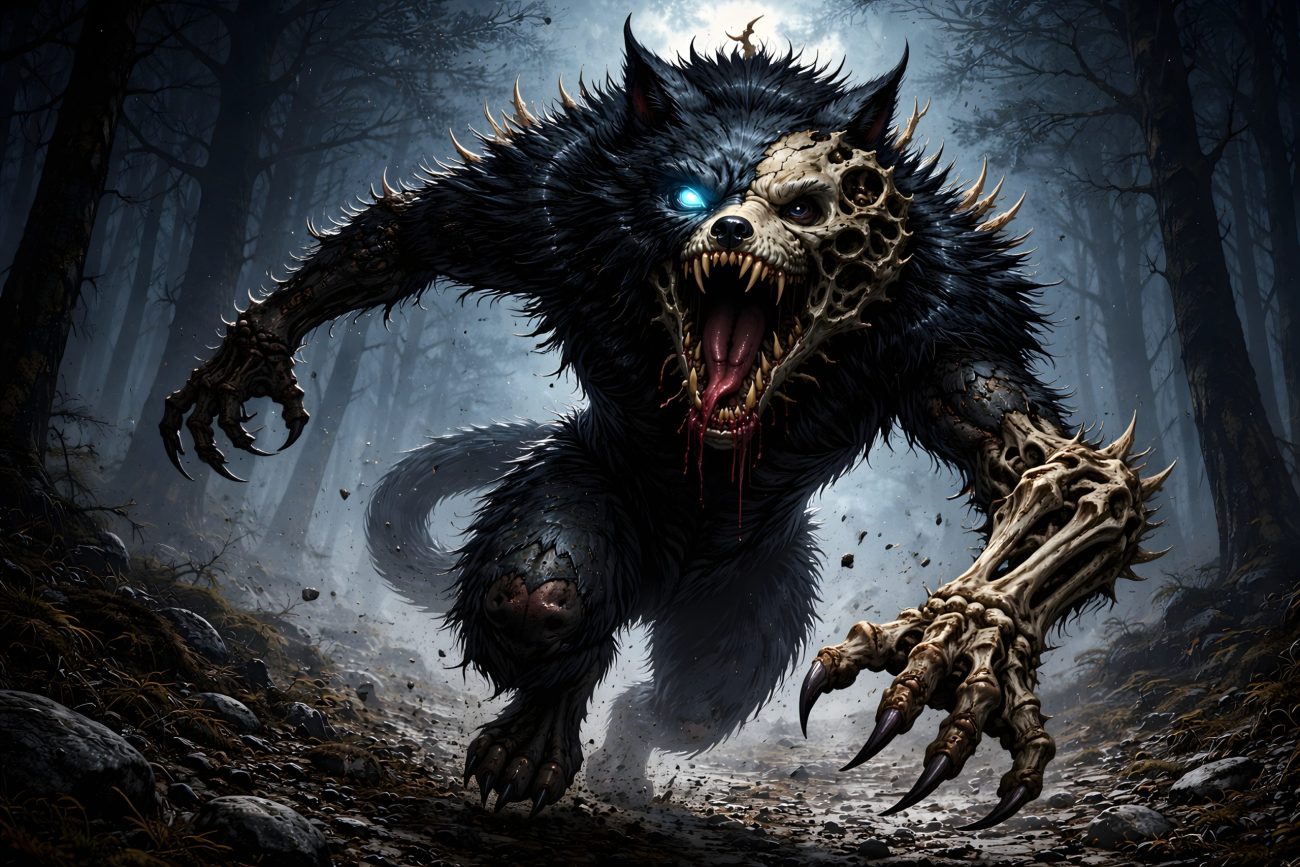
Unlike the strigoi, which keeps a human-like form, the pricolici almost always appears as a wolf, dog, or wolf-human hybrid. It may also take human form or disguise itself as other animals. In some stories it walks upright on two legs, making it more uncanny than an ordinary wolf.

Many folktales treat the pricolici as the final stage of a werewolf: a person cursed in life becomes a werewolf, and after death returns as a vampire-like wolf spirit. Because of this, the creature helped shape Romanian beliefs about vampires transforming into nocturnal animals such as wolves, dogs, bats, or owls.

Even into modern times, some rural communities explained mysterious wolf attacks as the work of pricolici — not natural predators, but revenants returning from the grave to hunt humans.

The pricolici therefore stands as one of the most unsettling figures of Romanian folklore: not merely a monster, but a dead soul that refuses to stop preying on the living.


Sources

Wikipedia contributors. (n.d.). Pricolici. In Wikipedia, from https://en.wikipedia.org/wiki/Pricolici


Dip

Tradition / Region: Catalan Mythology, Spanish Mythology
Alternate Names:
Category: Dog, Vampire


The Myth

In the traditions of Catalonia there was said to be a dreadful creature known as Dip.

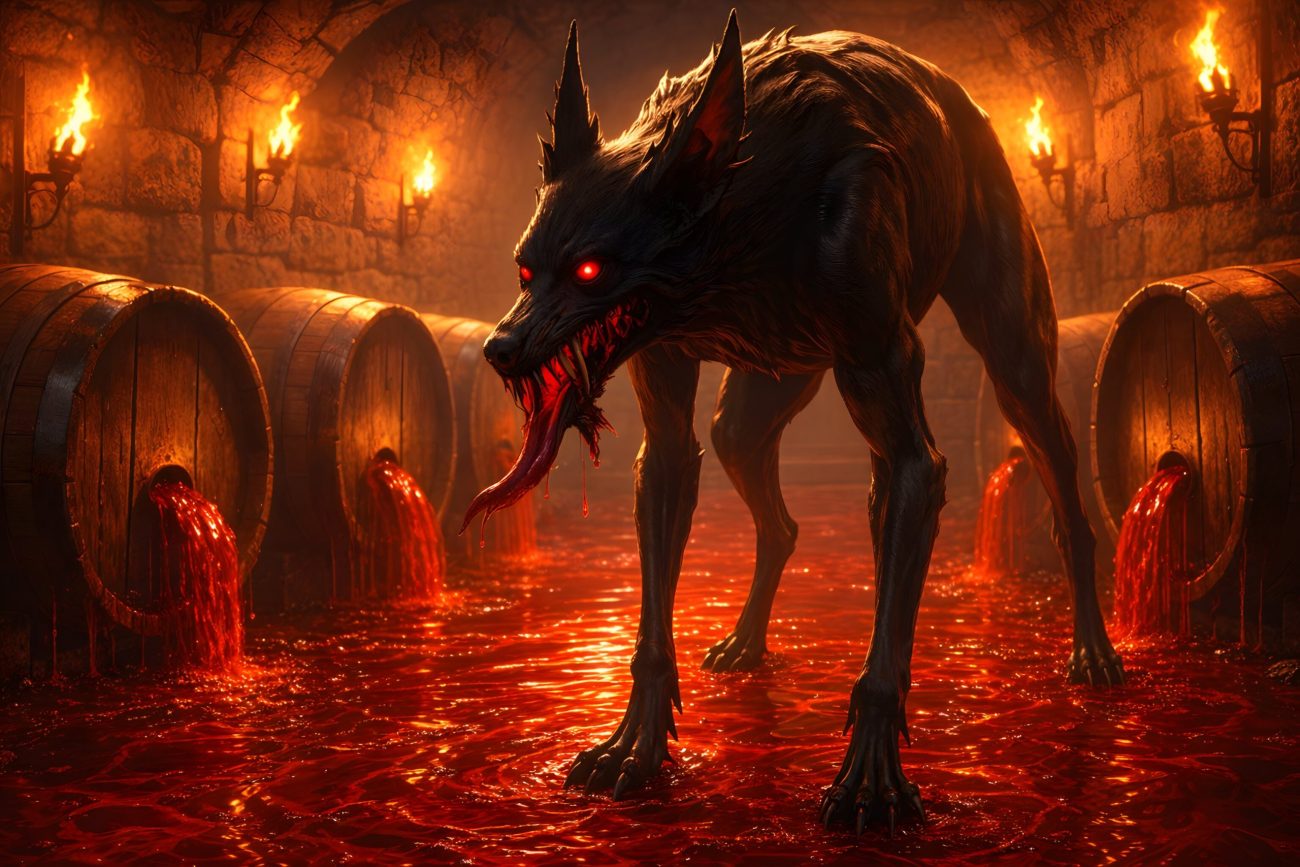
Dip was imagined as a black hellhound, a servant of the Devil who prowled the night in search of blood. He was not a perfect beast, for he was said to limp, lame in one leg, a mark that set him apart from ordinary dogs and revealed his infernal nature.

He was believed to haunt the lands around the village of Pratdip. When night fell, people spoke of glowing eyes watching from the darkness. The creature was said to attack cattle, sucking their blood, and to prey upon unlucky travelers. Some tales warned that drunken men returning from taverns were especially at risk, for the hellhound favored those wandering alone through the night.

Images of these terrible dogs appeared in religious artworks centuries ago, showing that the legend was already old by the early modern period. Over time the story became closely tied to the village itself, and people said its very name came from the presence of these creatures.

Though the fear of Dip faded and the sightings ceased, the memory of the blood-drinking hound remained. He was remembered as a shadow of the night, a limping black dog whose glowing eyes warned of danger and whose hunger for blood made him one of the most feared beasts of Catalan lore.


Sources

Wikipedia contributors. (n.d.). Dip (Catalan myth). In Wikipedia, from https://en.wikipedia.org/wiki/Dip_(Catalan_myth)


Nikusui

Tradition / Region: Japanese mythology (Mie–Wakayama mountain border)
Alternate Names: Meat sucker
Category: Vampire, yōkai, Montain dweller


The Myth

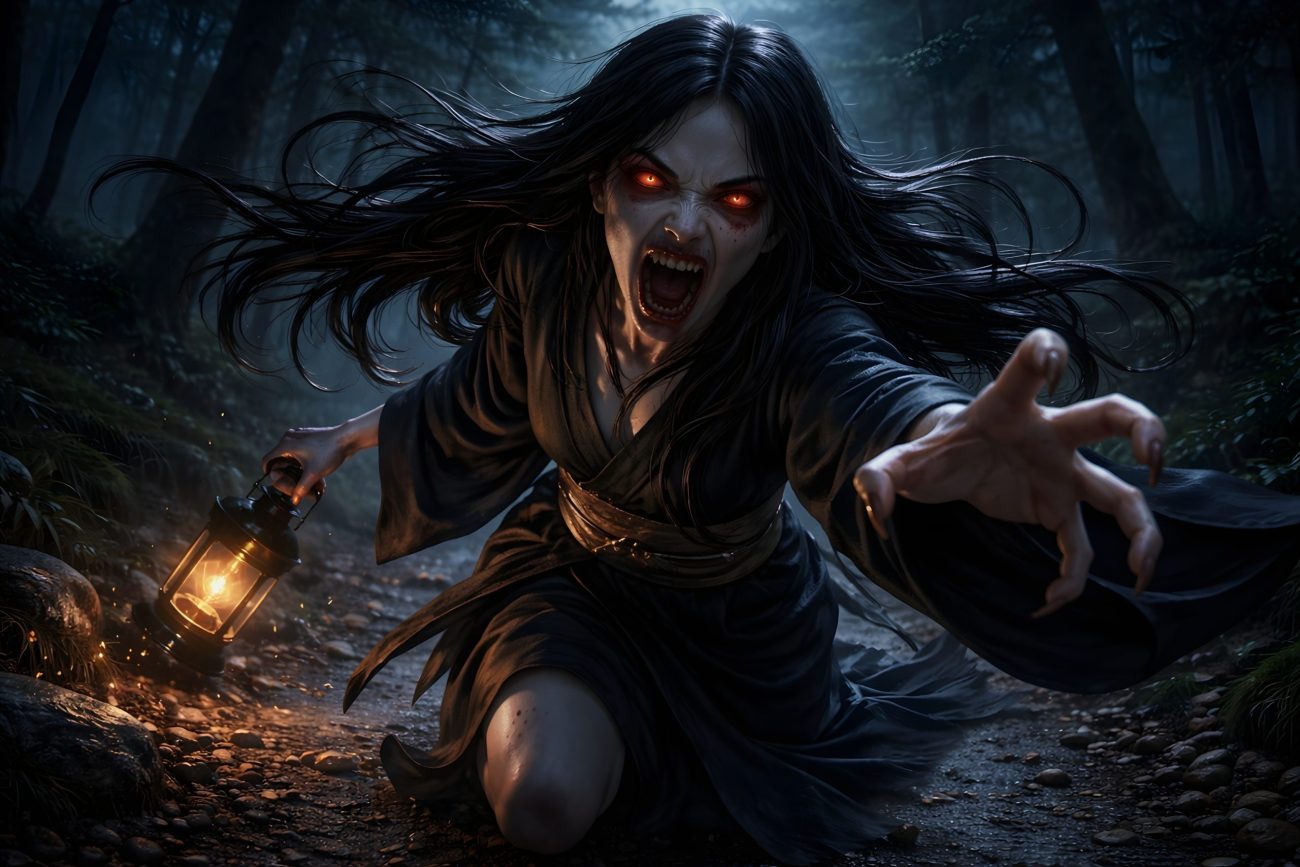
On the lonely mountain roads between Mie and Wakayama, travelers once feared to walk by lantern light. For in those dark passes, the nikusui prowled.

They appeared as young women, no more than eighteen or nineteen years old—beautiful, pale, and smiling softly in the night. They would step from the shadows as if they had been waiting, their laughter a faint “ho ho” that seemed to drift on the wind. Though it was pitch dark, they carried no lantern of their own.

When a young man traveling alone met such a woman, she would speak sweetly and draw closer. She might ask, shyly, to borrow his lantern. If he handed it over, she would snuff the flame at once. In the sudden darkness, before he could even cry out, she would seize him. Her teeth would sink into his body, and she would suck the meat from his bones. By morning, nothing remained but skin and skeleton, collapsed upon the road.

Sometimes the nikusui did not wait in the mountains. They slipped silently into bedrooms, approaching men who slept alone. They used tenderness and desire as their weapon. By seducing and exhausting their victims, they weakened them completely. Then, when the man was helpless, they fed at their leisure, draining his flesh until nothing but a hollow body remained.

Because of these horrors, villagers warned young men never to travel at night without extra light. Those who had no choice carried spare lanterns and burning coals. If a nikusui snatched their light, they could hurl hot embers into the darkness to drive her away.

One hunter named Genzō learned this lesson well. Late one night on Mount Hatenashi, a beautiful young woman appeared before him, laughing softly. She asked for his light. But Genzō felt unease stirring in his chest. He loaded his rifle with a blessed bullet inscribed with a prayer to Amida Buddha and leveled it at her. At once she fled into the dark.

Moments later, the earth shook as a monstrous shape—over six meters tall—charged from the shadows. Genzō fired. The sacred bullet struck true. The creature collapsed.

When he approached, he saw the truth of the nikusui’s form: a loose sack of pale skin draped over a bleached skeleton, empty of all flesh. There was no beauty left—only the hollow remains of what had once devoured others.

And so the mountain roads remained dangerous after dark, where beauty might be only a lantern’s breath away from death.


Gallery


Sources

Yokai.com contributors. (n.d.). Nikusui. In Yokai.com — The Japanese Mythology Database, from https://yokai.com/nikusui/


Interpretive Lenses

Religious Readings
  • Christian Ascetic Deep Dive
Philosophical Readings
  • Nietzschean Deep Dive
Psychological Readings
  • Jungian Deep Dive
Esoteric Deep Dive
  • Hermetic Deep Dive
Political / Social Readings
  • Marxist Deep Dive
Other
  • How to Invite The Nikusui

Katakana

Tradition / Region: Greek Mythology
Alternate Names:
Category: Bat, Vampire


The Myth

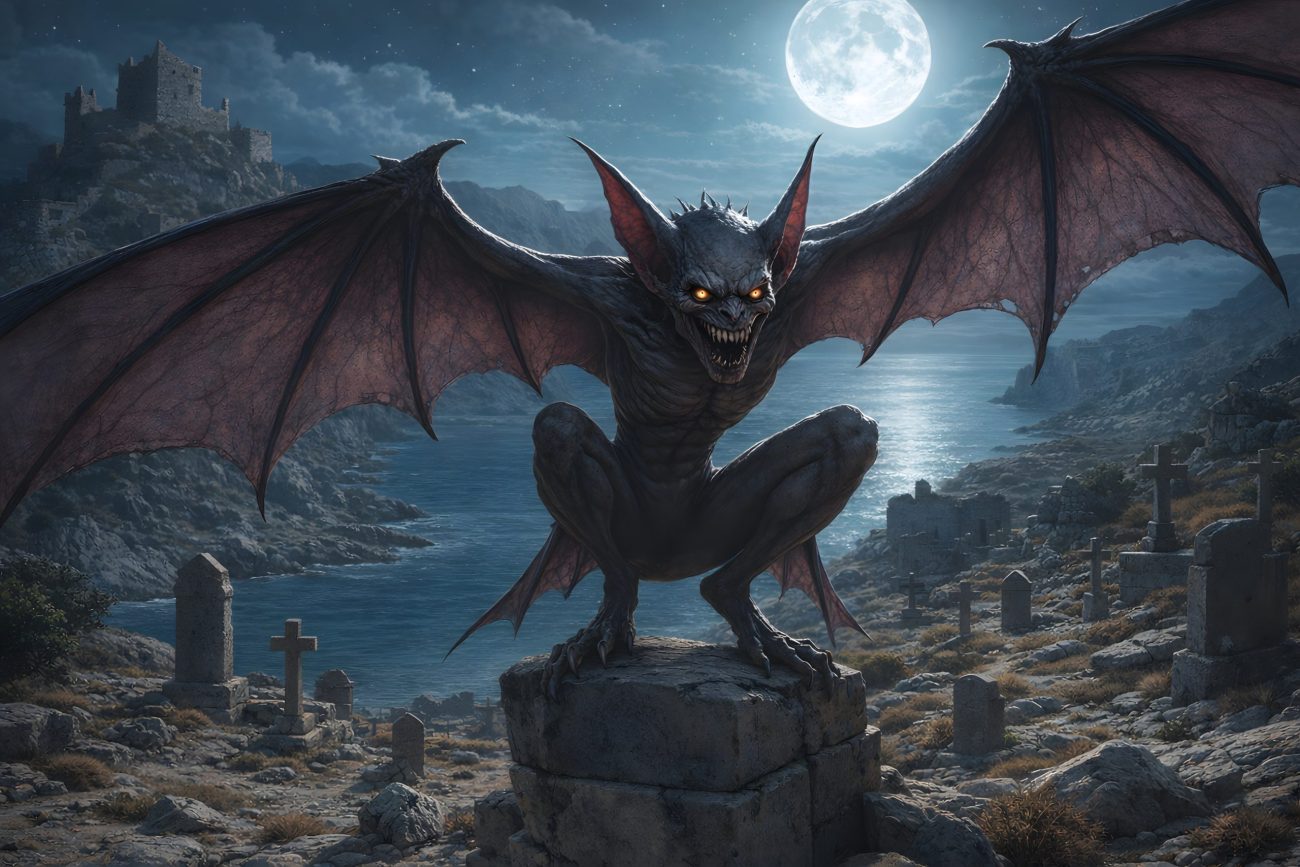
On the Greek islands of Crete and Rhodes, people tell of a vampire known as the katakana. It is believed that certain dead do not remain at rest. In older times, Cretans feared that if a person were buried in loose, unconstrained earth, the dead might rise again as a katakana. Because of this danger, holy soil was brought from sacred places, including the Holy Sepulcher, and sprinkled over cemeteries to prevent the dead from returning.

The katakana was said to arise from the bodies of suicides, evil people, or those who had been excommunicated from the church. After death, such individuals could transform into vampires, retaining a distorted likeness of their former selves. The katakana was described as constantly smiling, its teeth always visible, giving it a chilling and unnatural expression.

Unlike some other undead beings, the katakana did not rely solely on biting to create others of its kind. Instead, it was said to spit a burning, bloody discharge at people. If this sticky substance struck its target, the victim would in time become a katakana as well, transformed into a vampire like the one that cursed them.

People believed the katakana could be driven away temporarily by gunshots, but destroying it required strict measures. To kill it permanently, the vampire had to be decapitated, or at least struck in the head with a sharp-edged weapon. Its severed head was then boiled in vinegar, and its nails were burned. Another method involved trapping the katakana in a container filled with salt water, which could immobilize it.

These actions had to be carried out within the first forty days after the vampire’s rise. If this time passed, the katakana was believed to become indestructible, immune to all attempts to destroy it. Because of this, vigilance and speed were considered essential when signs of a katakana appeared.

Beliefs about the katakana were understood as a local island form of broader Greek vampire traditions, yet its distinctive grin, burning spit, and specific methods of destruction set it apart as one of the most feared undead beings of the Aegean islands.