Cocollona

Tradition / Region: Catalan Mythology, Spanish Mythology
Alternative names:
Category: Crocodile


The Myth

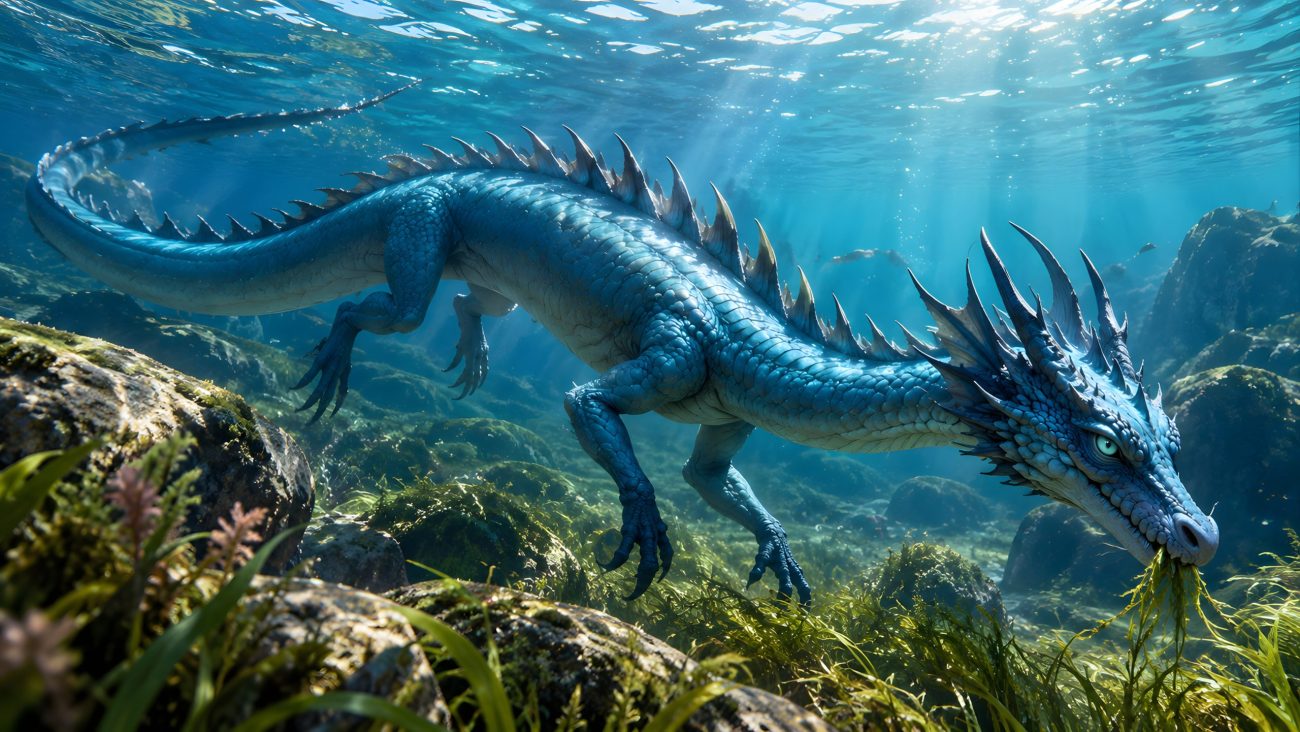
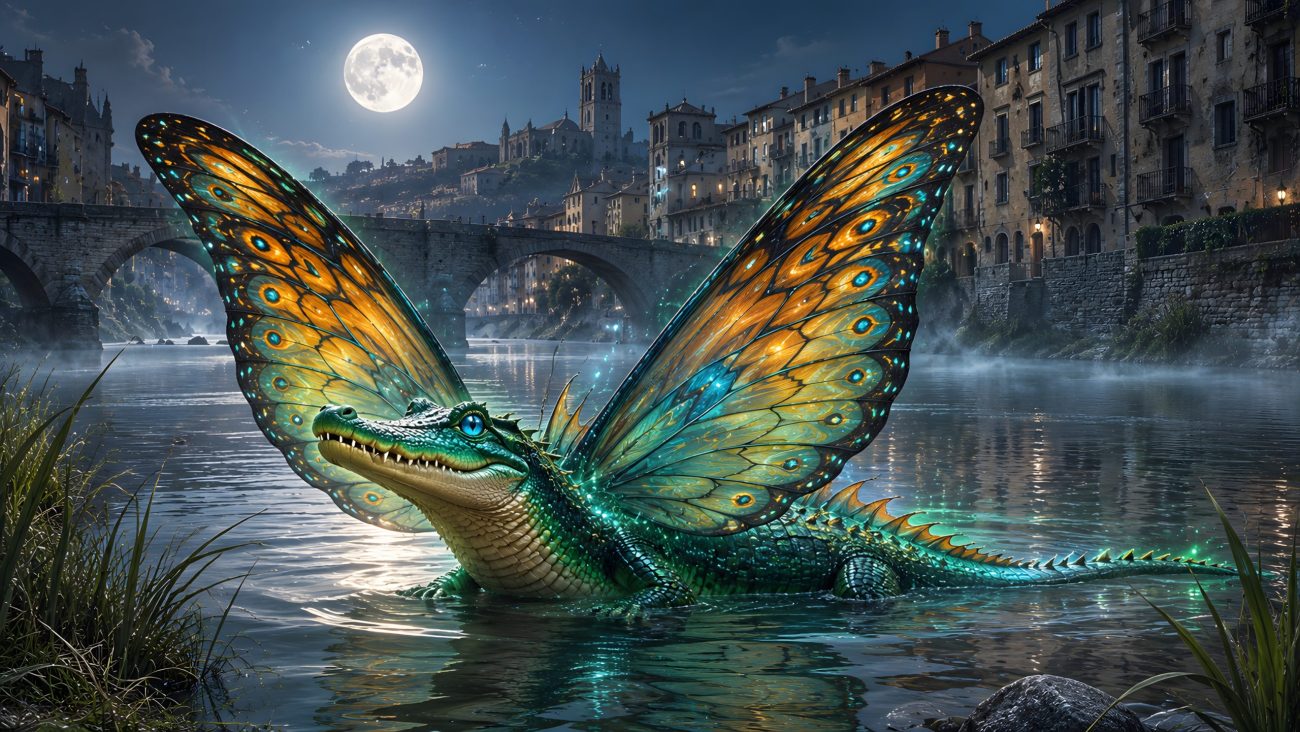
The Cocollona is a legendary creature from the city of Girona. According to tradition, it was once a novice nun who sincerely embraced the religious life while the other nuns in her convent neglected their vows and lived carelessly.

The novice repeatedly reproached the other nuns for their behavior. In response, they imprisoned her in a dark, damp cell beneath the convent, where she remained for many years. The constant darkness and humidity gradually transformed her body, causing scales to grow until she became like a crocodile.

Because of her purity and holiness, however, she also developed beautiful butterfly wings upon her back. In this way, she became the Cocollona, a creature that was half crocodile and half butterfly.

After her death, the Cocollona returned as a ghost. It is said to swim through the waters of the Onyar River near the place where she had been imprisoned. According to the legend, only on nights of the full moon, just before dawn, can those with sensitive souls glimpse the ghostly Cocollona gliding silently along the river before disappearing with the first light of day.


Sources

Wikipedia contributors. (n.d.). Cocollona. In Wikipedia. Retrieved June 29, 2026, from https://en.wikipedia.org/wiki/Cocollona


Muladona

Tradition / Region: Catalan Mythology, Spanish Mythology
Alternative names: Donamula
Category: Horse


The Myth

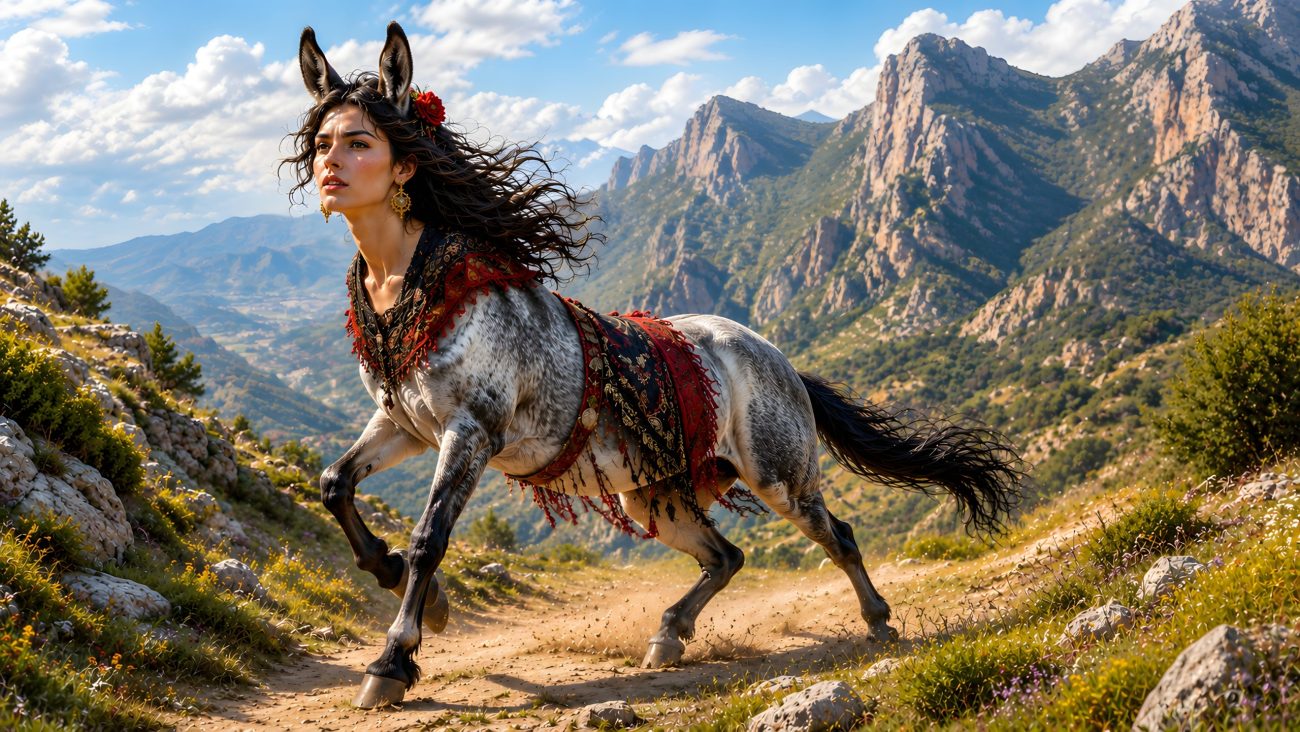
The Muladona is a monstrous creature from Catalan folklore with the body of a female mule and the head of a human woman. According to legend, it was once a young woman who was cursed by her community for being irreverent and irreligious, transforming her into this unnatural form.

After her transformation, the Muladona wandered through the mountains, especially at night, where she joined trains of mules. Her presence terrified the animals, causing them to panic, stampede into ravines, and perish.

The creature has the body of a mule, but its mane resembles a woman’s hair and its face is unmistakably human despite retaining some animal features. It is always depicted with the four legs of a mule, although some traditions show its front legs connected to a human-like torso where a mule’s neck would normally be. It is also consistently portrayed with breasts, emphasizing its female nature.

To protect their animals, muleteers fed their mules small pieces of bread shaped like the Muladona, believing this charm would prevent them from being frightened. They also carefully counted the mules in their caravans, fearing that the Muladona might secretly mingle among them and bring disaster if it went unnoticed.


Sources

Wikipedia contributors. (n.d.). Muladona. In Wikipedia. Retrieved June 29, 2026, from https://en.wikipedia.org/wiki/Muladona


Diano

Tradition / Region: Spanish Mythology
Alternative names: Diañu Burlón (“Mocking Devil”), Diablo Burlón (“Mocking Devil”)
Category: Sheep


The Myth

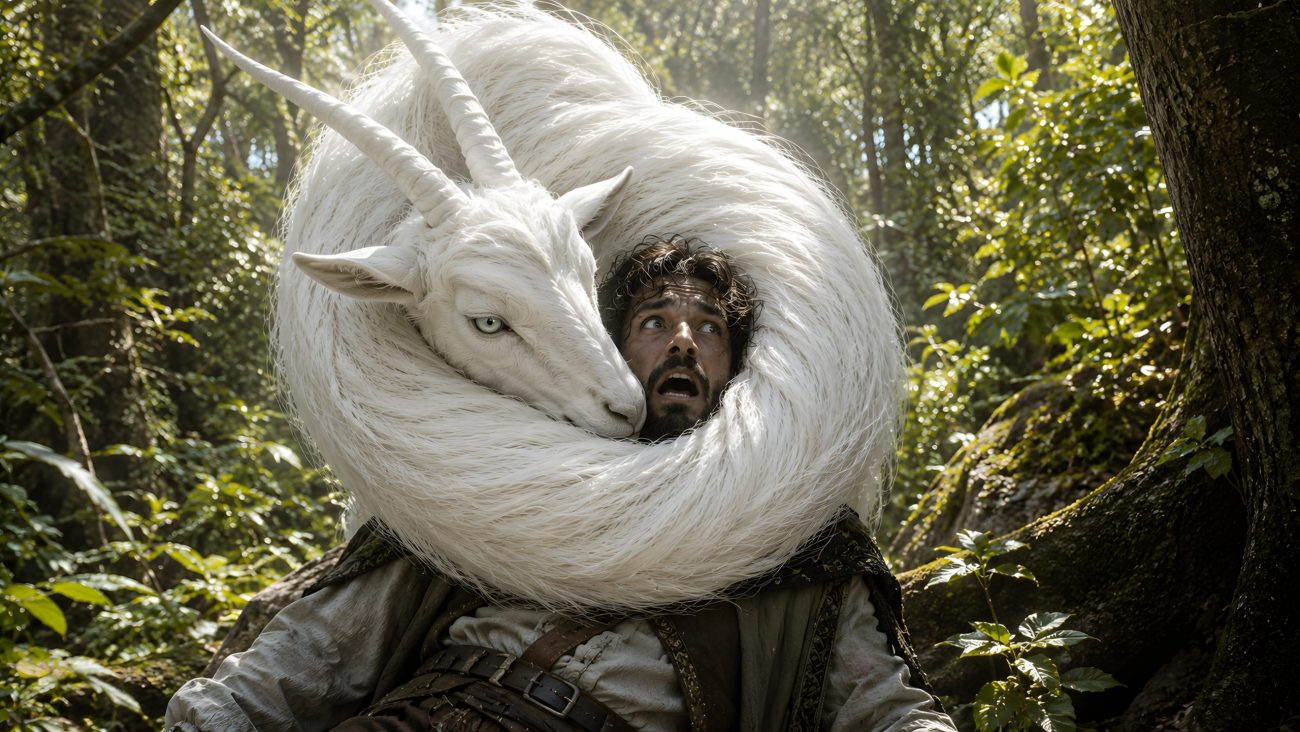
Diano is a deceptive demon from the folklore of northern Spain, most commonly appearing in the form of a beautiful goat. Rather than attacking people outright, it tricks exhausted travelers into mounting its back before revealing its true supernatural nature.

According to the Asturian legend El Diañu Burlón and the closely related Navarrese tale El Diablo Burlón, a weary traveler resting in a forest encounters an unusually handsome goat. The animal calmly kneels as if inviting the traveler to ride it. Believing he has found an easy way to continue his journey, the traveler climbs onto its back.

The moment he does, the goat suddenly begins to grow to an enormous size and bolts into the forest at terrifying speed. Racing through mountains and woodland with impossible swiftness, it carries its helpless rider ever deeper into the wilderness. The traveler, unable to escape and convinced he is about to die, desperately calls upon God and the saints for protection. At the sound of these prayers, the demonic goat instantly vanishes, throwing the rider safely to the ground before disappearing without a trace.

The legend presents Diano as a supernatural deceiver who preys upon the exhausted and unwary rather than killing through brute force. His goal is to terrify, mislead, and lure people away from safety into the unknown depths of the forest.

Diano’s appearance as a goat reflects medieval Christian symbolism. In the Gospel’s description of the Last Judgment, Christ separates the righteous sheep from the sinful goats, who are cast into eternal punishment. This imagery helped establish the goat as one of the Devil’s most recognizable forms throughout medieval Europe. In northern Spanish folklore, Diano embodies this symbolism, appearing as an attractive yet treacherous animal whose invitation leads only to fear, deception, and peril.


Sources

Bestiary.us. (n.d.). Diano. In New Bestiary: Encyclopedia of Imaginary Beings. Retrieved June 28, 2026, from https://www.bestiary.us/diano


Pesanta

Tradition / Region: Catalan Mythology
Alternate Names:
Category: Dog


The Myth

In Catalan tradition, the Pesanta is a creature of the night that enters houses while people sleep.

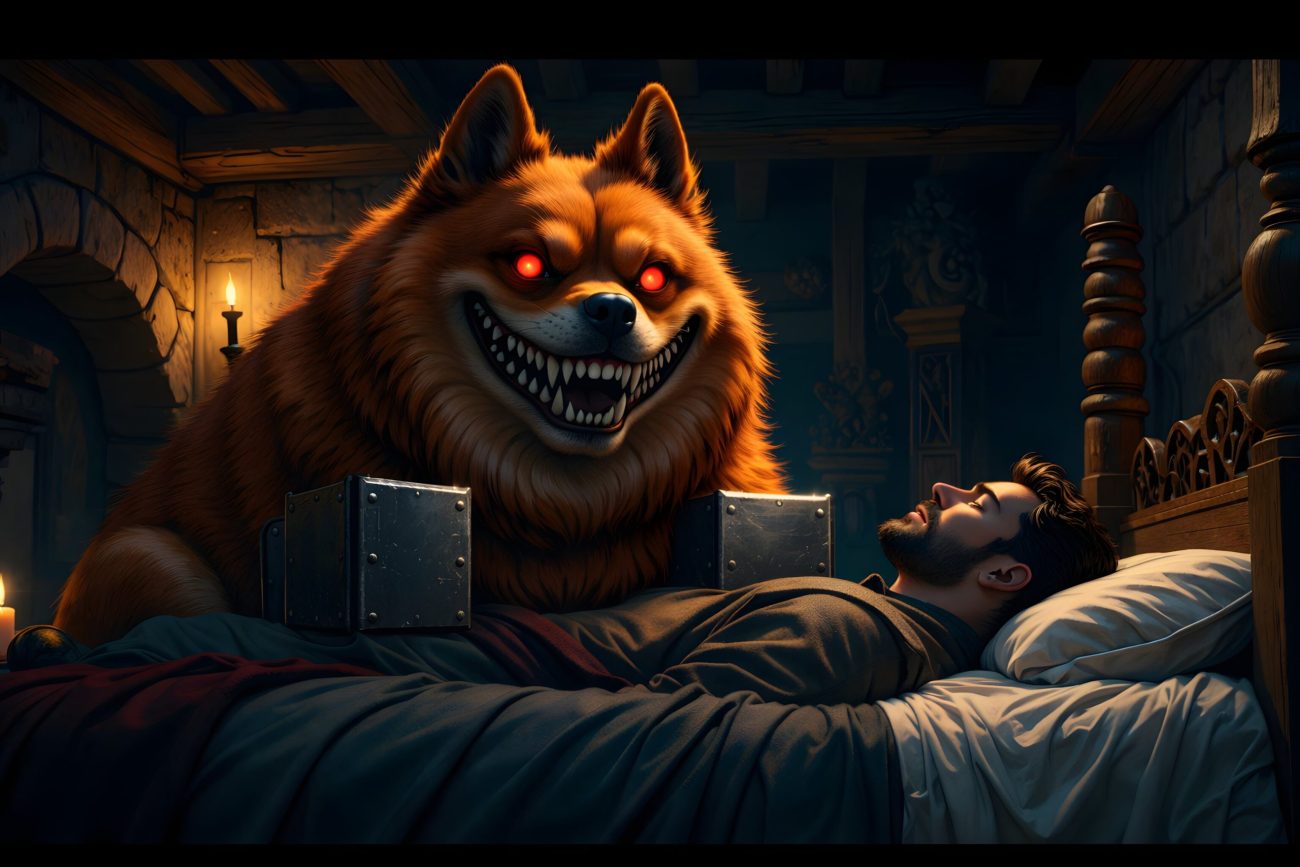
It is described as an enormous animal, sometimes appearing as a dog and sometimes as a cat. Its body is black and covered in thick hair, and its paws are said to be made of iron. Yet these paws are strange, for they have holes in them, marking the creature as something unnatural.

The Pesanta comes silently into homes after dark and climbs onto the chest of a sleeping person. There it presses down with its heavy weight, making it difficult to breathe. Those who suffer its visit cannot cry out or move, and they are left struggling beneath the creature as terror and nightmares fill their sleep.

By morning, the victim wakes exhausted, shaken, and often certain that something dreadful has visited in the night.

Thus the Pesanta was remembered as a night-walking beast — a great black dog-like spirit that crept into homes and weighed upon sleepers, bringing fear, suffocation, and dark dreams.


Gallery


Sources

Wikipedia contributors. (n.d.). Pesanta. In Wikipedia, from https://en.wikipedia.org/wiki/Pesanta


Interpretive Lenses

Religious Readings
  • Christian Ascetic Deep Dive
Philosophical Readings
  • Nietzschean Deep Dive
Psychological Readings
  • Jungian Deep Dive
Esoteric Deep Dive
  • Hermetic Deep Dive
Political / Social Readings
  • Marxist Deep Dive
Other
  • How to Invite The Kuygorozh

Dip

Tradition / Region: Catalan Mythology, Spanish Mythology
Alternate Names:
Category: Dog, Vampire


The Myth

In the traditions of Catalonia there was said to be a dreadful creature known as Dip.

Dip was imagined as a black hellhound, a servant of the Devil who prowled the night in search of blood. He was not a perfect beast, for he was said to limp, lame in one leg, a mark that set him apart from ordinary dogs and revealed his infernal nature.

He was believed to haunt the lands around the village of Pratdip. When night fell, people spoke of glowing eyes watching from the darkness. The creature was said to attack cattle, sucking their blood, and to prey upon unlucky travelers. Some tales warned that drunken men returning from taverns were especially at risk, for the hellhound favored those wandering alone through the night.

Images of these terrible dogs appeared in religious artworks centuries ago, showing that the legend was already old by the early modern period. Over time the story became closely tied to the village itself, and people said its very name came from the presence of these creatures.

Though the fear of Dip faded and the sightings ceased, the memory of the blood-drinking hound remained. He was remembered as a shadow of the night, a limping black dog whose glowing eyes warned of danger and whose hunger for blood made him one of the most feared beasts of Catalan lore.


Sources

Wikipedia contributors. (n.d.). Dip (Catalan myth). In Wikipedia, from https://en.wikipedia.org/wiki/Dip_(Catalan_myth)


Tibicena

Tradition / Region: Guanche Mythology, Spanish Mythology
Alternate Names: Guacanchas
Category: Dog


The Myth

In the traditions of the Guanches, the ancient inhabitants of the Canary Islands, there were feared creatures known as Tibicenas.

They were imagined as great wild dogs, enormous and terrifying, with glowing red eyes and long black fur. These beings did not roam openly across the land but lived deep inside caves within the mountains. Some caverns were believed to be their lairs, and certain caves were still known by names connected to them.

The Tibicenas were said to emerge at night. When darkness fell, they crept out from the mountain depths and prowled the land, attacking livestock and sometimes people. Because of this, they were feared as dangerous spirits rather than mere animals.

In Guanche belief, the Tibicenas were not independent creatures but were the offspring of Guayota, a malignant being associated with darkness and the underworld. This made them part of the world of demons and hostile spirits, tied to the hidden places of the earth.

Different islands knew them by different names. On Tenerife they were often called Guacanchas, while on Gran Canaria they were more commonly known as Tibicenas.

Thus the Tibicena was remembered as a cave-dwelling demon in the form of a great black dog, a night hunter of the mountains and a servant of the dark powers beneath the earth.


Sources

Wikipedia contributors. (n.d.). Tibicena. In Wikipedia, from https://en.wikipedia.org/wiki/Tibicena


Puigmal

Tradition / Region: Catalan mythology, Spanish Mythology
Alternate Names:
Category: Giant, Mountain dweller


The Myth

In the high mountains above the valley of Ribes there once lived a giant named Puigmal.

He towered above the forests and peaks, a mighty being who watched over the trees and the wild animals. No hunter could loose an arrow without feeling his presence. No woodcutter could strike a trunk without sensing the mountain’s silent warning. Puigmal guarded nature fiercely, defending it from careless human hands.

One day, as he wandered the slopes, he milked a wild doe and made cheese from her milk. He brought this cheese to a human and offered it as a gift. “As long as you do not eat it all,” he said, “it will grow again and again. You will never hunger, and you will not need to hunt the creatures of these mountains.”

The gift was a covenant: live with restraint, and the mountain would provide endlessly.

But the balance between humans and nature is fragile. In time, the giant was turned to stone, his immense body becoming the very mountain that now bears his name—Puigmal. His stony form rises above the valley still, silent and watchful.

They say he remains there as guardian still, the mountain itself standing as his petrified body, overlooking the forests and animals he once defended.


Sources

creatures-of-myth.fandom.com contributors. (n.d.). Puigmal. In creatures-of-myth.fandom.com, from https://creatures-of-myth.fandom.com/wiki/Puigmal


Cuegle

Tradition / Region: Cantabrian Mythology, Spanish Mythology
Alternate Names:
Category: Mountain dweller


The Myth

In the mountains and wild lands of Cantabria there is said to roam a dreadful creature known as the cuegle.

Though small in stature, it walks upright like a man. Its skin is black as soot, its beard long and tangled, its hair grey and unkempt. From its body sprout three arms—yet each ends bluntly, without hands or fingers. Upon its head sits a short, stunted horn, and in its face gleam three terrible eyes: one yellow, one red, and one blue. When it opens its mouth, five rows of teeth are revealed, layered deep within like the jaws of some monstrous trap.

Despite its size, the cuegle possesses enormous strength. It prowls at night, attacking travelers and livestock, dragging them down with ferocity. But most feared of all is its hunger for infants. The cuegle creeps silently into homes and steals babies from their cradles, vanishing into the darkness before anyone can stop it.

Families learned that the creature recoils from certain leaves. Oak and holly are hateful to it. So mothers would place fresh sprigs of oak or holly in the cradle beside their child. The sharp scent and sacred greenery drove the cuegle away, protecting the infant from its grasp.

Thus the people of Cantabria guarded their homes with leaves and vigilance, wary of the small, three-eyed horror that stalked the night.


Sources

Wikipedia contributors. (n.d.). Zana (mythology). In Wikipedia, The Free Encyclopedia. Retrieved February 13, 2026, from https://en.wikipedia.org/wiki/Cuegle


Bucentaur

Tradition / Region: Spanish mythology
Alternate Names:
Category: Cow, Hybrid


The Myth

In the old tales, there is mention of a creature rarely seen and seldom challenged: the Bucentaur.

It bears the upper body of a man, broad-shouldered and upright, with human eyes that can glare with anger or dull with indifference. From the waist down, however, its body is that of a massive bull—thick-limbed, heavy, and powerful, with hooves that strike the ground like stone. In its arms lies great strength, and in its bovine form rests an immense weight that anchors it to the earth.

The Bucentaur is ill-tempered and easily provoked. When disturbed, it bellows and threatens, pawing the ground and raising its fists as if to crush whatever stands before it. Yet despite its fearsome appearance, it is slow. Its great body moves with difficulty, and its rage burns hotter than its ability to act upon it. Those who encounter it and keep their distance often find that escape is easy, for the Bucentaur cannot pursue for long.

It does not hunt, nor does it scheme. It lingers in lonely places, half man and half beast, caught between thought and instinct. It is said that its human half knows frustration, while its bull’s body binds it to brute force and inertia.

Thus the Bucentaur remains a creature of warning rather than conquest: powerful, dangerous, yet limited—an image of strength weighed down by its own nature, and of a mind trapped within the body of a beast.


Sources

Bestiary. (n.d.). Букентавр — в европейском символизме чудовищная разновидность кентавра: получеловек, полубык. https://www.bestiary.us/bukentavr


Aatxe

Tradition / Region: Basque mythology, Spanish Mythology, French Mythology
Alternate Names: Etsai, Aatxegorri
Category: Cow


The Myth

Aatxe is a spirit in Basque folklore whose name means “young bull.” He is a cave-dwelling shapeshifter most often appearing as a young red bull, but he may also take the form of a man, cow, or calf. He emerges at night, especially during storms, from caves or hollows where he lives. He attacks criminals and other malevolent people and protects others by making them stay home when danger is near. He is considered a representative or enforcer of Mari.

In the ancient Basque lands, justice was not written in books or spoken by judges. It lived in the land itself. It moved through mountains, valleys, and storms, watching quietly. One of its strongest forms was the Aatxe.

The Aatxe did not live among people. He dwelled deep within caves carved into the earth—dark places where the world opens inward. These caves were not empty hollows but living thresholds, places where the human world touched something far older. From there, the Aatxe kept watch, standing between humanity and the forces beneath the ground.

He did not emerge without reason.

The Aatxe came forth only when rain fell. When storms covered the land, villages grew quiet and honest people stayed inside by their fires. Only those with secrets, ill intent, or guilt walked abroad in such weather. Rain stripped the world of witnesses and noise, leaving only the sound of water and footsteps. It was then, in the blurred paths and empty roads, that the Aatxe appeared.

Those who encountered him knew why he had come.

The Aatxe did not need to question or accuse. He did not bargain, hesitate, or explain. His presence alone was judgment. The guilty felt it immediately—an inescapable certainty that no excuse could undo what had already been done. Fear came not from violence, but from inevitability.

He was not an independent being, but a form taken by Mari, the great power of earth and storm. Through wind and rain, she shaped the conditions of justice, and through the Aatxe she made it visible. The storm was not a warning—it was the space in which judgment could occur.

Thus the people believed that morality was part of nature itself. To act wrongly was not merely to break a rule, but to step out of harmony with the world. And when that happened, the land would answer—quietly, patiently, and without mercy—through the coming of rain and the silent watch of the Aatxe.


Sources

Bane, T. (2016). Encyclopedia of spirits and ghosts in world mythology (p. 13). McFarland.

Barandiaran Ayerbe, J. M. D. (n.d.). Aatxe. Auñamendi Eusko Entziklopedia. Retrieved, from https://aunamendi.eusko-ikaskuntza.eus/artikuluak/artikulua.php?id=eu&ar=5626

Julien, D. H. U. Y., and Jean-Loïc LE QUELLEC. “Les Ihizi: et si un mythe basque remontait à la préhistoire?.”

Rose, C. (1998). Spirits, Fairies, Leprechauns and Goblins. Norton.