Tradition: Basque Mythology, Spanish Mythology
Alternative Names: Galtzagorri, Mamorro, Mamurru, Mamarrao, Mamor, Mamur, Maimur, Prakagorriak, Ximelgorriak
Category: Insect
The Myth
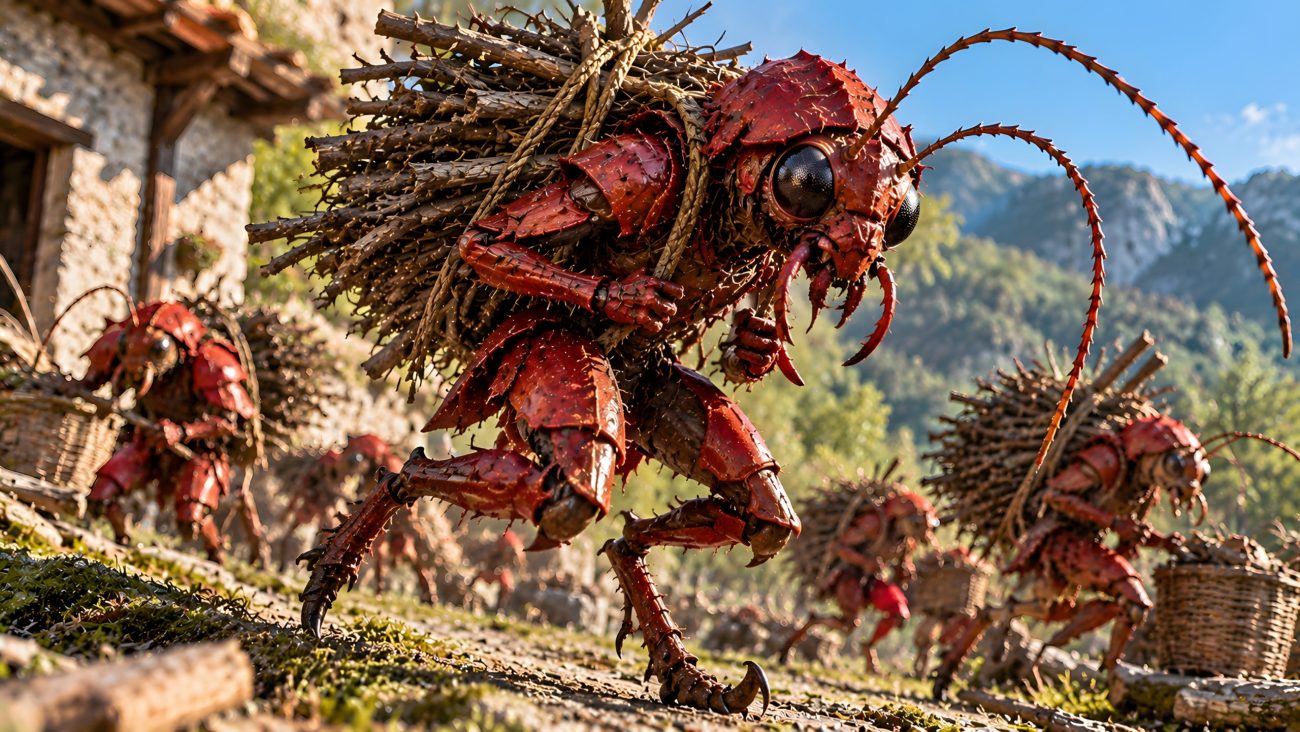
Mamarroak are tiny supernatural beings that can resemble insects or miniature humans. They are often depicted wearing distinctive red trousers, which is why they are also known as Galtzagorri, or “red trousers.” Although their precise appearance can vary, these little spirits are known for their extraordinary ability to perform tasks at incredible speed, accomplishing even seemingly impossible work when given instructions.
In Basque folklore, Mamarroak are generally benevolent spirits that help people with their daily chores and protect the households in which they live. However, they must always have something to do. When their owners fail to give them work, they can become troublesome or dangerous. People who possessed these spirits were sometimes said to have supernatural abilities, and stories credit Mamarroak with helping their masters perform remarkable feats.
Mamarroak were traditionally kept in small containers, sometimes made from needle cases, which could hold as many as four spirits. When someone opened a container, the creatures would emerge and fly around the owner’s head, repeatedly demanding, “What shall we do?” or “Work! Work!” Once given an order, they would immediately set about completing it. Their eagerness to work could be useful, but their owners had to choose their instructions carefully.
According to one tale from Kortezubi, a man who owned Mamarroak gave them several tasks, each of which they completed successfully. When they returned and asked what they should do next, he ordered them to carry water in a sieve. Unable to accomplish this impossible task, the spirits abandoned him. The story illustrates that even these extraordinarily capable beings had limits, and that an owner could escape their persistent demands by giving them work they could not perform.
Other legends describe people using Mamarroak to accomplish feats beyond ordinary human ability. A priest from Aizpuru supposedly travelled to Madrid and attended a bullfight with the help of the spirits. In Zarautz, a shepherd secretly placed their container on the yoke of his oxen during a competition, allowing his animals to pull a heavy stone farther than their rivals. The priest Juanis of Bargota was also credited with numerous extraordinary deeds, including building his house and performing acts of apparent magic with the spirits’ assistance.
Keeping Mamarroak could also become a burden. Some owners were said to retain their spirits throughout their lives, only to find themselves unable to die peacefully until they had disposed of them by destroying, selling, or giving them away. In one story from Bedia, a priest discovered a small bag of Mamarroak beside a dying woman. He threw the bag into the fire, where the spirits disappeared with loud neighing sounds. Only then was the woman able to die.
Mamarroak are therefore powerful but demanding household helpers. Their tiny size contrasts with the remarkable strength and speed they provide, while their constant need for employment makes them both useful companions and potentially troublesome possessions. In Basque tradition, they represent supernatural assistance that can bring extraordinary success, provided their owner knows how to control their tireless desire to work.
Sources
“Mamarro.” Viquipèdia, l’enciclopèdia lliure. Wikimedia Foundation. Accessed October 18, 2026. https://ca.wikipedia.org/wiki/Mamarro