Ojáncanu

Tradition: Cantabrian Mythology, Spanish Mythology
Alternative Names: Ojancanu, Ojáncana (female counterpart)
Category: Giant


The Myth

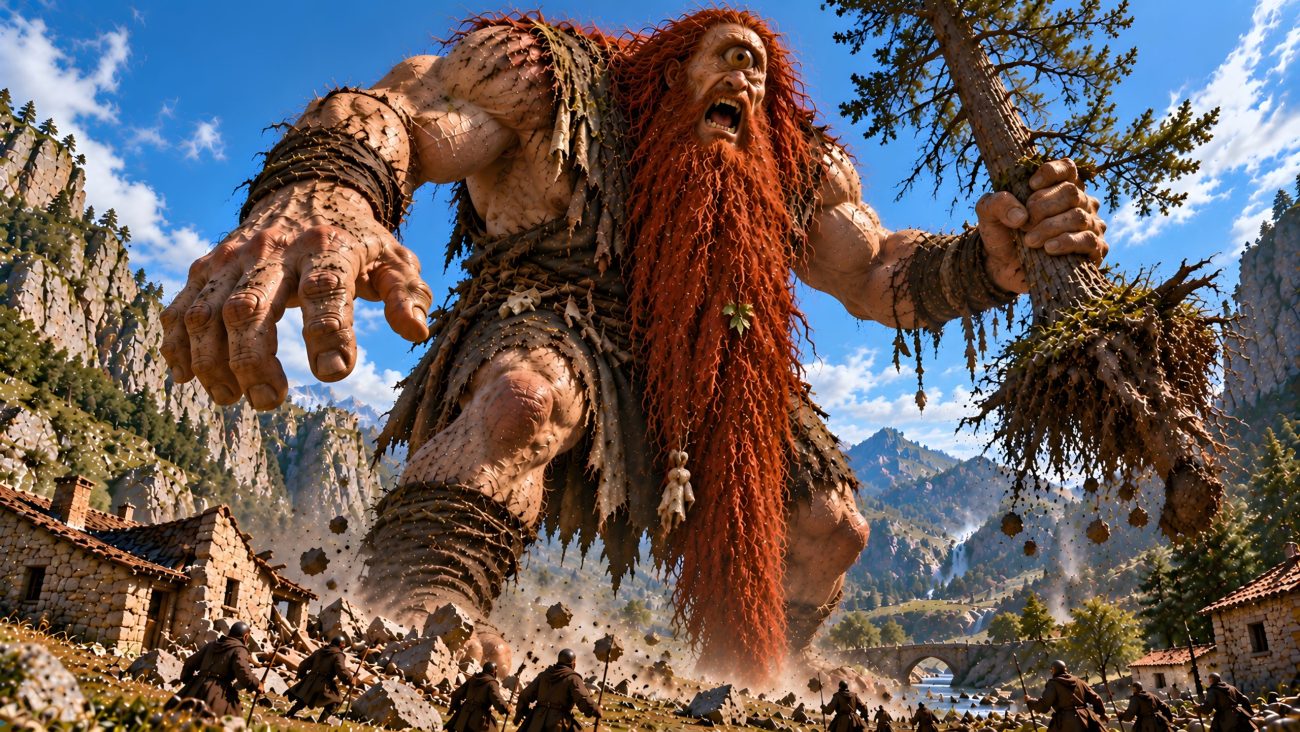
The Ojáncanu is a monstrous, one-eyed giant in Cantabrian mythology, embodying cruelty, brutality, and destructive power. It stands approximately ten to twenty feet tall and possesses superhuman strength, ten digits on each hand and foot, and two rows of teeth. Its appearance is wild and beast-like, with a long mane of red hair and an enormous beard that can nearly reach the ground.

The Ojáncanu constantly performs acts of destruction. It uproots rocks, demolishes huts, tears down trees, and blocks water sources, bringing hardship to the people who live nearby. It also fights Cantabrian brown bears and Tudanca bulls, defeating them through its extraordinary strength. Among the supernatural beings of Cantabria, it represents a violent and uncontrollable force that threatens both human settlements and the natural landscape.

Despite its immense power, the Ojáncanu has a peculiar weakness. Hidden among the tangled hair of its beard is a single white hair, and pulling it is said to be the easiest way to kill the giant. The creature therefore possesses a vulnerability that can be exploited by someone who knows its secret.

The female counterpart, known as the Ojáncana, resembles the male but has no beard. Instead, she has long, drooping breasts that reach the ground. When she runs, she must carry them over her shoulders. The Ojáncanu and Ojáncana also have an unusual reproductive tradition: when an old male dies, the other giants distribute his internal organs and bury his corpse beneath an oak or yew tree.

The Ojáncanu fears only the Anjanas, the benevolent fairies of Cantabrian mythology. These good supernatural beings stand in opposition to the giant’s cruelty and destructive nature, representing one of the few forces capable of inspiring fear in this otherwise formidable monster.


Sources

“Ojáncanu.” Wikipedia: The Free Encyclopedia. Wikimedia Foundation. Accessed October 16, 2026. https://en.wikipedia.org/wiki/Oj%C3%A1ncanu
Tartaro

Tradition: Basque Mythology, Spanish Mythology
Alternative Names: Tartalo, Tartaroa, Torto, Alarabi, Anxo, Ancho
Category: Giant


The Myth

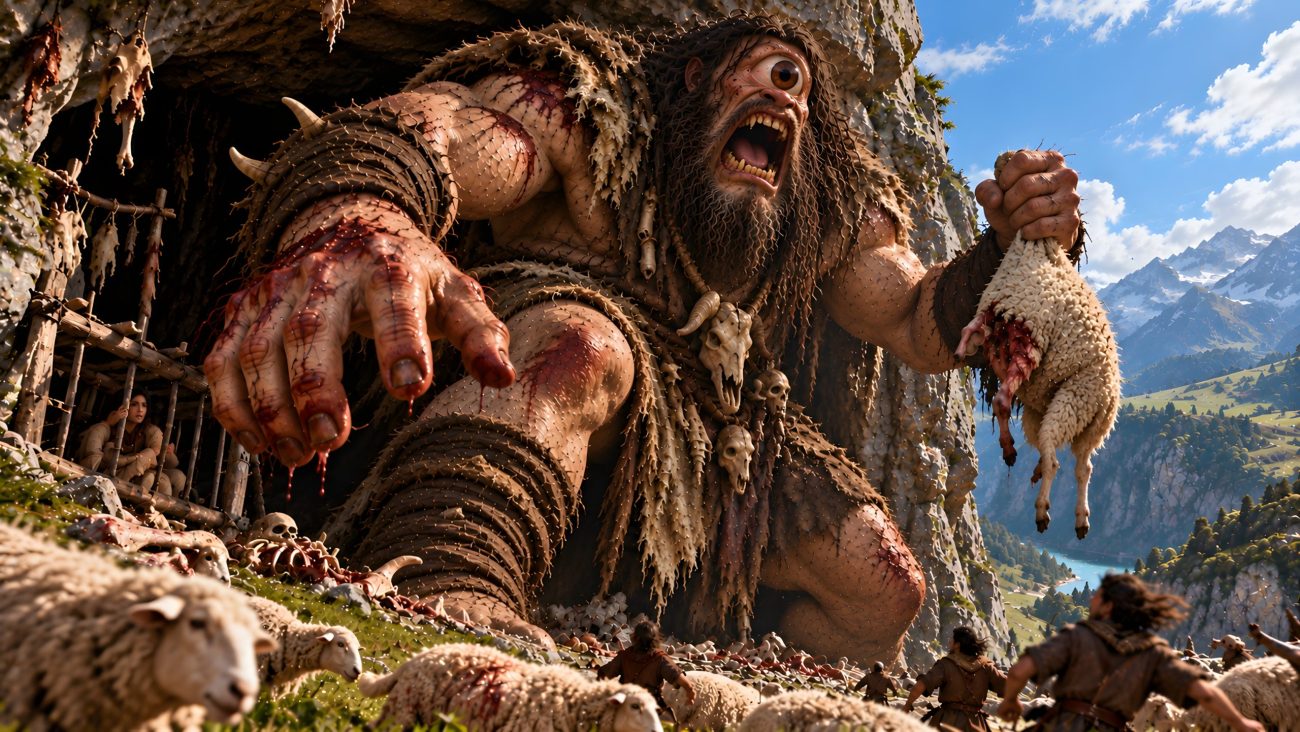
Tartaro is a gigantic, immensely strong, one-eyed monster in Basque mythology. He is commonly described as a cave-dwelling giant who captures and devours young people, especially those who wander into his lair or seek shelter there. In some accounts, he also eats sheep, consuming an entire sheep each day. His single eye and man-eating nature make him closely resemble the Greek Cyclops Polyphemus, encountered by Odysseus in Homer’s Odyssey.

In traditional tales, Tartaro lives in caves in the mountains, where he waits for unsuspecting victims. Stories about him often involve a captive who must find a way to escape the giant’s lair. Some versions closely parallel the story of Odysseus and Polyphemus: the giant is blinded with a heated spit, and the captive escapes by concealing himself beneath a sheep’s fleece. These similarities have led to comparisons between the Basque monster and the Greek Cyclops, although a direct derivation from Homer’s epic has not been established.

The creature’s name appears in several forms across Basque storytelling. Tartaro and Tartaroa occur in translated tales and older commentary, while Torto, Alarabi, and Anxo are recorded as regional names. Tartalo is particularly associated with the Zegama region. The name Anxo or Ancho is sometimes identified with Tartaro, although other accounts treat it as an alternative name for Basajaun, another supernatural being in Basque folklore.

Tartaro also appears in Basque adaptations of European fairy tales. In some versions of stories resembling Cinderella, Hop-o’-My-Thumb, and Donkeyskin, a giant called Tartaroa takes the role of the man-eating ogre. In one account, instead of smelling fresh meat, he detects the presence of Christians, whom he intends to eat. These variations show how the figure could be incorporated into stories beyond the traditional cave-monster narrative.

The origin of the name Tartaro remains uncertain. One nineteenth-century explanation connected it with the Tatar peoples, while other commentators compared the name with the European word “ogre.” These theories remain speculative. Across the different versions of the tradition, Tartaro is chiefly remembered as a powerful, one-eyed man-eater whose victims must rely on courage and cunning to escape him.


Sources

“Tartalo.” Wikipedia: The Free Encyclopedia. Wikimedia Foundation. Accessed October 16, 2026. https://en.wikipedia.org/wiki/Tartalo


Olentzero

Tradition: Basque Mythology, Spanish Mythology
Alternative Names: Olentzaro, Olantzaro, Olenchero, Onenzaro, Onentzaro, Ononzaro, Orentzago
Category: Giant


The Myth

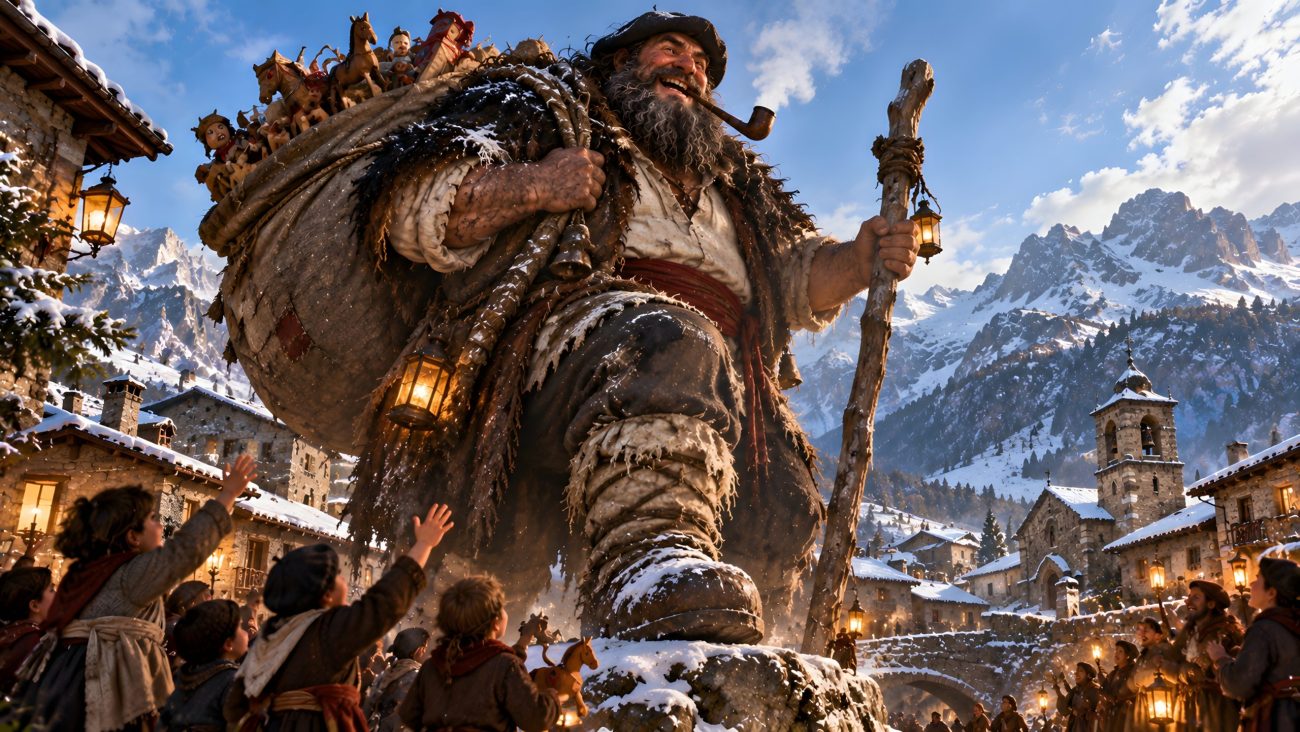
Olentzero is a traditional Basque Christmas figure who visits towns and villages to bring presents to children on Christmas Eve, 24 December. Depending on local custom, his arrival may take place on a different date, such as 27 December in Ochagavía or 31 December in Ermua. The name appears in several forms, including Olentzaro, Olantzaro, and Onenzaro. One widely accepted explanation derives it from the Basque word on, meaning “good,” combined with a plural genitive ending and the seasonal suffix -zaro, giving the approximate meaning “season of the good ones.” The earliest written reference dates to the seventeenth century, when the name was used for Christmas Eve.

In one traditional legend, Olentzero is the sole survivor of the Jentillak, a race of giants who lived in the Pyrenees. One day, the giants witnessed a mysterious, glowing cloud in the sky. Unable to look directly at it, they asked an elderly, nearly blind giant to examine it. He recognized the cloud as a sign that Jesus would soon be born, heralding the arrival of Christianity. In some versions, the old giant asked the others to throw him from a cliff so that he would not have to witness the coming transformation. After they fulfilled his request, the giants stumbled and died, leaving Olentzero as the only survivor. Other versions simply say that the Jentillak departed, while Olentzero remained and embraced Christianity.

Another version of the legend describes Olentzero as an abandoned child discovered in the woods by a fairy. She named him Olentzero, gave him the gifts of strength and kindness, and entrusted him to an elderly, childless couple who lived in the forest. As he grew up, he became a strong and skilled charcoal burner who carved wooden toys. Carrying the toys in a large charcoal sack, he distributed them to the children of nearby villages. According to this story, he died while rescuing children from a burning house. The fairy who had found him then granted him eternal life so that he could continue bringing happiness to children and adults.

Olentzero’s older traditions also include darker and more frightening customs. In some villages, adults dressed as Olentzero to frighten children who stayed outdoors too late or refused to go to bed. He was sometimes represented by a straw effigy carrying a sickle, hung from a church tower, chimney, or window. In these traditions, he threatened to punish disobedient children or those who broke the traditional Christmas fast. In parts of Navarre, related seasonal celebrations were known as xubilaro or subilaro, names connected with the Yule log. Other local versions depicted Olentzero as a three-eyed figure with red eyes, sometimes portrayed as a drunkard dressed like a scarecrow. Over time, these varied regional traditions developed into the familiar Christmas gift-bringer who visits Basque children.


Sources

“Olentzero.” Wikipedia: The Free Encyclopedia. Wikimedia Foundation. Accessed October 16, 2026. https://en.wikipedia.org/wiki/Olentzero


Jentilak

Tradition: Basque Mythology, Spanish Mythology
Alternative Names: Jentil, Jentilak, Jentilgo, Jentilarri (Giant Stones)
Category: Giant


The Myth

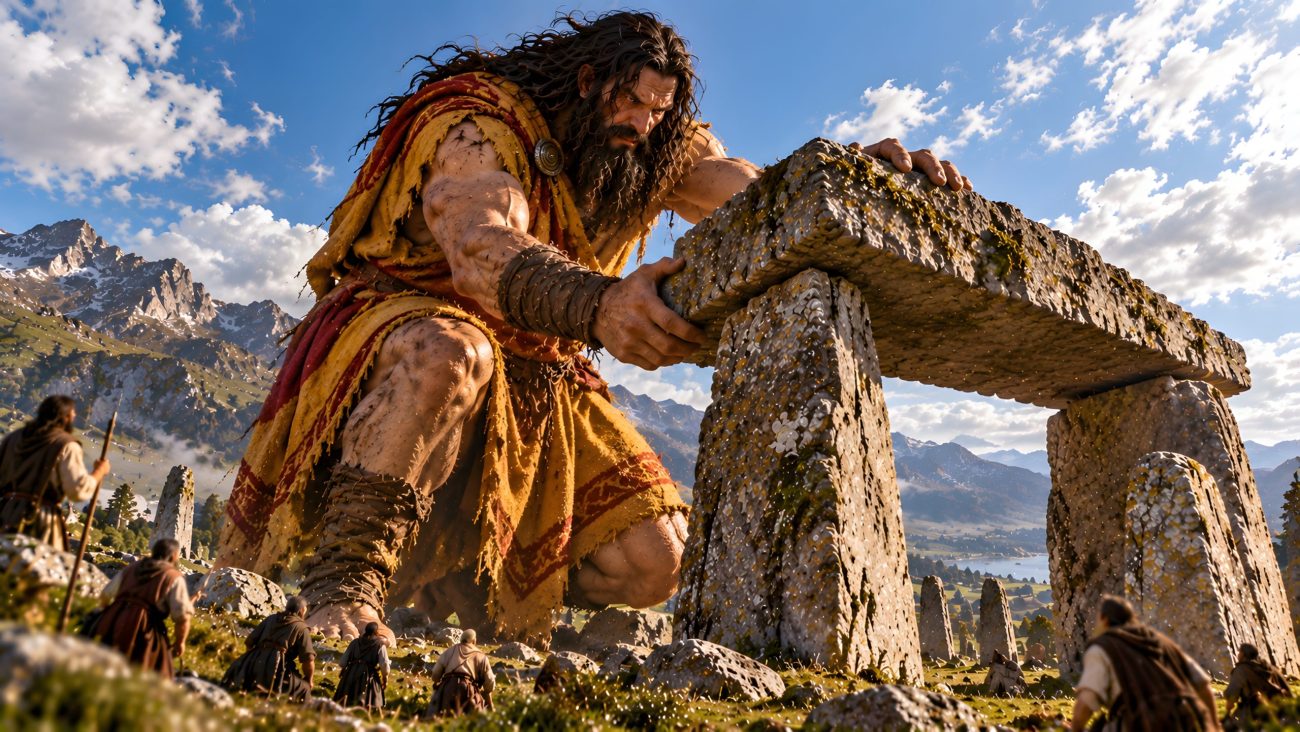
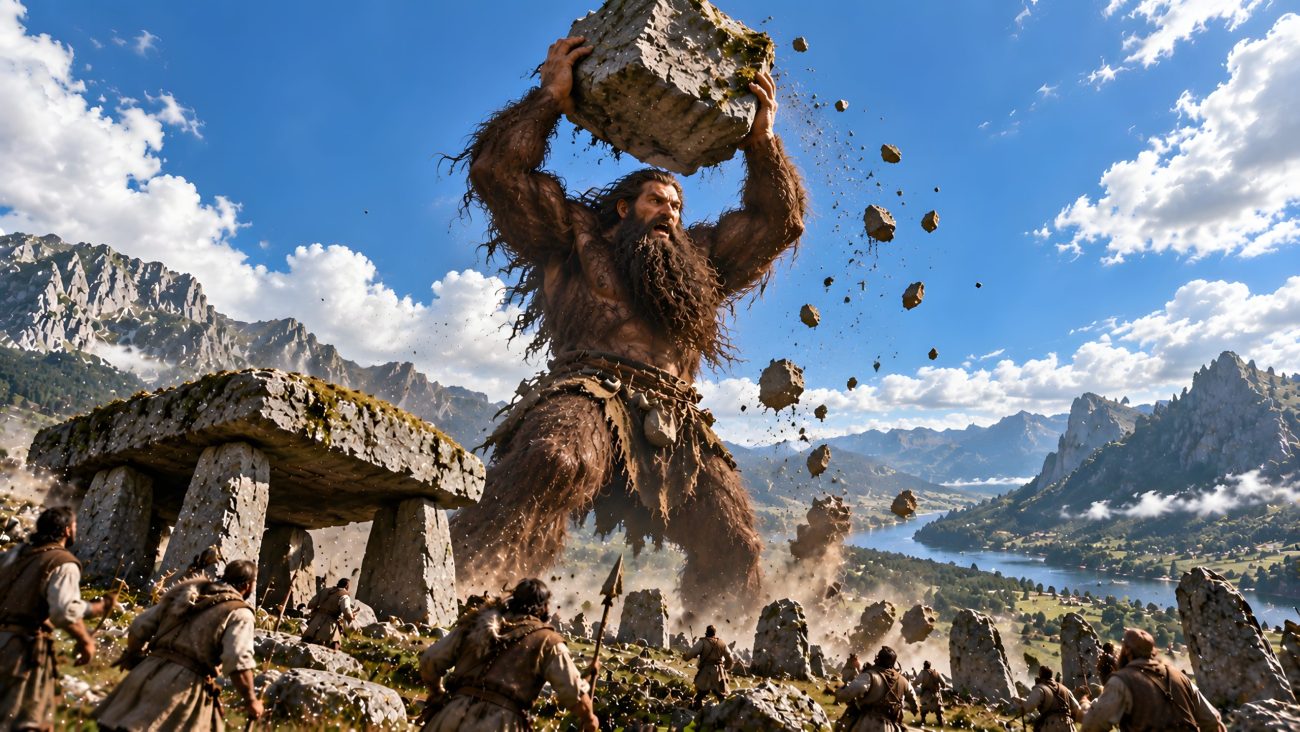
The Jentilak are a race of giants in Basque mythology who were believed to have lived alongside the Basque people in ancient times. They were exceptionally tall and covered in hair, so enormous that they could walk through the sea and throw massive rocks from one mountain to another. Their legendary strength was used to explain the presence of ancient stone monuments, megaliths, and isolated boulders scattered throughout the Basque Country. Some traditions also attributed the origins of Basque pelota, the traditional ball game, to the giants’ stone-throwing contests.

The Jentilak were regarded as builders and inventors who shaped the ancient world. They were credited with constructing Neolithic monuments such as dolmens, as well as inventing metallurgy and the saw. They were also said to have been the first to cultivate wheat and to have taught humans how to farm. Despite these achievements, the giants preferred to remain in the mountains rather than move into the valleys and adopt new ways of life.

Some legends associate the Jentilak with historical battles. One tradition claims that they helped defeat Roland and the Frankish army at the Battle of Roncevaux by hurling enormous rocks at the enemy. Their immense strength and connection with ancient stone structures made them central figures in explanations of the landscape and the distant past.

According to one tradition, the age of the Jentilak ended when a luminous cloud, possibly a star, appeared in the sky, heralding the birth of Christ, whom they called Kixmi. The giants understood this portent as a sign that their era had come to an end. They disappeared beneath the earth under a dolmen in the Arratzaren valley in Navarre. Other versions say that they threw themselves from a mountain. Only Olentzero remained, a giant associated with Christmas who survives in Basque tradition as a figure represented by straw dolls.

The Jentilak’s legacy remains visible in Basque place names and local traditions. Many ancient structures are associated with them: dolmens are called jentilarri or jentiletxe, stone circles known as harrespil are called jentilbaratz, and caves may be known as jentilzulo or jentilkoba. These names preserve the memory of the giants as the legendary builders of ancient monuments and as inhabitants of a world that existed before the Christian era.


Sources

“Jentil.” Wikipedia: The Free Encyclopedia. Wikimedia Foundation. Accessed October 16, 2026. https://en.wikipedia.org/wiki/Jentil


Mairuak

Tradition: Basque Mythology, Spanish Mythology
Alternative Names: Mairu, Maideak, Mairiak, Saindi Maidi, Intxisu
Category: Giant


The Myth

The Mairuak are giants in Basque mythology, traditionally associated with the construction of ancient stone monuments in mountainous regions. They were believed to have built dolmens and harrespil, stone structures found in the mountains of the Basque Country. Their association with these megalithic monuments connects them to the legendary peoples who were thought to have inhabited the region before the arrival of Christianity.

The Mairuak are also known by several regional names. In Lower Navarre, they are called Saindi Maidi, while in the Bidasoa valley they are known as Intxisu. Other names include Maideak and Mairiak. They are frequently associated with the lamia, another supernatural being found throughout Basque mythology.

The name Mairu may derive from a Basque word meaning “Moor.” In traditional usage, the term was associated with non-Christian peoples and earlier civilizations, particularly those credited with constructing megalithic monuments. The Mairuak share similarities with the mouros encantados of Portuguese folklore, or moros encantados in Spanish, supernatural figures believed to preserve the memory of ancient, pre-Roman deities.


Sources

“Mairu.” Wikipedia: The Free Encyclopedia. Wikimedia Foundation. Accessed October 16, 2026. https://en.wikipedia.org/wiki/Mairu


Ujanko

Tradition: Navarrese Mythology, Spanish Mythology
Alternative Names: Uhanko, Ukhanko
Category: Giant


The Myth

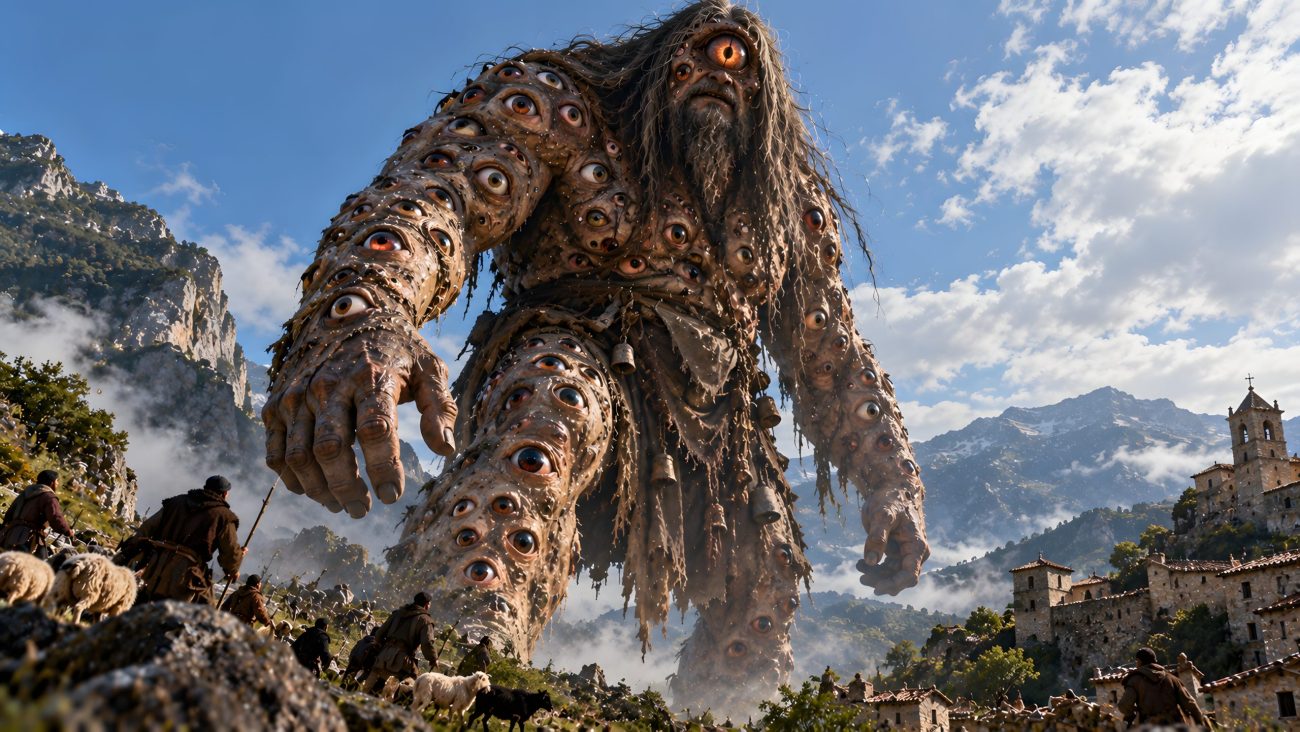
Ujanko is a strange supernatural creature from the folklore of Navarre, a region in northern Spain. It is described as an enormous, multi-eyed giant whose body is covered with numerous eyes. Each eye disappears on a particular day of the year and reappears on Christmas Eve, giving the creature an unusual connection to the passage of time and the Christmas season. In Basque-speaking communities of northeastern Spain, Ujanko is understood as the personification of a year, with its many eyes representing the days that make up the annual cycle.

According to the legend, Ujanko has a single enormous eye on its face, which is often hidden beneath a multitude of eyes covering its body. On a particular day, ten of these eyes disappear, transforming the creature’s appearance. Its many eyes are said to correspond to the days of the year, and the return of its eyes on Christmas Eve marks the completion of the cycle. This strange annual transformation connects Ujanko to seasonal change and the transition from one year to the next.

Ujanko belongs to a wider group of giant-like supernatural beings found in the folklore of the Iberian Peninsula. It has been compared to the Ombre de los Ojos, or Man of the Eyes, from Cabazuela del Valle in Extremadura, and the One-eyed Nasus from Catalonia. Its unusual anatomy also recalls Argus from ancient Greek mythology, the many-eyed giant whose numerous eyes made him an exceptional watcher. However, Ujanko’s distinctive association with the yearly calendar and Christmas Eve gives it a particular place in Navarrese folklore.


Sources

“Ukhanko.” New Bestiary (Bestiary.us). https://www.bestiary.us/ukhanko


Puigmal

Tradition / Region: Catalan mythology, Spanish Mythology
Alternate Names: —
Category: Giant


The Myth

In the high mountains above the valley of Ribes there once lived a giant named Puigmal.

He towered above the forests and peaks, a mighty being who watched over the trees and the wild animals. No hunter could loose an arrow without feeling his presence. No woodcutter could strike a trunk without sensing the mountain’s silent warning. Puigmal guarded nature fiercely, defending it from careless human hands.

One day, as he wandered the slopes, he milked a wild doe and made cheese from her milk. He brought this cheese to a human and offered it as a gift. “As long as you do not eat it all,” he said, “it will grow again and again. You will never hunger, and you will not need to hunt the creatures of these mountains.”

The gift was a covenant: live with restraint, and the mountain would provide endlessly.

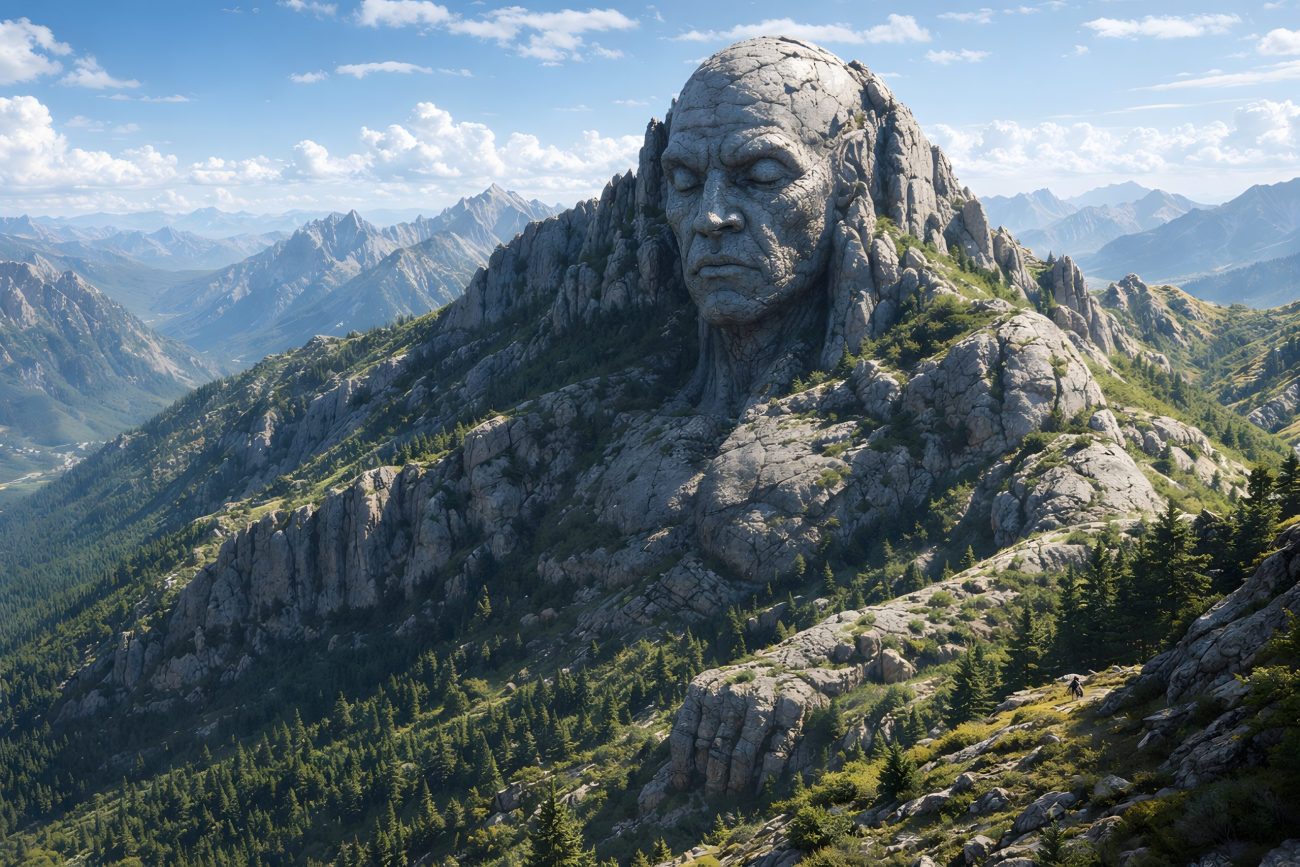
But the balance between humans and nature is fragile. In time, the giant was turned to stone, his immense body becoming the very mountain that now bears his name—Puigmal. His stony form rises above the valley still, silent and watchful.

They say he remains there as guardian still, the mountain itself standing as his petrified body, overlooking the forests and animals he once defended.


Sources

creatures-of-myth.fandom.com contributors. (n.d.). Puigmal. In creatures-of-myth.fandom.com, from https://creatures-of-myth.fandom.com/wiki/Puigmal