Vadleány

Tradition / Region: Hungarian Mythology
Alternate Names: Wild Maiden
Category: Nymph


The Myth

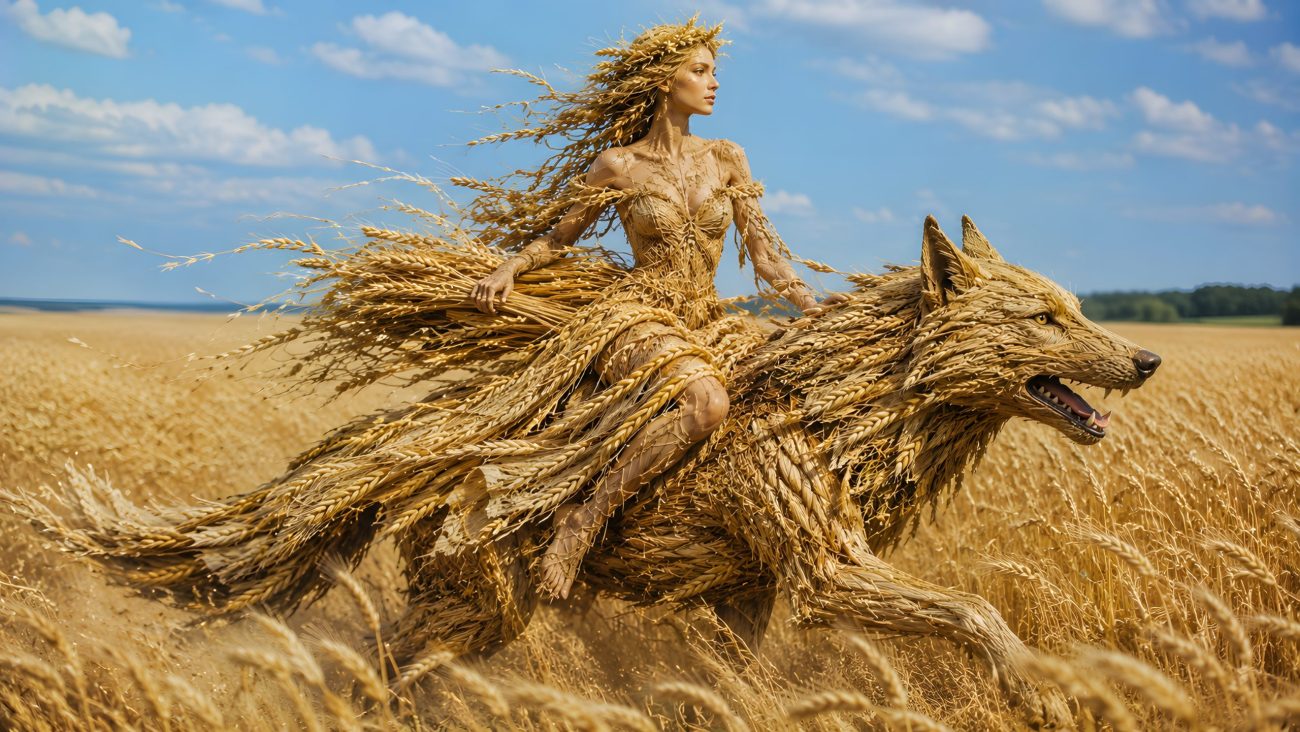
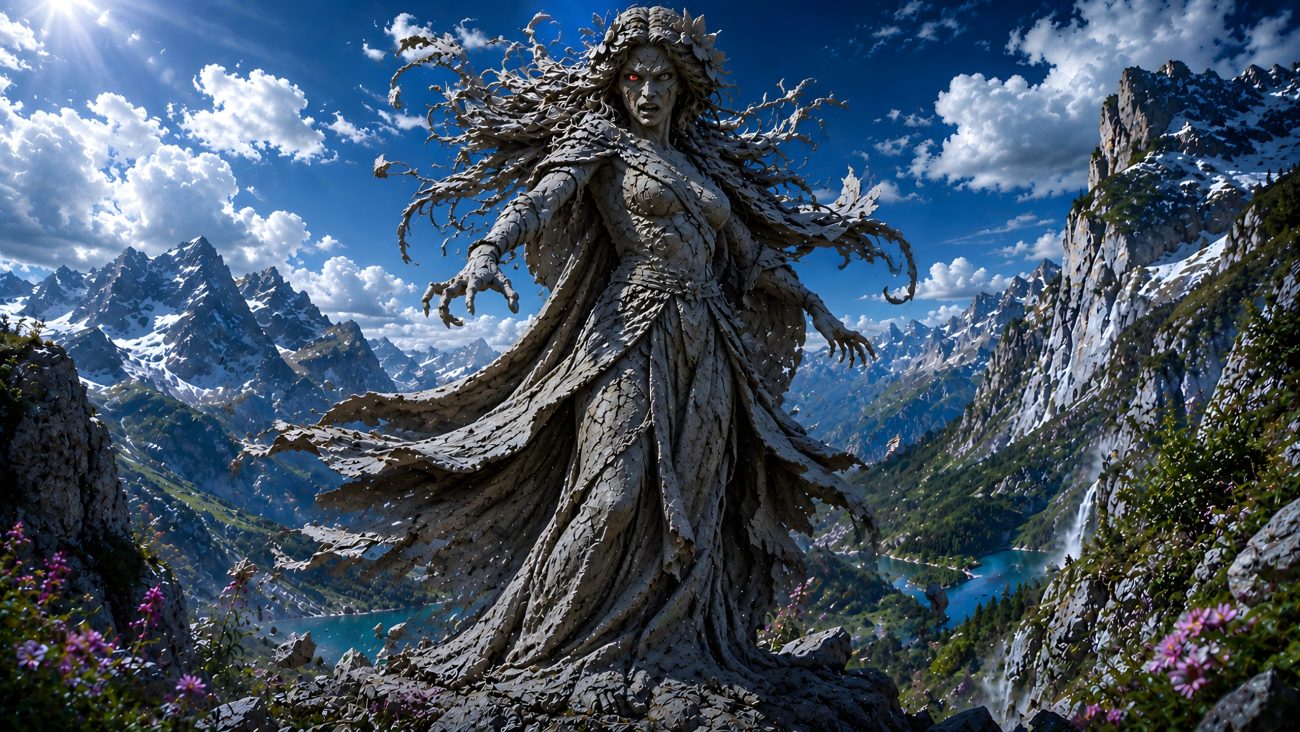
The Vadleány is a mysterious and dangerous forest spirit from Hungarian folklore, closely related to nymphs or dryads. Her name literally means “wild girl,” reflecting her untamed and primal nature.

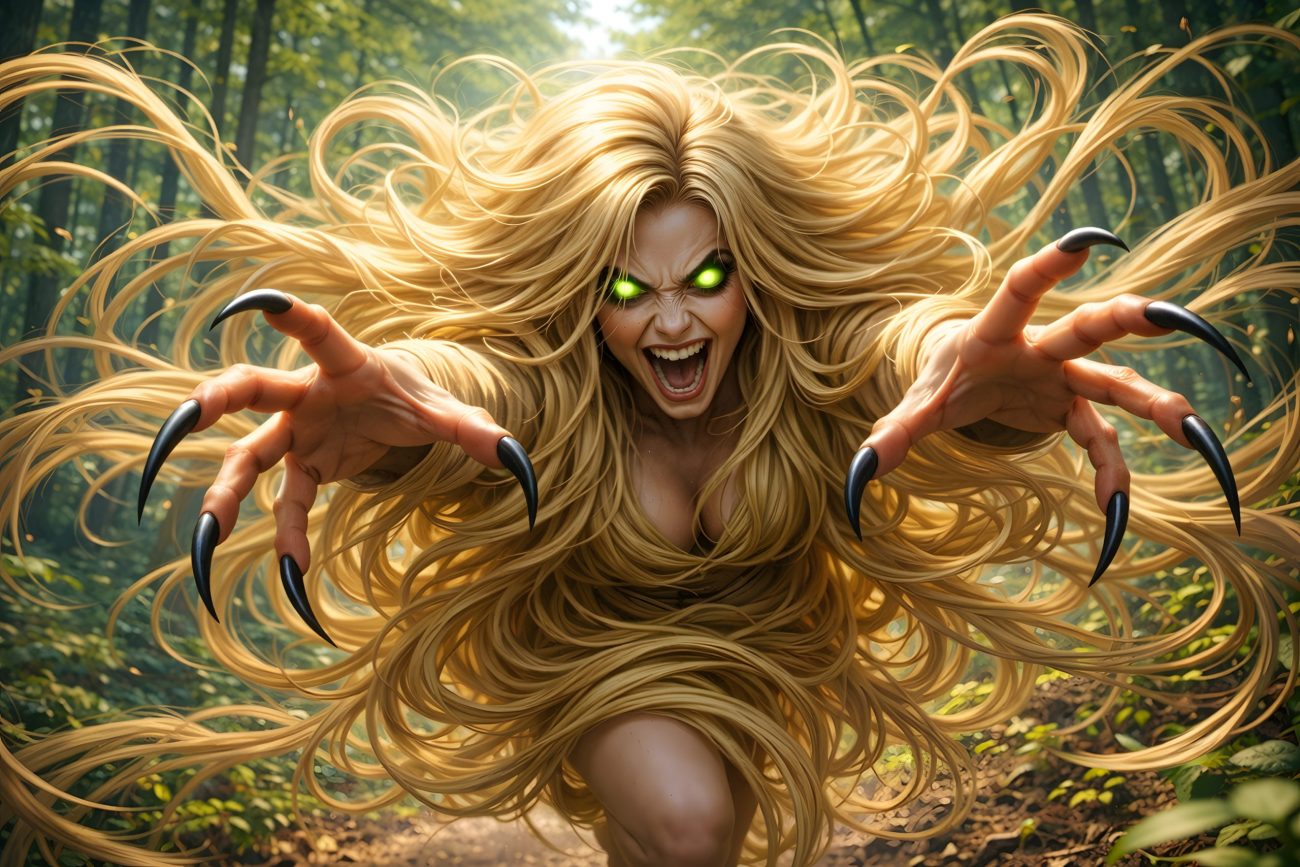
She is described as a nude female being with extremely long hair and elongated fingernails, embodying the raw and uncontrolled forces of the wilderness. Her appearance is both alluring and unsettling, placing her between beauty and threat.

The Vadleány is known for seducing wanderers, especially men who venture too deep into the forest. Rather than killing immediately, she drains their strength or vitality, leaving them weakened or doomed. Her method is subtle, relying on attraction and enchantment rather than brute force.

Her presence can often be detected through unnatural rustling in the trees, even in still air. This serves as a warning sign that the forest itself is no longer safe.

Despite her danger, folklore suggests she can be captured through trickery. If someone places a single boot along her path, her curiosity may lead her to try fitting both feet into it, allowing her to be restrained. This detail highlights a recurring theme in folklore — that even powerful spirits can be outwitted under the right circumstances.

The Vadleány represents the seductive danger of the wild: a force that attracts, deceives, and ultimately punishes those who underestimate nature.


Sources

Wikipedia contributors. (n.d.). Vadleány. In Wikipedia, from https://en.wikipedia.org/wiki/Vadle%C3%A1ny


Slattenpatten

Tradition / Region: Danish Folklore
Alternate Names: Slattenlangpat
Category: Nymph


The Myth

Slattenpatten is a strange and unsettling female figure in Danish folklore, often described as a wild woman of the woods or waters. She is sometimes classified among the “ellefolk” (hidden folk), though unlike the beautiful elf-maidens, she appears in a far more grotesque and uncanny form.

Her most defining feature is her extremely long, sagging breasts, which hang down to her knees. These are not merely physical traits but serve a symbolic and functional role. In stories, she can throw them over her shoulders to move freely or even nurse a child carried on her back. This unnatural anatomy emphasizes both her maternal nature and her otherworldly character.

Slattenpatten is not purely benign. Like other female nature spirits, she can be dangerous to humans, haunting certain areas and appearing unpredictably. In some legends, she is pursued nightly by a king—often identified as Kong Volmer—who hunts and shoots her, yet she always returns the next day, suggesting an immortal or cyclical existence.

She is also linked to water and fertility. Some traditions claim she bore many children, her long breasts symbolizing nourishment and abundance. In more unusual accounts, she is said to nurse offspring beneath the water, connecting her to lakes, rivers, and the hidden life within them.

This dual nature—nurturing yet eerie, fertile yet unsettling—places Slattenpatten between roles:
a maternal figure, a spirit of nature, and a haunting presence that reflects both life-giving power and the strangeness of the natural world.


Sources

Wikipedia contributors. (n.d.). Slattenpatte. In Wikipedia, from https://en.wikipedia.org/wiki/Slattenpatte


Fairy of Fontargent

Tradition / Region: Andorran Mythology
Alternate Names: Water Woman of Fontargent
Category: Fairy, Nymph


The Myth

The Fairy of Fontargent is one of the “water women,” ethereal beings tied to lakes and mountain waters, known for their beauty and benevolent nature. Unlike witches, they were admired and even venerated across the Pyrenees.

These beings were believed to depend on water, living near streams, springs, and high mountain lakes. Their presence symbolized purity, calm, and a hidden supernatural harmony within nature.

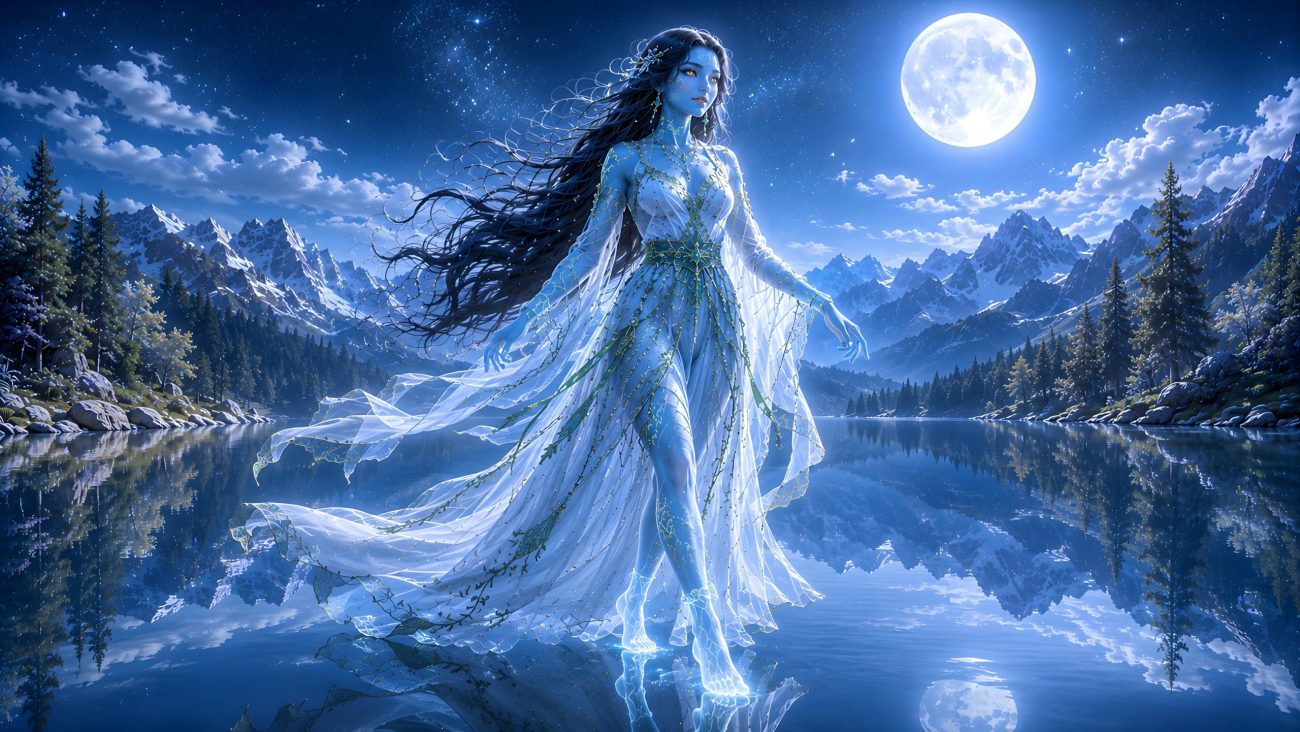
One of the most renowned among them dwelled in Lake Fontargent. On certain summer nights, when the moon aligned between the surrounding peaks, she would rise from the water wearing a long, flowing silk tunic. She moved silently across the lake’s surface, as if untouched by gravity, in complete stillness.

Her appearance was brief and sacred. At dawn, as the first light turned the lake blue and revealed the stark mountain landscape around it, the fairy would vanish back into the depths.

Over time, traditions say these fairies disappeared from the region, driven away by the spread of Christian belief, particularly associated with the Virgin of Meritxell.


Sources

Valls, À., & Carol, R. (2023). Llegendes d’Andorra. In Encamp-Montellà: Anem Editors p. 55.


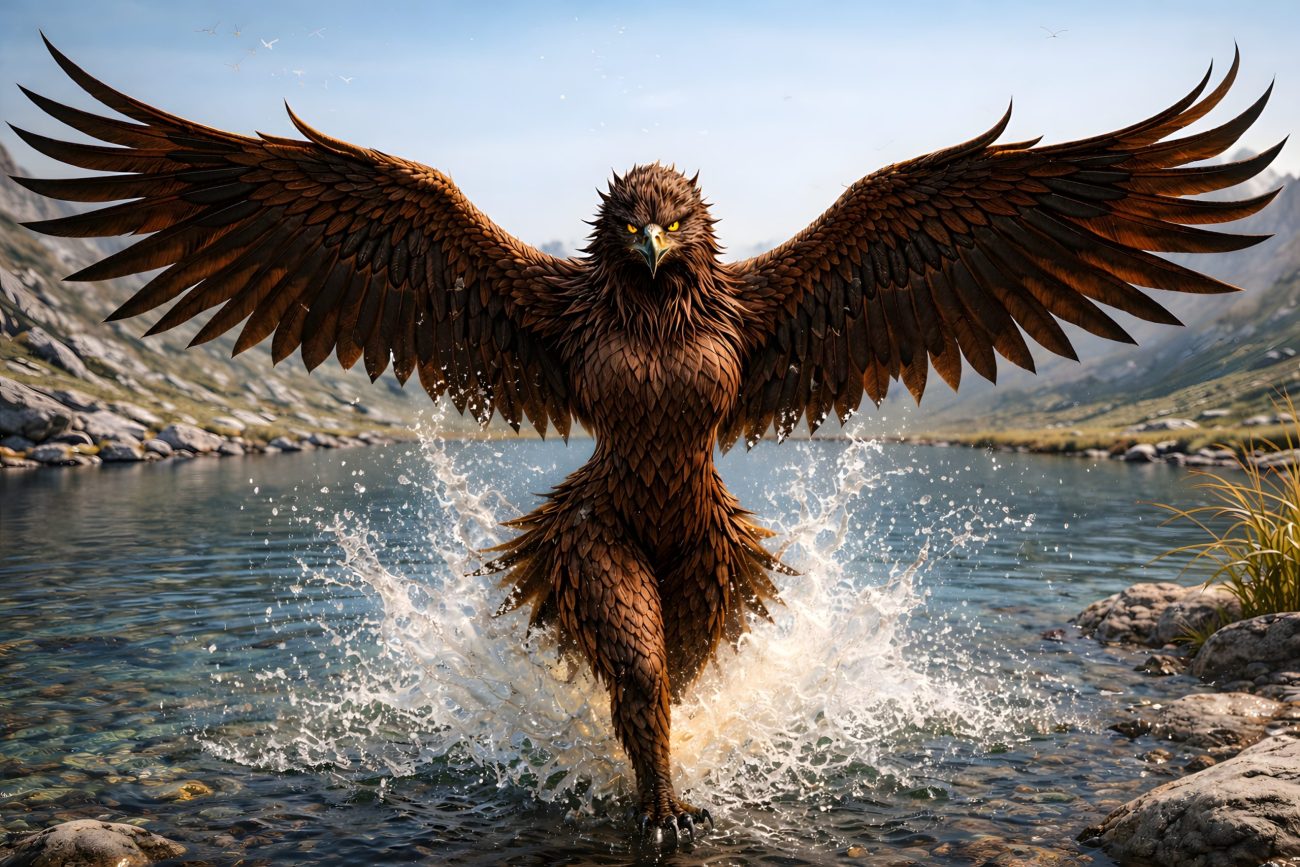
Eagle Maiden

Tradition / Region: Albanian Mythology
Alternate Names: —
Category: Bird, Nymph


The Myth

The Eagle Maidens are beings who take the form of eagles and transform into maidens by bathing in water. They are encountered by a traveler during his search for Gjizar the nightingale and possess knowledge of its location.

A youth traveling through a wilderness came upon a house where an old woman lived. She warned him that her daughters would return and devour him, then hid him in a closet with a hole through which he could see. After some time, three eagles arrived, each one wounded. They entered through the window, bathed in a bowl of water, and became maidens. They spoke with their mother and then ate.

The old woman asked what they would do if a man were present, and each maiden swore not to harm the one who had wounded her. The youth was then revealed, and he told them he was the one who had injured them. The maidens did him no harm and asked his purpose. He told them he was searching for Gjizar the nightingale. They said they knew where it was and that he could not reach it on foot.

They told him to remain with them for three months. After this time, they took him to the place where the nightingale was and left him there.


Sources

Albanian Literature contributors. (n.d.). Folktale 14. In Albanian Literature, from http://www.albanianliterature.net/folktales/tale_14.html

Pedersen, H. (1895). Albanesische Texte mit Glossar. In Abhandlungen der philologisch-historischen Classe der Königl. Sächsischen Gesellschaft der Wissenschaften, Vol. 15 (reprinted in Folklor shqiptar 1, Proza popullore, 1963). Translated by Elsie, R.


Melusina of the Bock Rock

Tradition / Region: Luxembourg Mythology
Alternate Names: Melusina, Melusine of Luxembourg, Water Nymph of the Alzette
Category: Mermaid, Shapeshifter, Nymph


The Myth

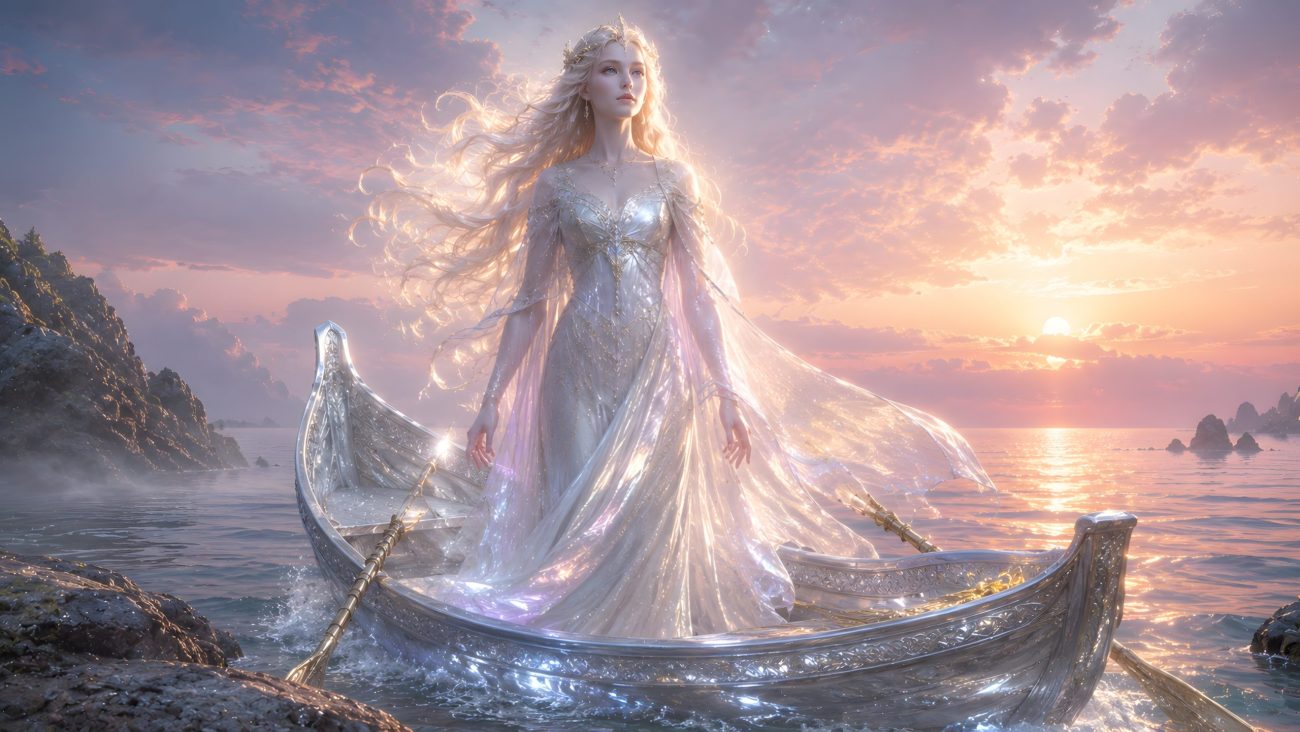
Long ago, Count Siegfried, a noble knight, became lost while hunting and came upon a deep valley where the Bock rock rises above the Alzette River. There he heard a wondrous song and saw a beautiful maiden seated upon the ruins of an ancient castle. She was Melusina, a water nymph of the valley. When she noticed him, she veiled her face and vanished with the setting sun.

The vision never left Siegfried’s mind, and he returned again and again to the valley. At last he met the maiden once more and confessed his love. Melusina agreed to marry him, on the condition that she would never be forced to leave the rock and that he must never seek her presence on Saturdays, when she wished to be alone. Siegfried swore to honor this oath.

To bring her home, he exchanged his lands for the barren Bock rock and, with supernatural help, built a great castle upon it. He married Melusina, and they lived happily together, and she bore him seven children. Yet each Saturday she withdrew to her chamber and locked herself away.

After many years, stirred by the suspicions of others, Siegfried resolved to learn her secret. One Saturday he crept to her door and looked through the keyhole. Inside he saw Melusina bathing in a wave-filled chamber, combing her long golden hair. But below her waist her body ended in a monstrous fishtail that lashed the water. With a cry of horror, he revealed himself. At once Melusina sank into the depths of the rock and was lost to him forever.

After her disappearance, a white figure was sometimes seen at night rocking her youngest child. It is said that Melusina still appears every seven years above the Bock rock in human form, begging to be freed. If no one rescues her, she cries out that not yet seven years have passed and sinks back into the stone.

Once, a soldier on night watch encountered her. She told him that to free her he must stand behind the altar in the Dominican church at midnight for nine consecutive nights. On the tenth night she would appear as a fiery serpent holding a key in her mouth, which he must take with his own mouth and throw into the Alzette River. Only then would she be redeemed and the ancient fortress rise again.

The soldier kept the vigil for eight nights but arrived late on the ninth. That night terrible roaring was heard around the Bock rock, and the chance of her redemption was lost.

Since then Melusina is said to circle the rock and cry out whenever danger threatens the city. Every seven years she is believed to make a single stitch on a mysterious garment she is weaving from flax that grows upon the bare rock. When the garment is finished, she will be freed — but it is said that the city itself will then fall into ruin.

And so Melusina remains bound beneath the Bock to this day, waiting for the one who will finally release her.


Gallery


Sources

sagen.at contributors. (n.d.). Melusina. In sagen.at, from https://www.sagen.at/texte/sagen/luxemburg/Melusina.html


Interpretive Lenses

Religious Readings
  • Christian Ascetic Deep Dive
Philosophical Readings
  • Nietzschean Deep Dive
Psychological Readings
  • Jungian Deep Dive
Esoteric Deep Dive
  • Hermetic Deep Dive
Political / Social Readings
  • Marxist Deep Dive
Other
  • How to Invite The Melusina of the Bock Rock

Zana

Tradition / Region: Albanian mythology, Kosovo Mythology
Alternate Names: Zanë, Zërë, Xanë, Zâna, Zónja, Jashtësme
Category: Mountain dweller, Nymph


The Myth

High in the Albanian mountains, where cold springs run clear and forests cling to the slopes, dwell the Zana—wild and radiant maidens of the peaks. Each mountain is said to have its own Zana, who appears as a beautiful young woman with untamed hair and fearless eyes, often seen bathing in hidden streams or wandering among rocks and alpine flowers.

The Zana are guardians of nature—of forests, animals, springs, and the living strength that pulses through human beings. They walk accompanied by wild goats with golden horns, and the air grows tense with power wherever they pass. Though fair in form, they are fierce in spirit. Their courage is unmatched, and in Albanian speech it is said of a brave person: “He is as bold as a Zana.”

They favor warriors. In times of battle, a Zana may watch unseen from the mountainside. If she is pleased by a hero’s heart, she grants him strength beyond mortal limits. In the epic songs of the highlands, the young hero Muji was once found in the mountains by the Zana. They took pity on him and nursed him with their own milk. From that moment, Muji possessed the strength of many men, able to lift boulders and defeat giants. His power was the gift of the Zana.

Yet their favor is not lightly won, and their anger is dreadful. With a single glance, a Zana can paralyze a man, turning him stiff as stone. Those struck by such a gaze are said to be “touched by the Zana,” frozen in body and spirit.

In the northern highlands, the Zana also come by night in threes when a child is born. Like mysterious sisters of fate, they gather around the newborn and decide its destiny. One may grant fortune and health, another hardship and sorrow, and the third death itself. Their whispering shapes the path of a life before it has even begun.

Sometimes they reveal themselves to mortals. A soldier lost in the mountains may encounter a Zana at dusk. She may warn him of danger ahead—or lead him unknowingly toward it. In old tales, a captain once knelt before such a radiant being, believing her divine. She spoke to him gently, yet her words foretold tragedy, and fate unfolded as she had hinted.

The Zana are not bound by human law or morality. They belong to the mountains and to the older rhythms of the world. They can love, grieve, and rage. In epic song, when the maiden Tringa was slain, the Great Zana descended in fury, lifted her fallen companion, and called upon warriors to rise in vengeance. Her cry echoed through the valleys like a battle horn.

They are wild beauty and untamed force. Eternal maidens of the highlands, they move between tenderness and terror, between blessing and doom—spirits of the mountains who grant strength, shape destiny, and vanish like mist at dawn.


Sources

Wikipedia contributors. (n.d.). Zana (mythology). In Wikipedia, The Free Encyclopedia. Retrieved February 13, 2026, from https://en.wikipedia.org/wiki/Zana_(mythology)


Peri

Tradition / Region: Azerbaijani mythology
Alternate Names:
Category: Nymph, Pigeon, Deer, Lake Dweller


The Myth

The Peri is a beautiful supernatural maiden, gentle by nature and radiant in form. She often appears as a pigeon or a deer, coming to ponds or rivers where she removes her animal skin and bathes as a human woman.

If someone steals this skin, the Peri is trapped and can be forced to obey, performing magic or granting favors. Yet such acts are dangerous, for Peris are not evil beings. They are kind-hearted, capable of fighting demons, and may even marry humans.

A Peri must be treated with respect. When offended or humiliated, her sorrow can turn into power, bringing misfortune or supernatural disaster. Thus she is remembered as a being of beauty and kindness, but one whose dignity must never be violated.


Sources

JAMnews.net. (2017). The magical creatures of Azerbaijani mythology. Retrieved from https://jam-news.net/azerbaijani-demons/


Bardha

Tradition / Region: Albanian Mythology
Alternate Names: E Bardha (“The White One”)
Category: Nymph


The Myth

Bardha, whose name means “the White One,” is a mythological figure in Albanian folklore. She appears either as a zana, a nymph-like being of nature, or as an ora, a fate spirit connected with human destiny and fortune. Bardha is associated with goodwill and good luck, and is believed to favor humans rather than harm them.

In the beliefs of the people of the Dukagjini Mountains, there are three types of Ora. Bardha is the one who brings good fortune and wishes people well. Alongside her are e Verdha (“the Yellow One”), who brings misfortune and casts harmful spells, and e Zeza (“the Black One”), who determines death. Among these three, Bardha is the most benevolent.

In older folklore that treats her as a nymph-like being, Bardha is said to resemble the zana e malit, the mountain nymph. She is described as pale and nebulous in form, sometimes appearing indistinct or ghostlike. In some traditions, she is believed to dwell beneath the earth rather than openly in forests or mountains.

To gain Bardha’s favor or avoid offending her, people would leave offerings such as sugar or small cakes on the ground. These gifts were meant to appease her and invite her goodwill, ensuring luck and protection rather than misfortune.

Through these traditions, Bardha is remembered as a gentle and auspicious spirit, moving quietly between the worlds of fate and nature, and watching over human lives with benevolent intent.


Sources

Wikipedia contributors. (n.d.). Bardha. In Wikipedia, from https://en.wikipedia.org/wiki/Bardha


Zwanenjonkvrouw

Tradition / Region: Netherlands (Noord-Holland, Heemskerk)
Alternate Names:
Category: Swan maiden / nymph


The Myth

In Noord-Holland, people tell of the Zwanenjonkvrouw, a woman of extraordinary beauty who can take the form of a swan. She changes between swan and human shape by means of a magical swan shirt, known as her zwanenhemd. When she wears it, she becomes a swan; when it is removed, she remains human.

In many tales, a man discovers the Zwanenjonkvrouw while she is bathing and steals her swan shirt. Without it, she is unable to return to her true form. The man then forces her to become his wife, and she lives among humans, bound by the loss of her garment rather than by her own will.

For a time, she remains with him, but she never ceases to long for her swan shirt. When she eventually finds it again, she immediately leaves her husband without mercy and disappears, returning to her true nature and her former life.

In a legend from Heemskerk, the story ends more tragically. When the man chooses to abandon her in favor of an ordinary human woman, the Zwanenjonkvrouw falls down dead, her life ending the moment she is rejected.

Thus the Zwanenjonkvrouw is remembered as a swan-maiden bound by theft, marriage, and loss, whose fate is sealed by the recovery of her stolen form or by betrayal.


Interpretive Lenses

Religious Readings
Philosophical Readings
Psychological Readings
Esoteric Deep Dive
Political / Social Readings
Other

Näcken

Tradition / Region: Swedish Mythology
Alternate Names: Strömkarlen, Bäckamannen, Kvarngubbe, Kvarnrå, Forskarlen, Dammapågen
Category: Water spirit


The Myth

In Swedish folklore, Näcken dwelled in lakes, rivers, streams, and mill waters, haunting places where the current moved quietly or gathered strength beneath the surface. He was not a single spirit but a powerful water-being known by many names, feared and respected wherever people lived close to water.

Näcken most often appeared as a naked man, sometimes young and slender, sometimes old and bearded, seated upon a rock or at the water’s edge. His hair was said to be green or woven with foliage, as if grown from the river itself. In his hands he held an instrument, most often a violin, though he was also known to play horns, flutes, or other melodies. His music was said to be irresistibly beautiful. Those who heard it felt drawn toward the sound, their feet carrying them closer to the water without their will.

Näcken was a master of deception. Though water might seem shallow and harmless, he could seize a person’s footing, locking their legs in place and pulling them beneath the surface. Many drownings were blamed on him, and children were warned never to trust the calm of a stream or the beauty of music drifting across the water at dusk.

At times, Näcken took other forms. He could appear as animals — a black or white horse, a bull, a dog, or a cat — and these shapes often bore a subtle wrongness, such as having three legs instead of four. He could also disguise himself as floating objects or tempting treasures, lying in wait for the unwary.

Näcken was not merely a minor spirit, but a powerful force of the natural world, sometimes spoken of as nearly divine. He embodied the danger of water itself: beautiful, life-giving, and deadly. To encounter him was to be reminded that rivers and lakes were alive, watching, and never fully under human control.