Karakondzhul

Tradition / Region: Serbian, Macedonian, Bulgarian, Turkish, Albania, Kosovo
Alternative names: Karakondzhal, Karakoncolos
Category: Demon


The Myth

The Karakondzhul is a terrifying winter demon from Balkan and Anatolian folklore that appears during the darkest and coldest days of midwinter. These creatures emerge during the dangerous period between Christmas and Epiphany, especially during severe frosts and the “unbaptized days” of winter when the boundary between the human world and the spirit world was believed to weaken.

The demons rise from rivers, caves, frozen lakes, abandoned places, and other unclean locations after midnight. They wander through villages, fields, and riverbanks until the first rooster crows at dawn. During these nights people avoided traveling alone because the Karakondzhuls were believed to attack travelers, leap onto their backs, and force them to run wildly through the darkness until exhaustion or death.

In Serbian tradition, Karakondzhuls were associated with the spirits of children conceived or dead during the impure winter period. They were believed to especially target women and children, scratching faces, drinking blood, and devouring victims.

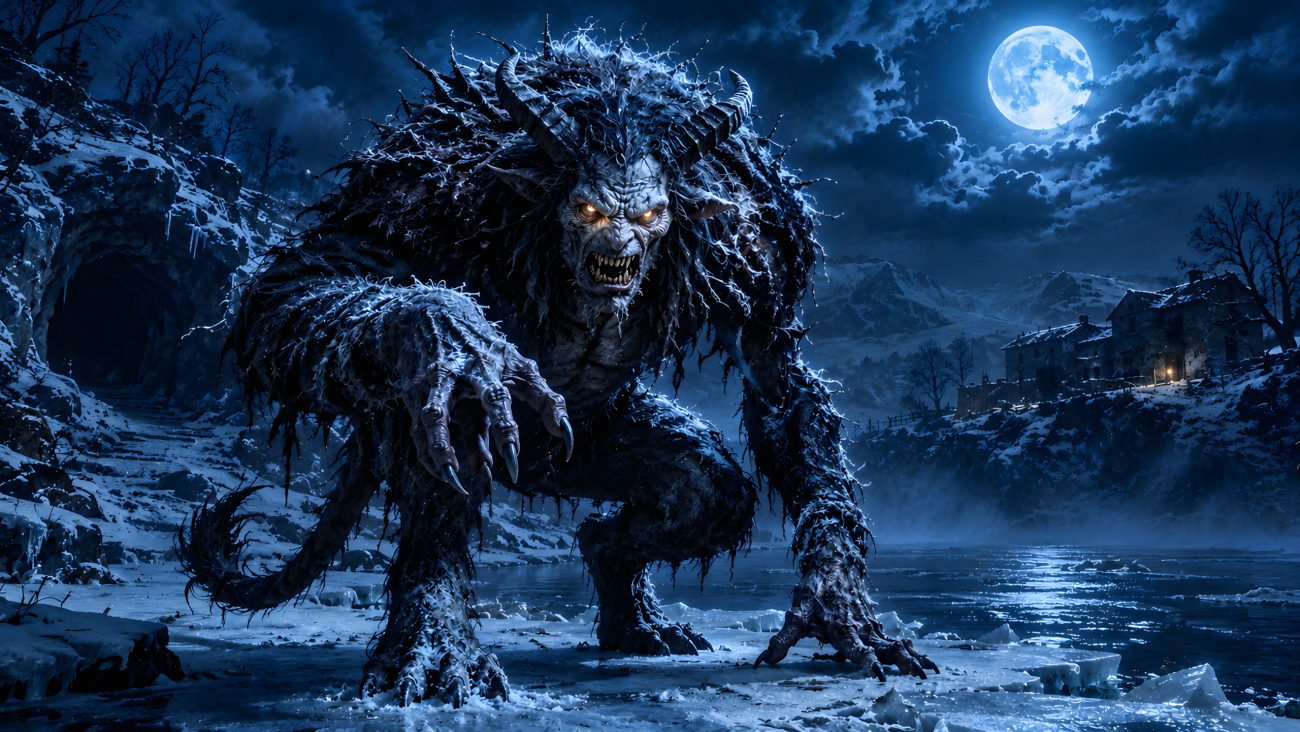
The appearance of the Karakondzhul changes constantly. Folklore describes them as shaggy black or red humanoids with horns and tails, naked thorn-covered creatures, horse-bodied beings with human heads and wings, monstrous little people that lure victims onto dangerous ice, or animals such as dogs, sheep, and calves. Some traditions considered them werewolf-like beings capable of changing shape freely.

In Turkish and Anatolian folklore, the related Karakoncolos appears as a small black hairy creature roughly the size of a monkey, child, or cat. It roams winter roads at night questioning travelers with strange riddles such as “Where are you from?” and “Where are you going?” The answer had to include the word kara, meaning “black.” If the traveler failed, the creature attacked them using a massive comb.

People believed iron, fire, bread, salt, ashes from the Christmas badnjak fire, and sharp metal objects could repel the demon. In some regions combs were hidden during winter so the Karakoncolos could not use them as weapons.

The Karakondzhul was feared not simply as a monster, but as a spirit of the dangerous winter season itself — a creature of darkness, frost, wilderness, and the chaotic nights when the world temporarily fell outside divine protection.


Sources

Bestiary.us. (n.d.). Karakonj. Retrieved May 16, 2026, from https://www.bestiary.us/karakonj

Zana

Tradition / Region: Albanian mythology, Kosovo Mythology
Alternate Names: Zanë, Zërë, Xanë, Zâna, Zónja, Jashtësme
Category: Mountain dweller, Nymph


The Myth

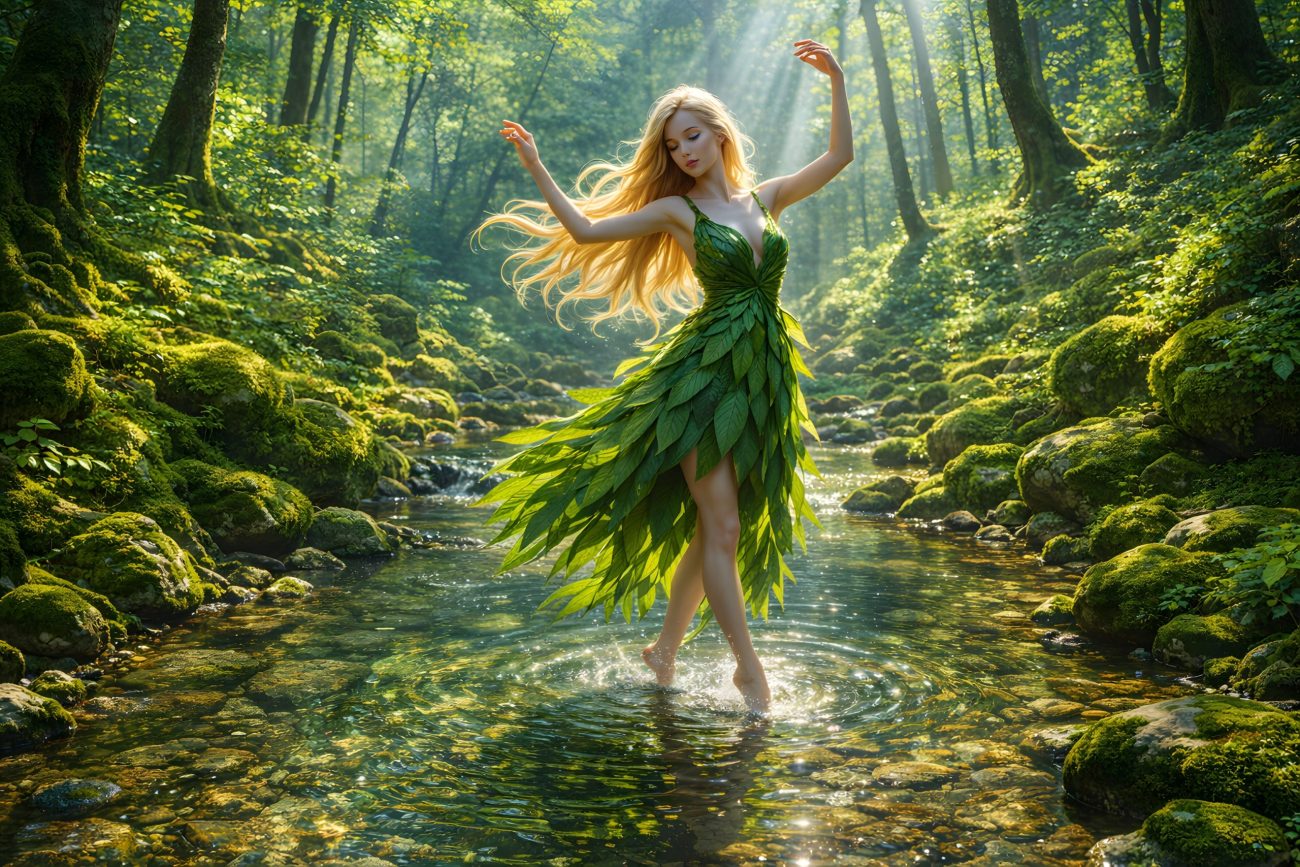
High in the Albanian mountains, where cold springs run clear and forests cling to the slopes, dwell the Zana—wild and radiant maidens of the peaks. Each mountain is said to have its own Zana, who appears as a beautiful young woman with untamed hair and fearless eyes, often seen bathing in hidden streams or wandering among rocks and alpine flowers.

The Zana are guardians of nature—of forests, animals, springs, and the living strength that pulses through human beings. They walk accompanied by wild goats with golden horns, and the air grows tense with power wherever they pass. Though fair in form, they are fierce in spirit. Their courage is unmatched, and in Albanian speech it is said of a brave person: “He is as bold as a Zana.”

They favor warriors. In times of battle, a Zana may watch unseen from the mountainside. If she is pleased by a hero’s heart, she grants him strength beyond mortal limits. In the epic songs of the highlands, the young hero Muji was once found in the mountains by the Zana. They took pity on him and nursed him with their own milk. From that moment, Muji possessed the strength of many men, able to lift boulders and defeat giants. His power was the gift of the Zana.

Yet their favor is not lightly won, and their anger is dreadful. With a single glance, a Zana can paralyze a man, turning him stiff as stone. Those struck by such a gaze are said to be “touched by the Zana,” frozen in body and spirit.

In the northern highlands, the Zana also come by night in threes when a child is born. Like mysterious sisters of fate, they gather around the newborn and decide its destiny. One may grant fortune and health, another hardship and sorrow, and the third death itself. Their whispering shapes the path of a life before it has even begun.

Sometimes they reveal themselves to mortals. A soldier lost in the mountains may encounter a Zana at dusk. She may warn him of danger ahead—or lead him unknowingly toward it. In old tales, a captain once knelt before such a radiant being, believing her divine. She spoke to him gently, yet her words foretold tragedy, and fate unfolded as she had hinted.

The Zana are not bound by human law or morality. They belong to the mountains and to the older rhythms of the world. They can love, grieve, and rage. In epic song, when the maiden Tringa was slain, the Great Zana descended in fury, lifted her fallen companion, and called upon warriors to rise in vengeance. Her cry echoed through the valleys like a battle horn.

They are wild beauty and untamed force. Eternal maidens of the highlands, they move between tenderness and terror, between blessing and doom—spirits of the mountains who grant strength, shape destiny, and vanish like mist at dawn.


Sources

Wikipedia contributors. (n.d.). Zana (mythology). In Wikipedia, The Free Encyclopedia. Retrieved February 13, 2026, from https://en.wikipedia.org/wiki/Zana_(mythology)