Tradition / Region: Turkish, Azerbaijani, Kyrgyz and Tajik folklore
Alternative names: Gul, Ghul, Desert Demon
Category: Demon, Zombie
The Myth
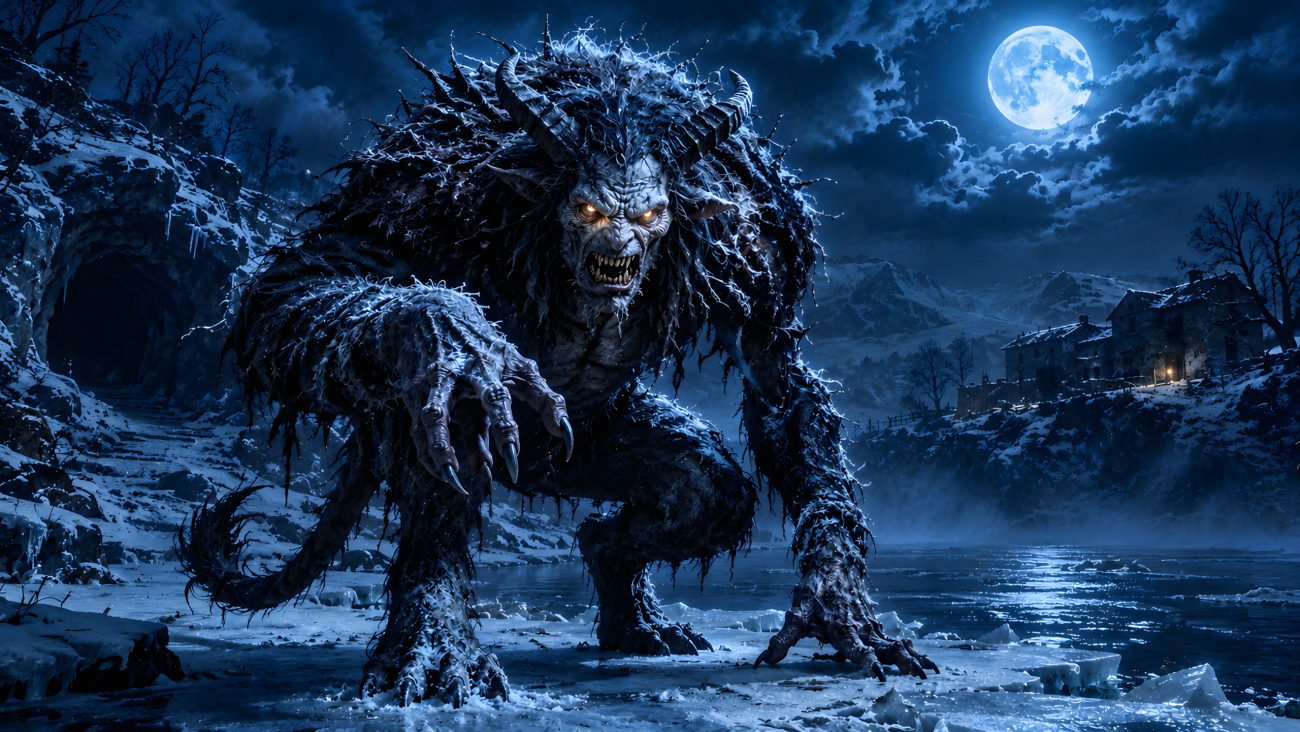
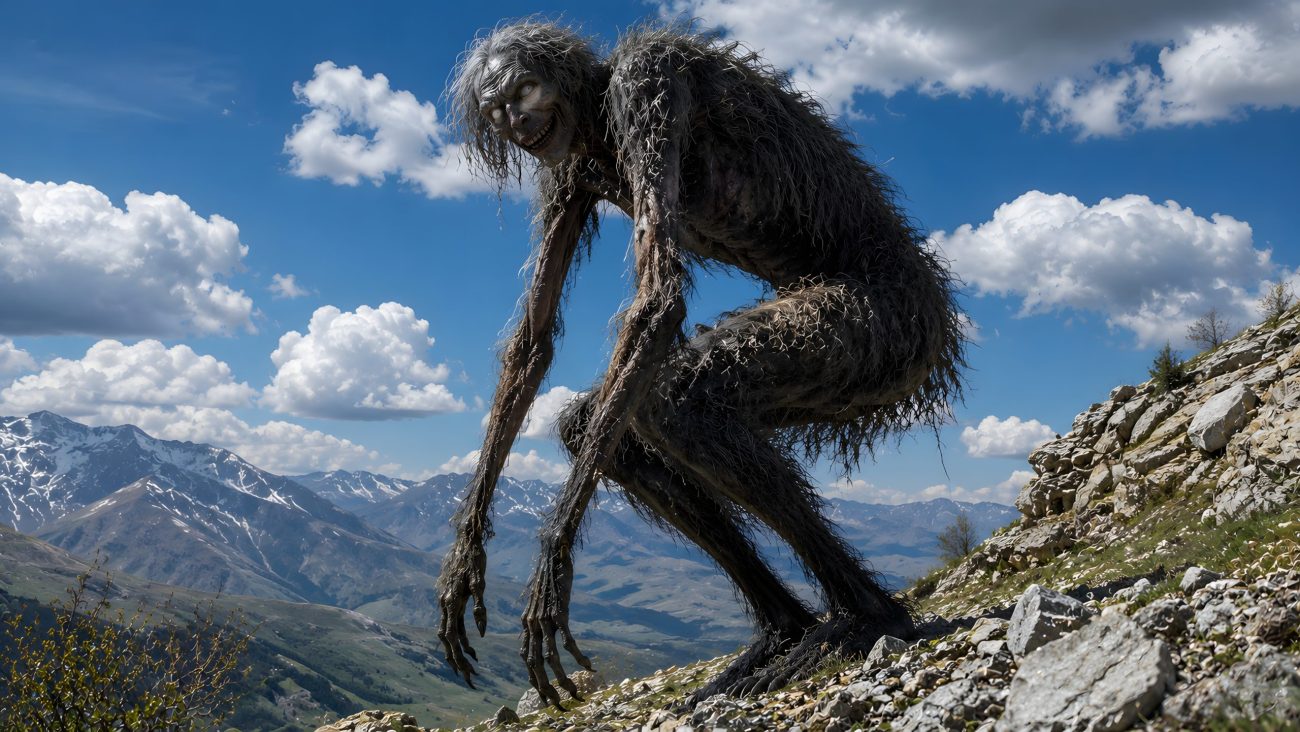
The Gul-yabani is a fearsome spirit of the wild places, known throughout parts of Central Asia and the Turkic world. Its name means “Desert Demon,” and it is regarded as a dangerous being that inhabits lonely steppes, cemeteries, deserts, forests, and remote mountains. Travelers who encounter it after sunset are said to face terror or death.
The creature is usually described as gigantic, standing three to four meters tall and covered in gray or black fur. It possesses an overpowering animal-like stench, backward-facing feet or clawed limbs, and often appears in the form of an enormous shepherd or hairy man. Its arrival is accompanied by shrill whistling in the darkness.
Among Turks and Azerbaijanis, Gul-yabani wanders cemeteries and desolate places at night. It frightens travelers and is especially known for riding horses, tangling their manes before vanishing into the darkness. In some parts of western Azerbaijan it was even identified with harmful water spirits. It was believed that if a Gul-yabani could be captured and pierced with a needle, it would become bound to its captor and perform work for them, although often doing the opposite of what was intended.
The Kyrgyz of the Eastern Pamirs and the Tajiks believed the creature lived in deserts and mountain forests. Although monstrous in appearance, it speaks with a human voice and often challenges strong men to wrestling matches. Only exceptionally powerful individuals are capable of fighting it as an equal.
Stories tell of a man near Tajikabad who encountered a giant shepherd after sunset. The two wrestled throughout the night, neither able to defeat the other. When dawn arrived, the stranger was revealed to be covered in wool. The creature gifted the man a piece of its fur and promised friendship, telling him that burning the hair would summon it. A mullah later explained that the mysterious shepherd had been a Gul-yabani and warned that revealing the encounter could bring death.
The Gul-yabani is said to understand every language, though it communicates through thoughts rather than spoken words. Those who establish contact with it may gain unusual powers, and only extremely pious mullahs are believed capable of seeing the creature clearly.
Hunters seldom encounter Gul-yabani because the monster greatly fears gunfire and can smell gunpowder from many kilometers away. One story tells of a police chief resting beside his car in the mountains when a tremendous force began shaking the vehicle. Looking outside, he saw an enormous hairy being devouring meat from a basin. The creature pressed its giant hands against the rear window of the car before fleeing when the officer fired his pistol. Two massive handprints were said to remain on the glass.
Mysterious, foul-smelling, and immensely powerful, the Gul-yabani is remembered as one of the great monsters of Turkic folklore—a giant hairy demon that roams the lonely wilderness and appears only when night falls.
Sources
Bestiary.us. (n.d.). Gjul-Jabani. In New Bestiary: Encyclopedia of Imaginary Beings. Retrieved June 16, 2026, from https://www.bestiary.us/gjul-jabani