Koutsoulan

Tradition / Region: Bulgarian Mythology
Alternative names: Krivlyo / The Lame Wolf / The Crippled Wolf
Category: Wolf


The Myth

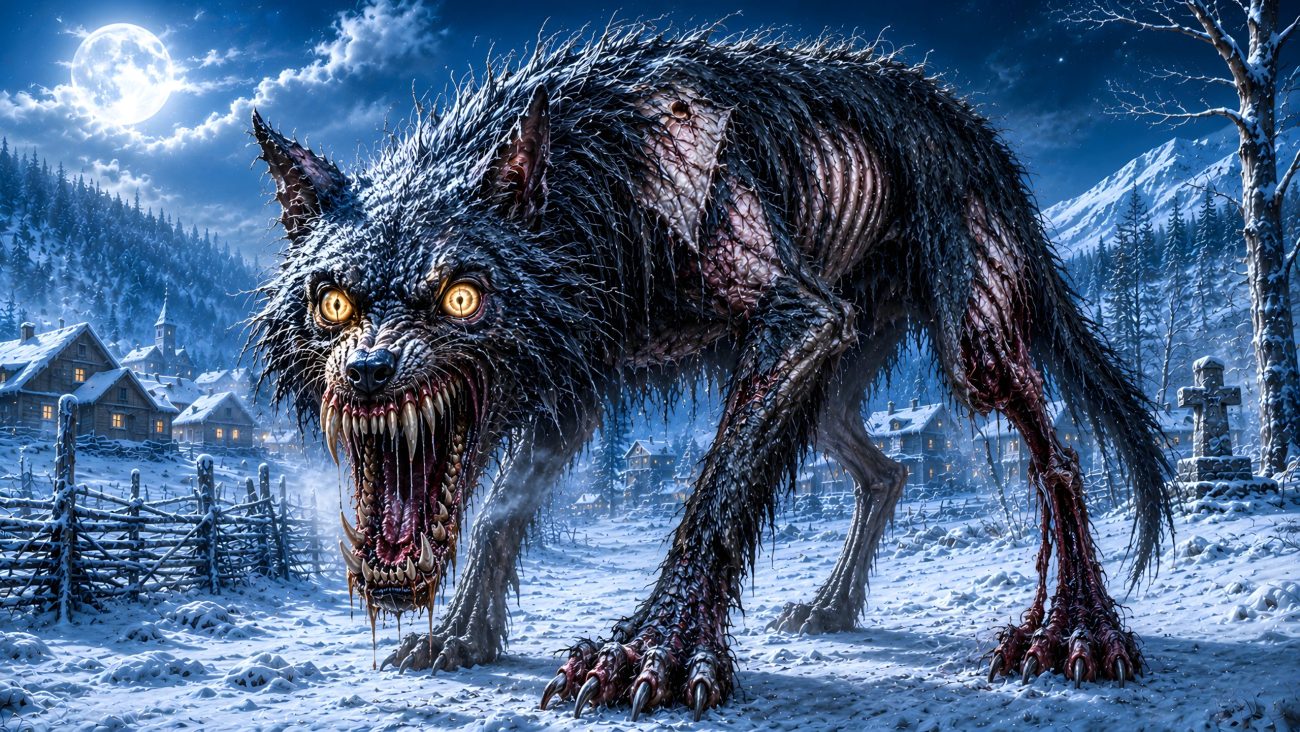
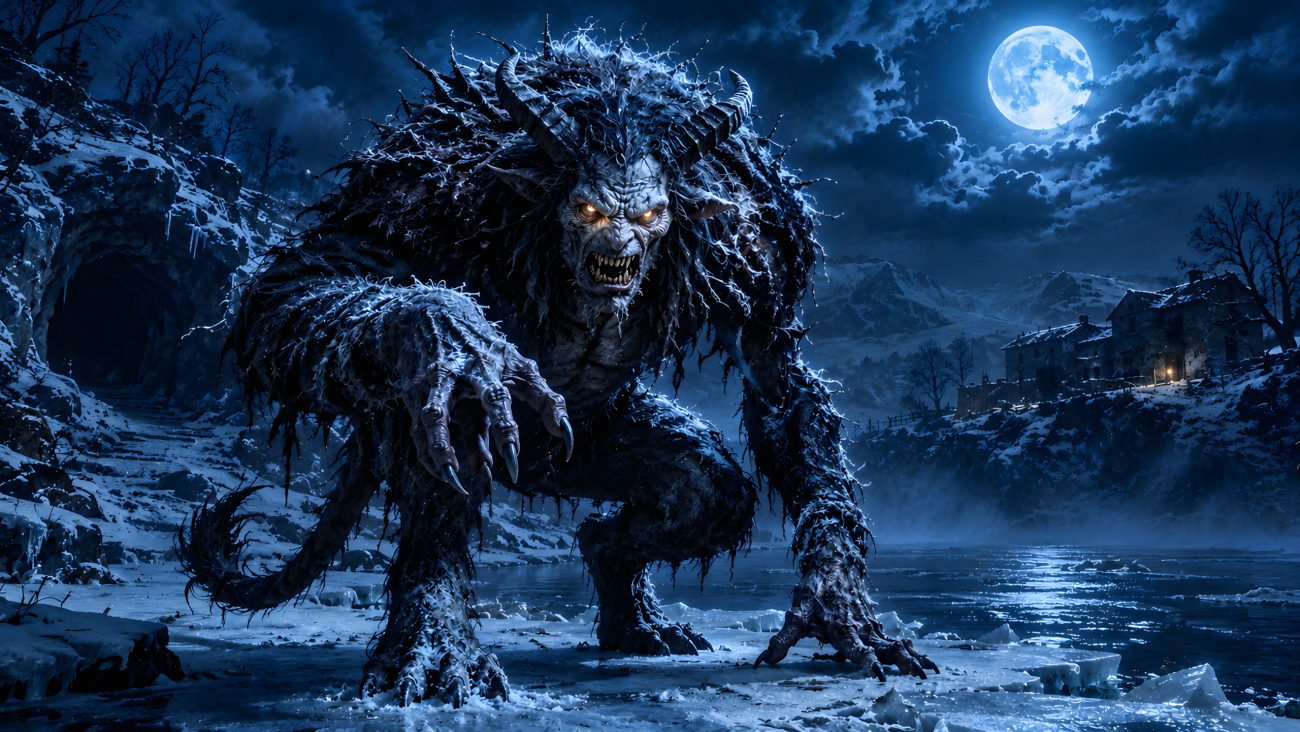
Koutsoulan was the most feared of all wolves in Bulgarian folklore — a supernatural lame wolf believed to roam during the dangerous winter “wolf days” between late autumn and early winter. Unlike ordinary wolves, Koutsoulan was seen as a monstrous spirit-beast connected to darkness, demons, and the border between the human and supernatural worlds.

The creature was described as crippled, lame, or twisted in form, which gave it its names Koutsoulan (“cripple”) and Krivlyo (“crooked one”). Though injured in appearance, it was believed to be far more dangerous than any normal wolf. It wandered alone and attacked both people and livestock, especially those who violated sacred taboos during the wolf feast days.

Bulgarian legends connected the wolf itself to the Devil. In one tale, the Devil created the wolf from clay but could not bring it to life. When the wolf finally awakened, it immediately attacked its creator and crippled him, which is why evil spirits in folklore were sometimes imagined as lame or one-legged. Koutsoulan inherited this supernatural deformity and became the most terrible of wolves.

During the wolf days, people avoided spinning wool, sewing, cutting cloth, or even speaking the wolf’s name aloud. It was believed that wolves could smell garments made during forbidden days and would hunt down the wearer. One story tells of a woman who mocked the lame wolf after finishing a sleeve during the forbidden period. Later the wolf attacked her husband, who escaped only by throwing away the cursed sleeve.

Many magical rituals were used against Koutsoulan. Villagers tied scissors shut to “seal the wolf’s mouth,” locked chains with padlocks to “bind its jaws,” and placed clay on doors to “blind the wolf’s eyes.” Charms were repeated aloud calling for thorns in its eyes, bullets in its liver, and stakes in its body.

Despite its terrifying nature, the wolf also possessed supernatural power against evil beings. Wolves were believed to attack vampires and tear demons apart. In some traditions they were creatures chosen by God to destroy devils hiding in the world. Because of this, the wolf existed in folklore as both a feared destroyer and a savage guardian against darker forces.


Sources

Georgieva, I. (1985). Bulgarian mythology. Sofia: Svyat Publishers.


Human Bear

Tradition / Region: Bulgarian Mythology
Alternative names: Granny Bear (Baba Metsa) / Bear-Man
Category: Bear


The Myth

In Bulgarian folklore, the bear stood between the world of humans and the world of beasts. It was seen as almost human in thought and behavior, yet still a powerful creature of the wilderness. Because of this dual nature, stories arose about beings who were part human and part bear.

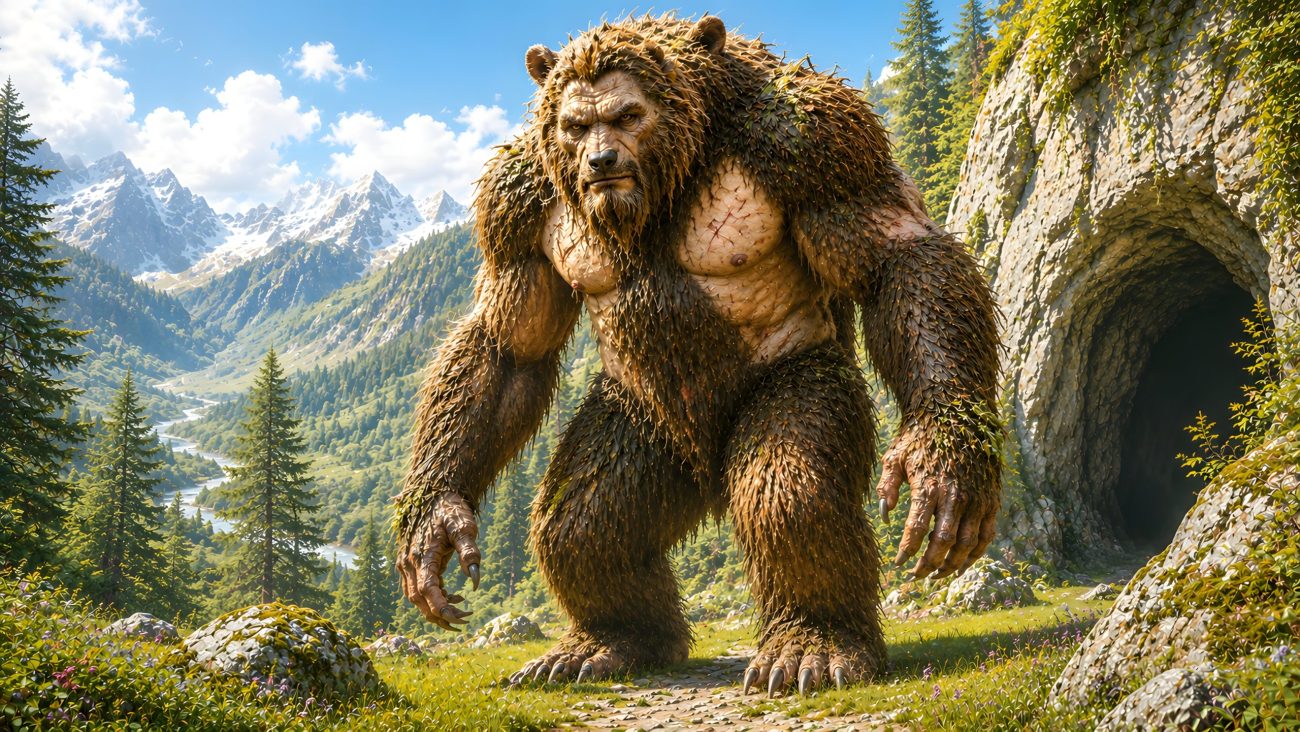
One of the best-known tales tells of a king’s daughter abducted by a great bear and carried deep into a mountain cave. There she gave birth to a child who was neither fully man nor fully beast. The child possessed terrifying strength, enormous size, and the wild nature of the bear combined with human intelligence. Such human-bear beings were feared as creatures belonging to both worlds at once.

Other legends claimed that certain women could become bears through curses, transformation, or magical punishment. In the Western Rhodopes, a story told of a girl forced by her cruel stepmother to wash black wool until it turned white. Through suffering and enchantment she eventually became a bear herself. In some traditions, girls who violated sacred rules or failed ritual tests were transformed into she-bears.

A related belief described dragon-women appearing in the form of flesh-eating bears. After magical rites removed their dragon nature, only the bear shape remained. Because of this, bears and dragons were often linked in Bulgarian myth as powerful earthly beings tied to fertility, wilderness, initiation, and hidden strength.

The bear was treated with unusual respect. People avoided calling it directly by name and instead used affectionate titles such as “Granny Bear.” Killing a bear was often forbidden. Special feast days were held in its honor, especially on Bear’s Day during late autumn, when people scattered beans and grain around the house to appease it and ask for protection from sickness and disaster.

In wedding rituals from Western Bulgaria, young women sometimes dressed as bears and performed dances imitating growling, running, and wild animal behavior. These rites preserved ancient beliefs that connected the bear to transformation, initiation, and the passage from girlhood into adulthood.

Bulgarian folklore viewed the Human Bear not simply as a monster, but as a powerful being standing on the boundary between civilization and the ancient untamed world.


Sources

Georgieva, I. (1985). Bulgarian mythology. Sofia: Svyat Publishers.


Dragon Eagle

Tradition / Region: Bulgarian Mythology
Alternative names: Eagle Dragon / Dragon Eagle
Category: Dragon, Bird


The Myth

High above the mountains of Bulgaria there lived a supernatural eagle connected to storms, dragons, and the powers of the sky. It nested on remote peaks, flew above the clouds where violent winds raged, and was believed to travel between the world of the living and the underworld. Unlike ordinary creatures, the eagle never grew old because it drank from a hidden lake of life-giving water at the edge of the world.

The Dragon Eagle was feared and respected as a guardian of villages and farmlands. In the Pirin mountains it was said to build its nest in giant sycamore trees overlooking the countryside. From there it defended the land against destructive hailstorms and black storm clouds. As storms approached, the eagle flew directly against them, battling the clouds in the sky and driving them away before they could ruin crops.

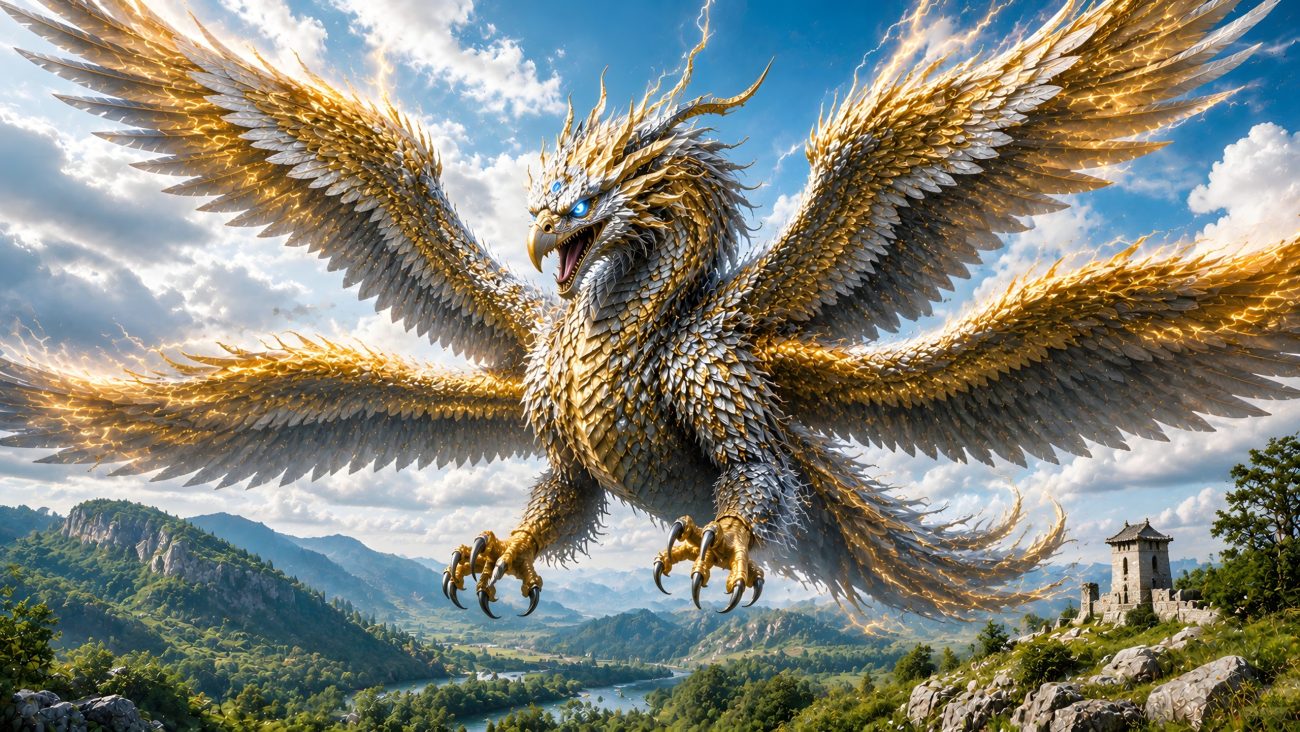
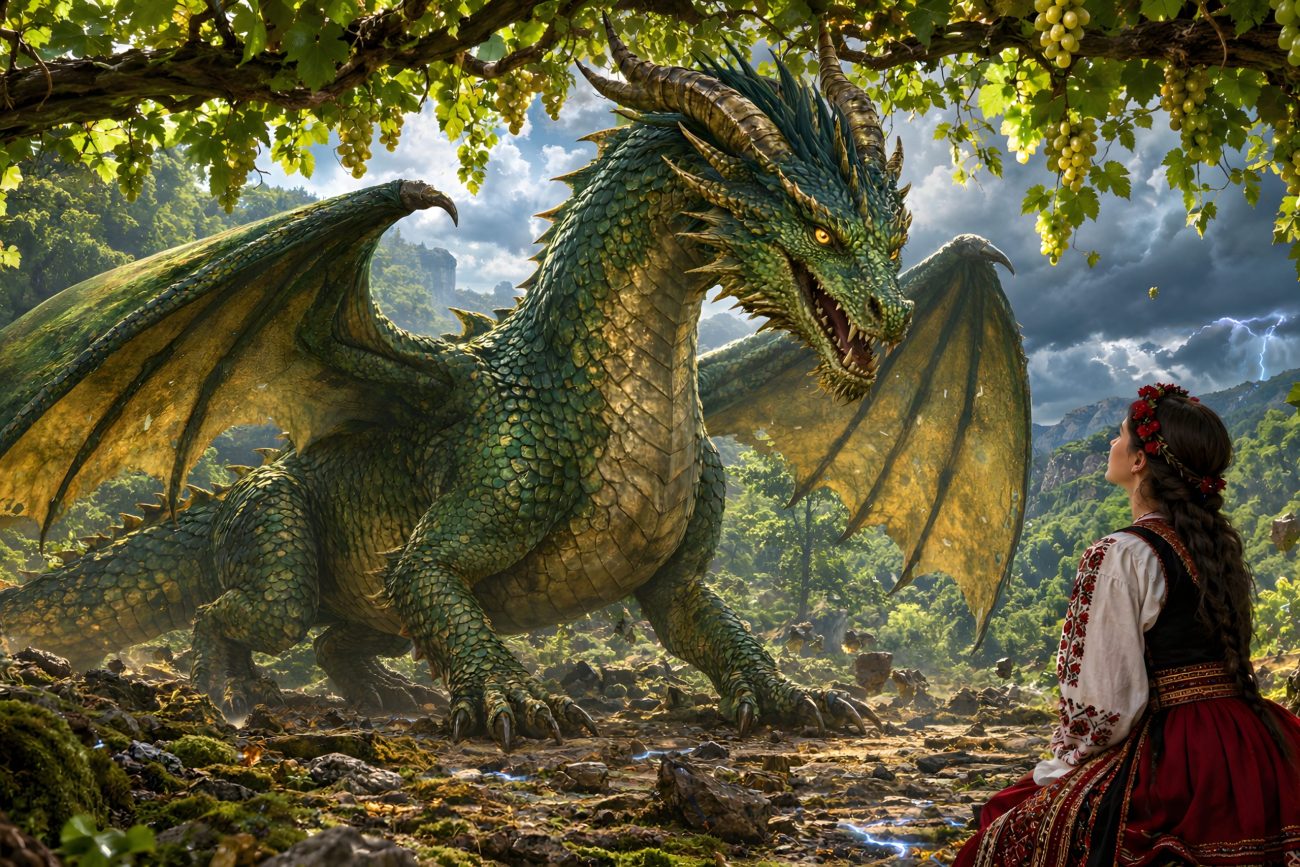
People believed the eagle’s powers were almost identical to those of the dragon. In parts of Western Bulgaria, the Rhodopes, and Serbia, dragons and eagles were sometimes considered the same kind of supernatural being. The Dragon Eagle was said to possess four invisible wings and to create winds merely by flying. Some traditions claimed it could even become human or take human form, much like dragon-men in Balkan folklore.

The eagle was also connected with sacred trees, especially the oak, the tree of thunder. It symbolized both heavenly and earthly power. Folk songs described giant eagles battling in forests while rivers of blood flowed beneath them. In older traditions, the Dragon Eagle was seen not only as a storm fighter but as a guardian spirit and protector of clans, villages, and rulers.

One of the oldest images linked to the creature was the battle between the eagle and the serpent. This struggle appeared in medieval art and stories across Bulgaria, where the eagle represented heavenly force and the serpent represented darkness, evil, or destructive powers. Because of this, images of eagle-like dragon beings were carved onto churches, doors, jewelry, and protective objects to ward away danger.


Sources

Georgieva, I. (1985). Bulgarian mythology. Sofia: Svyat Publishers.


Karakondzhul

Tradition / Region: Serbian, Macedonian, Bulgarian, Turkish, Albania, Kosovo
Alternative names: Karakondzhal, Karakoncolos
Category: Demon


The Myth

The Karakondzhul is a terrifying winter demon from Balkan and Anatolian folklore that appears during the darkest and coldest days of midwinter. These creatures emerge during the dangerous period between Christmas and Epiphany, especially during severe frosts and the “unbaptized days” of winter when the boundary between the human world and the spirit world was believed to weaken.

The demons rise from rivers, caves, frozen lakes, abandoned places, and other unclean locations after midnight. They wander through villages, fields, and riverbanks until the first rooster crows at dawn. During these nights people avoided traveling alone because the Karakondzhuls were believed to attack travelers, leap onto their backs, and force them to run wildly through the darkness until exhaustion or death.

In Serbian tradition, Karakondzhuls were associated with the spirits of children conceived or dead during the impure winter period. They were believed to especially target women and children, scratching faces, drinking blood, and devouring victims.

The appearance of the Karakondzhul changes constantly. Folklore describes them as shaggy black or red humanoids with horns and tails, naked thorn-covered creatures, horse-bodied beings with human heads and wings, monstrous little people that lure victims onto dangerous ice, or animals such as dogs, sheep, and calves. Some traditions considered them werewolf-like beings capable of changing shape freely.

In Turkish and Anatolian folklore, the related Karakoncolos appears as a small black hairy creature roughly the size of a monkey, child, or cat. It roams winter roads at night questioning travelers with strange riddles such as “Where are you from?” and “Where are you going?” The answer had to include the word kara, meaning “black.” If the traveler failed, the creature attacked them using a massive comb.

People believed iron, fire, bread, salt, ashes from the Christmas badnjak fire, and sharp metal objects could repel the demon. In some regions combs were hidden during winter so the Karakoncolos could not use them as weapons.

The Karakondzhul was feared not simply as a monster, but as a spirit of the dangerous winter season itself — a creature of darkness, frost, wilderness, and the chaotic nights when the world temporarily fell outside divine protection.


Sources

Bestiary.us. (n.d.). Karakonj. Retrieved May 16, 2026, from https://www.bestiary.us/karakonj