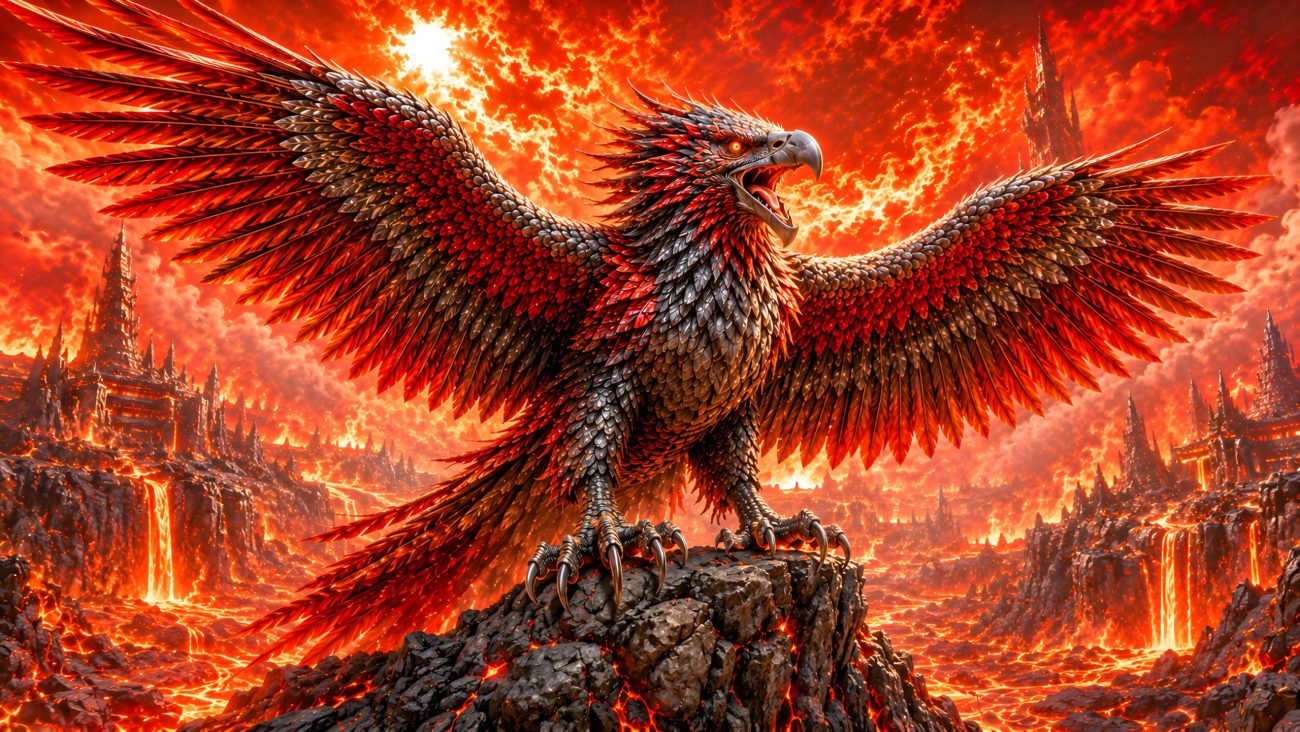
Huma

Tradition / Region: Iranian Mythology, Persian Mythology
Alternative Name: –
Category: Bird


The Myth

The Huma is a legendary bird from Persian mythology said to live its entire life flying high above the earth without ever landing. In many legends, the bird is invisible to humans and is believed to never touch the ground.

The Huma is often described as a bird of fortune and divine blessing. Seeing its shadow or catching even a brief glimpse of it is believed to bring happiness, luck, or greatness for the rest of a person’s life. In some traditions, the bird’s shadow falling upon someone foretells that they will become a ruler or king.

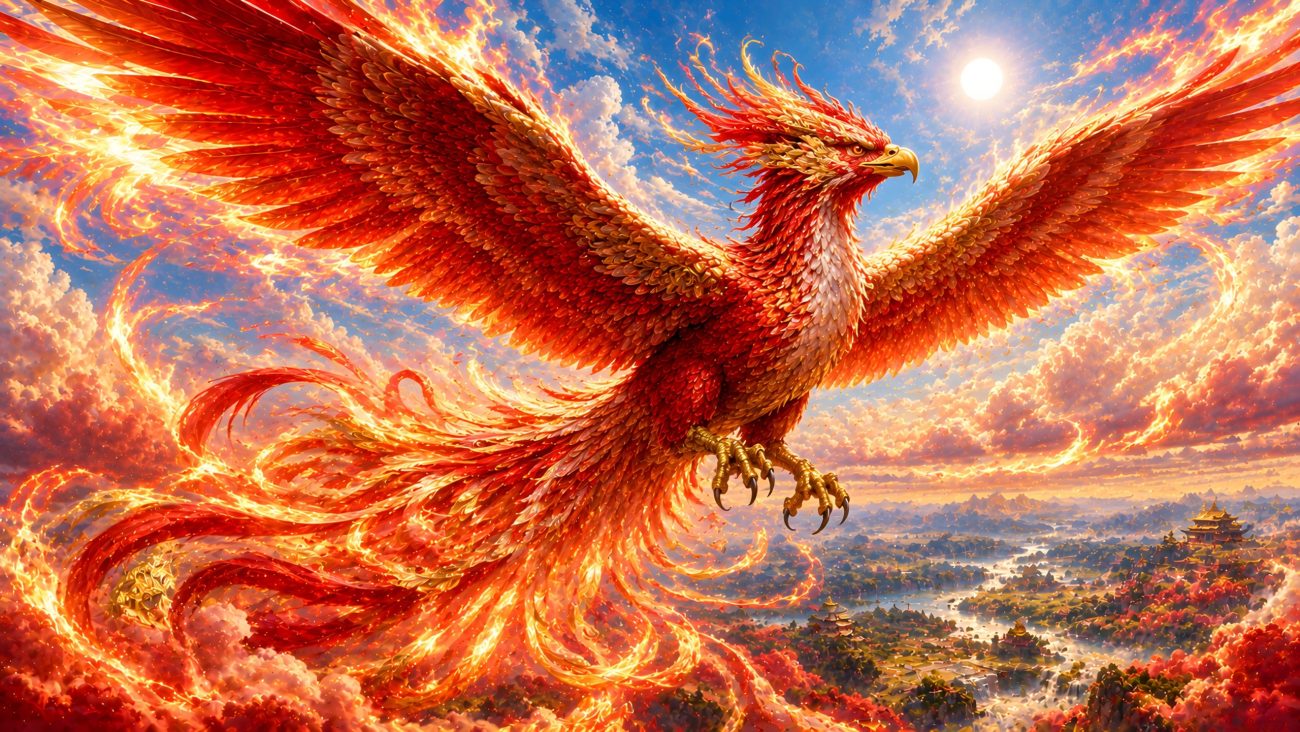
Certain legends describe the Huma as similar to a phoenix, burning itself in fire after many centuries before rising again from its ashes. Some stories also say the creature possesses both male and female qualities within a single body.

In Persian and Sufi traditions, the Huma became a symbol of spiritual elevation, destiny, and unreachable perfection. The bird was believed to be impossible to capture, and legends warned that anyone who killed a Huma would die within forty days.

The Huma later appeared in Ottoman, Mughal, and Central Asian traditions, where it continued to symbolize kingship, fortune, and heavenly blessing.


Sources

Wikipedia contributors. (n.d.). Huma bird. In Wikipedia. Retrieved May 10, 2026, from https://en.wikipedia.org/wiki/Huma_bird


Dilmun Griffin

Tradition / Region: Dilmun Mythology, Bahrain Mythology, Qatari Mythology
Alternate Names: None Recorded
Category: Bird


The Myth

The Dilmun Griffin is a rare chimeric creature appearing on ancient Dilmun seals from the Bronze Age civilization of Dilmun. It is shown as part of a mythological battle scene in which a humanoid or divine figure leads several beasts against a great serpent or dragon.

The griffin-like creature appears beside a bull, lion, and ibex as they confront the serpent. It is depicted as one of the creatures accompanying the divine champion during the battle. In other seal scenes, the same griffin-like being appears again beside the humanoid figure, suggesting it belonged to the same mythological motif.

Very little survives about the creature itself, and no detailed myths describing its origin or nature remain. The surviving imagery only shows it participating in the sacred conflict against the serpent-dragon alongside the other beasts.


Sources

Laursen, S. T. (n.d.). Dilmun boats on seals, horned figureheads, and the serpent/dragon slaying myth, c. 2050–1500 BC, p. 7-8.


Byangoma & Byangomi

Tradition / Region: Bengali MythologyIndian Mythology
Alternate Names: Byangoma, Byangomi
Category: Bird


The Myth

The Byangoma and Byangomi are legendary birds from Bengali folklore, most famously appearing in the tales of Thakurmar Jhuli. They are mysterious human-faced birds said to dwell far beyond the world of ordinary people, at the edge of Tepantorer Math — the “Field of Three Horizons,” a vast and dangerous expanse crossed only during great journeys and quests.

Though their bodies are those of birds, they possess human faces and the ability to speak like humans. They are regarded as wise beings with knowledge of distant lands, hidden dangers, and the paths travelers must follow. The birds rarely reveal themselves openly and are usually encountered only by those who have endured long hardships to reach their remote dwelling.

According to the stories, the Byangoma are born blind. Their young remain sightless until another living being willingly offers a few drops of blood. Only then do their eyes open and their true vision awaken. Once awakened, the birds gain the wisdom and supernatural sight for which they are known.

The Byangoma are also described as immensely powerful despite their strange appearance. In the tale Lalkamal Neelkamal, the princes reach the great tree where the birds live after crossing many dangers. The Byangoma then carry the princes upon their backs and fly them safely across the endless Tepantorer Math, a distance impossible for humans to travel alone. In this role the birds act as guides and helpers, aiding only those who prove themselves worthy through courage and endurance.

Unlike many creatures in folklore, the Byangoma are not evil spirits or monsters. They are mysterious watchers who exist between the human world and distant unknown realms. They do not alter fate or fight battles themselves, but instead reveal hidden paths and help travelers continue journeys they could never complete alone.

After guiding those they choose to help, the Byangoma return once more to their solitary tree at the edge of the world, remaining distant guardians of forgotten roads and impossible horizons.


Sources

Wikipedia contributors. (n.d.). Ghosts in Bengali culture. In Wikipedia, from https://en.wikipedia.org/wiki/Ghosts_in_Bengali_culture


Guguli

Tradition / Region: Georgian Mythology
Alternate Names:
Category: Bird, Hybrid


The Myth

The Guguli are a strange people encountered by Mindia after he escaped from captivity and lost his way, arriving in their land instead of returning home. They questioned him about his origin and why he had come, and he told them his story.

Among them was a one-eyed Guguli who reproached Mindia, reminding him that as a child he had thrown a stone and blinded him, even though he was the one who brought spring to the land. Mindia remembered this and asked for forgiveness.

The Guguli lived in houses made of small dry branches. One day they became alarmed and began strengthening their homes, saying that an enemy army was approaching. Soon a black host attacked their land and began destroying it. Mindia took a stick and fought them off, killing the attackers.

After this, the Guguli became fond of Mindia and told him they would grant whatever he wished. He asked them to take him back to his homeland.

They then prepared a meal and brought forth a flock of white snakes. One of the snakes was killed in his honor. Mindia was afraid and reluctant, but was persuaded to eat it. After eating, he became unwell and restless.

The Guguli women prepared three beds for him and told him to lie on each in turn until he found rest. On the third bed he recovered. When he awoke, he found swellings under his arms. The Guguli instructed him to cut them open, and many biting creatures came out. After this, he became light, so much so that he had to carry a stone with him so the wind would not carry him away.


Sources

Tsanava, A. (1992). ქართული მითოლოგია [Georgian Mythology]. In Tbilisi: Merani P. 28.


Valravn

Tradition / Region: Danish Mythology
Alternate Names: Valravnen
Category: Bird, Wolf


The Myth

The Valravn is a supernatural raven connected with death, transformation, and dark power. It is often described as either a human turned into a raven or a raven that gains human nature through consuming the dead.

In the central ballad tradition, the Valravn appears as a cursed knight in raven form. He encounters a maiden and offers to carry her to her betrothed, but demands a price: the first son she will bear. The woman accepts, and after she is reunited and later gives birth, the raven returns to claim the child.

No bargain or wealth can stop him. When the child is brought forth, the Valravn pierces the boy and drinks his heart’s blood. Through this act, the curse is broken—the raven transforms back into a human knight.

After the transformation, the child is restored to life, and the danger passes. Yet the event reveals the cost of the change: the Valravn’s return to humanity requires blood and sacrifice.

Another tradition presents a different origin. Ravens that feed on the bodies of fallen kings or warriors—especially consuming the heart—gain human intelligence and supernatural abilities. These creatures can harm people, alter forms, and possess unnatural strength.

The Valravn represents a darker transformation motif:
a being caught between animal and human, whose return to humanity is achieved through violence, death, and the crossing of natural boundaries.


Sources

Wikipedia contributors. (n.d.). Valravn. In Wikipedia, from https://en.wikipedia.org/wiki/Valravn


Raven Men

Tradition / Region: Czech Mythology
Alternate Names: Raven Brothers, Rabenköpfige Männer
Category: Bird


The Myth

The Raven Men are the restless spirits of violent brothers who, after death, were condemned to wander as punishment for their deeds. Though their castle had long fallen into ruin, they continued to appear upon its remains.

Every Friday, they manifested in human form—but with raven heads. Their voices were harsh and unnatural, croaking so loudly that they drove all birds from the surrounding forest. People feared the place and avoided passing near the ruins.

One day, a young hunter dared to approach and fired at them. The shot struck with such force that he collapsed. When he awoke, he discovered he had been transformed—his face now bore a long, bristling raven beak.

From that moment, the curse shifted. The three brothers were no longer bound to their half-human form and instead became ordinary ravens, while the hunter carried their former burden, living in shame and isolation.

After years of suffering, the hunter died. At that moment, voices were heard from the ruins, declaring that he had freed them. With his death, the Raven Men vanished completely and were never seen again.

The Raven Men represent a powerful theme in Central European folklore:
a transferable curse, where guilt and punishment can pass from one being to another. Their story also reflects redemption through suffering—the hunter’s transformation and endurance ultimately broke the cycle and released the damned spirits.


Sources

sagen.at contributors. (n.d.). Raben und Roß. In sagen.at, from https://www.sagen.at/texte/sagen/tschechien/watzlik/rabenundross.html


Giant Falcon

Tradition / Region: Albanian Mythology
Alternate Names: —
Category: Bird


The Myth

The Giant Falcon is an enormous and ancient bird encountered during a hero’s journey. It serves as a guide and means of transport to a distant, unreachable realm, but demands sustenance and assistance in return.

A young man searching for the half iron being was told by the south wind that he would find a falcon so large it could no longer fly. When he found it, he seized it and demanded information. The falcon agreed to help, but only after being fed and restored, as its wings had weakened with age.

The young man remained with the falcon and provided it with large amounts of meat until its strength returned. Once recovered, the falcon allowed him to climb onto its back and carried him across vast distances to a mountain in another world where the half iron being lived.

During the journey, the falcon required constant feeding. When the meat ran out, it demanded more, threatening to drop him. The young man cut flesh from his own body to sustain the bird until they reached their destination. Afterward, the falcon restored him by returning what it had taken, bringing him back to health.

The falcon later recognized the hero again after his death and revived him using swallow’s milk, restoring him to life and allowing him to continue his quest.


Sources

Albanian Literature contributors. (n.d.). Folktale 4. In Albanian Literature, from http://www.albanianliterature.net/folktales/tale_04.html

Dozon, A. (1879). Manuel de la langue chkipe ou albanaise: Grammaire, vocabulaire, chrestomathie. In Paris: Ernest Leroux (reprinted in Folklor shqiptar 1, Proza popullore, 1963). Translated by Elsie, R.


Eagle Maiden

Tradition / Region: Albanian Mythology
Alternate Names: —
Category: Bird, Nymph


The Myth

The Eagle Maidens are beings who take the form of eagles and transform into maidens by bathing in water. They are encountered by a traveler during his search for Gjizar the nightingale and possess knowledge of its location.

A youth traveling through a wilderness came upon a house where an old woman lived. She warned him that her daughters would return and devour him, then hid him in a closet with a hole through which he could see. After some time, three eagles arrived, each one wounded. They entered through the window, bathed in a bowl of water, and became maidens. They spoke with their mother and then ate.

The old woman asked what they would do if a man were present, and each maiden swore not to harm the one who had wounded her. The youth was then revealed, and he told them he was the one who had injured them. The maidens did him no harm and asked his purpose. He told them he was searching for Gjizar the nightingale. They said they knew where it was and that he could not reach it on foot.

They told him to remain with them for three months. After this time, they took him to the place where the nightingale was and left him there.


Sources

Albanian Literature contributors. (n.d.). Folktale 14. In Albanian Literature, from http://www.albanianliterature.net/folktales/tale_14.html

Pedersen, H. (1895). Albanesische Texte mit Glossar. In Abhandlungen der philologisch-historischen Classe der Königl. Sächsischen Gesellschaft der Wissenschaften, Vol. 15 (reprinted in Folklor shqiptar 1, Proza popullore, 1963). Translated by Elsie, R.


Rukh

Tradition / Region: Arabian mythology, Madagascar Mythology
Alternate Names: Roc
Category: Bird


The Myth

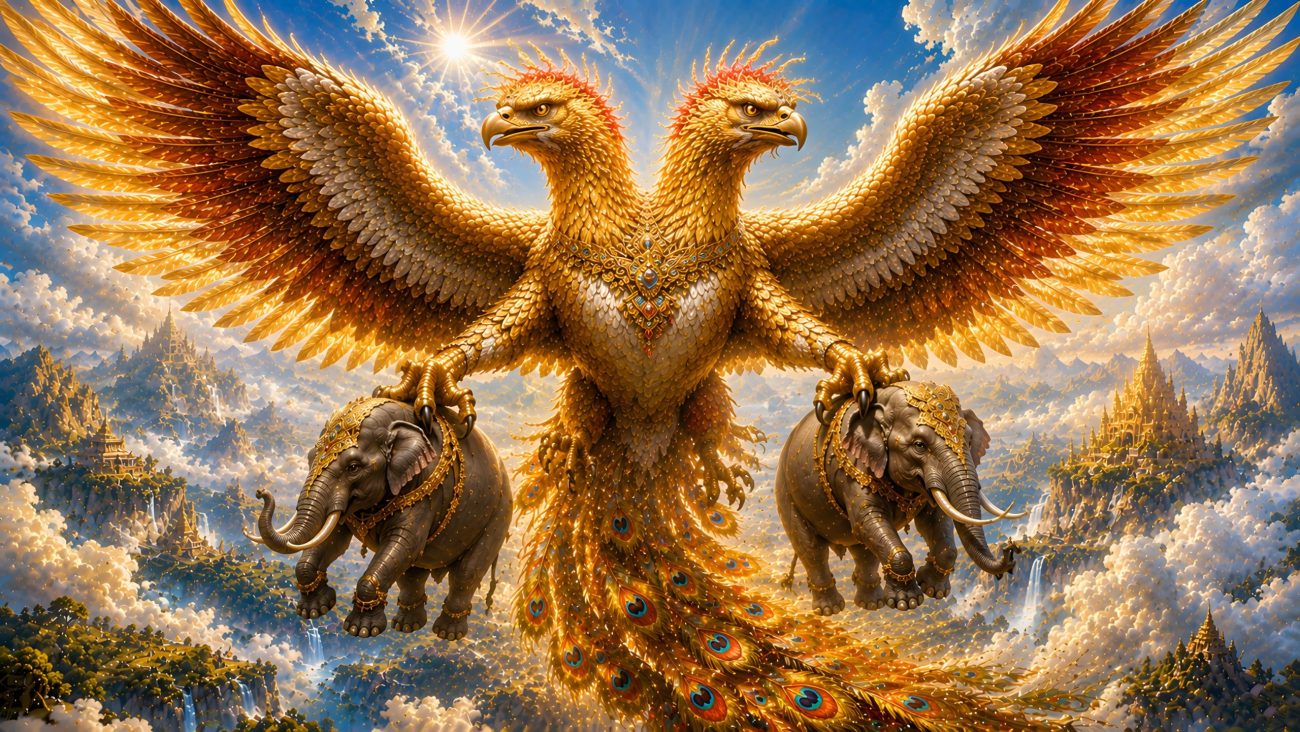
The Rukh is a colossal bird of prey said to live in distant lands, often associated with Madagascar or remote mountains. Its exact appearance is not fixed, but it is always described as enormous, sometimes so large that its wings stretch for vast distances. It preys on the largest animals, including serpents, elephants, and rhinoceroses, and is strong enough to carry them through the air. It is also said to use stones to kill prey.

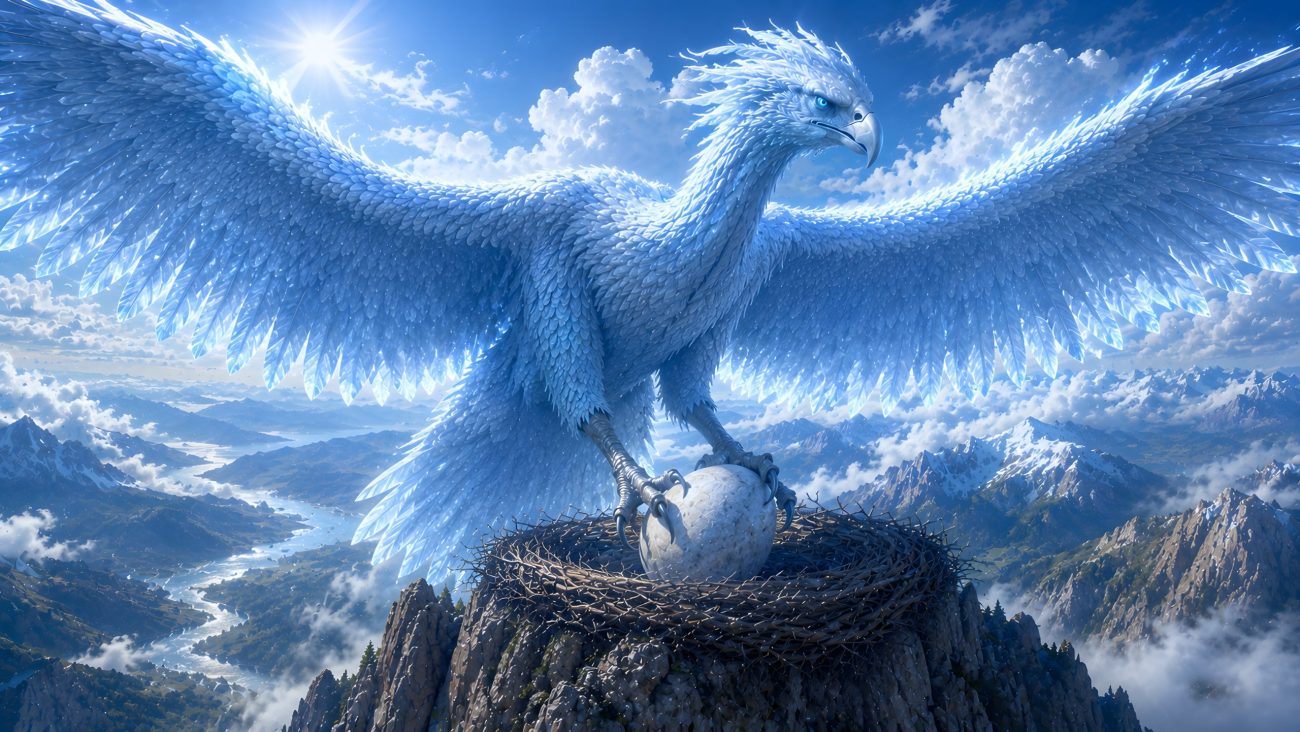
The sailor Sindbad encountered the Rukh during his travels. On one voyage, he found himself stranded on an island and discovered a great white dome, which proved to be the egg of the bird. When the Rukh returned and settled upon it, Sindbad tied himself to its leg so that it might carry him away. The bird later flew off and landed elsewhere, where it seized a giant serpent before departing again, allowing Sindbad to escape.

On another journey, Sindbad’s companions landed on an island and found a similar egg. Ignoring his warning, they broke it open and killed the chick. Soon the two parent birds appeared and pursued the fleeing ship. Each carried a massive stone in its talons. One missed, but the other struck the vessel directly, destroying it and killing all aboard except Sindbad.

In another tale, a magician urged Aladdin to obtain a Rukh egg to hang in his palace. This request angered the genie, who declared it an insult and revealed that the suggestion came from an enemy.

Travellers also spoke of encounters with the bird. One man obtained a feather quill from a chick cut from an enormous egg; the parent bird attacked their ship with a falling stone, though they escaped. It was said that those who ate the chick’s flesh never grew old. Another traveller saw a distant Rukh in the sky over the seas, so vast it resembled a moving mountain. Others described the bird as able to seize elephants, lift them into the air, and drop them to the ground before feeding on them.


Gallery


Sources

A Book of Creatures. (2015, October 23). Rukh. From https://abookofcreatures.com/2015/10/23/rukh/


Interpretive Lenses

Religious Readings
  • Christian Ascetic Deep Dive
Philosophical Readings
  • Nietzschean Deep Dive
Psychological Readings
  • Jungian Deep Dive
Esoteric Deep Dive
  • Hermetic Deep Dive
Political / Social Readings
  • Marxist Deep Dive

Black Chicken of Pretai

Tradition / Region: Romanian Mythology
Alternate Names: The Money Chicken; The Hearth Chicken; Black Familiar Chicken
Category: Chicken


The Myth

A man from Pretai was once returning home from the mill when he noticed something small and black lying by the roadside. When he bent down to look, he saw it was a chicken, entirely black. He picked it up and carried it home, placing it beneath the hearth and feeding it.

After some time, one night he heard a voice coming from the hearth. It was the chicken speaking.

“What should I bring you?” it asked.

Startled, the man muttered, “Be quiet! What could you possibly bring me?”

The following night, the chicken spoke again.
“What should I bring you?”

This time the man answered, “If you truly want to bring me something, then bring me plenty of money.”

From that night on, the chicken did exactly that, and the man soon became rich.


Sources

sagen.at contributors. (n.d.). Das schwarze Huhn. In sagen.at, from https://www.sagen.at/texte/sagen/rumaenien/siebenbuergen/dasschwarzehuhn.html