Bewitched Water Bird of Geisbusch

Tradition / Region: Luxembourg Mythology
Alternate Names: Geisbusch Night Bird
Category: Bird


The Myth

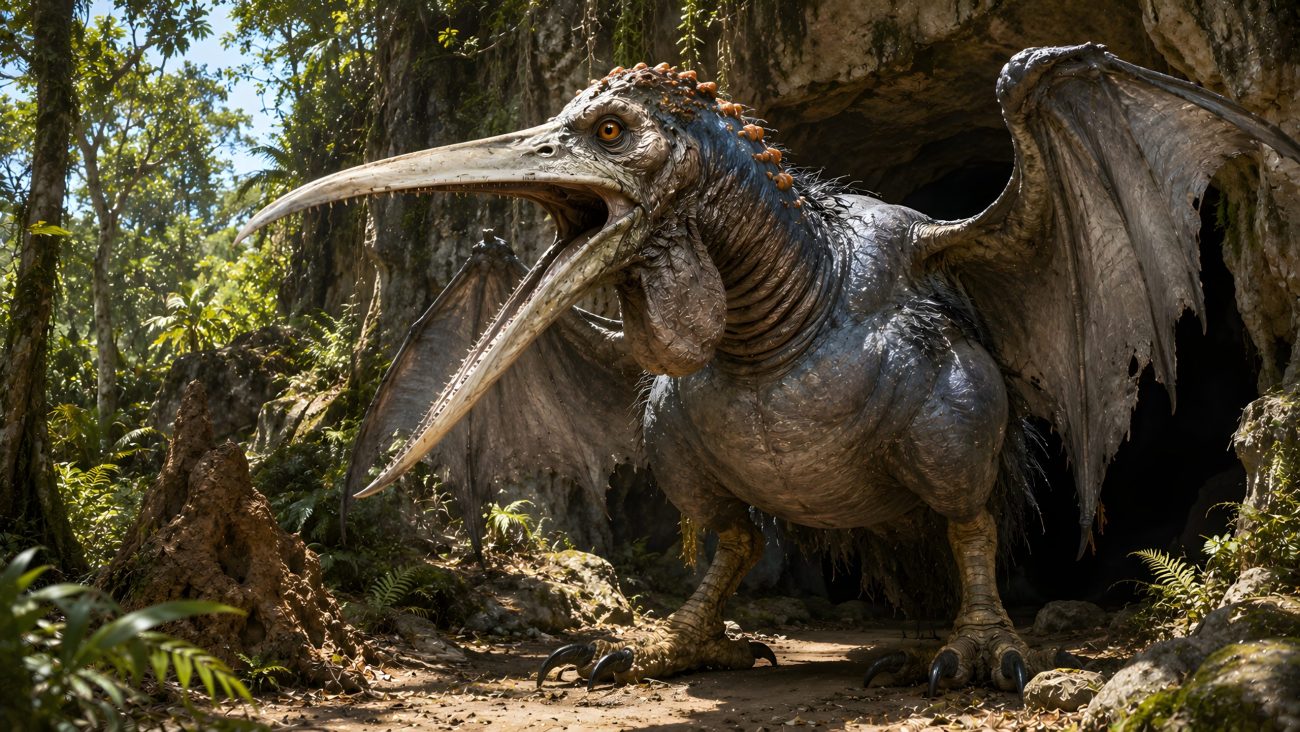
Many years ago, in the wooded area called Geisbusch between Alzingen and Itzig, there lay a large fishpond. Each evening an unknown bird appeared there, whose harsh and repulsive song frightened all who heard it.

People believed the creature possessed the power to bewitch any living being that came into its sight, luring them toward the pond where they would perish in the water. Because of this, no one dared approach it.

At last a mounted hunter decided to destroy the uncanny bird. One evening he rode into the forest with his double-barreled gun and crept close to the pond. When he thought himself near enough, he fired at the bird. Immediately afterward a pitiful cry and a dull roar were heard, and horse and rider were swallowed by the waters of the pond.

After this event, the pond was said to have turned into a wild moor. The place remained visible for a long time, but people carefully avoided it, believing that evil spirits still lingered there and sought to destroy anyone who came too near.


Sources

sagen.at contributors. (n.d.). Der verhexte Wasservogel auf dem Fischteich im Geisbusch. In sagen.at, from https://www.sagen.at/texte/sagen/luxemburg/Fischteich_Geisbusch.html


Quauhxouilin

Tradition / Region: Mexican Mythology
Category: Fish, Eagle, Bird


The Myth

The Quauhxouilin, known as the Eagle-Fish, is a remarkable fish spoken of in Mexican tradition. Its name joins two ideas into one being: quauhtli, meaning eagle, and xouilin, a kind of fish.

This creature bears the head of an eagle, with a curved snout shining golden-yellow, giving it the look of a bird of prey risen from the water. Its body is long, large, and smooth, moving through the water with the same effortless grace as an eagle gliding through the sky.

Unlike ordinary fish, the Quauhxouilin has no scales and no bones. Its flesh is soft throughout, and for this reason it is considered good to eat, valued not only for its strange form but also for its taste.

The Quauhxouilin stands as a fusion of sky and water—a fish shaped like a bird, uniting the domains of river and air in a single living form.


Gallery


Sources

Bestiary.us contributors. (n.d.). Eterari. In Bestiary.us, from https://www.bestiary.us/eterari/


Interpretive Lenses

Religious Readings
  • Christian Ascetic Deep Dive
Philosophical Readings
  • Nietzschean Deep Dive
Psychological Readings
  • Jungian Deep Dive
Esoteric Deep Dive
  • Hermetic Deep Dive
Political / Social Readings
  • Marxist Deep Dive
Other
  • How to Invite The Quauhxouilin

Alan

Tradition / Region: Philippines Mythology
Alternate Names: Alans
Category: Forest dweller, Bird


The Myth

Among the Tingyan people of northwestern Luzon, the Alans are known as wild, winged female spirits who belong to a lower order of supernatural beings. They dwell deep within forests, and at times near rivers, in places seldom visited by humans.

In appearance, the Alans resemble women, but their features are disturbing. Their faces are said to be rough and deeply wrinkled, resembling the hide of a carabao buffalo. They possess wings and are able to fly. Their fingers are inverted, and their toes point backward, emerging from their heels rather than their feet, making them frightening to behold.

The Alans are believed to live in houses much like those of humans, though far more splendid and richly furnished. These dwellings are hidden within the dark forest. At night or when unseen, the Alans are said to hang upside down from tree branches, like bats.

Despite their terrifying appearance, the Alans are credited with a nurturing role. It is believed that when they find drops of menstrual blood, a placenta, or the remains of a miscarriage, they are able to raise a child from it. These children are raised secretly, without the knowledge of their human parents. Once grown, the Alans assist the children throughout their lives, offering help and protection.

Thus, the Alans are remembered not only as fearsome forest spirits, but also as mysterious foster mothers, moving between danger and care, concealment and guardianship.


Sources

Bestiary.us contributors. (n.d.). Eterari. In Bestiary.us, from https://www.bestiary.us/eterari/


Etengena

Tradition / Region: Papua New Guinea Mythology
Alternate Names:
Category: Forest Dweller, Bird, Snake


The Myth

In Kiwai Papuan folklore, etengena are mythical beings associated with particular places in the natural world. They are said to dwell in large trees, springs, and similar locations where nature is dense and undisturbed. Some etengena are believed to watch over vegetable gardens, guarding them from harm or intrusion.

Etengena do not have a single fixed appearance. At times they may take on human form, while at other times they reveal themselves as animals. They are known to appear as snakes, birds, or other creatures, depending on the situation and the person who encounters them.

The idea of the etengena overlaps in part with that of the ororarora, another class of mythical beings known in Kiwai belief. Because of this, the boundaries between these beings are not always clear, and their roles and forms may blend into one another in stories and traditions.


Gallery


Sources

Bestiary.us contributors. (n.d.). Etengena. In Bestiary.us, from https://www.bestiary.us/etengena/


Interpretive Lenses

Religious Readings
  • Christian Ascetic Deep Dive
Philosophical Readings
  • Nietzschean Deep Dive
Psychological Readings
  • Jungian Deep Dive
Esoteric Deep Dive
  • Hermetic Deep Dive
Political / Social Readings
  • Marxist Deep Dive
Other
  • How to Invite The Etengena

Lidérc

Tradition / Region: Hungarian Mythology
Alternate Names: Ludvérc
Category: Bird, Chicken, Flame, Spirit, Shapeshifter


The Myth

In the villages and marshlands of Hungary, people speak of the Lidérc, a restless and many-formed spirit that moves between fire, flesh, and shadow.

On some nights it appears as a shooting star or a wandering flame, streaking low across the sky or flickering over bogs and fields. Wherever it passes, sparks leap and fires may break out, barns and pens igniting without cause. In other places it takes the shape of a fiery rod, a blazing figure, or a marsh light that lures the unwary.

But the Lidérc is most feared for the form it takes among humans.

It seeks the lonely: widows, widowers, abandoned lovers, those whose beloveds are far away or dead. Slipping through the night, it enters their homes and assumes the exact appearance of the person they long for most. It speaks gently, knows their memories, and offers comfort, affection, and desire. Night after night it returns, lying beside its victim, feeding not on blood but on life itself. The victim grows pale and weak, dizzy and thin, until at last they waste away and die, loved to death. When its prey is spent, the Lidérc abandons the body and rises again into the sky as a star, seeking another heart to consume.

Yet the Lidérc is never perfect in its disguise. One of its legs always betrays it: a scaly goose foot, a chicken’s claw, or sometimes a horse’s iron-shod hoof. Those who scatter ashes at their threshold may see the tracks—one human footstep, one monstrous—and know what has crossed their door. Garlic, cords, and household charms can bar its entry, if the danger is recognized in time.

There is another kind of Lidérc as well, one born not from fire but from human greed. If the first egg laid by a black hen is hidden beneath a person’s armpit and warmed there, a strange, featherless creature will hatch. This Lidérc binds itself to its keeper, speaking with intelligence and obeying commands. It brings wealth, steals treasure, and works tirelessly, living on butter and favors. But it is never satisfied. If its master fails to give it constant tasks, it becomes restless and cruel, pestering day and night until it finally destroys the one who raised it.

The only escape is to give the Lidérc an impossible command: to carry water in a sieve, to squeeze through solid wood, to complete a task that cannot be done. Unable to endure failure, the creature will rage, weaken, and finally vanish.

Thus the Lidérc remains a warning whispered in Hungarian folklore: that desire, loneliness, and greed can summon something that looks like love or fortune—but feeds only on ruin.


Sources

A Book of Creatures contributors. (2021). Lidérc. In ABookOfCreatures.com, from https://abookofcreatures.com/2021/03/22/liderc/

Wikipedia contributors. (n.d.). Lidérc. In Wikipedia, The Free Encyclopedia, from https://en.wikipedia.org/wiki/Lid%C3%A9rc


Alcyone

Tradition / Region: Greek Mythology
Alternate Names: Halcyone
Category: Bird


The Myth

Alcyone is remembered as a woman whose grief reshaped the sea itself. When her husband was lost to a violent storm, she threw herself into the waves in despair. Moved by her devotion and sorrow, the gods transformed her into a seabird—most often identified as the kingfisher—so that she might remain forever bound to the waters that had taken him.

In her new form, Alcyone lays her eggs upon the open sea. During this sacred time, the winds are stilled and the waves grow calm, allowing her fragile nest to float safely upon the surface. These days of quiet waters became known as the halcyon days, a brief and precious interval when the sea abandons its fury and rests in perfect balance.

The myth tells that Alcyone does not command the sea through strength or authority. Instead, her constancy and patience bring harmony where chaos once ruled. The calm she creates is temporary, but absolute—a pause in the natural order granted by devotion rather than force.

Thus Alcyone endures as a symbol of steadfast love and cosmic balance. Her story affirms that even the wildest forces of the world may be softened, if only for a time, by loyalty, endurance, and grief transformed into quiet renewal.


Source


Aderyn y Corff

Tradition / Region: Welsh mythology
Alternate Names: Corpse Bird
Category: Bird, Zombie


The Myth

The Aderyn y Corff, the “corpse bird,” appears at the very edge of life, when death is no longer distant but imminent. In Welsh tradition, it does not wander the countryside at random nor bring vague ill fortune. It comes with purpose. When a person is near death, the bird is said to arrive outside the house, perching near a door or window, and calling softly into the night.

Its cry is described as sounding like dewch, dewch—“come, come.” This is not a threat or a warning meant to be avoided. It is a summons. The call is directed not to the living, but to the soul of the dying, inviting it to leave the body and pass onward. In this role, the Aderyn y Corff acts as a messenger between worlds, announcing that the moment of crossing has arrived.

The creature’s form marks it as something profoundly unnatural. It is said to have no feathers and no wings, yet it flies. This impossibility places it outside ordinary creation, identifying it as a being that does not belong fully to the physical world. Its movement obeys no natural law, only the logic of death and transition, reinforcing its status as a liminal presence suspended between life and the otherworld.

When it is not calling to the dying, the Aderyn y Corff is believed to dwell in another realm entirely—a plane of illusion or unreality that exists alongside the human world but rarely touches it. Death is one of the few moments when the boundary thins enough for the bird to cross over. It does not linger after its task is done. Once the soul has departed, the bird vanishes.

In many tellings, the Aderyn y Corff is closely associated with the screech owl, whose piercing nocturnal cry has long been linked to death across Europe. In Welsh usage, the name itself can refer to such owls, blurring the line between natural bird and supernatural herald. Yet folklore insists that when the call comes at the right moment, it is no ordinary owl but the corpse bird itself.

The Aderyn y Corff is feared, but not hated. It does not kill, curse, or deceive. It simply announces what cannot be changed. Its presence affirms a belief deeply rooted in Welsh tradition: death does not arrive silently. The otherworld sends a messenger first, and when the corpse bird calls, the soul is already being gathered.


Sources

Sikes, W. (1881). British Goblins: Welsh Folk-lore, Fairy Mythology, Legends and Traditions. Sampson Low, Marston, Searle, & Rivington, p. 213.

Wikipedia contributors. (n.d.). Aderyn y Corff. In Wikipedia, The Free Encyclopedia, from https://en.wikipedia.org/wiki/Aderyn_y_Corff


Cikavac

Tradition / Region: Serbian Mythology
Alternate Names:
Category: Bird / Pelican


The Myth

The Cikavac is a creature of Serbian folklore, described as a strange winged being that is neither fully bird nor beast. It is said to resemble a bird with a long beak and a pouch like that of a pelican. The Cikavac does not appear naturally in the world but must be deliberately created through a secret ritual.

To obtain a Cikavac, a person must take an egg laid by a black hen. The egg is then carried under the armpit of a woman for forty days. During this time, strict rules must be followed. The caretaker must not confess sins, must not pray, must not wash her face, cut her nails, or speak of what she is doing. If these conditions are kept, the egg hatches, and the Cikavac is born.

Once created, the Cikavac becomes bound to its owner. At night, it flies out to perform tasks on their behalf. It is said to steal honey from neighboring beehives and milk from other people’s cattle, bringing these goods back to its master. Despite this, the beehives and animals it visits are often described as remaining unharmed.

The Cikavac is also believed to grant its owner the ability to understand the language of animals. Through this power, humans gain insight into the hidden world of beasts and birds, learning things normally beyond human hearing.

The Cikavac remains close to the household that created it, acting as a secret helper and bringer of prosperity. Its existence depends on secrecy and careful observance of the ritual that brought it into the world. If the rules are broken, the creature is said to fail to form or to disappear.

In Serbian tradition, the Cikavac is remembered as a liminal being—born through human action, moving between forest, farm, and home, and serving as a hidden companion that operates under cover of night.


Zwanenjonkvrouw

Tradition / Region: Netherlands (Noord-Holland, Heemskerk)
Alternate Names:
Category: Swan maiden / nymph


The Myth

In Noord-Holland, people tell of the Zwanenjonkvrouw, a woman of extraordinary beauty who can take the form of a swan. She changes between swan and human shape by means of a magical swan shirt, known as her zwanenhemd. When she wears it, she becomes a swan; when it is removed, she remains human.

In many tales, a man discovers the Zwanenjonkvrouw while she is bathing and steals her swan shirt. Without it, she is unable to return to her true form. The man then forces her to become his wife, and she lives among humans, bound by the loss of her garment rather than by her own will.

For a time, she remains with him, but she never ceases to long for her swan shirt. When she eventually finds it again, she immediately leaves her husband without mercy and disappears, returning to her true nature and her former life.

In a legend from Heemskerk, the story ends more tragically. When the man chooses to abandon her in favor of an ordinary human woman, the Zwanenjonkvrouw falls down dead, her life ending the moment she is rejected.

Thus the Zwanenjonkvrouw is remembered as a swan-maiden bound by theft, marriage, and loss, whose fate is sealed by the recovery of her stolen form or by betrayal.


Interpretive Lenses

Religious Readings
Philosophical Readings
Psychological Readings
Esoteric Deep Dive
Political / Social Readings
Other

Keledones

Tradition / Region: Greek Mythology
Alternate Names: Celedones, Khryseiai Keledones (“Golden Charmers”)
Category: Object


The Myth

In the age when gods still shaped wonders with their own hands, the divine smith Hephaistos forged a set of miraculous beings for the temple of Apollon at Delphi. These were the Keledones, golden singers crafted not of flesh, but of shining metal, alive with sound and enchantment.

The Keledones were made entirely of gold and were said to sing with voices of supernatural power. Some described them as beautiful maidens, others as wryneck birds, and still others as strange bird-women, reminiscent of the Sirens. However they appeared, their song possessed a soothing and bewitching force, capable of charming all who heard it.

They were placed high upon the temple, above the pediment, where their voices rang out continuously. There, the Golden Charmers sang in honor of Apollon, their music filling the sacred space with an otherworldly harmony. Ancient poets spoke of them as wonders beyond human craft, comparing their song to that of the Sirens, though fashioned not to destroy but to enthrall.

Some later writers questioned whether such beings truly existed or whether they were poetic embellishments inspired by earlier myths. Yet the tradition endured: that once, at Delphi, golden singers adorned the god’s temple, their voices echoing across stone and air, forged by divine hands and animated by sacred song.

Thus the Keledones remained in memory as marvels of divine artifice — not born, but made; not living, yet singing — eternal symbols of beauty, craft, and the dangerous power of enchanted sound.