Ördög

Tradition / Region: Hungarian Mythology
Alternate Names: Ürdüng (Old Hungarian)
Category: Demon


The Myth

The Ördög is a shape-shifting demonic being in Hungarian mythology, representing dark and destructive forces. In earlier traditions, he was not purely identical to the Christian devil, but after Christianization he became directly associated with the concept of Satan.

In some accounts, the Ördög even plays a role in the creation of the world, acting as a helper or counterpart to God. This reflects an older dualistic belief system where opposing forces both contributed to existence.

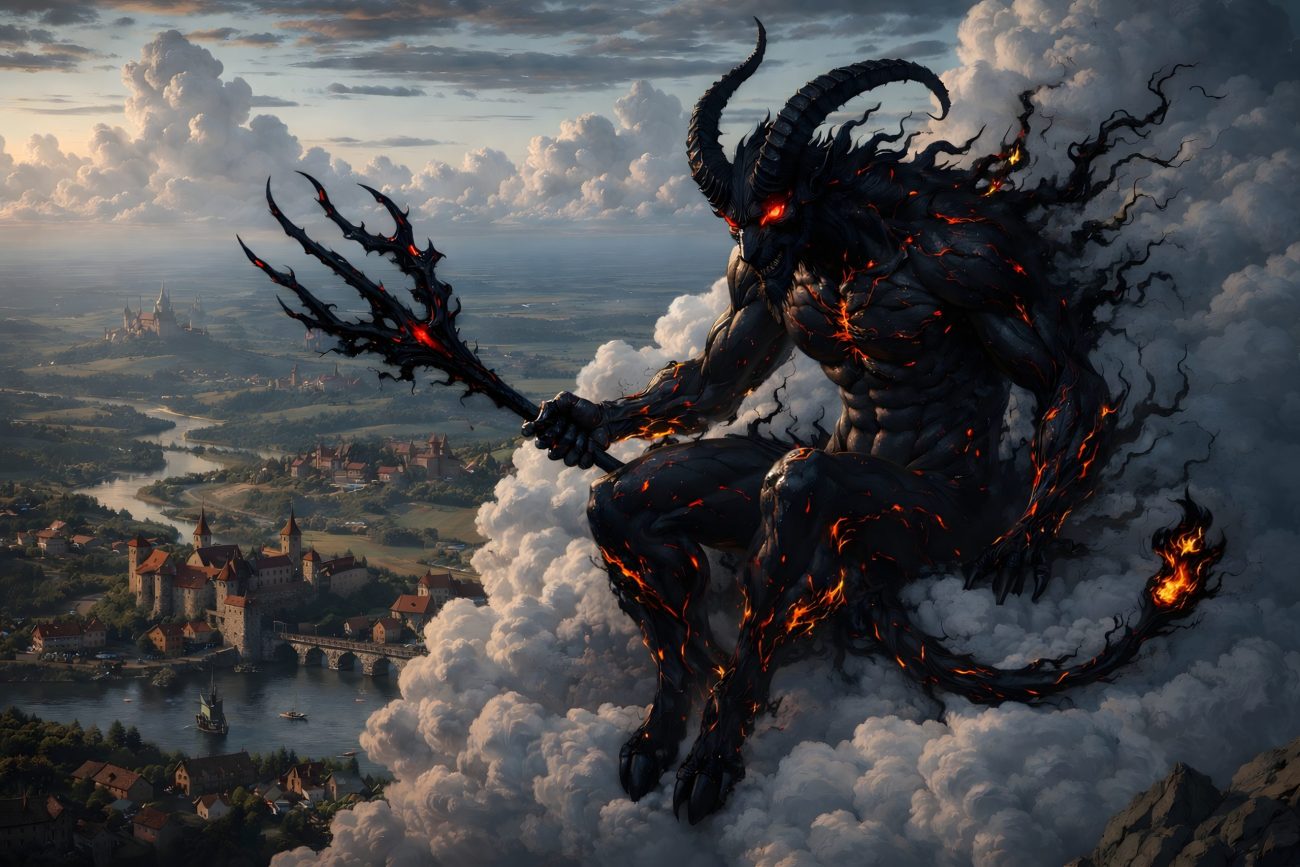
He is commonly described as a humanoid creature with goat-like features: horns, cloven hooves, and a tail, resembling a satyr or faun. His body is often depicted as black, and he may carry a pitchfork. However, he is not limited to this form and is known for his ability to shapeshift.

When appearing among humans, the Ördög may take the form of a fox, a dark flame, or even a human—often a shepherd with unsettling, glowing eyes. He is said to hide within walls, making strange, high-pitched noises to disturb or influence people.

The Ördög is strongly associated with the underworld, known as Pokol, where he stirs a great cauldron filled with the souls of sinful humans. However, this idea may be influenced by later Christian beliefs, as earlier traditions did not necessarily describe the underworld strictly as a place of punishment.

A defining trait of the Ördög is his tendency to make bargains or bets with humans. Through these deals, he attempts to corrupt individuals and claim their souls. His ultimate goal is the accumulation of human souls, making him a persistent and dangerous adversary in Hungarian folklore.


Sources

Wikipedia contributors. (n.d.). Ördög. In Wikipedia, from https://en.wikipedia.org/wiki/%C3%96rd%C3%B6g

Tündér

Tradition / Region: Hungarian Folklore
Alternate Names:
Category: Fairy


The Myth

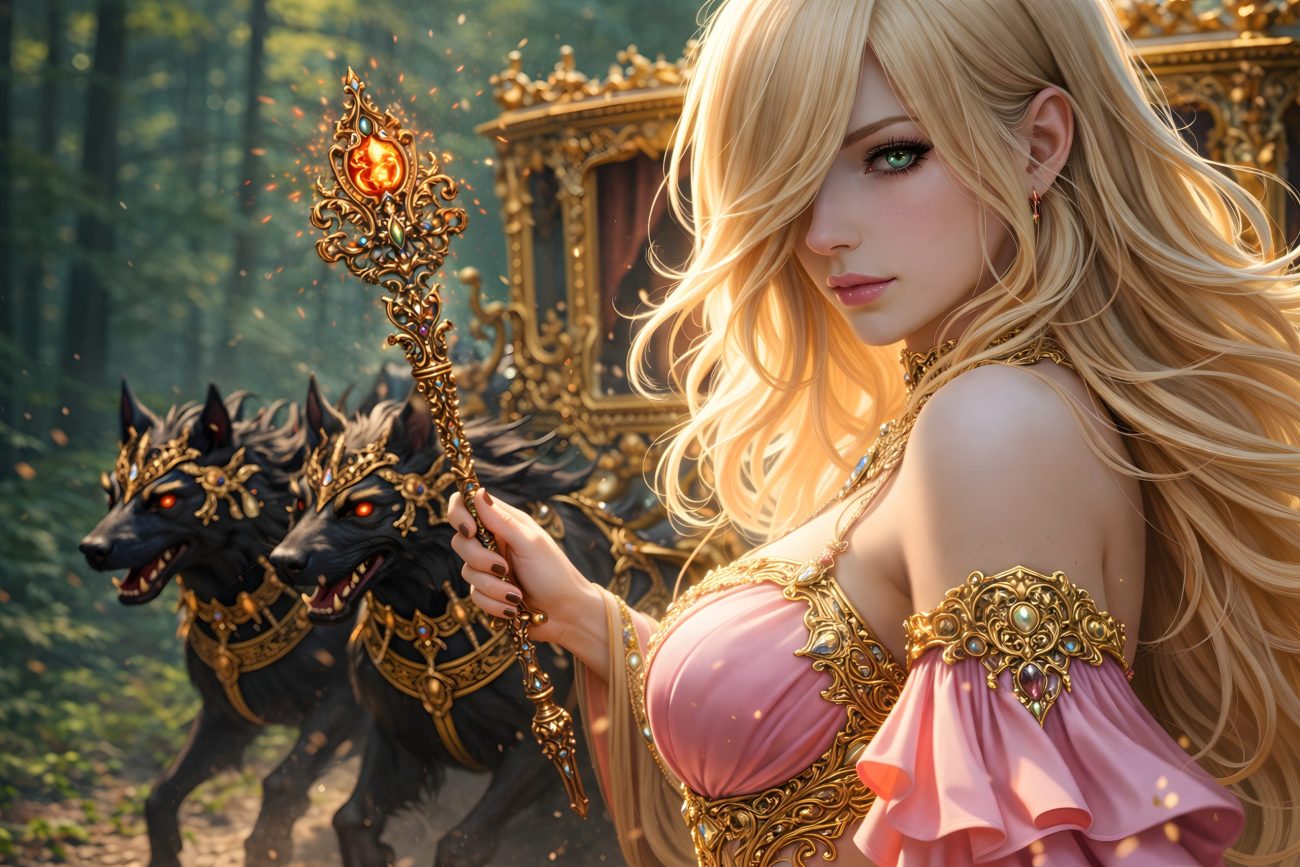
The tündér is a supernatural being in Hungarian folklore, often appearing as a beautiful woman with magical abilities, including granting wishes.

A poor couple lived together and loved each other, but they were very poor and sometimes argued because of it. One evening, the husband returned home and told his wife that on the road he had encountered a beautiful woman sitting in a golden carriage pulled by black dogs. The carriage had been stuck in the mud, and he helped her out. The woman then revealed that she was a tündér and promised to grant three wishes to his wife.

At home, the husband told his wife to try wishing for something. She wished for a sausage, and immediately a large sausage appeared in a pot from the chimney. They were happy and began planning how to use the remaining wishes wisely. While preparing to eat, the husband accidentally knocked the pot into the fire. The wife, upset, wished that the sausage would grow onto her husband’s nose. At once, the sausage appeared hanging from his nose.

They argued about what to do. The husband did not want to cut it off, and after a long dispute, they used their final wish to return the sausage to the pot. With this, all three wishes were gone, and they remained as poor as before.

They ate the sausage and realized that their arguing had caused them to waste the wishes. After that, they decided to live in peace and stopped quarreling. Over time, through work and thrift, they improved their lives.


Sources

László, B. (ed.). (1982). Hungarian Folktale Catalog 3: Types of Hungarian legendary tales (AaTh 750–849). In Budapest: MTA Ethnographic Research Group.


Sárkány

Tradition / Region: Hungarian Mythology
Alternate Names:
Category: Dragon


The Myth

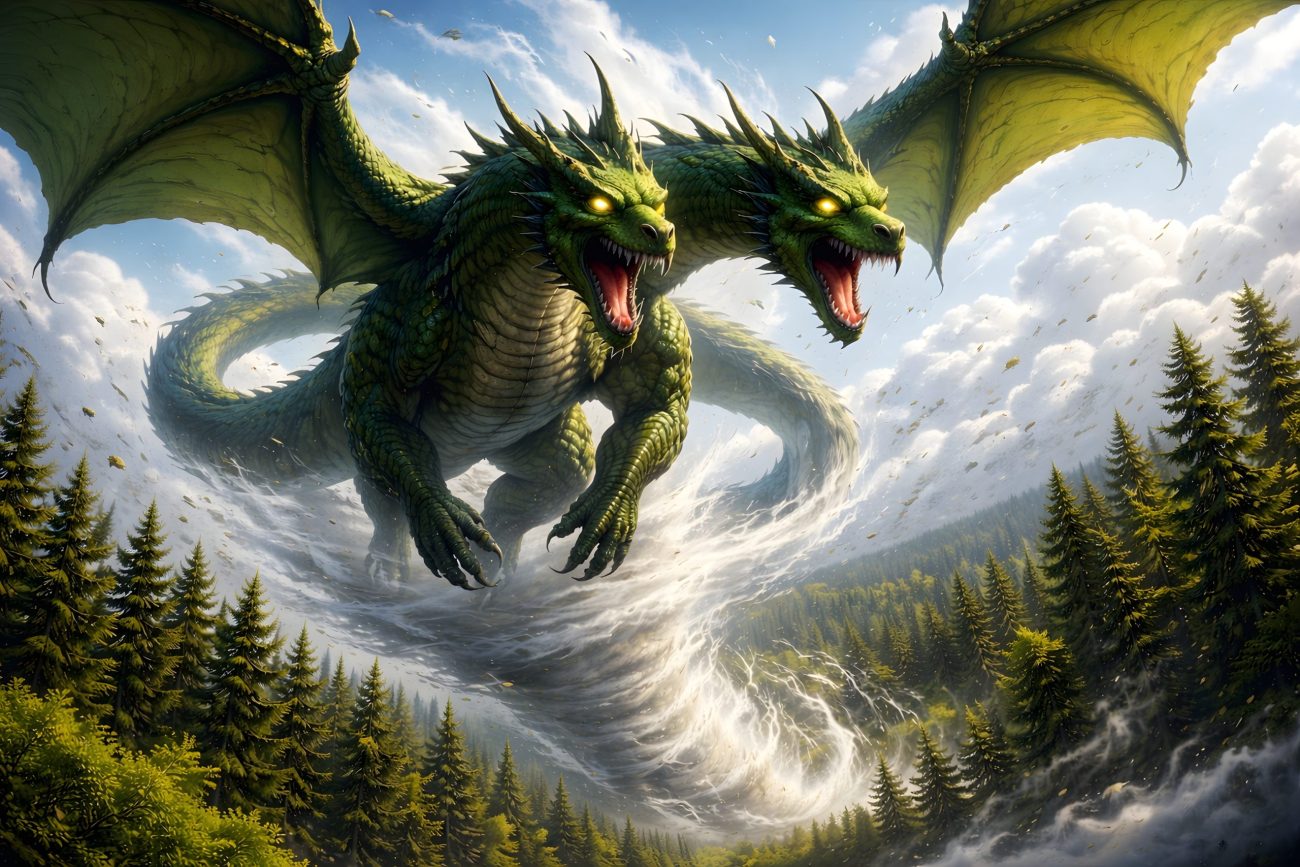
The sárkány is a large and powerful mythical creature, typically described as a reptilian being with magical or spiritual properties. In Hungarian tradition, it may also appear as a humanoid figure and often has multiple heads.

Creatures identified as dragons appear in many cultures and likely do not share a single origin. Similar beings are found in ancient mythologies such as Mesopotamian and Akkadian traditions, where serpent-like or dragon-like creatures already existed. In European and Persian traditions, dragons are generally hostile, while in other cultures they may be benevolent.

In Hungarian belief, the meaning of the word sárkány changed over time. During earlier periods it could refer to a title or role, but later became associated with the monstrous dragon known from Western-Christian traditions.

In folklore and fairy tales, the sárkány is commonly a dangerous, multi-headed enemy. It is often connected with storms or whirlwinds and may appear together with violent weather. Many stories describe encounters between humans and such creatures, where the sárkány proves deadly and difficult to defeat.


Sources

Wikipedia contributors. (n.d.). Sárkány (mitológia). In Wikipedia, from https://hu.wikipedia.org/wiki/S%C3%A1rk%C3%A1ny_%28mitol%C3%B3gia%29


Vadleány

Tradition / Region: Hungarian Mythology
Alternate Names: Wild Maiden
Category: Nymph


The Myth

The Vadleány is a mysterious and dangerous forest spirit from Hungarian folklore, closely related to nymphs or dryads. Her name literally means “wild girl,” reflecting her untamed and primal nature.

She is described as a nude female being with extremely long hair and elongated fingernails, embodying the raw and uncontrolled forces of the wilderness. Her appearance is both alluring and unsettling, placing her between beauty and threat.

The Vadleány is known for seducing wanderers, especially men who venture too deep into the forest. Rather than killing immediately, she drains their strength or vitality, leaving them weakened or doomed. Her method is subtle, relying on attraction and enchantment rather than brute force.

Her presence can often be detected through unnatural rustling in the trees, even in still air. This serves as a warning sign that the forest itself is no longer safe.

Despite her danger, folklore suggests she can be captured through trickery. If someone places a single boot along her path, her curiosity may lead her to try fitting both feet into it, allowing her to be restrained. This detail highlights a recurring theme in folklore — that even powerful spirits can be outwitted under the right circumstances.

The Vadleány represents the seductive danger of the wild: a force that attracts, deceives, and ultimately punishes those who underestimate nature.


Sources

Wikipedia contributors. (n.d.). Vadleány. In Wikipedia, from https://en.wikipedia.org/wiki/Vadle%C3%A1ny


Grünröckel

Tradition / Region: Hungarian Mythology
Alternate Names: The Greencoat; Green Coat Man; Mountain Dwarf of Günser
Category: Mountain dweller, Gnome


The Myth

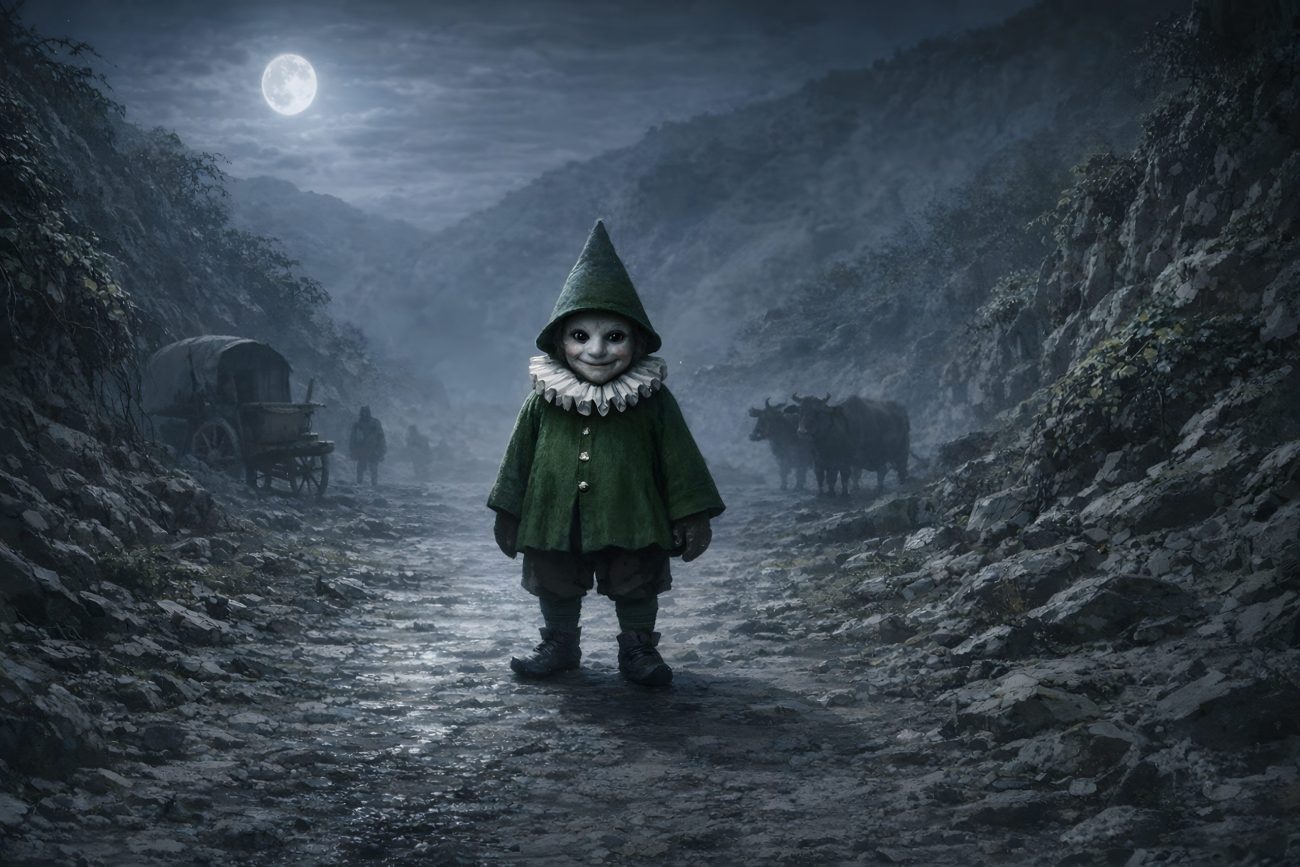
In the Günser Mountains, people speak of a small, strange being known as the Grünröckel, the Greencoat. It is said to appear on bright moonlit nights along mountain paths and hollow roads. Though not truly evil, its appearance is feared, for those who meet it often suffer misfortune afterward.

One summer night, three men from the mountains were hauling wood down into town with their oxen, using the cool moonlight to avoid the heat and the swarms of flies. Their teams moved one behind another through a hollow between vineyards while the drivers rested on their wagons.

Suddenly the first pair of oxen stopped and would not go forward.

The driver climbed down and went ahead to see what blocked the way. There, in the middle of the hollow, shining clearly in the full moon, stood a short figure. It wore a pointed hat, a white ruff at the neck, and over its shoulders a bell-shaped green coat that hung down to its thighs. Beneath it were short breeches and tight trousers. The little man stood still, smiling with an eerie grin.

Terrified, the driver leapt back and seized his long-handled axe. He rushed forward and struck with all his strength. But just as the blade came down, the small man sprang lightly up the embankment and vanished at once. Though the slope was thick with vines, the figure passed through without a sound or any sign of resistance, as if it had never been solid at all.

The men continued on their way, shaken. Soon afterward, one of the companions died unexpectedly, and people said the meeting with the Greencoat had brought the ill fortune.

In the mountains it is also said that the Grünröckel is a spirit who delights in startling travelers and teasing wanderers, though he is not wholly hostile. Some claim he is the restless ghost of an executed man who once fled through these hills, while others believe he is an ancient mountain spirit who has always belonged to the land.

But all agree that when the small man in the green coat appears in the moonlight, it is a sign that something strange is about to follow.


Sources

sagen.at contributors. (n.d.). Das Grünröckel. In sagen.at, from https://www.sagen.at/texte/sagen/ungarn/gruenroeckl.htm


Hany Istók

Tradition / Region: Hungarian Mythology
Alternate Names: The Foundling of Hanság; Marsh Child; Haon Ischtok
Category: Swamp dweller


The Myth

On March 15, 1746, two fishermen, Franz Nagy and Michael Molnár, brought a strange boy to the castle of Kapuvár. The child resembled a wild animal more than a human, yet by his size he seemed to be about ten years old. Because he could not speak, he was baptized Hany Istók.

The boy was naked. His head was round, with small eyes, a flat nose, and a wide mouth. His body and head were said to be covered in fish-like scales, and his fingers and toes were unusually long. He would eat nothing but grass, hay, and straw. Whenever he thought himself unobserved, he leapt into the castle moat and swam like a fish.

For almost a year he remained quietly at the castle. In time he began to accept cooked food, and it seemed he might gradually adapt to human life. Because of this, the guards watched him less closely.

Then, without warning, he disappeared.

People believed he had thrown himself into the nearby Rábcza River and escaped back into the marshlands.

A wooden likeness of Hany Istók was later kept at the Esterházy palace of Esterház. From this figure, observers noted strange features: a wrinkled brow, sparse facial hair, and a body whose belly seemed too large for its limbs. These traits made some think the being had not been a child at all, but something older in human form.

After his disappearance, the strange creature was reportedly seen a few more times in the marshes of the Hanság. After that, it vanished entirely, and no one saw it again.


Sources

sagen.at contributors. (n.d.). Das Findelkind. In sagen.at, from https://www.sagen.at/texte/sagen/ungarn/findelkind.htm


Lidérc

Tradition / Region: Hungarian Mythology
Alternate Names: Ludvérc
Category: Bird, Chicken, Flame, Spirit, Shapeshifter


The Myth

In the villages and marshlands of Hungary, people speak of the Lidérc, a restless and many-formed spirit that moves between fire, flesh, and shadow.

On some nights it appears as a shooting star or a wandering flame, streaking low across the sky or flickering over bogs and fields. Wherever it passes, sparks leap and fires may break out, barns and pens igniting without cause. In other places it takes the shape of a fiery rod, a blazing figure, or a marsh light that lures the unwary.

But the Lidérc is most feared for the form it takes among humans.

It seeks the lonely: widows, widowers, abandoned lovers, those whose beloveds are far away or dead. Slipping through the night, it enters their homes and assumes the exact appearance of the person they long for most. It speaks gently, knows their memories, and offers comfort, affection, and desire. Night after night it returns, lying beside its victim, feeding not on blood but on life itself. The victim grows pale and weak, dizzy and thin, until at last they waste away and die, loved to death. When its prey is spent, the Lidérc abandons the body and rises again into the sky as a star, seeking another heart to consume.

Yet the Lidérc is never perfect in its disguise. One of its legs always betrays it: a scaly goose foot, a chicken’s claw, or sometimes a horse’s iron-shod hoof. Those who scatter ashes at their threshold may see the tracks—one human footstep, one monstrous—and know what has crossed their door. Garlic, cords, and household charms can bar its entry, if the danger is recognized in time.

There is another kind of Lidérc as well, one born not from fire but from human greed. If the first egg laid by a black hen is hidden beneath a person’s armpit and warmed there, a strange, featherless creature will hatch. This Lidérc binds itself to its keeper, speaking with intelligence and obeying commands. It brings wealth, steals treasure, and works tirelessly, living on butter and favors. But it is never satisfied. If its master fails to give it constant tasks, it becomes restless and cruel, pestering day and night until it finally destroys the one who raised it.

The only escape is to give the Lidérc an impossible command: to carry water in a sieve, to squeeze through solid wood, to complete a task that cannot be done. Unable to endure failure, the creature will rage, weaken, and finally vanish.

Thus the Lidérc remains a warning whispered in Hungarian folklore: that desire, loneliness, and greed can summon something that looks like love or fortune—but feeds only on ruin.


Sources

A Book of Creatures contributors. (2021). Lidérc. In ABookOfCreatures.com, from https://abookofcreatures.com/2021/03/22/liderc/

Wikipedia contributors. (n.d.). Lidérc. In Wikipedia, The Free Encyclopedia, from https://en.wikipedia.org/wiki/Lid%C3%A9rc