Viesulis

Tradition / Region: Latvian Mythology
Alternate Names: Whirlwind Spirit
Category: Spirit


The Myth

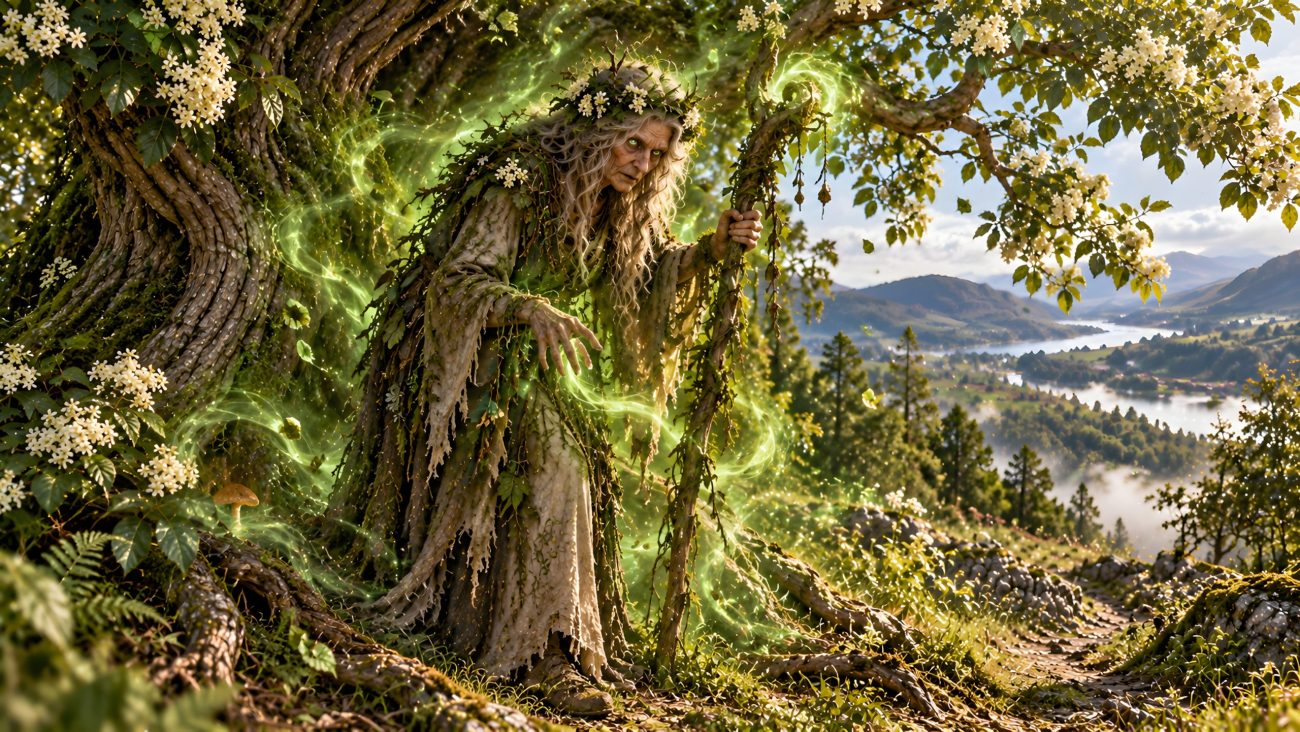
Viesulis is a destructive whirlwind entity from Latvian epic tradition, most notably appearing in the works of Andrejs Pumpurs. It is not merely natural wind, but a supernatural force associated with chaos, divine conflict, and demonic influence.

Viesulis manifests as a violent, living storm — a spiraling whirlwind capable of reshaping the land. In the myth, it is sent by dark forces (the devil or opposing powers) as a weapon, descending from the sky with destructive intent. It is not random: it acts with purpose, targeting specific places.

When it appears, it brings catastrophic consequences. In one account, a whirlwind descends upon the Burtnieki lands, and through human interference and misjudgment, it causes a lake to collapse into the earth, burying a castle beneath it. This shows that Viesulis is not only destructive by nature, but also amplifies the consequences of human actions.

Unlike witches or sorcerers, Viesulis does not speak, scheme, or deceive. Its power lies in raw force — wind, pressure, and motion — acting as an instrument of higher supernatural will rather than an independent thinker.

Viesulis exists between natural and supernatural realms, embodying the idea that storms are not just weather, but manifestations of unseen powers. It represents sudden disaster, divine punishment, or chaos unleashed upon the world.


Sources

AILAB contributors. (n.d.). Pumpurs – Lāčplēsis (3. daļa). In AILAB, from https://web.archive.org/web/20060131100844/http://www.ailab.lv/Teksti/Senie/Pumpurs/3.dala.html

Pumpurs, A. (1888). Lāčplēsis (Bearslayer), III Song: Kangar and Dieterich – The War with the Estonians – The Sunken Castle of the Witches. In Latvian national epic poetry.


T’q’ashmapa

Tradition / Region: Georgian Mythology
Alternate Names: Tkashi-Mapa
Category: Spirit


The Myth

T’q’ashmapa is a powerful and dangerous forest being from Mingrelian folklore, associated with wilderness and encounters between humans and supernatural forces.

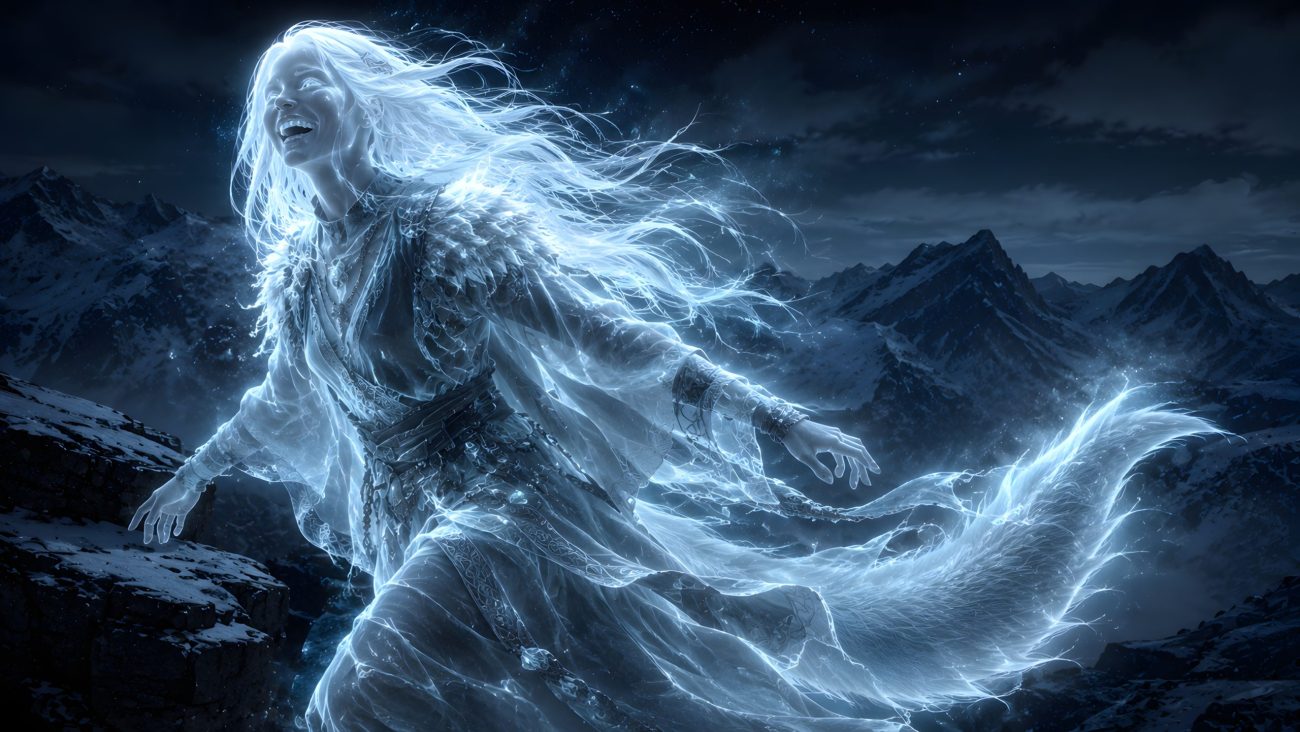
She appears as a pale woman with very long white hair, dressed entirely in white. Despite her beauty, she is not benevolent. She possesses great physical strength and becomes violent when displeased.

She seeks out men in the forest, especially young and inexperienced ones, and attempts to take them as lovers. Those who accept her are drawn into her domain, while those who resist face severe consequences. She is known to attack, beat, and physically harm men who refuse her advances.

T’q’ashmapa exists within the wild, beyond human control, where encounters with her are sudden and dangerous. She embodies both attraction and threat, luring individuals into situations they cannot easily escape.

She represents
a force of the forest that seduces and punishes — a being whose beauty conceals violence and whose desire brings danger to those who encounter her.


Sources

Tsanava, A. (1992). ქართული მითოლოგია [Georgian Mythology]. In Tbilisi: Merani.

Wikipedia contributors. (n.d.). Georgian mythology – Spirits, creatures, and other beings. In Wikipedia, from https://en.wikipedia.org/wiki/Georgian_mythology#Spirits,_creatures,_and_other_beings


Kaji

Tradition / Region: Georgian Mythology
Alternate Names:
Category: Spirit


The Myth

Kaji are supernatural beings in Georgian mythology who inhabit a separate, distant realm known as Kajeti. They are a distinct race of magical entities, existing apart from humans and associated with natural forces.

They are active both day and night and are believed to control the winds. They can move across both land and sea, and possess the ability to change their appearance at will.

Kaji are divided into different types depending on their domain. Land kaji dwell in forests and remote cliffs, where they attack humans, harming them or driving them mad. Water kaji live in rivers and lakes, where they are less dangerous and may even protect fishermen.

There is also a distinction between male and female kaji. Male kaji are often frightening in appearance, while female kaji are known for their beauty. Female kaji may form relationships with humans, sometimes helping or rescuing them, and in certain cases marrying them.

The Kaji represent
a hidden race of powerful beings tied to nature — capable of both harm and aid, depending on their kind and their encounter with humans.


Sources

Bestiary contributors. (n.d.). Каджи (Kadzhi). In Bestiary, from https://www.bestiary.us/kadzhi


Haltija

Tradition / Region: Finnish Mythology
Alternate Names: Haltia
Category: Spirit


The Myth

A haltija is a supernatural being tied to a specific place, creature, or domain. It exists as the unseen inhabitant and protector of that domain, maintaining its order, balance, and wellbeing.

Each haltija is bound to a particular location or function. Some guard forests, waters, homes, or farms, while others are connected to animal species or even individual people. A haltija may also arise from the dead, especially if a person is buried in their home, becoming a protective presence linked to that place.

Haltijas act as guardians of nature and life. A forest haltija protects the forest and may help or punish humans depending on how they behave within it. A water haltija dwells in lakes or rivers and governs those waters. A haltija tied to animals ensures their continuation by returning them to the earth after death.

Within human spaces, haltijas protect daily life. The home haltija watches over the household, the sauna haltija guards the sauna, and the mill haltija oversees the mill. These spirits require respect, and improper behavior in their domain may bring misfortune.

Offerings were made to haltijas when settling new land or using resources, acknowledging their authority over that place.

A haltija differs from a god in scope. Rather than ruling over vast forces, it governs a specific area or function, acting as a localized power.

It represents a fundamental belief:
every place, being, and domain has its own unseen guardian that must be respected.


Sources

Wikipedia contributors. (n.d.). Haltija. In Wikipedia, from https://en.wikipedia.org/wiki/Haltija


Menninkäinen

Tradition / Region: Finnish Mythology
Alternate Names: —
Category: Spirit, Goblin


The Myth

Menninkäinen are small spirit beings that dwell in isolated or hidden places. They were originally regarded as generally friendly toward humans and associated with quiet, remote environments.

Over time, their image changed, and they came to be described as goblin-like creatures. They are often linked with hidden treasures and are said to guard them, enjoying riddles, tricks, and contests of wit or dominance.

Their dwelling places vary in different traditions. Some accounts place them deep in forests and natural landscapes, while others describe them as inhabiting more unexpected locations, including human-made environments.

Despite these variations, they remain beings connected to secrecy and hidden spaces, interacting with humans through challenges, games, or encounters tied to what they guard.


Sources

Kielitoimiston sanakirja contributors. (n.d.). menninkäinen. In Kielitoimiston sanakirja, from https://www.kielitoimistonsanakirja.fi/#/mennink%C3%A4inen?searchMode=all

Wikipedia contributors. (n.d.). Menninkäinen. In Wikipedia, from https://en.wikipedia.org/wiki/Mennink%C3%A4inen


Näkki

Tradition / Region: Finnish Mythology
Alternate Names: Näkk, related to Nix, Vetehinen
Category: Spirit


The Myth

Näkki is a dangerous water spirit that inhabits lakes, ponds, wells, and deep or murky waters. It represents the hostile and deadly side of water, especially in places where the depth or current is hidden.

It waits in ambush for swimmers, pulling them beneath the surface and drowning them. It is often said to dwell in the deepest parts of water, under bridges, near docks, or in whirlpools. Because of its nature, people used protective sayings before entering or leaving the water, acknowledging its presence.

In some traditions, Näkki appears at first in a harmless or even inviting form, sometimes seen sitting on rocks and combing long hair. This appearance hides its true nature, which is revealed only when it attacks. Its real form is described as monstrous, sometimes frog-like, scaly, or made entirely of seaweed, making it impossible to overcome in water.

Regional beliefs distinguish it from other water beings. In some areas, Näkki is the one that physically seizes swimmers, while another spirit brings illness. In others, it is simply another name for older water spirits, including a maternal figure of the waters.

Näkki also appears in ritual and song, where diseases are cast into the water for it to take, placing it among forces that receive and contain harm.

It represents the danger of unseen depths:
a spirit that lures, seizes, and drags the living into the water below.


Sources

Mythus Fandom contributors. (n.d.). Näkki. In Mythus Fandom, from https://mythus.fandom.com/wiki/N%C3%A4kki

Wikipedia contributors. (n.d.). Nixie (folklore). In Wikipedia, from https://en.wikipedia.org/wiki/Nixie_(folklore)


Pesta

Tradition / Region: Danish Mythology and Norwegian Mythology
Alternate Names: —
Category: Spirit


The Myth

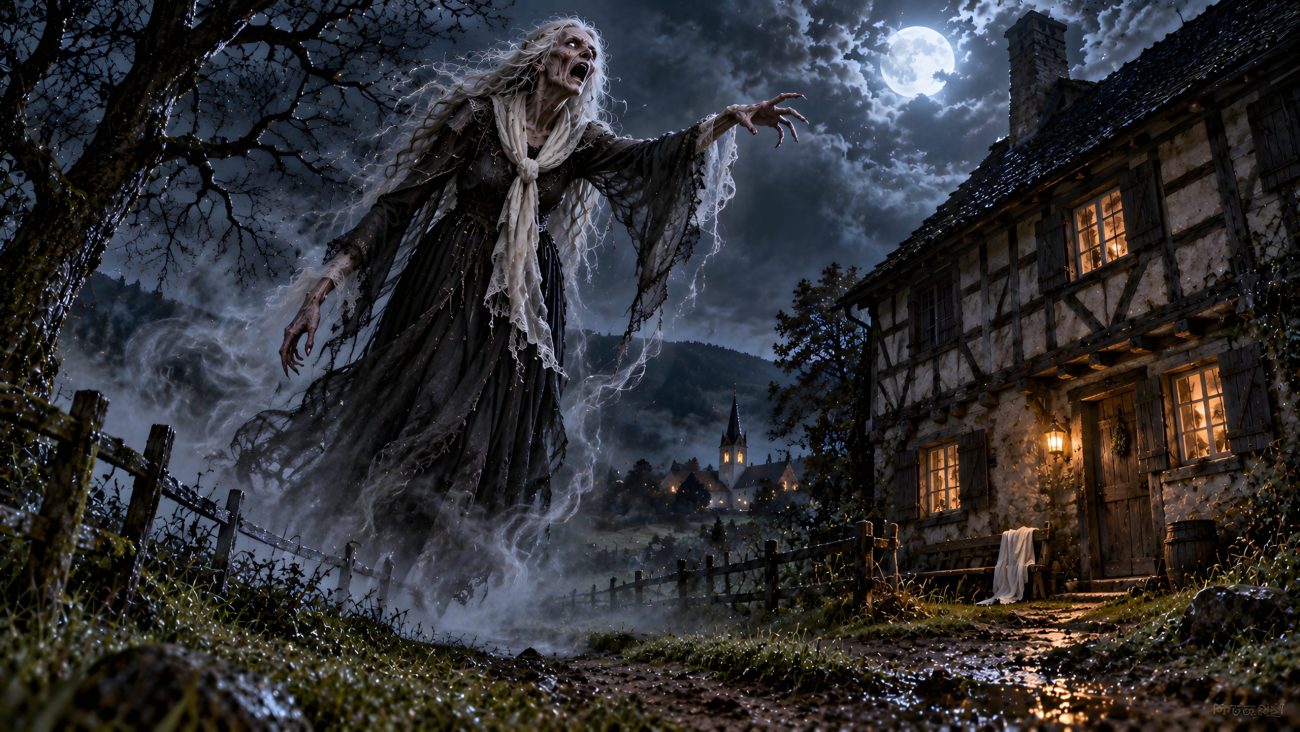
Pesta is the personification of plague and pestilence, appearing as an old woman dressed in a black robe who travels from village to village.

She wanders across the land during times of disease, bringing illness wherever she goes. Her arrival is a sign that plague has reached a place, and her presence determines the fate of its people.

It is said that she carries either a rake or a broom. If she arrives holding a rake, some people will survive the plague. If she comes with a broom, all will die, as she “sweeps” the entire population away.

Pesta moves silently but inevitably, and no one can stop her path. Villages struck by her presence are left to suffer according to what she carries.

She represents the unavoidable spread of disease:
a figure who decides survival or total destruction, depending on the tool in her hands.


Sources

Bestiary contributors. (n.d.). Pesta. In Bestiary, from https://www.bestiary.us/pesta


Hyldemoer

Tradition / Region: Danish Mythology
Alternate Names: Hyldequinde, Elder Mother, Old Lady
Category: Forest Dweller, Spirit


The Myth

Hyldemoer is a spirit that dwells within the elder tree and guards it. She is regarded as a living presence tied directly to the tree, similar to a nymph or dryad, and her existence is inseparable from the wood itself.

She watches over all elder trees and reacts to how humans treat them. Anyone who cuts or uses elder wood without first asking permission risks provoking her anger. When offended, she brings misfortune, illness, or direct harm.

Tradition required that a person ask the Elder Mother before taking any wood. If this was not done, consequences followed. In one account, a man used elder wood to make part of a child’s cradle without permission. The spirit responded by attacking the child, leaving it in distress until the object was replaced.

In other stories, the spirit appears in human form, often as an old woman or witch. She may be seen connected to the tree itself—sometimes bleeding when the tree is cut, or appearing wounded in the same place. This reflects the belief that the tree and the spirit are one and the same.

Hyldemoer is also linked to transformation and protection. In some traditions, a woman or witch becomes an elder tree, or uses its power to act against others. In one tale, a figure associated with the elder turns a king and his men into stone and transforms herself into the tree.

The elder tree itself was considered powerful and dangerous. It could protect against evil, but only if treated correctly. If disrespected, it became a source of harm.

Hyldemoer represents a clear rule within folklore:
nature is inhabited and must be approached with respect, or it will respond with punishment.


Sources

Wikipedia contributors. (n.d.). Elder Mother. In Wikipedia, from https://en.wikipedia.org/wiki/Elder_Mother

Shahapet

Tradition / Region: Armenian Mythology
Alternate Names: Shvaz, Shvod
Category: Snake, Spirit


The Myth

The Shahapet is a serpent-ghost, a guardian spirit tied to specific places such as fields, forests, mountains, homes, and especially graveyards. It can appear either as a snake or in human form, but its serpent aspect is the most common and deeply rooted.

In its role as a household spirit, the Shahapet was believed to be an ancestral presence, watching over the home and ensuring prosperity. When respected, it brought protection, fertility, and sometimes even wealth. However, if angered or driven away improperly, it could bring misfortune, poverty, and disorder upon the household.

The same spirit also existed beyond the home. As Shvaz, it guarded agricultural lands and was connected to seasonal cycles, appearing particularly in spring when farming resumed. As Shvod, it remained within the house, acting as a domestic guardian feared especially by children.

A unique ritual marked its transition between these roles. At the end of winter, villagers performed a ceremony to drive the household spirit out into the fields so it could aid agricultural work. They struck the walls of their homes, shouting for the spirit to leave, while placing water at the threshold to help guide its departure. Though forced away, the spirit was believed to labor in the fields and later return.

The Shahapet was not inherently malevolent. It was protective and beneficial by nature, but highly sensitive to human behavior. Hospitality, respect, and proper ritual ensured its favor. Neglect or disrespect, however, could transform it into a source of harm.

In some traditions, larger territorial serpent-spirits guarded entire regions, distinguishing between locals and outsiders—protecting their own while attacking strangers.

Overall, the Shahapet represents a complex fusion of ancestral ghost, land spirit, and protective serpent, deeply tied to both the home and the cycle of life, death, and fertility.


Sources

Ananikian, M. H. (1925). Armenian Mythology. In The Mythology of All Races, Vol. 7. Published by the Archaeological Institute of America p. 74-75.


Wörthersee Sprite

Tradition / Region: Austrian Mythology
Alternate Names: Wassermann
Category: Spirit


The Myth

The Wörthersee Sprite is a male water spirit said to inhabit Lake Wörthersee and is known for dragging young women into its depths. One evening, a servant girl went alone to bathe in the lake at sunset. After some time in the water, the surface suddenly grew restless and waves began to rise, and from the middle of the lake she saw something approaching her. She recognized the figure by its pale green face and the wreath of reeds in its hair — it was the Wassermann.

Overcome with fear, she ran out of the water and fled back to the house, managing to lock the door just in time. Moments later, the Wassermann reached the house and could be heard outside, but it was unable to enter. The doorway bore the protective sign “C + M + B”, which prevented the spirit from crossing the threshold.

The Wassermann, which was said to claim victims from the lake each year, was forced to leave empty-handed. The girl survived, but from that day on, she never entered the lake after sunset again.


Sources

sagen.at contributors. (n.d.). Die Wichtelcher zu Useldingen. In sagen.at, from https://www.sagen.at/texte/sagen/luxemburg/Wichtlein_Useldingen.html