Dwarf of the Earth’s Mirror

Tradition: Czech Mythology
Alternative Names: The Earth’s Mirror
Category: Dwarf


The Myth

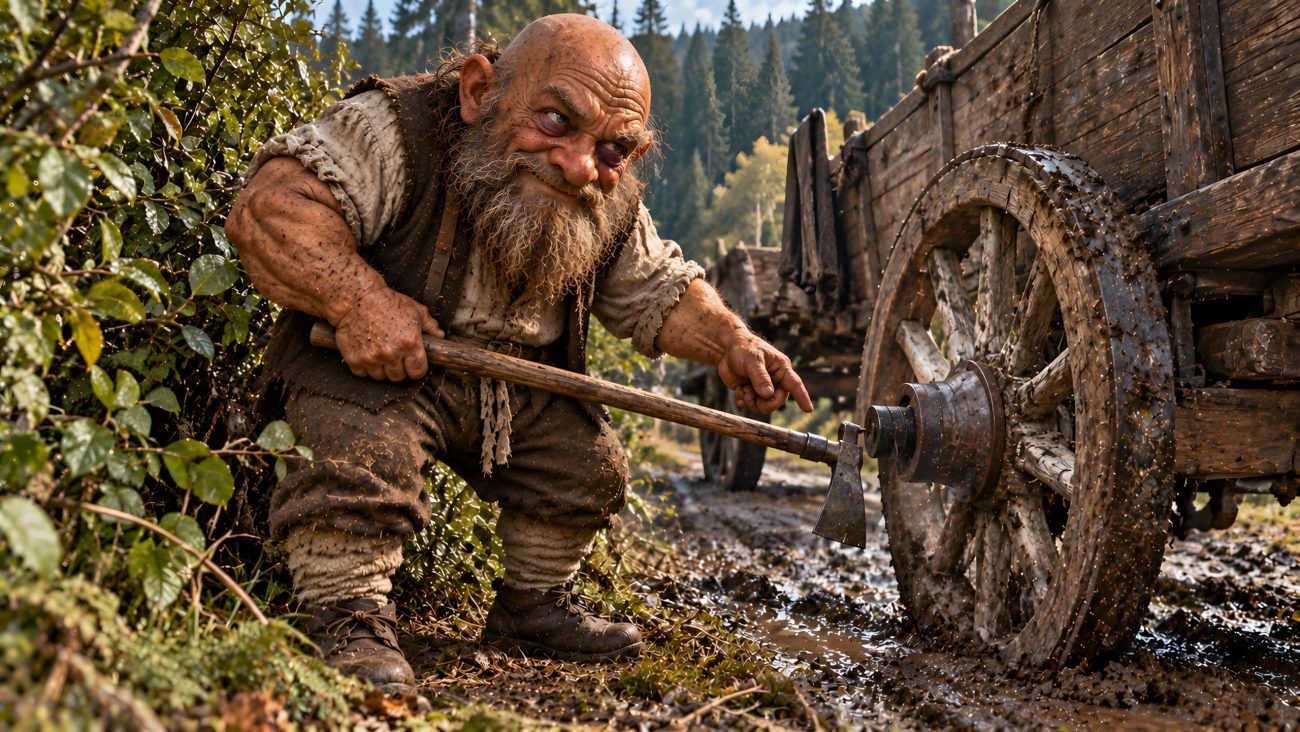
A farmer was returning home between Lichten and Siehstmichnit with an empty wagon when his oxen suddenly stopped. No matter how fiercely he struck them with his whip, the animals could not move the wagon. They strained against it, panting and bellowing, but the wagon seemed to have become completely frozen in place.

Then a little man emerged from the bushes. He told the farmer to strike the rear wheel with his hoe. The farmer followed the strange little man’s instructions, and as soon as the hoe struck the wheel, the wagon was able to move again.

When the farmer reached his village, he discovered something terrible. His neighbor was lying in his room with one of his feet severed.

The neighbor was a wicked sorcerer who possessed a mysterious mirror through which he could see what was happening elsewhere. While watching the farmer and his wagon in the mirror, the sorcerer had placed his own foot against the rear wheel as it appeared in the reflection. When the farmer struck the wheel with his hoe in the real world, the blow was transferred through the enchanted mirror and cut off the sorcerer’s foot in his room.

The strange little man had therefore given the farmer the means to break the sorcerer’s spell, turning the sorcerer’s own magical mirror against him.


Sources

Hans Watzlik. “Erdspiegel.” In Böhmerwald-Sagen. Budweis: Böhmerwalder Dorfbücher, 1921, Heft 5. Reproduced by SAGEN.at.
https://www.sagen.at/texte/sagen/tschechien/watzlik/erdspiegel.html
Changeling

Tradition: Czech Mythology
Alternative Names: Changeling
Category: Dwarf


The Myth

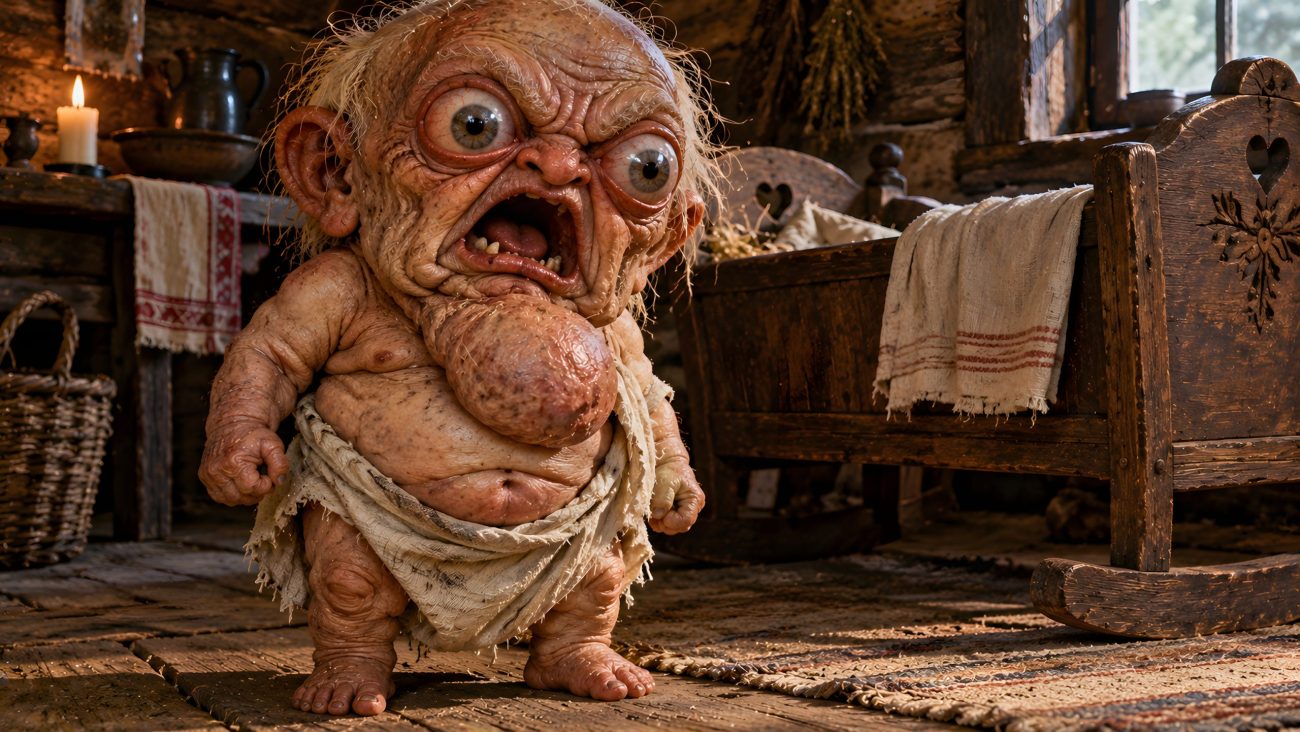
The changeling was a hideous creature placed in the cradle of a human child after a dwarf woman secretly stole the mother’s beautiful baby. Its head was unnaturally large, its eyes were like those of a frog, and a great goiter hung from its body. It also possessed an enormous appetite, eating so much that the mother could scarcely provide enough food for it.

When the mother discovered that the child in her cradle was not her own, she was overcome with grief. She begged and pleaded with the dwarf woman to return her beloved child, but the dwarf refused. The ugly creature remained in the cradle, crying out maliciously while the mother desperately tried to get her real child back.

Eventually, the mother prepared a strange drink and poured beer into an empty hen’s egg. She brought this to the screaming changeling. The bizarre sight caused the creature to suddenly stop crying. Then, to the mother’s astonishment, it spoke.

It declared that it was as old as the Bohemian Forest and had never witnessed such a strange custom in all its long life. By speaking like this, the creature revealed that it was no human child at all. The changeling immediately disappeared, and the dwarf woman was forced to return the stolen child to its mother.


Sources

Hans Watzlik. “Wechselbalg.” In Böhmerwald-Sagen. Budweis: Böhmerwalder Dorfbücher, 1921, Heft 5. Reproduced by SAGEN.at. https://www.sagen.at/texte/sagen/tschechien/watzlik/wechselbalg.html


Permonik

Tradition / Region: Czech Mythology, Slovak Mythology
Alternative names: Permoník, Permon, Perkmont, Perkajst, Berggeist
Category: Spirit, Dwarf


The Myth

The Permonik is a supernatural mine spirit said to dwell deep beneath the mountains and mining tunnels of the Czech and Slovak lands, especially in regions such as Kladno, Příbram, Kutná Hora, Moravia, and central Slovakia. Miners feared and respected these underground beings for centuries.

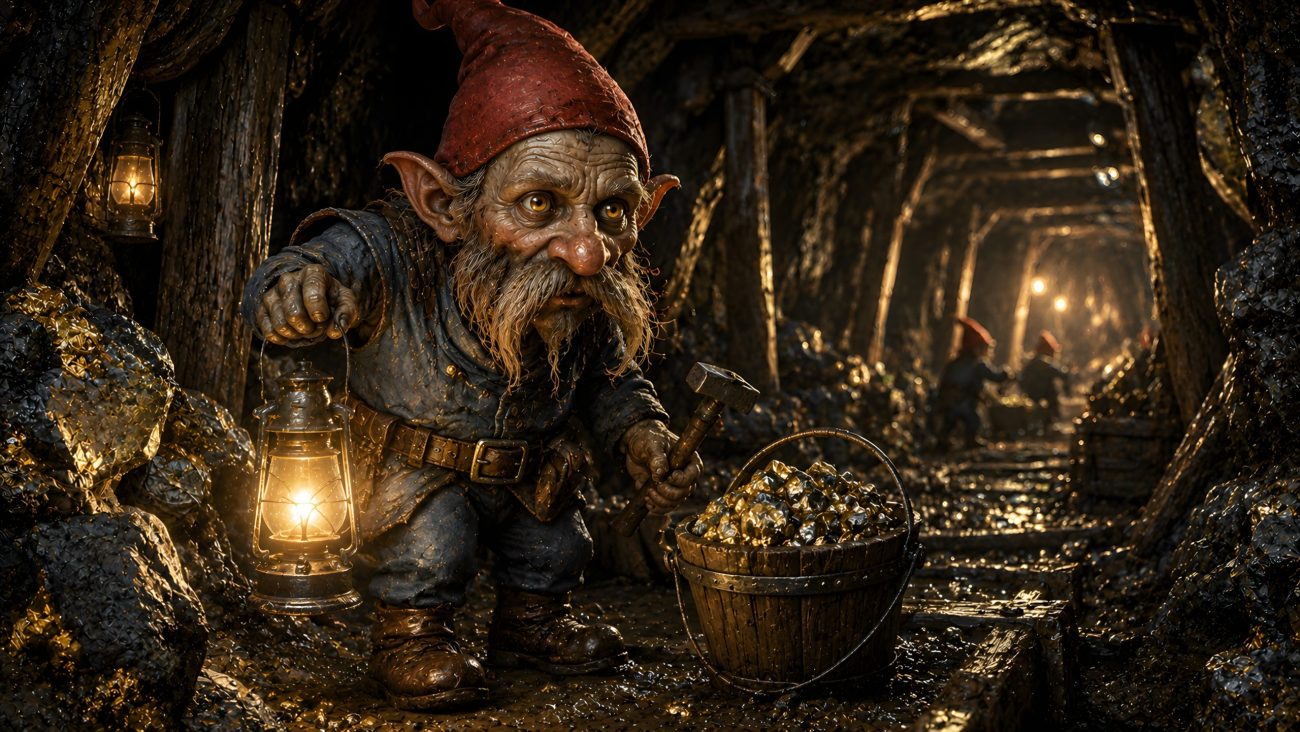
Permoniks are usually described as small dwarf-like figures with enormous heads, broad shoulders, and short legs. They wear the clothing of miners and often carry lamps, buckets, hammers, or mining tools. In some traditions they appear with long moustaches, pointed red caps, and blue clothing. Elsewhere they may take the form of mice, toads, or tiny angelic boys.

These spirits lived in large underground communities hidden within shafts and tunnels. They mined ore themselves, gathered precious metals, washed gold, and guarded hidden veins deep inside the earth. Miners believed that hearing the sounds of Permoniks working underground was a sign that rich deposits of ore were nearby.

The Permoniks could warn miners about cave-ins, accidents, or dangerous explosions, but they were easily angered by greed, disrespect, swearing, whistling, or loud noises inside the mine. Those who violated mining customs risked being punished or trapped forever underground.

When miners encountered a Permonik, tradition required them to greet it loudly with the words “Zdař Bůh” — “God help you.” If the creature blocked the passage and refused to move, the miner was expected to crawl between its legs to avoid offending it.

Offerings of food and proper respect earned the goodwill of the Permoniks. In return, they sometimes guided poor miners toward hidden gold or valuable ore and protected honest workers from danger beneath the mountains.

The name “Permonik” comes from medieval German mining traditions and is related to the word Bergmännchen, meaning “little miner.” Similar beings appear throughout Slavic and Germanic folklore, including kobolds, skarbniki, mine dwarves, and mountain spirits, but the Permonik became one of the best-known underground spirits of the Czech and Slovak mining world.


Sources

Bestiary.us. (n.d.). Permonik. Retrieved May 18, 2026, from https://www.bestiary.us/permonik/