Almajonas

Tradition / Region: Portuguese Mythology
Alternative names: Armajonas, Almazonas
Category: Giant


The Myth

The Almajonas are enormous supernatural women from Portuguese folklore believed to be wandering souls of the dead. They appear as gigantic human-like females who roam through remote places carrying children on their backs. According to popular belief, they are almas penadas — restless spirits unable to find peace.

The Almajonas are described as unnaturally tall and powerful, towering over ordinary people. Some traditions portray them almost like female giants wandering silently across hills, forests, and lonely roads. Their appearance was both frightening and strange because despite their monstrous height they still resembled ordinary women.

Folklore says they carried babies or children strapped to their backs while traveling. Some accounts describe them with extremely long breasts which they pulled over their shoulders in order to nurse the children they carried.

In older Portuguese traditions, the word “amazon” was sometimes used as another name for “wild woman,” and the Almajonas seem connected to that idea. Their husbands were sometimes called Alamões, who were also described as very tall supernatural beings.

The Almajonas were not always portrayed as openly violent creatures, but they were feared because they belonged to the world of wandering dead souls and appeared in isolated places far from villages and settlements.


Sources

The Narrator. (2020). Corrilários. In portuguesecreaturesandlegendsgalore.wordpress.com, from https://portuguesecreaturesandlegendsgalore.wordpress.com/2020/01/17/corrilarios/


Balborinho

Tradition / Region: Portuguese Mythology
Alternative names: Borborinho, Barborinho, Belborinho
Category: Spirit


The Myth

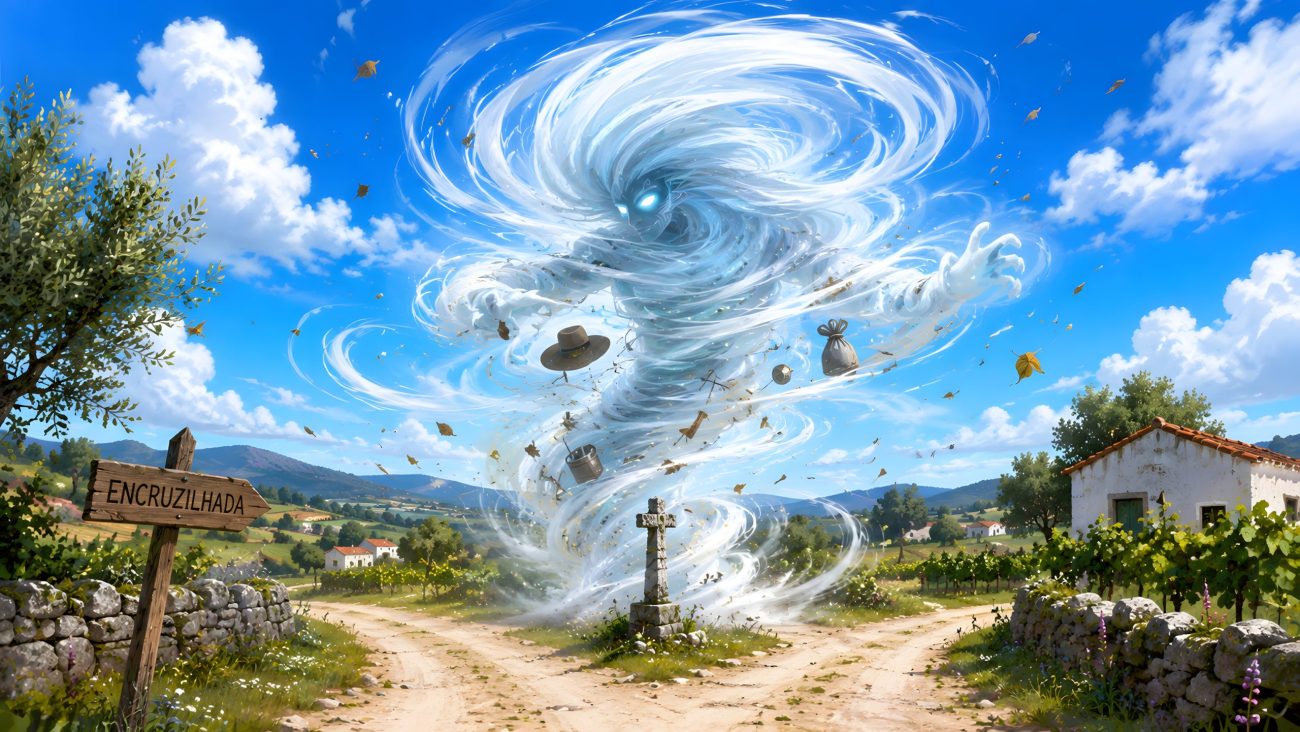
The Balborinho is a supernatural whirlwind from Portuguese folklore that appears suddenly on roads, fields, and crossroads during hot open hours of the day. It looks like a spinning column of dust, straw, leaves, and wind moving violently across the land. People believed something alive moved inside it.

According to tradition, the Balborinho contains the tormented souls of peasants who committed crimes involving land, theft, or agriculture during life. These dead souls cannot enter heaven because they still owe a debt to the living. The whirlwind wanders endlessly, carrying straw and debris as it searches for rest.

In many regions of Portugal people believed witches, devils, or evil spirits hid inside the spinning wind. In Minho and Moncorvo, villagers threw knives or open razor blades into the center of the whirlwind to drive away the spirit inside it. Elsewhere people crossed themselves and shouted protective prayers or insults at the storm.

Some traditions claimed the straw carried by the Balborinho came from stolen fields and marked places where injustice or wrongdoing had happened. In Guimarães there was even a belief that every leaf spinning inside the whirlwind carried a tiny devil riding upon it.

The Balborinho was especially feared in isolated rural places where sudden whirlwinds could appear without warning. In Beira Alta it was described as a violent localized wind capable of lifting entire piles of straw into the air with loud cracking sounds. People connected these unnatural winds directly with demonic forces.

Although terrifying, the Balborinho was not always seen as purely evil. Some stories described it as a suffering spirit trapped between worlds, wandering because of sins committed in life and unable to find peace.


Sources

Wikipedia contributors. (n.d.). Balborinho. In Wikipédia. Retrieved May 16, 2026, from https://pt.wikipedia.org/wiki/Balborinho


Bicho do Cidrão

Tradition / Region: Portuguese Mythology
Alternative names: None recorded
Category: Ghost


The Myth

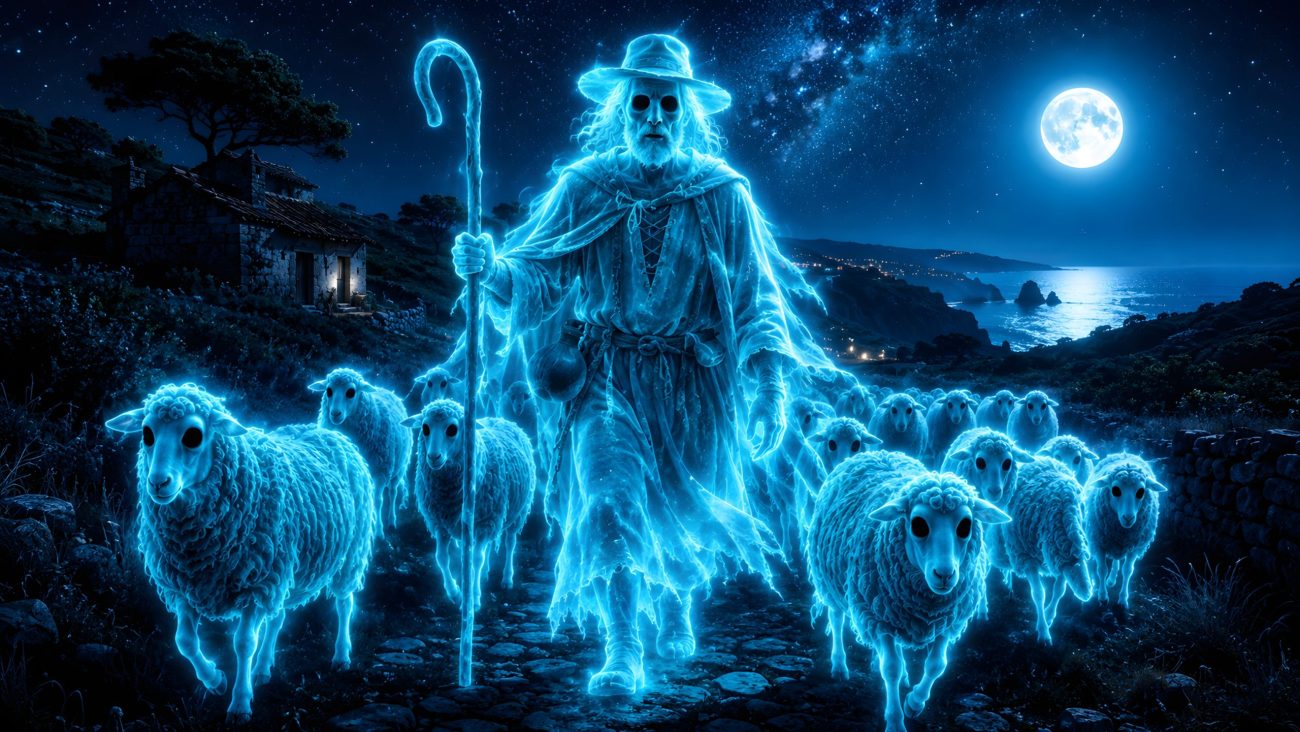
The Bicho do Cidrão is a ghostly being from the mountains of Madeira said to wander the highlands with an invisible flock of sheep. People never clearly see the creature itself, but they hear strange cries echoing through the mountains — sounds identical to the bleating of lambs. These cries are believed to foretell rain, storms, or approaching bad weather.

According to legend, the creature was once a human shepherd who lived in Montado do Cidrão in the region of Curral das Freiras. One day his beloved sheepdog disappeared into the mountains. Desperate and overwhelmed with grief, the shepherd silently promised his soul to the devil if the dog would return.

Soon afterward, the missing dog came back.

After the shepherd eventually died, he did not rest peacefully. Instead, he became the Bicho do Cidrão, a strange supernatural being condemned to roam the mountains forever with his unseen flock. Travelers sometimes claimed to hear phantom sheep moving through foggy valleys or across rocky slopes even when no animals could be seen.

The creature’s mournful cries were feared because they announced storms and rain approaching the island. In older times people in Madeira said the sound could be heard clearly through the mountains during dark or misty weather, though many later claimed the cries had not been heard for many years.


Sources

Bestiary.us. (n.d.). Bishu du Sidran. Retrieved May 16, 2026, from https://www.bestiary.us/bishu-du-sidran/


Corrilário

Tradition / Region: Portuguese Mythology
Alternate Names: Coralário (plural: Coralários)
Category: Dog, Ghost


The Myth

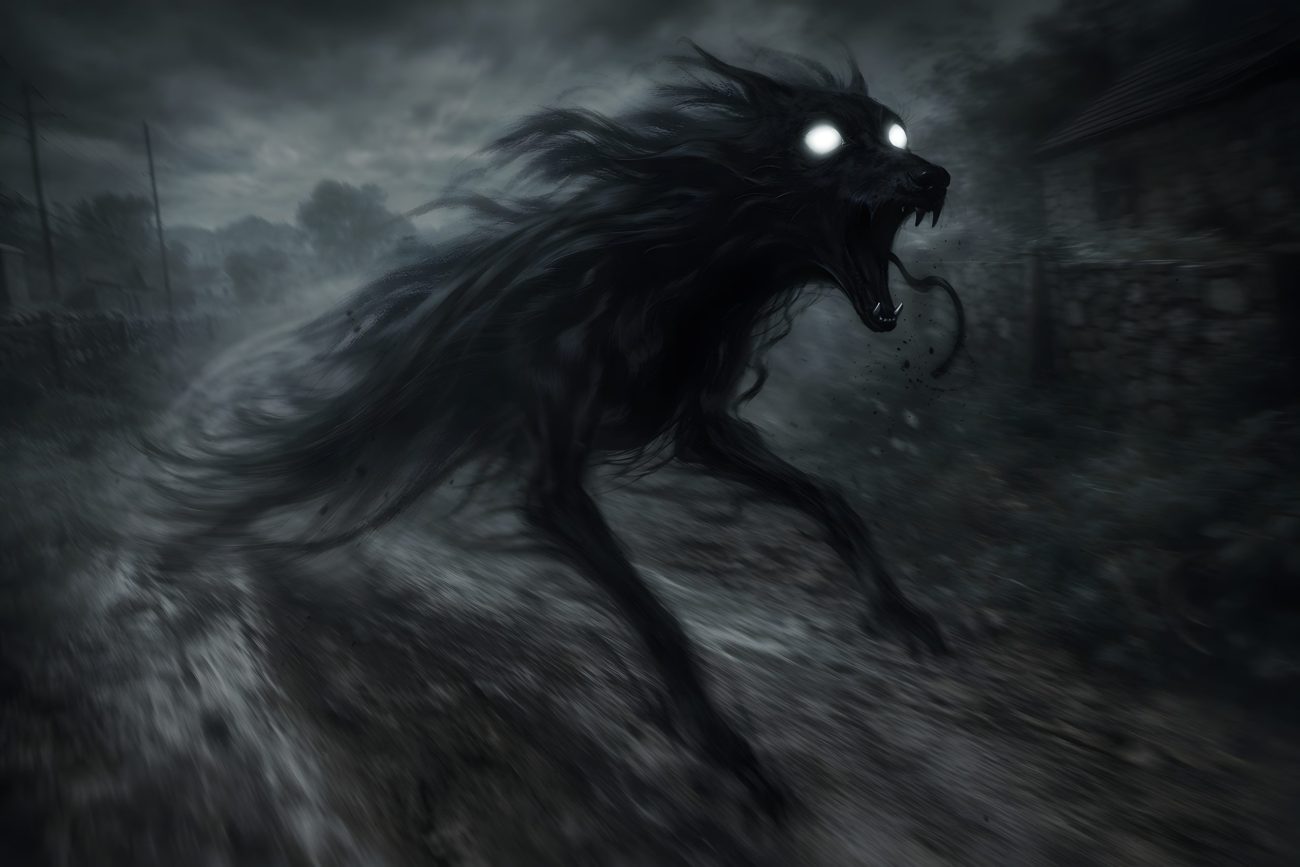
In Portuguese tradition, the Corrilário is said to be the spirit of a restless dead person, appearing in the form of a dog.

These beings are believed to be the souls of those whose lives ended wrongly or whose fate remained unfinished. Some say they were people who died violently, who left promises unfulfilled, or who failed to complete the rites expected of them in life. Others say that a werewolf who dies before the time appointed for his curse must continue on after death as one of these wandering spirits.

As a Corrilário, the soul does not find rest. Instead it is bound to wander the roads and paths of the world. Unlike werewolves, which are said to follow only straight roads, the Corrilário moves along both straight ways and hidden shortcuts, passing through fields, tracks, and lonely routes where few people walk.

Because they are spirits tied to unfinished fate, they are thought to remain in this form only for as long as they would have lived had death not come early. Until that time has passed, they continue their wandering, like messengers moving between places, never settling.

Thus the Corrilário was remembered as a ghostly dog of the roads — not a beast of malice, but the shape taken by the unquiet dead, walking the paths of the living until their destined time was finally spent.


Sources

The Narrator. (2020). Corrilários. In portuguesecreaturesandlegendsgalore.wordpress.com, from https://portuguesecreaturesandlegendsgalore.wordpress.com/2020/01/17/corrilarios/