Xunantunich

Tradition / Region: Belize Mythology
Alternate Names: Stone Woman
Category: Ghost


The Myth

At the ancient ruins of Xunantunich, there are whispers of a silent figure known as the Stone Woman.

She appears without warning.

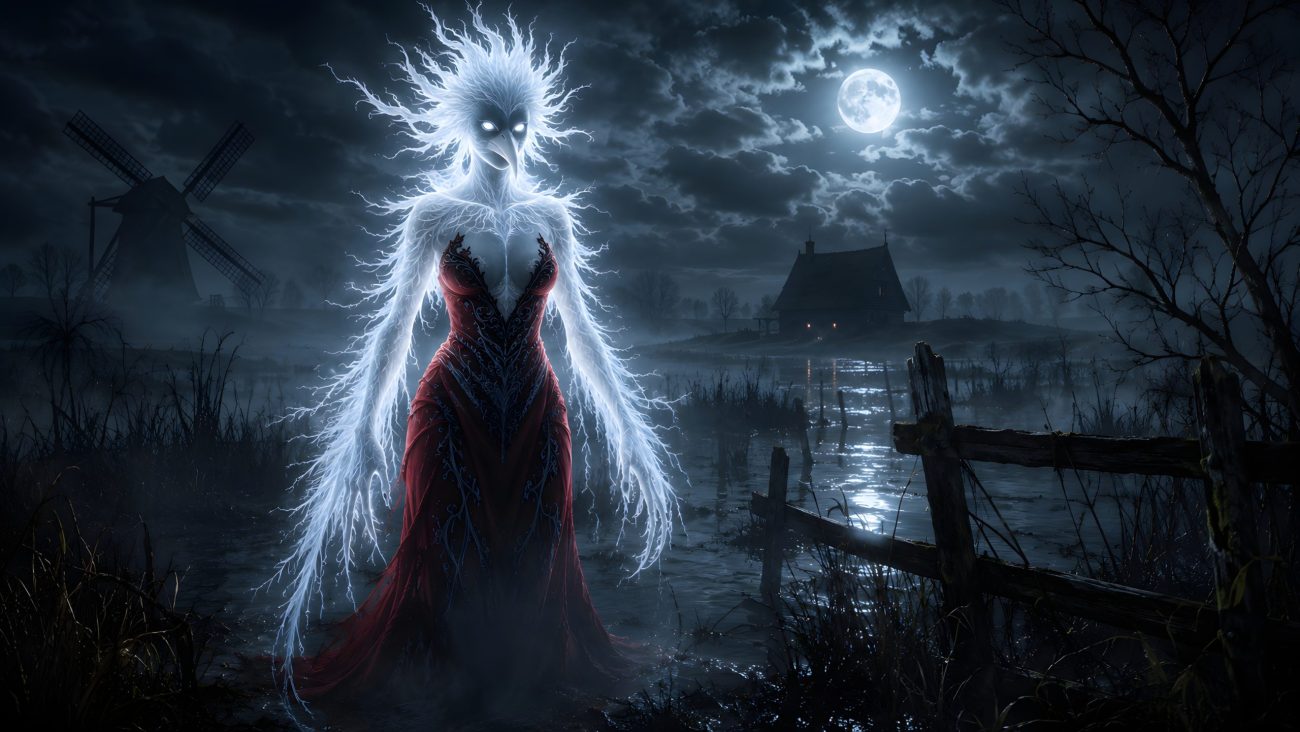
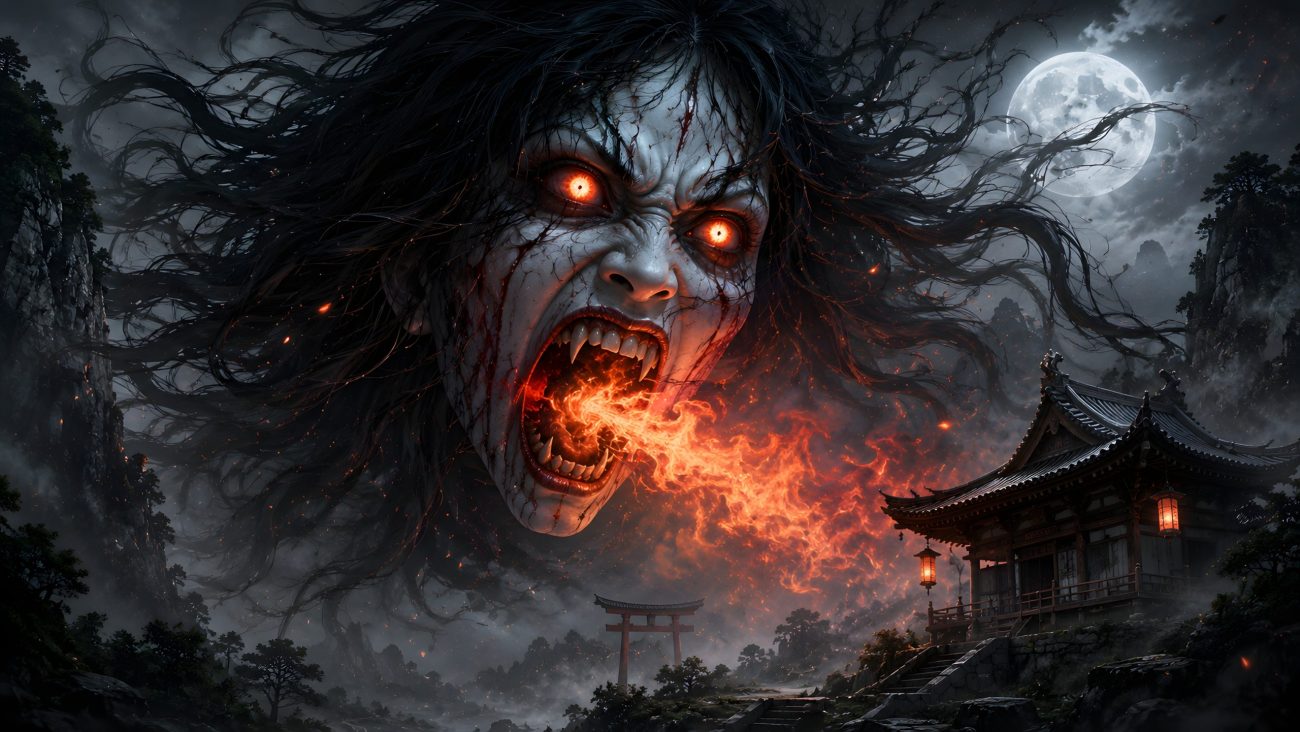
Dressed entirely in white, with glowing red eyes, she manifests near the great pyramid known as El Castillo. Witnesses say she does not speak or acknowledge those who see her. Instead, she moves slowly and deliberately—ascending the stone steps as if following a path known only to her.

At the top, she does not stop.

She reaches the upper structure and simply passes into it—disappearing into a solid wall, vanishing as if she were never there at all.

She does not chase, attack, or interact.

But her presence is deeply unsettling. She appears, performs the same motion, and disappears—an endless repetition tied to the ruins themselves, as if bound to that place.

No one knows who she was.

Only that she remains.


Sources

Belize Travel Blog contributors. (2016, November). Belize Folklore Legends – Finados Edition. In Belize Travel Blog, from https://belize-travel-blog.chaacreek.com/2016/11/belize-folklore-finados/


Urvakan

Tradition / Region: Armenian Mythology
Alternate Names: Ghost, Phantom (from “uru”)
Category: Ghost


The Myth

The Urvakan is a ghostly being in Armenian belief, representing the spirit of a deceased person after death. The term derives from an older word meaning soul or phantom, which over time came to signify a visible or perceptible ghost.

In early Armenian thought, a human being consisted of a body and a soul, the latter originally understood as “breath.” At death, this soul was believed to leave the body—often imagined as exiting through the mouth in a painful process—becoming a separate, wandering entity.

After death, the Urvakan did not immediately depart to another realm. It remained near the body until burial, lingering in a transitional state between the living world and the afterlife. This period was considered dangerous and sacred, which is why candles and incense were used around the corpse—to protect the spirit and ward off harmful influences.

These ghostly beings were not merely feared but also, in earlier times, received forms of reverence or worship. The existence of the term for “ghost-worshippers” indicates that the Urvakan once held a recognized place in spiritual practices, possibly linked to ancestor veneration.

The Urvakan reflects a broader fatalistic worldview in which human life was tied to cosmic forces. The soul itself was sometimes associated with stars, and it was believed that when a star fell, a human life ended—suggesting a deep connection between human existence and the heavens.

Though not always malevolent, the Urvakan inspired fear and respect. The presence of the dead was considered polluting and powerful, requiring ritual care. Improper handling of death or burial could disturb the spirit, potentially leaving it restless.

Overall, the Urvakan embodies the Armenian conception of the soul after death: a lingering, perceptible presence caught between worlds, shaped by ritual, belief, and the cosmic order governing human fate.


Sources

Ananikian, M. H. (1925). Armenian Mythology. In The Mythology of All Races, Vol. 7. Published by the Archaeological Institute of America p. 94.


Comitiva Fantasmal

Tradition / Region: Andorran Mythology
Alternate Names: Black Procession
Category: Ghost


The Myth

The Comitiva Fantasmal is a ghostly procession of dark, human-like figures that appears as a supernatural punishment for irreverence and mockery of sacred rites. It manifests as a silent, solemn group dressed in black, moving with ritual precision and carrying holy objects.

The legend tells of a group of young men who, feeling offended after being denied their own religious procession on Corpus Christi, decided to create a parody. They constructed a fake monstrance and imitated a sacred procession, singing and praying in a mocking but ceremonious way as they walked toward the hill of La Quera.

After completing their imitation, they stopped to rest and began laughing at what they had done. At that moment, they heard movement along the same path they had just taken. When they looked, they saw a second procession approaching.

This time it was real, but not human.

A silent line of figures dressed entirely in black advanced up the hill. They carried a true monstrance, surrounded by flowers, and at its center shone a radiant host with an intense, unnatural light. The entire scene had a heavy, otherworldly presence.

Overcome with terror, the young men fled in panic, believing they were witnessing a divine or supernatural punishment. They did not stop running until they reached the village.

After this event, the place became feared, and for many years no one dared to travel that path. The ghostly procession came to be understood as a manifestation of sacred forces correcting human disrespect, appearing not as chaos, but as a perfect and solemn imitation of the sacred — far more real than the living.


Sources

Valls, À., & Carol, R. (2023). Llegendes d’Andorra. In Encamp-Montellà: Anem Editors p. 74.


Ghostly Cat

Tradition / Region: Austrian Mythology
Alternate Names: White Cat Spirit
Category: Cat, Ghost


The Myth

The Ghostly Cat is the spirit of a woman condemned to wander in the form of a large white cat, appearing at night on the rooftops of an old house.

The legend tells of a man who lived a corrupt and immoral life, while his wife endured everything in silence. Eventually, he fell under the influence of another wicked woman, and together they plotted to murder his wife using poisoned food.

However, through a twist of fate, the poison was consumed by the very woman who had prepared it. The effects were unnatural and disturbing. Instead of dying immediately, she began to lose her humanity and believed herself to be a cat.

She crawled on all fours, ran wildly through the house, climbed across the roof, and screamed like an animal. Her madness intensified with time, growing worse by the hour, until finally she fell from the highest point of the roof and broke her neck.

After her death, she did not find rest.

She became a restless spirit, condemned to return as a ghostly white cat, roaming the rooftops at night. Those who come too close to her path risk being attacked, as she lashes out with sharp claws at anyone who dares approach.

The Ghostly Cat represents a punishment tied to guilt, corruption, and unnatural transformation — a human reduced to an animal in life, and bound to that form even after death.


Sources

sagen.at contributors. (n.d.). Die gespenstische Katze. In sagen.at, from https://www.sagen.at/texte/sagen/oesterreich/wien/sagen_legenden_gugitz/katze.html


Kladdegat

Tradition / Region: Dutch Mythology
Alternate Names: Spookhond van Hattem
Category: Dog, Ghost


The Myth

Kladdegat was the feared ghost dog of the town of Hattem.

For generations, townsfolk claimed to hear its howling at night. According to tradition, the creature was chained in the cellars of the Spookhuys, a building connected to the now-vanished castle known as the Dikke Tinne. Other versions say it lived in a hole in the city wall.

People believed that anyone who ventured outside the town walls at night risked being seized by the beast and dragged into its lair, where victims were kept captive. Because of this, many in Hattem were afraid to leave their homes after dark.

At last, a brave man decided to confront the creature. He captured the dog in a net, forced it into the hole in the wall, and sealed the opening with masonry. From that time onward, the howling ceased, and nothing more was heard of Kladdegat.

Thus the creature lived on in local memory as a chained phantom hound — a terror of the night that once guarded the ruins beneath Hattem.


Gallery


Sources

Abe de Verteller. (n.d.). Van aardmannetje tot zwarte juffer: Een lijst van Nederlandse en Vlaamse elfen en geesten. From https://abedeverteller.nl/van-aardmannetje-tot-zwarte-juffer-een-lijst-van-nederlandse-en-vlaamse-elfen-en-geesten/


Interpretive Lenses

Religious Readings
  • Christian Ascetic Deep Dive
Philosophical Readings
  • Nietzschean Deep Dive
Psychological Readings
  • Jungian Deep Dive
Esoteric Deep Dive
  • Hermetic Deep Dive
Political / Social Readings
  • Marxist Deep Dive

Gabriel Hounds

Tradition / Region: English Mythology
Alternate Names: Gabriel Ratchets, Gabble Retchets, Sky Yelpers
Category: Dog, Ghost, Death omen


The Myth

The Gabriel Hounds are said to be ghostly dogs that travel across the night sky.

They are rarely seen, but their cries are often heard — high, distant, and mournful, echoing above the land in darkness. Some describe them as dogs with human heads, flying through the air like a spectral hunt. When they pass over a house, it is said to foretell death or misfortune for those who live there.

In some traditions, the hounds are believed to be the restless souls of unbaptised children, wandering between worlds and crying through the night. In others, they belong to a supernatural hunt led by a figure named Gabriel, who is doomed to roam the skies with his dogs as punishment for having hunted on a holy day.

Their voices were sometimes explained by the sound of geese flying overhead at night, whose honking could resemble distant barking. Yet for many, the cries were not natural at all, but a warning from the unseen world.

Thus the Gabriel Hounds were remembered as sky-roaming ghost dogs — heard more often than seen, and feared wherever their eerie yelping was taken as a sign that death was near.


Sources

Wikipedia contributors. (n.d.). Black dog (folklore). In Wikipedia, from https://en.wikipedia.org/wiki/Black_dog_(folklore)


Dando’s Dogs

Tradition / Region: English Mythology
Alternate Names: Devil’s Dandy Dogs
Category: Dog, Ghost


The Myth

In English tradition there is a tale of Dando, a priest who loved hunting more than he loved the duties of his church.

One Sunday, after spending the day hunting instead of attending to sacred matters, he sat with his companions drinking. They gave him ale and wine, but he demanded more and more. At last he swore that if the drink he wanted could not be found on Earth, then it must be fetched from Hell itself.

At that moment a strange huntsman appeared among them. He offered Dando a flask and gave him drink, but then seized part of the priest’s game. Dando, drunk and furious, shouted that he would follow the huntsman even to Hell to recover it.

No sooner had he spoken than the huntsman carried him away, vanishing with him in an instant. Dando’s hounds gave chase, racing after their master, but they could not catch him.

From that time on, people said that Dando was lost, taken into the otherworld by the mysterious hunter. Yet his dogs never stopped searching. On certain mornings, especially early on Sundays, their howling is said to be heard in the distance, still hunting or still seeking their vanished master.

Thus Dando’s Dogs were remembered as ghostly hounds of the Wild Hunt — forever running across the unseen fields, chasing what they can never reach and echoing through the air as a warning against sin and excess.


Sources

Wikipedia contributors. (n.d.). Dando’s dogs. In Wikipedia, from https://en.wikipedia.org/wiki/Dando%27s_dogs


Moddey Dhoo

Tradition / Region: Manx Mythology
Alternate Names: Mauthe Doog
Category: Dog, Ghost


The Myth

In the Isle of Man there was once said to haunt Peel Castle a great black spectral dog known as the Moddey Dhoo.

It appeared as a large shaggy hound, often described as resembling a black spaniel. The creature was seen moving through the rooms of the castle, but most often it lay in the guardroom beside the fire, visible to the soldiers stationed there. Over time, they grew accustomed to its presence, though it never ceased to disturb them.

The dog was said to enter and leave through a certain passage in the castle each evening and return to it again at dawn.

One night, a guard, emboldened by drink, ignored the custom that the castle gates should be locked by two men together. He took the keys alone and went down the haunted passage to deliver them. Soon afterward, he returned pale and shaken, unable or unwilling to say what he had seen.

Within a few days he died.

After this, the passage was sealed and never used again. From that time onward, the black dog was no longer seen.

Thus the Moddey Dhoo was remembered as the silent hound of Peel Castle — a spirit that walked the halls, appeared before soldiers, and vanished after leaving one final warning behind.


Gallery


Sources

Wikipedia contributors. (n.d.). Moddey Dhoo. In Wikipedia, from https://en.wikipedia.org/wiki/Moddey_Dhoo


Interpretive Lenses

Religious Readings
  • Christian Ascetic Deep Dive
Philosophical Readings
  • Nietzschean Deep Dive
Psychological Readings
  • Jungian Deep Dive
Esoteric Deep Dive
  • Hermetic Deep Dive
Political / Social Readings
  • Marxist Deep Dive

Black Dog of Newgate

Tradition / Region: English Mythology
Alternate Names:
Category: Dog, Ghost


The Myth

At the old Newgate Prison in London, there was once said to haunt a terrible creature known as the Black Dog of Newgate.

The story tells that during a time of famine, when hunger and misery gripped the land, a scholar was imprisoned there. He had a reputation as a sorcerer, a man said to have practiced dark arts. The prison conditions were so dreadful that the inmates, driven mad with starvation, killed and ate him.

Not long after this deed, something began to move through the prison in the night.

Prisoners reported seeing a monstrous black dog pacing the corridors and the cells. It appeared suddenly and vanished just as quickly, but its presence filled the place with dread. Those who had taken part in the killing believed the creature was the spirit of the murdered man, returned in a new form to avenge himself.

One by one, the prisoners who had been involved were said to die horribly, as though hunted down by the spectral beast. Fear spread through the prison until the survivors, half-mad with terror, broke out and fled.

But the story says the black dog did not stop there. It followed the escapees wherever they tried to hide, pursuing them until each had paid for the crime.

The tale was later told as a warning about cruelty, sin, and the brutal life within the prison walls. Some even doubted whether the beast was real at all, claiming the only “black dog” in the prison was a dark stone in the dungeon where condemned prisoners sometimes dashed out their brains in despair.

Yet the legend endured, and the image remained of a great black hound stalking the halls of Newgate — a spirit born from murder, hunger, and guilt, returning to claim the lives of those who had done wrong.


Sources

Wikipedia contributors. (n.d.). The Black Dog of Newgate. In Wikipedia, from https://en.wikipedia.org/wiki/The_Black_Dog_of_Newgate


Tienuurshond

Tradition / Region: Dutch Mythology, Belgian Mythology
Alternate Names: Twaalfuurshond, Negenuurshond, Tienurenhond
Category: Dog, Ghost


The Myth

In parts of Utrecht and the region around Antwerp, people once spoke of a spectral animal known as the Tienuurshond.

He was said to appear on lonely roads during winter evenings. At exactly the same hour each night — most often at ten o’clock — a large black dog would come into view ahead of a traveler. Around its body hung chains that rattled as it moved, their sound echoing through the cold darkness.

The creature did not usually attack. Instead, it walked in front of the traveler, leading the way along the road as though guiding them through the night. It remained just out of reach, always ahead, never allowing itself to be caught.

Because it appeared at a fixed hour, people gave it its name: the Ten-O’Clock Dog. In some places, where it was believed to appear at other times, it was known as the Nine-O’Clock Dog or the Twelve-O’Clock Dog instead.

Thus the Tienuurshond was remembered as a chained black hound of the winter roads, a ghostly figure that emerged at the appointed hour and walked before the lonely traveler until it vanished again into the night.


Sources

Abe de Verteller. (n.d.). Van aardmannetje tot zwarte juffer: Een lijst van Nederlandse en Vlaamse elfen en geesten. From https://abedeverteller.nl/van-aardmannetje-tot-zwarte-juffer-een-lijst-van-nederlandse-en-vlaamse-elfen-en-geesten/