Zwaardman

Tradition: Dutch Mythology, Belgian Mythology
Alternative Names: Zwaardman
Category: Ghost


The Myth

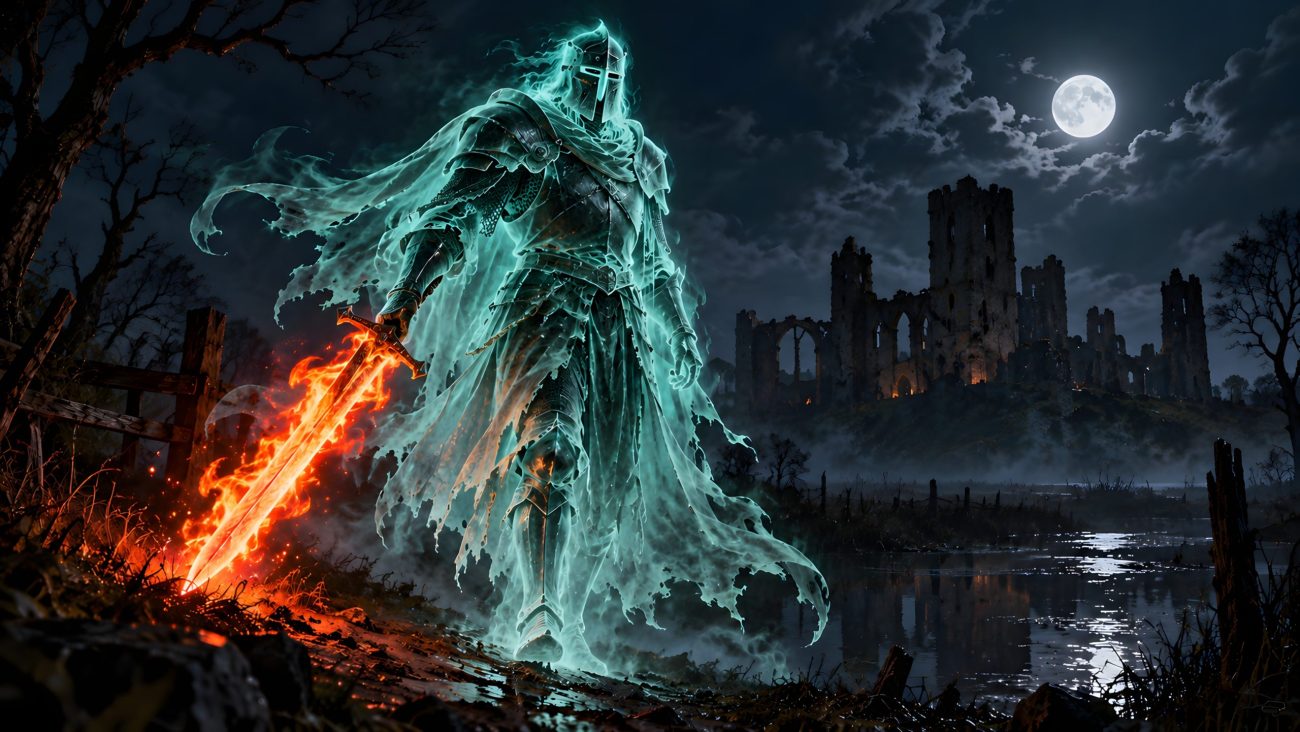
The Zwaardman is the ghost of a knight who wanders the earth carrying a flaming sword. In life, he was a proud and wrathful man whose arrogance led him to commit a terrible crime: he murdered a priest inside a church while the priest was celebrating Mass. For this sacrilege, he received a dreadful punishment that continued beyond death.

As divine punishment for his crime, the knight’s castle sank into the ground, and his spirit was condemned to wander forever. Unable to find rest, the Zwaardman haunts the places associated with his legend, appearing as a ghostly knight wielding a sword engulfed in flames.

Stories of the Zwaardman are told in several places, including Uithuizermeeden, Maaseik, Bergeijk, and Sint-Pieters-Rode near Brussels. His legend warns of the terrible consequences of pride, violence, and the murder of a holy man.


Sources

Van der Veen, Abe. “Van aardmannetje tot zwarte juffer: Een lijst van Nederlandse en Vlaamse elfen en geesten.” Abe de Verteller. https://abedeverteller.nl/van-aardmannetje-tot-zwarte-juffer-een-lijst-van-nederlandse-en-vlaamse-elfen-en-geesten/
Lange Man

Tradition: Belgian Mythology, Dutch Mythology
Alternative Names: Lange Man
Category: Ghost


The Myth

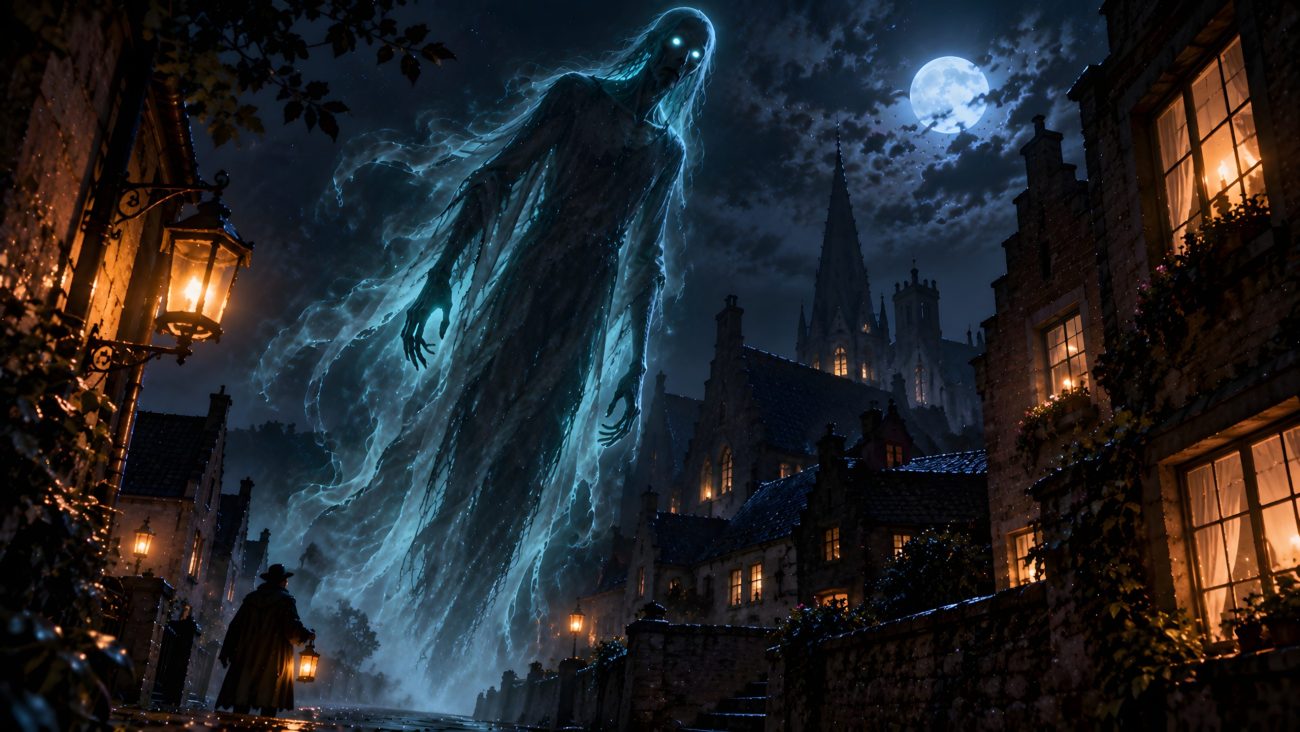
The Lange Man is a tall, black apparition shaped like a human figure. Rather than walking, he glides above the ground with his legs held tightly together, his neck stiff and his arms hanging limply at his sides. Despite his frightening appearance, he is said to protect people who travel late at night.

In Maastricht, the Lange Man is said to emerge from a cellar opening during the night before growing to a height greater than the surrounding houses. He peers through people’s windows and knocks on the highest panes of glass, towering over the buildings as he moves through the darkness. He can also transform himself into an old woman or a large, rolling ball, making his appearance unpredictable and unsettling.

Despite his occasional protective role, the Lange Man is also regarded as a harbinger of disease. His nocturnal appearances and strange transformations are signs that illness may soon come to the people who encounter him.


Sources

Van der Veen, Abe. “Van aardmannetje tot zwarte juffer: Een lijst van Nederlandse en Vlaamse elfen en geesten.” Abe de Verteller. https://abedeverteller.nl/van-aardmannetje-tot-zwarte-juffer-een-lijst-van-nederlandse-en-vlaamse-elfen-en-geesten/

Houwvrouw

Tradition: Dutch Mythology, Belgian Mythology
Alternative Names: Meltevrouw, Barende Vrouw, Varende Vrouw, Dolvrouw, Bontevrouw, Windsbruid, Winddrolle
Category: Ghost


The Myth

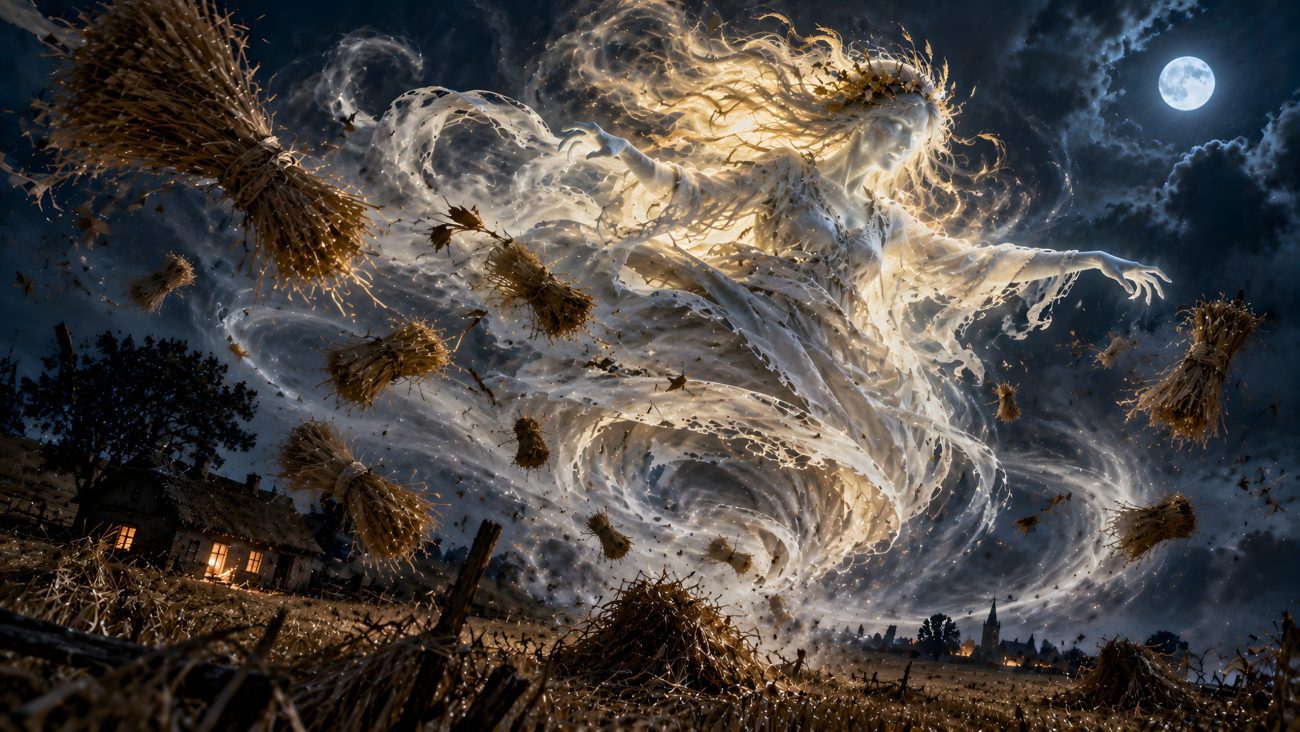
The Houwvrouw is a mysterious female wind spirit said to appear on hot summer days above the Afferdsche heath in Limburg. She can be seen in the shimmering waves of heated air, twisting and spinning as she travels through the sky. As she moves, she carries away everything light enough to be swept up by the wind. After her journey, she rests in an underground dwelling belonging to Aart with the Grey Beard, king of the gnomes, and Wieland the Smith, king of the little elves.

In Belgian Limburg, the Houwvrouw is described as a powerful storm wind that uproots and overturns sheaves of grain, carrying them several metres into the air. Her appearance may take the form of a sudden downpour, a whirlwind, or a swirling gust of wind that sweeps across the land. Farmers fear the destruction she can cause as she tears through fields and scatters their harvest.

The names Houwvrouw and Meltevrouw both mean “marrying woman.” One explanation suggests that people may have interpreted the wind as a sign of a marriage between heaven and earth, as it rises into the sky before descending again. In this way, the Houwvrouw embodies the mysterious and destructive power of the wind, appearing as a supernatural woman whose passage can transform a peaceful summer landscape into a swirling storm.


Sources

Van der Veen, Abe. “Van aardmannetje tot zwarte juffer: Een lijst van Nederlandse en Vlaamse elfen en geesten.” Abe de Verteller. https://abedeverteller.nl/van-aardmannetje-tot-zwarte-juffer-een-lijst-van-nederlandse-en-vlaamse-elfen-en-geesten/

Shirt of the Ghost

Tradition: Belgian Mythology
Alternative Names: The Ghost’s Shirt
Category: Ghost


The Myth

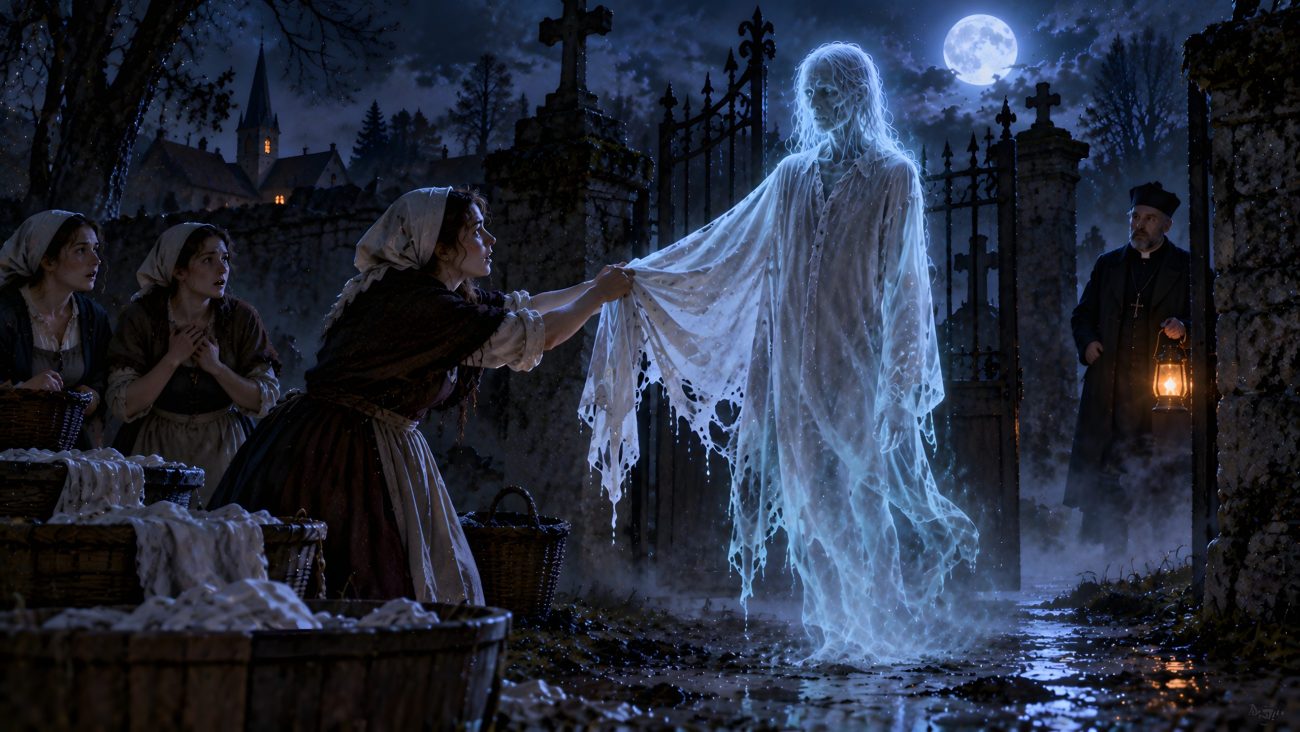
In Lebbeke, three women went out washing together every day. They began their work early in the morning, long before the sun appeared in the east. Whenever they passed the cemetery, they saw a mysterious figure standing before the entrance, wearing a white shirt. At first, the women were terrified, but after seeing the apparition so often, their fear gradually faded. They even began making mocking remarks, eventually convincing themselves that some prankster was dressing in white to frighten them.

The boldest of the three women decided that, given the next opportunity, she would pull the shirt straight off the mysterious figure’s body. A few days later, while the women were doing the washing at the priest’s house and passing the cemetery again, she carried out her plan. She seized the shirt, pulled it from the figure, and placed it in the washing tub with the other linen.

After Mass, the priest was walking through his garden when he noticed the linen laid out to bleach. One particular shirt caught his attention. Upon examining it more closely, he recognized it with horror as a ghost’s shirt. He hurried to the washing women to discover how it had come into their possession. The woman who had taken it was terrified when she learned what she had done. The priest ordered her to return the shirt to the ghost at exactly the same hour the following night. He promised to follow her from a distance and protect her from harm if necessary.

When the appointed hour arrived, the frightened woman approached the apparition with the priest following behind her. With a trembling heart, she placed the shirt back on the ghost. As soon as she had finished, the spirit turned toward her and spoke in a hollow voice, thanking her a thousand times. He explained that she had freed him from purgatory, where he had been condemned to return every night until someone removed his shirt and put it back on him. Having finally been released from his punishment, the ghost vanished and was never seen again.


Sources

De Cock, Alfons. Vlaamsche sagen uit den volksmond. Amsterdam: Maatschappij voor Goede en Goedkoope Lectuur, 1921.


White Woman of Wijnegem

Tradition: Belgian Mythology
Alternative Names: The White Woman of Wijnegem
Category: Ghost


The Myth

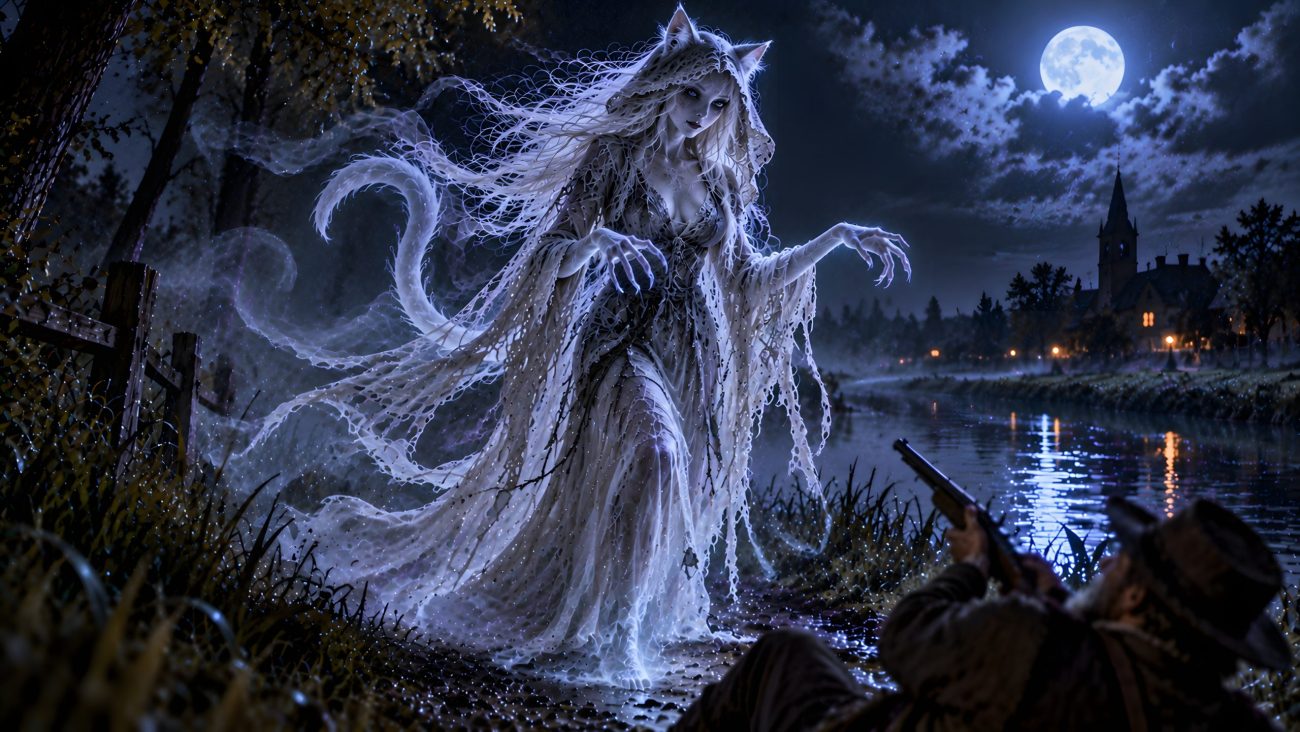
The White Woman of Wijnegem appears as a mysterious white figure that roams near the canal. Although she initially resembles a ghostly woman, she may actually be a witch capable of transforming into an animal.

Around forty years before the legend was recorded, a man from Wijnegem was returning home from work along the canal. A white figure approached him and attempted to attack him. The man fired his gun at the apparition, which immediately transformed into a cat and disappeared.

The following day, the man learned that a woman known locally as a witch was lying wounded in bed. He realized that the white figure he had shot had been the witch in another form. The encounter revealed the dangerous nature of the White Woman, whose ghostly appearance concealed a shapeshifting witch.


Sources

De Cock, Alfons. Vlaamsche sagen uit den volksmond. Amsterdam: Maatschappij voor Goede en Goedkoope Lectuur, 1921.


Klakkaart

Tradition: Belgian Mythology
Alternative Names: Klakkaart
Category: Ghost


The Myth

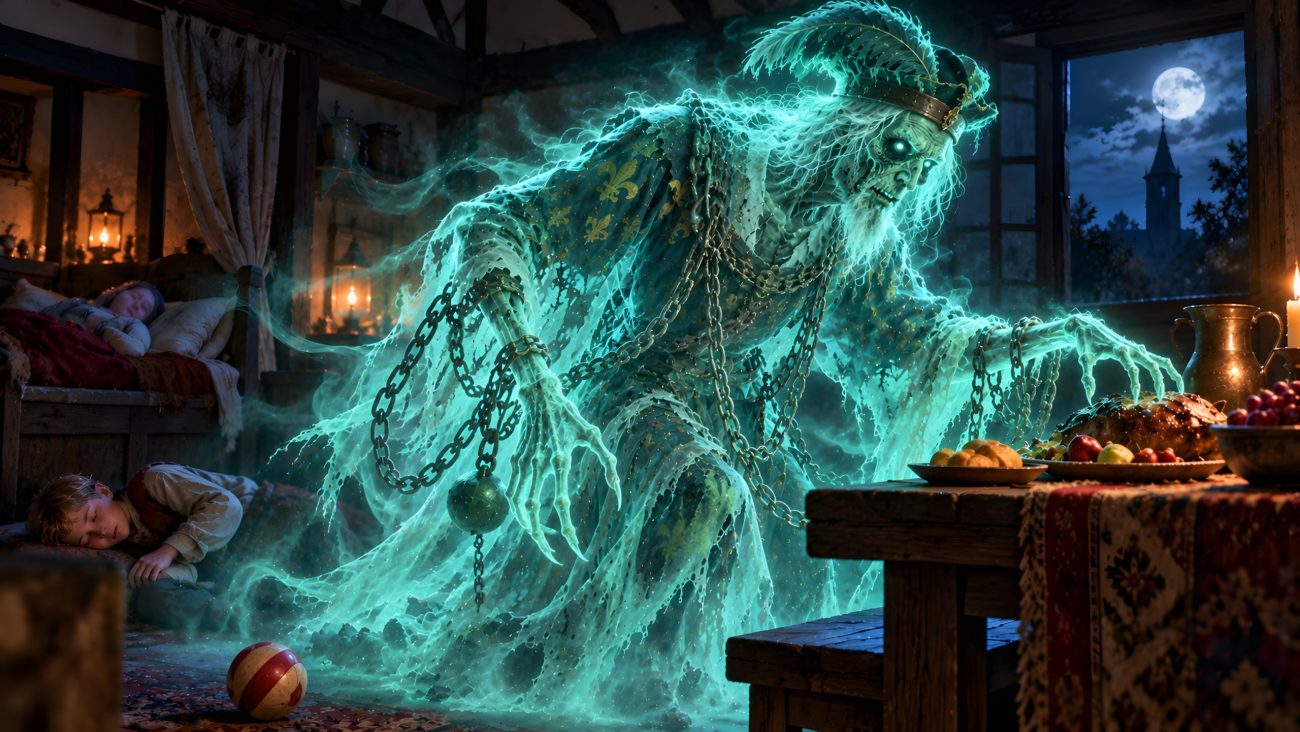
Klakkaart is the ghost of a French nobleman who was killed during the Battle of the Golden Spurs in Flanders. His spirit frightens women and children by rattling his chains, creating a terrifying noise as he moves about. Although invisible, he can enter houses unnoticed and search for delicious food.

When Klakkaart finds food to his liking, he uses his supernatural powers to make the household fall asleep, allowing him to enjoy himself without being disturbed. He also enjoys tormenting boys by placing a small ball used in the traditional game of kolf beside his hiding place. Anyone who touches the ball is suddenly struck with a sharp slap across the cheek, suffering the ghost’s mischievous punishment.


Sources

Van der Veen, Abe. “Van aardmannetje tot zwarte juffer: Een lijst van Nederlandse en Vlaamse elfen en geesten.” Abe de Verteller. https://abedeverteller.nl/van-aardmannetje-tot-zwarte-juffer-een-lijst-van-nederlandse-en-vlaamse-elfen-en-geesten/

Roesschaert

Tradition: Belgian Mythology
Alternative Names: Roessaart, Roesjhoart, Roesschaert
Category: Ghost, Witch, Dog


The Myth

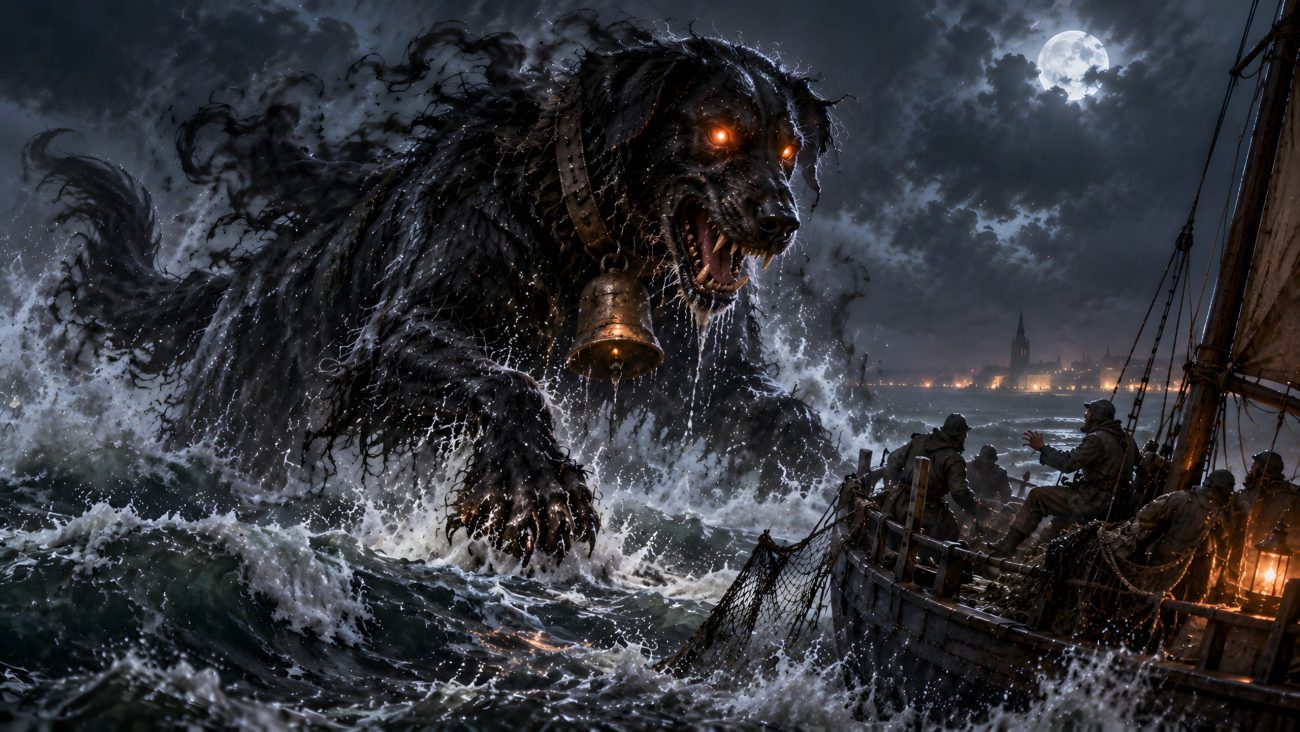
Roesschaert was the ghost of a burned witch. She could appear in several frightening forms, most notably as an enormous black dog with a bell around its neck. At other times she appeared as a cat or a donkey. Whatever form she took, her presence was accompanied by the sound “Roes, Roes, Roes,” from which her name was said to derive.

Roesschaert was especially troublesome to fishermen. She would destroy their fishing nets or try to overturn their boats, bringing danger to those working at sea.

She could also rise suddenly from the water itself, appearing without warning beside fishermen and sailors. From the sea she would seize them and drag them into the depths, making Roesschaert a particularly feared spirit along the Flemish coast.


Sources

“Aardmannetje tot zwarte juffer: een lijst van Nederlandse en Vlaamse elfen en geesten.” Abe de Verteller. Accessed September 30, 2026. https://abedeverteller.nl/van-aardmannetje-tot-zwarte-juffer-een-lijst-van-nederlandse-en-vlaamse-elfen-en-geesten/

Deogen

Tradition: Belgian Mythology
Alternative Names: De-ohen, De Ochen
Category: Ghost


The Myth

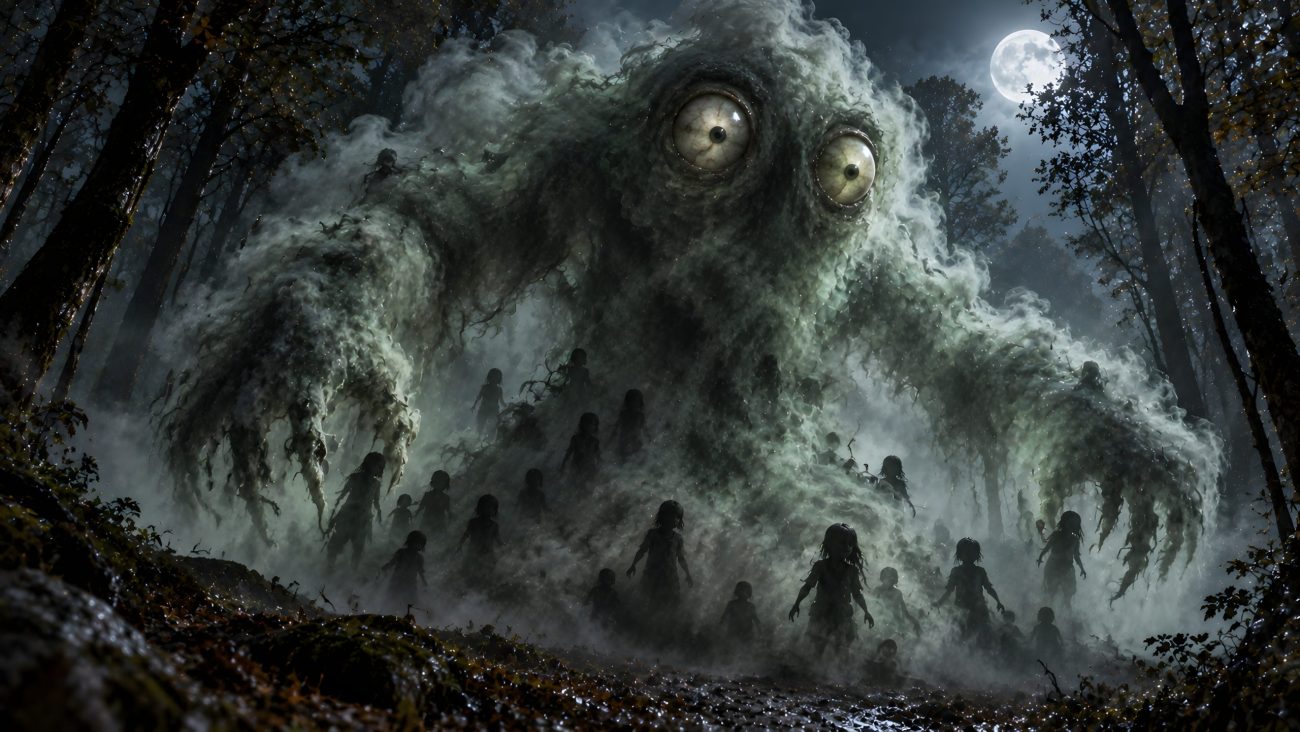
De-ohen appears as a huge, looming ghostly figure formed from a cloud of white or greenish fog. Its eyes bulge from the mist, giving the creature its name, derived from the Dutch “de ogen,” meaning “the eyes.” Alongside the towering figure come the shadowy forms of the children it has killed, their tiny silhouettes following behind it through the darkness.

The legend is associated with the Forêt de Soignes, the great forest on the southern outskirts of Brussels. Drivers travelling through the forest at night or at dusk, especially in foggy weather, were said to encounter black, ghostly figures darting through their headlights. Bloody handprints could appear on car windows, while the terrifying laughter and screams of invisible children seemed to surround the road. Behind the sounds came the tiny shadows of children, following in the footsteps of a huge, looming figure rising from the fog.

The story is tied to a tale of a local serial killer and his victims. As the legend spread, the number of children supposedly murdered in the forest grew enormously. A 1937 book, Children of the Haunted Forest, described how local nuns supposedly discovered the burned bodies of small children scattered throughout the Sonian Forest. The story claimed that as many as eighty children had been brutally murdered, their bodies burned and left throughout the woods.

De-ohen became a figure of frightening campfire stories, with people claiming that they had personally encountered the ghost in the forest. The tale presents the fog itself as something alive: a monstrous presence with enormous eyes, accompanied by the ghosts of the children lost within the woods.


Sources

“De Okhen.” New Bestiary (Bestiary.us). Accessed September 29, 2026. https://www.bestiary.us/de-okhen


Hotteman

Tradition: Belgian Mythology
Alternative Names: Hotteman
Category: Ghost


The Myth

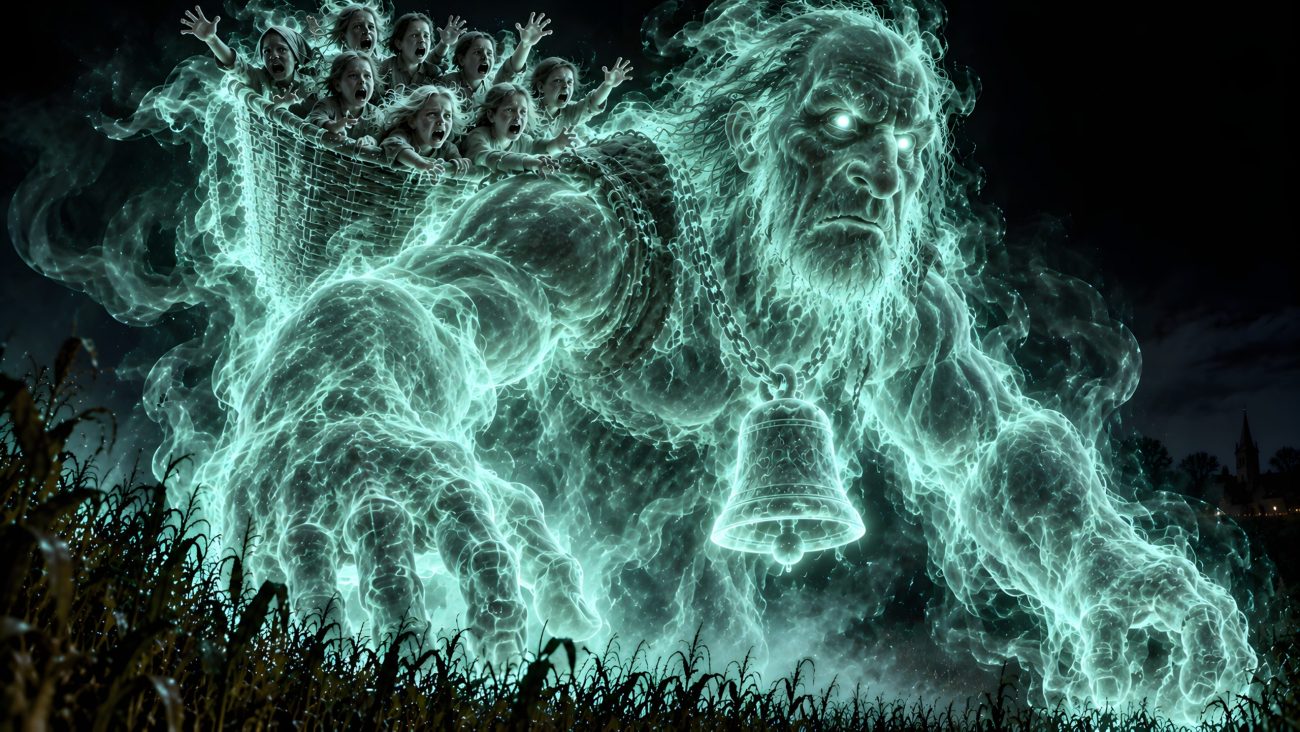
The Hotteman was the ghost of a pig herder. He was said to carry an enormous basket on his back, so large that it was as big as a table.

With this basket, the Hotteman would seize naughty children and carry them away. He was also said to cut off the toes of children who wandered into the grain fields. Mothers told their children these frightening stories to make them behave and keep them away from the crops.


Sources

“Aardmannetje tot zwarte juffer: een lijst van Nederlandse en Vlaamse elfen en geesten.” Abe de Verteller. Accessed September 29, 2026.
https://abedeverteller.nl/van-aardmannetje-tot-zwarte-juffer-een-lijst-van-nederlandse-en-vlaamse-elfen-en-geesten/

Tienuurshond

Tradition / Region: Dutch Mythology, Belgian Mythology
Alternate Names: Twaalfuurshond, Negenuurshond, Tienurenhond
Category: Dog, Ghost


The Myth

In parts of Utrecht and the region around Antwerp, people once spoke of a spectral animal known as the Tienuurshond.

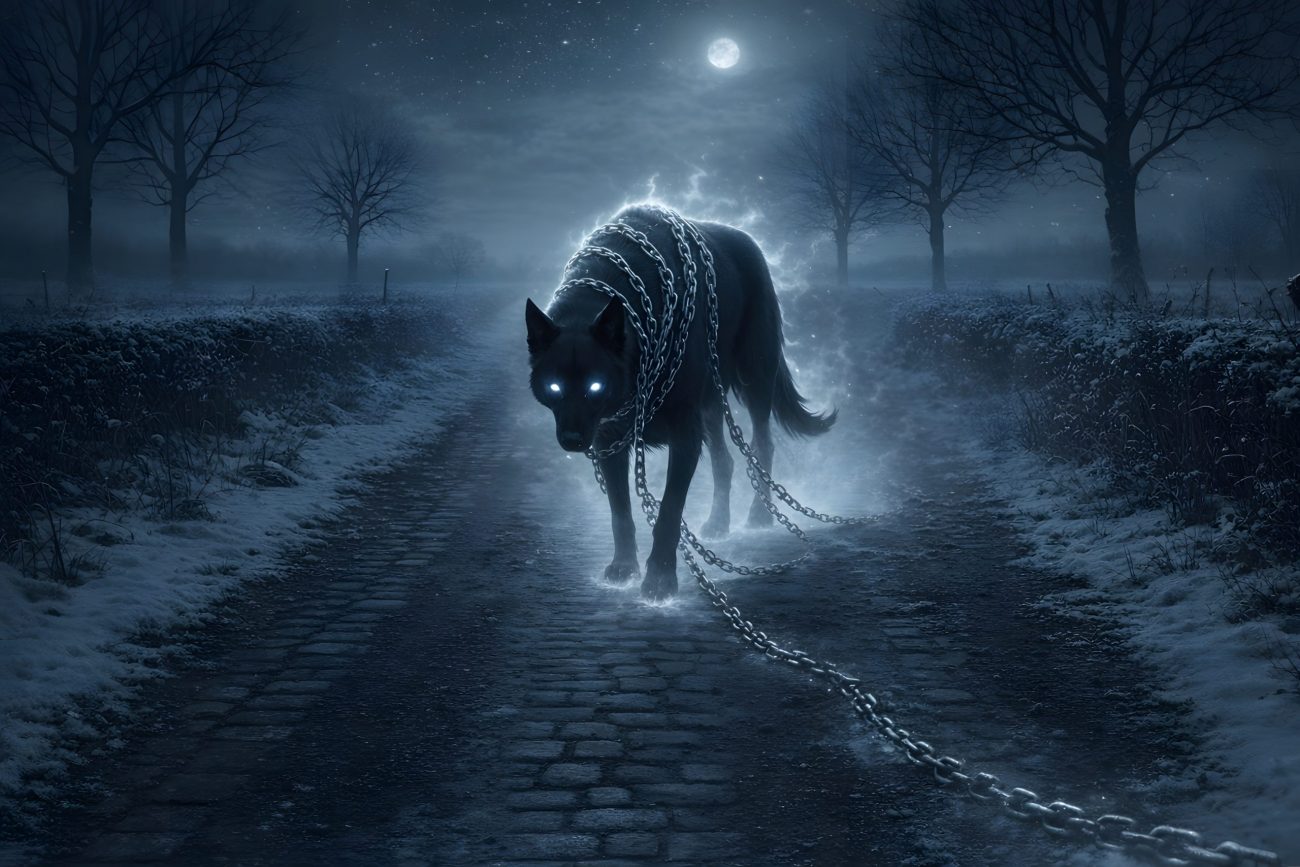
He was said to appear on lonely roads during winter evenings. At exactly the same hour each night — most often at ten o’clock — a large black dog would come into view ahead of a traveler. Around its body hung chains that rattled as it moved, their sound echoing through the cold darkness.

The creature did not usually attack. Instead, it walked in front of the traveler, leading the way along the road as though guiding them through the night. It remained just out of reach, always ahead, never allowing itself to be caught.

Because it appeared at a fixed hour, people gave it its name: the Ten-O’Clock Dog. In some places, where it was believed to appear at other times, it was known as the Nine-O’Clock Dog or the Twelve-O’Clock Dog instead.

Thus the Tienuurshond was remembered as a chained black hound of the winter roads, a ghostly figure that emerged at the appointed hour and walked before the lonely traveler until it vanished again into the night.


Sources

Abe de Verteller. (n.d.). Van aardmannetje tot zwarte juffer: Een lijst van Nederlandse en Vlaamse elfen en geesten. From https://abedeverteller.nl/van-aardmannetje-tot-zwarte-juffer-een-lijst-van-nederlandse-en-vlaamse-elfen-en-geesten/