Drommelkater

Tradition / Region: Dutch Mythology
Alternative names: Duivelkater
Category: Cat


The Myth

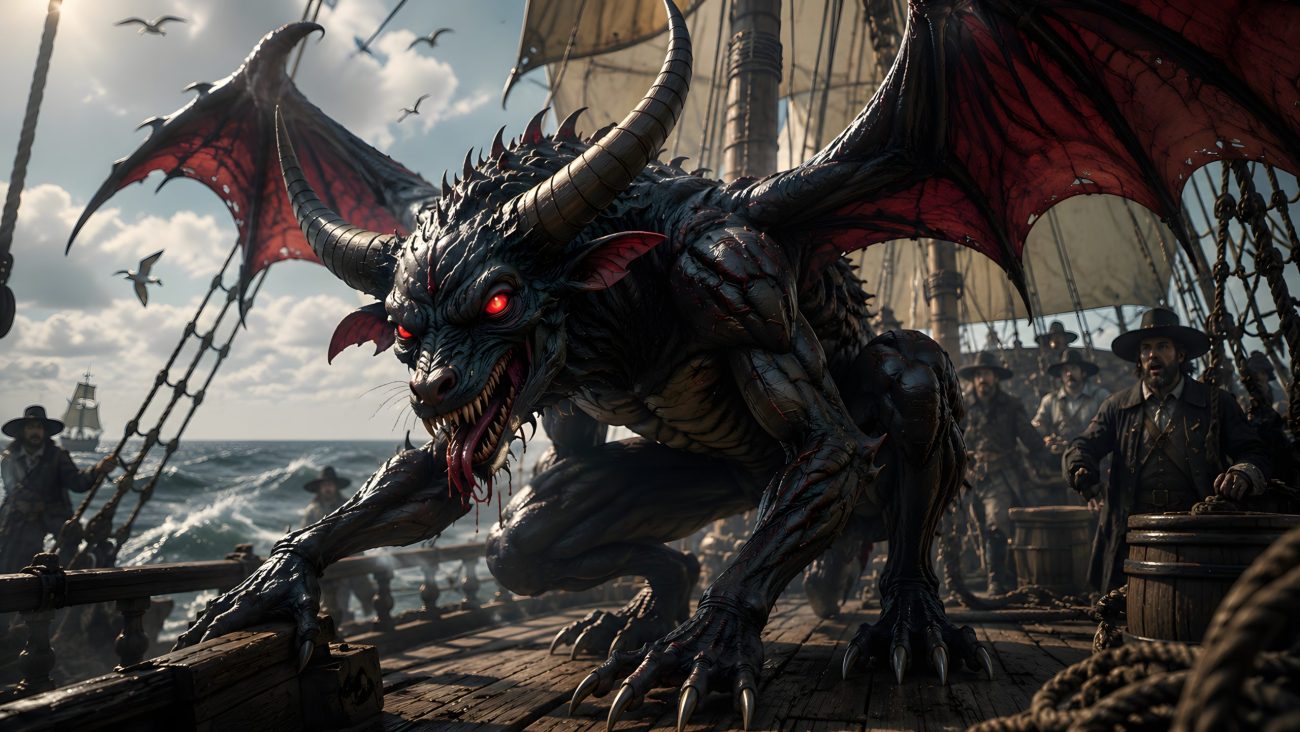
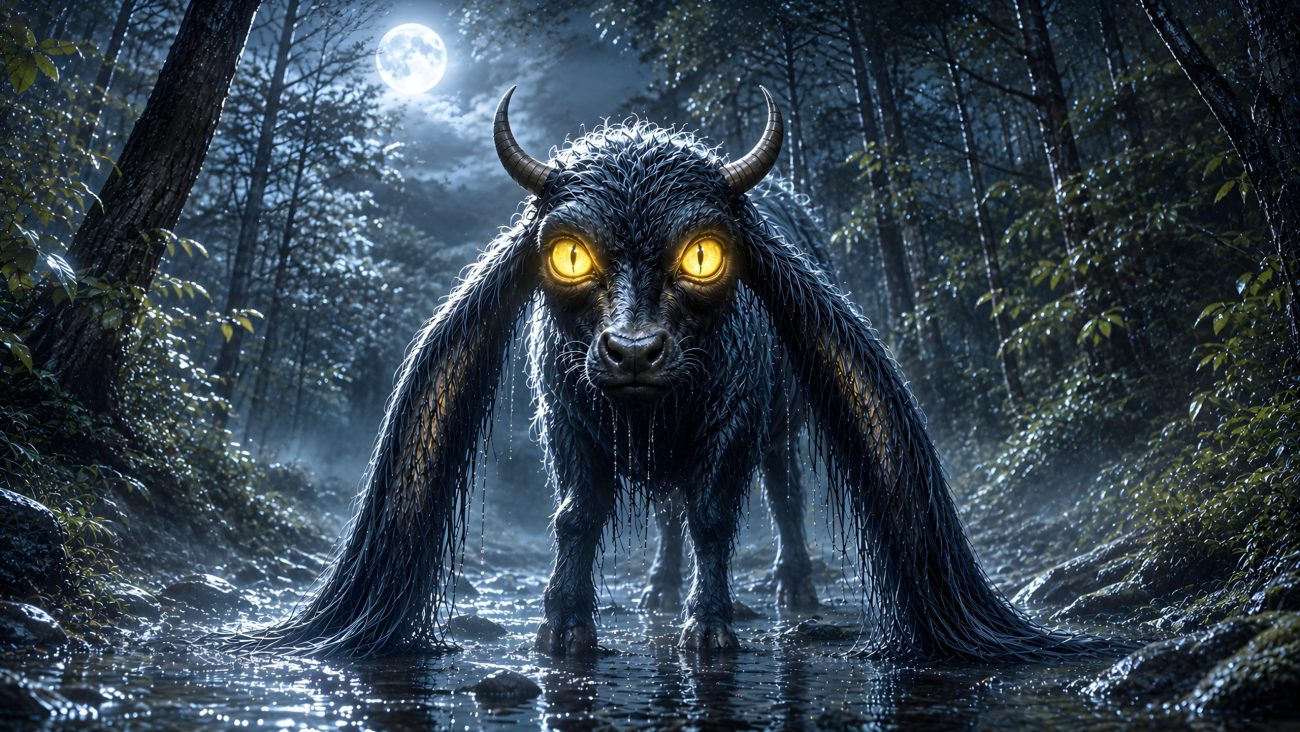
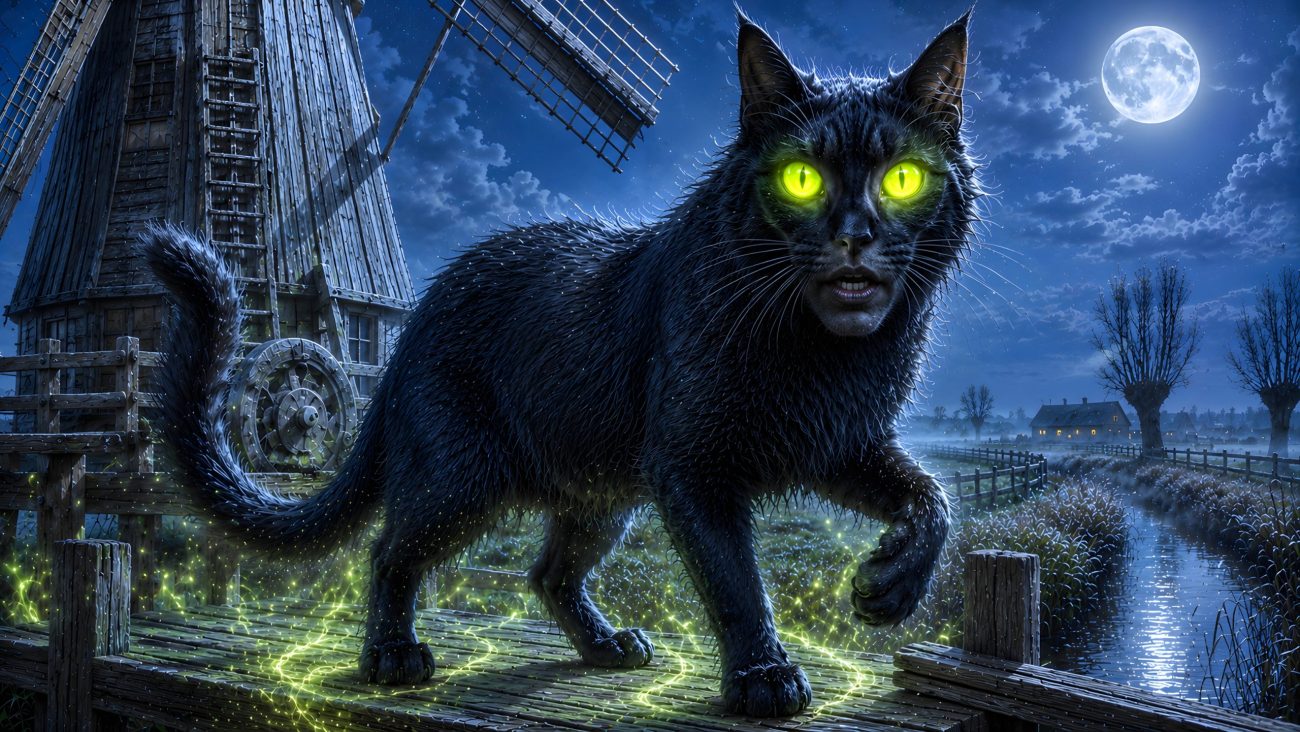
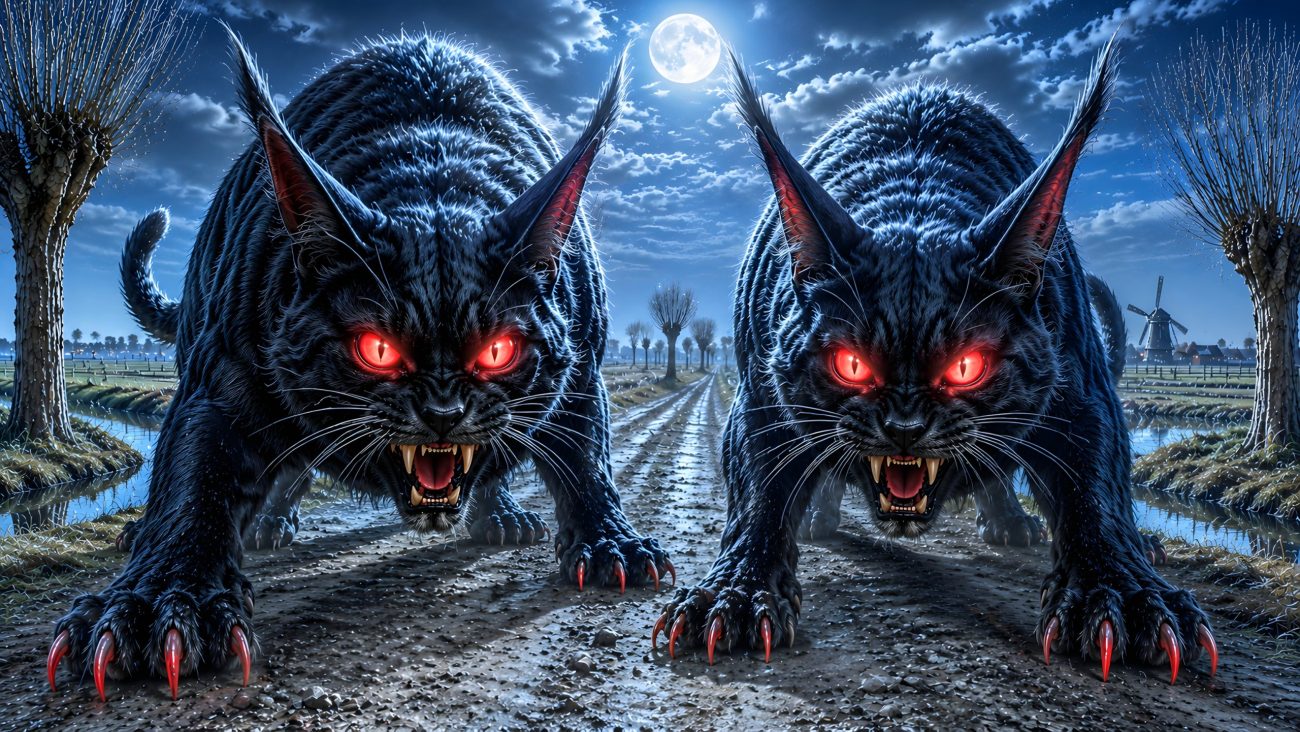
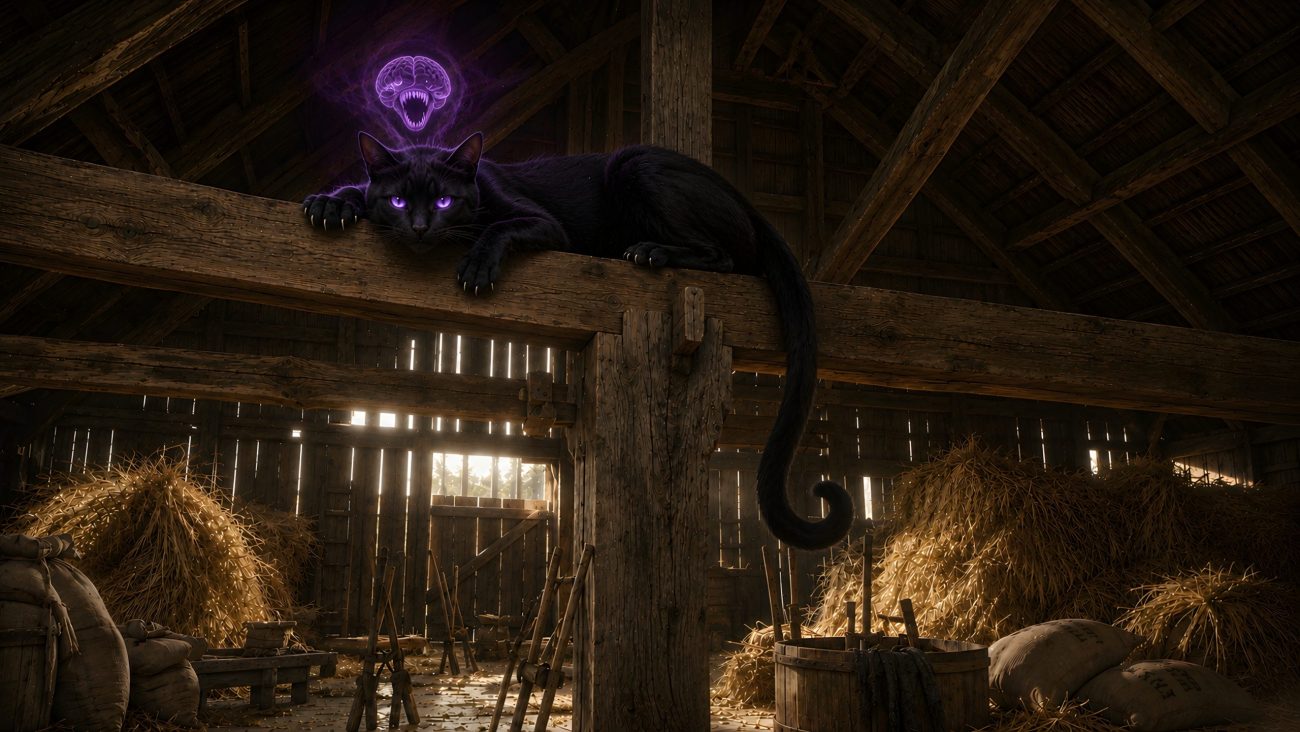
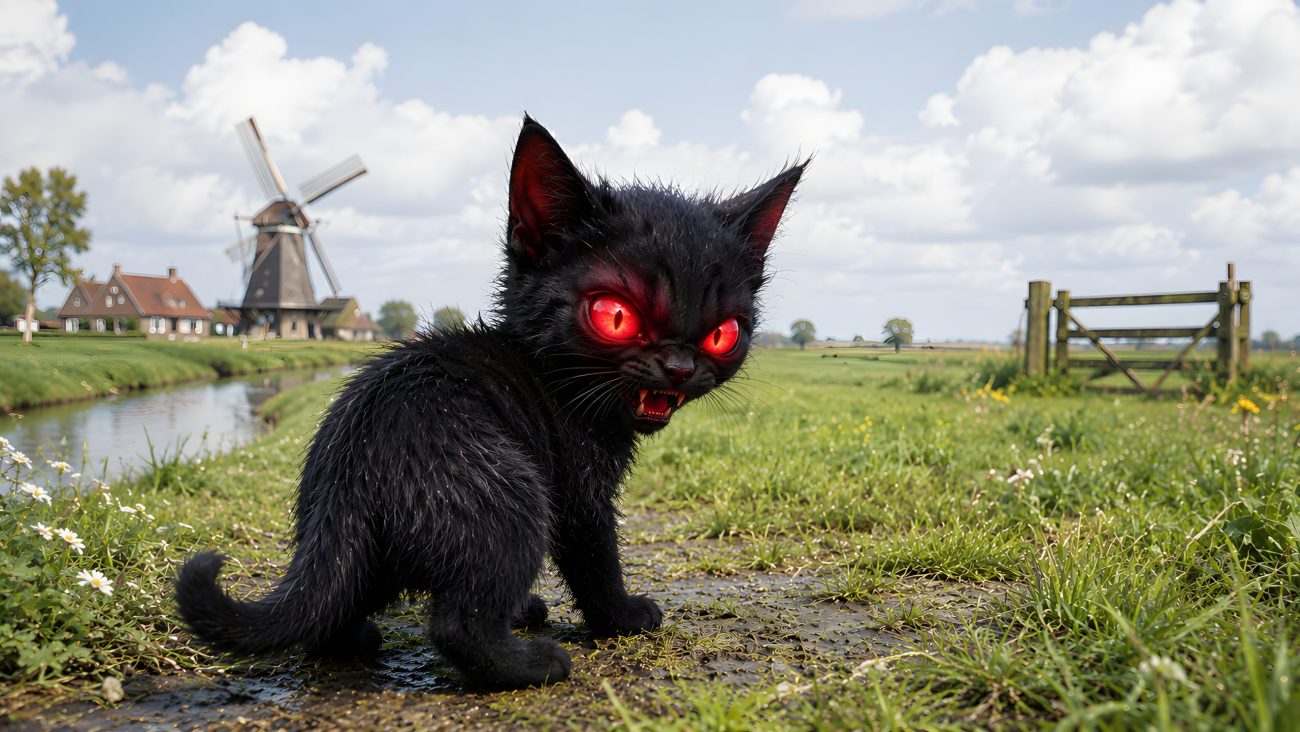
The Drommelkater is a name for the Devil when he appears in the form of a large black cat with glowing eyes. As a supernatural creature, it was regarded as a frightening manifestation of the Devil himself, haunting those who encountered it.

The name also became attached to a traditional loaf of bread known as a duivelkater (“devil’s cat”). According to folklore, this bread replaced an older ritual in which a live cat was buried or burned as an offering to the Devil. The loaf came to symbolize that former sacrifice, preserving its memory while replacing the living offering.


Sources

Van der Veen, Abe J. “Van aardmannetje tot zwarte juffer: Een lijst van Nederlandse en Vlaamse elfen en geesten.” Abe de Verteller. Accessed July 28, 2026. https://abedeverteller.nl/van-aardmannetje-tot-zwarte-juffer-een-lijst-van-nederlandse-en-vlaamse-elfen-en-geesten/


Readrokje

Tradition / Region: Dutch Mythology
Alternative names: Roodrokje
Category: Ghost, Bird


The Myth

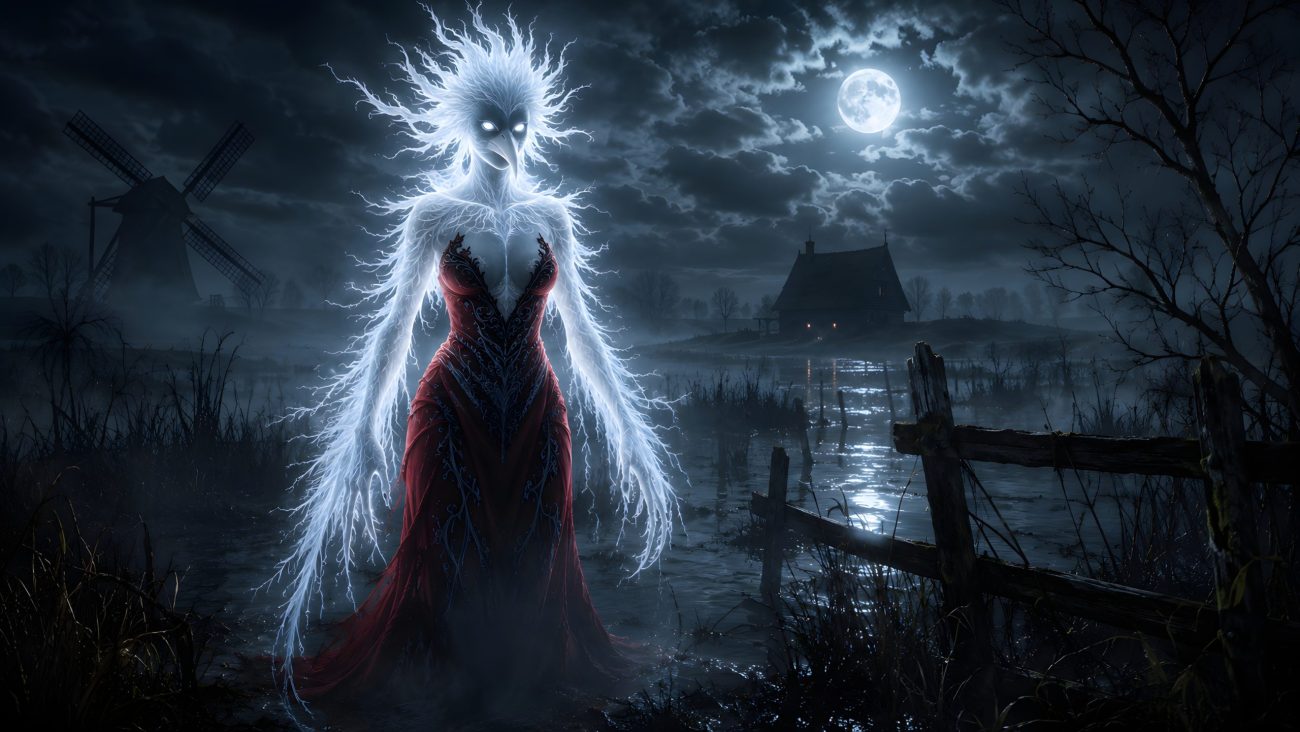
The Readrokje (“Little Red Skirt”) is a ghost said to haunt the area around Akkrum in Friesland. She is described as having a sharp, bird-like face, a white upper garment, and a distinctive red skirt.

She wanders the countryside with long, silent strides, gliding effortlessly over ditches and through beds of reeds. At times, the Readrokje suddenly rushes straight toward a lone traveler walking late at night, frightening them so badly that they flee in terror.


Sources

Abe van der Veen. (2014, July 8). Van aardmannetje tot zwarte juffer: Een lijst van Nederlandse en Vlaamse elfen en geesten. Abe de Verteller. Retrieved June 29, 2026, from https://abedeverteller.nl/van-aardmannetje-tot-zwarte-juffer-een-lijst-van-nederlandse-en-vlaamse-elfen-en-geesten/


Kruusstee Swan

Tradition / Region: Dutch Mythology
Alternative names:
Category: Bird


The Myth

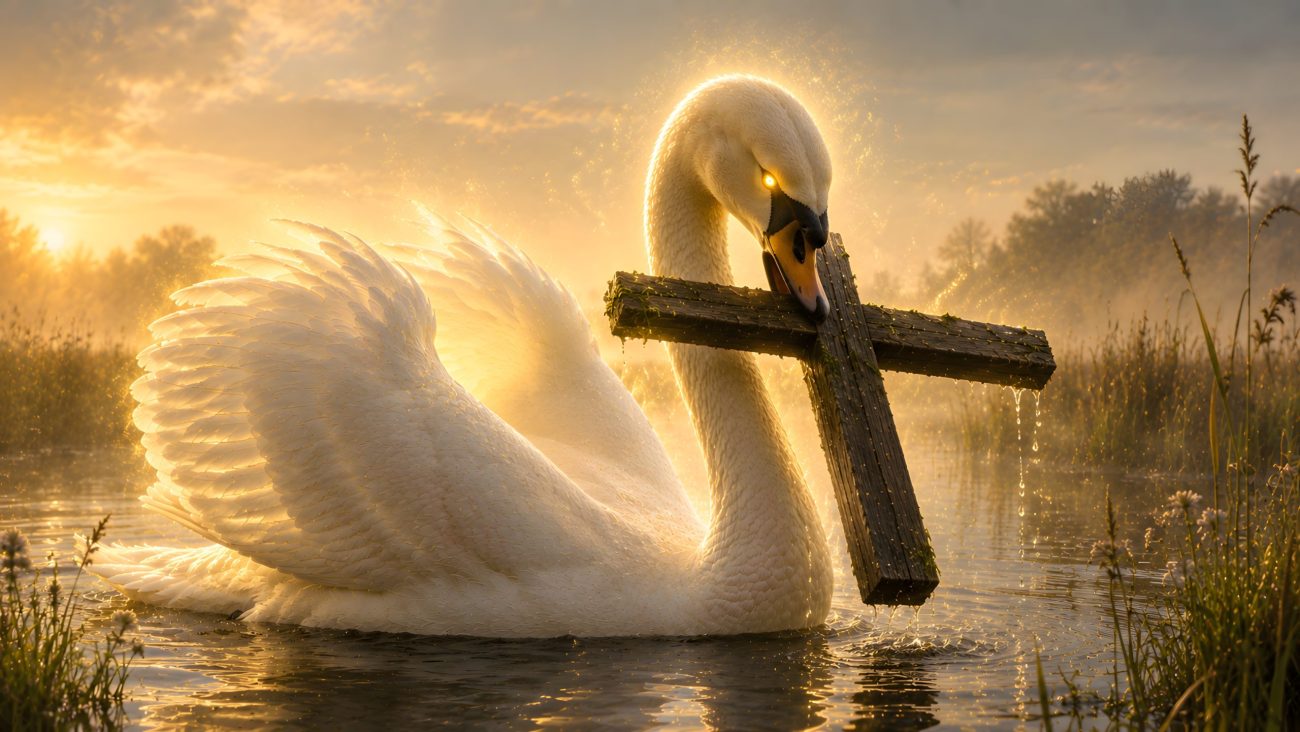
Many years ago, laborers working on the land behind Uskwerd witnessed a miracle. Two swans swam ashore carrying a dark object floating between them. When they reached the land, they beat their wings and flew away, revealing that they had brought a large wooden cross.

The people gathered around the miraculous find. Some believed a chapel should be built on that very spot to house the holy cross, while others argued that the location was unsuitable because the sea regularly flooded the land, and there were no dikes to protect it. Unable to decide, they sought a sign from Heaven.

A wise man proposed placing the cross on a wagon drawn by two oxen. The animals were to be left entirely alone, without guidance or command. Wherever the oxen stopped of their own accord would reveal the place chosen by the Higher Power for the cross.

The oxen began walking by themselves while the people followed in silence with uncovered heads. They continued until they reached the monastery of Wijtwerd, where they stopped and refused to go any farther. The cross remained there for as long as the monastery existed. The place where the swans first brought the holy cross ashore became known as Kruusstee (“Cross Place”), a name that has endured ever since.


Sources

Ter Laan, K. (1959). Groninger volksleven. Deel 1: Verhalende folklore. P. Noordhoff, p. 15.


Schuimert

Tradition / Region: Dutch Mythology
Alternative names:
Category: Bear


The Myth

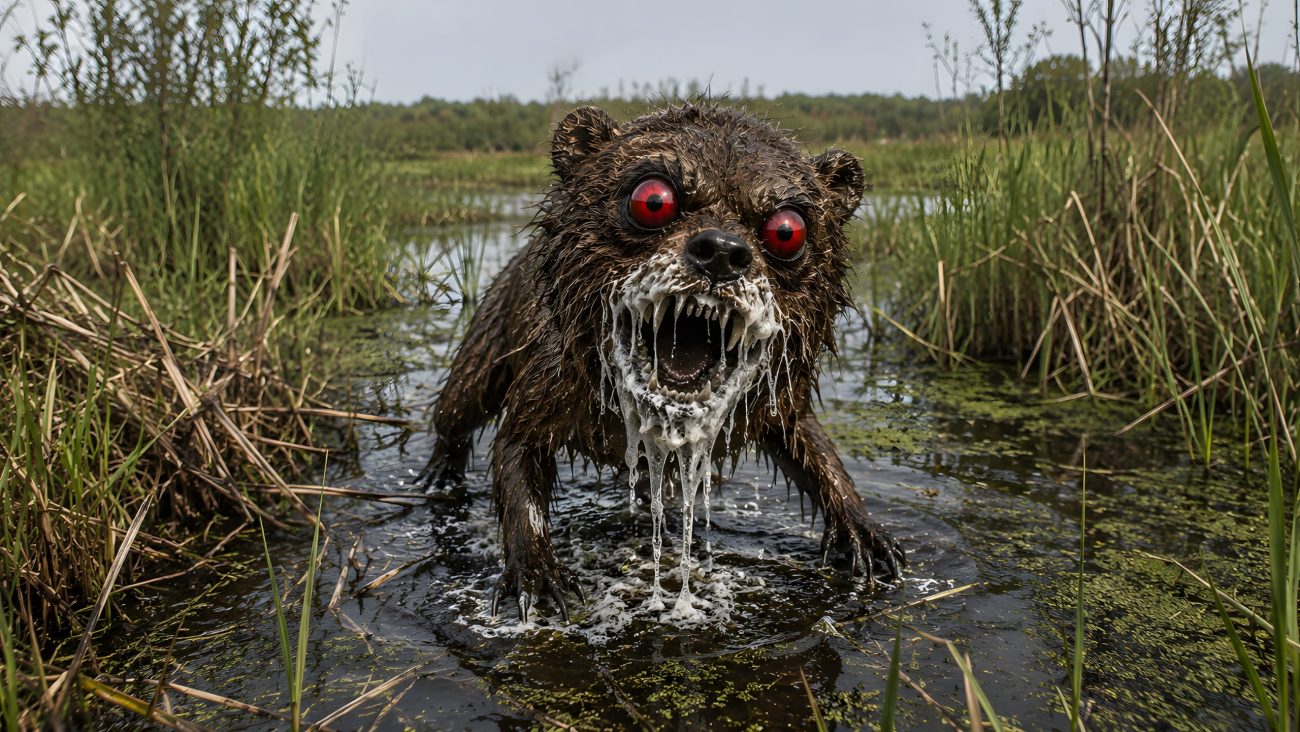
The Schuimert is a fearsome creature from the folklore of Gelderland. It is described as a plague beast that appears to people in the form of either a wolf or a bear.

When taking the shape of a bear, the Schuimert is recognized by the foam covering its mouth. Its sudden appearance is regarded as an ominous encounter, and the creature is remembered as a dangerous being that brings fear and misfortune to those who cross its path.


Sources

Abe van der Veen. (2014, July 8). Van aardmannetje tot zwarte juffer: Een lijst van Nederlandse en Vlaamse elfen en geesten. Abe de Verteller. Retrieved June 29, 2026, from https://abedeverteller.nl/van-aardmannetje-tot-zwarte-juffer-een-lijst-van-nederlandse-en-vlaamse-elfen-en-geesten/


Kunne Klaas

Tradition / Region: Dutch Mythology
Alternative names: Grijze Veulen, Steggeveulen
Category: Horse


The Myth

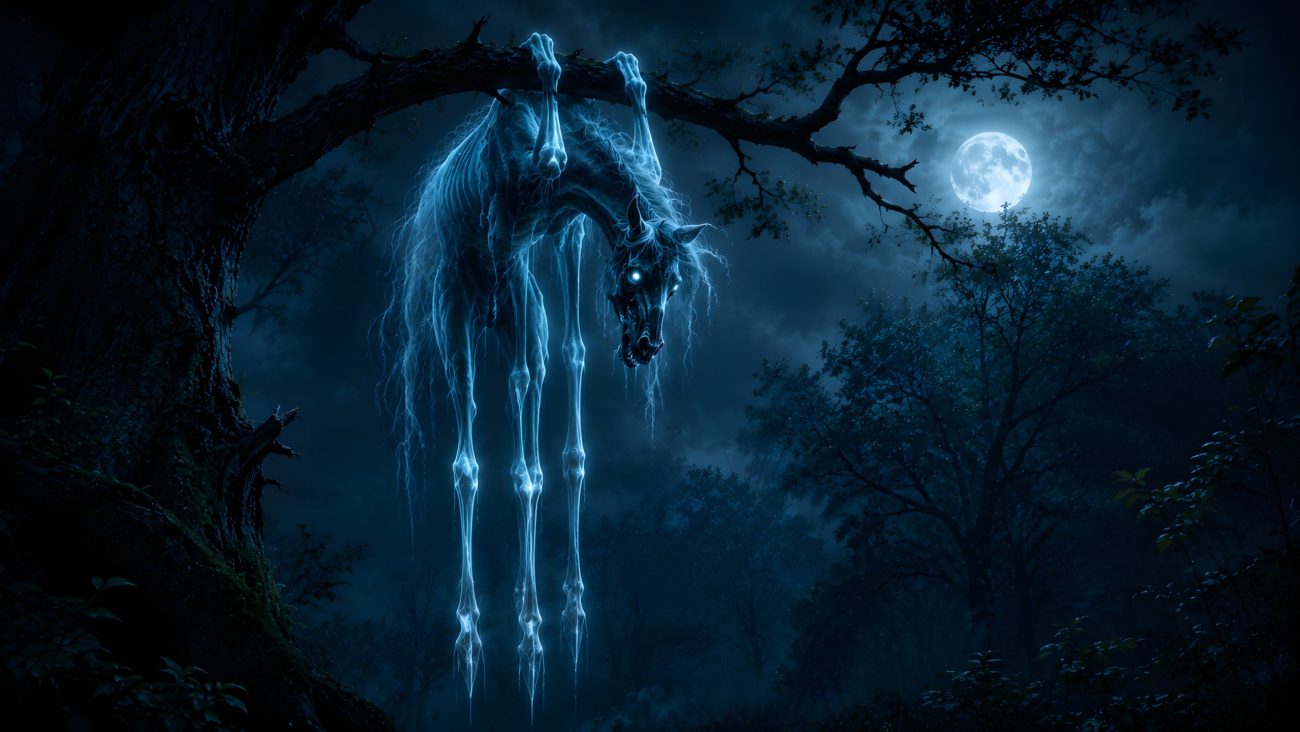
Kunne Klaas is a ghostly horse from the folklore of Twente in the Dutch province of Overijssel.

The phantom horse is said to come charging toward unsuspecting travelers before suddenly vanishing without a trace. In some traditions, it emerges from the water, while in others it flies out of the trees before rushing at its victims.


Sources

Abe van der Veen. (2014, July 8). Van aardmannetje tot zwarte juffer: Een lijst van Nederlandse en Vlaamse elfen en geesten. Abe de Verteller. Retrieved June 29, 2026, from https://abedeverteller.nl/van-aardmannetje-tot-zwarte-juffer-een-lijst-van-nederlandse-en-vlaamse-elfen-en-geesten/.


IJzeren Veulen

Tradition / Region: Dutch Mythology
Alternative names: Iron Foal
Category: Horse


The Myth

The IJzeren Veulen (“Iron Foal”) is a ghostly horse said to haunt the area near Cabauw in the Dutch province of Utrecht.

According to tradition, it galloped between two bridges every night between midnight and one o’clock. As it ran, it made an enormous clattering noise, as though its body were filled with iron or all of its joints were made from iron hinges.

One night, three boys decided to wait for the creature with clubs. When the Iron Foal appeared, it charged them with such tremendous force that it struck the boy standing in the middle, killing him instantly.

A white friar was later said to have banished the haunting spirit. As it disappeared, however, the Iron Foal cried out, “In a hundred years, I will return!”


Sources

Abe van der Veen. (2014, July 8). Van aardmannetje tot zwarte juffer: Een lijst van Nederlandse en Vlaamse elfen en geesten. Abe de Verteller. Retrieved June 29, 2026, from https://abedeverteller.nl/van-aardmannetje-tot-zwarte-juffer-een-lijst-van-nederlandse-en-vlaamse-elfen-en-geesten/


Hommelstommel

Tradition / Region: Dutch Mythology
Alternative names: Hompelstompel
Category: Horse


The Myth

Hommelstommel, also known as Hompelstompel, is a devilish apparition from the Oldambt region of Groningen.

It was said to appear with the upper body of a horse and the lower body of a human. In this monstrous form, or sometimes as a headless horse, it pursued lonely travelers wandering the roads at night.


Sources

Abe van der Veen. (2014, July 8). Van aardmannetje tot zwarte juffer: Een lijst van Nederlandse en Vlaamse elfen en geesten. Abe de Verteller. Retrieved June 29, 2026, from https://abedeverteller.nl/van-aardmannetje-tot-zwarte-juffer-een-lijst-van-nederlandse-en-vlaamse-elfen-en-geesten/


Glujende Peerd

Tradition / Region: Dutch Mythology
Alternative names: Het Gloeiende Paard
Category: Horse


The Myth

The Glujende Peerd, or “Glowing Horse,” is a supernatural horse from the folklore of Gelderland.

It is described as a burning horse that appears at haunted places. Wherever its hooves touch the ground, the grass is scorched and left burned in its wake.


Sources

Abe van der Veen. (2014, July 8). Van aardmannetje tot zwarte juffer: Een lijst van Nederlandse en Vlaamse elfen en geesten. Abe de Verteller. Retrieved June 29, 2026, from https://abedeverteller.nl/van-aardmannetje-tot-zwarte-juffer-een-lijst-van-nederlandse-en-vlaamse-elfen-en-geesten/


Capirussa

Tradition / Region: Dutch Mythology
Alternative names: Capirissa, Tapirussa
Category: Horse


The Myth

Capirussa is a legendary creature from the Dutch town of Brielle in South Holland. According to a chronicle written by the priest Taerling in 1600, the inhabitants of Brielle witnessed a strange monster emerging from the mouth of the River Meuse.

The creature was described as having the head of a woman, the ears and tail of a hunting dog, and the feet of a horse. At the time, it was said that such a being had previously only been seen in the Indies.

The marvelous creature became closely associated with Brielle and appeared as a supporter of the town’s coat of arms until 1816. It was later replaced in the heraldry by a centaur.

One tradition suggests that the name Capirussa may be a Latinized form of an older native water spirit known as the Roeschaart or Osschaart.


Sources

Abe van der Veen. (2014, July 8). Van aardmannetje tot zwarte juffer: Een lijst van Nederlandse en Vlaamse elfen en geesten. Abe de Verteller. Retrieved June 29, 2026, from https://abedeverteller.nl/van-aardmannetje-tot-zwarte-juffer-een-lijst-van-nederlandse-en-vlaamse-elfen-en-geesten/


Flying Dutchman

Tradition / Region: Dutch Mythology
Alternative names: De Vliegende Hollander
Category: Ghost, Object


The Myth

The Flying Dutchman is a legendary ghost ship condemned to sail the seas for all eternity, never able to enter port or find rest. Surrounded by an eerie supernatural glow, it appears during violent storms or in heavy mist, serving as one of the most feared omens in maritime folklore. Sailors believed that seeing the phantom vessel foretold disaster, shipwreck, or death.

According to the most famous version of the legend, the ship was commanded by the Dutch captain Hendrick van der Decken, who attempted to round the Cape of Good Hope during a fierce storm. When urged to seek shelter, the stubborn captain swore that he would round the cape even if it took until the Day of Judgment. For his blasphemous oath and defiance of Heaven, he and his crew were cursed to wander the oceans forever.

Other traditions claim the crew had committed terrible crimes such as piracy, murder, or even participating in the early slave trade, and that their eternal voyage was divine punishment for these sins.

The ghost ship is said to appear suddenly out of storms with blood-red or ghostly white light illuminating its sails. It moves without regard for wind or current and may vanish as quickly as it appears. Some witnesses claimed it could pass directly through other ships without collision.

One of its most infamous traits is attempting to deliver letters addressed to people who died long ago. Sailors warned that accepting these messages would bring terrible misfortune or death.

Numerous sightings have been reported since the eighteenth century. Perhaps the most famous occurred in 1881, when the future King George V and several crew members aboard HMS Bacchante reported seeing a glowing phantom ship. Later that same day, one of the sailors who witnessed the apparition fell to his death, reinforcing the Flying Dutchman’s reputation as a harbinger of doom.

The Flying Dutchman remains one of the world’s most enduring ghost-ship legends, symbolizing eternal punishment, doomed ambition, and the unforgiving power of the sea.


Sources

Wikipedia contributors. (n.d.). Flying Dutchman. In Wikipedia. Retrieved June 27, 2026, from https://en.wikipedia.org/wiki/Flying_Dutchman