IJzeren Veulen

Tradition / Region: Dutch Mythology
Alternative names: Iron Foal
Category: Horse


The Myth

The IJzeren Veulen (“Iron Foal”) is a ghostly horse said to haunt the area near Cabauw in the Dutch province of Utrecht.

According to tradition, it galloped between two bridges every night between midnight and one o’clock. As it ran, it made an enormous clattering noise, as though its body were filled with iron or all of its joints were made from iron hinges.

One night, three boys decided to wait for the creature with clubs. When the Iron Foal appeared, it charged them with such tremendous force that it struck the boy standing in the middle, killing him instantly.

A white friar was later said to have banished the haunting spirit. As it disappeared, however, the Iron Foal cried out, “In a hundred years, I will return!”


Sources

Abe van der Veen. (2014, July 8). Van aardmannetje tot zwarte juffer: Een lijst van Nederlandse en Vlaamse elfen en geesten. Abe de Verteller. Retrieved June 29, 2026, from https://abedeverteller.nl/van-aardmannetje-tot-zwarte-juffer-een-lijst-van-nederlandse-en-vlaamse-elfen-en-geesten/


Hommelstommel

Tradition / Region: Dutch Mythology
Alternative names: Hompelstompel
Category: Horse


The Myth

Hommelstommel, also known as Hompelstompel, is a devilish apparition from the Oldambt region of Groningen.

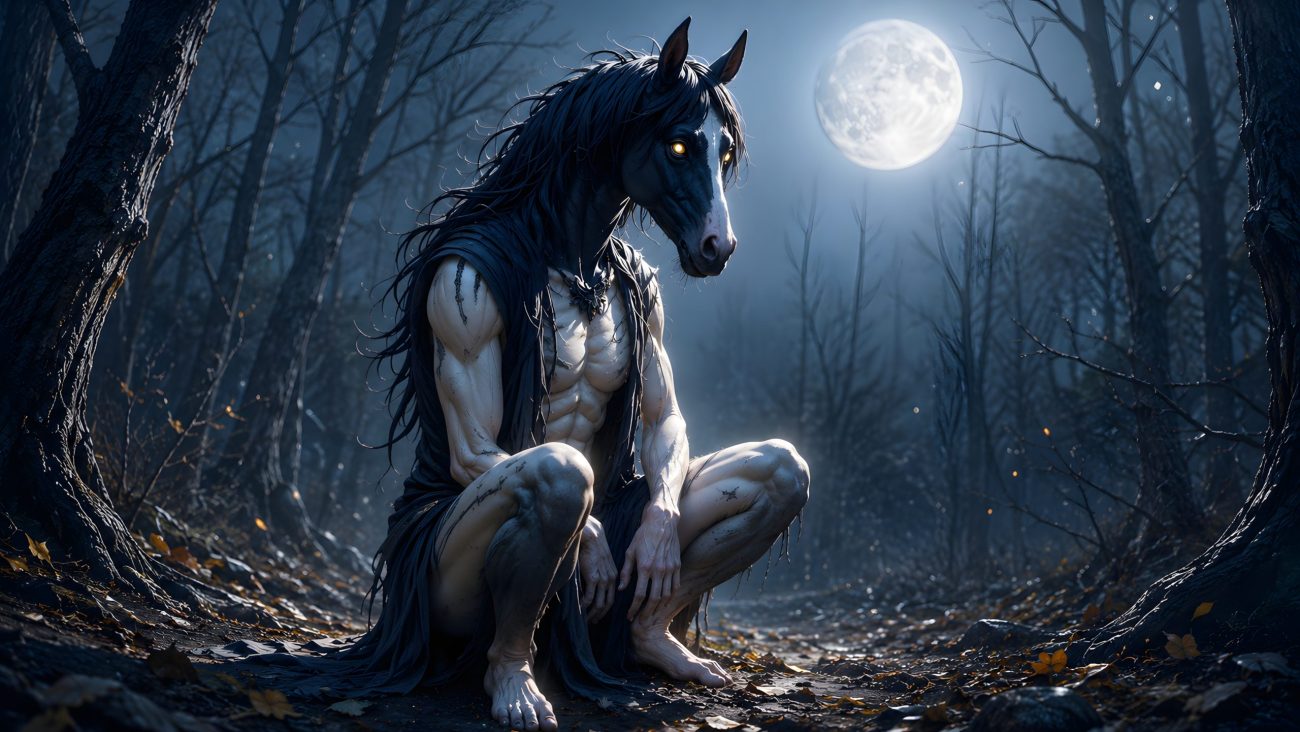
It was said to appear with the upper body of a horse and the lower body of a human. In this monstrous form, or sometimes as a headless horse, it pursued lonely travelers wandering the roads at night.


Sources

Abe van der Veen. (2014, July 8). Van aardmannetje tot zwarte juffer: Een lijst van Nederlandse en Vlaamse elfen en geesten. Abe de Verteller. Retrieved June 29, 2026, from https://abedeverteller.nl/van-aardmannetje-tot-zwarte-juffer-een-lijst-van-nederlandse-en-vlaamse-elfen-en-geesten/


Glujende Peerd

Tradition / Region: Dutch Mythology
Alternative names: Het Gloeiende Paard
Category: Horse


The Myth

The Glujende Peerd, or “Glowing Horse,” is a supernatural horse from the folklore of Gelderland.

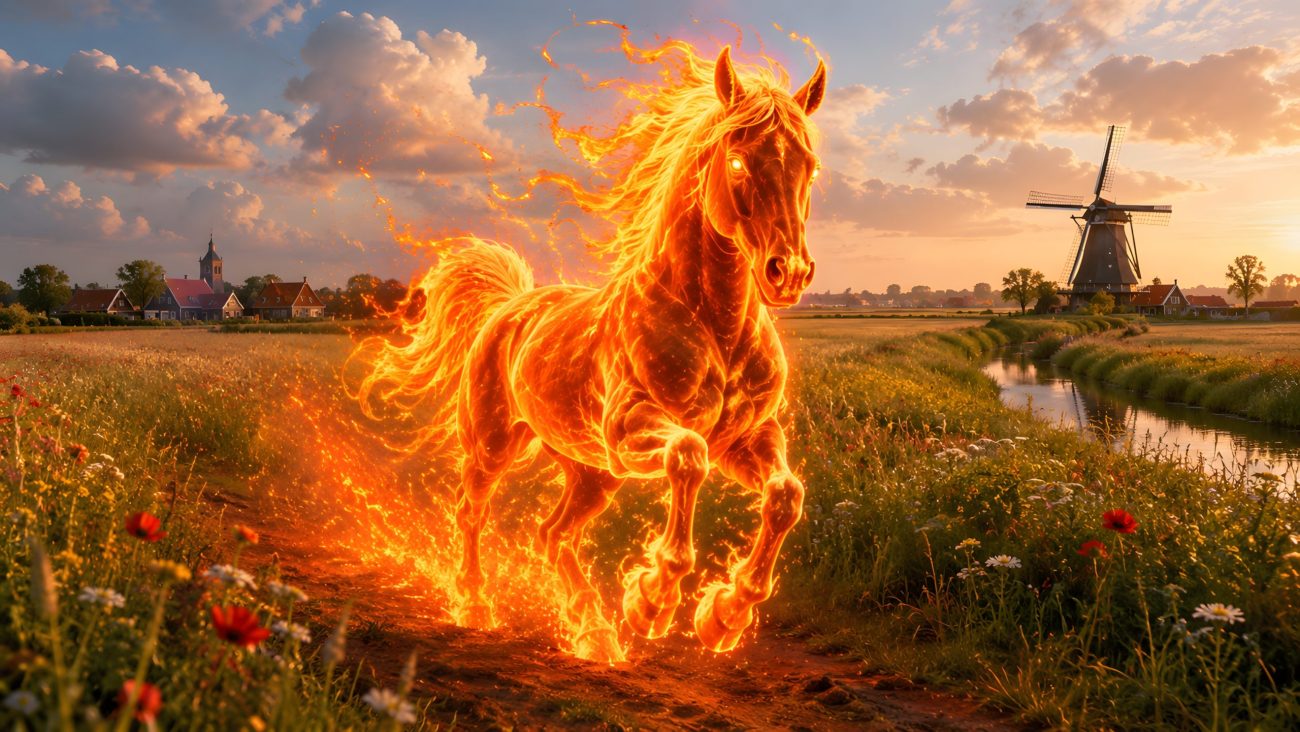
It is described as a burning horse that appears at haunted places. Wherever its hooves touch the ground, the grass is scorched and left burned in its wake.


Sources

Abe van der Veen. (2014, July 8). Van aardmannetje tot zwarte juffer: Een lijst van Nederlandse en Vlaamse elfen en geesten. Abe de Verteller. Retrieved June 29, 2026, from https://abedeverteller.nl/van-aardmannetje-tot-zwarte-juffer-een-lijst-van-nederlandse-en-vlaamse-elfen-en-geesten/


Capirussa

Tradition / Region: Dutch Mythology
Alternative names: Capirissa, Tapirussa
Category: Horse


The Myth

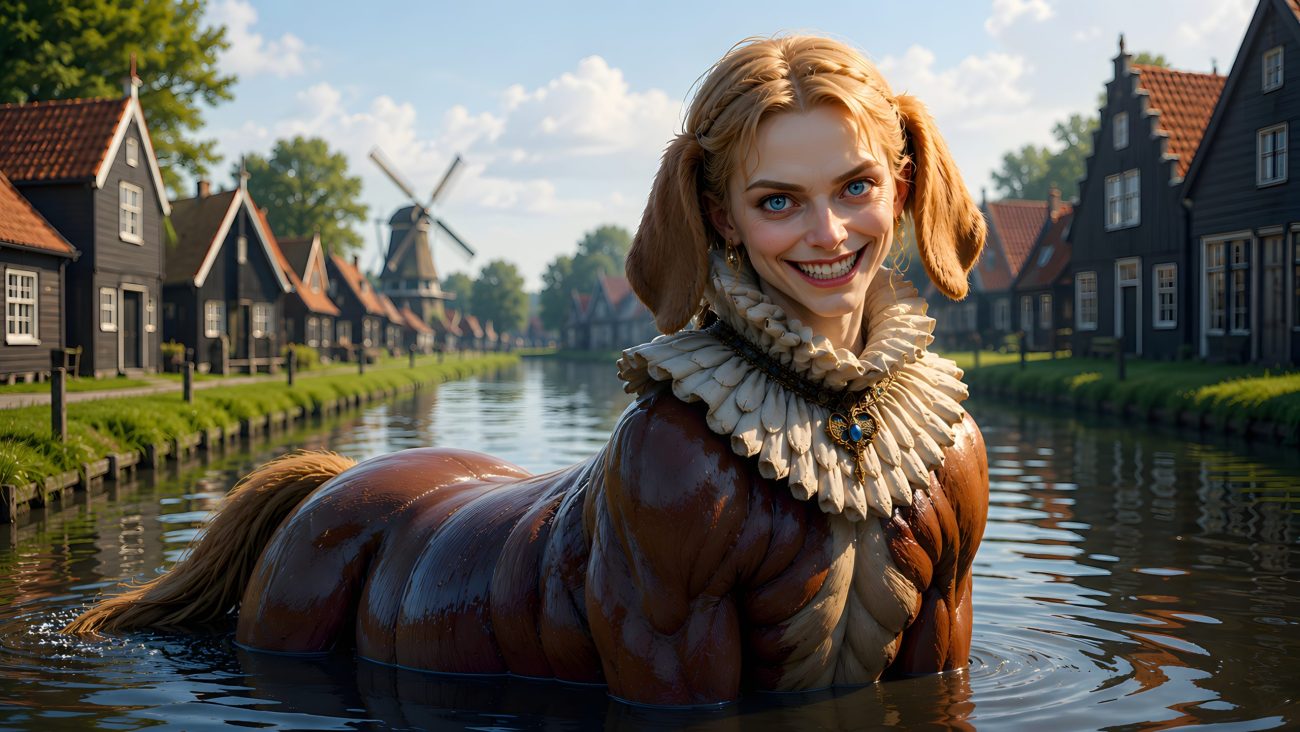
Capirussa is a legendary creature from the Dutch town of Brielle in South Holland. According to a chronicle written by the priest Taerling in 1600, the inhabitants of Brielle witnessed a strange monster emerging from the mouth of the River Meuse.

The creature was described as having the head of a woman, the ears and tail of a hunting dog, and the feet of a horse. At the time, it was said that such a being had previously only been seen in the Indies.

The marvelous creature became closely associated with Brielle and appeared as a supporter of the town’s coat of arms until 1816. It was later replaced in the heraldry by a centaur.

One tradition suggests that the name Capirussa may be a Latinized form of an older native water spirit known as the Roeschaart or Osschaart.


Sources

Abe van der Veen. (2014, July 8). Van aardmannetje tot zwarte juffer: Een lijst van Nederlandse en Vlaamse elfen en geesten. Abe de Verteller. Retrieved June 29, 2026, from https://abedeverteller.nl/van-aardmannetje-tot-zwarte-juffer-een-lijst-van-nederlandse-en-vlaamse-elfen-en-geesten/


Flying Dutchman

Tradition / Region: Dutch Mythology
Alternative names: De Vliegende Hollander
Category: Ghost, Object


The Myth

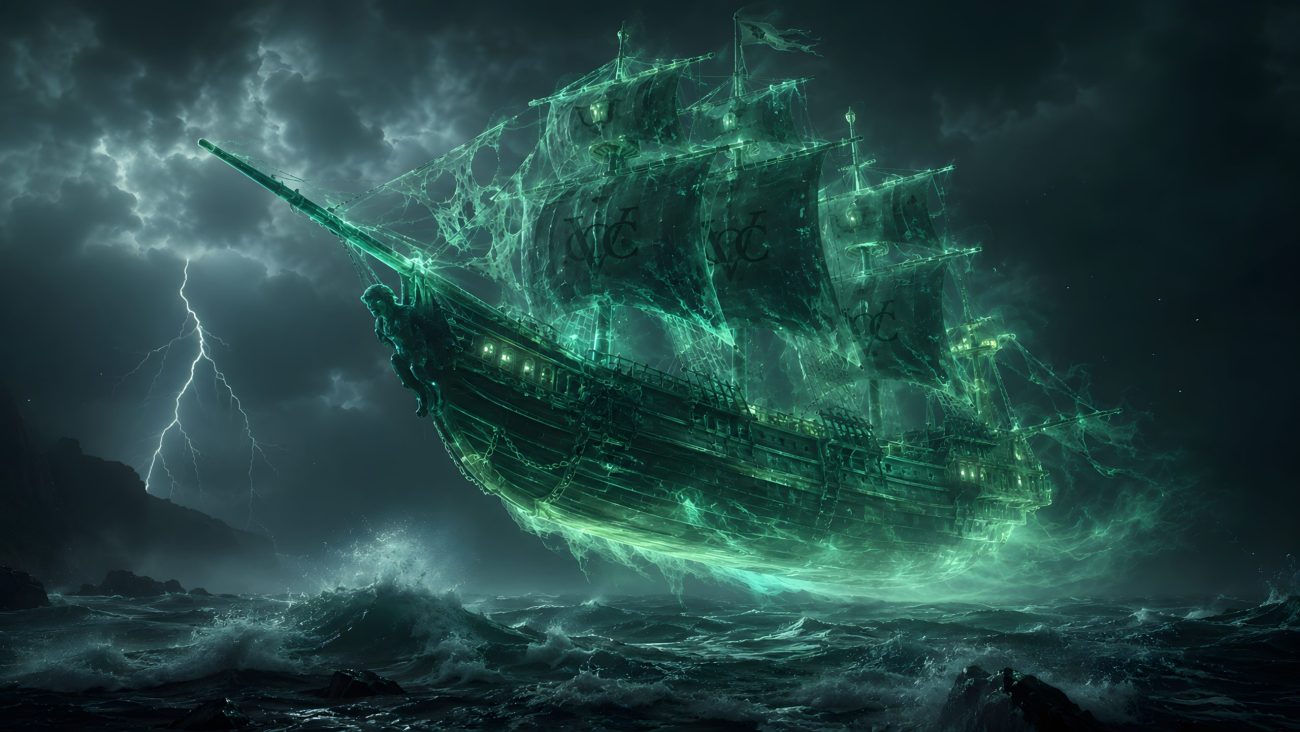
The Flying Dutchman is a legendary ghost ship condemned to sail the seas for all eternity, never able to enter port or find rest. Surrounded by an eerie supernatural glow, it appears during violent storms or in heavy mist, serving as one of the most feared omens in maritime folklore. Sailors believed that seeing the phantom vessel foretold disaster, shipwreck, or death.

According to the most famous version of the legend, the ship was commanded by the Dutch captain Hendrick van der Decken, who attempted to round the Cape of Good Hope during a fierce storm. When urged to seek shelter, the stubborn captain swore that he would round the cape even if it took until the Day of Judgment. For his blasphemous oath and defiance of Heaven, he and his crew were cursed to wander the oceans forever.

Other traditions claim the crew had committed terrible crimes such as piracy, murder, or even participating in the early slave trade, and that their eternal voyage was divine punishment for these sins.

The ghost ship is said to appear suddenly out of storms with blood-red or ghostly white light illuminating its sails. It moves without regard for wind or current and may vanish as quickly as it appears. Some witnesses claimed it could pass directly through other ships without collision.

One of its most infamous traits is attempting to deliver letters addressed to people who died long ago. Sailors warned that accepting these messages would bring terrible misfortune or death.

Numerous sightings have been reported since the eighteenth century. Perhaps the most famous occurred in 1881, when the future King George V and several crew members aboard HMS Bacchante reported seeing a glowing phantom ship. Later that same day, one of the sailors who witnessed the apparition fell to his death, reinforcing the Flying Dutchman’s reputation as a harbinger of doom.

The Flying Dutchman remains one of the world’s most enduring ghost-ship legends, symbolizing eternal punishment, doomed ambition, and the unforgiving power of the sea.


Sources

Wikipedia contributors. (n.d.). Flying Dutchman. In Wikipedia. Retrieved June 27, 2026, from https://en.wikipedia.org/wiki/Flying_Dutchman
Haspelvrouwtje

Tradition / Region: Dutch Mythology
Alternate Names:
Category: Gnome


The Myth

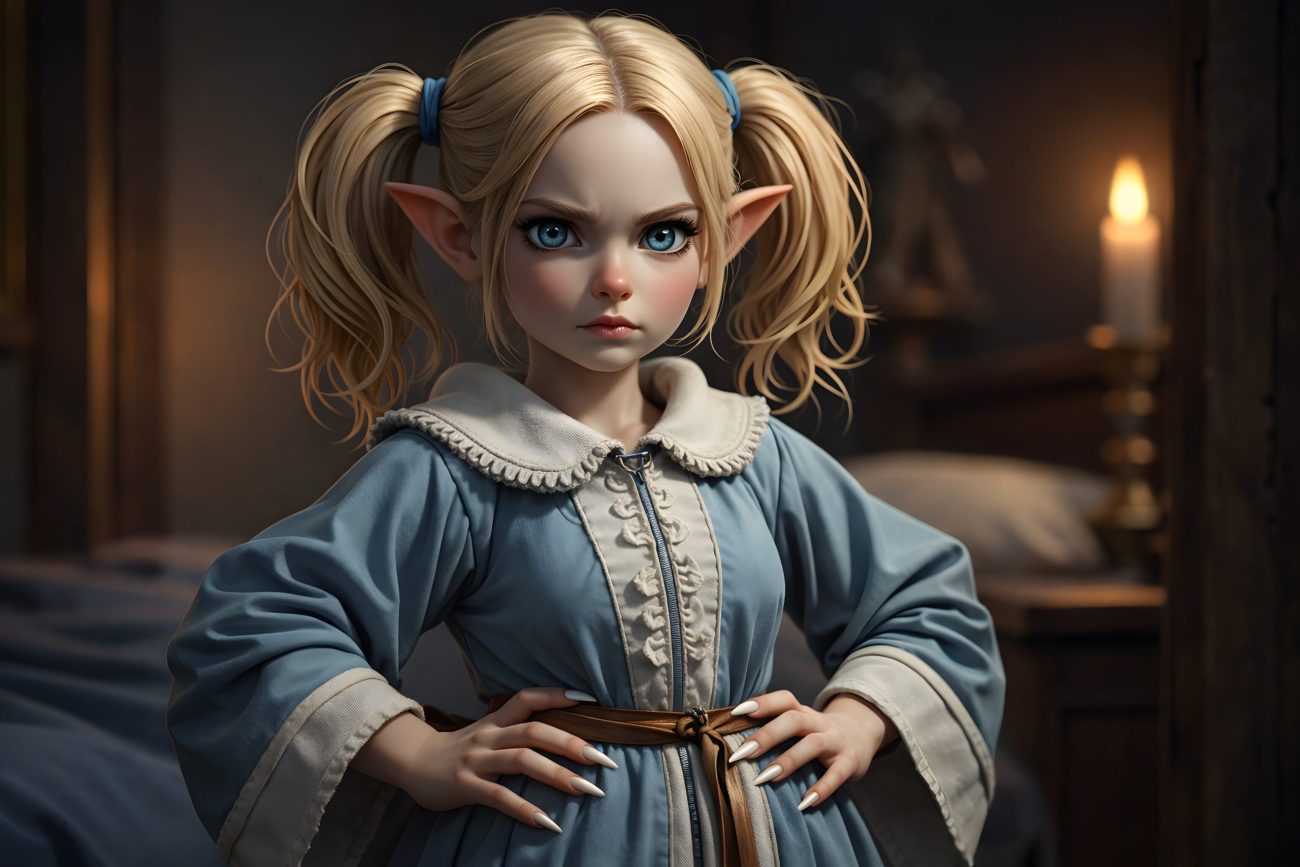
The Haspelvrouwtje is a small female kabouter-like being from Brabant folklore, known for its helpful role within the household, particularly toward women.

It is described as a tiny, human-like female spirit that assists with domestic and intimate tasks. It helps women in childbirth, cares for sick women, and completes unfinished work for those who are exhausted or overworked.

Despite its benevolent nature, the Haspelvrouwtje can become dangerous if offended. When angered, it may scratch a person’s skin with its sharp nails or abduct them to its underground dwelling.

It represents a dual-natured household spirit: protective and supportive when respected, but vengeful when mistreated.


Sources

Abe de Verteller. (n.d.). Van aardmannetje tot zwarte juffer: Een lijst van Nederlandse en Vlaamse elfen en geesten. Retrieved March 1, 2026, from https://abedeverteller.nl/van-aardmannetje-tot-zwarte-juffer-een-lijst-van-nederlandse-en-vlaamse-elfen-en-geesten/


Klabautermann

Tradition / Region: German Mythology, Dutch Mythology
Alternate Names: Kalfater; Klabautermännchen; Kaboutermanneken
Category: Gnome


The Myth

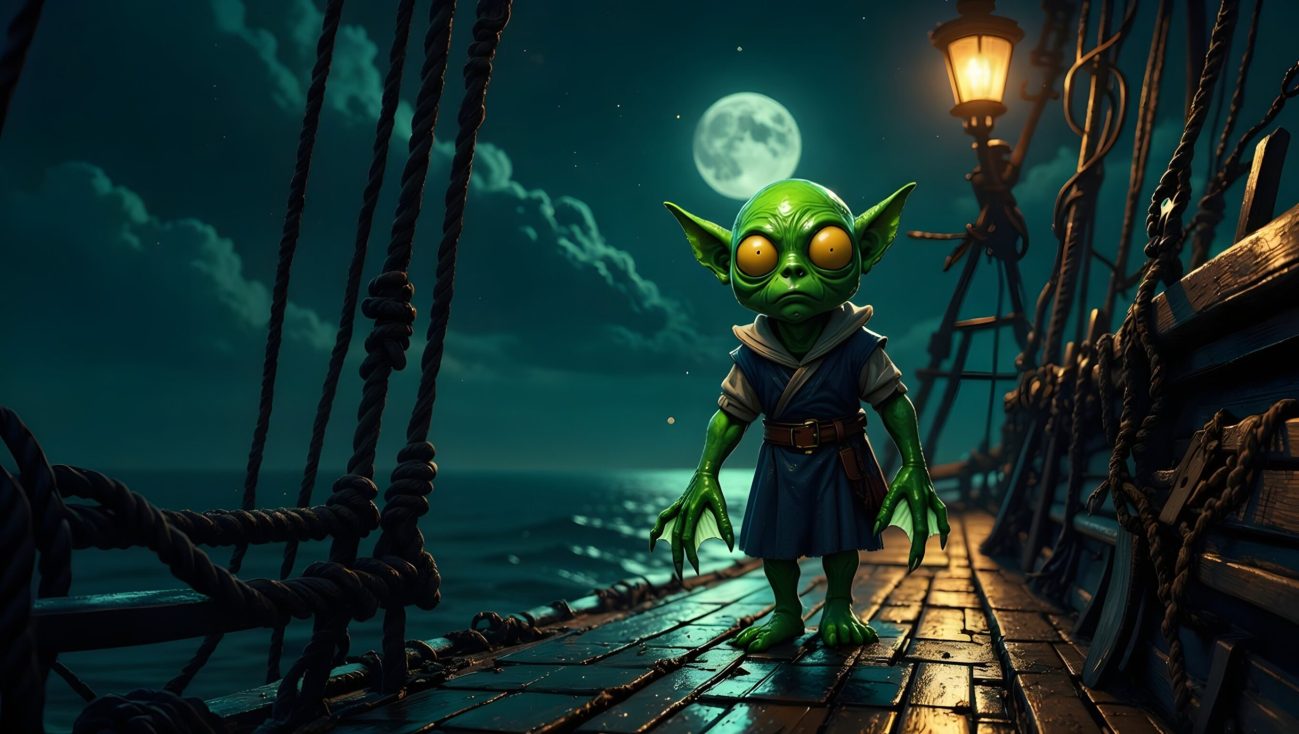
The Klabautermann is a water kobold associated with ships, appearing as a small humanlike figure or sometimes as a ship’s carpenter. It is linked to the wood of the vessel and is rarely seen, as its appearance is considered an ill omen.

The Klabautermann lives within the wood of a ship and assists sailors and fishermen with their duties. It may pump water from the hold, arrange cargo, repair damage, and work at night to fix broken objects. It is often said to sit beneath the capstan. Its presence protects the ship from danger such as illness, fire, or attack, and ensures the vessel remains seaworthy.

It appears only rarely to humans, and seeing it is considered bad luck. It may be seen as a small figure with a pipe, wearing a sailor’s cap and a red or grey jacket, though descriptions vary. It can also appear in the form of the ship’s carpenter.

The spirit reacts to the behavior of the crew. If treated with respect, it continues its helpful work. If angered, it creates disturbances, tangles ropes, makes noise, and damages objects. When the ship is beyond saving, the Klabautermann becomes restless, making loud sounds, running through the ship, or leaving it. Its departure signals that the vessel is doomed to sink.


Sources

Wikipedia contributors. (n.d.). Klabautermann. In Wikipedia. Retrieved March 1, 2026, from https://en.wikipedia.org/wiki/Klabautermann.


Appelman

Tradition / Region: Dutch Mythology
Alternate Names: Appelmannetje, Appleman
Category: Plant


The Myth

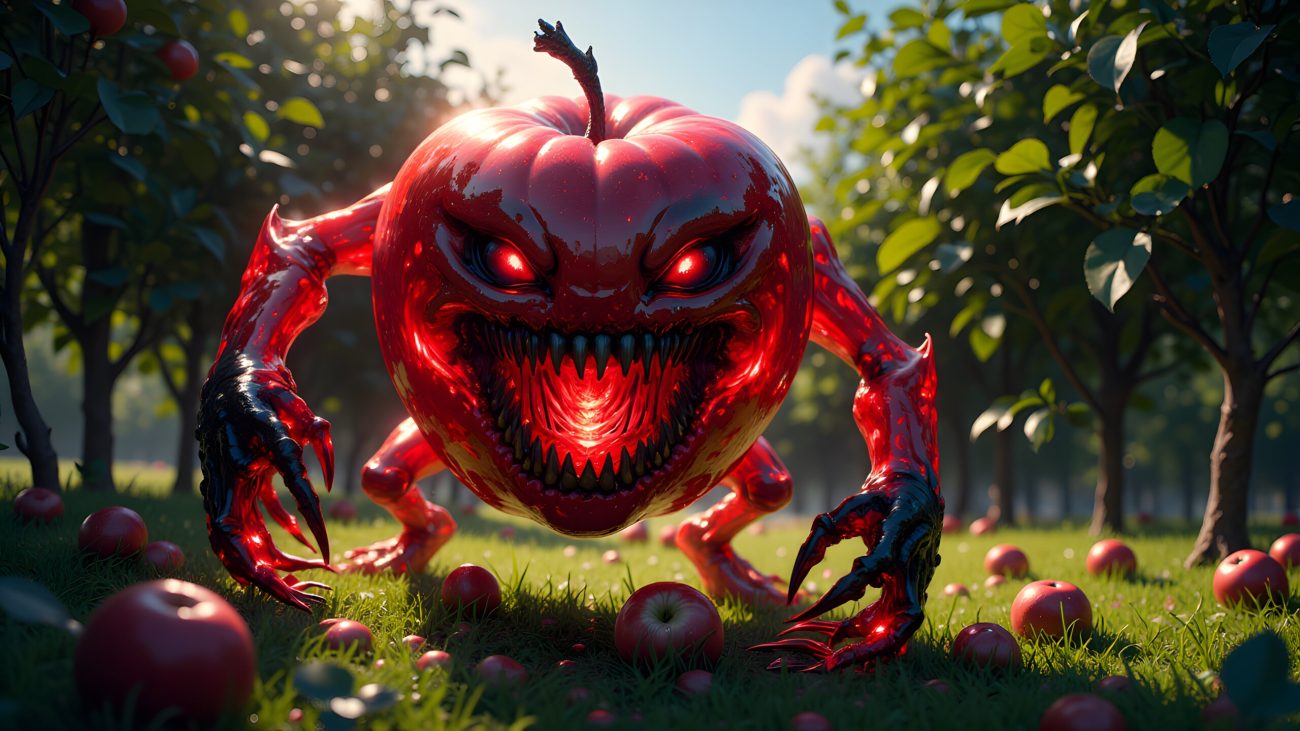
In the orchards of Limburg, people once warned children and adults alike not to eat too many apples. If someone grew greedy and devoured more than their share, they were told, “The Appelman will get you,” or, “The Appleman will come to collect what is owed.”

The Appelman was believed to be the spirit of the apple tree itself, a quiet presence watching over the orchard. He was not often seen, but people felt that he noticed when someone showed too much hunger or greed. Those who ignored the warning risked misfortune, illness, or some other small punishment sent by the spirit of the tree.

A similar belief was known in England, where people said the final apple on a tree should never be picked. That fruit was left behind as the share belonging to the Appleman. To take it would be to rob the spirit who guarded the tree, and doing so might bring bad luck upon the household.

Thus the Appelman was remembered as a guardian of balance in the orchard — a spirit who reminded people that the fruits of the earth should be taken with moderation, and that greed might awaken the watchful soul of the tree.


Sources

Abe de Verteller. (n.d.). Van aardmannetje tot zwarte juffer: Een lijst van Nederlandse en Vlaamse elfen en geesten. Retrieved March 1, 2026, from https://abedeverteller.nl/van-aardmannetje-tot-zwarte-juffer-een-lijst-van-nederlandse-en-vlaamse-elfen-en-geesten/


Alruinmannetje

Tradition / Region: Dutch Mythology
Alternate Names: Galgenmannetje, Pismannetje, Alruin
Category: Plant


The Myth

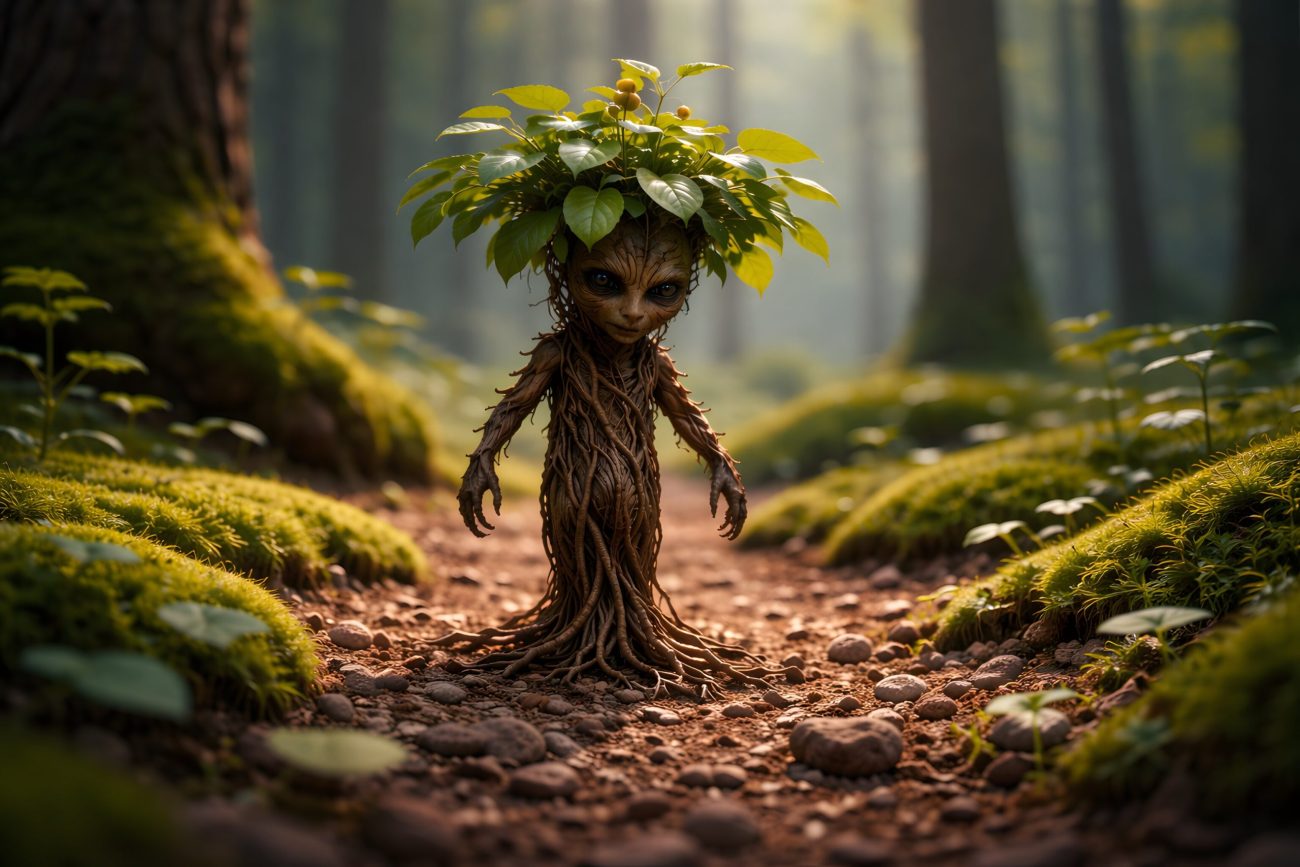
The Alruinmannetje is said to be the root of the poisonous mandrake plant, shaped vaguely like a tiny human figure. Because of this form, people believed the plant was not merely a root but a being with a spirit living inside it.

It was feared above all when pulled from the earth. The Alruinmannetje was said to scream with such a terrible, piercing cry that anyone who heard it would fall dead on the spot. Only those who managed to survive this dreadful moment could claim the root. If they then treated it well — giving it a small bed, dressing it in cloth, and feeding it milk and food — the spirit within would become loyal to its keeper.

Once cared for properly, the Alruinmannetje was believed to whisper secrets to its owner and reveal hidden knowledge. It could also bring wealth. At night, it would fetch money for the household, and coins placed beside it in the evening would be found doubled by morning.

The root was sometimes called Pismannetje because people believed it sprang from the urine of a freshly hanged man beneath the gallows. From this grim origin, the plant gained its connection to death, magic, and the unseen world.

In Friesland, the name Alrún was also used for a witch from Raerd who possessed the power to heal people and lift enchantments, showing how the name of the root became linked not only to a plant, but to human magic as well.


Sources

Abe de Verteller. (n.d.). Van aardmannetje tot zwarte juffer: Een lijst van Nederlandse en Vlaamse elfen en geesten. Retrieved March 1, 2026, from https://abedeverteller.nl/van-aardmannetje-tot-zwarte-juffer-een-lijst-van-nederlandse-en-vlaamse-elfen-en-geesten/


Waterwolf

Tradition / Region: Dutch Mythology
Alternate Names: None recorded
Category: Wolf

The Myth

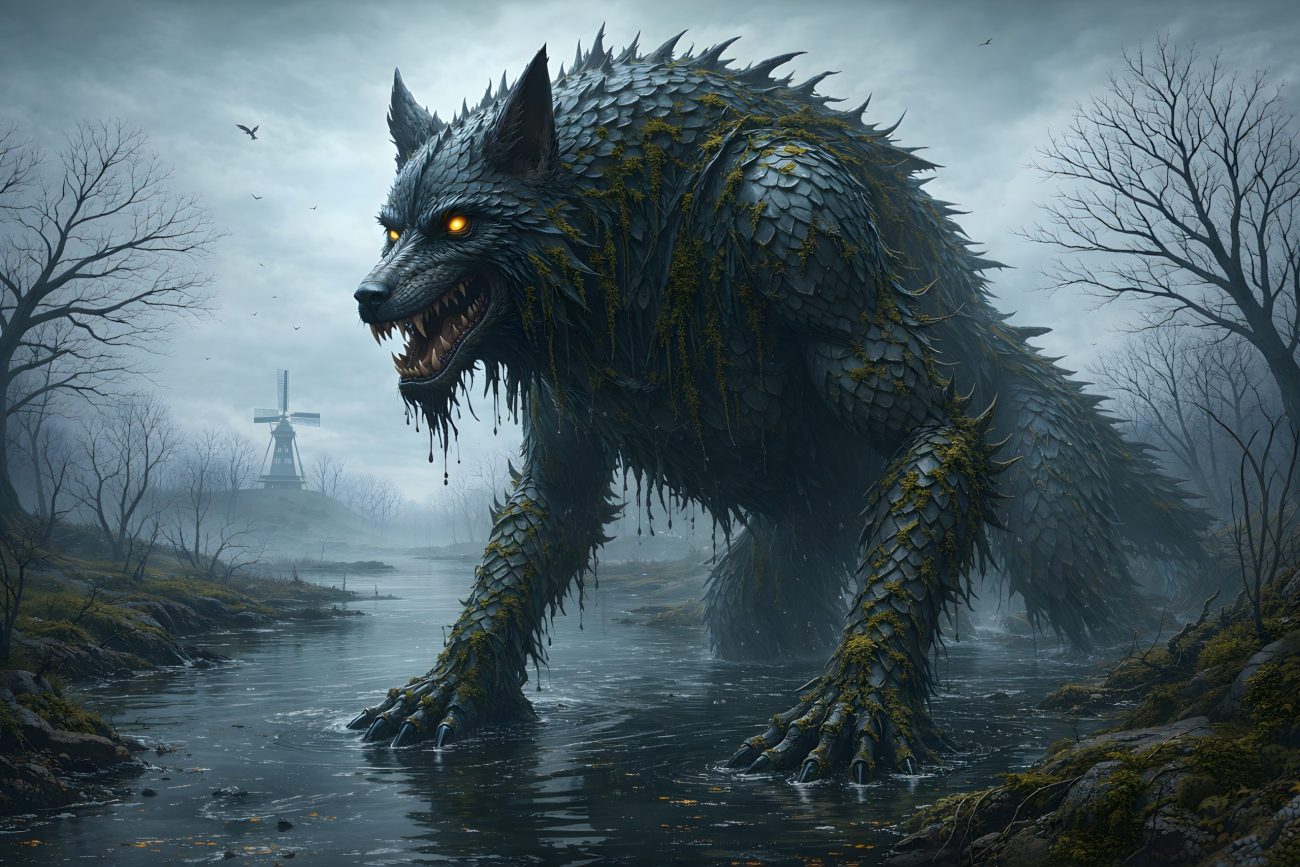
The Waterwolf is a dangerous spirit said to appear in the form of a wolf adapted to life in the water. Unlike a normal wolf, its body is covered in scales, over which moss and water plants such as algae and weeds have grown. It moves silently through rivers, marshes, and flooded lands, propelled by two large fins that allow it to glide swiftly and almost invisibly beneath the surface.

The creature is feared as a predator of humans, especially children. According to the stories, it lurks near banks and shorelines, dragging the unwary into the water where they disappear without a trace.

Like many Dutch water legends, the Waterwolf reflects anxieties about the dangers of marshes, floods, and deep water, giving those natural threats a monstrous, animal form.


Sources

Abe de Verteller. (n.d.). Van aardmannetje tot zwarte juffer: Een lijst van Nederlandse en Vlaamse elfen en geesten. From https://abedeverteller.nl/van-aardmannetje-tot-zwarte-juffer-een-lijst-van-nederlandse-en-vlaamse-elfen-en-geesten/