Readrokje

Tradition / Region: Dutch Mythology
Alternative names: Roodrokje
Category: Ghost, Bird


The Myth

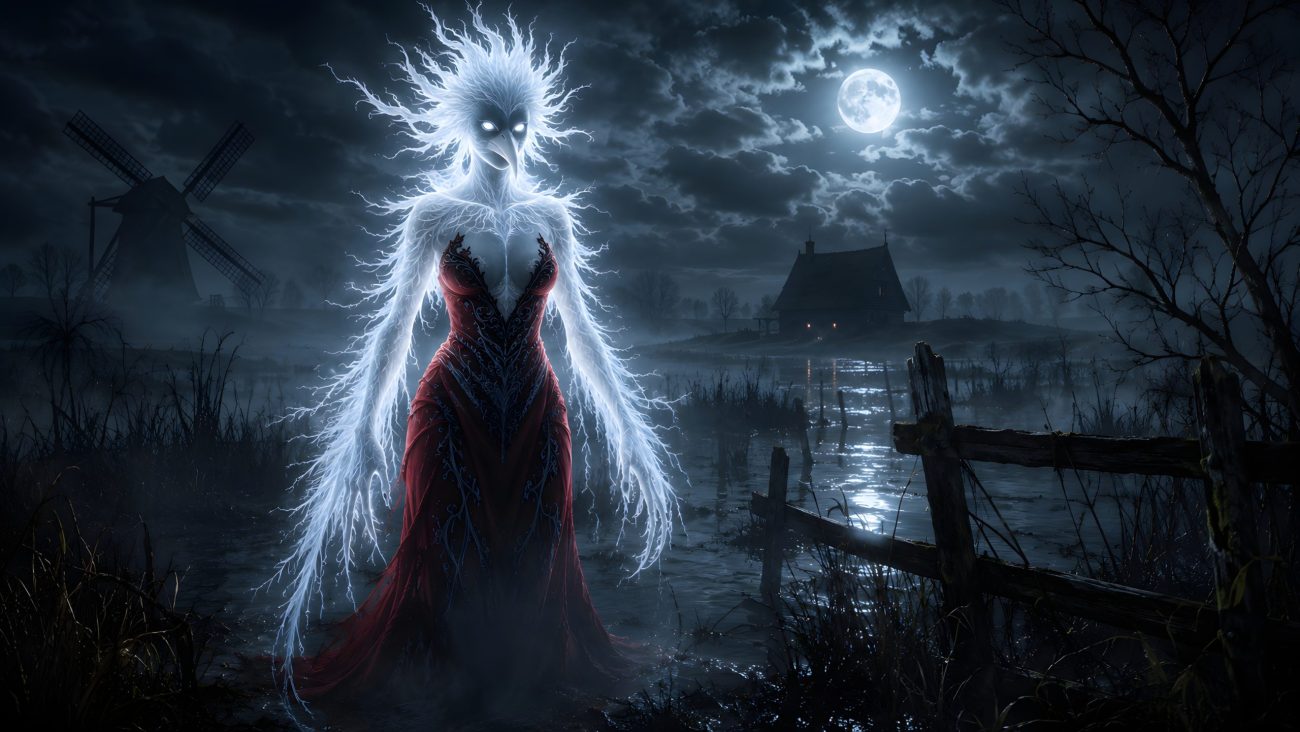
The Readrokje (“Little Red Skirt”) is a ghost said to haunt the area around Akkrum in Friesland. She is described as having a sharp, bird-like face, a white upper garment, and a distinctive red skirt.

She wanders the countryside with long, silent strides, gliding effortlessly over ditches and through beds of reeds. At times, the Readrokje suddenly rushes straight toward a lone traveler walking late at night, frightening them so badly that they flee in terror.


Sources

Abe van der Veen. (2014, July 8). Van aardmannetje tot zwarte juffer: Een lijst van Nederlandse en Vlaamse elfen en geesten. Abe de Verteller. Retrieved June 29, 2026, from https://abedeverteller.nl/van-aardmannetje-tot-zwarte-juffer-een-lijst-van-nederlandse-en-vlaamse-elfen-en-geesten/


Flying Dutchman

Tradition / Region: Dutch Mythology
Alternative names: De Vliegende Hollander
Category: Ghost, Object


The Myth

The Flying Dutchman is a legendary ghost ship condemned to sail the seas for all eternity, never able to enter port or find rest. Surrounded by an eerie supernatural glow, it appears during violent storms or in heavy mist, serving as one of the most feared omens in maritime folklore. Sailors believed that seeing the phantom vessel foretold disaster, shipwreck, or death.

According to the most famous version of the legend, the ship was commanded by the Dutch captain Hendrick van der Decken, who attempted to round the Cape of Good Hope during a fierce storm. When urged to seek shelter, the stubborn captain swore that he would round the cape even if it took until the Day of Judgment. For his blasphemous oath and defiance of Heaven, he and his crew were cursed to wander the oceans forever.

Other traditions claim the crew had committed terrible crimes such as piracy, murder, or even participating in the early slave trade, and that their eternal voyage was divine punishment for these sins.

The ghost ship is said to appear suddenly out of storms with blood-red or ghostly white light illuminating its sails. It moves without regard for wind or current and may vanish as quickly as it appears. Some witnesses claimed it could pass directly through other ships without collision.

One of its most infamous traits is attempting to deliver letters addressed to people who died long ago. Sailors warned that accepting these messages would bring terrible misfortune or death.

Numerous sightings have been reported since the eighteenth century. Perhaps the most famous occurred in 1881, when the future King George V and several crew members aboard HMS Bacchante reported seeing a glowing phantom ship. Later that same day, one of the sailors who witnessed the apparition fell to his death, reinforcing the Flying Dutchman’s reputation as a harbinger of doom.

The Flying Dutchman remains one of the world’s most enduring ghost-ship legends, symbolizing eternal punishment, doomed ambition, and the unforgiving power of the sea.


Sources

Wikipedia contributors. (n.d.). Flying Dutchman. In Wikipedia. Retrieved June 27, 2026, from https://en.wikipedia.org/wiki/Flying_Dutchman

Kladdegat

Tradition / Region: Dutch Mythology
Alternate Names: Spookhond van Hattem
Category: Dog, Ghost


The Myth

Kladdegat was the feared ghost dog of the town of Hattem.

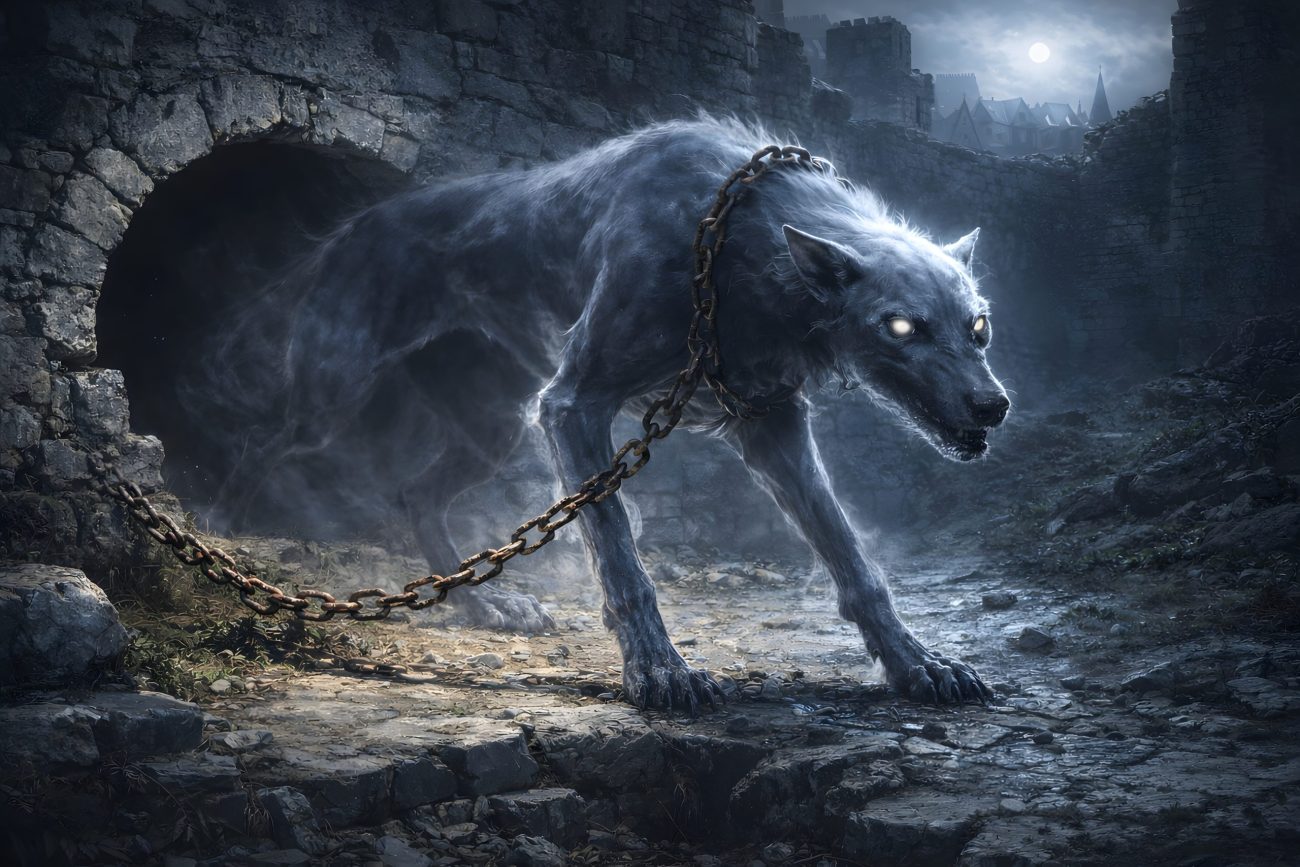
For generations, townsfolk claimed to hear its howling at night. According to tradition, the creature was chained in the cellars of the Spookhuys, a building connected to the now-vanished castle known as the Dikke Tinne. Other versions say it lived in a hole in the city wall.

People believed that anyone who ventured outside the town walls at night risked being seized by the beast and dragged into its lair, where victims were kept captive. Because of this, many in Hattem were afraid to leave their homes after dark.

At last, a brave man decided to confront the creature. He captured the dog in a net, forced it into the hole in the wall, and sealed the opening with masonry. From that time onward, the howling ceased, and nothing more was heard of Kladdegat.

Thus the creature lived on in local memory as a chained phantom hound — a terror of the night that once guarded the ruins beneath Hattem.


Gallery


Sources

Abe de Verteller. (n.d.). Van aardmannetje tot zwarte juffer: Een lijst van Nederlandse en Vlaamse elfen en geesten. From https://abedeverteller.nl/van-aardmannetje-tot-zwarte-juffer-een-lijst-van-nederlandse-en-vlaamse-elfen-en-geesten/


Interpretive Lenses

Religious Readings
  • Christian Ascetic Deep Dive
Philosophical Readings
  • Nietzschean Deep Dive
Psychological Readings
  • Jungian Deep Dive
Esoteric Deep Dive
  • Hermetic Deep Dive
Political / Social Readings
  • Marxist Deep Dive

Tienuurshond

Tradition / Region: Dutch Mythology, Belgian Mythology
Alternate Names: Twaalfuurshond, Negenuurshond, Tienurenhond
Category: Dog, Ghost


The Myth

In parts of Utrecht and the region around Antwerp, people once spoke of a spectral animal known as the Tienuurshond.

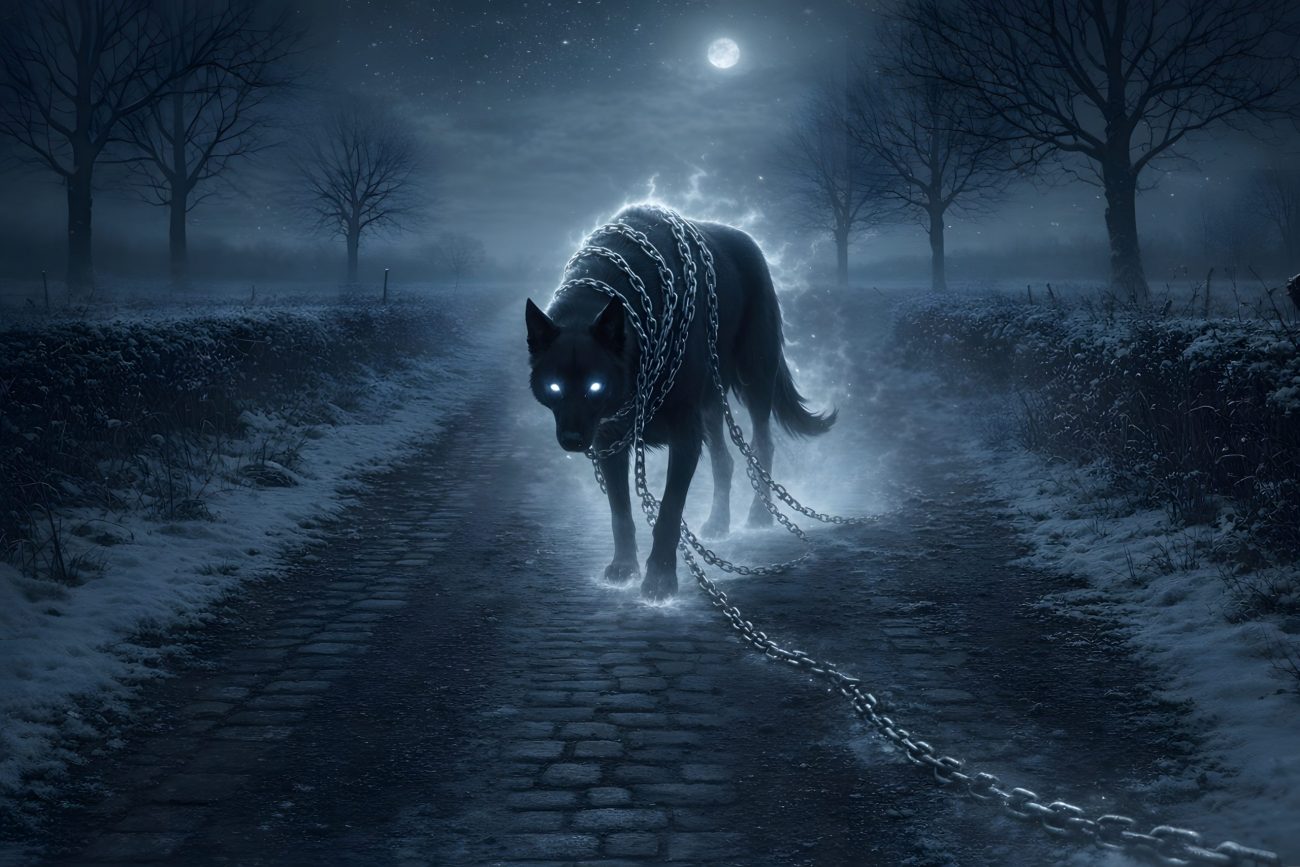
He was said to appear on lonely roads during winter evenings. At exactly the same hour each night — most often at ten o’clock — a large black dog would come into view ahead of a traveler. Around its body hung chains that rattled as it moved, their sound echoing through the cold darkness.

The creature did not usually attack. Instead, it walked in front of the traveler, leading the way along the road as though guiding them through the night. It remained just out of reach, always ahead, never allowing itself to be caught.

Because it appeared at a fixed hour, people gave it its name: the Ten-O’Clock Dog. In some places, where it was believed to appear at other times, it was known as the Nine-O’Clock Dog or the Twelve-O’Clock Dog instead.

Thus the Tienuurshond was remembered as a chained black hound of the winter roads, a ghostly figure that emerged at the appointed hour and walked before the lonely traveler until it vanished again into the night.


Sources

Abe de Verteller. (n.d.). Van aardmannetje tot zwarte juffer: Een lijst van Nederlandse en Vlaamse elfen en geesten. From https://abedeverteller.nl/van-aardmannetje-tot-zwarte-juffer-een-lijst-van-nederlandse-en-vlaamse-elfen-en-geesten/


Antsje mei it Tsjil

Tradition / Region: Dutch Mythology
Alternate Names: Antje met het Wiel
Category: Ghost


The Myth

Antsje mei it Tsjil is a spirit of the rye fields, feared as a child-snatching presence that lurks among tall grain. She is said to dwell within the fields themselves, unseen but never silent, bound to the growing rye and the dangers it hides.

Children were warned never to wander through ripe rye fields, for Antsje waits there. Those who stray too far are seized, crushed, and devoured, ground down as though by a mill. No trace is left behind, only flattened stalks and silence.

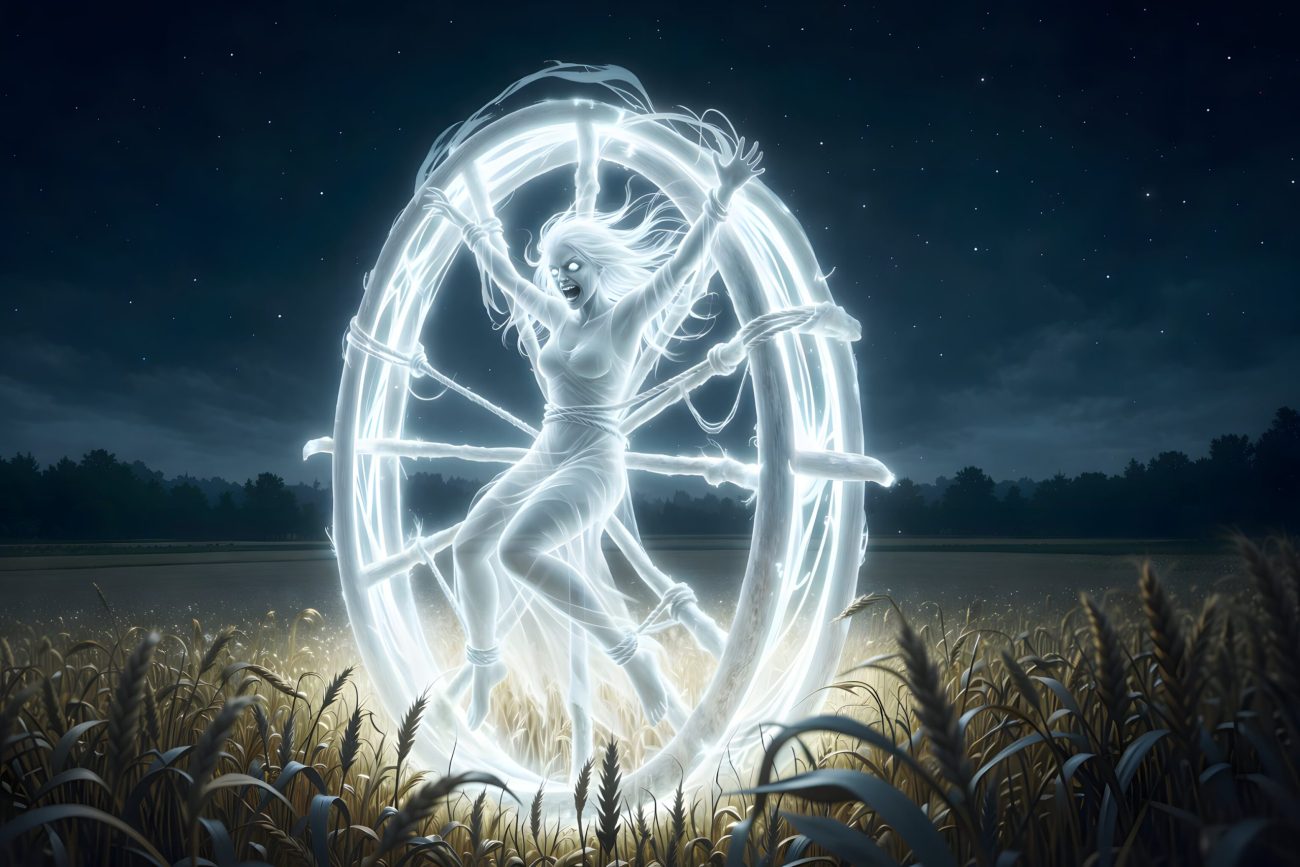
Antsje moves upon a wheel, rolling endlessly through the fields. Though she cannot be seen, her approach is always announced. Before she arrives, a soft rustling passes through the rye—not the sound of wind, but something heavier, deliberate, circling closer and closer.

Those who hear the sound know to flee at once. To remain is to risk being caught in her turning path, drawn into the grain and destroyed. Adults say the fields themselves seem to close behind her, hiding her passage and concealing her victims.

Antsje mei it Tsjil stands as a warning spirit, embodying the dangers of the harvest fields and the boundary between safety and wilderness. She reminds all who hear the rye whisper that not every rustle belongs to the wind, and that some fields are alive with hunger.


Sources

Abe de Verteller. (2014). Van aardmannetje tot zwarte juffer: Een lijst van Nederlandse en Vlaamse elfen en geesten. In AbeDeVerteller.nl, from https://abedeverteller.nl/van-aardmannetje-tot-zwarte-juffer-een-lijst-van-nederlandse-en-vlaamse-elfen-en-geesten/