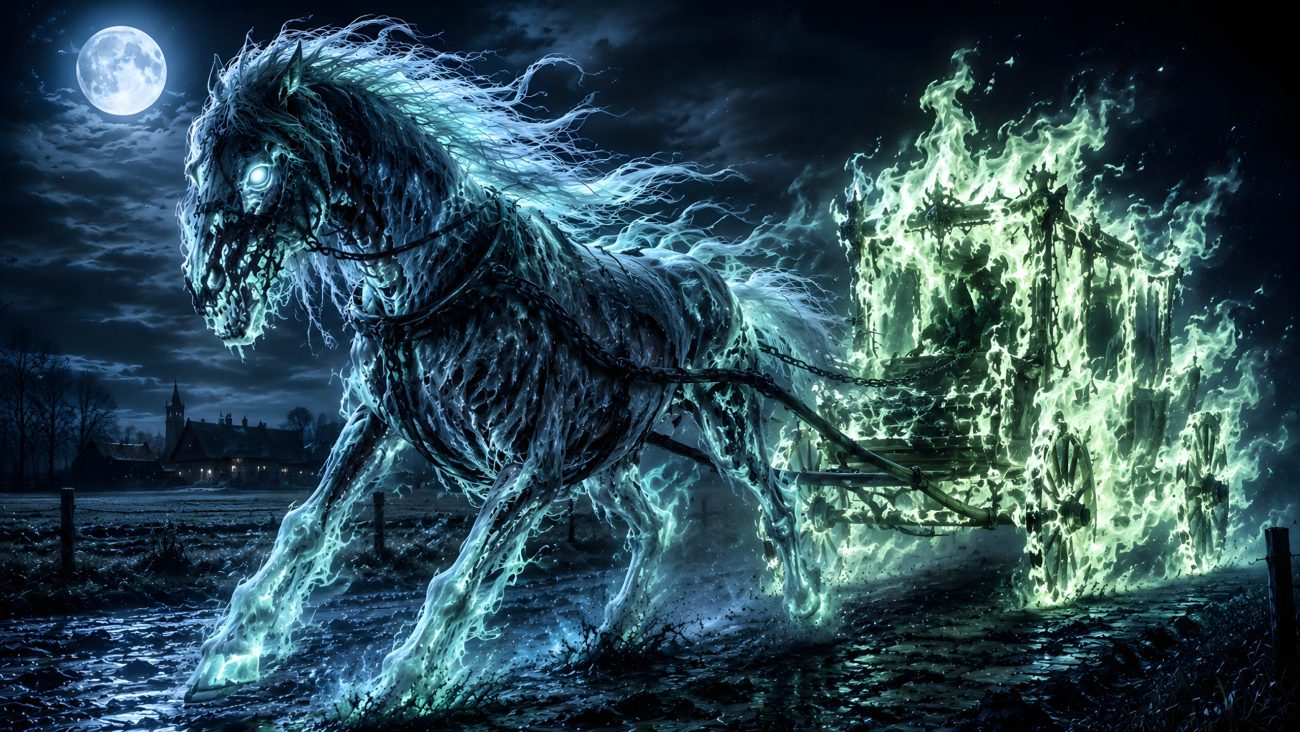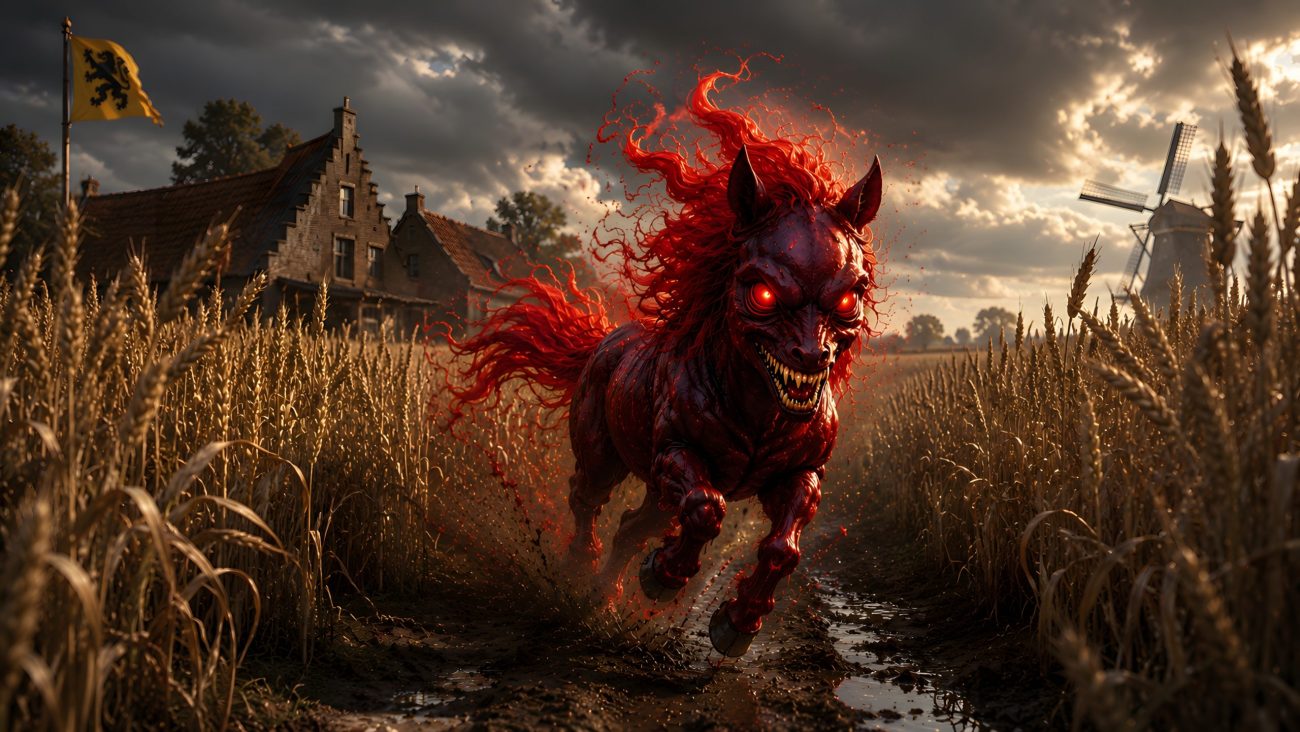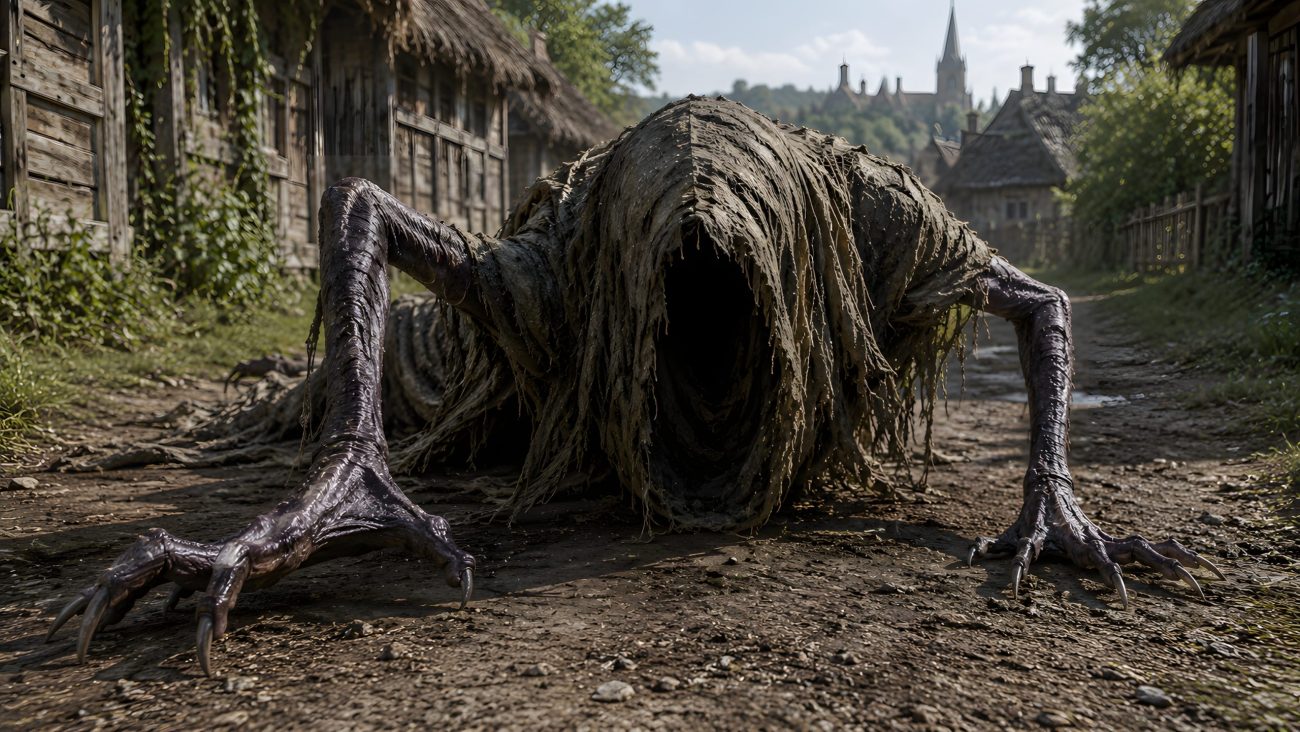
Cat Witch of Heist op den Berg

Tradition / Region: Belgian Mythology
Alternate Names:
Category: Cat, Witch


The Myth

During the time of Napoleon I, a Belgian soldier was returning home from war, passing through a Prussian village.

As he walked through the town, he noticed a woman sitting outside her house. She was smoking a pipe, but something about her seemed wrong—on her backside there was a dark, unnatural stain. The soldier immediately suspected that she was a witch.

Without hesitation, he took his rifle from his shoulder, loaded it with a consecrated bullet, and fired—just grazing her.

He then continued his journey back to Belgium, where he was required to stay for several days.

There, he encountered a woman who bore strange signs: she had a black patch at the back of her skirt and a wound on her nose that refused to heal. The injury lingered unnaturally, as if it could not recover.

It became clear that this was the same being he had shot before.

The wound remained open because it had been inflicted by a consecrated bullet—something believed to harm witches in a way that could not be undone.


Sources

de Cock, A. (1921). Vlaamsche sagen uit den volksmond. In Amsterdam: Maatschappij voor goede en goedkoope lectuur, from https://www.dbnl.org/tekst/cock001vlaa01_01/colofon.php p. 37.


Reus te Hammen

Tradition / Region: Belgian Mythology
Alternate Names: Giant of Hamme
Category: Giant


The Myth

The Reus te Hammen refers to a legendary giant or giants associated with the town of Hamme in Flanders. The most tangible element of the legend is a massive bone kept in the local church, believed by the people to be the thigh bone of a giant.

According to tradition, this enormous bone was pulled from the river Durme long ago and preserved in the church, where it came to be treated almost like a sacred relic. Its unusual size reinforced the belief that giants once lived in the region.

Older accounts speak of two giants who lived on opposite sides of the river. They argued over who was taller and went to prove their size by reaching the roof of a church under construction, each able to place stones without the need for scaffolding.

In other versions, there were three giants who built a church in Hamme themselves, their height allowing them to work directly at roof level. One of them was said to cross the river simply by walking through it, unaffected by its depth.

Local traditions also preserve traces of their presence in the landscape. Certain paths and features, such as “giants’ roads,” were believed to mark where they once moved, and these places were treated with caution and respect.

The giant of Hamme was not just a distant myth but a figure tied to physical evidence, local geography, and enduring popular belief, linking the land, the people, and the memory of beings of immense size who once walked there.


Sources

de Cock, A. (1921). Vlaamsche sagen uit den volksmond. In Amsterdam: Maatschappij voor goede en goedkoope lectuur p. 154.


Tienuurshond

Tradition / Region: Dutch Mythology, Belgian Mythology
Alternate Names: Twaalfuurshond, Negenuurshond, Tienurenhond
Category: Dog, Ghost


The Myth

In parts of Utrecht and the region around Antwerp, people once spoke of a spectral animal known as the Tienuurshond.

He was said to appear on lonely roads during winter evenings. At exactly the same hour each night — most often at ten o’clock — a large black dog would come into view ahead of a traveler. Around its body hung chains that rattled as it moved, their sound echoing through the cold darkness.

The creature did not usually attack. Instead, it walked in front of the traveler, leading the way along the road as though guiding them through the night. It remained just out of reach, always ahead, never allowing itself to be caught.

Because it appeared at a fixed hour, people gave it its name: the Ten-O’Clock Dog. In some places, where it was believed to appear at other times, it was known as the Nine-O’Clock Dog or the Twelve-O’Clock Dog instead.

Thus the Tienuurshond was remembered as a chained black hound of the winter roads, a ghostly figure that emerged at the appointed hour and walked before the lonely traveler until it vanished again into the night.


Sources

Abe de Verteller. (n.d.). Van aardmannetje tot zwarte juffer: Een lijst van Nederlandse en Vlaamse elfen en geesten. From https://abedeverteller.nl/van-aardmannetje-tot-zwarte-juffer-een-lijst-van-nederlandse-en-vlaamse-elfen-en-geesten/
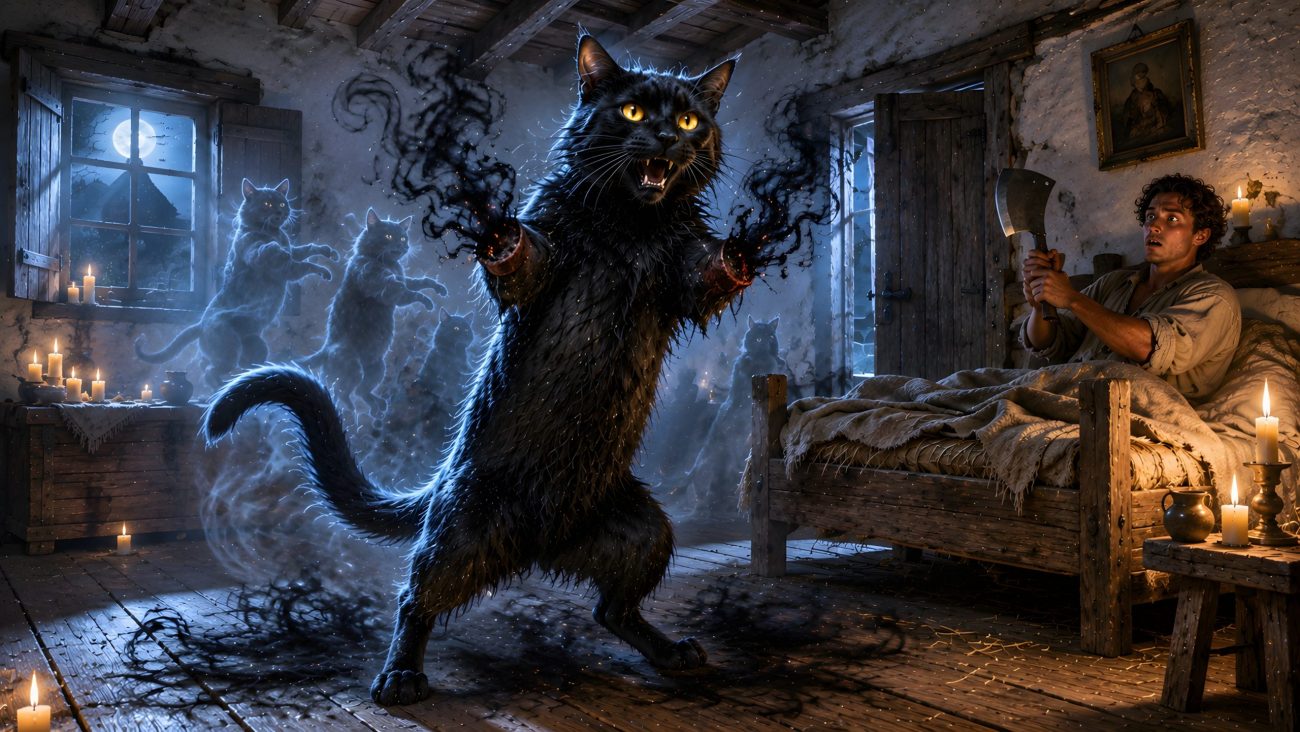
Hus

Tradition / Region: Belgian Mythology
Alternate Names: Alvervrouwen, wives of the alvermannekes
Category: Gnome


The Myth

In the heaths around Leuven and Aarschot lived the Hussen, the female counterparts of the alvermannekes. They were small, secretive beings who survived not by honest labor but by raiding and stealing, slipping unseen into human spaces and vanishing again with what they needed.

The Hussen lived apart from people, bound by their own harsh customs. Among them was a grim belief about age and renewal. When a Hus grew too old to keep up with the others, she was buried alive by her own kind. This was not done in cruelty alone, but as part of a strange promise.

Before the earth was closed over her, they placed beside her a small bottle of beer or a loaf of bread, and spoke these words:
“Vertrek, oud moederke, ge zult in jongheid wederkeren.”
“Depart, old mother, you will return in youth.”

It was believed that death beneath the soil would restore her, allowing her to be reborn young, ready to return to the world of the Hussen once more.

Thus the Hussen were remembered as beings of theft and survival, ruled by their own laws—laws in which age was not endured, but buried, and where the earth itself was the gateway back to youth.


Sources

Abe de Verteller contributors. (n.d.). Van aardmannetje tot zwarte juffer: Een lijst van Nederlandse en Vlaamse elfen en geesten. In Abe de Verteller, from https://abedeverteller.nl/van-aardmannetje-tot-zwarte-juffer-een-lijst-van-nederlandse-en-vlaamse-elfen-en-geesten/

Galgenjong

Tradition / Region: Belgian Mythology
Alternate Names: Galgenaas, Duivelsjongen
Category: Gnome, Demon, Familiar


The Myth

In old Flemish tales there is a sinister little being known as the Galgenjong, a creature bound to bargains and blood. In its smallest form it appears as a tiny black beast, no larger than a pea, with a blood-red mouth. At other times it takes on a clearer shape: a gnome-sized figure, as large as a child’s doll, black-skinned, with shining eyes and a red tongue. In this form it hides itself in a small box or a pouch, waiting for its owner’s command.

Whoever possesses a Galgenjong gains unnatural advantages. Their hands move faster than any other worker’s, their strength exceeds human limits, and luck follows them—especially in games of cards. The creature can see what is yet to come and knows where hidden treasures lie, whispering secrets no ordinary person could uncover.

But its gifts are never free. Each day the Galgenjong must be fed a drop of its owner’s blood. Without this offering it grows restless and dangerous. Though it brings fortune to its master, it spreads misfortune to everyone around them. Neighbors fall into bad luck, accidents multiply, and prosperity withers wherever the creature lingers.

To obtain a Galgenjong, one must commit oneself to darkness. Some say it can be gained by fasting for three days in honor of the Devil. Others claim it comes only through joining a secret and wicked brotherhood. Once acquired, the creature is almost impossible to be rid of. It cannot be dismissed or destroyed by its owner’s will alone. Only if someone else steals it away can its bond be broken.

If the Galgenjong remains with its master until death, it claims its final payment. When the owner dies, the creature carries their soul with it, dragging it down to hell as the last fulfillment of the pact.

Thus the Galgenjong is remembered as a source of power and ruin alike: a tiny servant of immense danger, promising success in life while quietly ensuring damnation in the end.


Sources

Abe de Verteller contributors. (n.d.). Van aardmannetje tot zwarte juffer: Een lijst van Nederlandse en Vlaamse elfen en geesten. In Abe de Verteller, from https://abedeverteller.nl/van-aardmannetje-tot-zwarte-juffer-een-lijst-van-nederlandse-en-vlaamse-elfen-en-geesten/

Antonen

Tradition / Region: Belgian Mythology
Alternate Names:
Category: Gnome


The Myth

In the villages of Ophoven and Molenbeersel, people once spoke of strange little beings known as the Antonen. They were a kind of earth spirit, much like the aardmannetjes, but darker and more secretive. Their skin was said to be black, and they lived hidden away from human sight, close to the ground and the old places of the land.

The Antonen were said to worship a golden calf, which they had buried in a secret place known only to them. There, underground and unseen, they honored it in silence, guarding both the idol and its location with great care.

For a long time they remained near the villages, unseen but present. Then the church bells began to ring the Angelus. The sound of the bells carried across fields and forests, cutting through earth and air alike. At the first ringing, the Antonen fled in terror. The holy sound was unbearable to them, and they abandoned their hidden places, their buried calf, and the land they had once inhabited.

After that, they were never seen again. Yet people say that wherever the Antonen once lived, the ground still remembers them—and that somewhere beneath the earth, the golden calf may still lie buried, waiting in silence.


Sources

Abe de Verteller contributors. (n.d.). Van aardmannetje tot zwarte juffer: Een lijst van Nederlandse en Vlaamse elfen en geesten. In Abe de Verteller, from https://abedeverteller.nl/van-aardmannetje-tot-zwarte-juffer-een-lijst-van-nederlandse-en-vlaamse-elfen-en-geesten/

Annequin

Tradition / Region: French Mythology, Belgian Mythology
Alternate Names: Hannequet; Hannequin; Harliquin
Category: Fairy, Goblin, Flame


The Myth

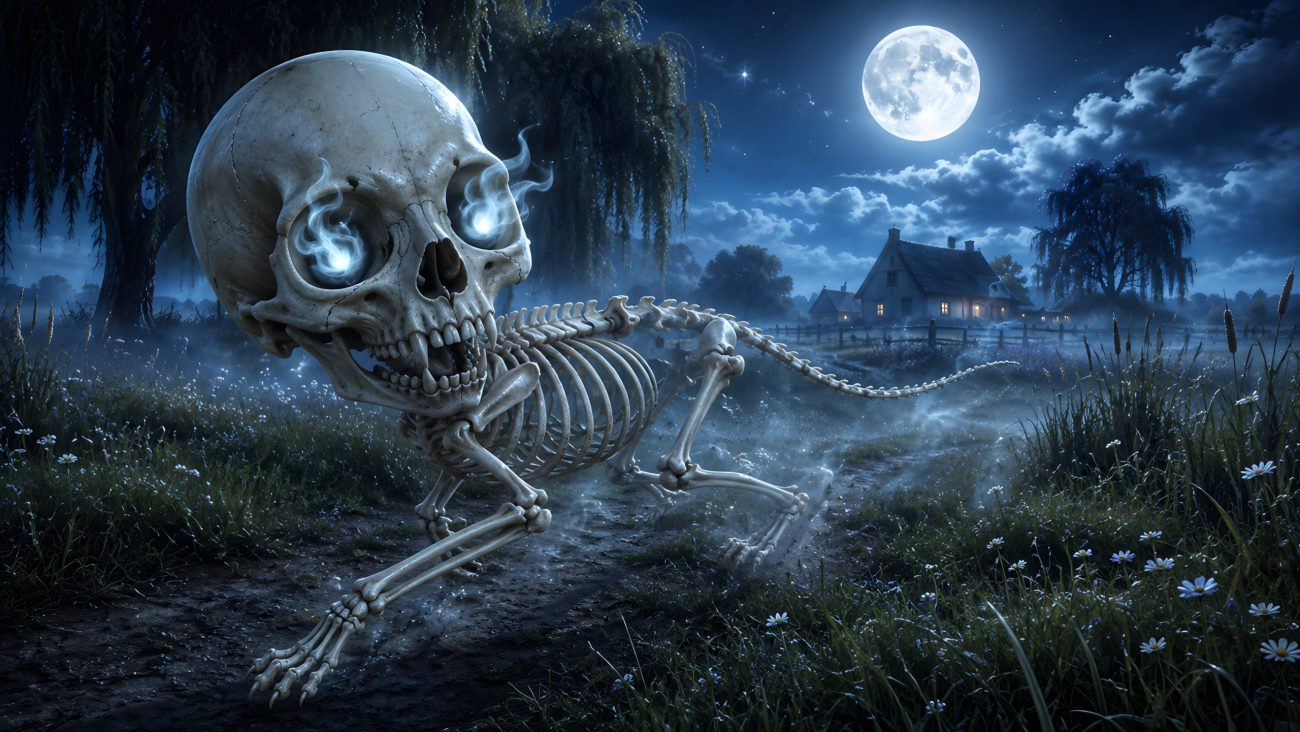
In the folklore of the Ardennes, the annequin is a malevolent fairy creature, often described as a kind of goblin or will-o’-the-wisp. It is known above all for luring humans to their deaths. Those who encounter an annequin are said to be drawn irresistibly toward marshes and wetlands, where they become lost and drown.

The annequins are closely associated with the mesnie Hellequin, the spectral procession that roams the night sky, and through it with the figure later known as Harlequin. Their nature is restless and predatory, bound to movement, noise, and disappearance.

According to tradition, annequins gather in a round dance every Saturday night. On certain nights, they are said to pass above houses, flying through the air while emitting shrill, piercing whistles. Anyone who is surprised by their passage is believed to vanish forever, leaving no trace behind.

The annequins are said to dwell especially in wooded areas, particularly in the forests of Puilly, where their presence is marked by strange sounds, sudden lights, and the dangerous pull toward bogs and swamps. Those who follow these signs are rarely seen again.

In the legends of the Ardennes, the annequin is remembered as a being of deception and disappearance, a nocturnal spirit whose call leads not to wonder, but to death.


Sources

Wikipedia contributors. (n.d.). Annequin (folklore). In Wikipedia, from https://fr.wikipedia.org/wiki/Annequin_(folklore)


Lange Wapper

Tradition / Region: Belgian Mythology
Alternate Names:
Category: Demon


The Myth

Lange Wapper is a water spirit said to dwell in the black mud of the canals and moats of Antwerp. He hides beneath the water and emerges to wander the city and its outskirts, playing cruel and often dangerous tricks on humans.

According to a legend from Wilrijk dating to the sixteenth century, Lange Wapper was once an ordinary boy. One day, he saved an old woman—revealed to be a witch—from drowning. As a reward, she granted him the power of shapeshifting. With this gift, he could alter his size at will, becoming so enormous that he could leap from one city to another in a single bound. From this ability, he gained his name, meaning “Long Strider.”

Lange Wapper can take many forms. He appears as a cat, a dog, a man, a child, or even as an ordinary object such as a white napkin. He may grow immensely tall, with long legs that allow him to peer into the windows of houses, or shrink himself to a tiny size. He can even duplicate himself. In one guise, he becomes a boy who plays with other children until he provokes a violent quarrel. In another, he transforms into a crying infant; when a young mother, moved by pity, offers him her breast, he suddenly resumes his true form as a large man and mocks her cruelly.

Many of his pranks ended in death. He was said to delay servants sent to fetch a midwife, causing newborns to die before baptism. He strangled drunkards by simply twisting their necks. Because of these acts, people came to regard Lange Wapper as a devil rather than a mere spirit.

When his mischief was complete, Lange Wapper would announce himself with a horrific, unmistakable laugh, so that people knew who had tormented them. According to tradition, his presence in Antwerp ended only after statues of the Virgin Mary were placed on street corners throughout the city. After this, Lange Wapper fled Antwerp and was seen no more.


Alvina

Tradition / Region: Belgian Mythology
Alternate Names:
Category: Spirit


The Myth

Alvina is a spirit of the air, known to wander endlessly through the sky. When the wind howls and roars, people say, “Listen! Alvina is crying.” Her presence is heard rather than seen, carried on storms and restless gusts that sweep across the land.

According to the legend, Alvina was once a king’s daughter. Against her parents’ wishes, she married the wrong man. For this act, her parents cursed her to wander forever, stripped of rest or peace. From that moment on, she was bound to the winds, condemned to eternal roaming.

Her name has led some to believe that she was the daughter of an elven king, linking her to an otherworldly royal lineage rather than a purely human one. Whether princess or elf-child, Alvina’s fate remained the same: to drift endlessly through the air, her sorrow echoing whenever the wind rises.

Thus, Alvina is remembered as a mournful air spirit, her lament still heard whenever the wind cries across West Flanders.


Source

Abe de Verteller. (2014). Van aardmannetje tot zwarte juffer: Een lijst van Nederlandse en Vlaamse elfen en geesten. In AbeDeVerteller.nl, from https://abedeverteller.nl/van-aardmannetje-tot-zwarte-juffer-een-lijst-van-nederlandse-en-vlaamse-elfen-en-geesten/

Couzzietti

Tradition / Region: Belgian Mythology, French Mythology
Alternate Names:
Category: Dwarf


The Myth

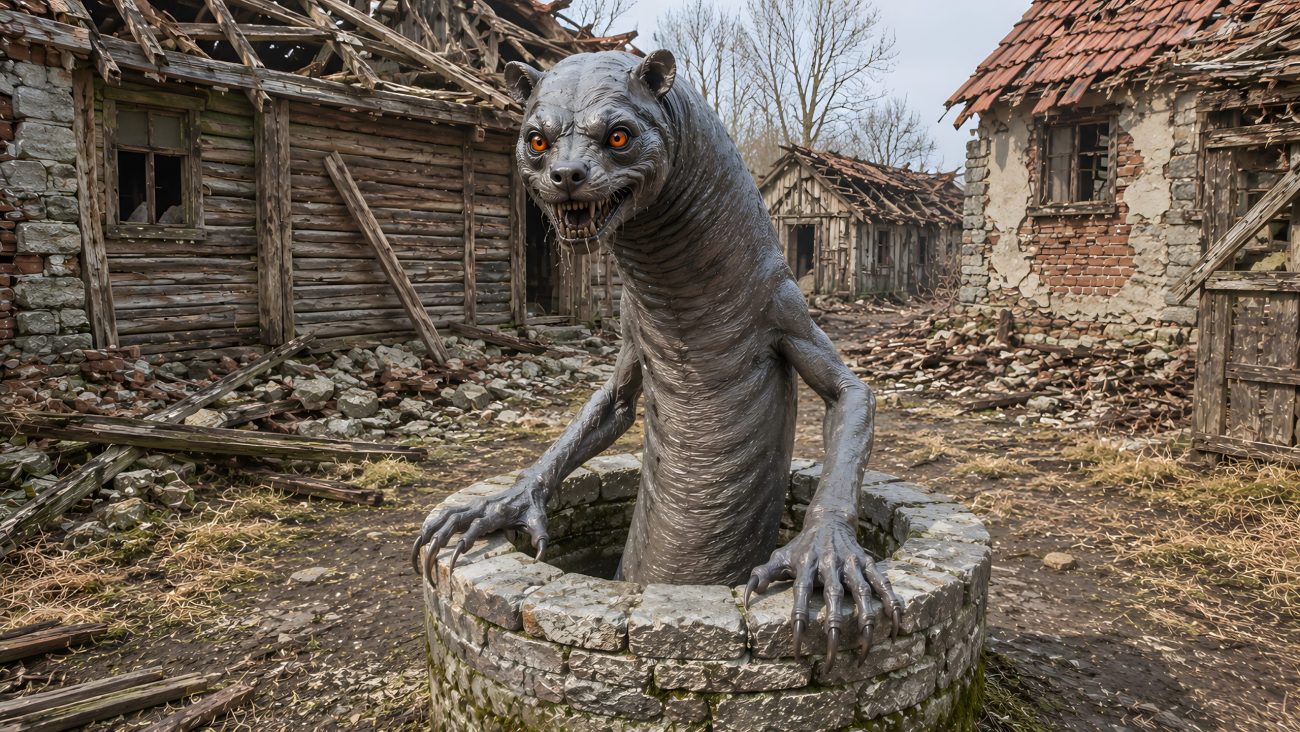
The Couzzietti is a forest-dwelling dwarf from the folklore of the Ardennes. He is said to haunt wooded areas near streams and washing places, where washerwomen come to clean their linen.

According to tradition, the Couzzietti sets traps to steal the freshly washed cloth. His presence is announced by loud cries echoing through the forest, shouting, “O Couzzietti, O Mould of Coutteni!” Those who hear the shouts know he is near.

The Couzzietti is remembered as a mischievous and thieving forest dwarf, whose tricks target washerwomen and whose voice betrays his hiding place among the trees.