Heksenkat van Kessel

Tradition / Region: Belgian Mythology
Alternative names: Witch Cat of Kessel
Category: Cat


The Myth

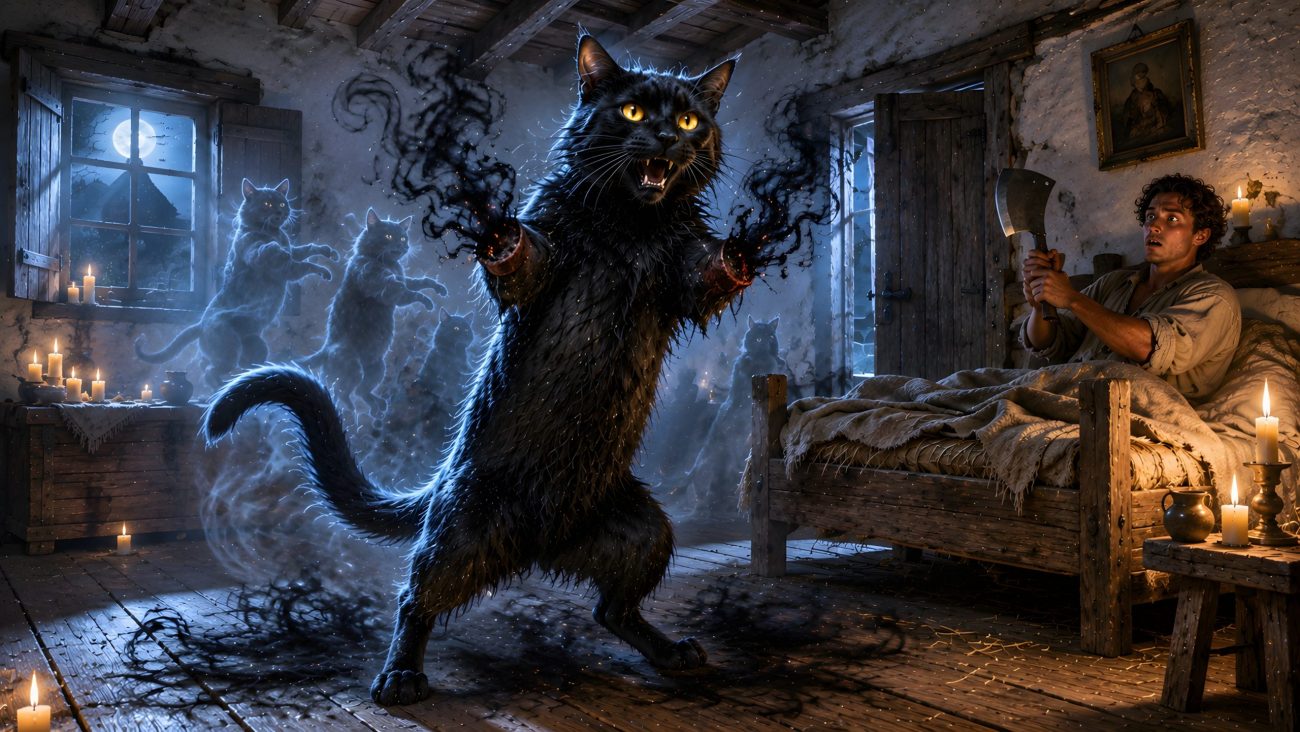
The Heksenkat appears as one of a group of ordinary-looking cats that secretly gather at night to perform eerie round dances. In reality, these cats are witches in animal form, and injuries inflicted upon them carry over to their human bodies.

According to the legend, a farmer in Kessel could never keep a farmhand for more than a day or two. Every servant abruptly left without explaining why. Eventually, the farmer decided to hire no one else, but one day a respectable young man insisted so strongly on working for him that the farmer reluctantly agreed.

On his first night, the servant was awakened by the sight of numerous cats dancing in a circle inside his room. Terrified, he remained still and said nothing to the farmer the following morning. Instead, he secretly armed himself with a large chopping knife before going to bed the next evening.

When the dancing cats returned, the servant calmly called out, Here, kitty. One of the cats approached him, and he hurled the blade, severing both of its front legs.

The next morning the farmer was horrified to discover his wife lying in bed covered in blood, both of her arms horribly cut off. The servant immediately gathered his belongings and fled.

Only then did the farmer realize the truth. His wife had been a witch who transformed herself into a cat each night to frighten away every servant, explaining why none of them had ever remained on the farm for long.


Sources

De Cock, Alfons. Vlaamsche sagen uit den volksmond. Amsterdam: Maatschappij voor Goede en Goedkoope Lectuur, 1921, p. 36.
Toverkat

Tradition / Region: Belgian Mythology
Alternative names: Magic Cat, Bewitched Cat
Category: Cat


The Myth

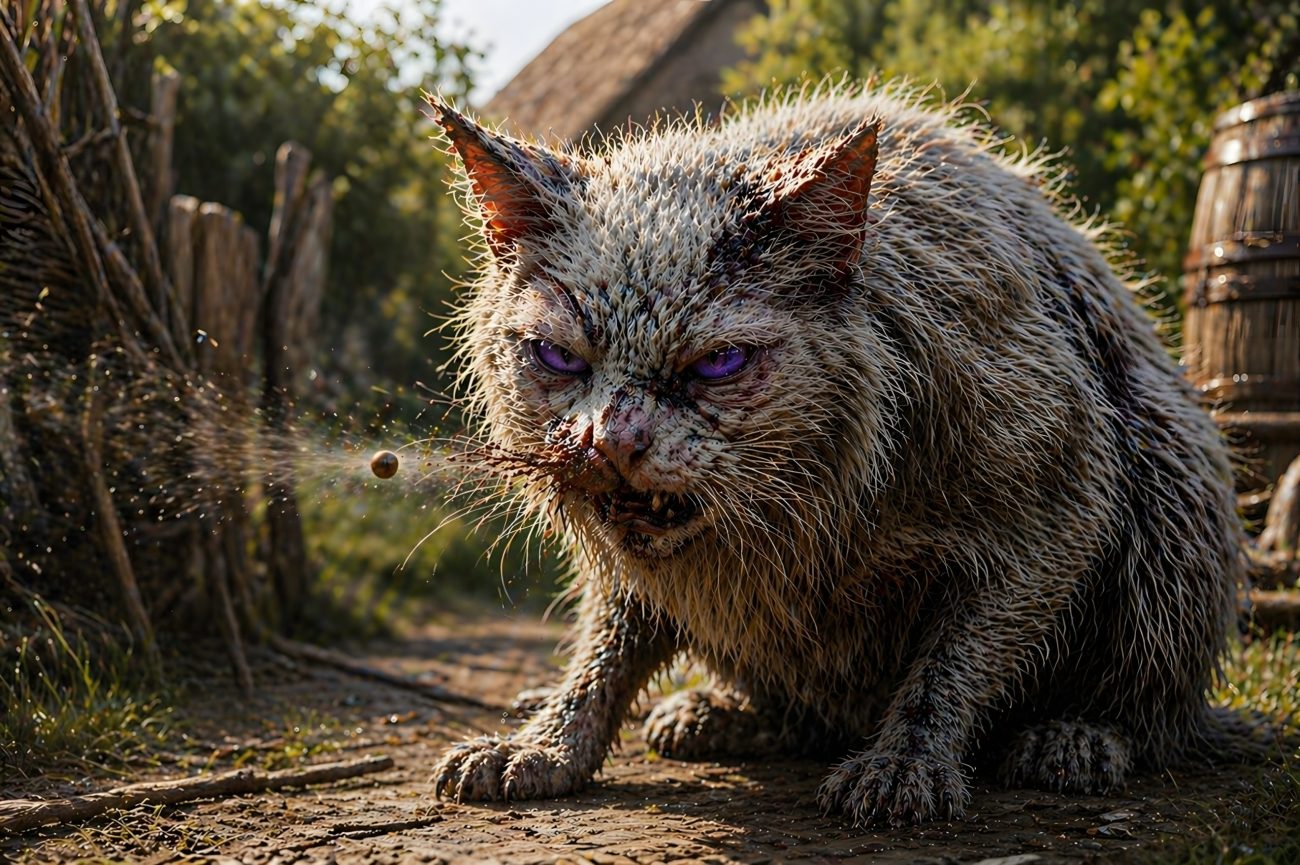
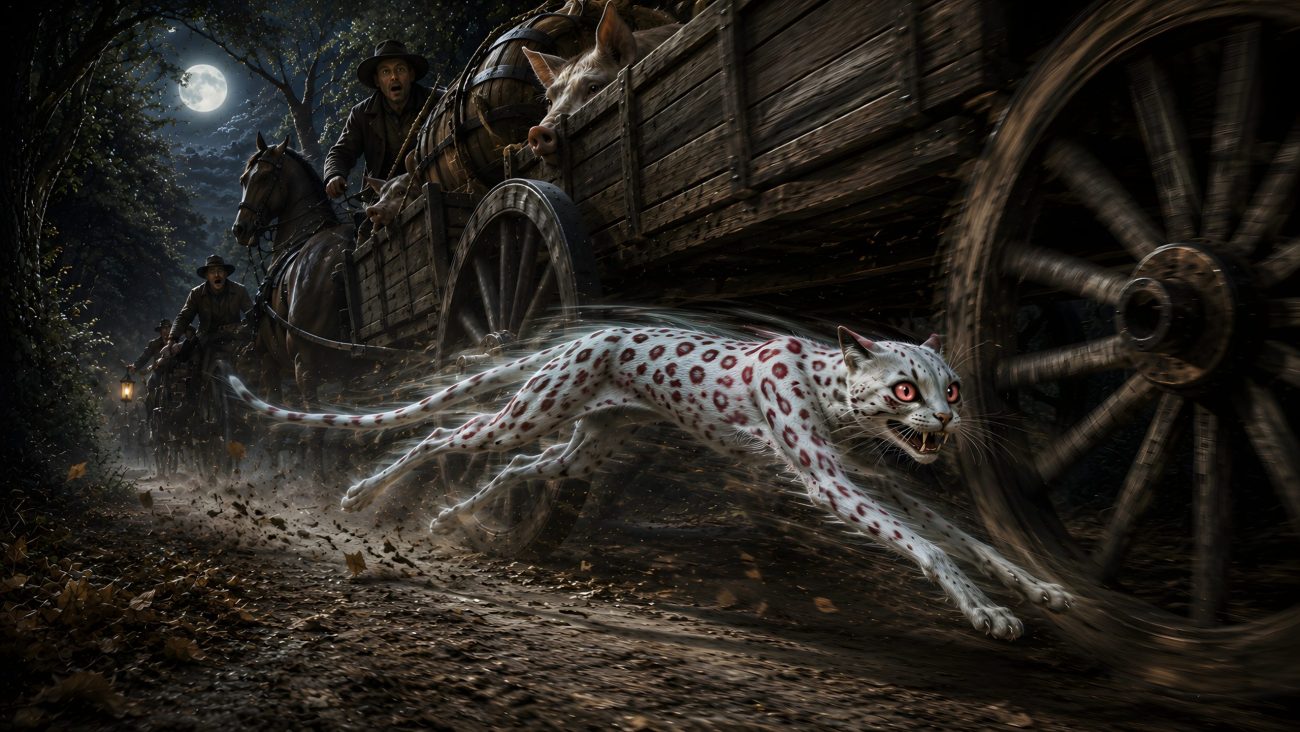
The Toverkat appears as a beautiful spotted cat with uncanny intelligence and supernatural abilities. It can escape any confinement, move with impossible speed, and seems impossible to capture. Rather than directly attacking people, it torments travelers and leads them into fear and confusion.

According to the legend, about fifty years before the story was recorded, three farmers were driving carts loaded with fat pigs to the market in Leuven on a bright September night. As they passed through the Bollo Woods near Tremelo, a beautiful spotted cat suddenly leapt from a thicket. It ran between the farmers’ legs and beneath the carts, meowing in an eerie and unsettling way.

One of the farmers suggested catching the animal. They seized the cat, tied it securely inside a sack, and continued their journey. Yet before they had gone ten paces, the cat was once again running beside them, despite the sack still being tightly fastened.

The strange cat continued to leap effortlessly through the spokes of the moving wagon wheels without suffering any injury, frightening the three men even more. After following them for another hour, they happened to meet a calf dealer on his way to the Leuven market. His cart was pulled by a large dog, and after hearing the farmers’ story, he confidently declared that his dog hated cats and would quickly deal with it.

The dog was released and charged toward the mysterious feline. In an instant, the cat sprang onto the dog’s back, dug its razor-sharp claws deep into its flesh, and clung to it as the terrified dog howled in pain. With the cat still on its back, the animal fled into the forest, disappearing forever.

The dog was never seen again. Left without his beast of burden, the calf dealer was forced to push his cart carrying the live calves all the way to Leuven himself. The tale endured as one of Flanders’ most famous stories of a supernatural or bewitched cat whose powers surpassed both humans and animals.


Sources

De Cock, Alfons. Vlaamsche sagen uit den volksmond. Amsterdam: Maatschappij voor Goede en Goedkoope Lectuur, 1921, p. 40.


Black Cat of Denderleeuw

Tradition / Region: Belgian Mythology
Alternative names: None recorded
Category: Cat


The Myth

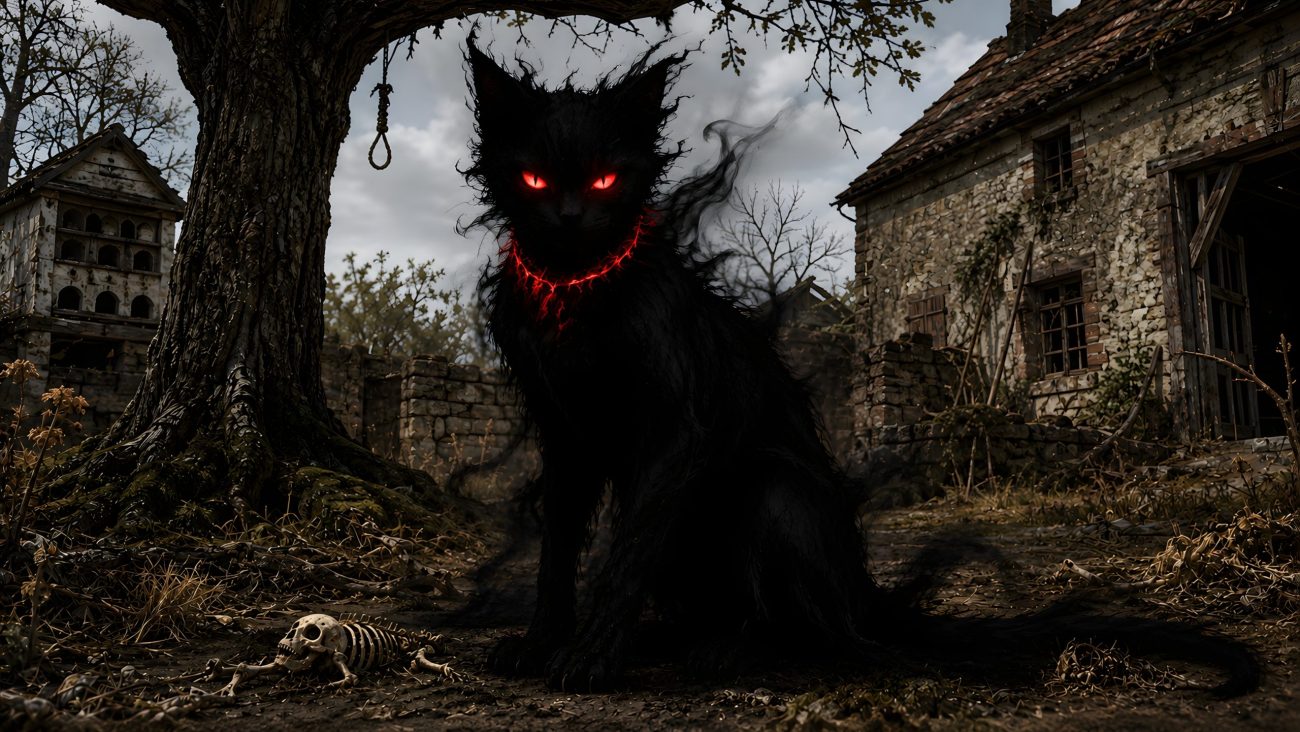
The Black Cat of Denderleeuw appears as an ordinary black cat whose death brings a powerful curse upon those responsible.

According to the legend, a black cat belonging to the Baetens household killed and ate one of their pigeons. Seeking revenge, the family hanged the cat from a tree. From that day onward, a curse fell upon the farm. For the next ten years, no cat could survive there. Every healthy young cat brought into the house soon began to waste away, weakened for no apparent reason, and died after only a short time. The strange succession of deaths was believed to be vengeance for the unjust killing of the black cat.


Sources

De Cock, Alfons. Vlaamsche sagen uit den volksmond. Amsterdam: Maatschappij voor Goede en Goedkoope Lectuur, 1921, p. 40.


Blonde Cats of Denderleeuw

Tradition / Region: Belgian Mythology
Alternative names: Three Blonde Cats
Category: Cat


The Myth

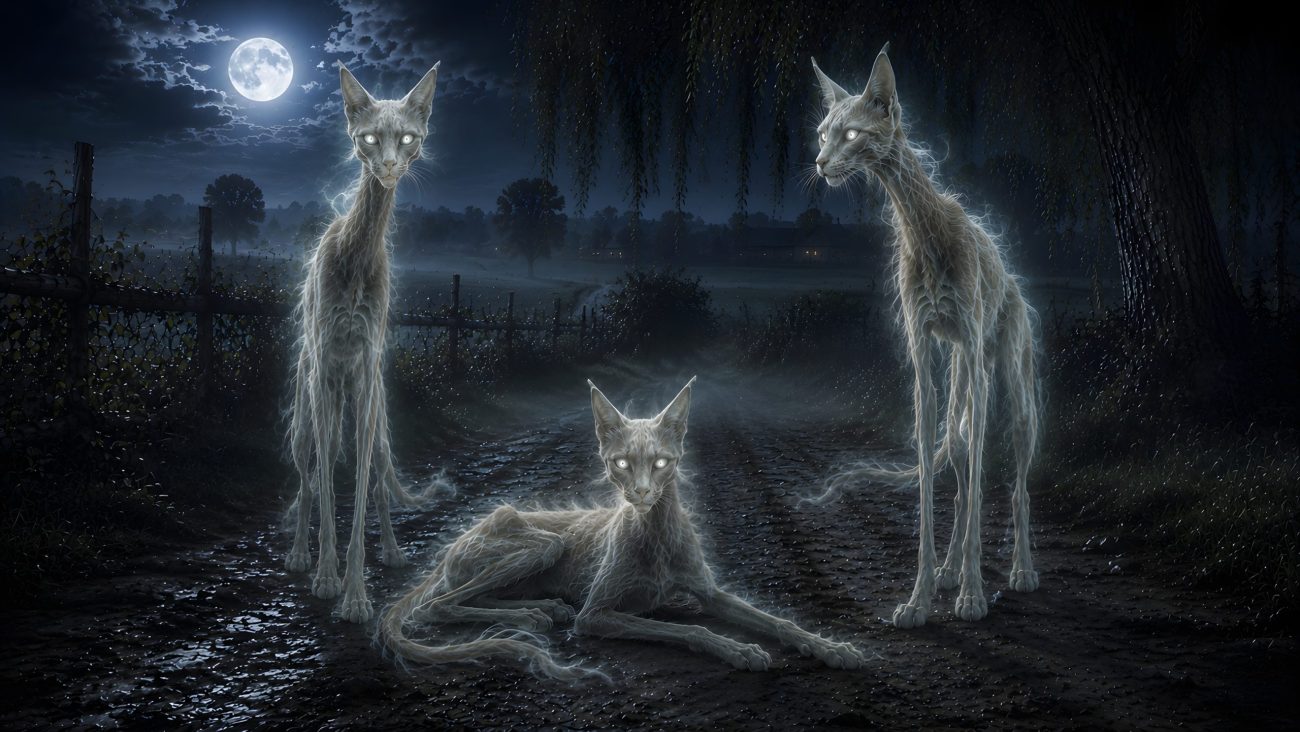
The Blonde Cats of Denderleeuw appear as three pale blonde cats that roam country roads at midnight. Although they resemble ordinary cats, they can speak with human voices and possess the supernatural ability to multiply endlessly, surrounding and overwhelming anyone they choose to follow.

According to the legend, a man named Jan Saeys was walking home around midnight after drinking. Along the road he encountered three blonde cats and jokingly greeted them, asking, Where are you going, beautiful little blonde cats?

To his horror, the cats answered him in human speech, repeating, Jan Saeys asks me, little blonde cat, where are you going? As they walked beside him, they continued repeating the same words over and over.

Meanwhile, the number of cats steadily increased. Three became many, and soon countless blonde cats surrounded him so densely that he could barely move his feet. Terrified, Jan instantly sobered and hurried home as fast as he could. With one final leap he threw himself inside his house and shut the door behind him.

No sooner had he entered than three tremendous knocks struck the door with such force that the entire house shook. The mysterious visitors never entered, but the terrifying encounter remained one of the supernatural cat legends of Denderleeuw.


Sources

De Cock, Alfons. Vlaamsche sagen uit den volksmond. Amsterdam: Maatschappij voor Goede en Goedkoope Lectuur, 1921, p. 40.


Black Cat of Keerbergen

Tradition / Region: Belgian Mythology
Alternative names: None recorded
Category: Cat


The Myth

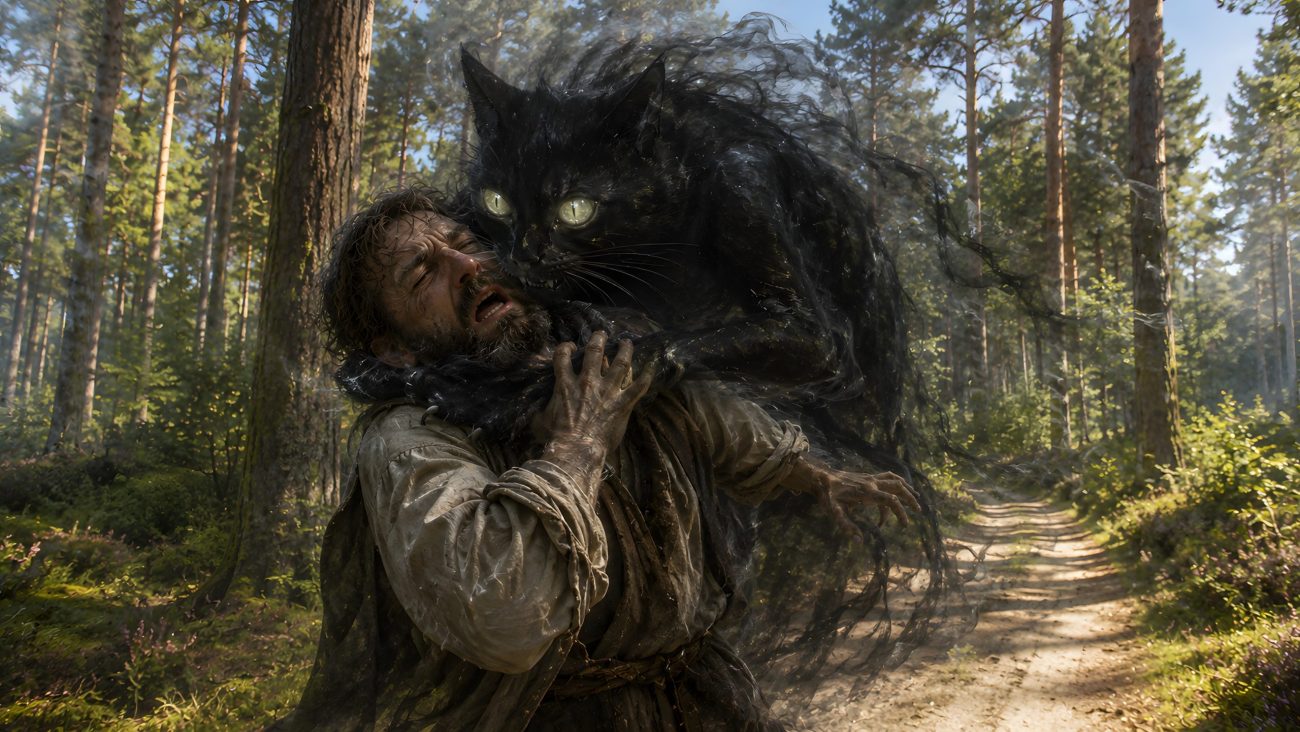
The Black Cat of Keerbergen appears as an ordinary but sinister black cat that suddenly leaps onto the shoulders of lone travelers at night. Once it has attached itself, it cannot be shaken off no matter how hard the victim struggles.

According to the legend, a farm laborer was walking home on a summer evening after working late at a nearby farm. His journey took him past a small pine wood when, without warning, a black cat sprang from one of the trees onto his shoulder. Terrified, he tried desperately to throw it off, shaking and striking at it, but the cat refused to let go.

Almost mad with fear, the man ran the rest of the way home. Only after he reached his house did the cat calmly jump down from his shoulder and disappear without a trace.

The laborer went straight to bed, deeply shaken by the encounter. Three days later, he died. According to the tradition, he had literally been frightened to death by the mysterious black cat.


Sources

De Cock, Alfons. Vlaamsche sagen uit den volksmond. Amsterdam: Maatschappij voor Goede en Goedkoope Lectuur, 1921, p. 40.


White Skull Cat

Tradition / Region: Belgian Mythology
Alternative names: White Cat
Category: Cat, Skeleton


The Myth

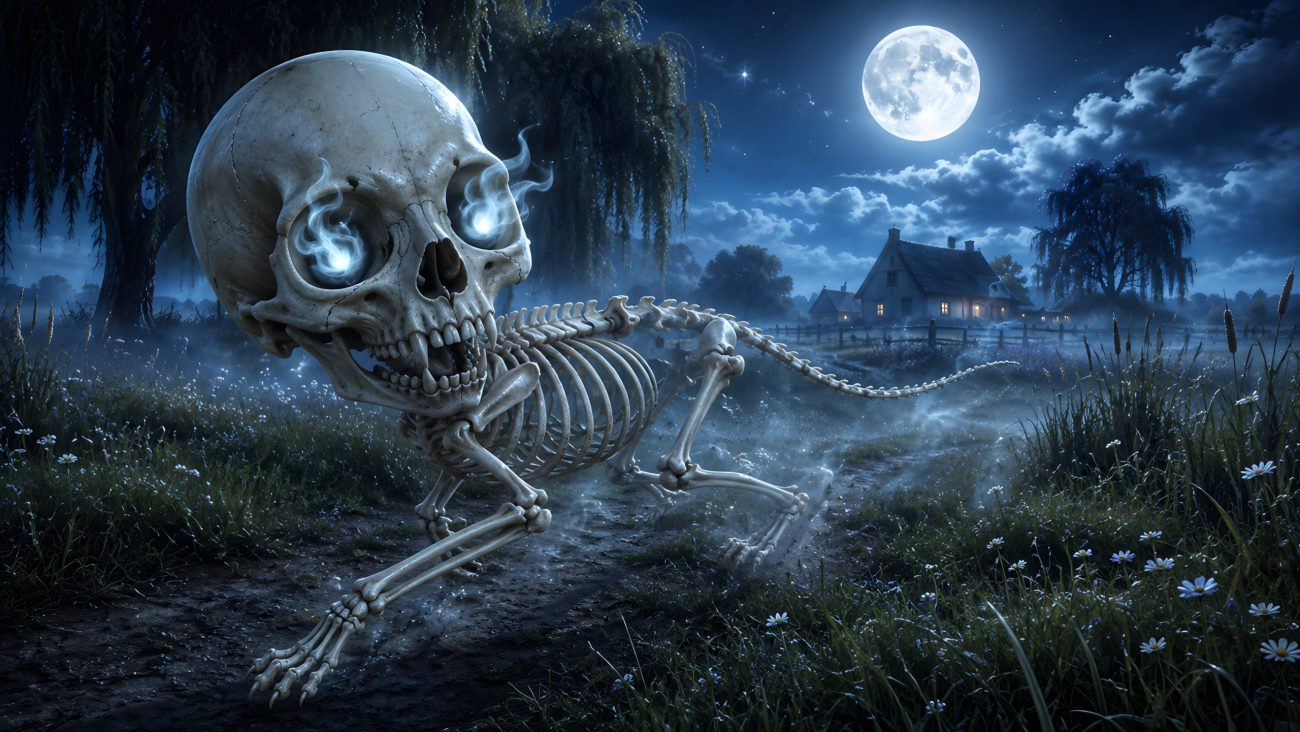
The White Skull Cat appears as a small white cat that can transform into a human skull.

According to the legend, a farmer known as Boerke Jans was walking home late one evening from the village square. Near the Lindo on the Windikeveld, a small white cat began walking ahead of him. He picked it up and carried it home inside his coat. Once home, he locked the cat inside his wardrobe for the night.

The following morning, when he opened the wardrobe, the cat had transformed into a human skull.

Terrified, Boerke Jans waited until midnight before carrying the skull back to the place where he had found the cat. As soon as he laid it on the ground, the skull instantly changed back into the white cat, which ran off across the fields and disappeared into the darkness.

The fright affected Boerke Jans so deeply that, according to the legend, he gradually wasted away from fear.


Sources

De Cock, Alfons. Vlaamsche sagen uit den volksmond. Amsterdam: Maatschappij voor Goede en Goedkoope Lectuur, 1921, p. 49.


Cat Witch of Heist op den Berg

Tradition / Region: Belgian Mythology
Alternate Names:
Category: Cat, Witch


The Myth

During the time of Napoleon I, a Belgian soldier was returning home from war, passing through a Prussian village.

As he walked through the town, he noticed a woman sitting outside her house. She was smoking a pipe, but something about her seemed wrong—on her backside there was a dark, unnatural stain. The soldier immediately suspected that she was a witch.

Without hesitation, he took his rifle from his shoulder, loaded it with a consecrated bullet, and fired—just grazing her.

He then continued his journey back to Belgium, where he was required to stay for several days.

There, he encountered a woman who bore strange signs: she had a black patch at the back of her skirt and a wound on her nose that refused to heal. The injury lingered unnaturally, as if it could not recover.

It became clear that this was the same being he had shot before.

The wound remained open because it had been inflicted by a consecrated bullet—something believed to harm witches in a way that could not be undone.


Sources

de Cock, A. (1921). Vlaamsche sagen uit den volksmond. In Amsterdam: Maatschappij voor goede en goedkoope lectuur, from https://www.dbnl.org/tekst/cock001vlaa01_01/colofon.php p. 37.