Tante Arie

Tradition: French Mythology
Alternative Names: Tainte Airie, Tante Airie
Category: Fairy


The Myth

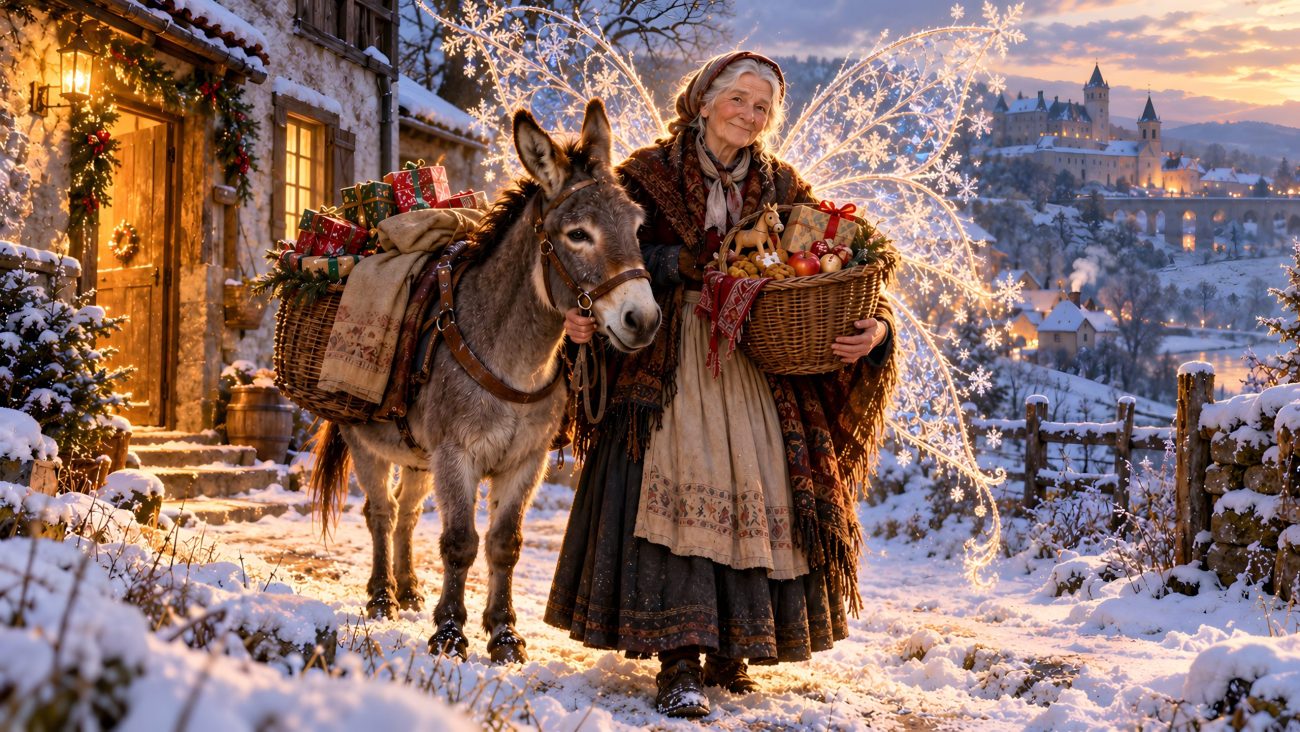
Tante Arie is a benevolent fairy who protects the people of the Montbéliard region. She is traditionally imagined as a kindly woman dressed as a peasant and accompanied by her donkey Marion, which carries Christmas gifts for children. At Christmas she visits children, whether they have been good or bad, taking the place of Santa Claus and Saint Nicholas in the old traditions of the County of Montbéliard.

According to local legend, Tante Arie is the reincarnation of the beloved Countess Henriette of Montbéliard. Henriette was remembered as a generous and protective ruler who continued to govern Montbéliard after the death of her husband and became particularly known for helping deserving inhabitants of the county during the final years of her life. After her death, her kindness was transformed in popular tradition into the figure of a supernatural protector who continued to watch over the people.

Tante Arie is not limited to Christmas. In many local tales she appears in different disguises and asks ordinary households for hospitality, observing the people she encounters and rewarding families who are virtuous, hardworking, careful, and charitable. She therefore acts as both a mysterious visitor and a benevolent guardian, testing the character of those she meets. At Christmas, however, she becomes especially beloved as the gift-bearing fairy of Montbéliard, a female counterpart to the Christmas gift-bringer.


Sources

“Tante Arie.” Wikipédia, l’encyclopédie libre (French Wikipedia). Wikimedia Foundation. Accessed October 5, 2026.
https://fr.wikipedia.org/wiki/Tante_Arie
Houles Fairy

Tradition: French Mythology
Alternative Names: Gwenn Fadoù, Houle Fairies, Good Ladies
Category: Fairy


The Myth

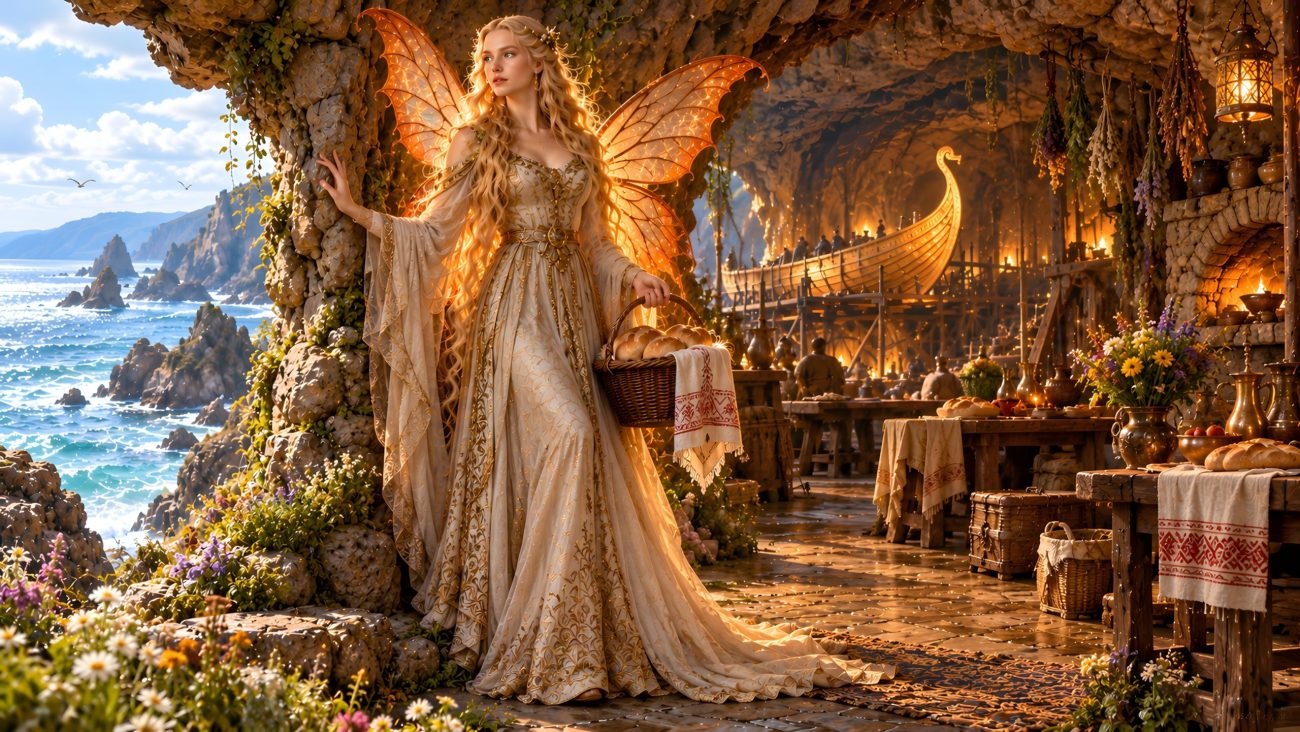
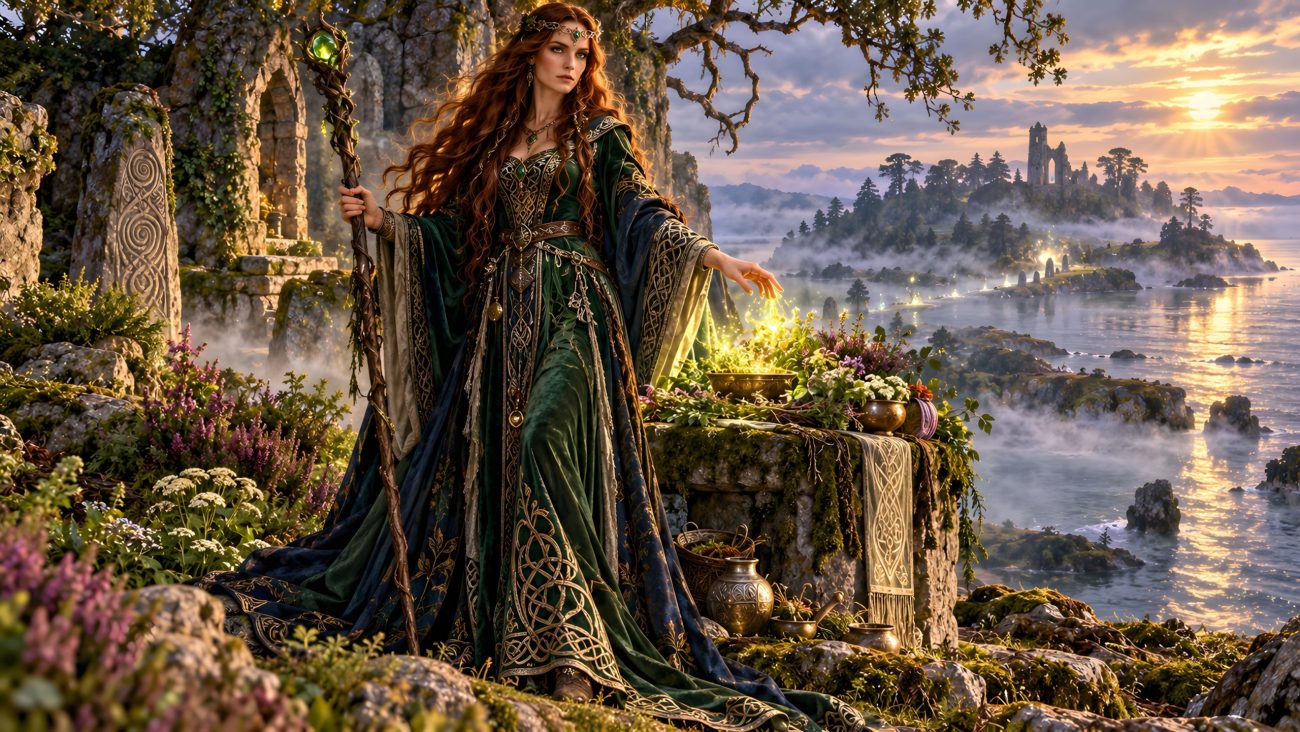
The Houles fairies are magnificent supernatural women who inhabit the coastal caves and caverns known as houles, along the Channel coast from Cancale to Tréveneuc, the Channel Islands, and parts of Cotentin. They are usually described as tall and beautiful blond women, most often dressed in grey garments. As they grow old, they are said to become smaller and cover themselves with seaweed. They are immortal, immune to illness, and immensely powerful, although salt can strip them of their immortality. Some traditions say that until they are baptized, they have worms in their mouths. Their enormous sea caves are luxurious Otherworldly dwellings containing everything they need for baking, teaching, music, dining, and daily life, and the great houle at Saint-Briac is even said to contain workshops where golden ships are built.

The fairies live together in communities and are generally benevolent toward humans. They bake their own bread, tend their flocks, do their own laundry, marry male fairies, and are served by warrior goblins known as Fions. They are often called the “Good Ladies” because of their willingness to aid people, providing food, enchanted objects, and other forms of assistance. They can nevertheless become dangerous when insulted or when humans attempt to acquire the supernatural sight needed to see through their disguises without permission. Most are contemplative and peaceful, although the fairies of the Grouin houle are an exception, being cursed and hostile creatures who bring misfortune. Some Houles fairies are also royal or descended from magicians and possess the ability to perform extraordinary or monstrous transformations.

The Houles fairies are closely tied to the mysterious Otherworld of the Breton coast. They rarely have much to do with the sea itself despite living beside it, although some stories suggest that they once possessed the ability to walk upon water. Their beauty and enchanting voices have also led them to be compared with mermaids, particularly because they can lure young fishermen. Some tales describe older, more obscure fairies resembling the groac’h, while others bring them into contact with creatures such as the “man of the sea.” The Houles fairies were regarded as powerful supernatural beings who lived alongside the human world in their hidden coastal caverns, protecting their secrets and rewarding those who treated them with respect.


Sources

“Houles fairy.” Wikipedia: The Free Encyclopedia. Wikimedia Foundation. Accessed October 5, 2026.
https://en.wikipedia.org/wiki/Houles_fairy


Morgan le Fay

Tradition: Welsh Mythology, French Mythology
Alternative Names: Morgen, Morgana, Morgaine, Morgante, Morgane, Morgayne, Morguein, Fée Morgane
Category: Fairy


The Myth

Morgan le Fay is a powerful and mysterious enchantress of Arthurian legend, traditionally portrayed as an extraordinarily magical woman whose nature can be both benevolent and destructive. She may appear as a fairy, sorceress, witch, goddess, or human woman, and her relationship with King Arthur varies between traditions. In her earliest appearances she is closely associated with the supernatural world and with Avalon, the magical Isle of Apples. She is particularly renowned as a healer, possessing the power to cure even wounds that seem fatal. She is also sometimes described as a fairy queen or goddess, and her supernatural nature remains present even in traditions where she is portrayed as human.

In later Arthurian traditions, Morgan becomes Arthur’s half-sister, the daughter of Igraine and Gorlois, while Arthur is the son of Igraine and Uther Pendragon. She marries King Urien and has a son, Yvain, but becomes a powerful and unpredictable enemy of Arthur and the knights of the Round Table. She learns magic from Merlin and becomes especially hostile toward Queen Guinevere. Morgan takes numerous lovers in different traditions, including Accolon and sometimes Merlin, while also possessing an unrequited love for Lancelot. She repeatedly plots against Arthur and his kingdom, sometimes attempting to bring about his downfall, and in some versions becomes one of his greatest enemies. Yet her relationship with Arthur remains strangely ambivalent, since she can oppose him while also retaining a connection to his protection and healing.

After Arthur is mortally wounded at the Battle of Camlann, Morgan’s oldest supernatural role returns. She is associated with Avalon and takes Arthur away to the magical island so that his wounds can be healed. In some traditions she is accompanied by other magical sisters, while later stories portray her as the immortal queen of Avalon. Thus, despite becoming increasingly villainous in medieval romances, Morgan ultimately remains tied to the Otherworld and to Arthur’s final journey. She is a figure of extraordinary duality: capable of healing and destruction, protection and betrayal, desire and vengeance, while standing between the human world and the magical realm of Avalon.


Sources

“Morgan le Fay.” Wikipedia: The Free Encyclopedia. Wikimedia Foundation. Accessed October 5, 2026.
https://en.wikipedia.org/wiki/Morgan_le_Fay


Trottes-vieilles

Tradition: French Mythology
Alternative Names: Trottes-vieilles
Category: Fairy


The Myth

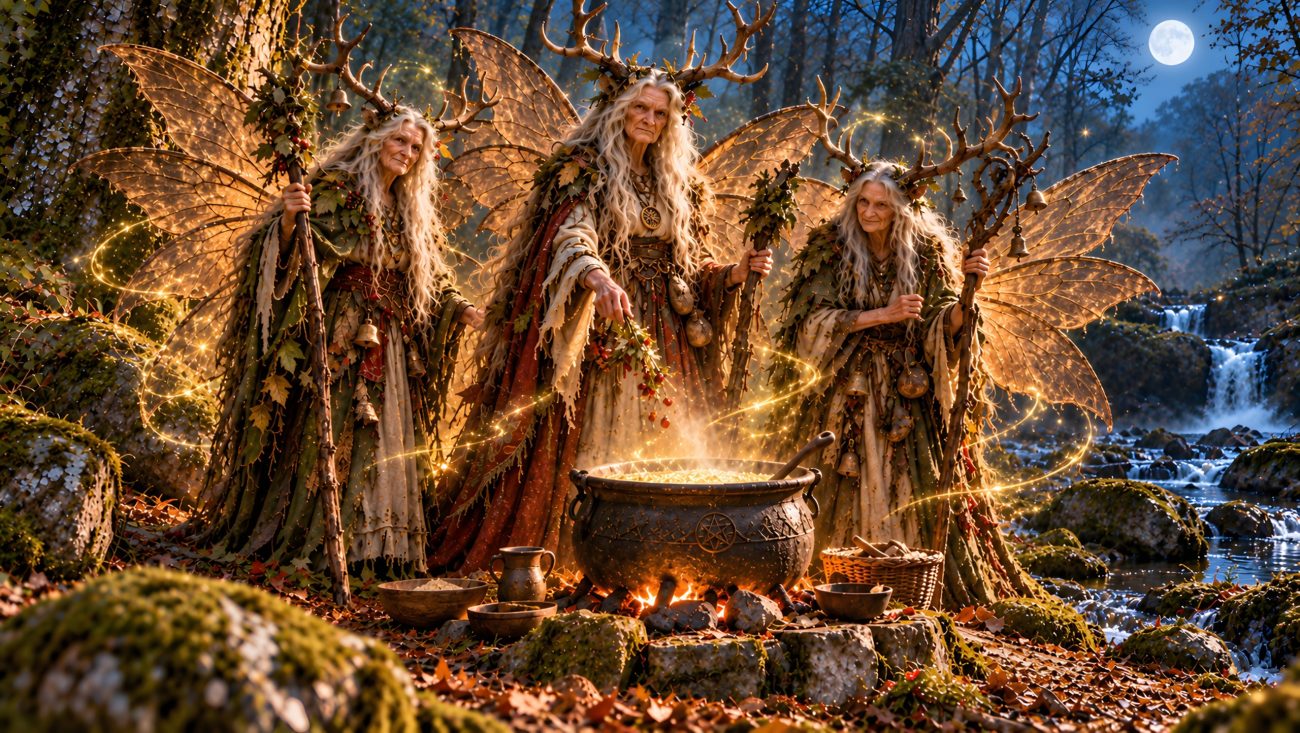
The Trottes-vieilles are three ancient fairies, said to be several thousand years old and to wear deer antlers upon their heads. They are described as daughters of the Gaulish god Cernunnos, giving them a close connection with the ancient supernatural world of the forest and wild animals. Their presence is particularly associated with the folklore of Saulnot in Haute-Saône.

At Christmas, the Trottes-vieilles watch over children and distinguish the well-behaved from the disobedient. Good children are rewarded, while naughty children are threatened with a terrible fate: the three fairies seize them, carry them away, and throw them into the nearest stream. Their warning describes how they impale the children upon their hard antlers before carrying them to the river and drowning them in its rushing waters. Despite this frightening role, their visit could also bring happiness to a household when they were properly welcomed.

Before nightfall, families traditionally prepared a large cauldron of milky porridge called paipai for the Trottes-vieilles. Leaving this offering was believed to win their favor, and a household visited by the three ancient fairies was considered fortunate. Thus the Trottes-vieilles could appear both as terrifying punishers of naughty children and as supernatural visitors whose presence brought prosperity and happiness to those who respected them.


Sources

“Trottes-vieilles.” Wikipédia, l’encyclopédie libre (French Wikipedia). Wikimedia Foundation. Accessed October 5, 2026.
https://fr.wikipedia.org/wiki/Trottes-vieilles


Ahès

Tradition: French Mythology
Alternative Names: Ahez, Ahès-la-fée, Gwrac’h Ahes
Category: Fairy, Giant


The Myth

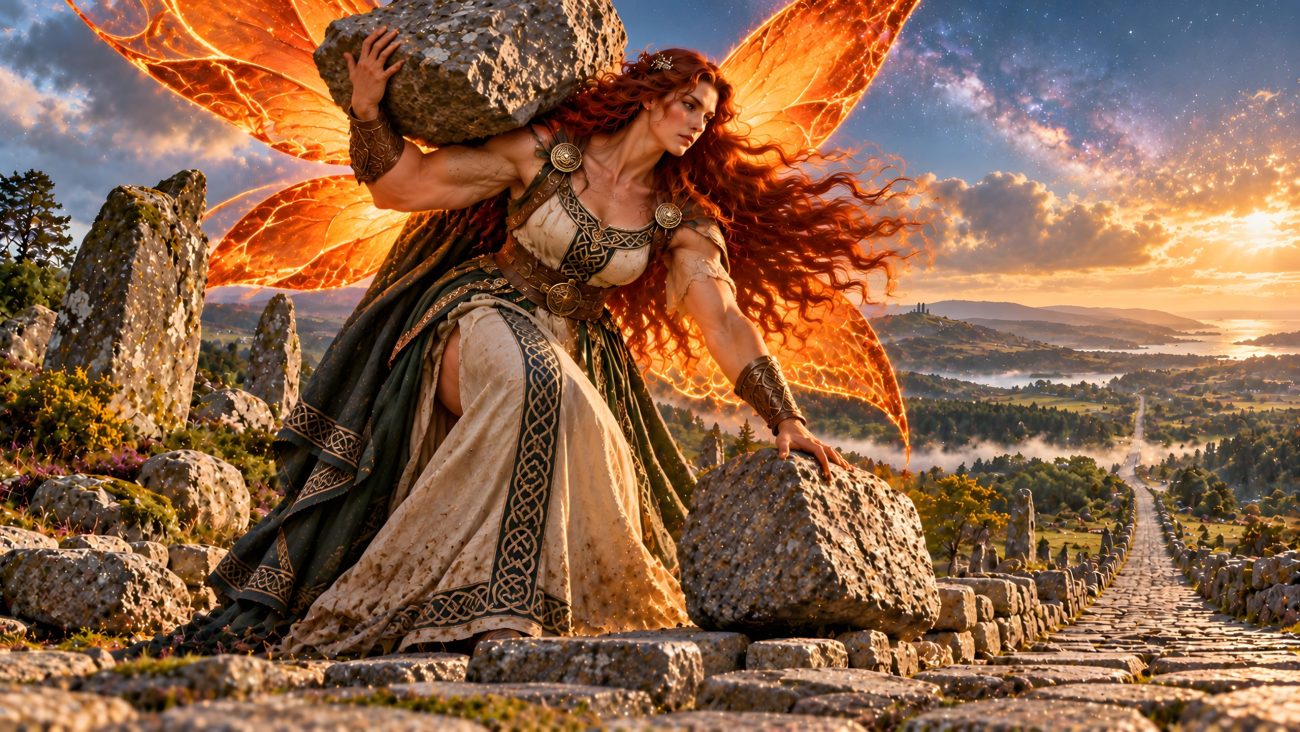
Ahès was a mysterious female figure of Breton legend who could appear as a princess, a fairy, or a giantess. She was especially associated with the construction of roads across Brittany and was said to have carried the enormous stones needed to build them. Many ancient roads were consequently known as the “Paths of Ahès” (Hent Ahès), while other routes bore related names such as Fossé-Ahès. Her supernatural reputation was so strong that her name also became attached to the Milky Way, known as the “Path of Ahès,” and the constellation of the Little Bear, called the “Chariot of Ahès.” A giantess named Ahès was also said to lie buried beneath a dolmen at Prat in Trégor.

Ahès became particularly associated with Carhaix, whose name was traditionally interpreted as Ker-Ahès, the city or village of Ahès. In this tradition she was regarded as the founder of the settlement and the builder of the great roads leading toward it. The legendary builder Ahès was compared with the fairy Mélusine, another supernatural woman associated with monumental construction. Breton traditions preserve numerous roads attributed to her, including routes near Quimper, Carhaix, Vannes, Corseul, and the Bay of the Dead. A related tale from La Chanson d’Aiquin speaks of a giant named Ohès who constructed a great road as far as Carhaix.

Ahès was sometimes confused with Dahut, the daughter of King Gradlon in the legend of Ys. Later traditions even identified Ahès as Gradlon’s daughter and portrayed her as a sinful princess who founded Ker-Ahès. However, Ahès and Dahut appear as distinct figures in other traditions, and Ahès’s older legendary identity is primarily that of the supernatural woman associated with roads, stonework, and the Breton landscape. She therefore survives in folklore not only as a fairy or giantess, but through the many ancient paths, bridges, and places that bear her name.


Sources

“Ahès.” Wikipédia, l’encyclopédie libre (French Wikipedia). Wikimedia Foundation. Accessed October 5, 2026.
https://fr.wikipedia.org/wiki/Ah%C3%A8s


Malgven

Tradition: French Mythology
Alternative Names: Malgwen, Malgwenn
Category: Fairy


The Myth

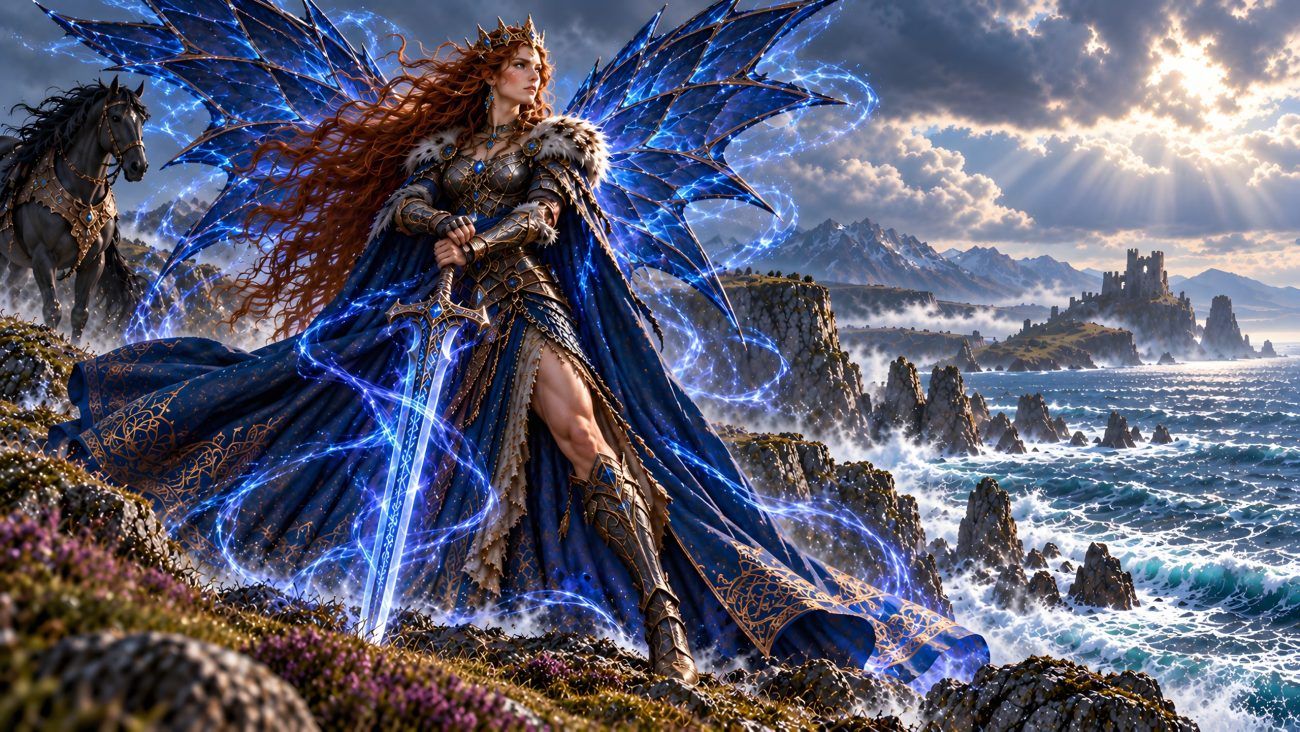
Malgven was the beautiful and formidable Queen of the North, portrayed as a warrior woman wearing shining armor and a steel chainmail corset, with a golden diadem and long flowing hair. Her hair is described as either golden or red, while her eyes were deep blue and possessed an enchanting quality. In the best-known version of her story, she was the wife of the aging King Harold and ruled a northern kingdom associated variously with Ireland, Norway, or Denmark. She was also portrayed as a Valkyrie or fairy of the North, combining supernatural beauty with the character of a powerful warrior queen.

Malgven encountered King Gradlon while he was raiding her kingdom and fell in love with him. She persuaded him to kill her husband, King Harold, and flee with her. The two escaped together on Malgven’s magical horse, Morvarc’h, riding toward Gradlon’s lands in Brittany. Their journey lasted an entire year, and during it Malgven became pregnant and gave birth to a daughter, Dahut. Malgven did not survive the birth and died, leaving Gradlon to return to Brittany with their daughter.

Malgven’s story provides the supernatural origin of Dahut in the later form of the legend of Ys. She is therefore remembered as the mysterious northern mother of the princess who would become central to the fate of the drowned city. The surviving tradition presents Malgven as a powerful otherworldly woman whose arrival brings a magical and tragic element to Gradlon’s story, joining the king of Brittany to a supernatural queen from the distant North.


Sources

“Malgven.” Wikipedia: The Free Encyclopedia. Wikimedia Foundation. Accessed October 5, 2026.
https://en.wikipedia.org/wiki/Malgven


Uriande

Tradition: French Mythology
Alternative Names: Uriande
Category: Fairy


The Myth

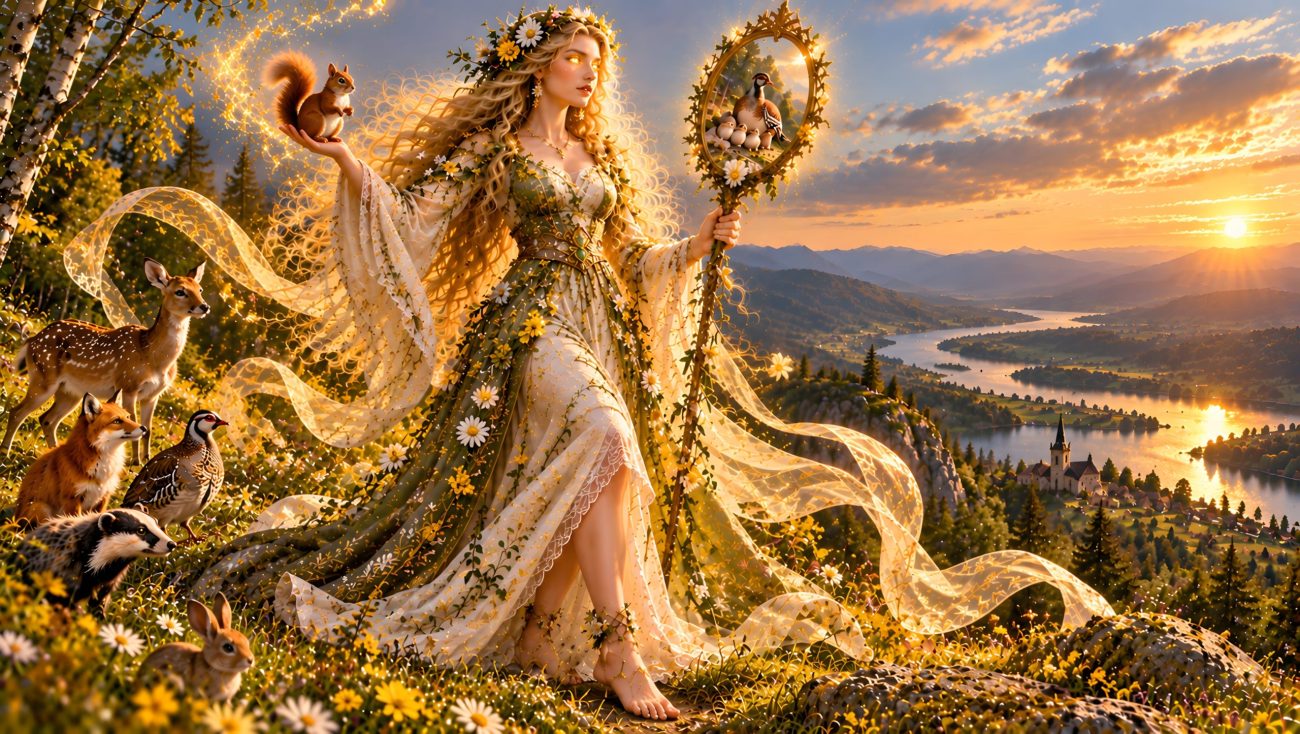
Uriande was a benevolent fairy associated with the Pilat massif. In one legend, a partridge became separated from her young during a violent storm and wandered in search of them. Uriande took the distressed bird into her care and, using a magical mirror, showed her that her chicks were safe and sheltered. The fairy’s compassion and magical power impressed the animals of the Pilat, who proclaimed her Queen of the Pilat at the summit of the Crêt de la Perdrix.

Uriande also appears in another legend in which she helps Henry of Léon, the seneschal of Brittany. Here she is again portrayed as a benevolent and mystical fairy, reinforcing her connection with the mysterious traditions surrounding the Pilat.

Uriande is therefore remembered as a protective fairy of the mountain, whose kindness extends both to animals and to human heroes. Her magical mirror and her role as Queen of the Pilat give her a particularly strong connection with the landscape and its creatures.


Sources

“Uriande.” Wikipédia, l’encyclopédie libre (French Wikipedia). Wikimedia Foundation. Accessed October 5, 2026. https://fr.wikipedia.org/wiki/Uriande


Fausserole

Tradition: French Mythology
Alternative Names: Fausserole
Category: Fairy


The Myth

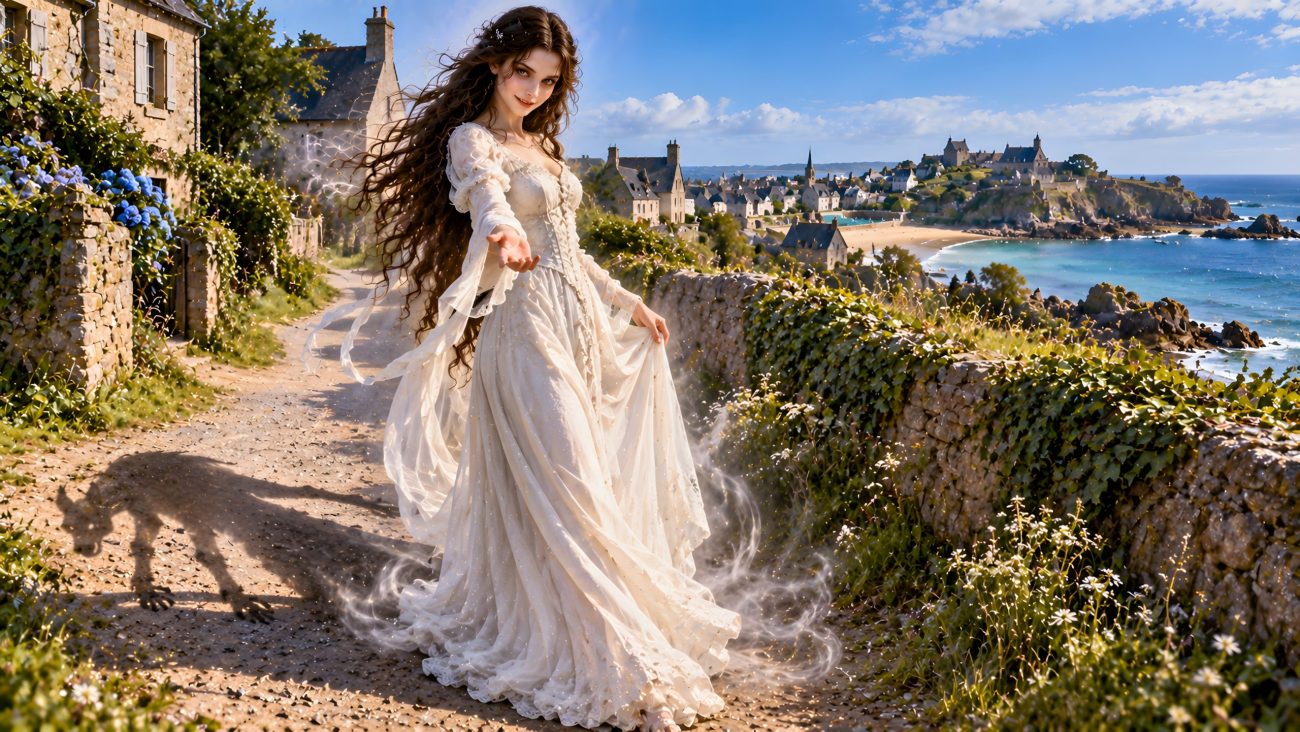
The Fausserole was a malevolent supernatural creature associated with Saint-Cast in Brittany. It was said to take the form of a dog or a calf and to attack people by knocking them over. The creature was blamed for an incident in 1832 when it allegedly knocked down the rector of the village church. A place called La Fausserole still carried the creature’s name, although the tradition does not make clear whether the beast took its name from the place or the place from the beast.

The Fausserole was also described as a lutin capable of changing its form. In another tradition, it was a beautiful young woman dressed in white, said to have been banished from the fairy realm because of her wickedness. She wandered from village to village, making herself beloved by the people around her and seeking a husband. Once she succeeded in marrying, however, her true nature was revealed: she killed her husband by absorbing his vital essence.

The Fausserole therefore appeared in several frightening forms, from an animal-like creature that violently knocked people down to a beautiful fairy who concealed her murderous nature beneath an innocent appearance. Its ability to change form made it particularly dangerous, allowing the creature to disguise its malevolent nature until its victim was unable to escape.


Sources

“Fausserole.” Wikipédia, l’encyclopédie libre (French Wikipedia). Wikimedia Foundation. Accessed October 5, 2026. Wikipedia
https://fr.wikipedia.org/wiki/Fausserole


Oriande

Tradition: French Mythology
Alternative Names: Oriande of Rosefleur
Category: Fairy


The Myth

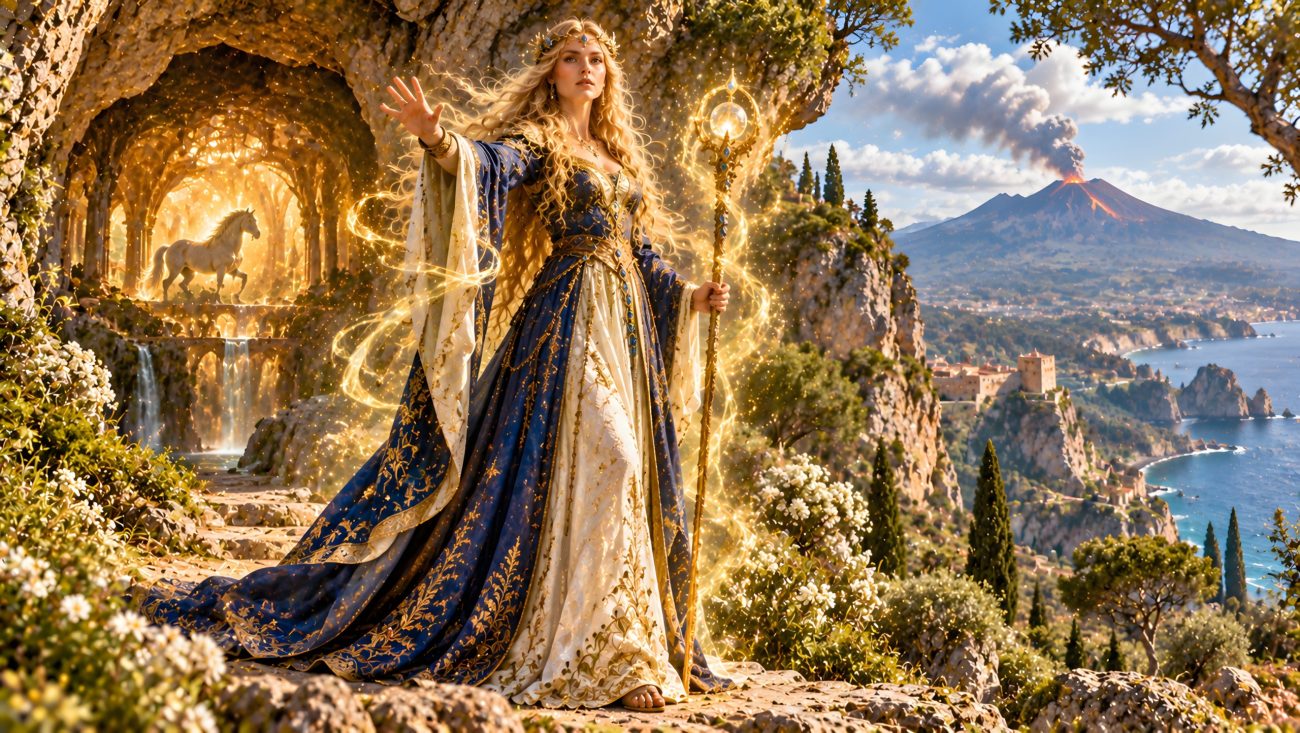
Oriande was a powerful fairy who took the abandoned child Maugis, son of Beuves d’Aigremont, under her protection. After Maugis had been abducted by Sorgalant and later found by Oriande, she raised him at Rosefleur, or Rocheflor, near Mongibel on Mount Etna in Sicily. She became his guardian and guide, nurturing him until he was ready to enter the world of heroic adventure.

When Maugis had grown, Oriande set him a great trial to prove his abilities and establish his status as a true hero. She commanded him to free the miraculous horse Bayard, which was imprisoned beneath the volcanic island of Bocan, or Boucam, traditionally associated with the Lipari Islands. Maugis succeeded in overcoming the supernatural challenge and released the extraordinary horse from its underground prison.


Sources

“Oriande.” Wikipédia, l’encyclopédie libre (French Wikipedia). Wikimedia Foundation. Accessed October 5, 2026. Wikipedia
https://fr.wikipedia.org/wiki/Oriande


Fayettes

Tradition: French Mythology
Alternative Names: Fayettes, Little Fairies
Category: Fairy


The Myth

The Fayettes are tiny fairies said to inhabit the Forez region of France, particularly the forests and caves around the Loire basin and Beaujolais. They are believed to descend from the ancient Greek nymphs, having escaped from the Mediterranean as Christianity spread. Though much smaller than their supposed ancestors, the Fayettes retained their magical powers. They guard caves and forests and can sometimes be seen dancing among the trees of Couroux in the Beaujolais.

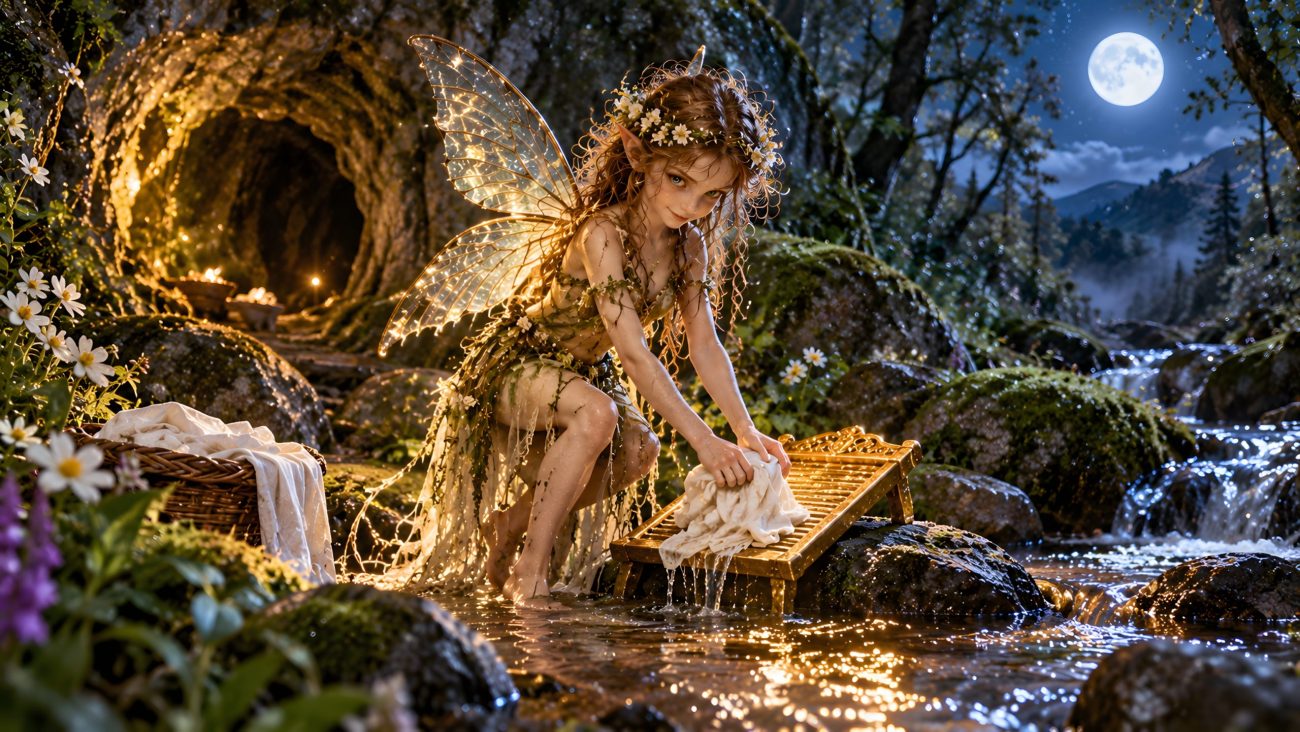
The Fayettes are notorious for stealing human children and leaving behind changelings in their place. These fairy children are difficult to satisfy and are said to possess an insatiable appetite. To recover a stolen child, the changeling can be taken to the entrance of a cave and threatened with violence. The Fayettes will then emerge and return the human child, saying, “There, here is yours; give me mine.” The fairies also emerge at night to wash their clothes beneath the moon. Travellers passing through their woodland territory are advised to sing loudly so that the Fayettes do not mistake them for enemies or threats.

At dawn, the Fayettes disappear like mist, sometimes leaving behind magical washboards made of solid gold. During the daytime they take another form, becoming moles that burrow through gardens and delight in destroying cultivated plants. According to the legend, this is why moles have their characteristic small pink hands. The Fayettes therefore move between several hidden worlds: fairies dancing in the forest by night, mysterious creatures guarding caves, and destructive little moles roaming gardens by day.


Sources

“Fayette.” A Book of Creatures. July 24, 2015. A Book of Creatures
https://abookofcreatures.com/2015/07/24/fayette/