Penloi

Tradition: Welsh Mythology
Alternative Names: Little Penloi, Penoi
Category: Fairy


The Myth

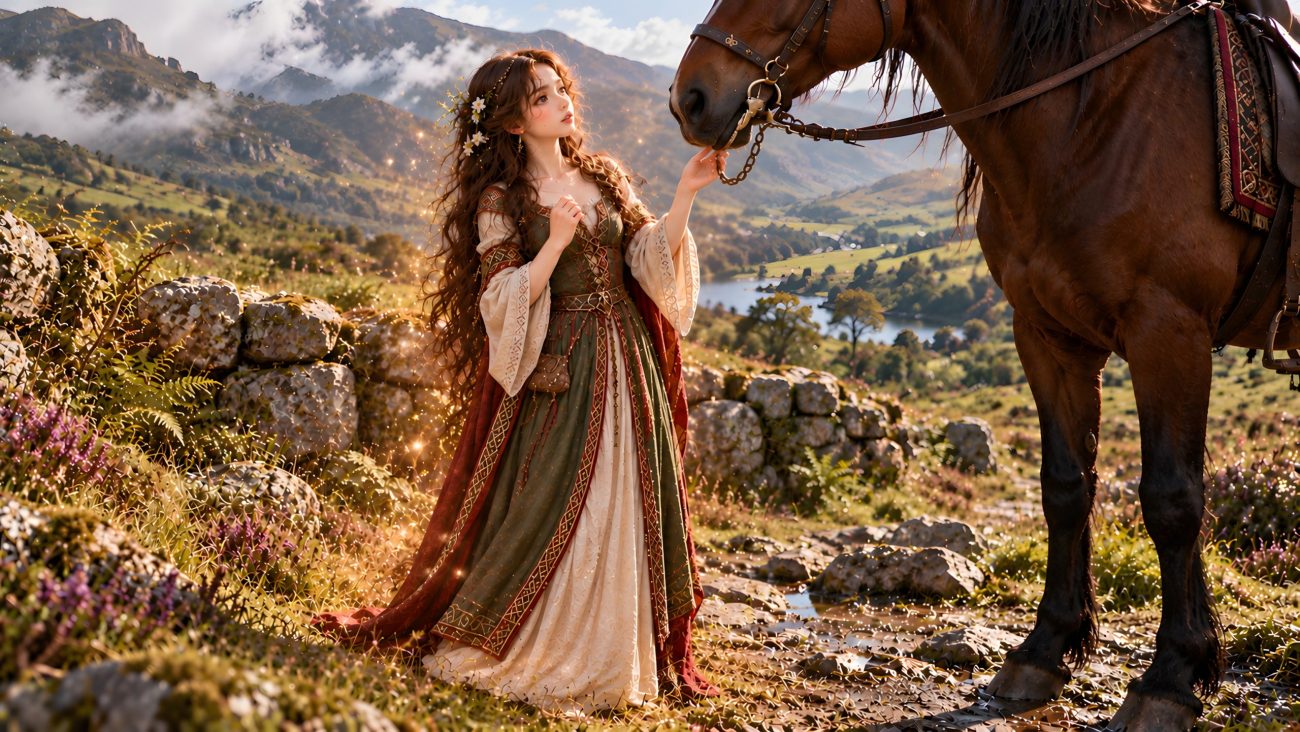
Penloi was a beautiful fairy maiden, remarkably handsome but short and slight in stature. Shon Rolant of Hafod y Dre was returning home from the market at Llanrwst when he encountered and captured her near Pentrevoelas. He brought her home, where her extraordinary beauty caused everyone to admire her. Shon quickly fell deeply in love with her and repeatedly asked her to marry him, but Penloi initially refused. Eventually she agreed, but only on the condition that he discover her name.

About a month later, Shon was again returning from the market when he heard voices near the place where he had first captured the fairy. Someone was calling repeatedly, asking where “little Penloi” had gone. Realising that this must be the name of the fairy he had brought home, Shon returned to his house and addressed her as Penloi. She accepted him as her husband, although she expressed her displeasure at marrying what fairies considered a “dead man” — a human being. She also gave him a strict warning: she must never be touched by iron, or she would immediately disappear.

Shon was careful to obey the warning, but eventually the condition was broken by accident. One day he was on horseback speaking with Penloi, who was standing near the horse’s head. The animal suddenly threw up its head, causing the iron curb of its bridle to strike Penloi. At that instant she vanished completely, leaving Shon without his fairy wife.


Sources

Owen, Elias. Welsh Folk-Lore: A Collection of the Folk-Tales and Legends of North Wales. London: Elliot Stock, 1896.


Fairy Maiden of Pentrevoelas

Tradition: Welsh Mythology
Alternative Names: Fairy Maiden, Fairy Wife
Category: Fairy


The Myth

The Fairy Maiden of Pentrevoelas was a beautiful supernatural woman who appeared one misty morning to the son of Hafodgarreg while he was tending his father’s sheep on the hills. He found her sitting beside a peat-stack, weeping in great distress. The young shepherd approached her kindly and comforted her, and his sympathy soon turned into love. She returned his affection, but their conversation was interrupted when an old man appeared and called the maiden his daughter. She obeyed him and left with him, while the shepherd remained behind, hoping she would return. He came back to the same place day after day, but she did not appear. Eventually, however, the maiden herself returned from her enchanted land, having planned the visit because she loved the shepherd as deeply as he loved her.

Her father soon discovered the lovers together and confronted them. The shepherd boldly asked for permission to marry his daughter, and the old man asked the maiden whether she truly wished to marry a man of the human world. She said that she did. Her father therefore allowed the marriage, with one condition: she could remain with her husband only so long as he never struck her with iron. He also gave her a marriage portion consisting of a bag filled with bright money. The couple married and lived happily together for many years, having children and building a loving family. The promise seemed secure until one day they went onto the hills to catch two wild ponies that they intended to take to the festival of the saint of Capel Garmon.

The ponies repeatedly escaped, and the husband became increasingly frustrated as he chased them. At last, when they slipped away once more, he angrily threw his bridle after them. The iron bit struck his wife. The moment it touched her, both husband and wife understood that their marriage contract had been broken. Almost immediately, her aged father appeared with a host of fairies and took his daughter back to the enchanted land. She was not even given the chance to say farewell to her children. The money from her dowry and the children themselves remained with the shepherd, but his fairy wife was gone, leaving only these reminders of the woman he had loved and the family they had shared.


Sources

Owen, Elias. Welsh Folk-Lore: A Collection of the Folk-Tales and Legends of North Wales. London: Elliot Stock, 1896.