Ychain Banog

Tradition: Welsh Mythology
Alternative Names: Ychain Banog, the Mighty Oxen, the Prominent Oxen of Hu Gadarn
Category: Cow


The Myth

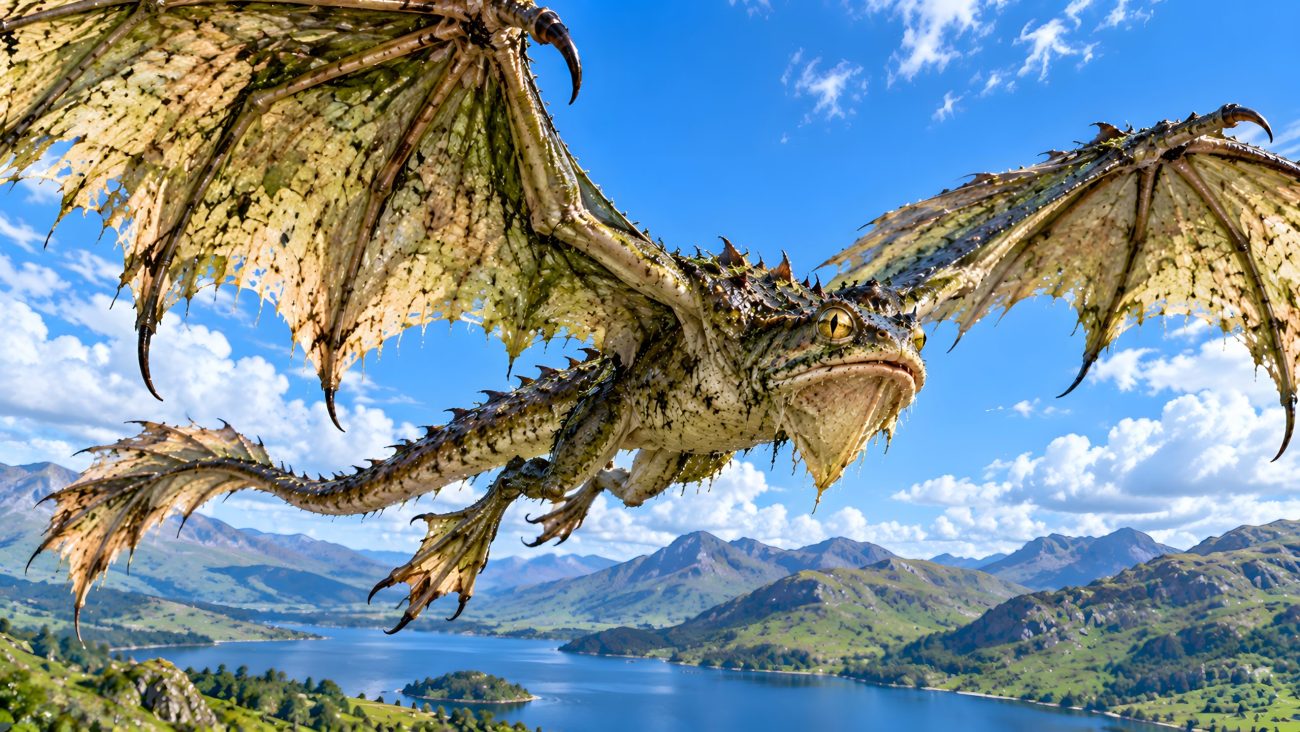
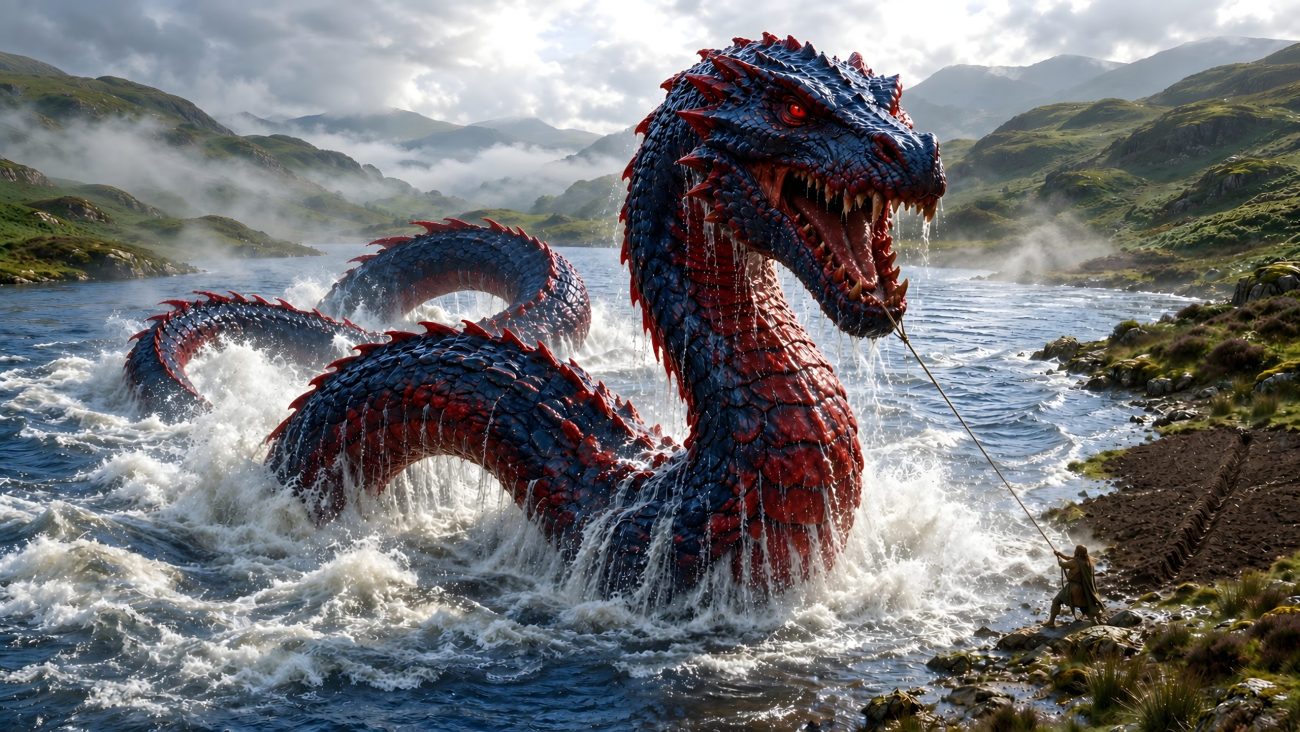
The Ychain Banog were a pair of mighty oxen associated with Hu Gadarn, the legendary figure who appears in Welsh tradition. They were enormous and powerful beasts, renowned for their extraordinary strength. A terrible water-monster lived concealed beneath an enchanted lake, where it terrorized the surrounding region. The monster is described in some traditions as a crocodile and in others as a dragon. The Ychain Banog were harnessed to draw the creature from the depths of the lake. The oxen strained with all their strength as they dragged the enormous monster from its watery hiding place.

The struggle was so immense that one of the mighty oxen died from the exertion. The surviving ox continued the struggle, and its tremendous bellowing was said to split the mountain in two. Thus the Ychain Banog became remembered as the mighty oxen whose supernatural strength was used to overcome the monstrous creature lurking beneath the lake.


Sources

Sikes, W. (2017). British Goblins: Welsh Folk-Lore, Fairy Mythology, Legends and Traditions (Classic Reprint) Forgotten Books, p. 109.


Fuwch Gyfeilior

Tradition / Region: Welsh Mythology
Alternative names: Fuwch Gyfeiliorn, The Stray Cow, Milk-White Cow
Category: Cow


The Myth

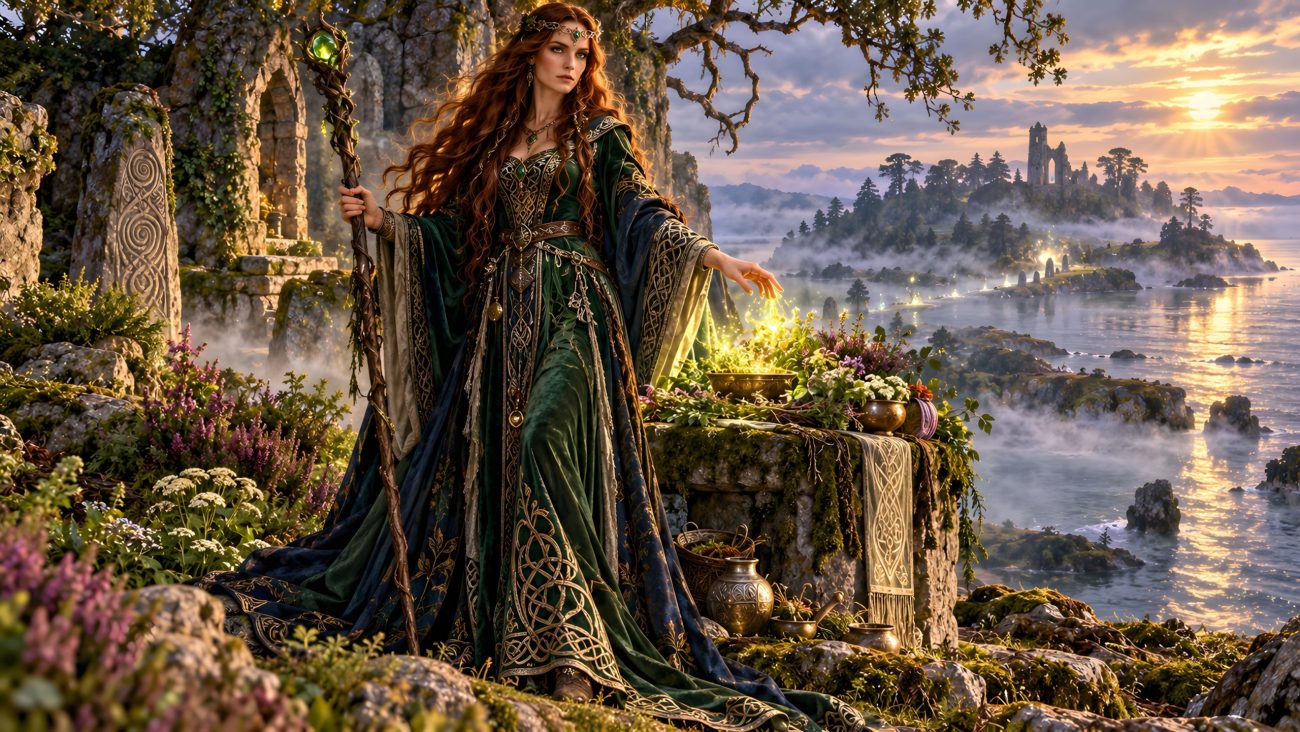
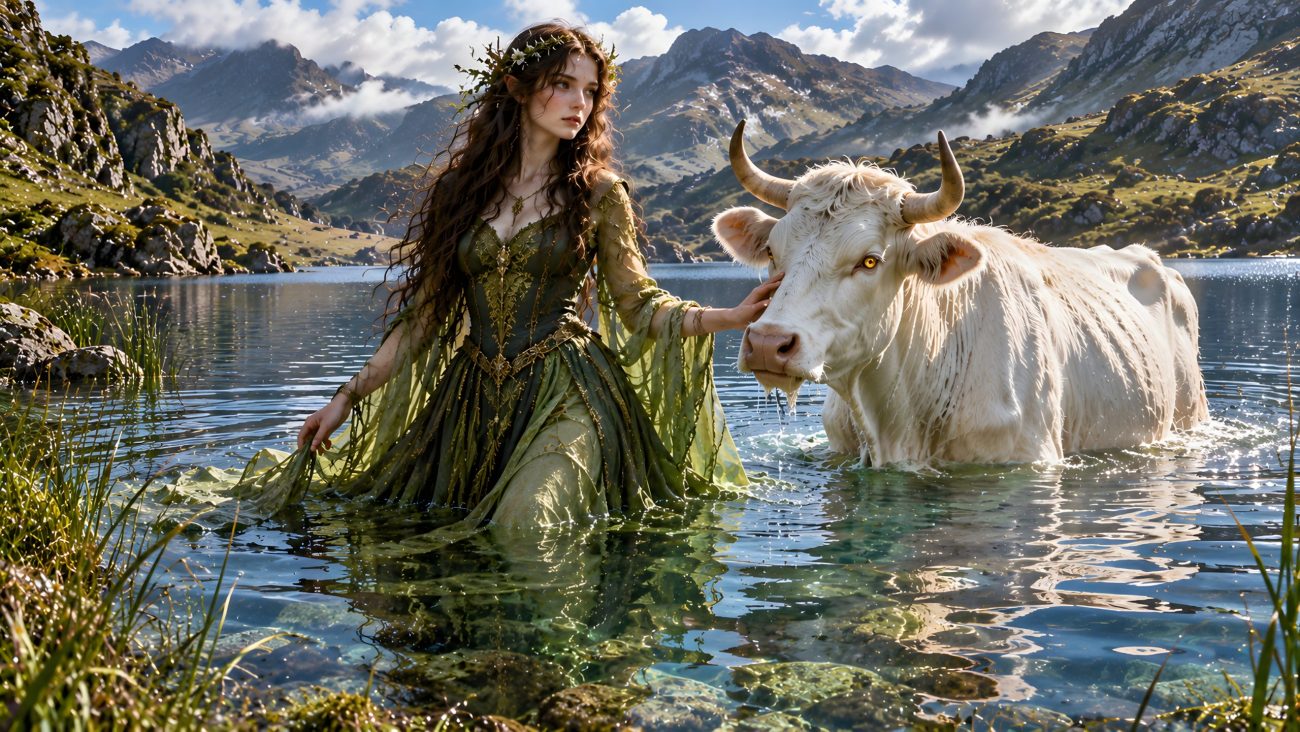
The Fuwch Gyfeilior was a beautiful milk-white cow belonging to the Gwragedd Annwn, the fairy women who lived around Llyn Barfog near Aberdyfi. The fairy women were said to appear at dusk dressed in green and accompanied by milk-white hounds and herds of supernatural white cattle.

One day, a poor farmer living near Dyssyrnant discovered that one of the fairy cows had wandered away from the lake and joined his own herd. He managed to catch her and kept her among his cattle.

The cow transformed the farmer’s fortunes. Her milk was extraordinarily abundant, and the butter and cheese made from it were better than anything previously seen in the region. Her calves were equally remarkable, and the farmer soon became wealthy and possessed a great herd of cattle.

As the Fuwch Gyfeilior grew older, however, the farmer decided that she had become too old to keep. He resolved to fatten her for slaughter. The cow became enormously fat, and when the day of her killing arrived, neighbors gathered to watch the enormous animal being butchered.

The cow was tied down while the butcher prepared to strike. Despite her mournful cries, the farmer ordered him to continue. The butcher raised his club and struck the cow between the eyes.

At that moment, a terrible cry rang across the hills. The blow passed through the cow’s supernatural body and knocked down nine men standing nearby, while the butcher was thrown into a frantic spin.

High above the lake, a green fairy woman appeared upon a rocky crag. She called out to the enchanted cow and summoned her back to the lake. The Fuwch Gyfeilior immediately rose and returned to the fairy women.

Her descendants followed her. All of the cow’s offspring from the third and fourth generations vanished from the farmer’s herd and disappeared over the hills with her.

Only one cow remained. The animal, once milk-white, had mysteriously turned completely black. The farmer, having lost his entire fortune, was overcome with despair and drowned himself in Llyn Barfog.

The black cow remained behind and became the ancestor of the Welsh Black cattle.

Another tradition tells of a miraculous milk-white cow that could provide milk for everyone who asked for it, no matter how many times she was milked. Those who drank her milk were healed of illness and became wiser and happier. The cow traveled throughout Britain, leaving calves wherever she went, until people in the Vale of Towy attempted to kill her for her meat. Before they could do so, she vanished from their hands and was never seen again.


Sources

Sikes, W. (2017). British Goblins: Welsh Folk-Lore, Fairy Mythology, Legends and Traditions (Classic Reprint), Forgotten Books, p. 37.


Cath Palug

Tradition / Region: Welsh Mythology
Alternative names: Cath Paluc, Cath Balug, Chapalu
Category: Cat


The Myth

Cath Palug was a monstrous cat whose legend became closely associated with the tales of King Arthur. According to Welsh tradition, it was born as a kitten from the great white sow Henwen in Gwynedd. The kitten was cast into the sea but crossed the Menai Strait to the Isle of Anglesey, where it was raised by the sons of Palug. As it grew, it became one of the island’s greatest plagues.

The beast haunted the waters and shores of Anglesey, where it slaughtered countless warriors. One Welsh tradition tells that 180 men fell before the monster before the hero Cai (Kay) confronted it and finally slew it.

In later Arthurian romances, the story changed, replacing Cai with King Arthur himself. Some tales place the monster beside lakes or marshes, where it is described as an enormous black cat—or even a strange fish-like cat—that terrorized all who approached. In one famous version, a fisherman caught a small black kitten in his net after breaking a sacred vow. The kitten grew into a gigantic monster that killed the fisherman, his family, and every traveler who came near the lake until Arthur destroyed it.

Not every legend grants Arthur victory. Some medieval French stories claim the monstrous cat defeated the king, knocking him into a bog before killing him. These versions were widely regarded by other medieval writers as hostile tales intended to mock the Arthurian tradition.

Whether slain by Cai or Arthur, Cath Palug remains one of the most famous monstrous cats of Celtic legend, remembered as a deadly beast born from an unnatural birth whose reign of terror ended only after a legendary battle.


Sources

“Cat-sìth.” Wikipedia: The Free Encyclopedia. Wikimedia Foundation. Accessed July 28, 2026. https://en.wikipedia.org/wiki/Cat-s%C3%ACth


Dormarch

Tradition / Region: Welsh Mythology
Alternate Names: Dormarth
Category: Dog


The Myth

Dormarch is a supernatural hound from Welsh tradition, closely tied to the Otherworld and the Wild Hunt. Though hounds in myth often serve mortal hunters, Dormarch belongs to the otherworldly ruler Gwyn ap Nudd, king of Annwn and leader of the spectral hunt that gathers the souls of fallen warriors.

Some traditions claim the hound was once owned by the historical Welsh king Maelgwn Gwynedd, but later passed into the service of Gwyn ap Nudd, reflecting its shift from earthly to supernatural master.

Dormarch’s appearance is unusual even among mythic dogs. He is said to have one head and two front legs, but his body tapers quickly behind the chest and ends in three fish-like tails, blending features of land, sky, and water. His natural domain is described as “ar wybir” — riding upon the clouds — suggesting that he moves through the skies and mountain peaks alongside the Wild Hunt.

As a result, Dormarch represents not just a hunting dog, but a liminal creature of the air and Otherworld, tied to death, the passage of souls, and the supernatural chase.


Sources

Wikipedia contributors. (n.d.). Dormarch. In Wikipedia, from https://en.wikipedia.org/wiki/Dormarch


Cŵn Annwn

Tradition / Region: Welsh Mythology
Alternate Names: Ci Annwn (singular)
Category: Dog


The Myth

The Cŵn Annwn are the spectral hunting dogs of Annwn, the otherworld of Welsh tradition.

They belong to the realm of the dead and are said to serve its ruler. In older tales they hunt under Arawn, king of Annwn, while later stories place them under Gwyn ap Nudd, a lord of the otherworld and the fairy host. Wherever they run, they form part of the Wild Hunt, a ghostly chase that moves across the night sky and over the hills of the living world.

The hounds are said to be vast and terrible, heard long before they are seen. Their howling carries across mountains and valleys, and people believed that to hear them was a sign that death was near. Their voices are strange: loud when far away, yet growing softer as they approach, until the silence itself becomes frightening.

They are said to hunt on certain nights of the year, especially during the dark seasons, when the boundary between worlds is thin. Some believed they ran only in winter, while others said they appeared on holy eves and sacred nights.

The Cŵn Annwn are not only hunters of beasts but also hunters of souls. They pursue wrongdoers without rest, driving them onward as they once drove their victims. In other tales, they escort the dead on their journey to the otherworld, guiding spirits from the world of the living to the land beyond.

Their cries were sometimes linked to the calls of geese flying in the night sky, whose distant honking was said to resemble the barking of ghostly hounds.

Thus the Cŵn Annwn were remembered as the hunting dogs of the otherworld — spirits of the Wild Hunt whose voices carried death’s warning and whose chase never ceased between the worlds of the living and the dead.


Sources

Wikipedia contributors. (n.d.). Cŵn Annwn. In Wikipedia, from https://en.wikipedia.org/wiki/C%C5%B5n_Annwn


Gelert

Tradition / Region: Welsh Mythology
Alternate Names:
Category: Dog


The Myth

Gelert was the loyal hunting dog of the Welsh ruler Llywelyn the Great.

One day Llywelyn went out hunting, leaving his infant child at home. Gelert remained behind to guard the house. When the prince returned, he found the scene in chaos. The cradle was overturned, the child nowhere in sight, and Gelert rushed forward to greet him with blood smeared around his mouth.

Seeing this, Llywelyn believed the worst. Thinking the dog had killed the child, he drew his sword in anger and struck Gelert down.

As the dog gave a final cry, Llywelyn suddenly heard another sound — the crying of his baby. Searching the room, he found the child alive beneath the overturned cradle. Nearby lay the body of a wolf, slain by Gelert while defending the infant.

Realizing what he had done, Llywelyn was filled with grief. He had killed the faithful dog who had saved his son’s life. He buried Gelert with honor, raising a grave in memory of his loyalty and sacrifice.

It was said that from that day forward Llywelyn never smiled again, and the echo of Gelert’s dying cry remained with him for the rest of his life.

Thus Gelert was remembered as the faithful hound who died protecting his master’s child, his story living on as a tale of loyalty, loss, and tragic mistake.


Sources

Wikipedia contributors. (n.d.). Gelert. In Wikipedia, from https://en.wikipedia.org/wiki/Gelert


Cavall

Tradition / Region: Welsh Mythology
Alternate Names: Cafall, Cabal, Caball
Category: Dog


The Myth

Cavall was the favorite hunting dog of King Arthur.

He was famed among Arthur’s hounds for his strength and loyalty, and during hunts he held a special place. When Arthur pursued game, the other dogs were often released first, while Cavall was kept back. Only when the moment was right would he be unleashed, and then he would race after the quarry with unmatched speed.

Cavall is most closely remembered for the hunt of the monstrous boar Twrch Trwyth. During this pursuit, the hound chased the beast across the land, and in the course of the hunt he leapt upon a stone and left the mark of his paw impressed in it.

Arthur ordered that a mound of stones be raised around that rock to honor the moment. The place became known as Carn Cavall, the Cairn of Cavall.

It was said that the stone bearing the pawprint possessed a strange power. Travelers who visited the cairn sometimes took the stone away, carrying it off for a day or a night. Yet when they returned, the stone would always be found back upon the mound where it belonged, as though the land itself refused to let the mark of Arthur’s dog be removed.

Thus Cavall was remembered not only as a hunter beside a king, but as a hound whose deed left a permanent sign in the earth, a mark that endured long after the hunt itself had passed into legend.


Sources

Wikipedia contributors. (n.d.). Cavall. In Wikipedia, from https://en.wikipedia.org/wiki/Cavall


Petitcrieu

Tradition / Region: Welsh Mythology
Alternate Names: Petitcreiu, Petitcru, Pticru
Category: Dog


The Myth

Petitcrieu was a wondrous dog said to come from the enchanted isle of Avalon. He belonged to Duke Gilan of Wales, who had received him as a gift from a goddess who loved him.

The little dog was unlike any creature of the ordinary world. His coat shimmered with many colors, beautiful beyond description, and around his neck he wore a collar with a small golden bell. Whenever the bell rang, its sound filled all who heard it with joy and drove away sorrow and grief.

Petitcrieu was a strange being even among magical creatures. He could not move on his own and had to be carried wherever he went. He never ate and seemed to have no need of food. He simply existed as a living marvel, bringing comfort to those near him.

When the knight Tristan was living in exile from Cornwall, he came to the court of Duke Gilan. The Duke, wishing to cheer his guest, showed him the fairy dog. Tristan was deeply taken with the creature and resolved to win him.

A giant named Urgan was troubling the land, and Tristan promised that if he defeated the giant, the Duke would grant him whatever reward he chose. Tristan fought and killed the giant, and when the time came to claim his prize, he asked for Petitcrieu.

The Duke honored his word, and Tristan took the dog with him. But Tristan did not keep the magical creature for himself. Instead, he sent Petitcrieu to Iseult, the woman he loved, hoping the bell’s enchantment would keep her forever free from sorrow.

When Iseult received the dog, she understood the magic of the bell and what it would do to her heart. She did not wish to live without grief, nor to have her true feelings hidden behind enchantment. Taking the collar, she removed the golden bell and cast it into the sea.

From that moment, Petitcrieu’s magic could no longer banish sadness. Yet the little dog remained with her, no longer a charm against sorrow but a faithful companion who stayed beside her in both happiness and grief.

And so the fairy dog of Avalon passed from being a creature of enchantment to one of quiet loyalty, remembered in the tales of Tristan and Iseult.


Sources

Wikipedia contributors. (n.d.). Petitcrieu. In Wikipedia, from https://en.wikipedia.org/wiki/Petitcrieu


Coblyn

Tradition / Region: Welsh folklore
Alternate Names: Coblynau (plural)
Category: Gnome, Cave dweller


The Myth

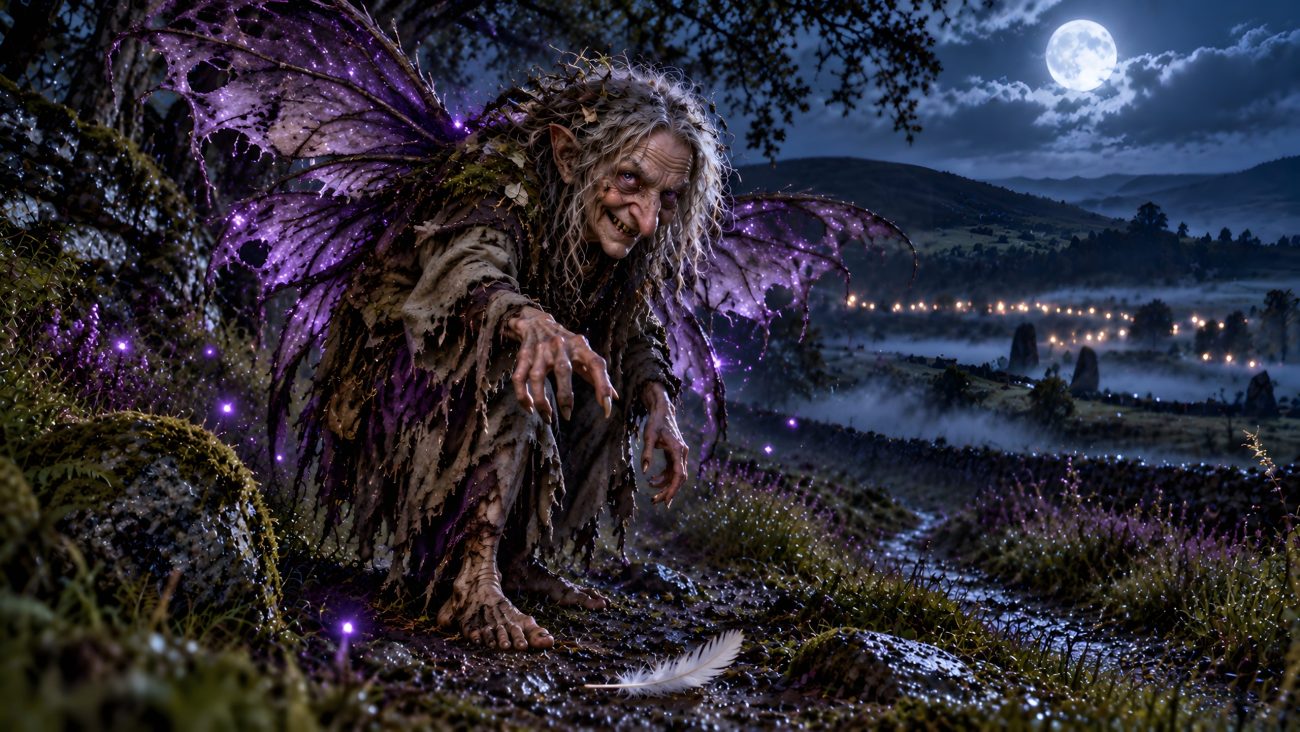
Deep beneath the hills of Wales, where pick and hammer rang against stone, miners spoke of the coblyn—a small, ugly little being who lived in mines and quarries. Barely half a yard tall, the coblyn dressed like a miner, carrying tiny tools and scurrying through the dark tunnels alongside human workers.

Coblynau were known not for their strength, but for their sounds. In the silence underground, miners sometimes heard strange knocking and tapping echoing through the rock. Those who understood the signs believed these knocks were not random at all. They were warnings, or guides—signals that rich veins of ore lay close, or that danger was near. To follow a coblyn’s knocking was often to find treasure.

Though they mimicked the labor of miners, the coblyn’s work was more playful than practical. They chipped and tapped with great enthusiasm, imitating human effort without truly shaping the stone. Still, they were considered friendly spirits, far kinder than many other underground beings. A mine blessed by coblynau was thought to be a fortunate one.

Like many spirits of the deep earth, the coblyn thrived in darkness and secrecy. It was rarely seen clearly, and most encounters came only through sound. Yet its presence lingered in miners’ lore as a quiet companion of the underworld—ugly, busy, and strangely benevolent, guiding humans to the hidden wealth of the stone.


Sources

Wikipedia contributors. (n.d.). Coblyn. In Wikipedia, The Free Encyclopedia, from https://en.wikipedia.org/wiki/Coblyn


Black Calf of Narberth

Tradition / Region: Welsh mythology
Alternate Names:
Category: Cow


The Myth

Near the village of Narberth, beside a quiet brook, there appeared a black calf that inspired deep unease among the people. It returned again and again to the same spot by the water, behaving unlike any ordinary animal. Its persistence and strange manner led the villagers to believe it was no calf at all, but the Devil himself, walking the land in animal form.

At last, two peasants resolved to confront it. One night they seized the black calf and dragged it back to their farm. There they locked it securely inside a stable among their other cattle, certain that the haunting had ended at last.

When morning came, they opened the stable doors.

The calf was gone.

The locks were untouched, the other cattle stood calmly in place, and no tracks marked the ground. There was no sign of escape, no trace of struggle, and no explanation that reason could offer.

From that day onward, the black calf was never captured again. The people of Narberth held fast to their belief that it had never been a true beast, but something far darker—an unearthly presence that could not be held by rope, wood, or iron, and that vanished whenever humans believed they had mastered it.


Sources

Sikes, W. (2017). British Goblins: Welsh Folk-Lore, Fairy Mythology, Legends and Traditions (Classic Reprint). Forgotten Books, p. 81.