Talafsa

Tradition / Region: Algerian Mythology
Alternative Name:
Category: Dragon, Snake


The Myth

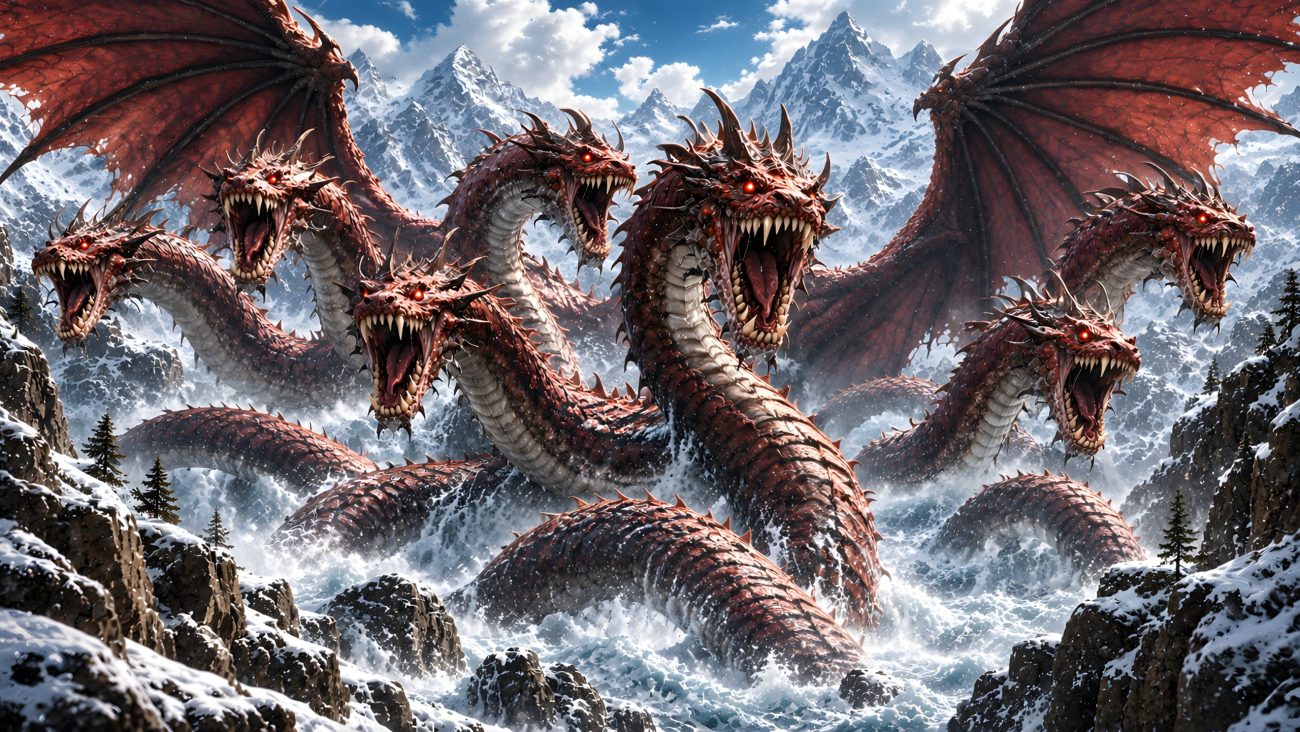
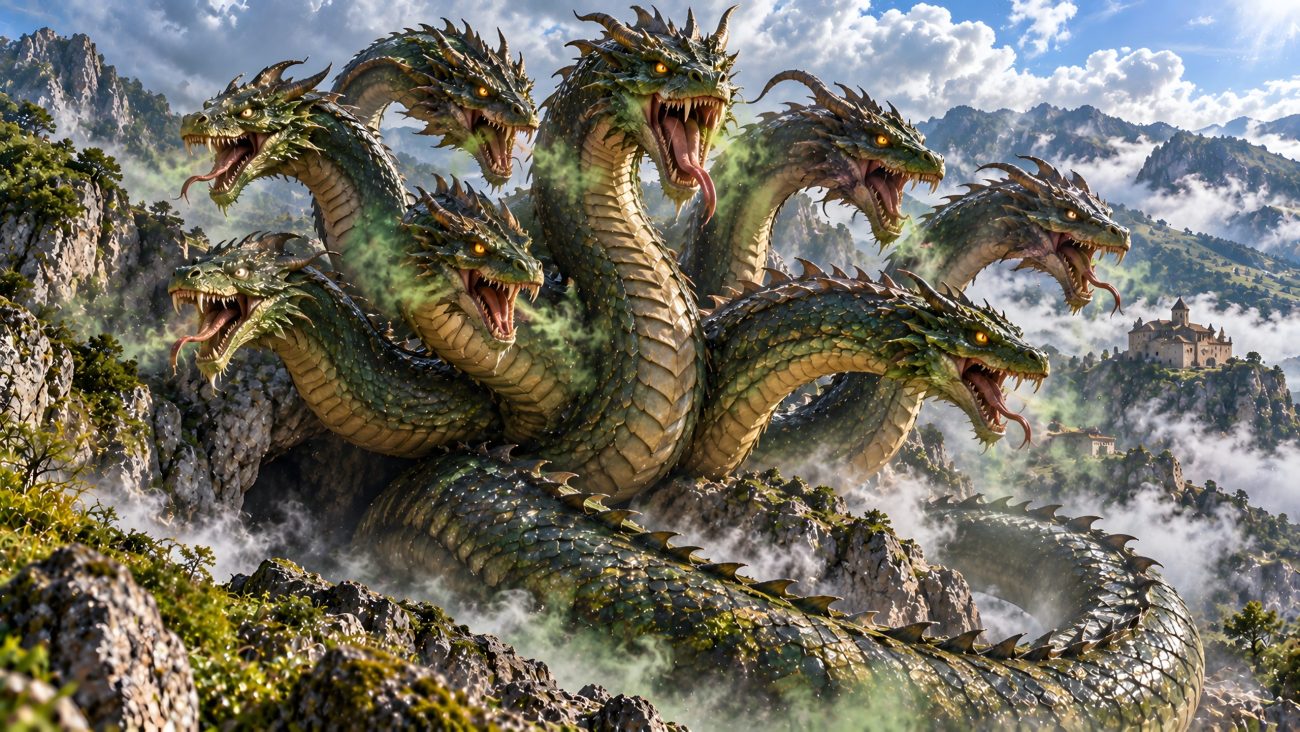
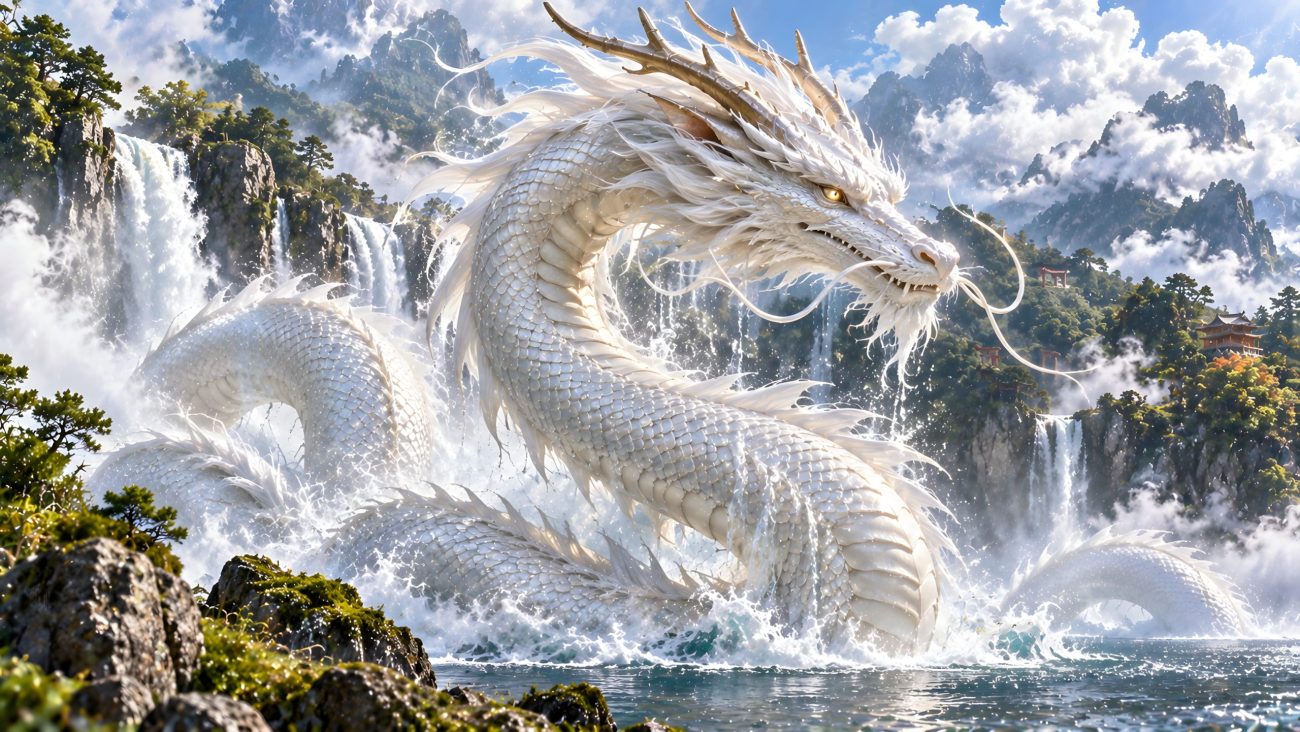
Talafsa is a monstrous female dragon from Kabyle and North African folklore, often described as a many-headed serpent similar to a hydra. In some legends, she possesses seven heads and lives near forests, caves, springs, or sources of water.

According to the myths, Talafsa controls the water of entire regions. Villages and cities suffer from drought because she guards rivers or springs and refuses to release the water unless she receives a yearly sacrifice. The sacrifice is usually a young girl chosen from the local people and offered to the monster to prevent destruction and thirst.

Stories about Talafsa are part of a wider North African tradition of dragon-slayer myths. In many versions, a hero eventually appears to confront the beast, defeat her, and free the water for the people. These tales were especially widespread in Kabylia, where Talafsa became one of the best-known monstrous beings of local folklore.


Sources

Tadukli.free.fr. (2006, July 22). Éléments de mythologie kabyle. Retrieved May 10, 2026, from https://tadukli.free.fr/pages/culture/histoire_01_elements_de_mythologie_kabyle.htm


Azhdaha

Tradition / Region: Iranian Mythology, Persian Mythology
Also Known As: Azhdahak, Ezhdeha, Azhdar
Category: Dragon


The Myth

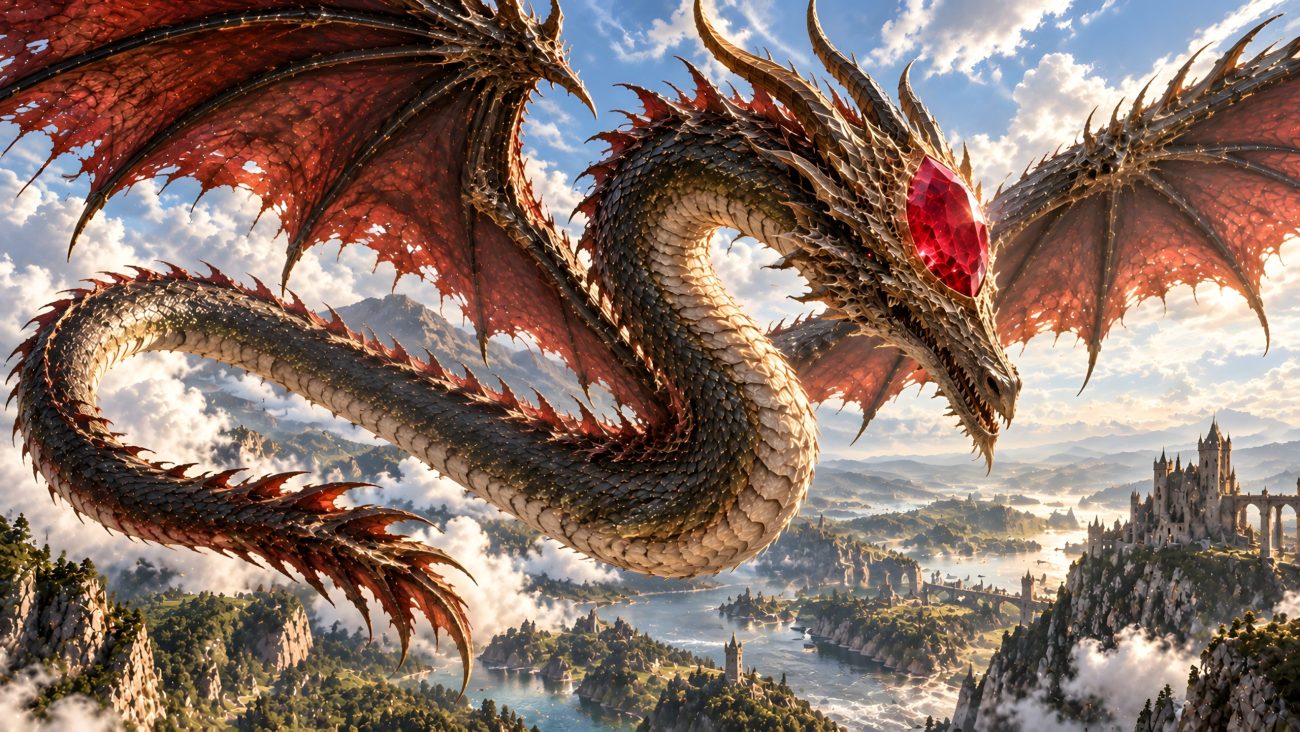
The Azhdaha is a dragon-like creature from Iranian mythology, often described as a gigantic serpent with an enormous body, blazing eyes, huge jaws, and countless teeth. In Persian legends, azhdahas could live in the sea, on land, or in the sky, and some were said to possess wings or fin-like appendages.

The creature appears throughout Persian epic literature, especially in the Shahnameh, where heroic warriors such as Rostam, Esfandiar, and Sām battle and slay monstrous azhdahas during their legendary quests.

In later Islamic-era traditions, the azhdaha was sometimes said to begin life as an ordinary snake. After living for hundreds of years and growing to an unnatural size, the serpent became violent and destructive. Because of the chaos it caused, God cast it into the sea. There the creature continued to grow even larger, developing fins or wings and creating massive waves with its movements.

Some medieval Persian accounts claimed that the heart of an azhdaha granted courage and bravery to whoever consumed it. Its skin was believed to possess healing properties, while its buried head was said to fertilize the earth.

The azhdaha became one of the most feared monsters in Persian mythology, representing destruction, chaos, and the dangerous power of nature.


Sources

Wikipedia contributors. (n.d.). Azhdaha. In Wikipedia. Retrieved May 10, 2026, from https://en.wikipedia.org/wiki/Azhdaha


Druk

Tradition / Region: Bhutan Mythology
Alternate Names: Duk, Dug
Category: Dragon


The Myth

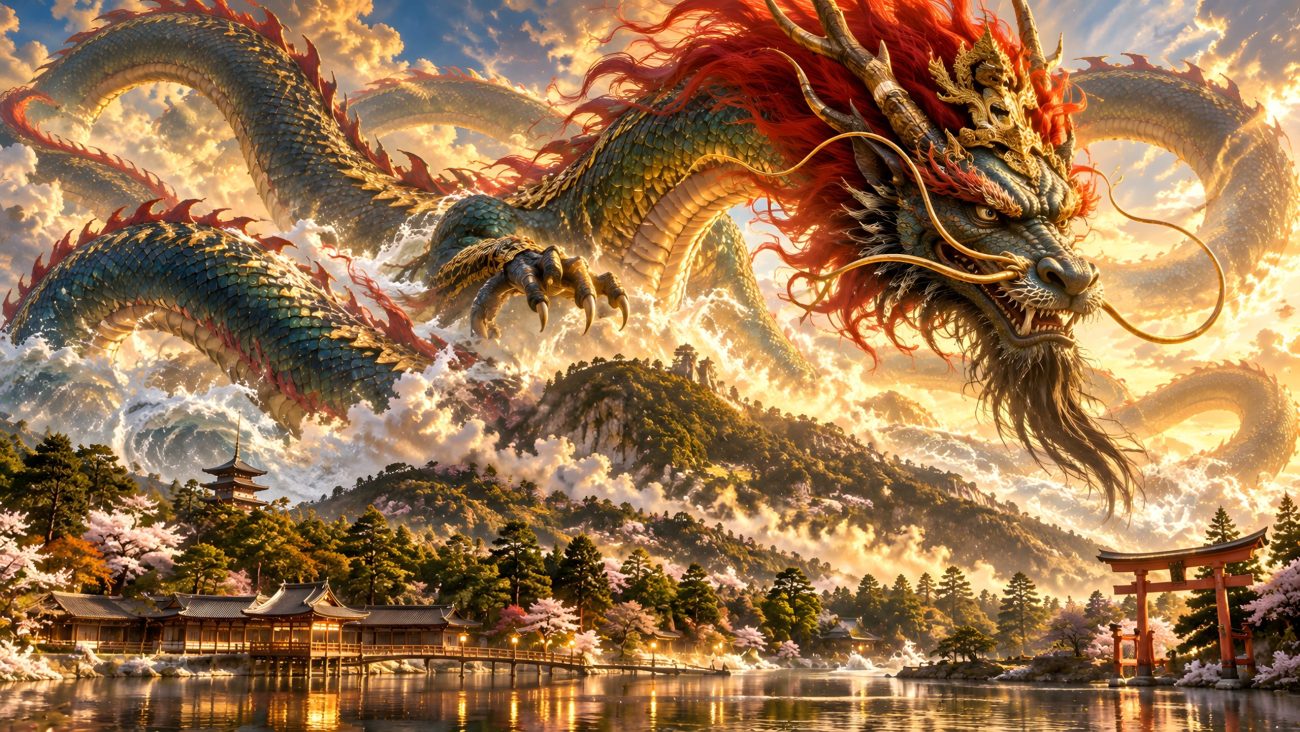
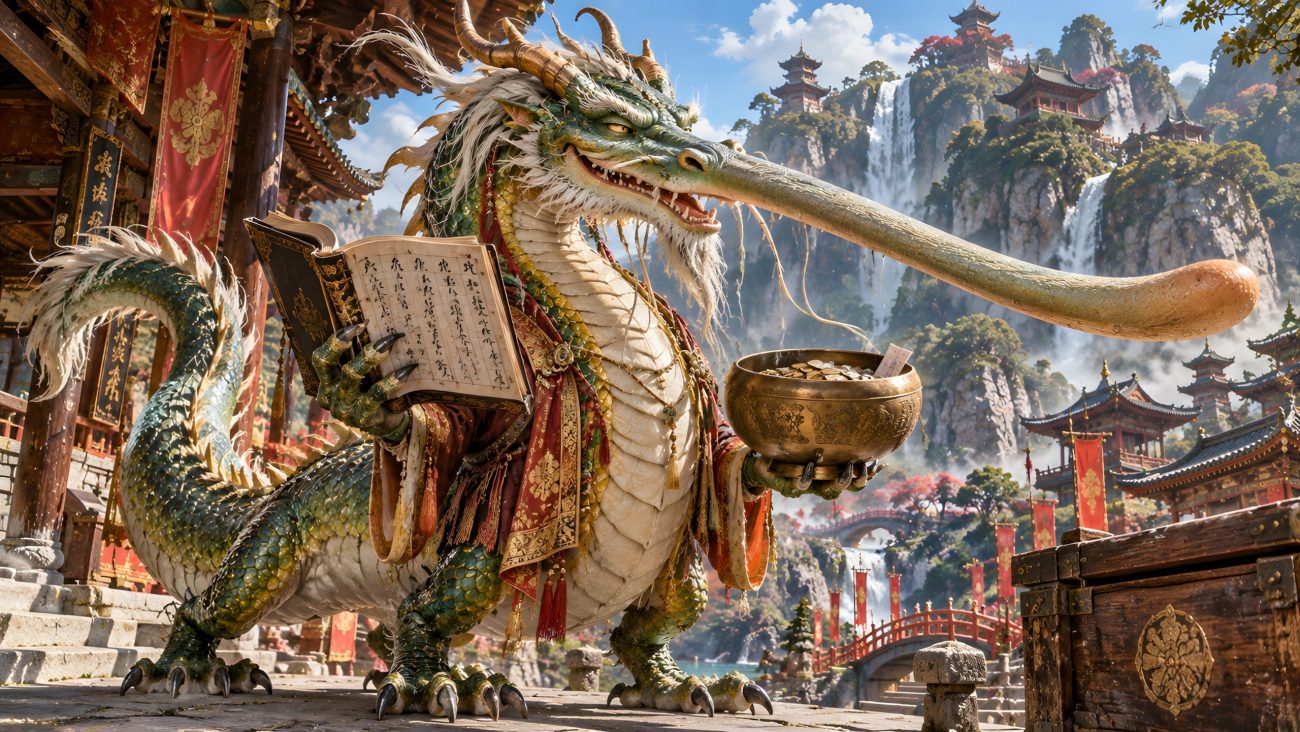
The Druk is the thunder dragon of Tibetan and Bhutanese mythology and the national symbol of Bhutan. It is associated with thunder, storms, and the sound of dragons roaring in the sky. The Druk is traditionally depicted as a dragon connected to clouds and lightning, and on the flag of Bhutan it is shown holding jewels that symbolize wealth.

According to tradition, the symbol of the Druk originated with the Drukpa Lineage in Tibet. When Tsangpa Gyare, the founder of the lineage, began building Ralung Monastery, a violent storm appeared. The thunder was interpreted as the roar of a dragon and seen as an auspicious omen. Because of this event, the monastery was named Drug-Ralung, meaning “Thunder Dragon.” The followers of the monastery became known as Drugpa, or “People of the Thunder Dragon.”

As the Drukpa Lineage spread into Bhutan, the thunder dragon became closely associated with the country itself. Bhutan came to be known as Druk Yul, meaning “Land of the Thunder Dragon,” while its rulers became known as Druk Gyalpo, or “Thunder Dragon Kings.” The Druk eventually became the central national symbol of Bhutan and remains closely tied to Bhutanese identity, religion, and kingship.


Sources

Wikipedia contributors. (n.d.). Druk. In Wikipedia, from https://en.wikipedia.org/wiki/Druk


Dilmun Serpent-Dragon

Tradition / Region: Dilmun Mythology, Bahrain Mythology, Qatari Mythology
Alternate Names: None Recorded
Category: Dragon, Snake


The Myth

The Dilmun Serpent-Dragon is a monstrous divine creature appearing in the mythology and seal art of ancient Dilmun. It is depicted as a long scaled serpent with massive jaws full of sharp teeth, large eyes, curved horns, and sometimes strange hoofed forelimbs. Certain depictions also show spikes running along its back, while some portray it crowned, suggesting that it was regarded as a supernatural or divine being rather than an ordinary beast.

The creature appears throughout Dilmun seal imagery as the enemy in a great mythological conflict. In one scene, a humanoid or divine champion leads several sacred beasts against the serpent-dragon, including a bull, lion, ibex, and a rare griffin-like creature. Together they confront the monster in what appears to be an epic supernatural battle.

Other seals depict the serpent-dragon captured, slain, or displayed upon sacrificial altars before the god Inzak. In some scenes the creature is shown stretched across offering tables after its defeat, while others appear to show the exact moment the divine champion strikes the fatal blow. The serpent-dragon’s death seems to represent the victory of divine order over a dangerous force tied to chaos and the sea.

The serpent-dragon was also closely associated with Dilmun ships. Ancient Dilmun boats often carried horned figureheads resembling the creature’s head, suggesting sailors believed the beast possessed power over the sea and invoked its image for protection or sacred authority during voyages across the Persian Gulf.

Very little of the full myth survives beyond the seal imagery, but the surviving scenes consistently portray the Dilmun Serpent-Dragon as a primordial chaos beast defeated by divine forces in one of the central mythological conflicts of ancient Dilmun tradition.


Sources

Laursen, S. T. (n.d.). Dilmun boats on seals, horned figureheads, and the serpent/dragon slaying myth, c. 2050–1500 BC.


Drache am Hirschensprung

Tradition / Region: Swiss Mythology
Alternate Names: Dragon of Hirschensprung
Category: Dragon


The Myth

In the narrow pass known as the Hirschensprung, where the land road is forced between steep rock faces to avoid the flood-prone Rhine plain, an old legend tells of a monstrous dragon that once lived among the cliffs.

The place itself already carried a name tied to danger and escape. It was said that a stag, hunted and cornered, once leapt across the chasm to evade its pursuers—an impossible jump that gave the site its name: Hirschensprung, the “stag’s leap.”

But long after that, something far worse inhabited the pass.

A dragon took up residence among the rocks, a grotesque and terrifying creature that threatened everything living in the area. It haunted the narrow route, making travel dangerous and filling the surrounding lands with fear. Neither man nor beast could pass safely while it remained.

The local farmers, unable to endure the threat any longer, devised a practical but brutal solution. Rather than confronting the creature with weapons, they used cunning.

They heated a ploughshare—an iron blade used for cutting earth—until it glowed red-hot. Then, approaching the dragon, they provoked it into opening its jaws. At the right moment, they hurled the burning iron straight into its mouth.

The dragon, driven by its insatiable hunger, swallowed it instantly.

Moments later, the heat consumed it from within. After a brief but violent death struggle, the creature perished.

Yet the story does not end with its death.

The dragon, according to local belief, still remains at Hirschensprung—but no longer alive. Its body turned to stone in the place where it died. Even now, people claim that its form can be seen in the rock itself: its head and gaping jaws protruding from the cliff face, while its tail stretches across the landscape toward the pass.

The position of the stone formation suggests that, in its final agony, the dragon twisted violently before becoming fixed forever in the mountain.


Sources

sagen.at contributors. (n.d.). Der Drache am Hirschensprung. In sagen.at, from https://www.sagen.at/texte/sagen/schweiz/st_gallen/hirschensprung.html


Uguns pūķis

Tradition / Region: Latvian Mythology
Alternate Names:
Category: Dragon


The Myth

The Uguns pūķis appears as a fire-associated dragon connected to witches and magical activity, seen carrying goods through the night.

In the story, as Lāčplēsis follows Spīdola and enters the dark supernatural setting, dragons with tails are seen moving through the night. These dragons carry money and belongings while flying, and fiery sparks come from them as they move. They appear together with witches and other supernatural beings in the same environment.

Later, a dragon is also seen in connection with the witches’ gathering, where it is bound to a transformed object and breathes out sparks and smoke. It remains present as part of the witches’ actions and surroundings.


Sources

AILAB contributors. (n.d.). Pumpurs – Lāčplēsis (2. daļa). In AILAB, from https://web.archive.org/web/20060131100630/http://www.ailab.lv/Teksti/Senie/Pumpurs/2.dala.html

Pumpurs, A. (1888). Lāčplēsis (Bearslayer), II Song: The Bear-World’s First Heroic Deed. In Latvian national epic poetry.


Sárkány

Tradition / Region: Hungarian Mythology
Alternate Names:
Category: Dragon


The Myth

The sárkány is a large and powerful mythical creature, typically described as a reptilian being with magical or spiritual properties. In Hungarian tradition, it may also appear as a humanoid figure and often has multiple heads.

Creatures identified as dragons appear in many cultures and likely do not share a single origin. Similar beings are found in ancient mythologies such as Mesopotamian and Akkadian traditions, where serpent-like or dragon-like creatures already existed. In European and Persian traditions, dragons are generally hostile, while in other cultures they may be benevolent.

In Hungarian belief, the meaning of the word sárkány changed over time. During earlier periods it could refer to a title or role, but later became associated with the monstrous dragon known from Western-Christian traditions.

In folklore and fairy tales, the sárkány is commonly a dangerous, multi-headed enemy. It is often connected with storms or whirlwinds and may appear together with violent weather. Many stories describe encounters between humans and such creatures, where the sárkány proves deadly and difficult to defeat.


Sources

Wikipedia contributors. (n.d.). Sárkány (mitológia). In Wikipedia, from https://hu.wikipedia.org/wiki/S%C3%A1rk%C3%A1ny_%28mitol%C3%B3gia%29


Brennet Wurm

Tradition / Region: Czech Mythology
Alternate Names: Brennetwurm
Category: Dragon


The Myth

The Brennet Wurm is a gigantic serpent said to dwell in the dense forests of the Brennetberg. It is described as an enormous snake-like creature, powerful enough to disturb both nature and human life.

Driven by thirst, the creature would descend from the mountains into the valley and drink from streams in such vast quantities that it could stop the flow of water, even halting the work of mills. Its presence was therefore not only terrifying but also destructive to local livelihoods.

In one encounter, a man unknowingly sat upon what he believed to be a fallen tree trunk. As he rested and emptied the ashes from his pipe, the heat struck the surface beneath him—revealing that the “log” was in fact the sleeping serpent. The creature suddenly sprang to life and slithered away with immense speed.

The Brennet Wurm also ravaged fields, crushing crops and causing widespread damage. Unable to tolerate its destruction any longer, the villagers armed themselves and drove it back into the wilderness.

There, they set the forest ablaze, using fire to destroy the beast. Through this act, the Brennet Wurm was finally eradicated.

The creature represents a classic European motif:
a dragon-like serpent tied to land and water, whose presence disrupts both natural balance and human survival, and which can only be defeated through collective action and elemental force—especially fire.


Sources

sagen.at contributors. (n.d.). Der Brennetwurm. In sagen.at, from https://www.sagen.at/texte/sagen/tschechien/watzlik/brennetwurm.html


Dragon Children

Tradition / Region: Armenian Mythology
Alternate Names: Brood of the Vishap, Dragon offspring
Category: Dragon, Hybrid


The Myth

The Dragon Children are the offspring or brood of the Vishap, the great dragons of Armenian mythology. They are described as uncanny beings that exist between human and dragon, combining physical presence with ghostly and demonic traits.

These beings were believed to dwell around Mount Massis, the sacred mountain strongly associated with dragons. They lived near their parent creatures in hidden ravines, mountain palaces, and remote regions, forming a kind of extended dragon lineage or tribe.

In some traditions, they were not purely monstrous but could appear human or semi-human, suggesting that they were born from unions between dragons and human women. This gave rise to the idea of dragon-born individuals—people with unnatural origins, often marked by strange behavior, magical abilities, or a sinister nature.

The Dragon Children were closely linked to witchcraft and supernatural knowledge. They were said to possess skill in magic and deception, and their presence among humans often brought unease. Some were thought to infiltrate human society, living among people while hiding their true nature.

A particularly feared trait was their connection to changelings. Like their dragon parents, they were believed to steal human children and replace them with one of their own kind—offspring that appeared human but behaved wickedly and unnaturally.

Historical and legendary figures were sometimes associated with this lineage. Individuals of strange origin or destructive character were believed to have dragon ancestry, reinforcing the idea that the Dragon Children could influence human bloodlines.

Despite their danger, they were not purely chaotic monsters. Their behavior reflected a primitive, almost human way of life—they hunted, set traps, and lived in organized groups, much like early human societies. This blurred the boundary between monster and being.

Overall, the Dragon Children represent a disturbing and complex concept: a race born from dragons, existing between worlds, capable of blending into humanity while carrying the power, cunning, and danger of their ancient lineage.


Sources

Ananikian, M. H. (1925). Armenian Mythology. In The Mythology of All Races, Vol. 7. Published by the Archaeological Institute of America p. 77–79.


Vishap

Tradition / Region: Armenian Mythology
Alternate Names: Dragon, Vishap (from Persian, “poisonous”)
Category: Dragon


The Myth

The Vishap is a dragon-like being of Armenian mythology, often envisioned as a gigantic serpent or monstrous creature associated with mountains, especially Mount Massis. It is both a physical and supernatural entity, combining traits of beasts, spirits, and demons.

These dragons were believed to dwell in remote and dangerous places such as high mountain ravines, volcanic regions, and deep waters. Their connection to Mount Massis was especially strong, where eruptions, smoke, and fire reinforced their image as destructive and fearsome beings.

Vishaps were intelligent and magical creatures capable of shape-shifting, often appearing as humans or serpents. Despite their monstrous nature, they were not purely evil. While dangerous and sometimes hostile, they also possessed qualities that made them part of a broader mythological balance rather than absolute embodiments of evil.

They were known to abduct humans, especially children, sometimes replacing them with strange offspring of their own kind. In certain legends, they formed relationships with humans, suggesting the existence of dragon-born lineages or hybrid beings with supernatural abilities.

Vishaps also had strong ties to fertility and natural forces. They were said to steal milk from livestock and carry away crops, linking them to both abundance and loss. Their presence could disrupt human life, yet also indicated a deep connection to the cycles of nature.

In heroic mythology, they served as adversaries to divine or semi-divine figures. The god Vahagn, associated with fire and lightning, was known as a slayer of dragons, battling Vishaps in a role similar to storm gods defeating forces of chaos and drought.

They were believed to possess powerful talismans, such as serpent stones, and to have poisonous breath or essence. Their voices were terrifying, and their sheer size made them overwhelming to encounter.

Overall, the Vishap represents a complex dragon figure—part natural force, part demon, part ancient being—feared by humans but deeply embedded in the mythological landscape of Armenia.


Sources

Ananikian, M. H. (1925). Armenian Mythology. In The Mythology of All Races, Vol. 7. Published by the Archaeological Institute of America p. 77–79.