
Helpful Fish

Tradition / Region: Qatari Mythology
Alternate Names: None Recorded
Category: Fish


The Myth

The Helpful Fish is a magical talking fish from Qatari folklore that appears in a Cinderella-like tale. Unlike dangerous sea spirits found in Gulf legends, the Helpful Fish is a benevolent creature connected to kindness, fortune, and reward. It lives in the sea and possesses supernatural powers, helping those who show it mercy. The fish is especially associated with granting food, wealth, fine clothing, jewelry, and good fortune to the innocent.

The story tells of a girl named Fsaijrah who lived under the cruelty of her stepmother. One day her stepmother ordered her to clean several fish by the seashore for dinner. As Fsaijrah prepared to cut the final small fish, it suddenly spoke and begged her not to kill it, promising to make her rich if she released it. Though afraid of angering her stepmother, Fsaijrah allowed the fish to escape back into the sea.

When she returned home and admitted one fish had escaped, her stepmother punished her by refusing her food. Later that night Fsaijrah was sent to throw fish bones into the sea, where the Helpful Fish appeared again. Waiting for her at the shore, it had prepared a tray of delicious food for her, rewarding her kindness.

Some time later a drums celebration was held. The stepmother dressed her own daughter in beautiful clothing and forbade Fsaijrah from attending. After they left, the Helpful Fish appeared carrying magnificent clothes, jewelry, and diamond slippers for the girl so she could secretly attend the celebration herself. Nobody recognized the beautifully dressed stranger as Fsaijrah.

As she rushed home before her stepfamily returned, one of her slippers fell into a well. The next day a shaikh discovered the glittering slipper and declared he would marry whichever woman it fit. The stepmother’s daughter failed to wear it, but when Fsaijrah tried it on, the slipper fit perfectly.

Before the wedding, the Helpful Fish returned one final time and dressed Fsaijrah in her most beautiful garments yet, covering her with pearls and red coral. Through the aid of the magical fish, the mistreated girl rose from suffering to wealth and marriage, while her stepmother’s daughter was left without the fortune she desired.


Sources

Taibah, N. J., & MacDonald, M. R. (n.d.). Folktales from the Arabian Peninsula: Tales of Bahrain, Kuwait, Oman, Qatar, Saudi Arabia, the United Arab Emirates, and Yemen. In World Folklore Series.

Bū Daryā

Tradition / Region: Bahrain Mythology, Qatari Mythology
Alternate Names: Lord of the Sea, Sea Devil, Shayṭān al-Baḥār
Category: Sea Dweller


The Myth

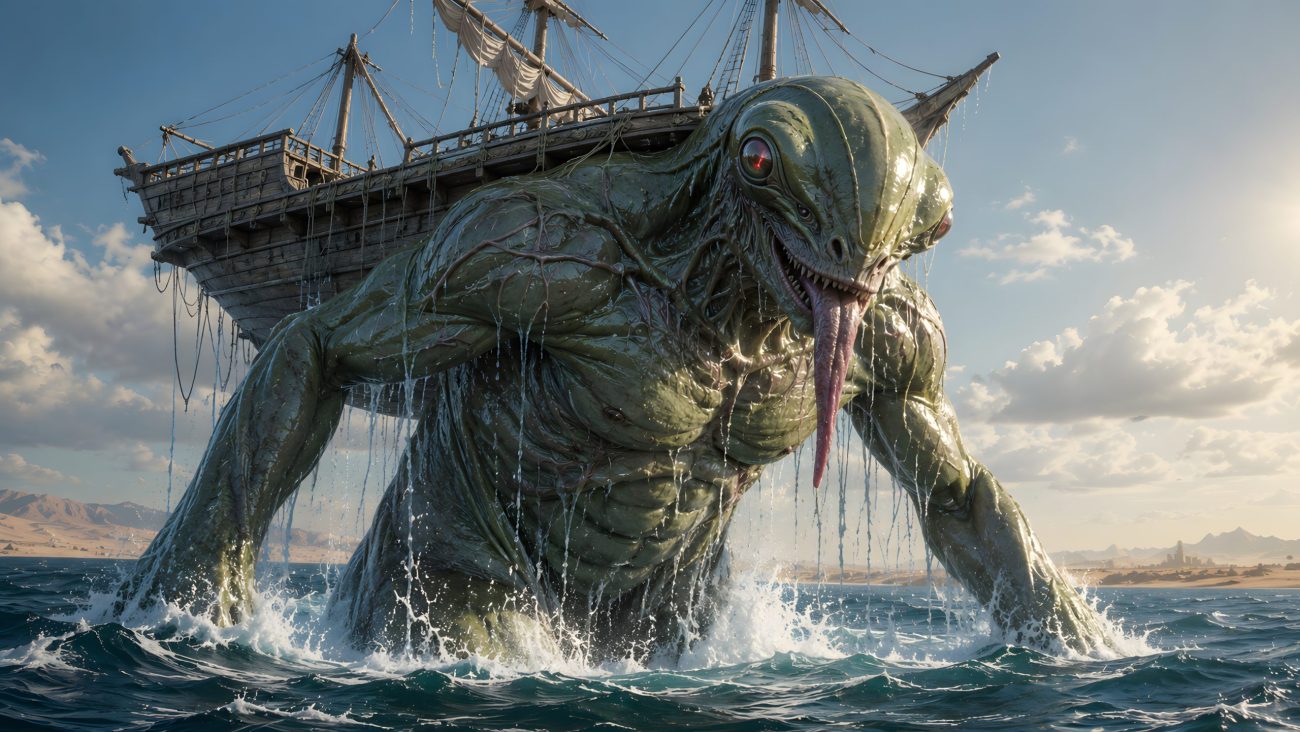
Bū Daryā is a monstrous sea spirit feared throughout the Persian Gulf, especially among sailors, pearl divers, and fishermen. Described as a gigantic half-human, half-fish being, the creature possessed the upper body of a man and the immense tail of a sea beast. Witnesses claimed it was enormous, hideous, and terrifying to behold, though many insisted no one had ever survived seeing it face to face. It was believed to dwell far out in the dark waters of the Gulf, haunting ships that traveled too far from shore.

According to the most common legends, Bū Daryā would silently climb aboard ships during the night while the crew slept. Sailors believed the creature moved through darkness unnoticed before dragging men away one by one to devour them in distant waters. Entire ships were sometimes said to vanish after encountering it, leaving only wreckage floating at sea. Because of this fear, pearl divers and sailors often kept night watches, staying awake in shifts to guard against attacks from the “Lord of the Sea.”

Another version of the legend tells of eerie cries echoing across the open water at night. The sounds resembled desperate human screams or mournful singing calling for help from somewhere in the darkness. Sailors who followed the cries were lured into deadly waters where Bū Daryā awaited them. Ships drawn toward the voice were believed to become lost, robbed of supplies, destroyed by storms, or dragged beneath the sea entirely. Many compared the creature’s hypnotic calls to the songs of sirens.

The only protection against Bū Daryā was believed to be the recitation of Quranic verses. Sailors repeated prayers aloud whenever strange cries were heard across the water, believing the sacred words could repel the sea demon and prevent it from luring the crew into disaster.

Among Gulf communities, the legend also became a warning tale used to frighten children away from the shoreline at night. Parents warned that if children wandered too close to the sea after dark, Bū Daryā would emerge from the water to carry them away. Despite its terrifying reputation, the creature remained one of the most enduring supernatural figures in Gulf maritime folklore, embodying the dangers, disappearances, storms, and mysteries of the open sea.


Sources

Pechcin, K. (Dyl). (n.d.). A Tale of “The Lord of the Sea” in Qatari Folklore and Tradition.

Wikipedia contributors. (n.d.). Qatari folklore – Mythical beings. In Wikipedia, from https://en.wikipedia.org/wiki/Qatari_folklore#Mythical_beings


Dilmun Serpent-Dragon

Tradition / Region: Dilmun Mythology, Bahrain Mythology, Qatari Mythology
Alternate Names: None Recorded
Category: Dragon, Snake


The Myth

The Dilmun Serpent-Dragon is a monstrous divine creature appearing in the mythology and seal art of ancient Dilmun. It is depicted as a long scaled serpent with massive jaws full of sharp teeth, large eyes, curved horns, and sometimes strange hoofed forelimbs. Certain depictions also show spikes running along its back, while some portray it crowned, suggesting that it was regarded as a supernatural or divine being rather than an ordinary beast.

The creature appears throughout Dilmun seal imagery as the enemy in a great mythological conflict. In one scene, a humanoid or divine champion leads several sacred beasts against the serpent-dragon, including a bull, lion, ibex, and a rare griffin-like creature. Together they confront the monster in what appears to be an epic supernatural battle.

Other seals depict the serpent-dragon captured, slain, or displayed upon sacrificial altars before the god Inzak. In some scenes the creature is shown stretched across offering tables after its defeat, while others appear to show the exact moment the divine champion strikes the fatal blow. The serpent-dragon’s death seems to represent the victory of divine order over a dangerous force tied to chaos and the sea.

The serpent-dragon was also closely associated with Dilmun ships. Ancient Dilmun boats often carried horned figureheads resembling the creature’s head, suggesting sailors believed the beast possessed power over the sea and invoked its image for protection or sacred authority during voyages across the Persian Gulf.

Very little of the full myth survives beyond the seal imagery, but the surviving scenes consistently portray the Dilmun Serpent-Dragon as a primordial chaos beast defeated by divine forces in one of the central mythological conflicts of ancient Dilmun tradition.


Sources

Laursen, S. T. (n.d.). Dilmun boats on seals, horned figureheads, and the serpent/dragon slaying myth, c. 2050–1500 BC.


Dilmun Griffin

Tradition / Region: Dilmun Mythology, Bahrain Mythology, Qatari Mythology
Alternate Names: None Recorded
Category: Bird


The Myth

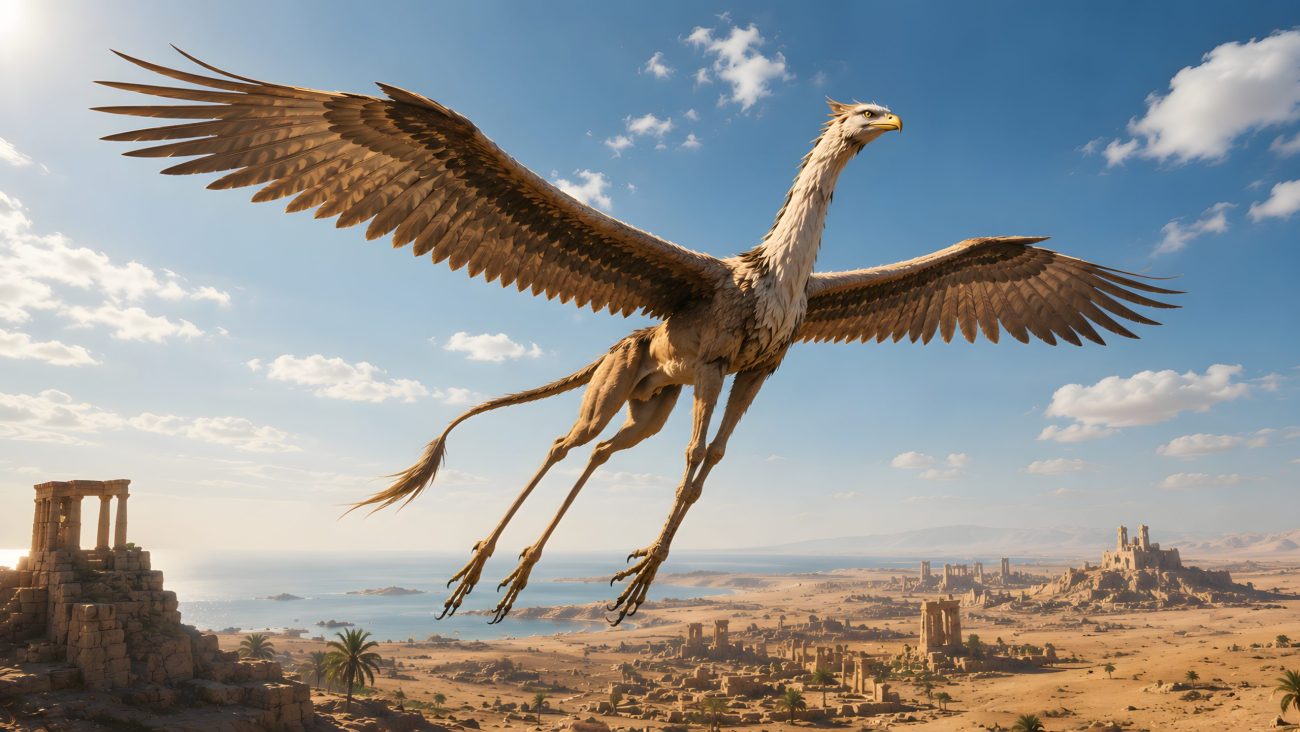
The Dilmun Griffin is a rare chimeric creature appearing on ancient Dilmun seals from the Bronze Age civilization of Dilmun. It is shown as part of a mythological battle scene in which a humanoid or divine figure leads several beasts against a great serpent or dragon.

The griffin-like creature appears beside a bull, lion, and ibex as they confront the serpent. It is depicted as one of the creatures accompanying the divine champion during the battle. In other seal scenes, the same griffin-like being appears again beside the humanoid figure, suggesting it belonged to the same mythological motif.

Very little survives about the creature itself, and no detailed myths describing its origin or nature remain. The surviving imagery only shows it participating in the sacred conflict against the serpent-dragon alongside the other beasts.


Sources

Laursen, S. T. (n.d.). Dilmun boats on seals, horned figureheads, and the serpent/dragon slaying myth, c. 2050–1500 BC, p. 7-8.