Bū Daryā

Tradition / Region: Bahrain Mythology, Qatari Mythology
Alternate Names: Lord of the Sea, Sea Devil, Shayṭān al-Baḥār
Category: Sea Dweller


The Myth

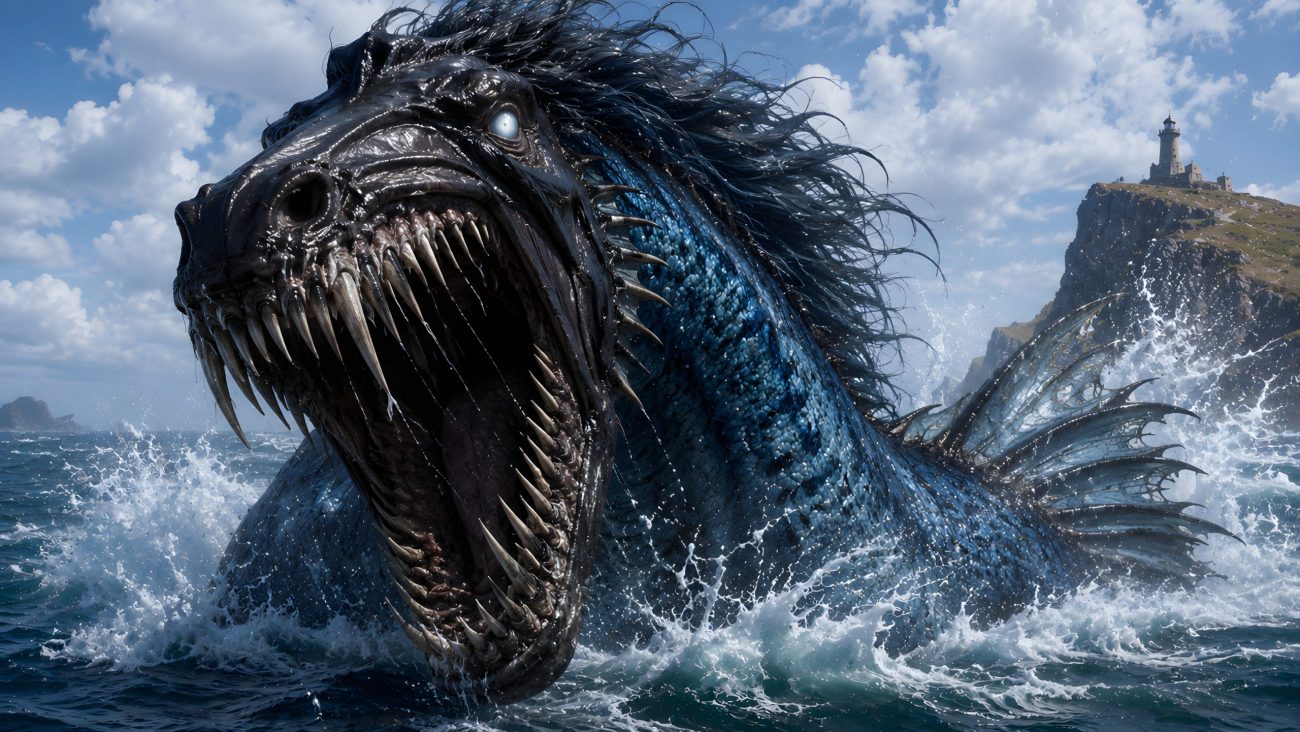
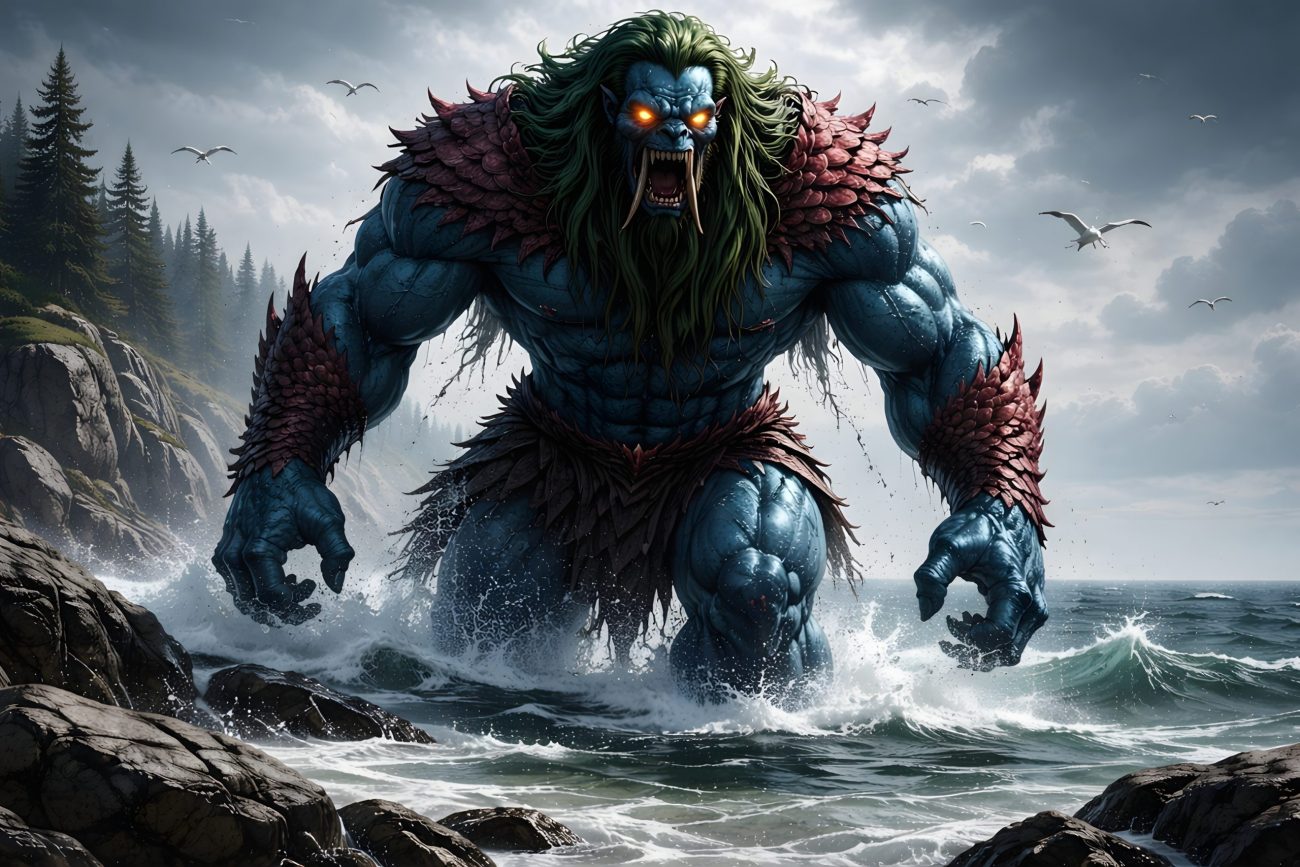
Bū Daryā is a monstrous sea spirit feared throughout the Persian Gulf, especially among sailors, pearl divers, and fishermen. Described as a gigantic half-human, half-fish being, the creature possessed the upper body of a man and the immense tail of a sea beast. Witnesses claimed it was enormous, hideous, and terrifying to behold, though many insisted no one had ever survived seeing it face to face. It was believed to dwell far out in the dark waters of the Gulf, haunting ships that traveled too far from shore.

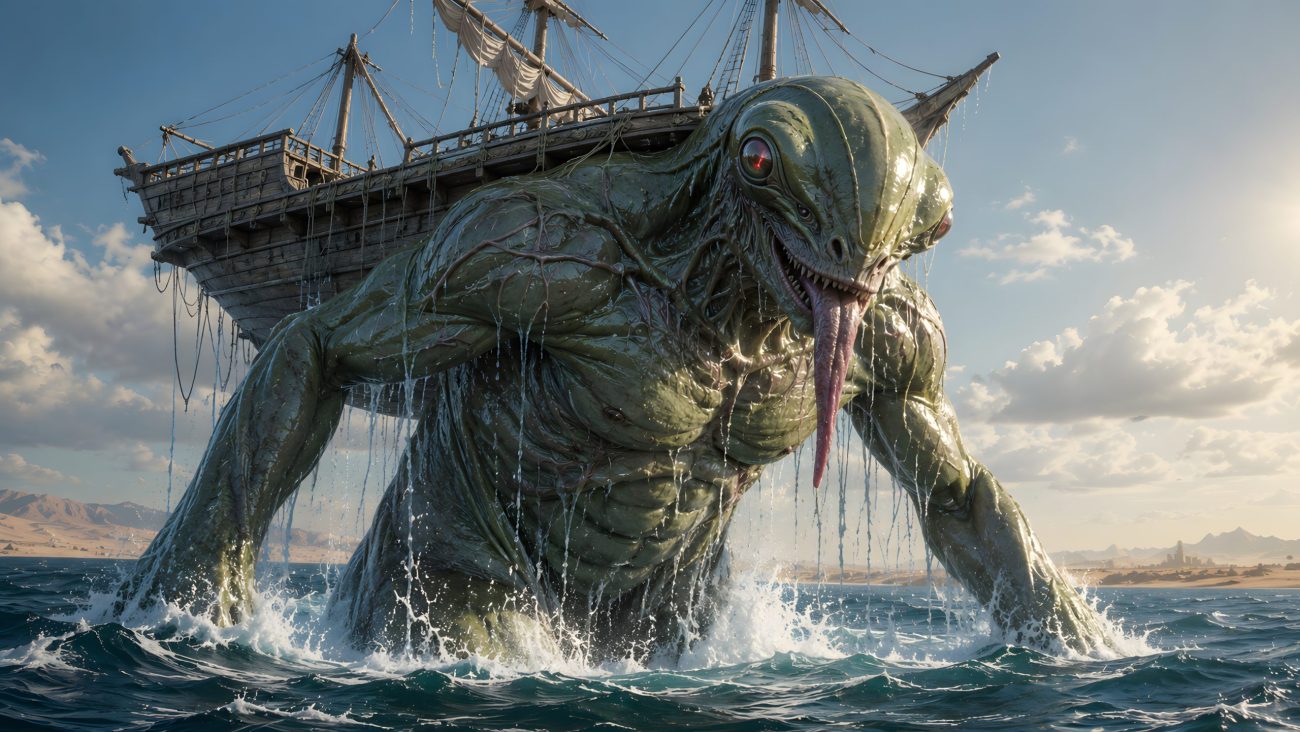
According to the most common legends, Bū Daryā would silently climb aboard ships during the night while the crew slept. Sailors believed the creature moved through darkness unnoticed before dragging men away one by one to devour them in distant waters. Entire ships were sometimes said to vanish after encountering it, leaving only wreckage floating at sea. Because of this fear, pearl divers and sailors often kept night watches, staying awake in shifts to guard against attacks from the “Lord of the Sea.”

Another version of the legend tells of eerie cries echoing across the open water at night. The sounds resembled desperate human screams or mournful singing calling for help from somewhere in the darkness. Sailors who followed the cries were lured into deadly waters where Bū Daryā awaited them. Ships drawn toward the voice were believed to become lost, robbed of supplies, destroyed by storms, or dragged beneath the sea entirely. Many compared the creature’s hypnotic calls to the songs of sirens.

The only protection against Bū Daryā was believed to be the recitation of Quranic verses. Sailors repeated prayers aloud whenever strange cries were heard across the water, believing the sacred words could repel the sea demon and prevent it from luring the crew into disaster.

Among Gulf communities, the legend also became a warning tale used to frighten children away from the shoreline at night. Parents warned that if children wandered too close to the sea after dark, Bū Daryā would emerge from the water to carry them away. Despite its terrifying reputation, the creature remained one of the most enduring supernatural figures in Gulf maritime folklore, embodying the dangers, disappearances, storms, and mysteries of the open sea.


Sources

Pechcin, K. (Dyl). (n.d.). A Tale of “The Lord of the Sea” in Qatari Folklore and Tradition.

Wikipedia contributors. (n.d.). Qatari folklore – Mythical beings. In Wikipedia, from https://en.wikipedia.org/wiki/Qatari_folklore#Mythical_beings


Iku-Turso

Tradition / Region: Finnish Mythology
Alternate Names: Iku-Tursas, Iki-Tursas, Meritursas, Tursas, Turisas
Category: Sea dweller, Giant


The Myth

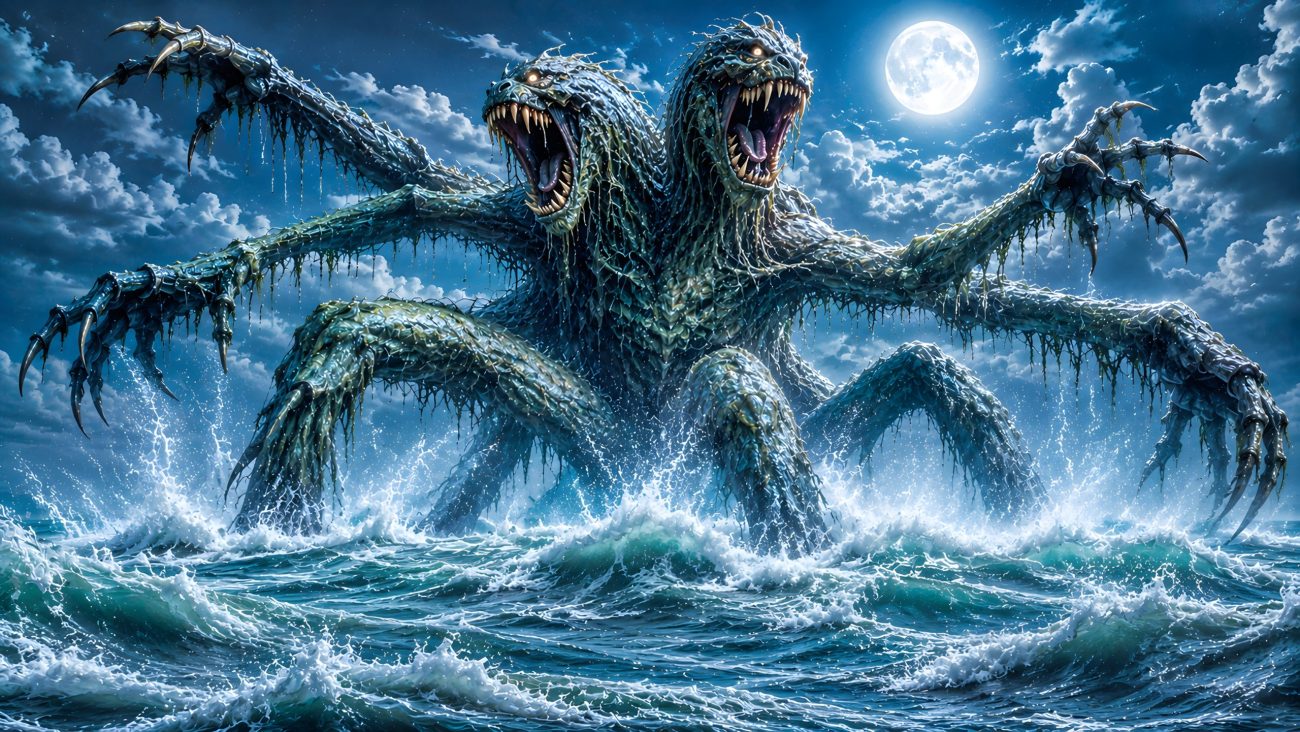
Iku-Turso is a fearsome and ancient being of Finnish mythology, most often portrayed as a monstrous creature of the sea. He is described as a malevolent force rising from the depths, associated with destruction, chaos, and primal power.

In mythic tradition, Iku-Turso is not always a single, clearly defined entity. Some stories treat him as one great being, while others suggest multiple related giants or spirits sharing the name. Despite this ambiguity, he is consistently tied to immense strength and dangerous supernatural influence.

In epic tradition, especially in the Kalevala, Iku-Turso emerges from the ocean as a destructive force. At one point, he burns gathered hay, and from the ashes grows a colossal oak tree. This tree becomes so vast that it blocks out the sun and the moon, plunging the world into darkness until it is finally cut down.

He is also depicted as a threat to heroes. When summoned from the sea by Louhi, he rises with the intent to destroy the heroes of Kalevala and reclaim a powerful magical artifact. However, he is ultimately confronted by Väinämöinen, who overpowers him and forces him, through magical command, to swear never to rise from the sea again.

In other traditions, a sea form known as “Meri-Tursas” is connected to the origins of disease, linking the being not only to physical destruction but also to sickness and suffering in the world.

Iku-Turso represents
an ancient, chaotic power of the deep — a giant whose emergence brings fire, darkness, and ruin, and whose defeat restores balance to the world.


Sources

Wikipedia contributors. (n.d.). Iku-Turso (creature). In Wikipedia, from https://en.wikipedia.org/wiki/Iku-Turso_(creature)


Ebihare

Tradition / Region: Papua New Guinea Mythology
Alternate Names: Bihare
Category: Sea Dweller


The Myth

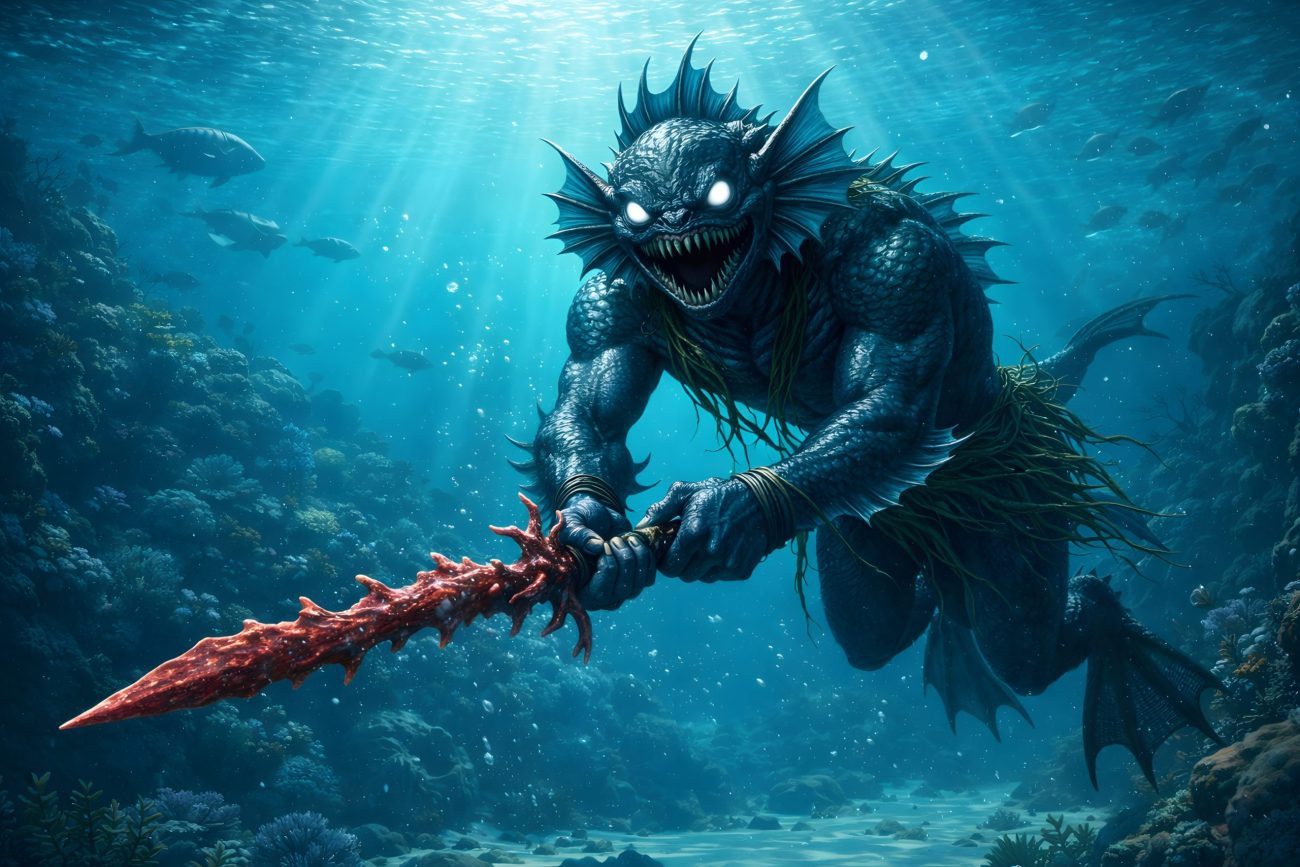
In Kiwai Papuan folklore, Ebihare is a general name used for all mythical beings that live in the sea. Before people learned how to fish, the inhabitants of Mawata did not eat fish at all. Fish were called ebihare, and people would flee from them in fear, collecting only shellfish instead. It was only later, when Bija became the first person to fish, that this fear began to change.

The words bihare and ebihare are commonly used to describe unknown or unnamed sea creatures, especially those believed to be dangerous or supernatural. Any sea being without a specific name may be called ebihare. Because of this, the term covers many kinds of mythical sea creatures rather than a single form.

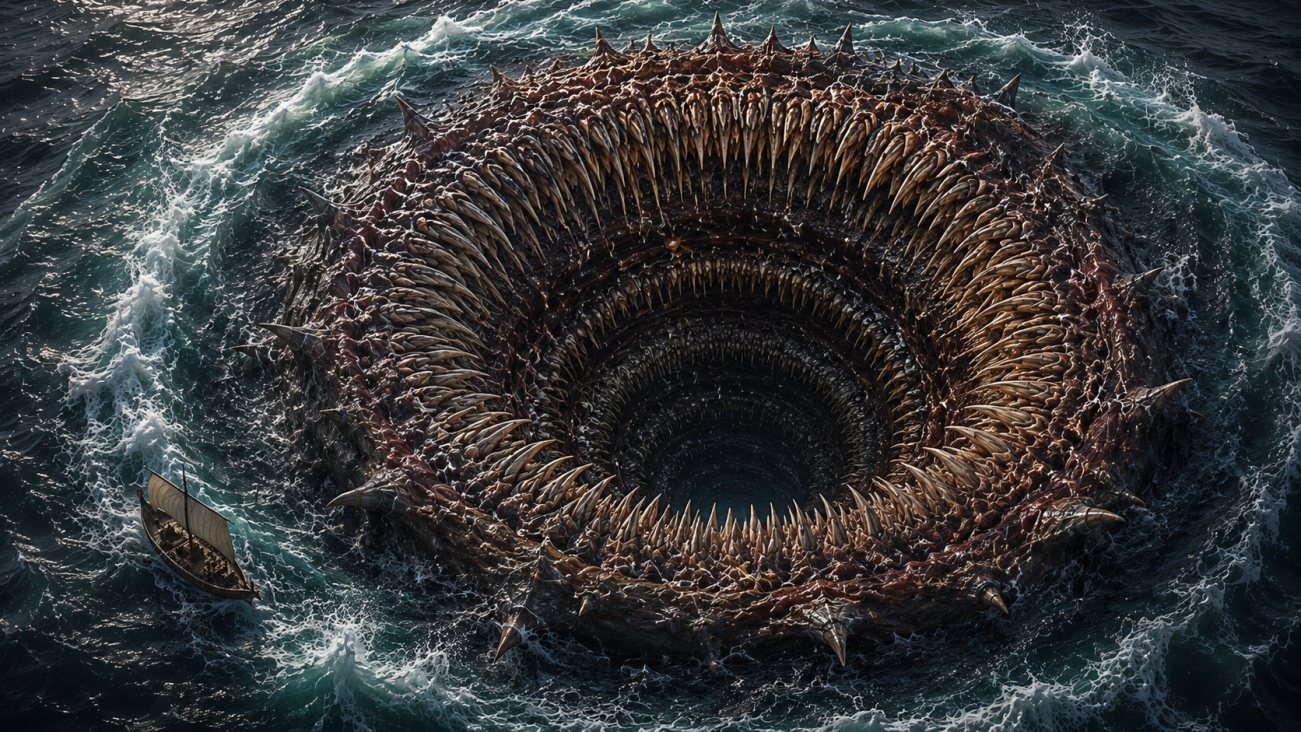
Ebihare are thought to be harmful to fishermen and sailors. People avoid areas of the sea where they believe these beings live. Their presence is said to be revealed by sudden disturbances in the water—whirlpools, swirling eddies, or ripples that look as though the sea is boiling in a pot.

One story tells of a man from Kubira named Meuri, who had fallen into disgrace among his people. During a raid in Dawar, he allowed himself to be killed by enemies, and his wife was killed as well. Some time later, their children set out by canoe to travel to Dawar. On the journey, the canoe sank, and the children were transformed into bihare, becoming beings of the sea themselves.


Gallery


Sources

Bestiary.us contributors. (n.d.). Ebihare. In Bestiary.us, from https://www.bestiary.us/ebikhare/


Interpretive Lenses

Religious Readings
  • Christian Ascetic Deep Dive
Philosophical Readings
  • Nietzschean Deep Dive
Psychological Readings
  • Jungian Deep Dive
Esoteric Deep Dive
  • Hermetic Deep Dive
Political / Social Readings
  • Marxist Deep Dive
Other
  • How to Invite The Ebihare

Erumia

Tradition / Region: Papua New Guinea Mythology
Alternate Names:
Category: Sea Dweller, Jellyfish


The Myth

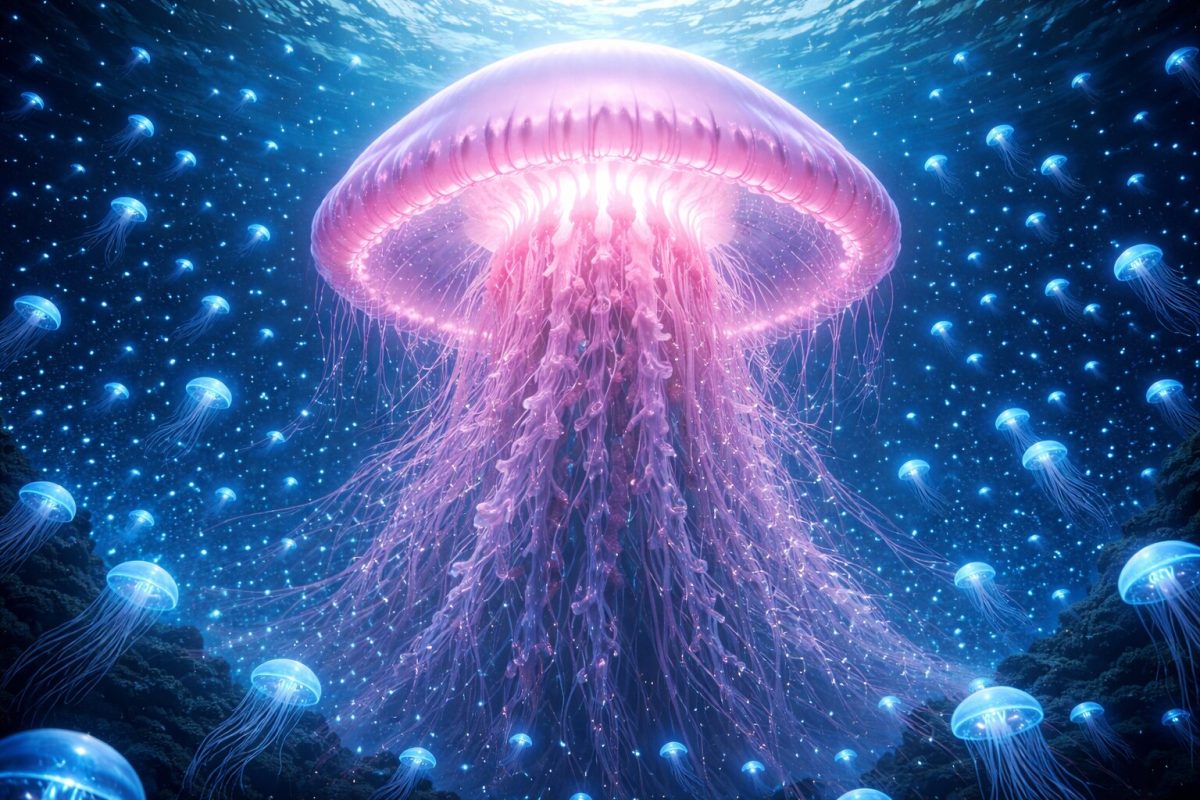
On a reef near the village of Mawata lives Erumia, an enormous jellyfish feared and respected by the people. All ordinary jellyfish are said to be her children, spreading through the sea as extensions of her presence. Many men claim to have seen her with their own eyes.

Erumia is deadly. Her sting can kill a person, and when swimmers see long, slimy strings drifting toward them in the water, they know these are her trailing tendrils. At such a sight, there is no thought of bravery—only flight. To remain is to risk death.

Yet Erumia is not merely a threat. She is the patron of all fish and holds power over the sea’s abundance. To certain men she appears in dreams, granting them “lucky things” for fishing—signs, charms, or knowledge that ensure a successful catch. Through these gifts, she sustains life even as she threatens it.

The Mawata people themselves are closely linked with Erumia. Neighboring groups regard her as their ororodrora, a powerful mysterious being bound to their identity. When Mawata visitors arrive elsewhere, they may be greeted with the words, “The Erumia people have come,” acknowledging this spiritual association.

Erumia’s presence is also remembered in song. In a serial chant describing a journey eastward from Adiri, her domain is marked by the hanging jellyfish strings near the mouth of the Bina River—a sign that one has entered her waters.

Thus Erumia remains both guardian and danger: mother of jellyfish, ruler of fish, giver of fortune, and bringer of death, dwelling silently on her reef while her influence drifts far beyond it.


Gallery


Sources

Landtman, G. (1970). The Kiwai Papuans of British New Guinea: A nature-born instance of Rousseau’s ideal community.


Interpretive Lenses

Religious Readings
  • Christian Ascetic Deep Dive
Philosophical Readings
  • Nietzschean Deep Dive
Psychological Readings
  • Jungian Deep Dive
Esoteric Deep Dive
  • Hermetic Deep Dive
Political / Social Readings
  • Marxist Deep Dive
Other
  • How to Invite The Erumia

The Gebaro Crab

Tradition / Region: Papua New Guinea Mythology
Alternate Names:
Category: Crab, Sea Dweller


The Myth

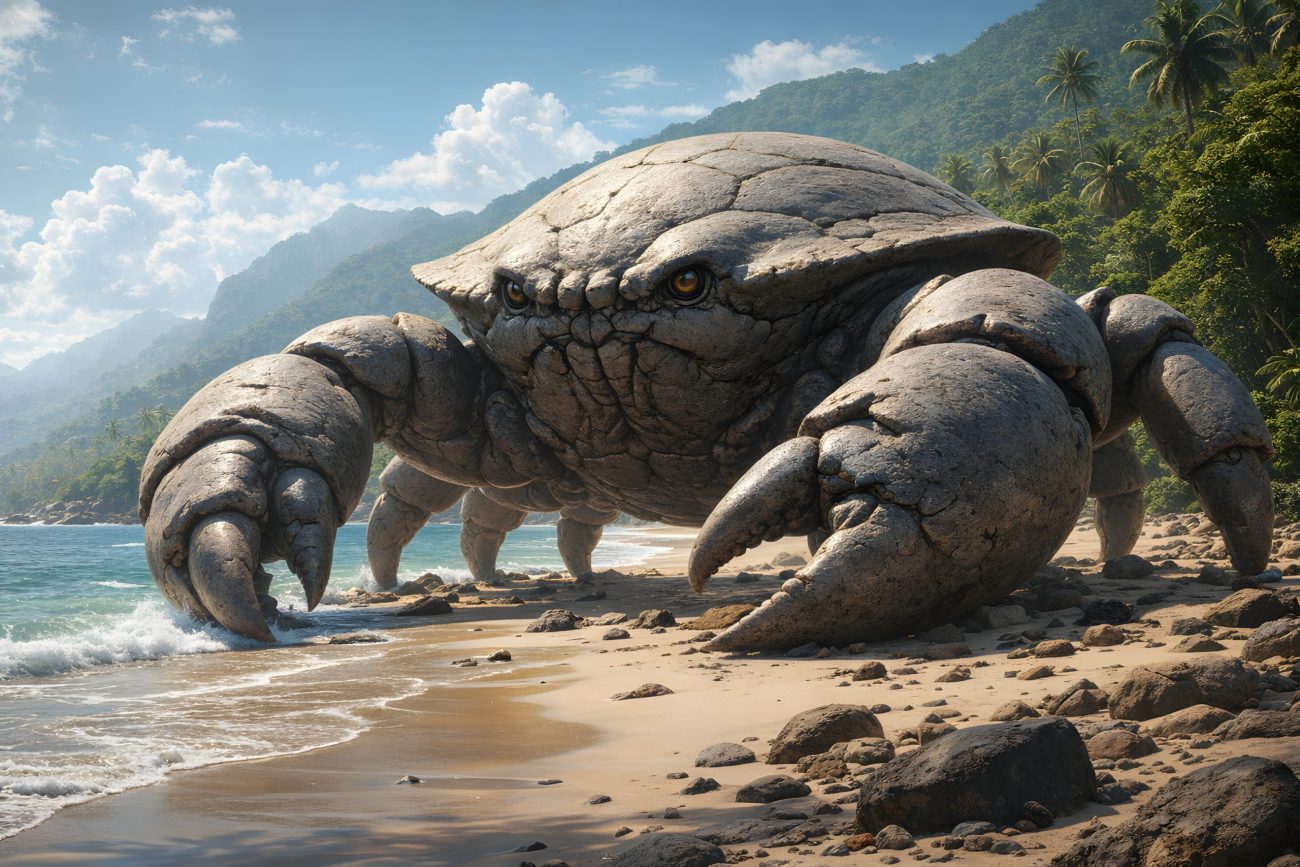
Near the village of Gebaro there once lived a monstrous crab, feared by all who knew of it. Its body was enormous, and its shell was as hard as solid stone.

The people tried many times to destroy the creature. They shot arrows at it and struck it with clubs, but every weapon failed. Arrow points shattered, and blows rang out uselessly against its armored shell. No wound could be made, and no crack appeared.

Because the crab could not be harmed, the people learned to avoid the place where it lived. It remained there, undefeated and unchallenged, a living proof that some beings cannot be overcome by human strength.

The Gebaro crab became a symbol of invulnerability—an enemy not meant to be slain, but endured and respected from a distance.


Gallery


Sources

Landtman, G. (1970). The Kiwai Papuans of British New Guinea: A nature-born instance of Rousseau’s ideal community.


Interpretive Lenses

Religious Readings
  • Christian Ascetic Deep Dive
Philosophical Readings
  • Nietzschean Deep Dive
Psychological Readings
  • Jungian Deep Dive
Esoteric Deep Dive
  • Hermetic Deep Dive
Political / Social Readings
  • Marxist Deep Dive
Other
  • How to Invite The Gebaro Crab

The Gigantic Crab of Aibinio

Tradition / Region: Papua New Guinea Mythology
Alternate Names:
Category: Crab, Sea Dweller


The Myth

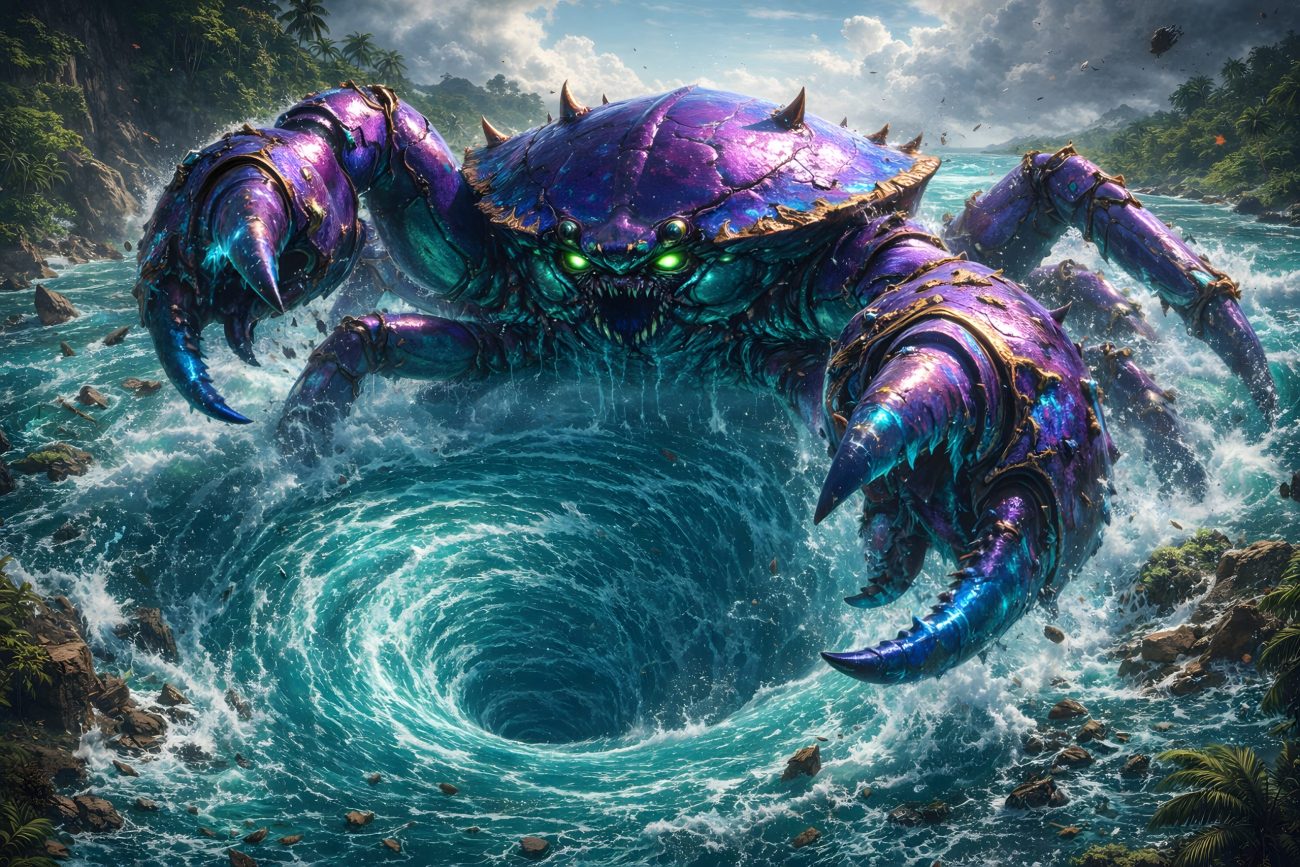
Near Aibinio there was once a small island where the Wiorubi people found an enormous crab, far larger than any ever seen before. Its shell was vast, its claws powerful, and it stood unmoving as men and women gathered around it.

Believing it could be captured, several people approached together. At that moment, the crab suddenly opened one of its great nippers. With terrifying speed, it seized the hands of those closest to it and dragged them into the lagoon. None could break free.

As the people were pulled under, the creature stirred the water with immense force. The lagoon began to spin, churning faster and faster until the water rose and roared. The island itself was torn apart and washed away, swallowed by the whirling waters. When the storm of water finally ceased, nothing remained of the island. Only a deep whirlpool marked the place where it had once stood.

The gigantic crab still dwells there beneath the surface. At every high tide, the water twists and surges in a powerful eddy, just as it did on the day the island vanished. The people say the creature is not a true crab, but an or or dr or a—a mysterious and dangerous being whose form only resembles an animal.

To this day, the waters near Aibinio are treated with fear and caution, for the crab waits below, and the sea still remembers its strength.


Gallery


Sources

Landtman, G. (1970). The Kiwai Papuans of British New Guinea: A nature-born instance of Rousseau’s ideal community.


Interpretive Lenses

Religious Readings
  • Christian Ascetic Deep Dive
Philosophical Readings
  • Nietzschean Deep Dive
Psychological Readings
  • Jungian Deep Dive
Esoteric Deep Dive
  • Hermetic Deep Dive
Political / Social Readings
  • Marxist Deep Dive
Other
  • How to Invite The Gigantic Crab of Aibinio

Saratan

Tradition / Region: Arabic folklore and medieval Islamic literature
Alternate Names: Zaratan
Category: Crab / sea monster


The Myth

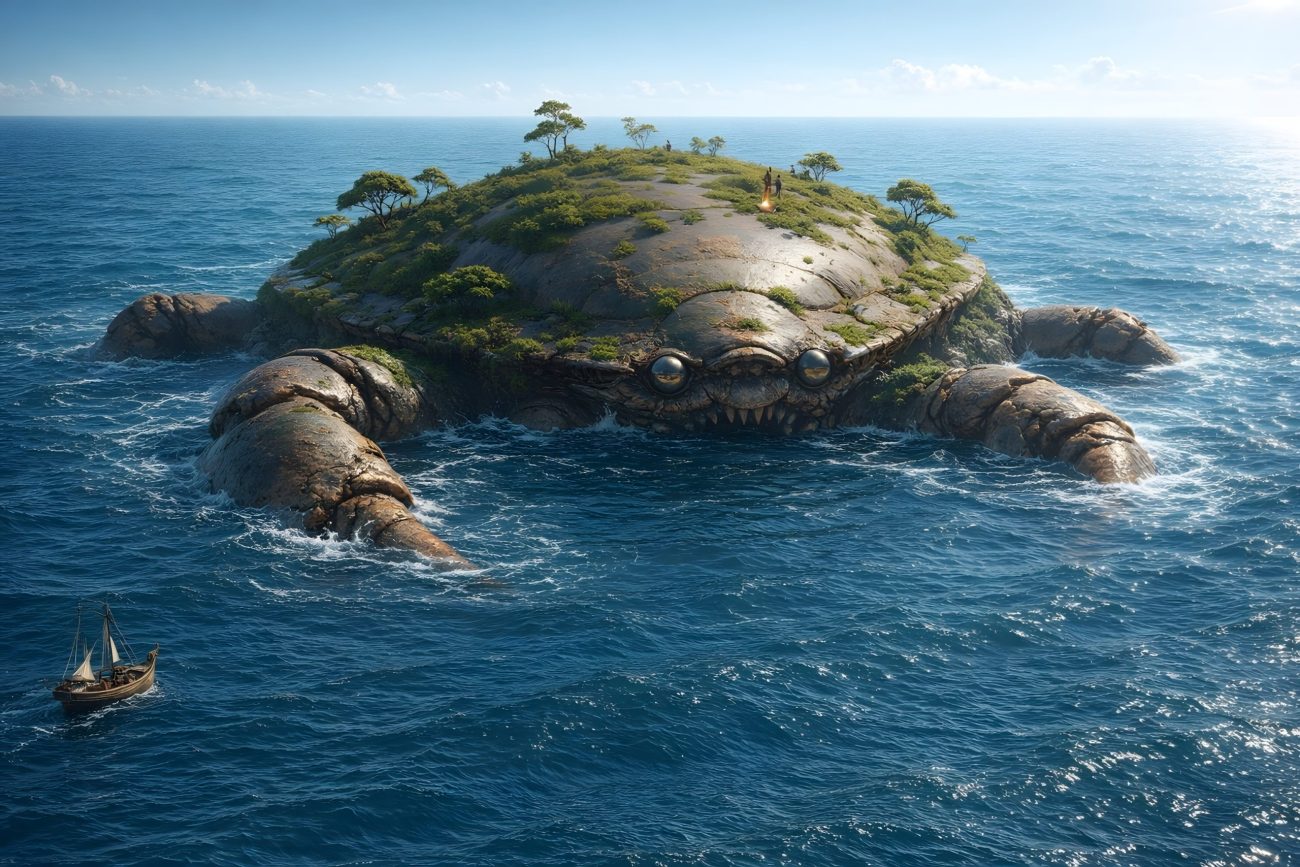
The Saratan is a colossal sea creature described in Arabic literature as a monstrous crab of unimaginable size. Sailors believed it lived far out at sea, where it remained so still and vast that it was often mistaken for an island. Its back was said to be covered with soil, plants, and even trees, giving the illusion of solid land rising from the ocean.

According to accounts repeated by sailors, ships sometimes anchored beside what appeared to be an island, and crews went ashore to rest. They lit fires, gathered wood, and explored valleys and fissures, unaware that the land beneath them was alive. When the heat of the fire reached the Saratan’s shell, the creature stirred and began to move, sliding back into the sea with everything on its back. Only those who realized the danger in time and fled were said to survive.

The ninth-century scholar Al-Jahiz, writing in Kitāb al-Ḥayawān (The Book of Animals), reported these stories but noted that he had never met anyone who could truthfully claim to have seen the Saratan with their own eyes. He placed it among other legendary sea monsters such as the sea-dragon and the great whale, repeating sailors’ tales while acknowledging their fantastical nature.

The Saratan also appears in The Wonders of Creation by al-Qazwini, where it is listed among the marvels of the seas. In the tales of One Thousand and One Nights, the creature is echoed in the first voyage of Sinbad the Sailor, where sailors land on what they believe to be an island, only to discover it is a living monster that dives beneath the waves.

Across these stories, the Saratan is remembered as a deceptive giant of the sea—silent, immobile, and deadly—whose vast shell lured the unwary and whose awakening meant sudden destruction.