Sansho-birashi

Tradition / Region: Japanese Mythology
Alternate Names: Sansho Kurage
Category: Demon


The Myth

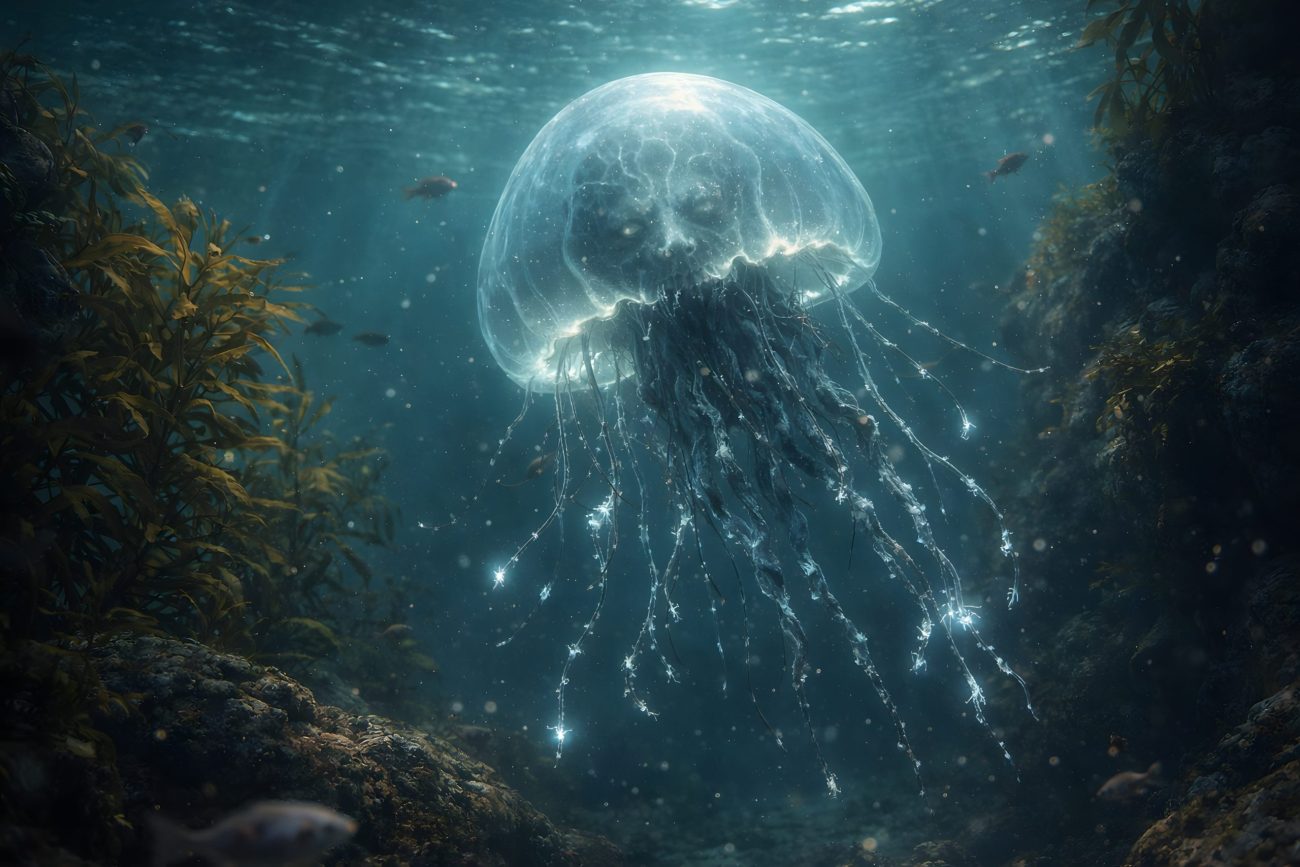
Among the women divers of Shima, who for generations descended into the sea to gather abalone and seaweed, there were stories of a feared presence beneath the water known as the Sansho-birashi.

When the divers worked along the reefs, they sometimes felt a sudden sting, sharp as a needle. At first it was only a small pain, but soon it spread through the body, tightening the chest and making it hard to breathe. Some said the shock could even cloud the mind, leaving the diver confused or helpless in the water.

In earlier times, such attacks were believed to be the work of a demon that lurked among the reefs. The creature was said to be small and difficult to see, nearly transparent, hiding where the seaweed cast shadows. It struck silently and vanished just as quickly.

Because of this, divers took precautions. They crushed the leaves of the sanshō plant and smeared the sharp-scented juice across their skin before entering the sea. Others tucked sprigs of sanshō into their hair as charms, believing the plant’s power would repel the unseen attacker.

Another creature feared in the same waters was called the Sansho Kurage, a jellyfish-like being said to drift beneath seaweed beds. Its sting was said to bring burning pain and fever, and it too became part of the stories told among the divers before they slipped beneath the waves.

Even as time passed and people learned ways to treat the stings, the name Sansho-birashi remained, a reminder that the sea was never empty, and that unseen things could still wait among the rocks for those who entered their realm.


Sources

Tyz-Yokai Blog. (n.d.). Sanshō-birashi. Retrieved March 1, 2026, from https://tyz-yokai.blog.jp/archives/1056156792.html

Erumia

Tradition / Region: Papua New Guinea Mythology
Alternate Names:
Category: Sea Dweller, Jellyfish


The Myth

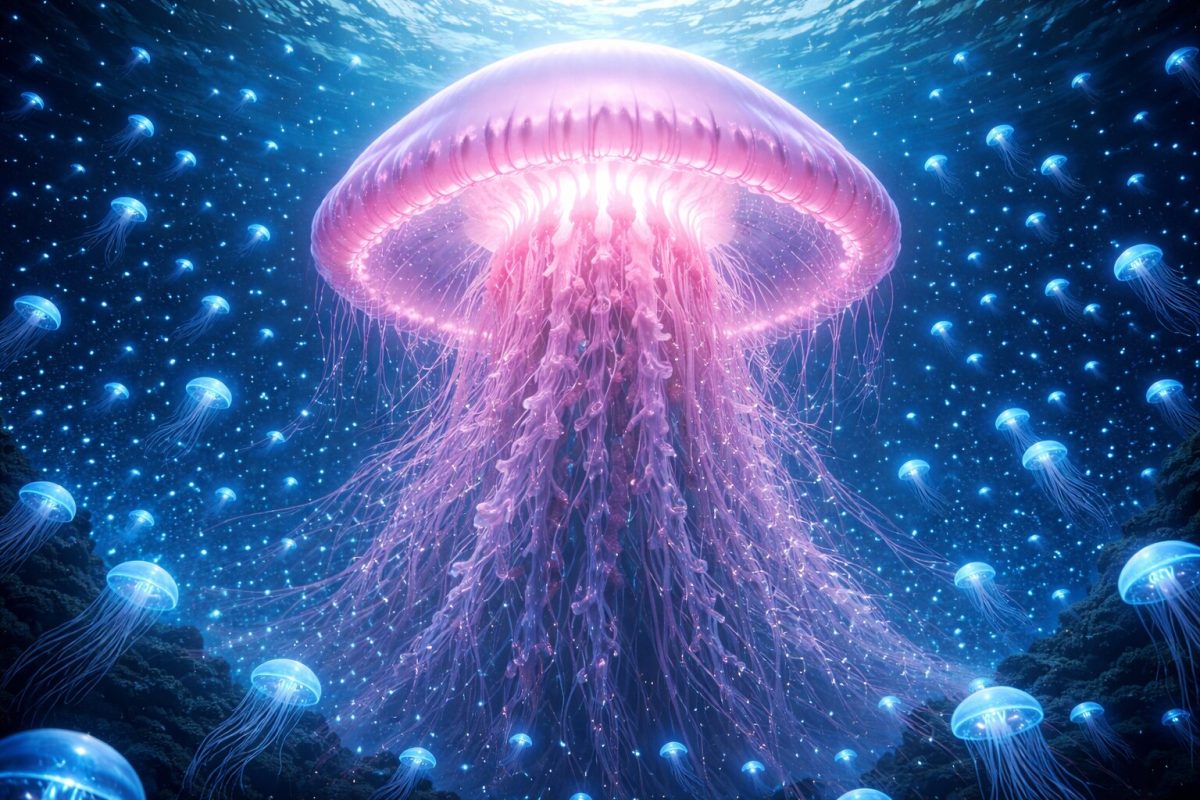
On a reef near the village of Mawata lives Erumia, an enormous jellyfish feared and respected by the people. All ordinary jellyfish are said to be her children, spreading through the sea as extensions of her presence. Many men claim to have seen her with their own eyes.

Erumia is deadly. Her sting can kill a person, and when swimmers see long, slimy strings drifting toward them in the water, they know these are her trailing tendrils. At such a sight, there is no thought of bravery—only flight. To remain is to risk death.

Yet Erumia is not merely a threat. She is the patron of all fish and holds power over the sea’s abundance. To certain men she appears in dreams, granting them “lucky things” for fishing—signs, charms, or knowledge that ensure a successful catch. Through these gifts, she sustains life even as she threatens it.

The Mawata people themselves are closely linked with Erumia. Neighboring groups regard her as their ororodrora, a powerful mysterious being bound to their identity. When Mawata visitors arrive elsewhere, they may be greeted with the words, “The Erumia people have come,” acknowledging this spiritual association.

Erumia’s presence is also remembered in song. In a serial chant describing a journey eastward from Adiri, her domain is marked by the hanging jellyfish strings near the mouth of the Bina River—a sign that one has entered her waters.

Thus Erumia remains both guardian and danger: mother of jellyfish, ruler of fish, giver of fortune, and bringer of death, dwelling silently on her reef while her influence drifts far beyond it.


Gallery


Sources

Landtman, G. (1970). The Kiwai Papuans of British New Guinea: A nature-born instance of Rousseau’s ideal community.


Interpretive Lenses

Religious Readings
  • Christian Ascetic Deep Dive
Philosophical Readings
  • Nietzschean Deep Dive
Psychological Readings
  • Jungian Deep Dive
Esoteric Deep Dive
  • Hermetic Deep Dive
Political / Social Readings
  • Marxist Deep Dive
Other
  • How to Invite The Erumia