Wabodame

Tradition: Papua New Guinea Mythology
Alternative Names:
Category: Crocodile


The Myth

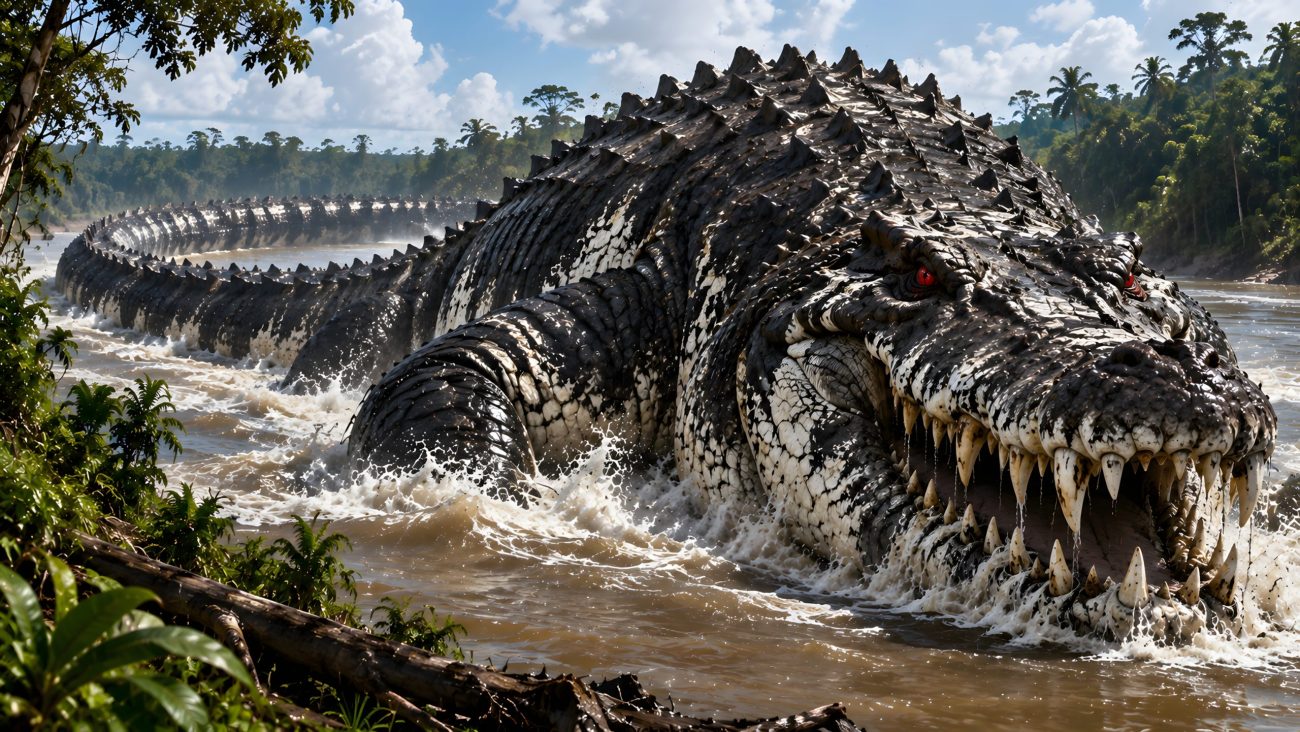
Wabodame was a famous old crocodile of enormous size who lived in the Binaturi River. The young crocodiles that lived there were said to bring parts of the people they caught to the old monster.

Wabodame was not merely a dangerous crocodile, however, but a powerful spirit associated with secret knowledge. When people wished to learn about hidden or secret matters, they would send a young boy who had not yet learned to be afraid to sleep in a place where Wabodame had previously slept, marked by the impression left by the crocodile’s body in the ground. During the boy’s sleep, the spirit of the crocodile would appear to him in a dream and give him the information that was required. When the boy awoke, he would tell the man who had sent him everything he had learned.

Eventually, Wabodame was shot and killed by a man from Dirimo who wanted to take revenge upon the whole people because of an injury he had suffered. After the crocodile had been killed, a boy was again sent to sleep in the place where it had rested. There, Wabodame’s spirit appeared to him and warned him that a great sickness was going to spread across the country.

The warning proved true. Men, women, and children began to die, and two people were sometimes buried in each grave. The people were forced to flee from their villages, and several tribes were entirely wiped out by the sickness.

Wabodame was also associated with sorcery and the supernatural killing of enemies. Sorcerers were said to appeal to the old crocodile when they wished to cause someone’s death. One method involved placing a croton twig in a creek and speaking a spell, causing the twig to transform into a crocodile that would seize the person whose name had been spoken.

Another method used the edible root called auhi to create a fictitious crocodile. A crocodile’s tooth was inserted into a suitable part of the root to represent its mouth, and medicine was spat onto it. The sorcerer then invoked Wabodame, saying, “Wabodame, you send devil belong you go catch that man,” and naming the intended victim.

The auhi was then placed in the river, where it transformed into a real crocodile. The crocodile went to the person named by the sorcerer, killed him, and brought his body back to the place. Afterwards, it returned to the form of an auhi.

When the sorcerer came back, he removed the crocodile tooth from the auhi and kept it, while the root itself was replanted in the garden. In some cases, the root would begin to grow again. Whenever this method was used, the auhi was taken from the same garden.


Sources

Landtman, Gunnar. The Kiwai Papuans of British New Guinea: A Nature-Born Instance of Rousseau’s Ideal Community. New York: Johnson Reprint Corp., 1970. https://archive.org/details/kiwaipapuansofbr0000land
Kaibani

Tradition / Region: Papua New Guinean mythology
Alternative names: None known
Category: Cave dweller


The Myth

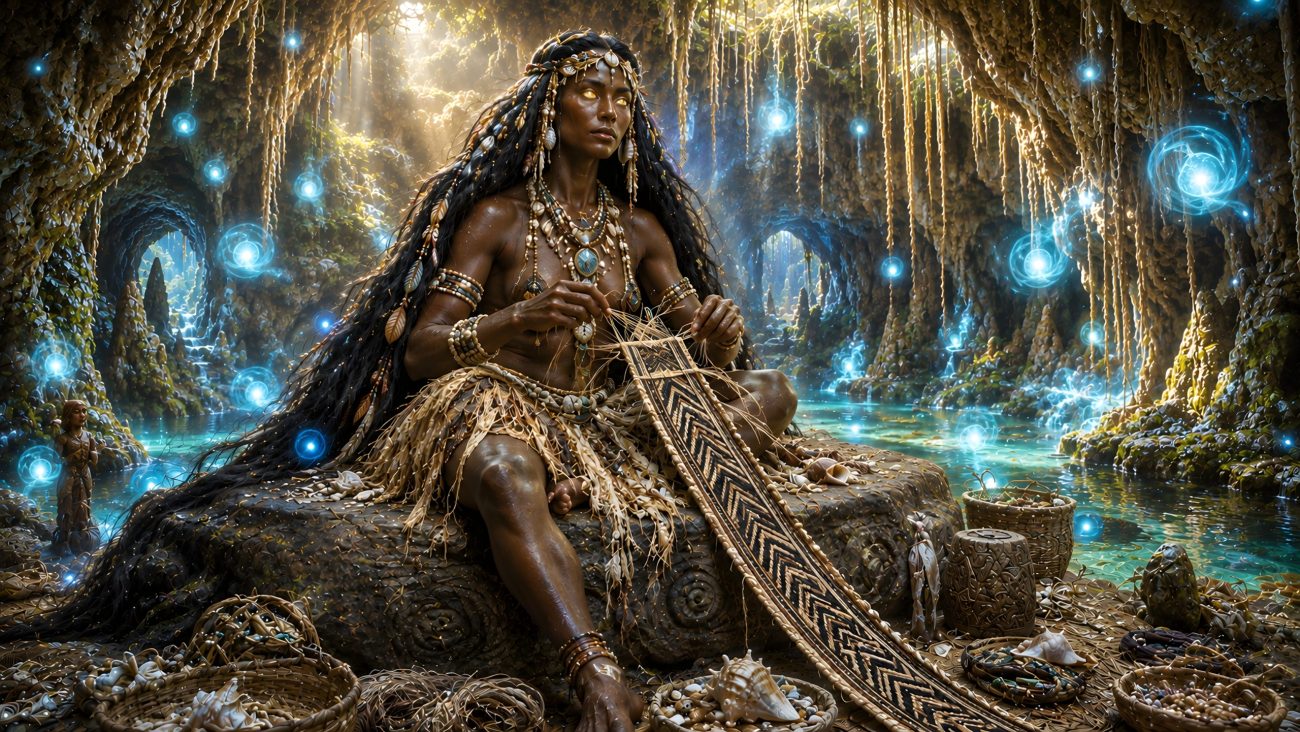
Kaibani is a mythical guardian spirit associated with a sacred stone on Paho Island. She is described as a woman who lives beneath the stone and was once seen there weaving a belt. In some traditions, the spirit inhabiting the place is called Basai instead of Kaibani.

The stone is connected to a hollow place beneath the ground known as Basai’s Drum. When people stamp on it, it produces a hollow sound. The spirits of the dead, traveling to Adiri, are said to dance around the stone and beat the drum by jumping upon it.

In earlier times, the Mawata people performed ritual dances at the site whenever they visited Paho to fish and catch crabs. The sound of the drum was believed to predict the future. If it rang out clearly, it meant good fortune lay ahead, while a dull or unclear sound foretold difficulties.

Kaibani is also mentioned in a traditional ceremonial song, which refers to her belt with the verse: Mother of Paso makes Kaibani’s belt; that belt is no good. The source provides no further explanation of this incident, only that it refers to an episode from an older legend.


Sources

Landtman, Gunnar. The Kiwai Papuans of British New Guinea: A Nature-Born Instance of Rousseau’s Ideal Community. With an introduction by Alfred C. Haddon. New York: Johnson Reprint Corp., 1970 [originally published London: Macmillan, 1927].


Eterari

Tradition / Region: Papua New Guinea Mythology
Alternate Names:
Category: Lizard


The Myth

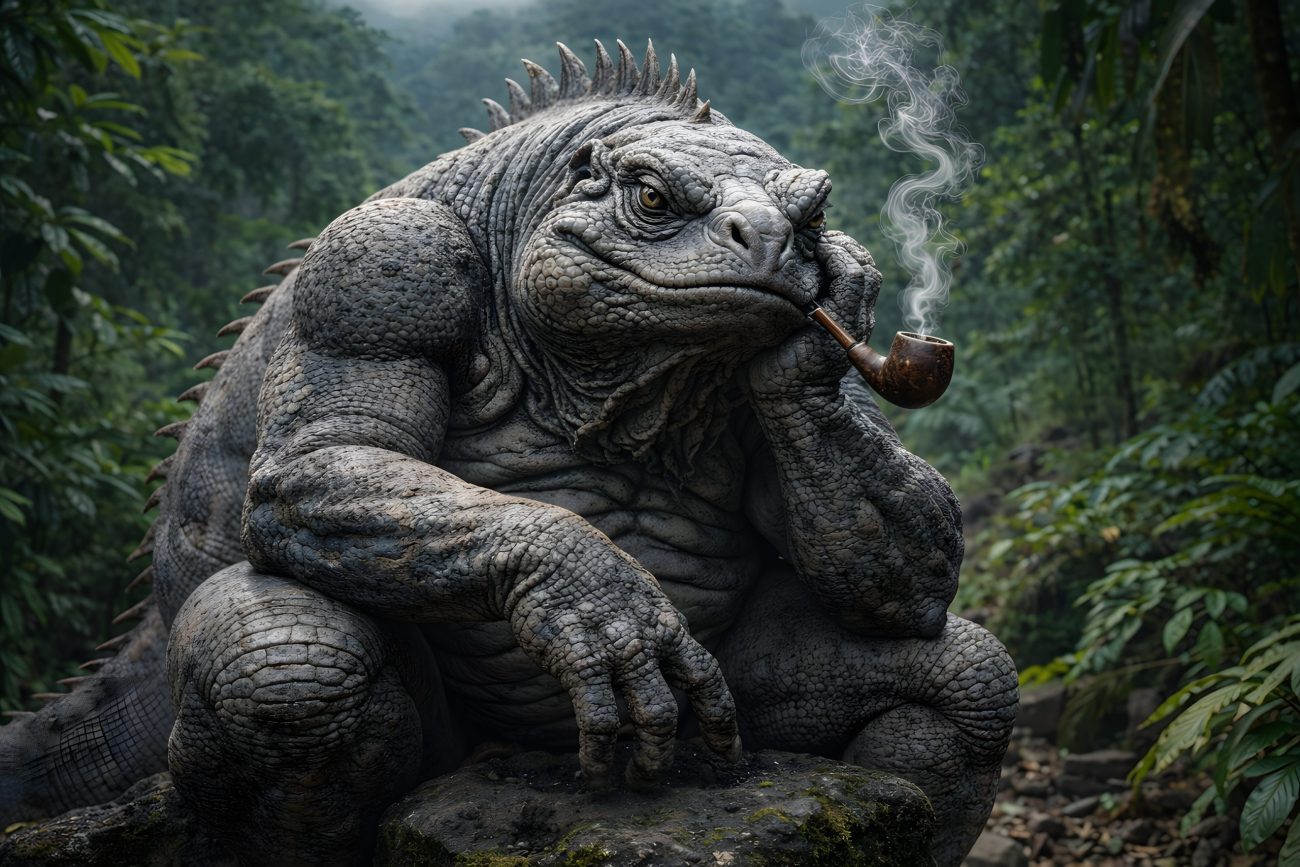
In Kiwai Papuan folklore, Eterari is a mythical being that appears in the form of a giant lizard. It is sometimes described as a speaking creature, capable of communicating with people.

According to Kiwai belief, eterari are not entirely distant from humans. They are said to interact with people on occasion, and in some areas these beings are regarded with special respect. Certain villages consider an eterari to be their patron, treating it as a protective or ancestral figure connected to the community.

Because of this role, the eterari functions both as a mythical creature and as a totemic being within Kiwai tradition.


Gallery


Sources

Bestiary.us contributors. (n.d.). Eterari. In Bestiary.us, from https://www.bestiary.us/eterari/


Interpretive Lenses

Religious Readings
  • Christian Ascetic Deep Dive
Philosophical Readings
  • Nietzschean Deep Dive
Psychological Readings
  • Jungian Deep Dive
Esoteric Deep Dive
  • Hermetic Deep Dive
Political / Social Readings
  • Marxist Deep Dive
Other
  • How to Invite The Eterari

Etengena

Tradition / Region: Papua New Guinea Mythology
Alternate Names:
Category: Forest Dweller, Bird, Snake


The Myth

In Kiwai Papuan folklore, etengena are mythical beings associated with particular places in the natural world. They are said to dwell in large trees, springs, and similar locations where nature is dense and undisturbed. Some etengena are believed to watch over vegetable gardens, guarding them from harm or intrusion.

Etengena do not have a single fixed appearance. At times they may take on human form, while at other times they reveal themselves as animals. They are known to appear as snakes, birds, or other creatures, depending on the situation and the person who encounters them.

The idea of the etengena overlaps in part with that of the ororarora, another class of mythical beings known in Kiwai belief. Because of this, the boundaries between these beings are not always clear, and their roles and forms may blend into one another in stories and traditions.


Gallery


Sources

Bestiary.us contributors. (n.d.). Etengena. In Bestiary.us, from https://www.bestiary.us/etengena/


Interpretive Lenses

Religious Readings
  • Christian Ascetic Deep Dive
Philosophical Readings
  • Nietzschean Deep Dive
Psychological Readings
  • Jungian Deep Dive
Esoteric Deep Dive
  • Hermetic Deep Dive
Political / Social Readings
  • Marxist Deep Dive
Other
  • How to Invite The Etengena

Ebihare

Tradition / Region: Papua New Guinea Mythology
Alternate Names: Bihare
Category: Sea Dweller


The Myth

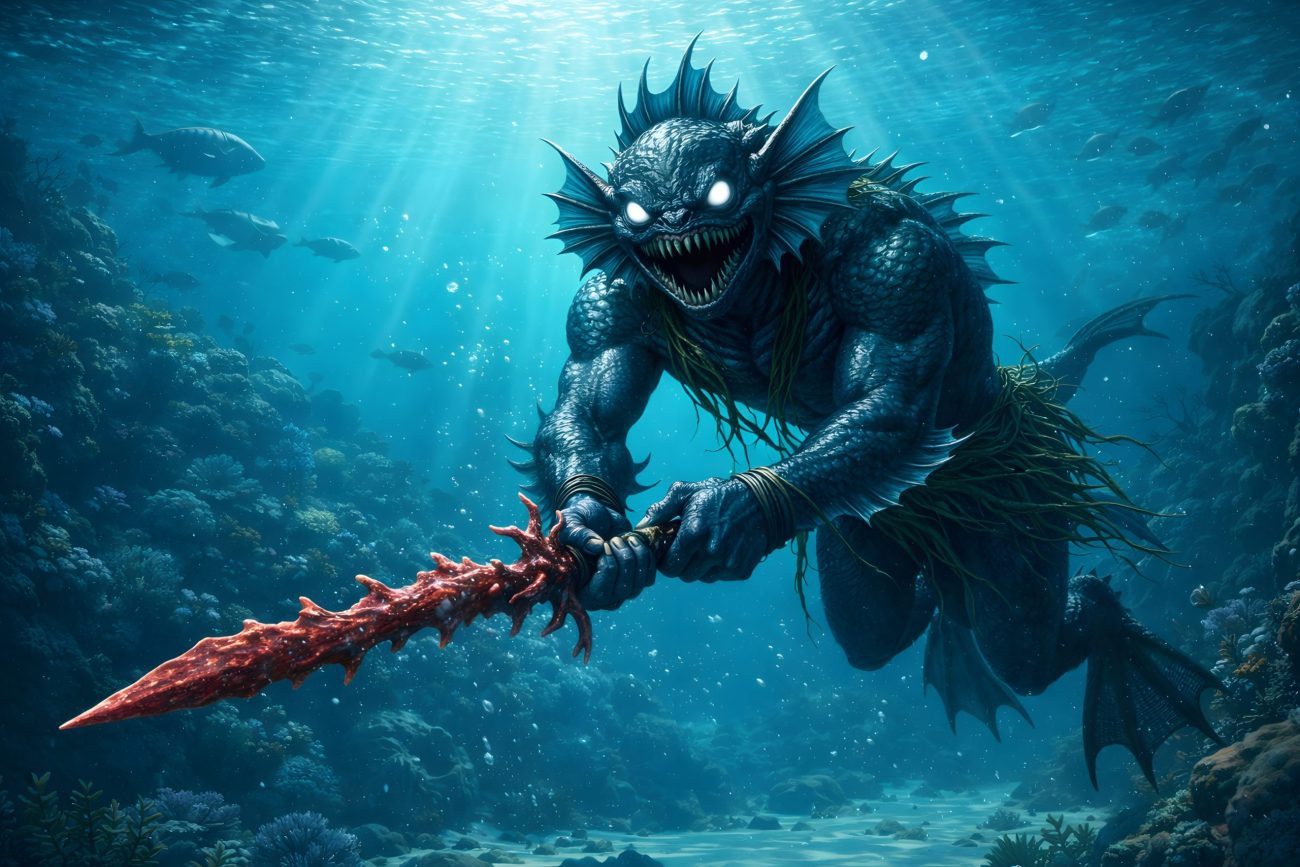
In Kiwai Papuan folklore, Ebihare is a general name used for all mythical beings that live in the sea. Before people learned how to fish, the inhabitants of Mawata did not eat fish at all. Fish were called ebihare, and people would flee from them in fear, collecting only shellfish instead. It was only later, when Bija became the first person to fish, that this fear began to change.

The words bihare and ebihare are commonly used to describe unknown or unnamed sea creatures, especially those believed to be dangerous or supernatural. Any sea being without a specific name may be called ebihare. Because of this, the term covers many kinds of mythical sea creatures rather than a single form.

Ebihare are thought to be harmful to fishermen and sailors. People avoid areas of the sea where they believe these beings live. Their presence is said to be revealed by sudden disturbances in the water—whirlpools, swirling eddies, or ripples that look as though the sea is boiling in a pot.

One story tells of a man from Kubira named Meuri, who had fallen into disgrace among his people. During a raid in Dawar, he allowed himself to be killed by enemies, and his wife was killed as well. Some time later, their children set out by canoe to travel to Dawar. On the journey, the canoe sank, and the children were transformed into bihare, becoming beings of the sea themselves.


Gallery


Sources

Bestiary.us contributors. (n.d.). Ebihare. In Bestiary.us, from https://www.bestiary.us/ebikhare/


Interpretive Lenses

Religious Readings
  • Christian Ascetic Deep Dive
Philosophical Readings
  • Nietzschean Deep Dive
Psychological Readings
  • Jungian Deep Dive
Esoteric Deep Dive
  • Hermetic Deep Dive
Political / Social Readings
  • Marxist Deep Dive
Other
  • How to Invite The Ebihare

Utumu

Tradition / Region: Papua New Guinea Mythology
Alternate Names:
Category: Spirit


The Myth

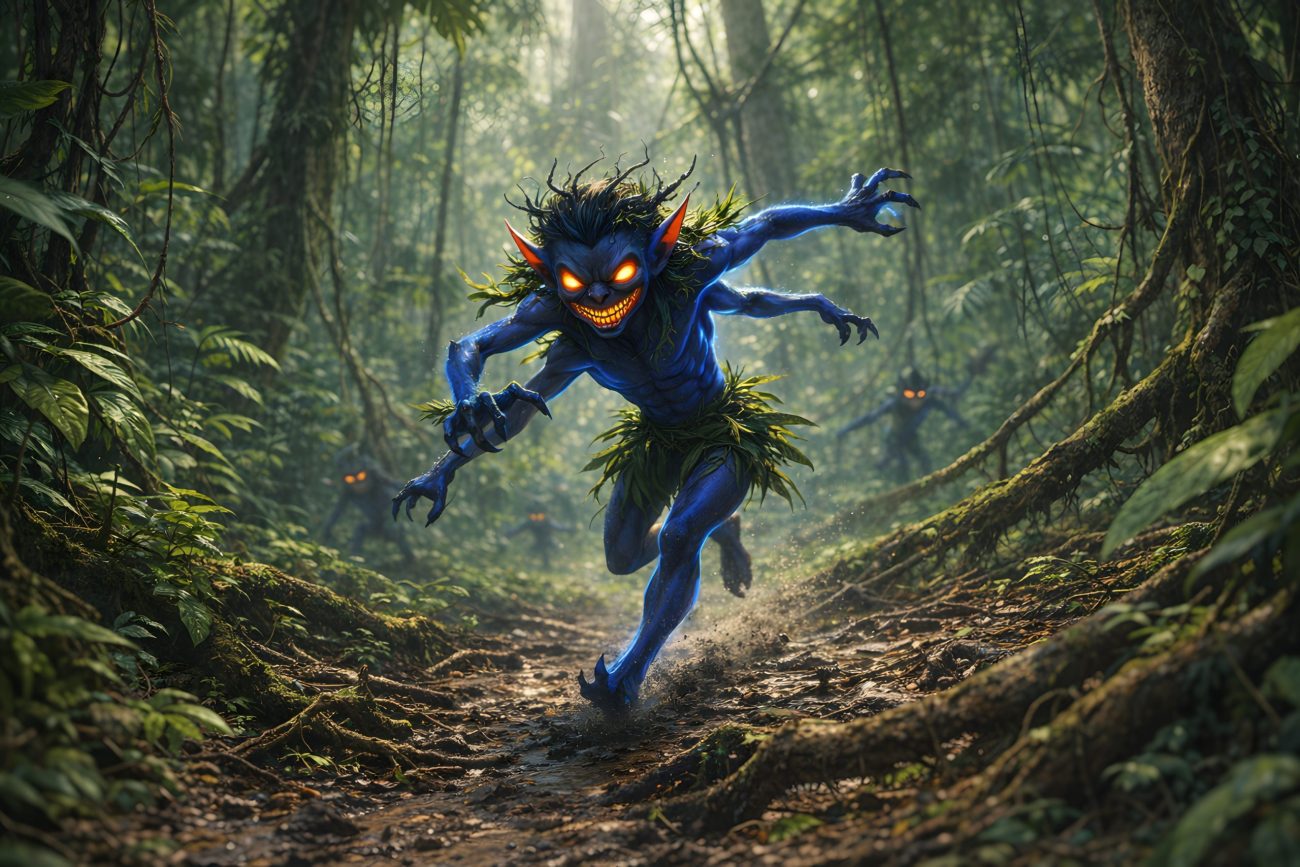
In Kiwai Papuan mythology, Utumu is the vengeful spirit of a man who was killed in battle and beheaded after death. Because of this violent end, his spirit did not rest and instead returned as a dangerous monster.

Utumu are capable of flight. When they move on the ground, their footprints resemble those of a human, but they are much shorter. These tracks are said to betray their presence to those who know how to recognize them.

At night, an utumu lures people by an eerie sight: the blood flowing from its severed neck glows like fire in the darkness. Drawn toward this shining light, victims are suddenly seized. The utumu attacks with powerful, monstrous claws, and sometimes with its fangs, despite being the spirit of a headless man.

After capturing a victim, the utumu devours the body but always leaves certain parts untouched. The head, bones, hands, and feet remain intact after the attack.

Because of this danger, people take special precautions before sleeping to prevent an utumu from carrying them away during the night. Even so, it is said that doors and walls offer little protection. An utumu can enter a hut through the smallest crack, just as spirits are able to pass wherever they wish.


Gallery


Sources

Bestiary.us contributors. (n.d.). Utumu. In Bestiary.us, from https://www.bestiary.us/Utumu/


Interpretive Lenses

Religious Readings
  • Christian Ascetic Deep Dive
Philosophical Readings
  • Nietzschean Deep Dive
Psychological Readings
  • Jungian Deep Dive
Esoteric Deep Dive
  • Hermetic Deep Dive
Political / Social Readings
  • Marxist Deep Dive
Other
  • How to Invite The Utumu

Oriogorukho

Tradition / Region: Papua New Guinea Mythology
Alternate Names: Oriogoruho
Category: Pig, Forest Dweller


The Myth

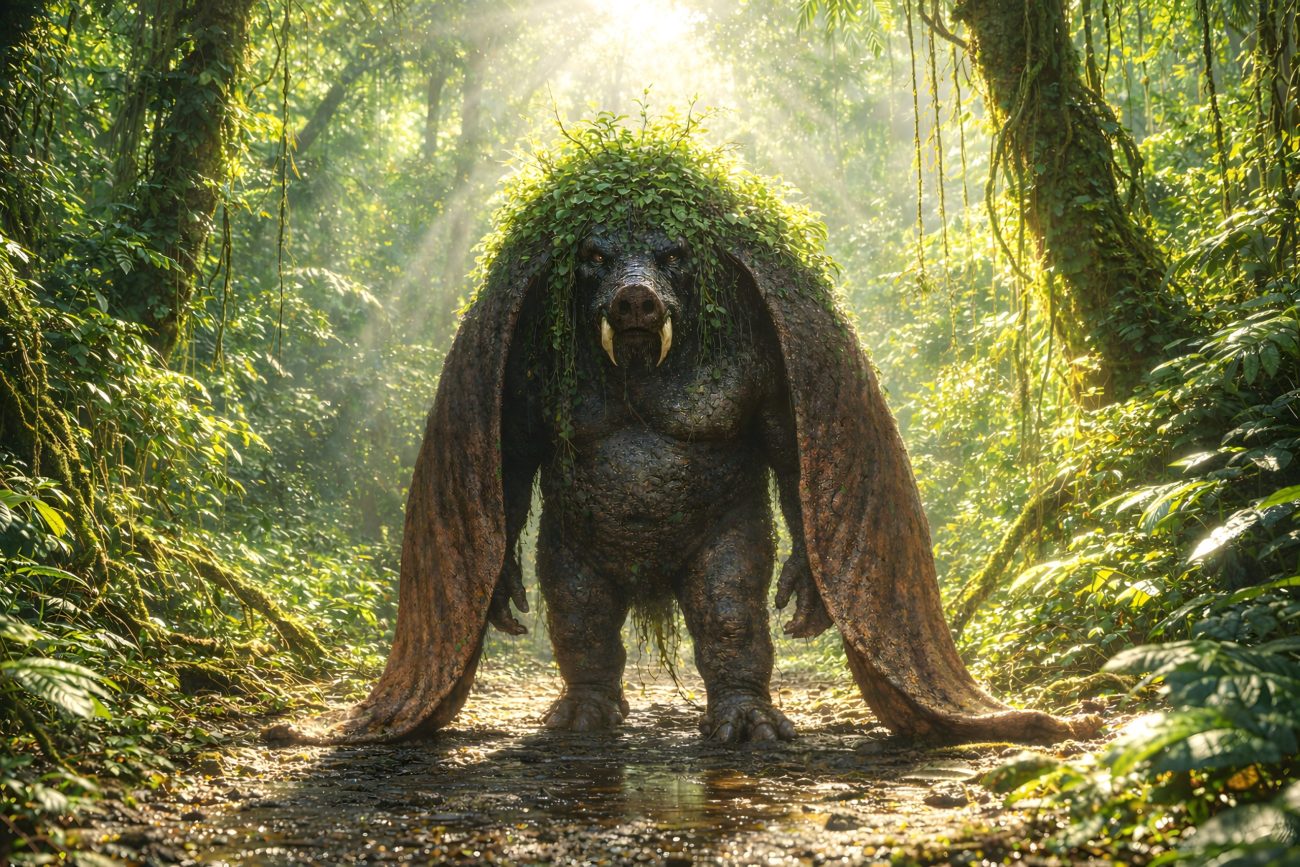
In the folklore of the Kiwai Papuans, Oriogorukho is described as an evil mythical creature that resembles a human in general form, but is clearly distinguished by several frightening features. Most striking are its enormous ears, which hang down to the ground. At night, the creature uses these ears to cover itself while it sleeps.

Although its body is broadly human-like, the Oriogorukho’s legs end in pig-like hooves. From its mouth protrude two pairs of sharp fangs, and instead of hair, bushes and creeping plants grow upon its head. Despite this monstrous appearance, the Oriogorukho possesses the ability to take on the shape of an ordinary human being. When it does so, it can be very difficult, or even impossible, to recognize it for what it truly is.

Oriogorukho are said to live in the forest, where they attack people. Their diet further sets them apart from humans. In addition to human flesh, they consume raw meat, fish, and unripe fruits. According to belief, a person who eats such improper food may themselves begin to transform into an Oriogorukho, with the first visible sign being the growth of the creature’s characteristic drooping ears.

In one tale, a man who has been shamed by his wife leaves his village and wanders into the forest. There he encounters an Oriogorukho and agrees to live together with it. Stories such as this suggest that although the Oriogorukho is regarded as a clearly negative and dangerous being, it is capable of treating people well if they themselves behave well toward it.


Gallery


Sources

Bestiary.us contributors. (n.d.). Oriogorukho. In Bestiary.us, from https://www.bestiary.us/Oriogorukho/


Interpretive Lenses

Religious Readings
  • Christian Ascetic Deep Dive
Philosophical Readings
  • Nietzschean Deep Dive
Psychological Readings
  • Jungian Deep Dive
Esoteric Deep Dive
  • Hermetic Deep Dive
Political / Social Readings
  • Marxist Deep Dive
Other
  • How to Invite The Oriogorukho

Ororarora

Tradition / Region: Papua New Guinea Mythology
Alternate Names:
Category: Forest Dweller


The Myth

Among the people of Kiwai Island, located in the Fly River delta of southeastern New Guinea, Ororarora is a name used to refer to mythical creatures. Rather than identifying a single being, the term functions as a general designation applied to such creatures within local belief.

The name appears in accounts of Kiwai mythology as a collective label, indicating the presence of beings understood to belong to the mythic or supernatural world.


Gallery


Sources

Bestiary.us contributors. (n.d.). Ororarora. In Bestiary.us, from https://www.bestiary.us/aromo-rubi/


Interpretive Lenses

Religious Readings
  • Christian Ascetic Deep Dive
Philosophical Readings
  • Nietzschean Deep Dive
Psychological Readings
  • Jungian Deep Dive
Esoteric Deep Dive
  • Hermetic Deep Dive
Political / Social Readings
  • Marxist Deep Dive
Other
  • How to Invite The Ororarora

Aromo-rubi

Tradition / Region: Papua New Guinea Mythology
Alternate Names:
Category: Spirit


The Myth

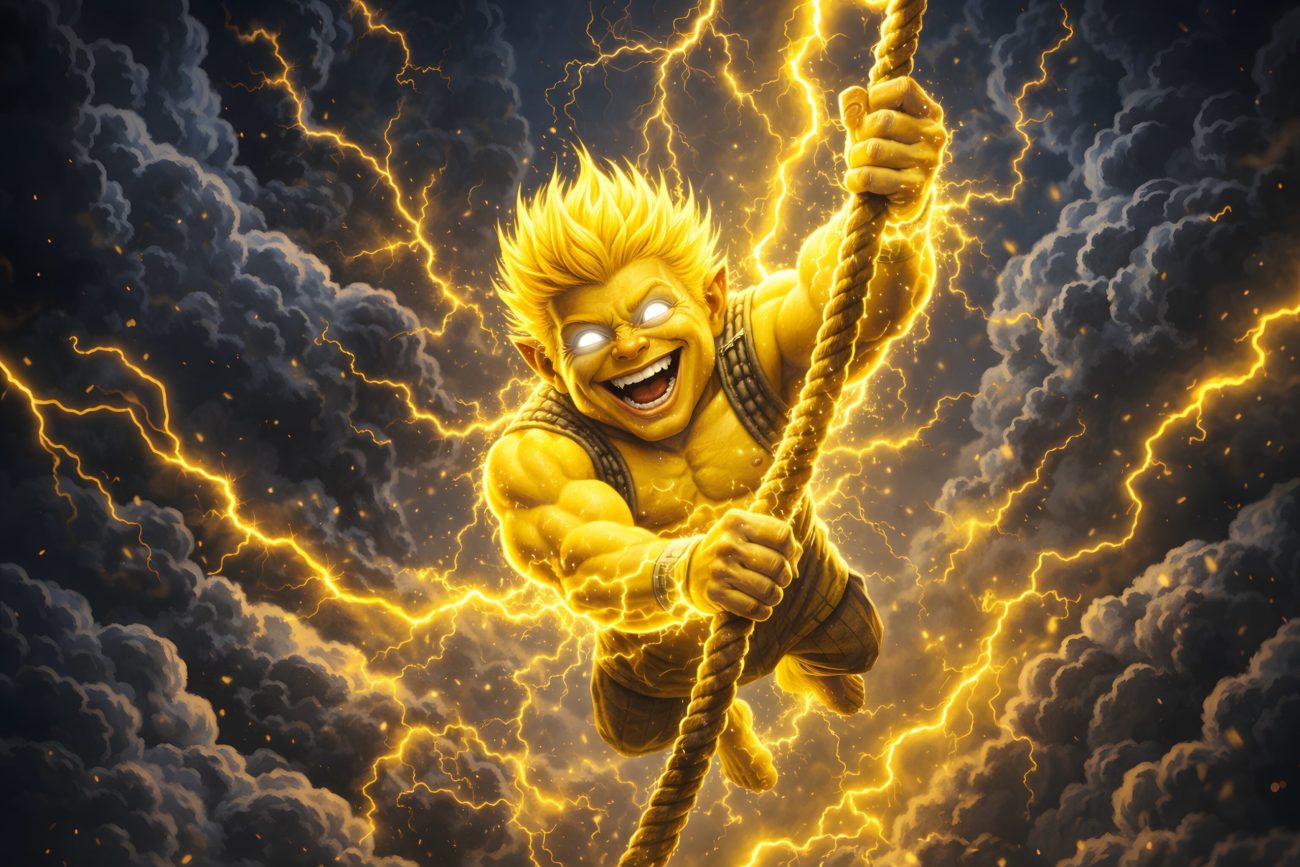
In the beliefs of the Kiwai Papuans, the sky is not empty. High above the earth live the Aromo-rubi, strange anthropomorphic beings with small bodies and great, powerful limbs. No other spirits dwell in the sky with them; the heights belong to the Aromo-rubi alone.

From their place above the world, they throw down long ropes. When they descend along these ropes and climb back up again, flashes of lightning tear across the sky. Their movement between sky and earth splits the darkness with sudden fire.

Thunder is made in another way. The Aromo-rubi roll massive tree trunks across the heavens. As the wood grinds and crashes through the sky, the sound echoes across the land as thunder, shaking forests and villages below.

Through these acts, the Aromo-rubi command the storm. Lightning and thunder are not signs of distant forces, but the visible and audible traces of their work in the sky.


Sources

Bestiary.us contributors. (n.d.). Aromo-rubi. In Bestiary.us, from https://www.bestiary.us/aromo-rubi/


Coconut Ghost of Wutumara

Tradition / Region: Papua New Guinea Mythology
Alternate Names: Wutumara
Category: Ghost, Coconut, Plant


The Myth

Wutumara was a woman of great force and determination, a culture heroine whose life became entwined with the world of spirits. She was married to a man who also took a second wife—a ghost from the underworld. This ghost-wife often visited, and each time she came, she drew the husband away from the human world for long stretches of time. Wutumara grew resentful and jealous, angered that her rival’s presence disrupted her household and marriage.

Seeking to resolve this, Wutumara persuaded her husband to bring the ghost-wife permanently into the world of the living, believing that if they all lived together, harmony might be restored. Secretly, however, Wutumara intended to murder the ghost, unaware that spirits cannot be killed in the way humans can.

She attacked her rival and left her body in the jungle. But the ghost was not destroyed. Instead, she returned in vengeance, using powerful magic. She exchanged the genitals of Wutumara and her husband, a transformation meant to humiliate and confuse, and then killed Wutumara. After this, the ghost transformed herself into a pubic hair growing on the husband’s groin, hiding in plain sight.

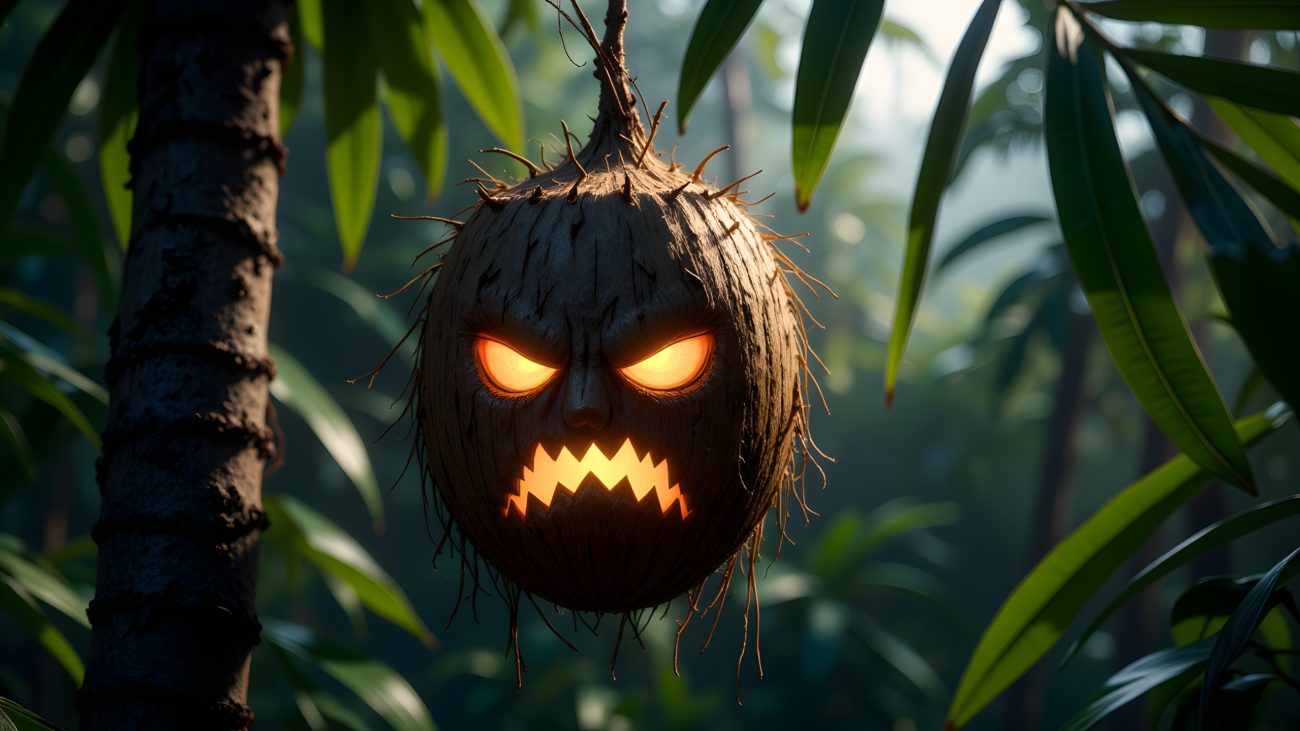
Eventually, the husband tricked the ghost into revealing herself and managed to destroy her. Yet even this was not the end. Shortly afterward, the ghost reappeared once more, transformed into a coconut palm. To this day, it is said that the face of the angry ghost can still be seen in the coconut, watching from within its shell.

Thus the coconut palm became a lasting reminder of jealousy, rivalry, and the persistence of spirits beyond death—a living monument to Wutumara’s tragic conflict with the unseen world.


Gallery


Sources

Landtman, G. (1970). The Kiwai Papuans of British New Guinea: A nature-born instance of Rousseau’s ideal community.


Interpretive Lenses

Religious Readings
  • Christian Ascetic Deep Dive
Philosophical Readings
  • Nietzschean Deep Dive
Psychological Readings
  • Jungian Deep Dive
Esoteric Deep Dive
  • Hermetic Deep Dive
Political / Social Readings
  • Marxist Deep Dive
Other
  • How to Invite The Coconut Ghost of Wutumara