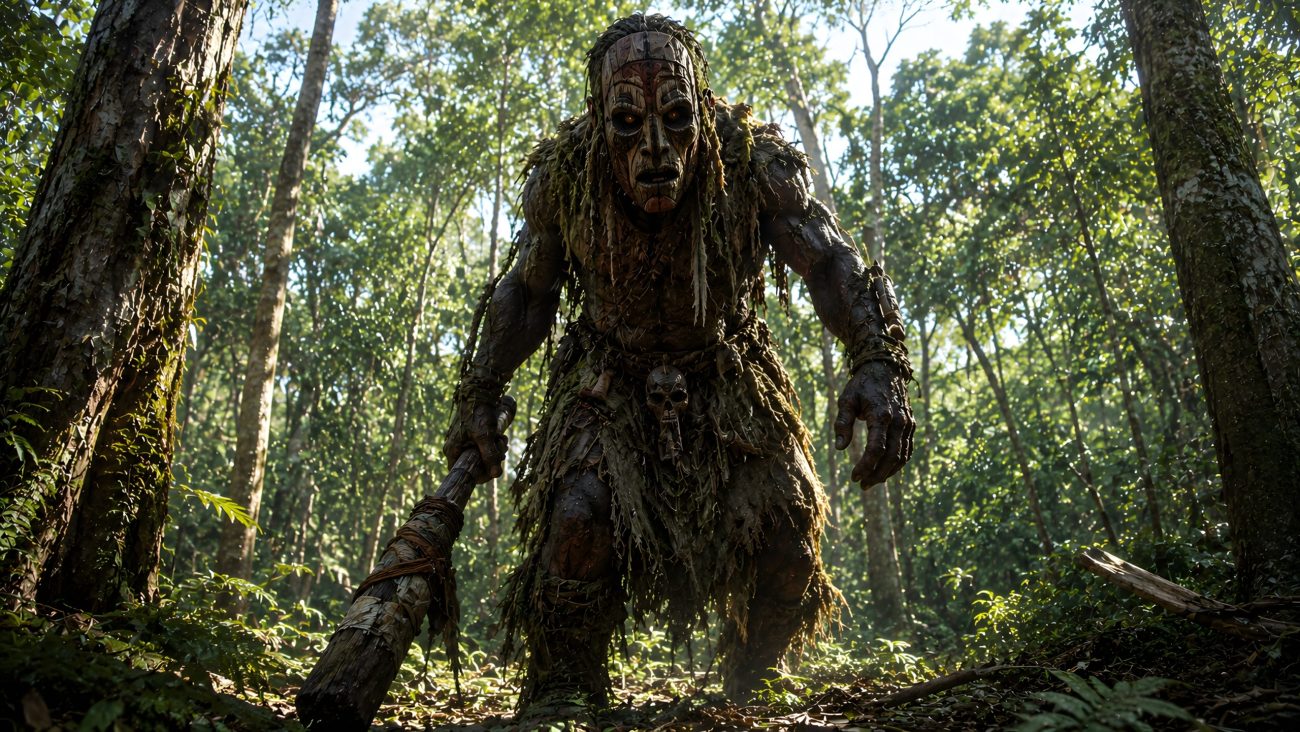
Black Hiesel

Tradition / Region: Czech Mythology
Alternate Names: Schwarzer Hiesel
Category: Forest dweller


The Myth

Black Hiesel was a feared and elusive poacher who roamed the forests with unnatural power. Though human in origin, he possessed supernatural resilience that set him apart from ordinary men.

No weapon could harm him. Bullets flattened against his skin, blades failed to cut him, and even iron had no effect. Hunters who tried to kill him found themselves powerless, as if he existed beyond the reach of normal violence.

He hunted freely in the forests, especially in the Wallerer woods, killing deer and game without restraint. Lawful hunters were left with nothing but tracks and remains, which fueled both their anger and fear. They organized hunts to capture or kill him, but every attempt failed.

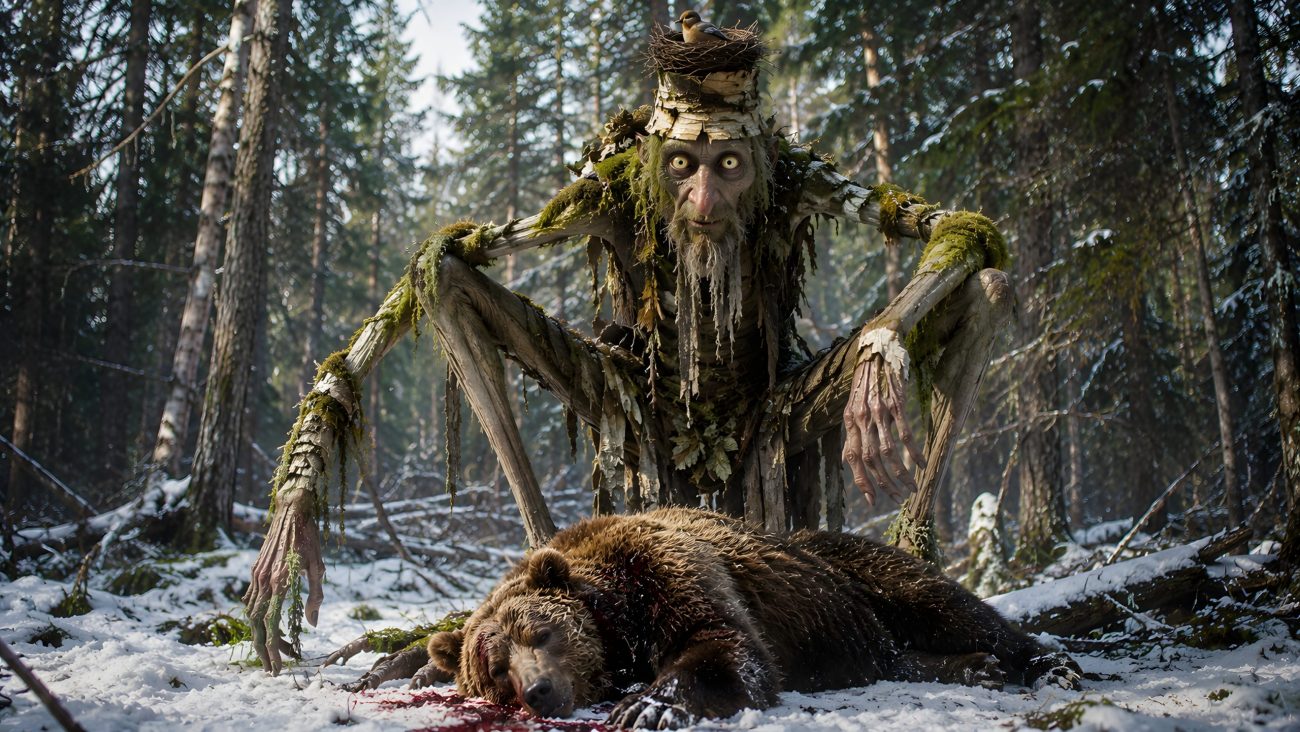
When cornered, Black Hiesel used another unnatural ability—transformation. He could turn himself into parts of the forest, such as a young fir tree or a dry stump. In this form, he remained unnoticed, listening as hunters passed by him, unaware that their target stood among them. This ability made him not only untouchable, but also omnipresent within the woodland.

Over time, his presence became deeply unsettling. Hunters began to lose their courage, knowing they were dealing with something more than a man.

Eventually, however, he was caught off guard. Unable to kill him by conventional means, his pursuers resorted to brute force. They crushed his skull with a heavy wooden tool, ending his life in a way that bypassed his unnatural protection.

Black Hiesel represents a recurring figure in folklore:
a human who crosses into the supernatural through defiance, gaining power over nature and weapons, but ultimately remaining vulnerable to raw, physical force.


Sources

sagen.at contributors. (n.d.). Der schwarze Hiesel. In sagen.at, from https://www.sagen.at/texte/sagen/tschechien/watzlik/hiesel.html


Sumpurnis

Tradition / Region: Latvian Mythology
Alternate Names: Sumpurs, Sumpurni (plural)
Category: Dog, Forest dweller


The Myth

In Latvian tradition, the Sumpurnis is a fearsome being that lives deep within the forests.

It is described as a creature with a human body but the head of a dog. Some tales say it may instead have a bird’s head, a single eye, or a single leg, but it always remains something neither fully human nor beast. The creatures wear garments made from leaves and dwell far from settlements, hidden in the wilderness.

Sumpurni are said to prey on people. They attack travelers, tear them apart, and feed on their flesh and blood. If they do not kill a victim at once, they may bind the person and keep them captive until they decide to eat them later.

Stories often portray them as the opposite of humans. Where people farm and raise animals, the Sumpurni roam as hunters. Where people eat animals, they eat human flesh. They speak in strange, unintelligible voices and live beyond the order of human society.

They were believed to have their own rulers and nobles, marked by long tails that signified status among them. Their closest kin were said to be dogs, and in some stories they were linked with werewolves, sharing with them the idea that a person might be transformed into such a creature through sorcery. In those tales, a magical belt could bind someone into the form, and only by tearing it free could the spell be broken.

Thus the Sumpurnis was remembered as a forest-dwelling dog-headed devourer — a creature of the wilds, living beyond the world of men and feared wherever the deep woods began.


Sources

Wikipedia contributors. (n.d.). Sumpurnis. In Wikipedia, from https://lv.wikipedia.org/wiki/Sumpurnis


Tokantongotra

Tradition / Region: Madagascar
Alternate Names:
Category: Forest dweller


The Myth

The Tokantongotra is described as a large white animal found in Madagascar. Despite its name meaning “single-foot” or “single-step,” it is not said to have only one leg in front and one behind, as some outsiders believed. It is known instead for its speed, being so fast that nothing can outrun it. It is said to hunt people and to wander at night.

Some claim to have seen it, though such reports are fewer than those concerning the Songomby.


Gallery


Sources

Sibree, J. (1896). Madagascar before the conquest: The island, the country, and the people, with chapters on travel and topography, folk-lore, strange customs and superstitions, the animal life of the island, and mission work and progress among the inhabitants. New York: Macmillan; London: T. F. Unwin.


Interpretive Lenses

Religious Readings
  • Christian Ascetic Deep Dive
Philosophical Readings
  • Nietzschean Deep Dive
Psychological Readings
  • Jungian Deep Dive
Esoteric Deep Dive
  • Hermetic Deep Dive
Political / Social Readings
  • Marxist Deep Dive

Tretretretre

Tradition / Region: Madagascar Mythology
Alternate Names: Tratratratra
Category: Forest dweller, Monkey


The Myth

Tretretretre is a shaggy forest creature from Madagascar said to be about the size of a calf. It has monkey-like forelimbs and hind limbs, a short tail, curly hair, and a round, human-like head and face.

It was described as living in forested regions and being agile, able to climb trees easily. Local people were said to fear it, though it was also said to fear humans in return.

Some accounts suggest that stories of Tretretretre may be linked to large extinct lemurs that once inhabited Madagascar. These included massive, slow-moving tree-dwelling animals that lived until several centuries ago. Their extinction has been attributed to environmental change and human activity.


Gallery


Sources

Bestiary. (n.d.). Tretretretre. From https://www.bestiary.us/tretretretre


Interpretive Lenses

Religious Readings
  • Christian Ascetic Deep Dive
Philosophical Readings
  • Nietzschean Deep Dive
Psychological Readings
  • Jungian Deep Dive
Esoteric Deep Dive
  • Hermetic Deep Dive
Political / Social Readings
  • Marxist Deep Dive

Witch of Bitschter Pond

Tradition / Region: Luxembourg Mythology
Alternate Names: The Old Witch of Bits; Matchmaking Witch of the Bits Pond
Category: Witch, Forest dweller, Lake dweller


The Myth

In earlier times, the Bitschter Pond lay in the deep valley between Buderscheid and the Pirmesknapp. The large body of water stretched from the Buderscheid mill to the Pirmesberg hill, surrounded by dense, wild forest. People said the place was haunted, for many spirits were believed to dwell there.

Among them lived the infamous old witch of Bits. She practiced fortune-telling and matchmaking, and young men and women who longed for marriage would seek her out. The witch possessed a mysterious bottle in which there was an egg and a crucified Christ. By means of this bottle, she told those who consulted her whom they would marry, where that person lived, and what they must do to win them.

At night, she was said to fly like a bird over the pond, crying out with a hoarse, croaking voice. Around the pond, other witches gathered, and in the moonlight they danced wildly in the trees, making music and raising a dreadful noise. They were also seen hovering around the Pirmesberg, reveling in the forest and floating through the air.

At last the witch’s deeds became known. She was seized and blown into the Bitschter Pond. At once a violent thunderstorm broke out, flooding the waters and turning the place into a great quagmire.

Even long afterward, people said the place was not a pleasant one, and many were afraid to pass the site of the old pond at night.


Gallery


Sources

sagen.at contributors. (n.d.). Der Bitschter Weiher. In sagen.at, from https://www.sagen.at/texte/sagen/luxemburg/Bischter_Weiher.html


Interpretive Lenses

Religious Readings
  • Christian Ascetic Deep Dive
Philosophical Readings
  • Nietzschean Deep Dive
Psychological Readings
  • Jungian Deep Dive
Esoteric Deep Dive
  • Hermetic Deep Dive
Political / Social Readings
  • Marxist Deep Dive

Bichelgretchen on the Syr

Tradition / Region: Luxembourg Mythology
Alternate Names: Bichelgretchen; Washerwoman of the Syr
Category: Ghost, Forest dweller


The Myth

Near Mensdorf, people once heard a woman washing clothes every night by the Syr River in the Bichel forest. This figure was known as Bichelgretchen.

She was feared because she carried an iron washing beater, whose cracking sound echoed through the night as she washed.

Travelers were warned never to mock or imitate her.
If someone clapped their hands to mimic the sound of her iron washing beater, they would suddenly lose their footing and fall into the river — at which point loud, mocking laughter would ring out.

Bichelgretchen was believed to possess supernatural strength, and anyone who came too close risked being struck down by the terrible force of her iron washing beater.


Sources

sagen.at contributors. (n.d.). Das Bichelgretchen an der Syr. In sagen.at, from https://www.sagen.at/texte/sagen/luxemburg/Bichelgretchen.html


Wild Woman of Wildfrauenhecke

Tradition / Region: Luxembourg Mythology
Alternate Names: Wild Woman of the Hedge
Category: Forest dweller


The Myth

Between Böwingen and Useldingen there once lay a place known as the Wild Woman’s Hedge, where the road now runs.

People said that a wild woman lived there. Parents warned their children not to linger in that place, telling them it was not a good spot, for the wild woman dwelt there.

Thus the hedge was remembered as the haunt of a hidden female spirit who lingered in the landscape.


Gallery


Sources

sagen.at contributors. (n.d.). Wildfrauenhecke zu Useldingen. In sagen.at, from https://www.sagen.at/texte/sagen/luxemburg/Wildfrauenhecke.html


Interpretive Lenses

Religious Readings
  • Christian Ascetic Deep Dive
Philosophical Readings
  • Nietzschean Deep Dive
Psychological Readings
  • Jungian Deep Dive
Esoteric Deep Dive
  • Hermetic Deep Dive
Political / Social Readings
  • Marxist Deep Dive

Äschtercher of Useldingen

Tradition / Region: Luxembourg Mythology
Alternate Names: Useldingen Gnomes, Äschtercher
Category: Gnome, Forest dweller, River dweller


The Myth

Between Useldingen and Ewerlingen, in the woods near the Lohmühle mill, little gnomes were said to live. The people of the area called them Äschtercher.

These small beings were known to frighten children who wandered too far into the woods. They were said to be especially drawn to those who bathed in the Attert River, where they would appear suddenly and startle them.

Thus the people spoke of the little gnomes of the forest, who lingered near the river and the mill and whose presence was feared by the young.


Sources

sagen.at contributors. (n.d.). Die Wichtelcher zu Useldingen. In sagen.at, from https://www.sagen.at/texte/sagen/luxemburg/Wichtlein_Useldingen.html


Nai tiki

Tradition / Region: Fijian mythology
Alternate Names:
Category: Forest dweller


The Myth

In the deep forests and high mountains of Fiji there is said to dwell a being called Nai Tiki, a creature neither fully man nor fully beast. Those who claim to have glimpsed him describe a powerful figure moving between the trees with unnatural speed, his form shifting between human outline and animal shadow.

Nai Tiki lives far from villages, in the wild places where thick roots twist across the earth and mist clings to the ridges. Hunters speak of sudden silence in the forest before his passing. Birds cease their calls. Leaves shudder though no wind blows. Then a shape darts through the undergrowth—faster than any boar, stronger than any warrior.

It is said that Nai Tiki possesses immense strength. He can uproot trees, split stones, and cross valleys in moments. No one can outrun him. Yet he does not appear without purpose. Some say he watches over the balance of the land, punishing those who disrespect the forest. Others whisper that he is unpredictable, dangerous to any who wander too far alone.

Nai Tiki is also believed to command the sky itself. When drought grips the land, sudden rain may fall after his presence is sensed in the hills. When storms threaten, the clouds may part without warning. Elders tell of times when the sun blazed after days of darkness, and they would murmur that Nai Tiki had chosen to calm the heavens.

Few have survived close encounters. Those who return speak in hushed voices of glowing eyes in the shadowed canopy and the feeling of being measured by something ancient and wild. Whether guardian or menace, Nai Tiki remains a powerful presence in the stories of Fiji—a reminder that the forests and mountains are not empty, and that forces older than mankind still move within them.


Gallery


Sources

mythicalencyclopedia.com contributors. (n.d.). Fiji mythical creatures. In mythicalencyclopedia.com, from https://mythicalencyclopedia.com/fiji-mythical-creatures/


Interpretive Lenses

Religious Readings
  • Christian Ascetic Deep Dive
Philosophical Readings
  • Nietzschean Deep Dive
Psychological Readings
  • Jungian Deep Dive
Esoteric Deep Dive
  • Hermetic Deep Dive
Political / Social Readings
  • Marxist Deep Dive
Other
  • How to Invite The Nai tiki

Patupaiarehe

Tradition / Region: Māori mythology (Aotearoa / New Zealand)
Alternate Names: Pakehakeha; Tūrehu (in some traditions)
Category: Forest dweller, Mountain dweller


The Myth

In the deep forests and mist-covered mountains of Aotearoa dwell the patupaiarehe, a hidden people of pale skin and fair or reddish hair. They are of human stature, yet unlike humans they bear no moko upon their skin. They live in great communities in the hills and ranges, in places wrapped in fog and shadow. Their houses and villages cannot be seen by human eyes.

The patupaiarehe are creatures of the mist. They draw it about themselves like a cloak, and they walk most freely in darkness or on foggy days. The full light of the sun is deadly to them, and so they retreat before dawn. They eat raw food and shun steam and fire; when ovens are opened and clouds of steam rise, they hide themselves away.

At times their presence is revealed by music drifting through the forest—the sweet notes of kōauau and pūtōrino flutes, and their haunting waiata carried on the mist. Their music is said to be more beautiful than any played by mortals. Though they can be hostile to those who trespass upon their sacred mountains, it is also told that they may speak with humans, and sometimes even fall in love with them.

On Mount Moehau and in the Coromandel ranges they once dwelled in strength. Some say they were there before the ancestors of the Māori arrived, and that they were driven from their most sacred peaks. In anger they punished those who offended them. Hunters who stole from their lands found their game turned to skin and bone. Men who intruded upon their treasures were dragged away into the night.

Yet there are gentler tales. Kahukura once came upon them at night as they hauled in their fishing nets. He joined them in their labor, and though they fled at dawn when they discovered he was mortal, he had learned their methods and brought that knowledge back to his people.

There is also the story of Hinerehia, a patupaiarehe woman of Moehau, who fell in love with a mortal man while gathering shellfish in the mist. She lived with him and bore children, weaving beautiful garments—but only at night. When the villagers tricked her into weaving past dawn so they could learn her craft, the first light revealed their deception. Heartbroken, she rose within a cloud and returned to the mountains, leaving her husband and children behind.

In the mountains of Ngongotahā they were said to number in the thousands, their skin pale or ruddy, their hair glinting red or gold. They fetched water in gourds from sacred burial cliffs, avoiding the steam of cooking fires. Some among them desired human husbands or wives, yet unions between the two worlds rarely endured.

In the south, on the misty peaks of Tākitimu, a hunter once encountered Kaiheraki, a woman of the mountain. She shone with coppery hair and fair skin, claiming no people but the mountain itself as her mother. The hunter, knowing her nature, tried to bind her to the human world through fire. But when flame touched her skin and blood flowed, she fled back into the high places, vanishing forever among the ridges and cloud.

Thus the patupaiarehe remain—guardians of misty summits and shadowed forests, beautiful and perilous, glimpsed only in song, in fog, or in the edge of human memory.


Gallery


Sources

Wikipedia contributors. (n.d.). Patupaiarehe. In Wikipedia, The Free Encyclopedia. Retrieved February 13, 2026, from https://en.wikipedia.org/wiki/Patupaiarehe


Interpretive Lenses

Religious Readings
  • Christian Ascetic Deep Dive
Philosophical Readings
  • Nietzschean Deep Dive
Psychological Readings
  • Jungian Deep Dive
Esoteric Deep Dive
  • Hermetic Deep Dive
Political / Social Readings
  • Marxist Deep Dive
Other
  • How to Invite The Patupaiarehe