Sirānis

Tradition / Region: Afghanistan (Kabul, Zabulistan)
Alternate Names: Siranis
Category: Forest dweller


The Myth

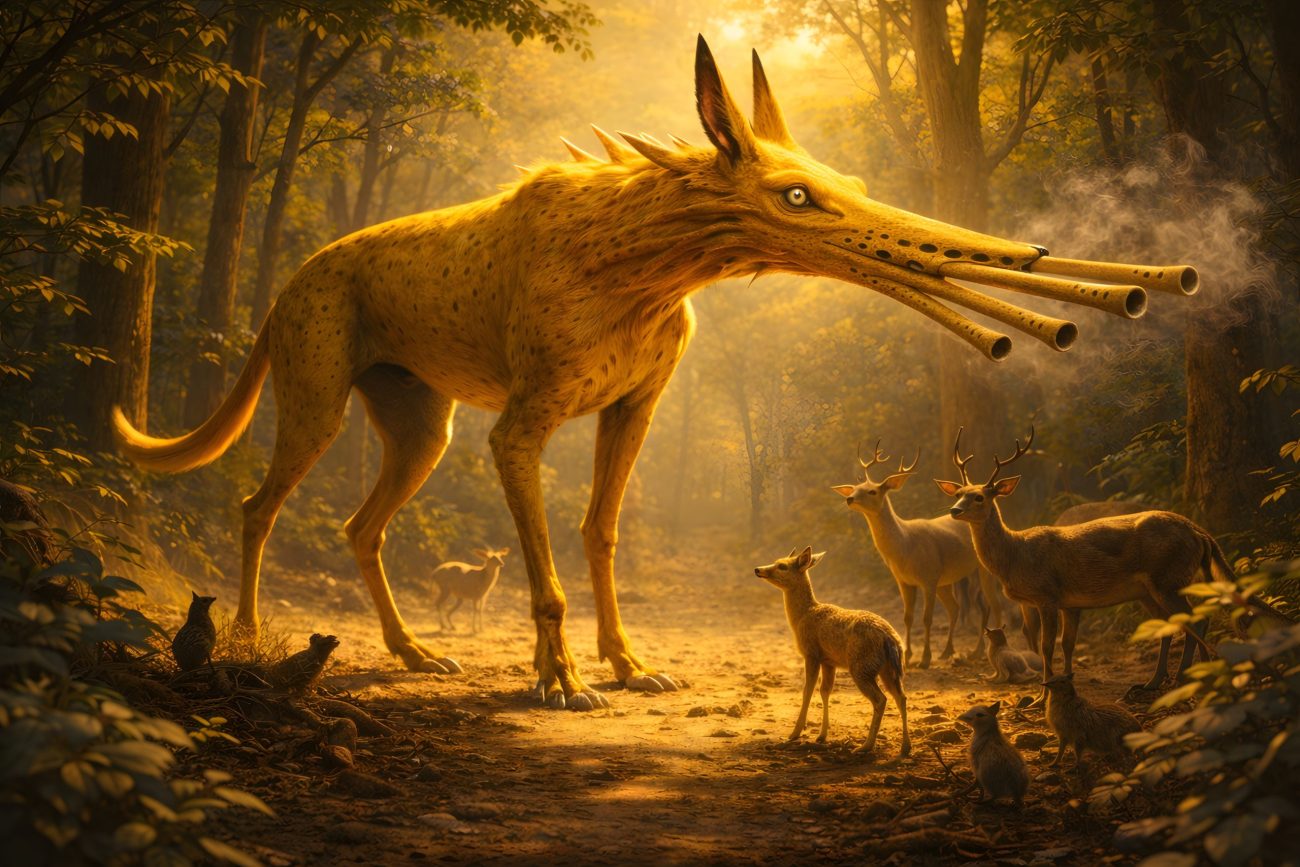
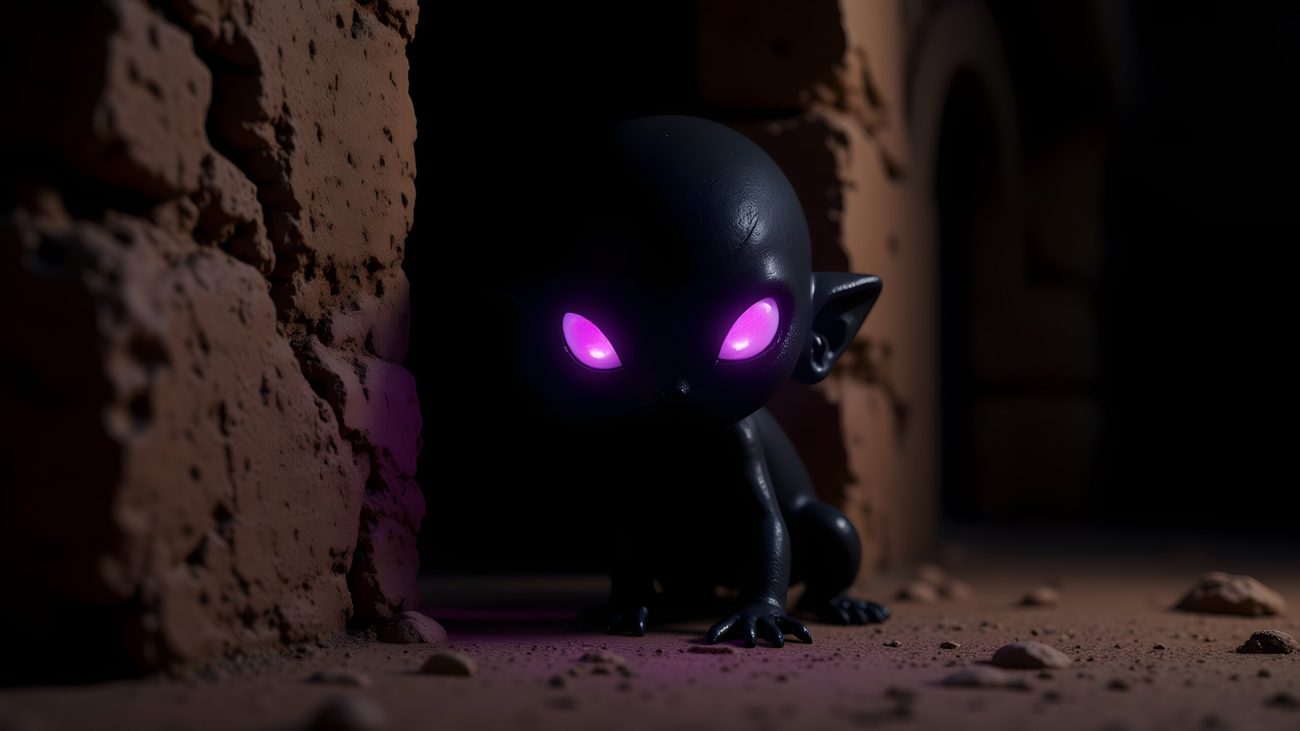
In the forests and undergrowth of Kabul and Zabulistan dwells the Sirānis, a strange carnivorous creature whose breath is music. Its snout is pierced by many openings, and when it exhales, a flute-like melody flows from them, sweet and irresistible.

Animals that hear this sound are drawn toward it, gathering peacefully as if enchanted. They stand transfixed, overwhelmed by the beauty of the music, until the Sirānis calmly chooses its prey and devours it. If none please it, the creature releases a terrible shriek that shatters the spell and sends all fleeing in terror.

It is said the Sirānis inspired the creation of musical instruments, for its sound was unlike anything else in the natural world. Thus it remains a being of deadly beauty—one whose song brings wonder, stillness, and sudden death to those who listen too closely.


Sources

abookofcreatures.com– Sirānis entry

Contadini, A. Musical Beasts: The Swan-Phoenix in the Ibn Bakhtishu’ Bestiaries. In O, Kane, B. (2005) The Iconography of Islamic Art. Edinburgh University Press.

Contadini, A. (2012) A World of Beasts: A Thirteenth-Century Illustrated Arabic Book on Animals (the Kitab Na’t al-Hayawan) in the Ibn Bakhtishu’ Tradition. Brill, Leiden.

Ettinghausen, R. (1950) The Unicorn. Studies in Muslim Iconography, Freer Gallery of Art Occasional Papers Vol. 1, No. 3, Washington.

al-Qazwini, Z. (1849) Zakariya ben Muhammed ben Mahmud el-Cazwini’s Kosmographie. Erster Theil: Die Wunder der Schöpfung. Ed. F. Wüstenfeld. Dieterichsche Buchhandlung, Göttingen.

Âssas Buxxam

Tradition / Region: Algerian Mythology
Alternate Names: Guardian of the House
Category: Household Dweller


The Myth

Every home is watched by an unseen presence known as the Âssas Buxxam, the guardian of the house. It lives quietly among the family, observing daily life, protecting the household, and expecting respect in return. When a house contains a rocky outcrop, it is believed the guardian dwells there, and during celebrations a lamp is kept burning so it is not neglected.

The Âssas Buxxam is not alone. It belongs to a greater host of Guardians who dwell in fields, trees, caves, and notable places shaped by nature. These spirits must be greeted and honored, for they are the watchers of the world.

They serve the great lord Aguellid Amokrane, acting as his sentinels. To them, humans do not truly own their homes or lands—they merely borrow them. The Guardians watch how people live, how they treat the earth, and how they behave toward one another.

When respected, the Âssas Buxxam brings harmony to the household and may even speak on behalf of its people before God. When ignored or insulted, its favor withdraws, reminding all who live there that the home is never truly empty, and never entirely theirs.


Sources

Tadukli contributors. (n.d.). Éléments de mythologie kabyle. In Tadukli, from http://tadukli.free.fr/pages/culture/histoire_01_elements_de_mythologie_kabyle.htm


Kalenik

Tradition / Region: Komi mythology (Zyryan Komi)
Alternate Names: Kalenik-lebach
Category: Forest spirit


The Myth

In Komi mythology, Kalenik is a forest spirit whose role is closely tied to the life of forest game birds. His sole function is to separate the young birds of the forest so that they may later pair off and breed. This act of separation is understood as a necessary step in maintaining the natural order of reproduction within the forest.

The name Kalenik comes from the Komi word kalkӧtny, meaning “to separate” or “to breed,” reflecting his specific task in the cycle of animal life. Kalenik does not hunt, punish, or mislead humans; instead, he quietly ensures that the rhythms of nature proceed correctly among the birds of the forest.

Among the Zyryan Komi, a related figure or expression is Kalenik-lebach, meaning “Kalenik-bird,” which was used as a name for the rainbow. In this form, Kalenik is associated with good fortune, and the appearance of the rainbow was considered a favorable sign.

Through these beliefs, Kalenik is remembered as a spirit connected not to danger or fear, but to fertility, balance, and the orderly continuation of life in the forest.


Interpretive Lenses

Religious Readings
Philosophical Readings
Psychological Readings
Esoteric Deep Dive
  • Hermetic Deep Dive
Political / Social Readings
Other

Huldra

Tradition / Region: Norwegian Mythology, Swedish Mythology
Alternate Names: Skogsrå, Tallemaja, Ulda, Hulder
Category: Fox, Forest dweller


The Myth

Deep within the Scandinavian forests, people spoke of the Huldra, a hidden woman who ruled the woods and the spaces between trees. She appeared as a beautiful young woman, dressed like a farmer’s daughter or forest maiden, her voice gentle and her manner inviting. Those who met her often believed they had encountered an ordinary human, for she moved easily among people and spoke their language. Yet the Huldra was never entirely what she seemed.

Those who looked too closely, or who followed her too far into the forest, might glimpse what she concealed. Beneath her skirt could be seen the tail of an animal, often that of a cow or fox, or her legs might be covered in coarse hair. Some said that if she turned her back, it was hollow like the inside of a rotting tree. For this reason she wore long clothing and kept her secrets well hidden, revealing them only to the careless or the doomed.

The Huldra was one of the rå, the wardens of the natural world, spirits who governed forests, waters, and mountains. As skogsrå, she claimed dominion over the woods and all who worked within them. Charcoal burners, who labored day and night tending their kilns, were said to be especially favored by her. While they slept from exhaustion, the Huldra would watch over the burning charcoal, waking them if danger threatened. In return, the men left food for her in a hidden place, knowing that respect earned protection.

Yet her kindness was matched by danger. Men who mocked her, tried to expose her secret, or followed her seduction without respect often lost their way in the forest, fell ill, or were never seen again. Some tales tell of men who were lured into marriage with a Huldra, only to discover her true nature too late. Others say that if she were treated well, baptized, or brought fully into the human world, her tail would fall away and she could live as a woman, though the forest would mourn her loss.

Thus the Huldra remained a presence both alluring and feared — a reminder that the forest was alive, watchful, and governed by powers older than humanity, rewarding respect and punishing arrogance in equal measure.