Lugovichok

Tradition / Region: Russian Mythology
Alternate Names: Meadow-goose (regional beliefs)
Category: Forest dweller, Gnome


The Myth

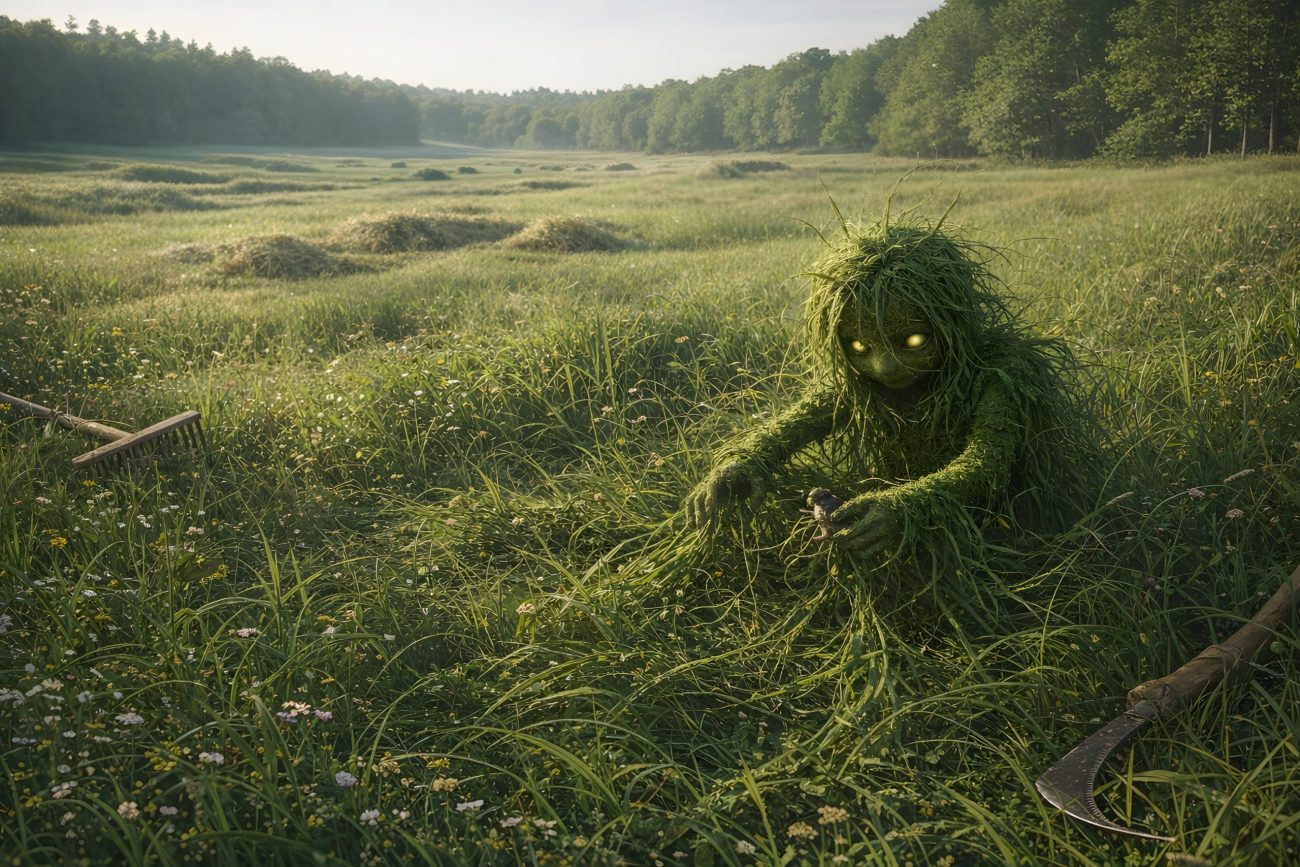
In Slavic mythology, Lugovichok is known as the spirit of the meadows. He is described as a small green man, clothed in grass and vegetation, and is considered one of the children of the field worker, a spirit connected with cultivated land and agricultural labor.

Lugovichok is believed to move swiftly through the meadows, catching birds and bringing them as food to his parent. During haymaking, he may secretly help people, ensuring that the work goes smoothly when it is done properly and at the right time.

However, Lugovichok is easily angered by neglect or improper behavior. When people delay mowing or fail to tend the meadow correctly, he may cause the grass to grow wildly and become tangled, braiding it so tightly that it cannot be cut or torn. In some cases, he is said to dry the grass at the root, ruining the hay altogether. If mowers arrive at the wrong time, Lugovichok can dull their scythes instantly or even break them completely, bringing work to a halt.

The name “Lugovichok” itself is rare and is recorded mainly in northwestern Russia. In other regions, related beliefs appear under different names. Peasants in the Tula province, for example, believed in shaggy meadow beings—alongside the field-goose and well-goose—who lived underground in burrows and emerged only at midday and just before sunset. At these times, such beings were considered dangerous and were thought capable of bringing illness or fever to humans.

Through these beliefs, Lugovichok represents both the helpful and harmful forces of the meadow—rewarding proper care and timing, but punishing neglect, impatience, or disrespect toward the land.


Sources

Bestiary.us contributors. (n.d.). Lugovichok. In Bestiary.us, from https://www.bestiary.us/Lugovichok
Kushkaftar

Tradition / Region: Dagestan Mythology, Russian Mythology
Alternate Names: Kashkaftar
Category: Forest dweller, Spirit, Demon


The Myth

In the folklore of several peoples of Dagestan, Kushkaftar is an evil forest spirit feared for her terrifying appearance and cruelty. She belongs to the realm of lower mythology and is known among the Tabasarans, Lezgins, Rutuls, Tsakhurs, Laks, and others.

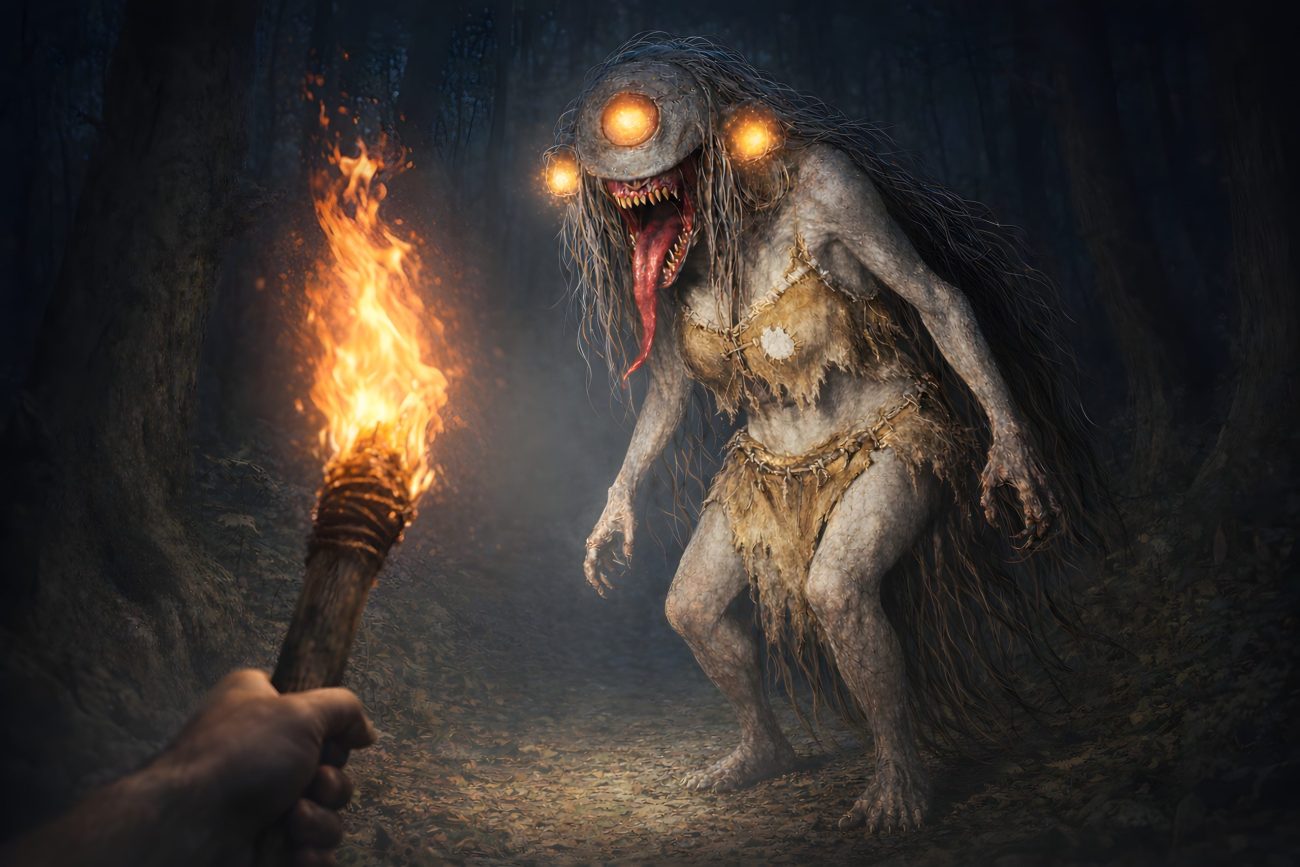
Most commonly, Kushkaftar is described as an ugly old woman. She has sharp fangs protruding from her mouth, fiery eyes, and long, tangled hair that hangs unkempt around her body. Her breasts are described as unusually large, further marking her as unnatural and frightening. According to belief, she lives deep in the forest together with her daughter.

At night, Kushkaftar is said to abduct children, carrying them away into the forest where she devours them. Because of this, she is regarded as a particular danger to families and a figure of terror used to explain disappearances and warn against wandering after dark.

Among the Rutuls, Kushkaftar—often called Kashkaftar—is described in a very different but equally frightening form. In these accounts, she appears as a strange, glowing creature, shining like phosphorus. She walks on two legs and possesses a single enormous eye, flat and plate-like, covering her entire face. From her mouth hangs a bright red tongue, and instead of ears she has burning lanterns, which glow in the darkness.

Despite differences in appearance across regions, Kushkaftar remains consistently portrayed as a malevolent forest being, associated with night, fear, and the consumption of children, embodying the dangers believed to lurk beyond the safety of the village.


Sources

Bestiary.us contributors. (n.d.). Kushkaftar. In Bestiary.us, from https://www.bestiary.us/Kushkaftar


Endar

Tradition / Region: Russian Mythology
Alternate Names:
Category: Forest dweller


The Myth

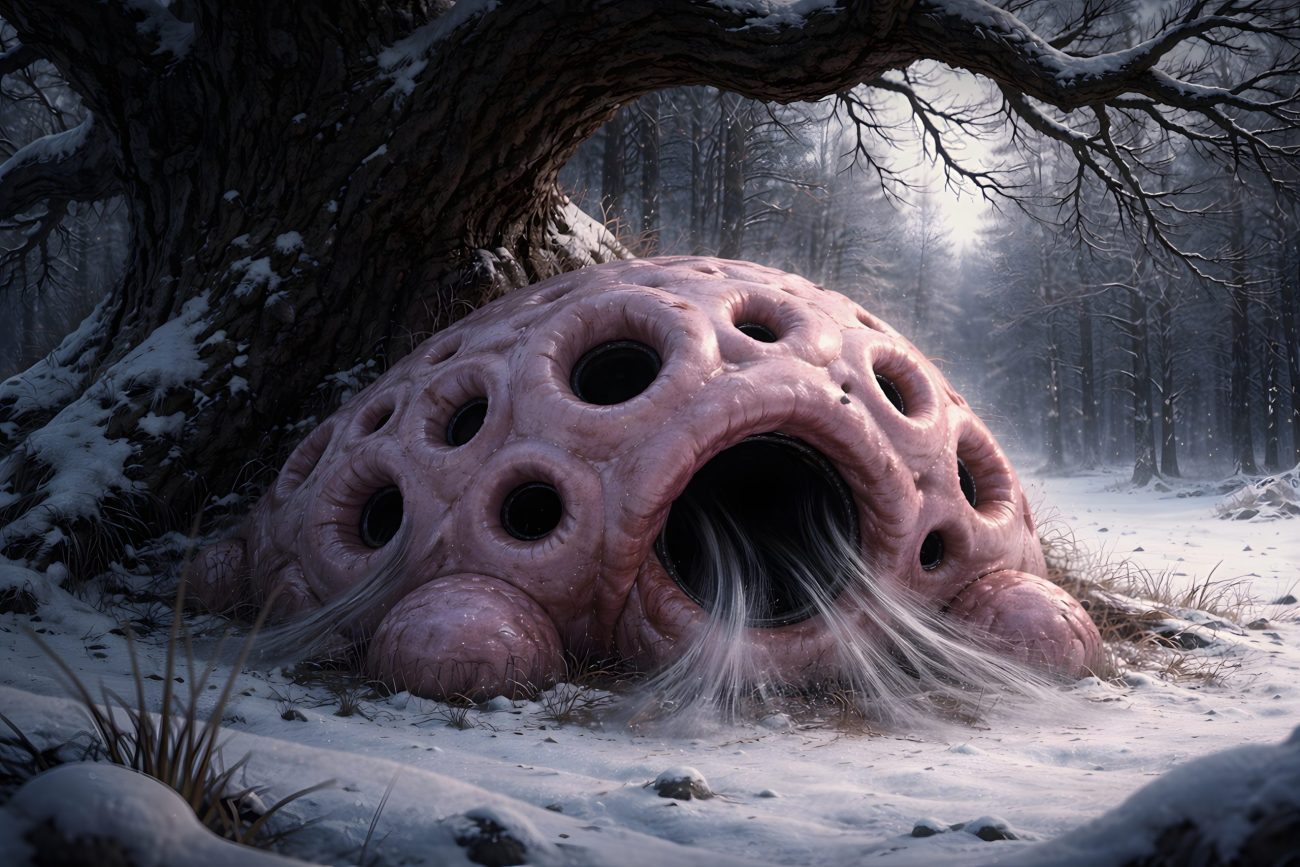
In Russian folklore, Endar is a scarcely described mythical being known primarily for its unusual way of sustaining itself. According to legends recorded in the Vyatka Province, the Endar lives beneath an old oak tree and feeds not on food or flesh, but on air itself.

Marina Vlasova, in her Encyclopedia of Russian Superstitions, notes that little else is known about this creature. Its form is not clearly described, and no detailed accounts of its behavior survive. The Endar remains largely undefined, existing more as a name and a location than as a fully formed figure.

Later retellings, particularly in modern sources, add that the Endar is said to be roughly the size of a boar. Beyond this single detail, however, its appearance remains uncertain.

The Endar thus occupies a quiet place in folklore: a being tied to a specific landscape, sustained by invisible means, and remembered more for its mystery than for any deeds or encounters.


Sources

Bestiary.us contributors. (n.d.). Endar. In Bestiary.us, from https://www.bestiary.us/endar


Kalenik

Tradition / Region: Komi mythology (Zyryan Komi)
Alternate Names: Kalenik-lebach
Category: Forest spirit


The Myth

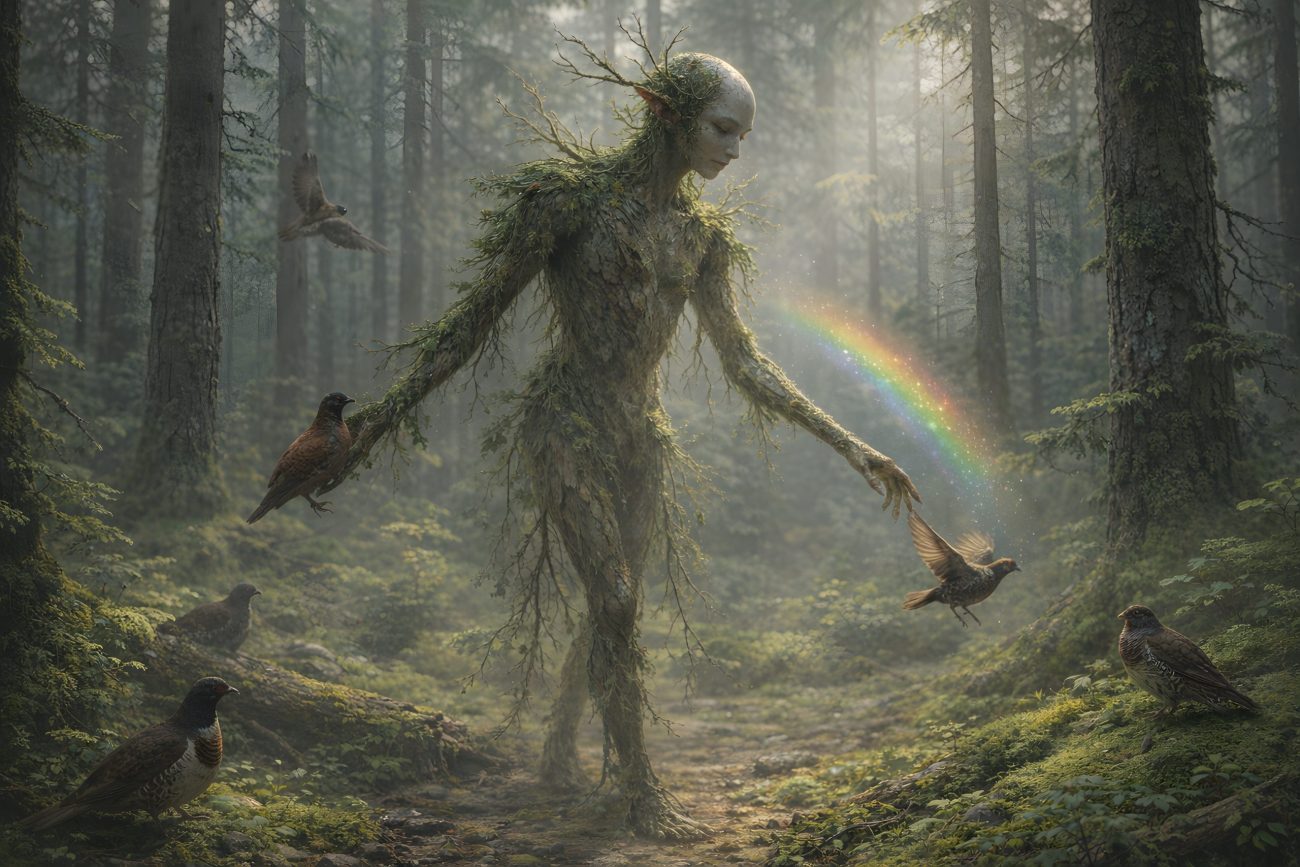
In Komi mythology, Kalenik is a forest spirit whose role is closely tied to the life of forest game birds. His sole function is to separate the young birds of the forest so that they may later pair off and breed. This act of separation is understood as a necessary step in maintaining the natural order of reproduction within the forest.

The name Kalenik comes from the Komi word kalkӧtny, meaning “to separate” or “to breed,” reflecting his specific task in the cycle of animal life. Kalenik does not hunt, punish, or mislead humans; instead, he quietly ensures that the rhythms of nature proceed correctly among the birds of the forest.

Among the Zyryan Komi, a related figure or expression is Kalenik-lebach, meaning “Kalenik-bird,” which was used as a name for the rainbow. In this form, Kalenik is associated with good fortune, and the appearance of the rainbow was considered a favorable sign.

Through these beliefs, Kalenik is remembered as a spirit connected not to danger or fear, but to fertility, balance, and the orderly continuation of life in the forest.


Interpretive Lenses

Religious Readings
Philosophical Readings
Psychological Readings
Esoteric Deep Dive
  • Hermetic Deep Dive
Political / Social Readings
Other