Kushkaftar

Tradition / Region: Dagestan Mythology, Russian Mythology
Alternate Names: Kashkaftar
Category: Forest dweller, Spirit, Demon


The Myth

In the folklore of several peoples of Dagestan, Kushkaftar is an evil forest spirit feared for her terrifying appearance and cruelty. She belongs to the realm of lower mythology and is known among the Tabasarans, Lezgins, Rutuls, Tsakhurs, Laks, and others.

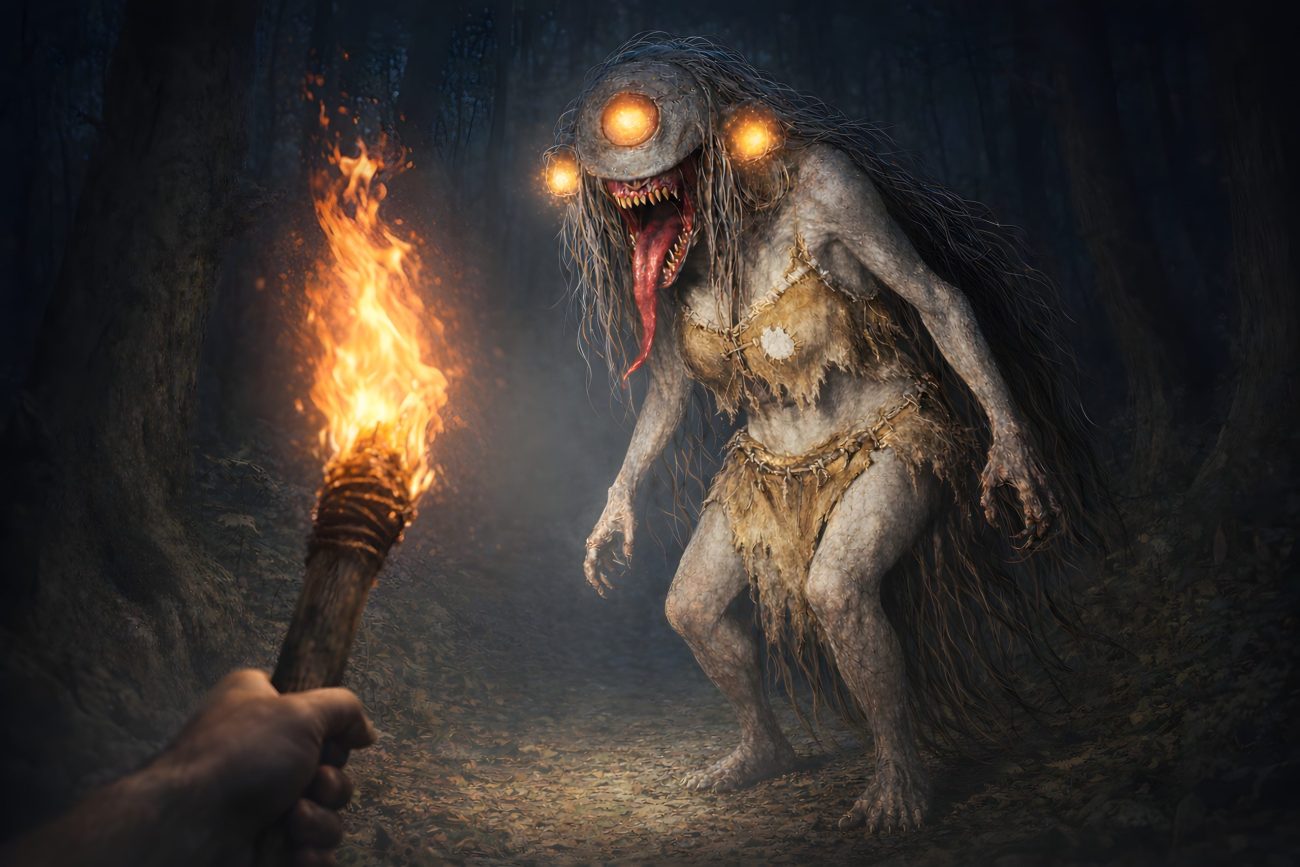
Most commonly, Kushkaftar is described as an ugly old woman. She has sharp fangs protruding from her mouth, fiery eyes, and long, tangled hair that hangs unkempt around her body. Her breasts are described as unusually large, further marking her as unnatural and frightening. According to belief, she lives deep in the forest together with her daughter.

At night, Kushkaftar is said to abduct children, carrying them away into the forest where she devours them. Because of this, she is regarded as a particular danger to families and a figure of terror used to explain disappearances and warn against wandering after dark.

Among the Rutuls, Kushkaftar—often called Kashkaftar—is described in a very different but equally frightening form. In these accounts, she appears as a strange, glowing creature, shining like phosphorus. She walks on two legs and possesses a single enormous eye, flat and plate-like, covering her entire face. From her mouth hangs a bright red tongue, and instead of ears she has burning lanterns, which glow in the darkness.

Despite differences in appearance across regions, Kushkaftar remains consistently portrayed as a malevolent forest being, associated with night, fear, and the consumption of children, embodying the dangers believed to lurk beyond the safety of the village.


Sources

Bestiary.us contributors. (n.d.). Kushkaftar. In Bestiary.us, from https://www.bestiary.us/Kushkaftar

Buka

Tradition / Region: Mordvin Mythology, Russian Mythology
Alternate Names:
Category: Spirit


The Myth

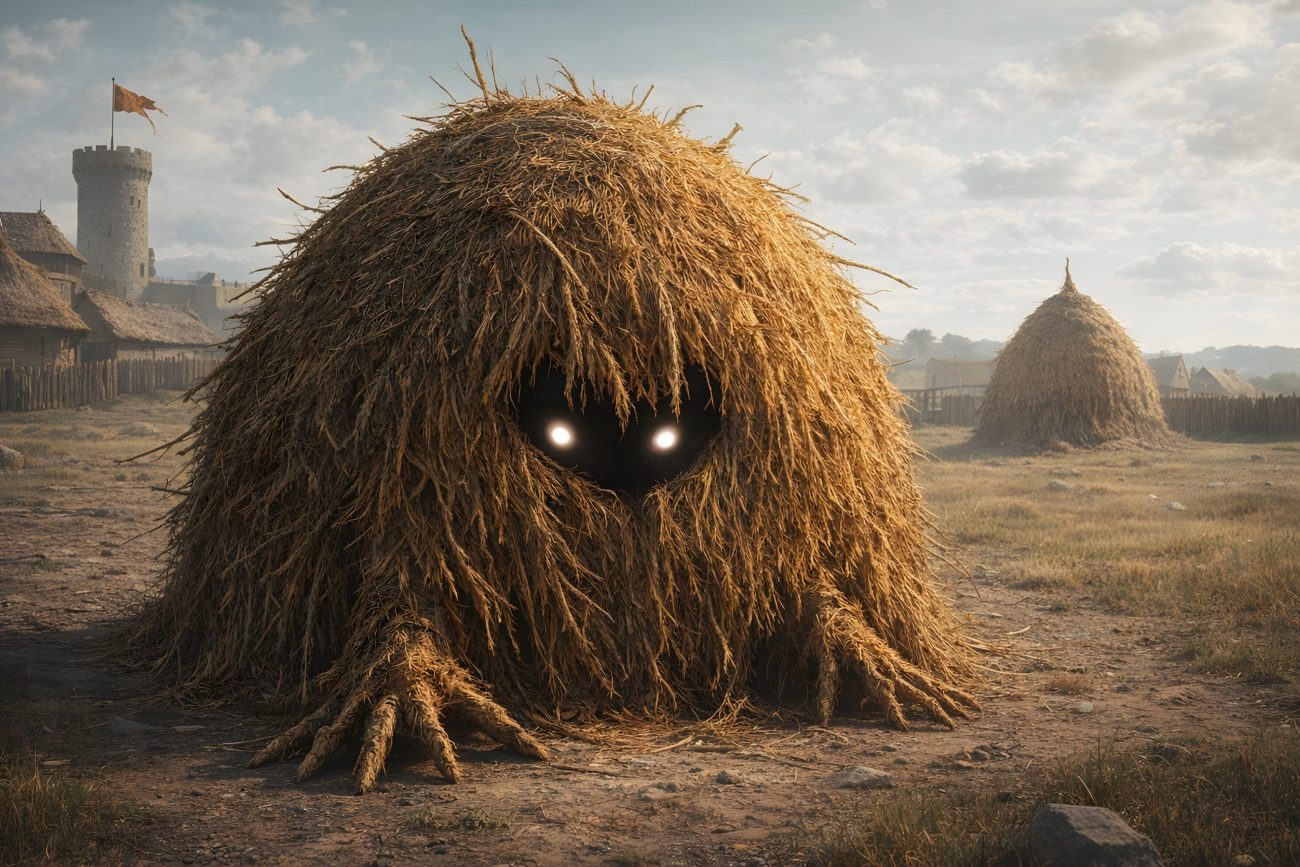
According to the tales of Mordvin peasants from the Saratov province, Buka is a strange and unsettling class of were-beast. Unlike creatures that take animal or human form, Buka appears at night in the shape of a haystack, blending almost perfectly into the rural landscape.

Buka is said to roam mainly after dark. It chases passers-by, pursuing them through fields and paths while emitting frightening sounds—described as tones resembling the growl of a harsh electric train. These unnatural noises announce its presence before it is fully perceived, filling those who hear them with sudden fear.

The creature is particularly associated with areas around churches, where it is said to circle repeatedly, lingering within the sacred boundary as if bound to it. Those who encounter Buka rarely attempt to confront it, for it is known to behave unpredictably.

If pursued or nearly caught by people, Buka does not fight back. Instead, it suddenly falls straight into the ground, disappearing entirely—“into Tartarus,” as the tales say—leaving no trace behind. After this, it is as if it never existed at all.

Buka remains a night-bound presence in Mordvin belief: a moving shape where none should move, a sound where silence belongs, and a reminder that even the most ordinary objects—like a haystack—can conceal something unnatural once darkness falls.


Sources

Bestiary.us contributors. (n.d.). Eterari. In Bestiary.us, from https://www.bestiary.us/eterari/


Kutys

Tradition / Region: Russian Mythology, Udmurt Mythology, Besermyan Mythology
Alternate Names: Vu Kutys (“Water Kutys”), Kutesi (Besermyan)
Category: Swamp Dweller, Spirit, Disease


The Myth

Kutys is a spirit that dwells near water, feared by people and animals alike. His name means “the one who seizes,” and when he acts, it is said that he truly grabs hold of his victims.

Kutys lives at springs, at the sources of rivers and streams, and in ravines where water once flowed. Even when a ravine dries in summer, Kutys may still remain there, unseen. Wherever he lives, sickness and terror follow. When he becomes angry, he punishes people and livestock first with sudden, unexplainable fear, and then with illness. Boils, scabs, erysipelas, abscesses, and wasting pains appear without warning. Sometimes Kutys inspires fear by wild, inhuman cries, and sometimes by appearing in dreadful forms, neither fully man nor beast.

Near the village of Omutnitsy, far from the town of Glazov, there is a spring where Kutys is said to live even now. Above the spring lies a marshy ravine covered with tangled growth. Kutys guards a hidden treasure there. On hot summer days, people or horses who approach the upper part of the ravine may be seized. Breath becomes difficult, strength drains away, the stomach tightens inward, fever and trembling begin, and soon the whole body falls into sickness. This suffering can last for days and may end in death unless Kutys is appeased with sacrifice.

Once, men building a bridge over the stream called Yazinets slept beside their work. At midnight they were awakened by a terrible roar. At the head of the stream they saw a gigantic figure advancing toward them, something neither clearly human nor animal. In panic, they fled to the village, leaving their clothes and belongings behind.

To protect themselves, people make offerings to Kutys. Small loaves of bread, egg-filled pies, pancakes, grains of barley tied in cloth, copper coins, or even a live chicken with bound legs are given at springs and streams. Some throw grain mixed with salt, bits of cloth, or small dolls into the water or onto the ground where Kutys dwells. This act of offering is meant to calm him and release those he has seized.

Kutys is closely bound to water itself. Those who curse into water, spit, blow their nose, or behave disrespectfully near springs risk being taken by him. Among the Besermyans, Kutys is believed to be the spirit of those who died unnatural deaths, or of infants who died without being named. Such spirits linger near their burial places and seize anyone who steps upon them.

Thus Kutys remains a presence of sudden fear and sudden illness, a reminder that water is not only life-giving but dangerous, and that unseen hands may still reach up from springs and ravines to seize the careless.


Sources

Bestiary.us contributors. (n.d.). Kutys. In Bestiary.us — Mythical Creatures of the World, from https://www.bestiary.us/kutys#


Kolodechnik

Tradition / Region: Russian Mythology
Alternate Names:
Category: Spirit


The Myth

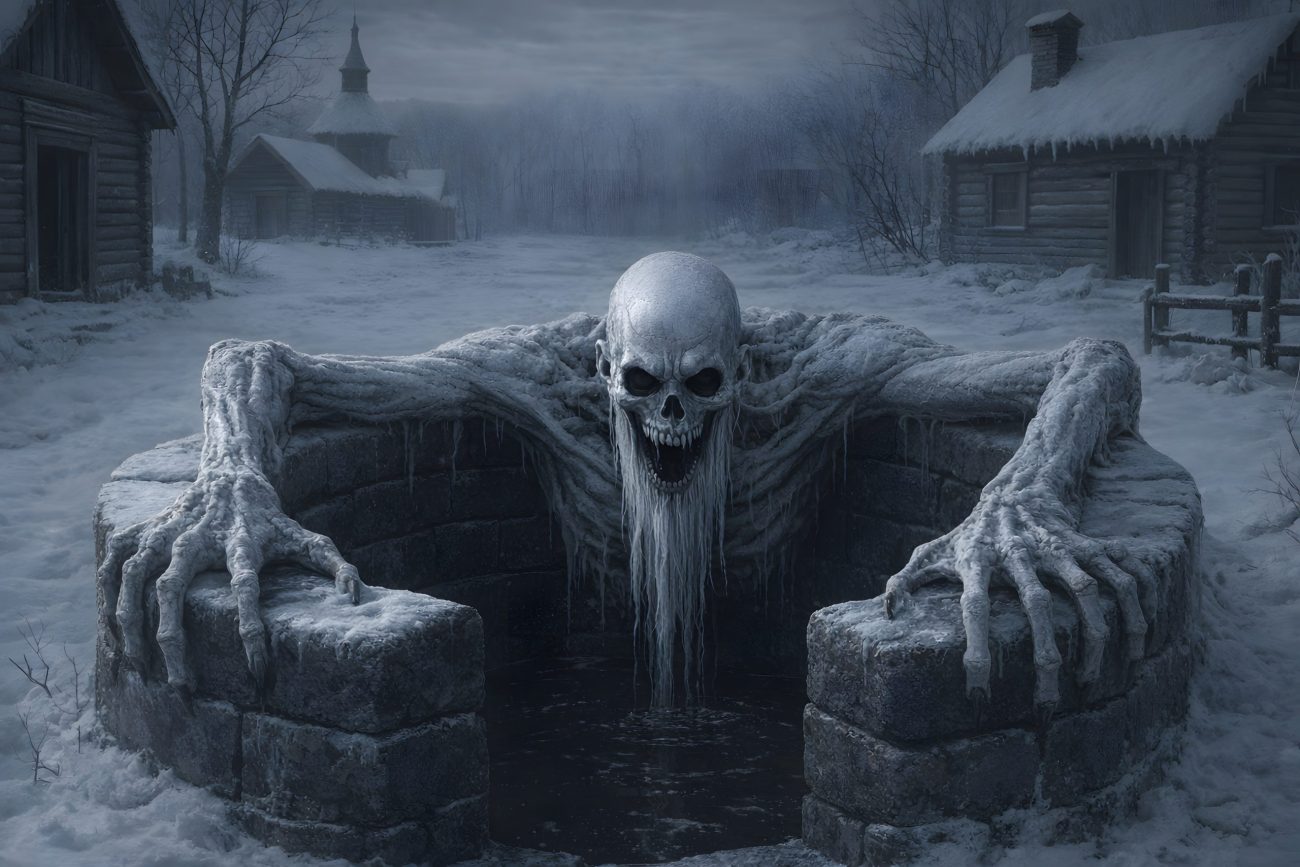
A kolodechnik is a type of brownie spirit in Russian folklore and is regarded as the master and guardian of a well. Each kolodechnik is bound to a specific well, which it protects as its own domain.

The spirit is believed to dwell within the depths of the well, watching over the water and ensuring its proper use. Every well has its own kolodechnik, and the spirit does not stray from the place it guards.


Ichchi

Tradition / Region: Russian Mythology
Category: Spirit masters / animistic spirits


The Myth

In traditional Yakut belief, ichchi are spirit masters that inhabit objects, places, and natural phenomena. According to this worldview, nature is alive in all its parts, and every thing—large or small—possesses its own indwelling spirit. Mountains, trees, rivers, lakes, fire, tools, dwellings, and even the most ordinary household objects were believed to have an ichchi.

Ichchi could dwell in prominent features of the landscape, such as forests or bodies of water, acting as guardians or owners of those places. At the same time, they could also inhabit humble or easily overlooked things, such as the firebox used in the hearth or tools used in daily work. Because of this, people were expected to treat both nature and objects with care and respect.

When approached properly, an ichchi could become a patron spirit to a person or household, offering protection, good fortune, and harmony. Disrespect, neglect, or improper behavior toward the object or place inhabited by an ichchi could provoke misfortune, illness, or bad luck.

Communication with ichchi took the form of prayers called algys, which were spoken to honor or appease the spirits. Offerings were an essential part of this relationship. These could include horsehair ornaments, scraps of cloth known as salama, non-animal foods, kumiss (fermented mare’s milk), or money. The offerings acknowledged the spirit’s presence and authority.

Ichchi are distinct from other spiritual beings in Yakut cosmology. They are not the high benevolent deities known as Aiyy, nor are they the malevolent spirits such as Abaahy or Uor. Instead, ichchi occupy a middle position as ever-present spirit owners of the world itself.

Similar beliefs in spirit masters exist among neighboring peoples. Other Turkic-speaking groups refer to such spirits as eye or ezi, the Buryats call them ezhins, and the Mongols know them as edzens, reflecting a shared animistic understanding across Inner Asia.


Igrets

Tradition / Region: Russian Mythology
Alternative Name: –
Category: Spirit


The Myth

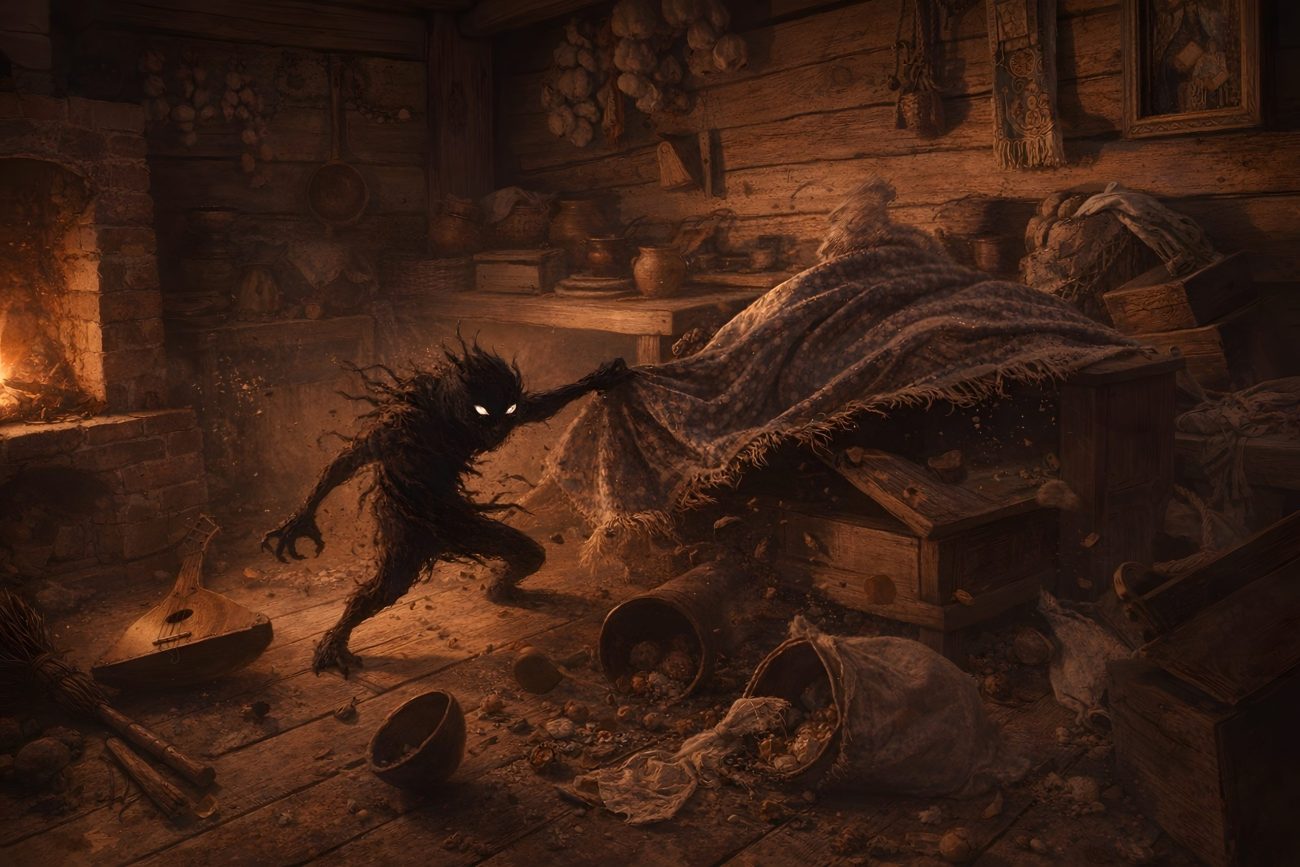
Igrets is a figure from Russian folk belief understood as a malicious type of domovoi, the household spirit. Unlike the more ambivalent or protective domovoi, the igrets is known specifically for cruel and troublesome behavior. It hides objects, causes disorder in the house, torments livestock, and interferes with daily life through spiteful tricks rather than playful mischief.

In popular belief, the igrets is sometimes identified directly with the house spirit itself, and in other cases confused with the devil or a demonic presence dwelling within the household. Its actions are described as aggressive and harmful: breaking things, frightening people, and provoking physical or emotional distress. Because of this, its “jokes” were considered dangerous rather than humorous.

Belief in the igrets was widespread in central and southern regions of Russia, including the Ryazan, Tambov, Kursk, Tula, Voronezh, Penza, and Oryol provinces, as well as the Don region. From at least the 19th century, everyday speech in these areas included expressions such as “Igrets take you,” “Igrets knows him,” or “Igrets is with you,” used to explain misfortune, sudden anger, or destructive behavior.

In some regions, the word igrets was also used to describe physical or psychological disturbances. In Kursk province, it could refer to a violent fit or hysterical episode accompanied by screaming. In Tambov and the Don region, it could mean paralysis or sudden loss of control over one’s limbs. These meanings suggest that the igrets was associated not only with household disorder, but also with unexplained illness or loss of bodily control.

Overall, the igrets represents the darker side of domestic spirits in Russian folklore: a presence within the home that causes chaos, suffering, and fear, and serves as an explanation for sudden misfortune, destructive impulses, or frightening physical episodes.