Bies

Tradition: Bosnian mythology, Croatian Mythology, Russian Mythology, Ukranian Mythology, Polish Mythology
Alternative Names: Bies, Bes, Bijes, Bisy, Chort, Czort
Category: Demon


The Myth

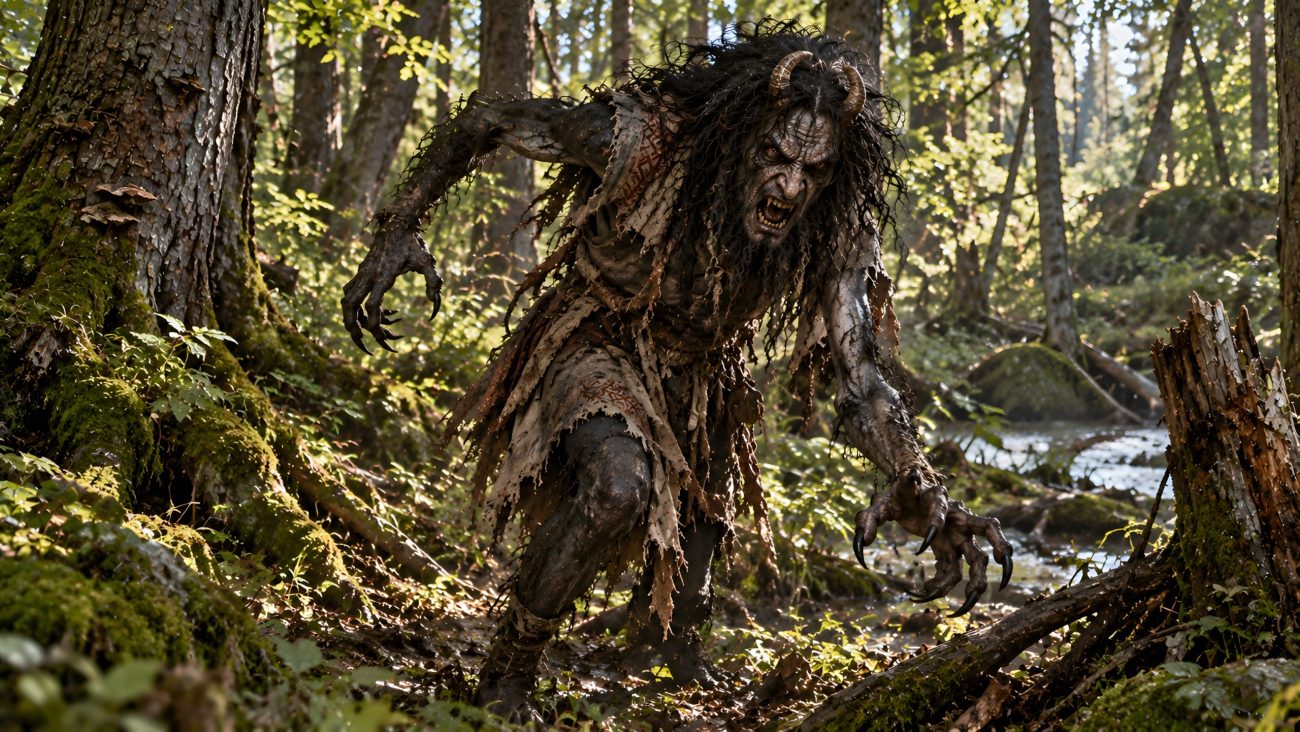
Bies is an evil spirit or demon in Slavic mythology. The word bies is associated with an evil supernatural being and, following the Christianization of Slavic peoples, became closely identified with the Devil and with the demon known as Chort or Czort.

In Christian-influenced tradition, Bies came to represent the Devil or other demonic beings. The plural biesy was used in Russian translations of the New Testament for the devils that possessed the swine in the Gospel of Mark. Related Slavic words also developed meanings associated with madness and uncontrolled behavior. In Slovenian, Croatian, and Serbian, the related forms bes and bijes mean “rage” or “fury.”

A separate being called bès is found among the Jah Hut people of Malaysia. These bès are dangerous spirits inhabiting the jungle. They can attack people and cause illness through spirit possession.

The Jah Hut can attempt to tame and contain a bès by carving a small wooden figure called a sepili, representing the particular spirit causing trouble. If the spirit approves of the figure, it may enter it, allowing the people to trap the spirit inside through a special ritual. The sepili must then be taken far away from the village because the bès may become angry when it eventually escapes. Traditionally, the figures were buried deep in the jungle.


Sources

“Bies.” Wikipedia: The Free Encyclopedia. Wikimedia Foundation. Accessed September 10, 2026. https://en.wikipedia.org/wiki/Bies

Notsnitsa

Tradition: Russian Mythology, Slovak Mythology
Alternative Names: Nocnitsa, Nochnitsa, Načnica, Nocnica, Płaczka, Nichnytsia, Kriksy, Plaksy, Night Hag, Night Maiden
Category: Demon


The Myth

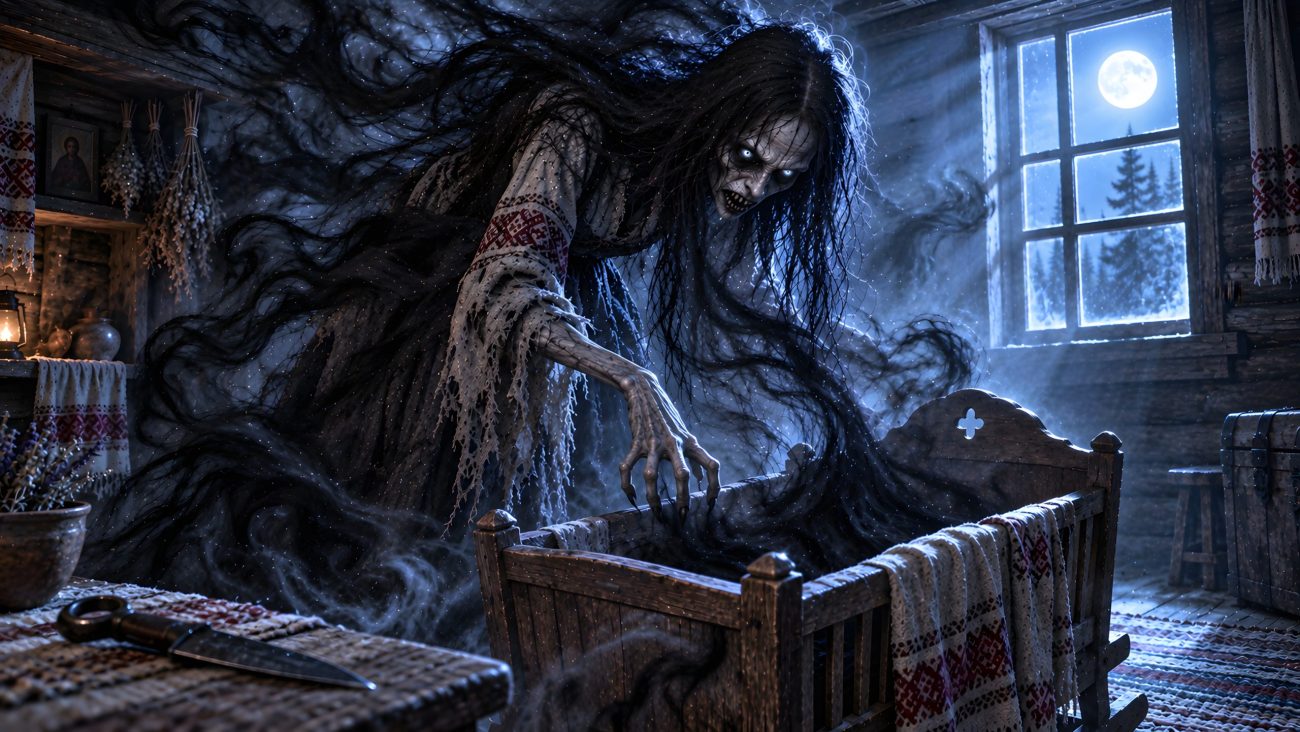
Notsnitsa is a nocturnal demon that torments people, especially children, while they sleep. She is associated with nightmares and is sometimes described as a shadow-like female spirit.

Notsnitsa is said to sit on a sleeping person’s chest and drain their life energy. Because of this, she is sometimes regarded as a kind of vampire. She may return to the same person repeatedly during the night.

In some traditions, Notsnitsa attacks people who sleep on their backs with their hands resting on their chests, a sleeping position associated with the dead.

Notsnitsa was especially feared for attacking children. In Russian and Slovak folklore, various protections were used to keep her away. A stone with a hole through its center could be placed as protection, while some mothers placed a knife in a child’s cradle or drew a circle around the cradle with a knife.

She is sometimes described as having a terrible screeching voice and as being made of shadow.


Sources

“Nocnitsa.” Wikipedia: The Free Encyclopedia. Wikimedia Foundation. Accessed September 9, 2026. https://en.wikipedia.org/wiki/Nocnitsa


Habernitsa

Tradition: Russian Mythology, Polish Mythology
Alternative Names: Chabernica, Habernitsa, Cornflower Wraith, Lady Cornflower, Cornflower Witch
Category: Demon


The Myth

Habernitsa is a noon demon who appears as a young, slender woman dressed in azure, with cornflowers woven into her hair. She wanders along the boundaries of fields at midday.

She becomes angry with people who trample the grain or work with sharp tools in the fields at noon. Those she considers deserving of punishment are put to sleep by her whisper.

Once they have fallen asleep, Habernitsa causes them terrible pain and injuries. She can inflict headaches, paralysis, and severe pain in the lower back. In some cases, she attacks more violently, breaking the victim’s arms, legs, or neck.

To avoid Habernitsa’s wrath, field workers must stop working and take a break at midday, at the time of the Angelus.


Sources

“Cornflower Wraith (Habernitsa).” Wikipedia: The Free Encyclopedia. Wikimedia Foundation. Accessed September 9, 2026. https://en.wikipedia.org/wiki/Cornflower_Wraith


Kulyashi

Tradition: Russian Mythology
Alternative Names: Kulyashi, Kuleshata, Kuleshi
Category: Demon


The Myth

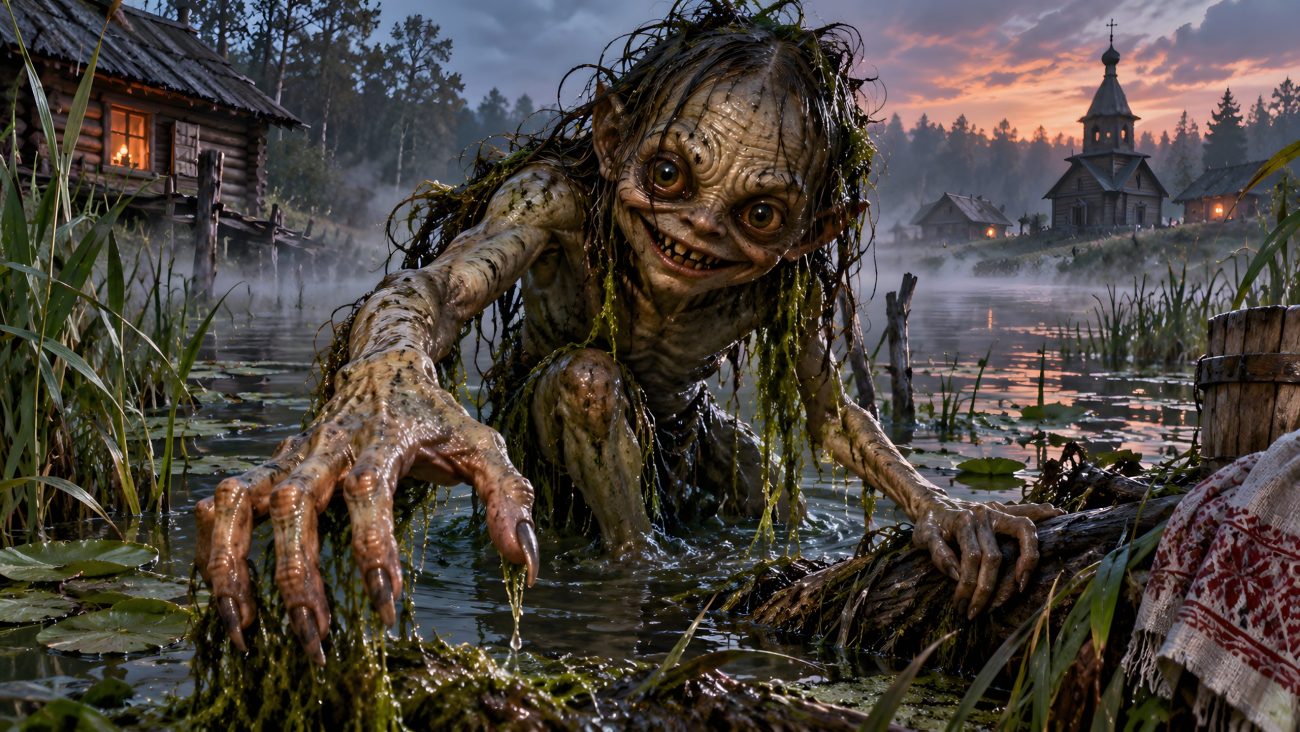
Kulyashi are small water demons from the folklore of the Vologda region of Russia. They live in the water and are said to emerge during Epiphany.

People were afraid of accidentally scooping up a Kulyash when drawing water, and a saying recorded in Vladimir Dal’s dictionary warned that the Kulyashi came out of the water at Epiphany. Because of them, people were careful when going onto or drawing from the water during this time.

In the Russian North, these little water beings were also known as Kuleshi or Kuleshata. They appeared during Svyatki, the Christmas festive period, where they caused trouble and mischief for people. When the festive season came to an end, the creatures disappeared again.

Kulyashi were therefore imagined as small, troublesome supernatural beings that appeared for a short period, disturbed people, and then vanished. They were regarded as a kind of water-dwelling counterpart to the better-known Shulikuny.


Sources

“Куляши (Kulyashi).” New Bestiary (Bestiary.us). Accessed September 7, 2026. https://www.bestiary.us/Kulyashi


Kushkaftar

Tradition / Region: Dagestan Mythology, Russian Mythology
Alternate Names: Kashkaftar
Category: Forest dweller, Spirit, Demon


The Myth

In the folklore of several peoples of Dagestan, Kushkaftar is an evil forest spirit feared for her terrifying appearance and cruelty. She belongs to the realm of lower mythology and is known among the Tabasarans, Lezgins, Rutuls, Tsakhurs, Laks, and others.

Most commonly, Kushkaftar is described as an ugly old woman. She has sharp fangs protruding from her mouth, fiery eyes, and long, tangled hair that hangs unkempt around her body. Her breasts are described as unusually large, further marking her as unnatural and frightening. According to belief, she lives deep in the forest together with her daughter.

At night, Kushkaftar is said to abduct children, carrying them away into the forest where she devours them. Because of this, she is regarded as a particular danger to families and a figure of terror used to explain disappearances and warn against wandering after dark.

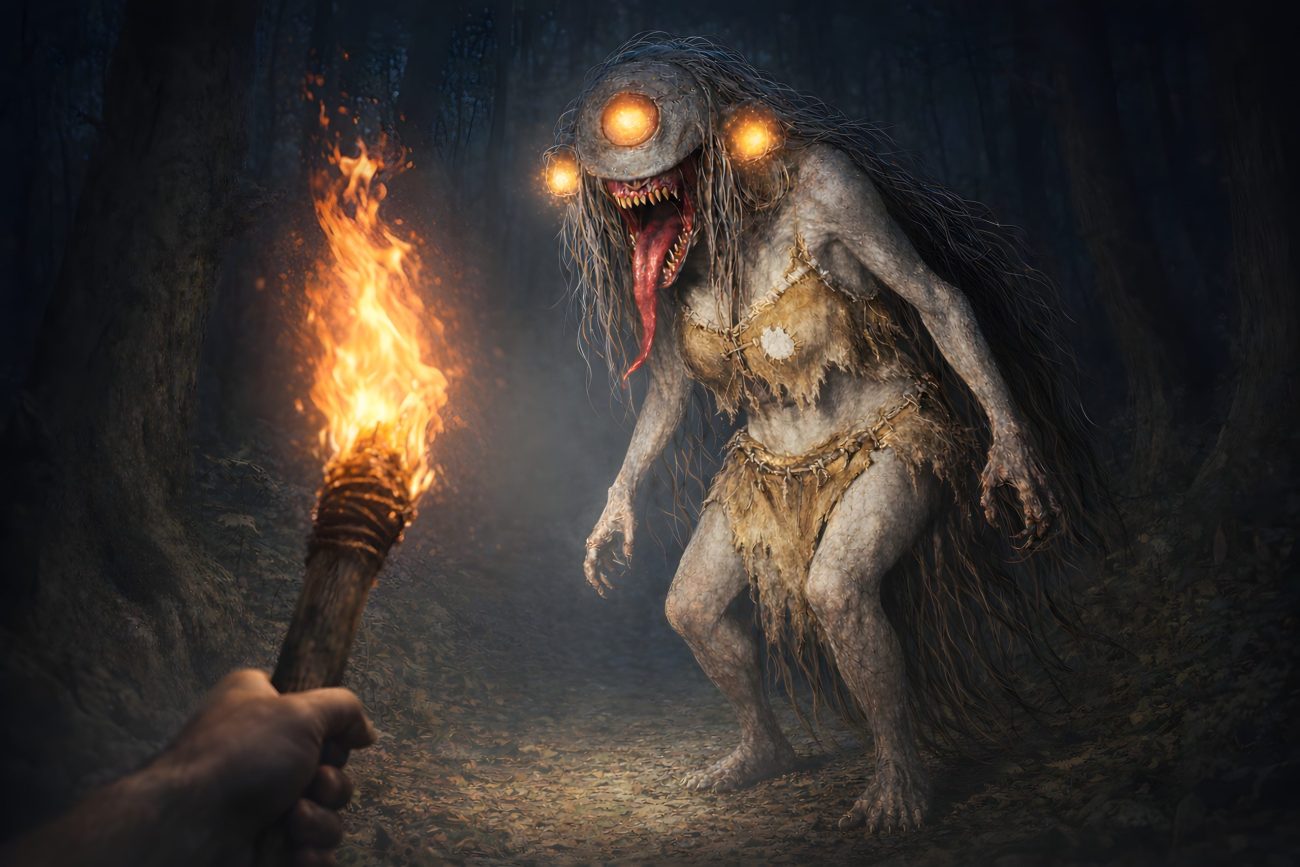
Among the Rutuls, Kushkaftar—often called Kashkaftar—is described in a very different but equally frightening form. In these accounts, she appears as a strange, glowing creature, shining like phosphorus. She walks on two legs and possesses a single enormous eye, flat and plate-like, covering her entire face. From her mouth hangs a bright red tongue, and instead of ears she has burning lanterns, which glow in the darkness.

Despite differences in appearance across regions, Kushkaftar remains consistently portrayed as a malevolent forest being, associated with night, fear, and the consumption of children, embodying the dangers believed to lurk beyond the safety of the village.


Sources

Bestiary.us contributors. (n.d.). Kushkaftar. In Bestiary.us, from https://www.bestiary.us/Kushkaftar