Gyrgalica

Tradition / Region: Slovakia Mythology, Polish Mythology
Alternative names: Grgolica, Gorgolica
Category: Giant


The Myth

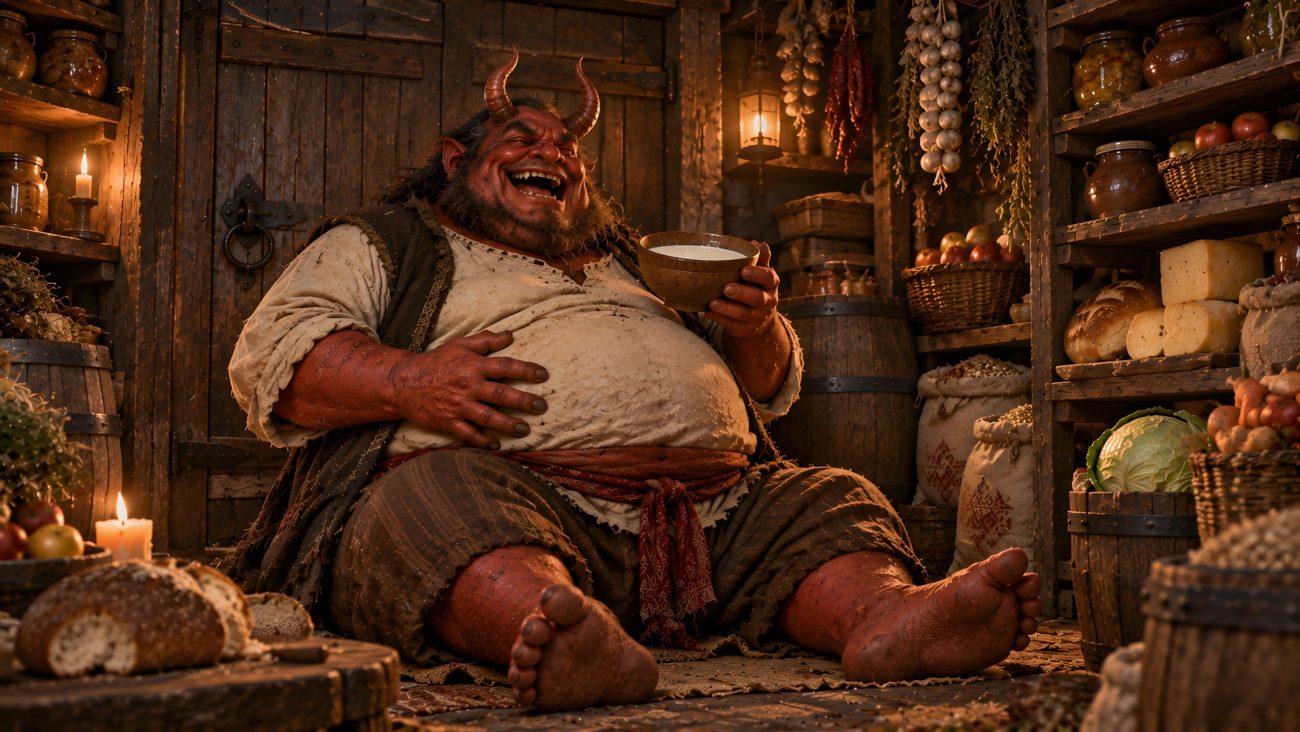
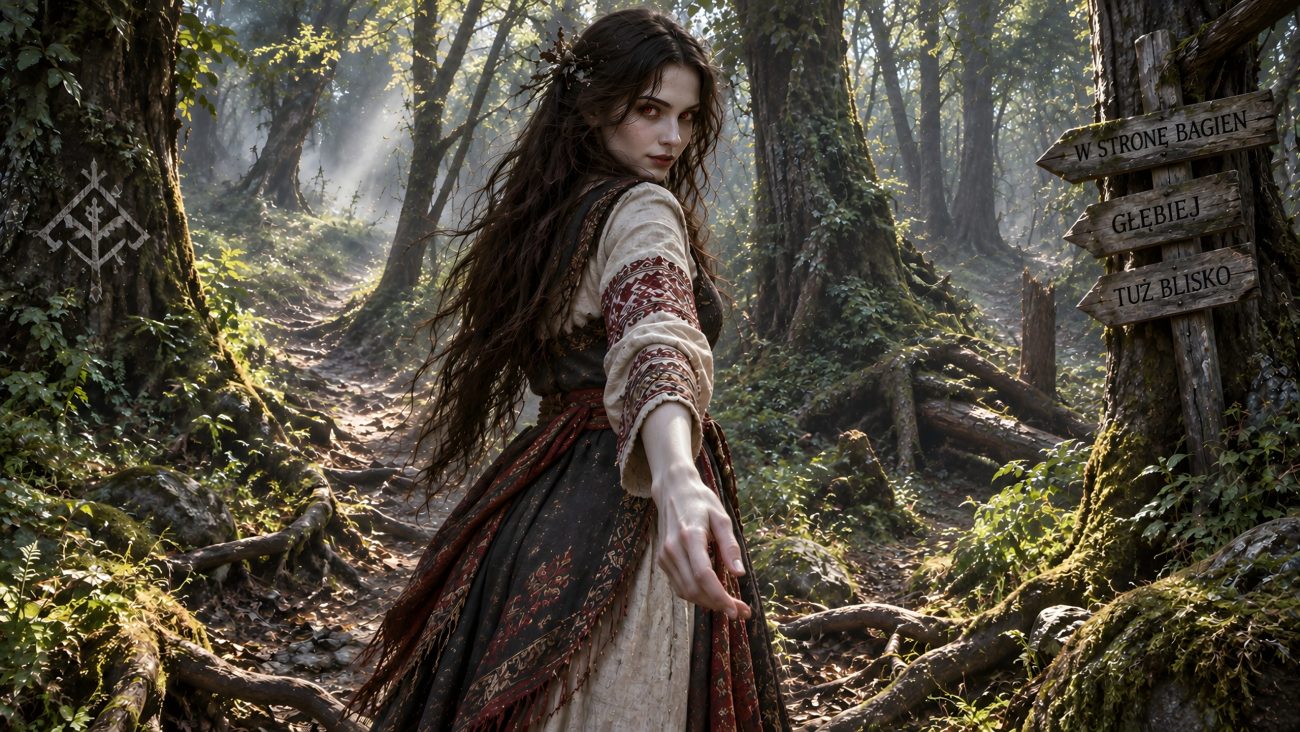
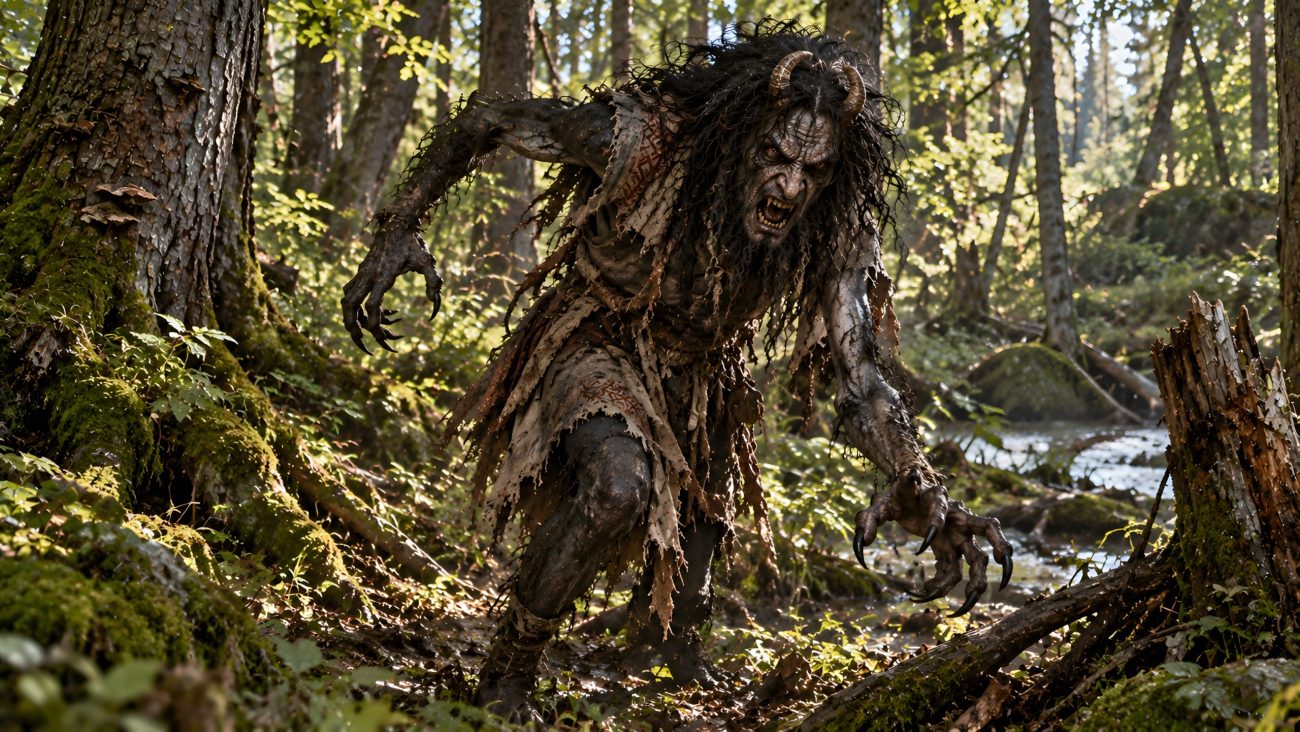
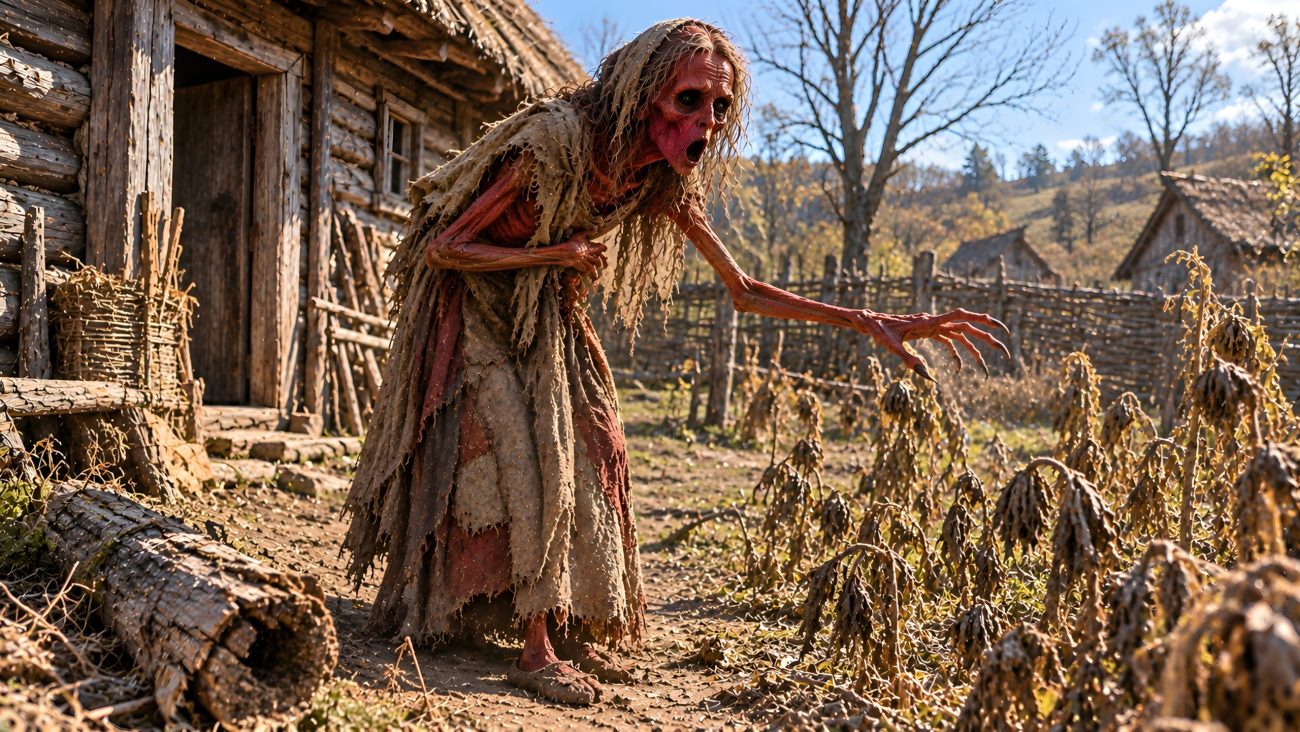
The Gyrgalica is a monstrous giant woman said to wander the forests of Slovakia and Poland. She is described as enormous and terrifying, with black feet, huge shovel-like hands, wild tangled hair, and eyes as large as saucers. Her breasts are so long and heavy that she throws them over her shoulders or across her back while moving through the woods.

Gyrgalicas hide deep in forests and prey upon wandering men. If one catches a victim, she kills him in a horrifying way: she forces one of her massive breasts into his mouth and suffocates him. Because of this, they became feared as deadly forest spirits associated with isolation, wilderness, and sudden disappearances.

In the Banská Bystrica region of Slovakia, people believed the creature could rarely be seen directly. Instead, travelers heard terrible howls and cries echoing through the forest at night. These sounds were believed to announce the presence of a nearby Gyrgalica hiding among the trees.

In some Slovak traditions, the Gyrgalica overlaps with the figure of the Runa and resembles other female wilderness spirits of the Carpathian region such as the Boginka and Mamuna. Like them, she is linked to remote forests, danger, and supernatural female beings that attack humans.

The name Gyrgalica or Gorgolica is believed to come from old Slavic words connected with shrieking, wailing, screaming, or harsh bird cries, reflecting the terrifying sounds said to echo through the woods when the giantess was near.


Sources

Bestiary.us. (n.d.). Grgalica. Retrieved May 18, 2026, from https://www.bestiary.us/grgalica/


Beskud

Tradition / Region: Ukraine Mythology, Poland Mythology, Czech Republic Mythology, Slovakia Mythology
Alternative names: Beskudians
Category: Vampire


The Myth

The Beskud is a rare and terrifying blood-drinking creature tied to the caves of the Beskydy Mountains. Unlike ordinary vampires, Beskuds are considered a separate breed of undead entirely. Folklore describes them as gray-skinned beings with slit-shaped catlike eyes, triangular teeth, immense physical strength, and skin so hard that ordinary weapons can barely wound them.

According to legend, the Beskuds were once members of the ancient Bastarnae nobility who willingly accepted a terrible curse before death. They were ritually killed and placed inside cave formations called helictites—strange twisting mineral structures that grow sideways inside the caves of the Moravian Karst and the northwestern Carpathians. Centuries later the cursed dead emerged from these stone cocoons as living blood-drinkers.

Unlike vampires, Beskuds are not created through bites, improper burials, or restless souls. Every Beskud originates directly from one of these ancient helictite cocoons. Even after one creature emerges, another may later form from the same cave structure, creating different Beskuds connected by an obscure mental bond. Destroying the helictite does not destroy the creatures born from it.

The life cycle of a Beskud is highly unusual. Newly emerged Beskuds are weak and unable to survive in sunlight. Even moonlight can temporarily turn them to stone. Hidden in caves, they survive on bats and are protected by older Beskuds until they grow stronger. After roughly a year of feeding, they enter a long hibernation and finally awaken as fully developed adult monsters.

Adult Beskuds can walk beneath the sun, though they strongly avoid open spaces and prefer darkness, storms, and overcast nights. Thunderstorms are considered their favored hunting time. Unlike most undead creatures, they usually attack only people awake after midnight—guards, drivers, thieves, wanderers, and night workers. Sleeping is considered one of the safest protections against them.

A Beskud’s bite drains more than blood. Victims also lose lymph and bodily fluids until they resemble dried mummies. Their attacks leave corpses shriveled and emptied rather than torn apart.

Beskuds are notoriously difficult to kill. They cannot dissolve into mist or transform into animals, but their speed and durability rival vampires. Wooden stakes are almost useless against them because their skin is extremely resistant. Folklore instead recommends silver-edged axes or silver-plated blades capable of severing the head. Decapitation is considered the only reliable way to destroy them.


Sources

Bestiary.us. (n.d.). Beskud. Retrieved May 18, 2026, from https://www.bestiary.us/beskud/


Maupun

Tradition / Region: Polish Mythology, Ukranian Mythology
Alternate Names: Maoupunu, Maupunu
Category: Mermaid, Zombie


The Myth

In the marshlands and river regions of eastern Polesia, it is said that not only girls become rusalki after death. Sometimes a boy may share their fate.

If a child dies before baptism, his soul cannot rest. Such a boy may return as a wandering spirit, bound to the waters and the fields. One such spirit is known as Maupun.

Maupun was once an unbaptized boy. After death he did not pass into the world of the dead, but instead came to dwell among the rusalki—the restless spirits of girls who died before receiving baptism. Over time, he became their leader and chief, ruling over them as they wandered the wetlands and meadows.

The rusalki under Maupun’s command are said to appear as pale girls with bright, shining eyes and wild, shaggy hair. During Trinity Week they leave the waters and roam the rye fields and grassy places, laughing loudly, singing, and playing together beneath the open sky.

But their laughter is dangerous. Anyone who encounters them must flee at once. If they catch a person, they will tickle and clutch them until they die.

And it is Maupun who leads them—
the boy who never received baptism,
now lord of the wandering mermaids of the marsh.


Sources

Bestiary.us contributors. (n.d.). Maupun. In Bestiary.us, from https://www.bestiary.us/maupun/


Topielec

Tradition / Region: Polish Mythology
Alternate Names: Utopiec, Utopce (plural), Vodník, Topnik, Topielica (female form)
Category: Swamp dweller


The Myth

In Slavic lands it was believed that not all who died in water truly left the world. Those who drowned—whether by accident, despair, or violence—might return as restless spirits bound forever to the element that took their lives. Such beings were called Topielce or Utopce.

They were said to dwell in lakes, rivers, marshes, and deep ponds, hiding beneath still water or lurking among reeds and mud. The places where they lived were often silent and treacherous, the surface calm while danger waited below.

These spirits did not rest peacefully. Drawn by envy of the living, they were believed to seize people who came too close to the water’s edge. Bathers, fishermen, children playing on riverbanks, even animals drinking at a pond could suddenly be dragged down into the depths. Many said the spirit would clutch its victim with cold hands and pull them under, adding another soul to the water’s domain.

The female forms, called Topielice, were sometimes said to appear near the shore, luring the unwary closer before the water closed over them.

Because of this, people treated lonely waters with caution. They crossed themselves before swimming, avoided marshes at dusk, and warned children never to mock the river. For it was said that beneath the quiet surface, the drowned were waiting—forever bound to the waters that claimed them, and eager to draw the living down to join them.


Sources

Wikipedia contributors. (n.d.). Topielec. In Wikipedia, The Free Encyclopedia. Retrieved February 14, 2026, from https://en.wikipedia.org/wiki/Topielec


Północnica

Tradition / Region: Polish Mythology
Alternate Names: Mara, Nocnica
Category: Mermaid


The Myth

Among the Slavs it was said that not all restless spirits wander by day. Some belong to the deep hours of night, when the world is quiet and the living are most vulnerable. One such being was the Północnica — the Midnight Woman.

She was believed to be born from the soul of someone who had lived in great sin, or from a person who had suffered terrible wrongs in life. Such a soul, unable to find peace after death, might return as a malicious spirit. Some said a person could even become such a being while still alive, if their heart was consumed by powerful hatred, grief, or bitterness.

There were darker whispers too. It was said that if, during baptism or on a deathbed, the words of prayer were spoken wrongly, the mistake could doom a soul. A slip of the tongue might bind it to wander as a Północnica.

She was a creature of midnight. When the hour was deepest and the world lay still, she would move unseen through houses and villages. Her nature was not always murderous, but she was spiteful and fond of mischief. She troubled sleepers, stirred unease, and spread fear in the dark hours when no one wished to meet what walked outside.

Thus people spoke her name carefully, knowing that some spirits belong not to the grave, but to the hour when the night is at its blackest.


Sources

Wikipedia contributors. (n.d.). Północnica. In Wikipedia, The Free Encyclopedia. Retrieved February 14, 2026, from https://pl.wikipedia.org/wiki/P%C3%B3%C5%82nocnica


Skarbnik

Tradition / Region: Polish Mythology, Ukranian Mythology, Belarusian Mythology
Alternate Names: Kladenets; Dzedka
Category: Cave dweller


The Myth

Deep beneath the earth, in the winding tunnels of mines and forgotten shafts, dwells the Skarbnik—the Treasurer of the underworld. He is the unseen guardian of gems, crystals, and precious metals, watching over the hidden wealth buried in stone.

Miners speak of him in hushed voices. To those who work honestly and show respect, Skarbnik is a silent protector. When tunnels groan and timbers strain, he may guide a worthy miner away from danger. When a man loses his path in the dark labyrinth underground, a whisper, a faint glow, or the echo of a step may lead him safely back. At times, Skarbnik rewards diligence by revealing a rich vein of ore, leading the faithful straight to silver, coal, or gold.

But Skarbnik is not gentle with the wicked.

Those who curse in the tunnels, mock the spirit, or treat the mine with arrogance soon feel his wrath. It is forbidden to whistle underground, to hurl stones in anger, or to cover one’s head in disrespect. Such acts insult the Treasurer. First comes a warning—a sudden shower of loose soil striking the offender, small clods thrown from unseen hands. If the warning is ignored, harsher punishment follows. Tunnels collapse without mercy. Dark chasms open beneath careless feet. Stones fall from above with deadly aim.

To the greedy and cruel, Skarbnik is a relentless judge. To the humble and respectful, he is a guardian and guide.

Thus the miners say that no one truly works alone beneath the earth. The Treasurer watches always, weighing the hearts of men as carefully as the ore they seek.


Sources

Wikipedia contributors. (n.d.). Karzełek. In Wikipedia, The Free Encyclopedia. Retrieved February 13, 2026, from https://en.wikipedia.org/wiki/Karze%C5%82ek


Devil Boruta

Tradition / Region: Polish mythology
Alternate Names: Boruta, Błotnik, Borowiec
Category: Demon, Swamp dweller, Shapeshifter


The Myth

In the forests, swamps, and muddy roads of Poland, people long spoke of Devil Boruta, a spirit who delighted in confusing travelers and leading them astray at night. When carts became stuck in the mud or paths vanished in the dark, it was Boruta who was blamed—lurking unseen, laughing as people wandered in circles through marsh and woodland.

Boruta was not always imagined as a horned demon. In older folk belief, he was closer note a wild forest spirit, a remnant of pre-Christian beings who ruled untamed places. After Christianization, this spirit was reshaped into a devil, though he retained his connection to bogs, dams, forests, and muddy crossings. He could appear suddenly as a black dog, slip through reeds as a shadow, or remain unseen while his presence was felt through fear and confusion.

Later stories—especially those popularized in books—portrayed Boruta as a devil dressed like a nobleman, tempting the upper classes with pride, corruption, and excess. Yet among common folk, Boruta was far less refined. He was a błotnik, a swamp devil, called upon when wagons sank into mud or when travelers lost their way. Peasants did not fear him as a tempter of souls so much as a malicious spirit of difficult terrain, a force of nature that punished arrogance and carelessness.

Boruta did not rule hell, nor did he demand worship. He belonged to the borderlands—between forest and field, road and swamp, safety and danger. To meet him was not always fatal, but it was humiliating, exhausting, and frightening. Those who mocked him or wandered carelessly risked being lost until dawn.

In this way, Devil Boruta stands as a shadow of older pagan spirits: no grand lord of evil, but a sly, muddy trickster who reminds humans that the wild places do not belong to them.


Sources

Wikipedia contributors. (n.d.). Devil Boruta. In Wikipedia, The Free Encyclopedia, from https://en.wikipedia.org/wiki/Devil_Boruta


Mężyk

Tradition / Region: Polish mythology
Alternate Names: Mały mąż, mały człowiek, mały mężczyzna
Category: Demon, Gnome


The Myth

In the old beliefs of the Pomeranian people, Mężyk was a feared male demon who preyed upon the most vulnerable moments of human life. He was especially dangerous to women who had just given birth and to their newborn children, striking during the fragile time of childbirth and early infancy.

Mężyk was described as a small, male figure with a beard so long it reached all the way to the ground. He moved unseen through homes at night, slipping close to cradles. When his moment came, he would seize a child from its crib and hurl it onto the bench near the hearth. If no one intervened in time, he would steal the infant away completely, carrying it down into the underground world from which he came. Some believed the stolen children were never returned, replaced instead with sickly or unnatural beings.

He was considered the male counterpart to dangerous female spirits such as the dziwożony, mamuny, sybiele, and boginki—beings likewise blamed for the disappearance or exchange of infants. Together, these spirits embodied the deep anxieties surrounding childbirth, infant mortality, and unseen forces lurking at the edge of the household.

To protect against Mężyk, families relied on simple but powerful defenses. Iron or steel objects were placed in the cradle—knives, nails, or other metal items—believed to repel the demon and prevent him from approaching the child. Through such measures, people sought to guard newborns from the bearded thief who waited in the shadows, ready to snatch life away before it had fully begun.


Sources

Wikipedia contributors. (n.d.). Mężyk (demon). In Wikipedia, The Free Encyclopedia (Polish), from https://pl.wikipedia.org/wiki/M%C4%99%C5%BCyk_(demon)


Błudnik

Tradition / Region: Sorbian Mythology, Polish Mythology, German Mythology
Alternate Names:
Category: Swamp dweller, Flame, Spirit


The Myth

In Sorbian tales, the Błudnik appears at night in places where the land itself is uncertain: bogs, marshes, wetlands, dark forests, and damp meadows. Travelers speak of strange lights drifting low over the ground—flickering, swaying, and always just out of reach. To follow them is dangerous.

The Błudnik is not merely a light, but a being with intent. It lures wanderers from safe paths, drawing them deeper into swamps or endless forest loops. Those who follow its glow find themselves hopelessly lost, walking in circles until exhaustion, fear, or the land itself overcomes them. In some stories, travelers vanish forever after chasing the light.

The spirit delights in confusion. It does not attack openly, nor does it speak. Instead, it misleads with false hope—appearing like a guiding flame, a lantern, or a sign of human presence. Only when it is too late does the victim realize the truth.

Elders warned that the Błudnik appears especially to the careless, the proud, or those who wander at night without respect for the land. To protect oneself, one must ignore strange lights, turn clothing inside out, pray, or mark a cross in the earth—anything to break the spell of deception.

In this way, the Błudnik stands as a reminder that not all light leads to safety, and that the night has its own will.


Sources

Wikipedia contributors. (n.d.). Błudnik. In Wikipedia, The Free Encyclopedia (Lower Sorbian), from https://dsb.wikipedia.org/wiki/B%C5%82udnik


Krasnoludek

Tradition / Region: Polish Mythology
Alternate Names: Krasnal
Category: Dwarf, Gnome


The Myth

In Polish folk tradition, krasnoludki are small, human-shaped beings who live close to the hidden places of the world—forests, hills, cellars, and quiet corners where people rarely look. They are usually described as no taller than a child’s knee, with bearded faces, clever eyes, and bright red pointed caps that mark them out from ordinary folk.

Krasnoludki are not mighty warriors or terrifying spirits. Instead, they belong to the older, gentler layer of folklore: quiet helpers, watchers, and sometimes tricksters. They move unseen among humans, observing daily life and occasionally intervening. When treated with respect, they may help with small tasks, guard treasures, or bring subtle good fortune. When mocked or disrespected, they can just as easily hide things, confuse travelers, or vanish altogether, taking their luck with them.

They are often imagined as living in groups, with strong bonds of kinship, and are skilled with simple crafts and handiwork. Though small, they are clever and resilient, and their red caps are said to be symbols of vitality and protection.

In many tales told to children, krasnoludki represent a world just beside the human one: familiar, homely, and magical without being grand. They remind people that the land itself is alive with watchers, and that kindness toward small, unseen beings is repaid in quiet ways.

Over time, krasnoludki became figures of warmth and nostalgia in Polish storytelling—symbols of folk wisdom, endurance, and the magic hidden in everyday life.


Sources

Wikipedia contributors. (n.d.). Krasnoludek. In Wikipedia, The Free Encyclopedia, from https://en.wikipedia.org/wiki/Krasnoludek