
Didki

Tradition / Region: Polish Mythology
Alternative names: Didko, Forest Didki
Category: Forest Dweller, Cave dweller


The Myth

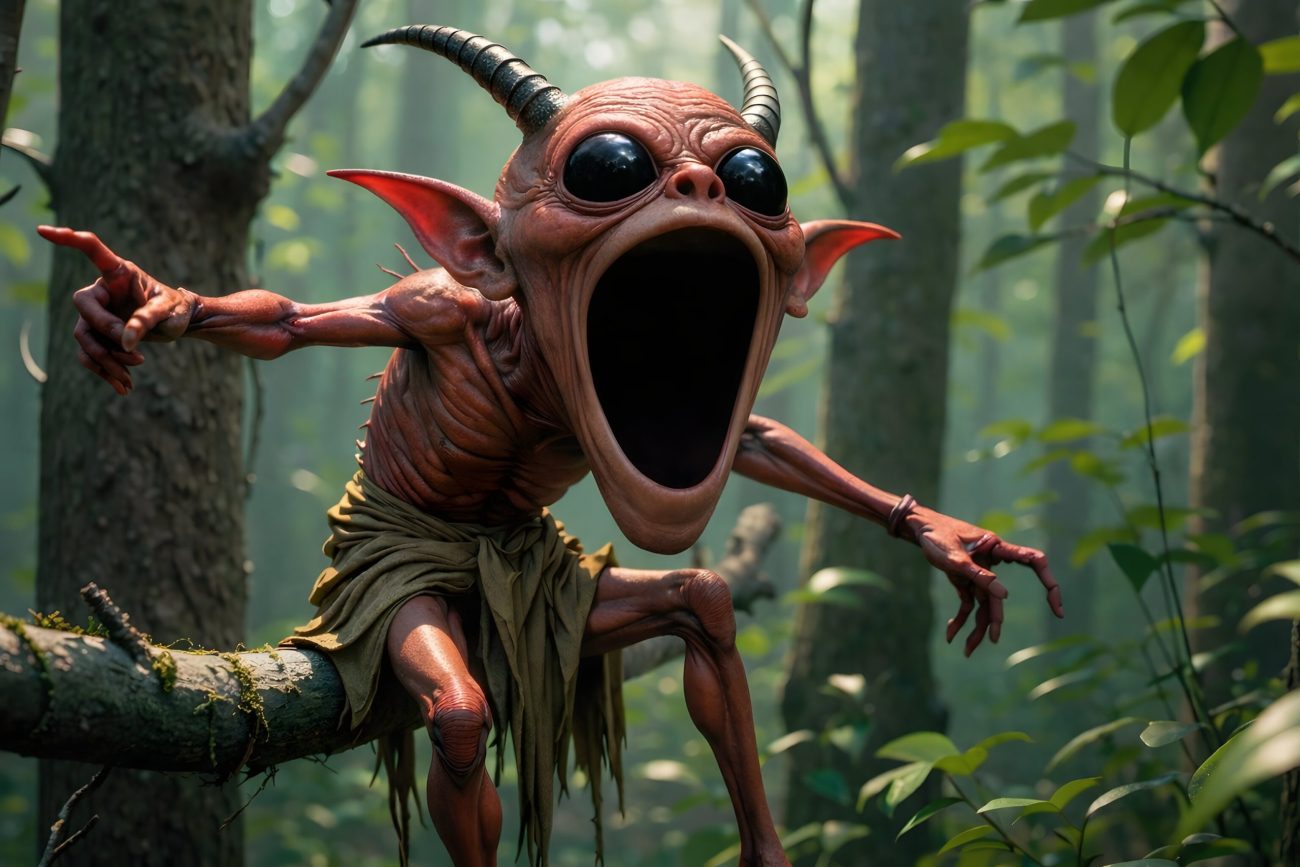
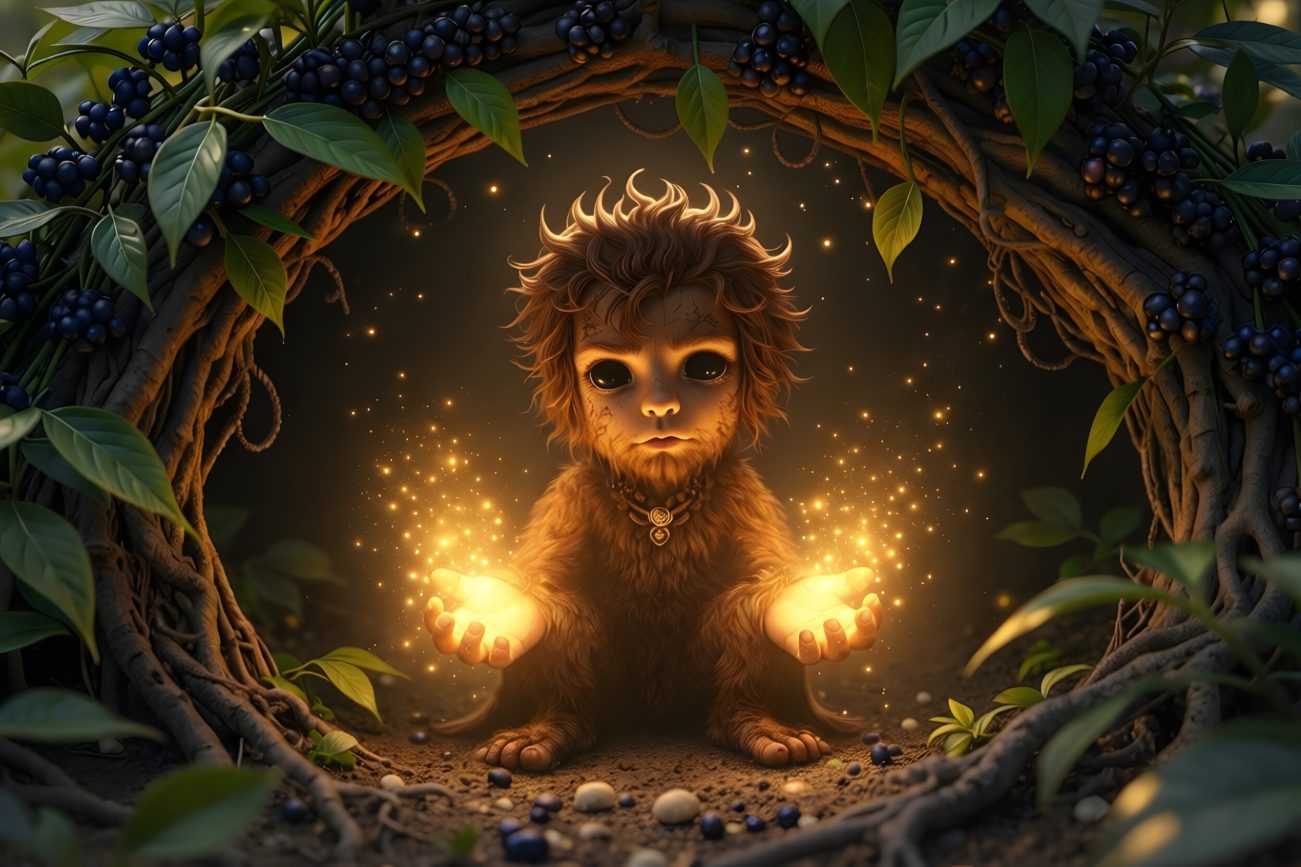
The Didki are small supernatural beings with enormous heads that dwell beneath ancient forests. They build hidden villages among the roots of colossal trees, where they keep great stores of gold, silver, and other treasures. Although they usually remain hidden underground, they are also said to appear as red dogs or red cats.

According to the legend, the Didki inhabited the forests from the earliest times. The ancient Slavs brought them offerings, and in return the spirits allowed people to clear woodland, cultivate fields, and graze their livestock without interference.

As the old customs faded and people stopped honoring them, the Didki grew hostile toward humankind. They began bringing misfortune to those who entered their forests and reserved their kindness only for murderers, thieves, and other criminals, whom they regarded as their allies.

From time to time, the Didki emerged from their underground homes and wandered among human settlements in the form of red cats or red dogs. Their appearance was believed to foretell disaster and death, while those who encountered them were often driven toward violence or other evil deeds.

With the coming of Christianity, the Didki came to be regarded as infernal beings. As the ancient forests were cleared, their hidden villages disappeared along with the great trees beneath which they had once lived.


Sources

Zych, Paweł, and Witold Vargas. Bestiariusz słowiański. Część pierwsza i druga. Warsaw: Bosz, 2017.
Loviduch

Tradition / Region: Polish Mythology
Alternate Names:
Category: Forest dweller, Demon


The Myth

Loviduch is a forest demon found in the folklore of the Lasowiaks, a subethnic group of the Lesser Poles living on the Tarnobrzeg Plain in southeastern Poland. According to beliefs recorded in the 19th century, the loviduch dwelled in the Sandomierz Forest, where it lay in wait for restless souls wandering far from their proper place.

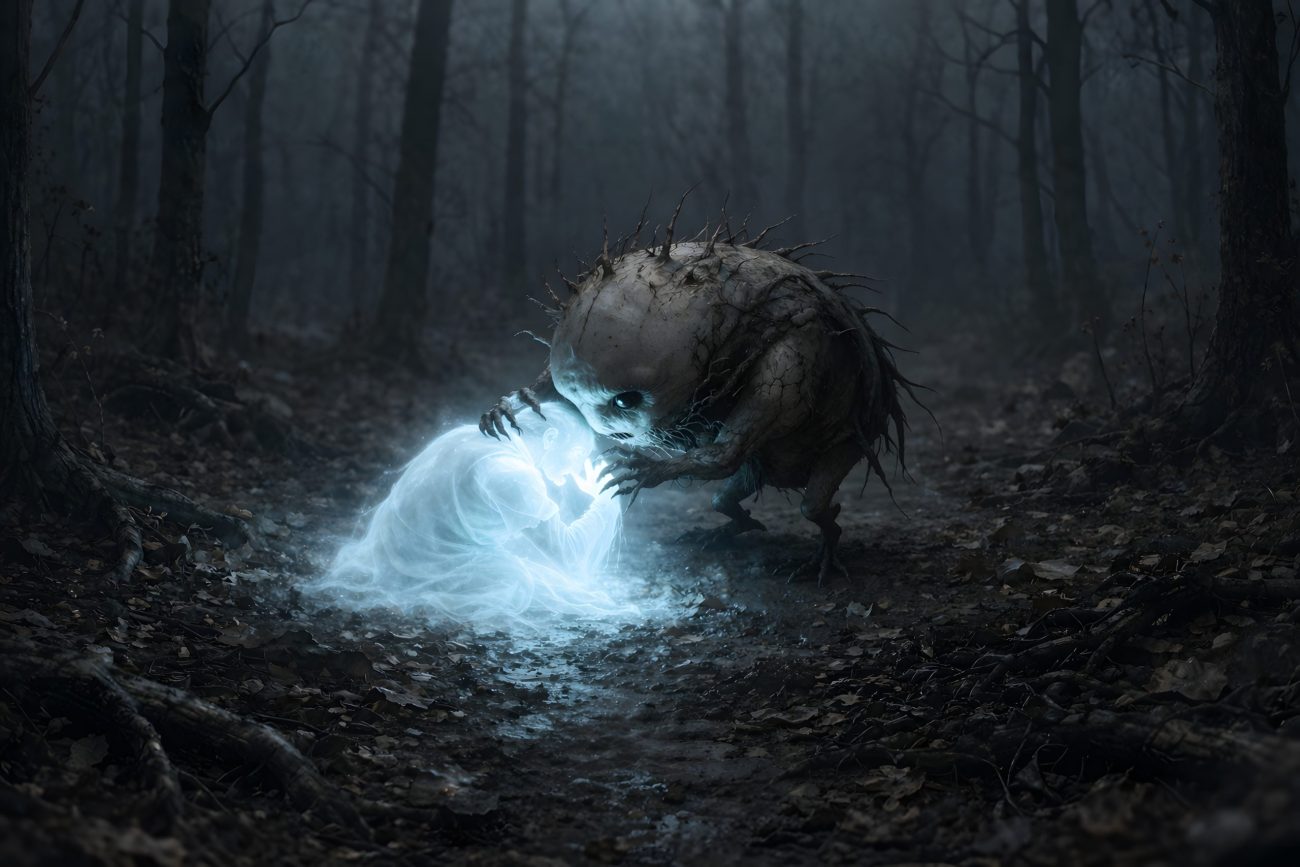
In appearance, the loviduch was described as strange and unsettling. It resembled a tuberous or onion-shaped body, set upon spiny, five-toed feet. Its limbs were short and thin, ending in long fingers armed with sharp claws. Though small and misshapen, it was considered fearsome because of its purpose rather than its strength.

The loviduch did not prey upon the living. Instead, it hunted ghosts and wandering spirits, capturing those restless souls that lingered in wastelands far from human settlements. Its dwelling was said to be the desolate, empty places, where such spirits were believed to roam. Once it seized a soul, the loviduch tormented it relentlessly, mocking it and making it cry, though it never destroyed it outright.

Despite its cruel treatment of spirits, the loviduch posed no danger to living people. Humans were not its concern, and it did not attack or harm them. Its role was limited entirely to the supernatural realm, acting as a tormentor of the dead who failed to find rest.

Over time, the name loviduch came to be applied jokingly or disparagingly to certain medical workers, though this usage bore no resemblance to the original being. Unlike these human namesakes, the true loviduch of folklore remained a creature concerned only with ghosts and spirits, dangerous solely to the dead and invisible to the living.


Sources

Bestiary.us contributors. (n.d.). lovidukh. In Bestiary.us, from https://www.bestiary.us/lovidukh


Bolts

Tradition / Region: Polish Mythology
Alternate Names: Errors
Category: Forest dweller, Demon


The Myth

Bolts are malicious forest or field demons known in the folk tales of Eastern Lesser Poland. They are believed to lure people away from proper paths, drawing travelers into wilderness, fields, or unfamiliar terrain where they lose their sense of direction.

These beings are closely associated with confusion and delusion, and are sometimes described as manifestations of madness or devilish influence. In local belief, bolts often appeared to people returning at night—especially those walking home from inns or taverns—leading them astray and preventing them from finding their way.

In the region of the Rzeszów Foothills, bolts were closely related to another figure known as the error, a demon said to sit at crossroads, sometimes beneath stones. Like the bolt, this being led nighttime travelers through open fields, causing spatial disorientation and helpless wandering. Because of these beliefs, people erected roadside shrines at such places and held special processions there, hoping to protect themselves from being misled.

Bolts were thought to nest near roads and highways, choosing places where travelers were most vulnerable. By means unknown, they caused sudden loss of orientation, making familiar routes feel unfamiliar. They seemed to take particular pleasure in confusing those who had spent the evening drinking, and many tales describe people arriving home at dawn ragged, bruised, and without their belongings, claiming that a bolt had led them astray.

In popular explanation, such misfortune was attributed not to human error, but to the direct action of these demons. To say that “a bolt went wild” became a way of explaining unexplained wandering, exhaustion, and loss.

Though later generations joked that the demon itself may have vanished, folklore preserves the belief that the experience of confusion in the night—of losing one’s way without knowing how—has never entirely disappeared.


Sources

Bestiary.us contributors. (n.d.). Bolts. In Bestiary.us, from https://www.bestiary.us/belty/pl


Bzionek

Tradition / Region: Silesian Mythology, Polish Mythology
Alternate Names:
Category: Forest dweller, Gnome, Spirit


The Myth

Bzionek is a guardian spirit known in Silesian superstition, believed to protect villages from evil spells and misfortune. It was imagined in the form of a small man who lived beneath or within elder bushes, especially the black elder growing close to human dwellings. From this association, the spirit took its name.

Because the bzionek was thought to dwell in elder bushes, these plants were treated with great reverence. Cutting them down, digging them up, or burning elder wood in an oven was strictly forbidden, as such acts might offend the spirit and bring harm upon the household or village.

Certain customs were connected to the elder bush and the bzionek. After washing the body of a deceased person, people would pour the used water beneath the elder bush to avert misfortune. In moments of desperation, when a baby was gravely ill, the child might be brought beneath the bush so that the bzionek could drive away the sickness.

The bzionek was not feared as a malicious being, but respected as a quiet protector whose presence demanded careful behavior. Through the elder bush, it stood as a silent guardian between the human world and unseen dangers.


Sources

Bestiary.us contributors. (n.d.). Eterari. In Bestiary.us, from https://www.bestiary.us/eterari/


Bebok

Tradition / Region: Polish Mythology, Silesian Mythology
Alternate Names:
Category: Forest dweller, Swamp dweller, House dweller


The Myth

In Polish and Silesian folklore, the bebok is a supernatural being associated with darkness and fear. It belongs to the family of bogeymen—creatures invoked to warn, threaten, and discipline, rather than to be seen directly.

In Upper Silesia in particular, the bebok is the most familiar and widely used bogeyman. Parents invoke its name to frighten disobedient or unruly children, warning that the bebok will come for those who misbehave or wander where they should not.

According to legend, beboks dwell in places avoided by people: forests thick with shadow, swamps and marshy ground, dark basements, cellars, and similar hidden or neglected spaces. These are places where light fades and sound carries strangely, and where the presence of the bebok is felt rather than seen.

The bebok is not described in detail, for its power lies in suggestion. It exists as a warning embodied—a lurking threat tied to darkness itself. Through fear of the bebok, children are taught caution, obedience, and respect for the boundaries between safety and danger.


Sources

Bestiary.us contributors. (n.d.). Eterari. In Bestiary.us, from https://www.bestiary.us/eterari/