Lozniki

Tradition: Belarusian Mythology
Alternative Names: Willow-Eaters, Willow-Growers
Category: Forest Dweller


The Myth

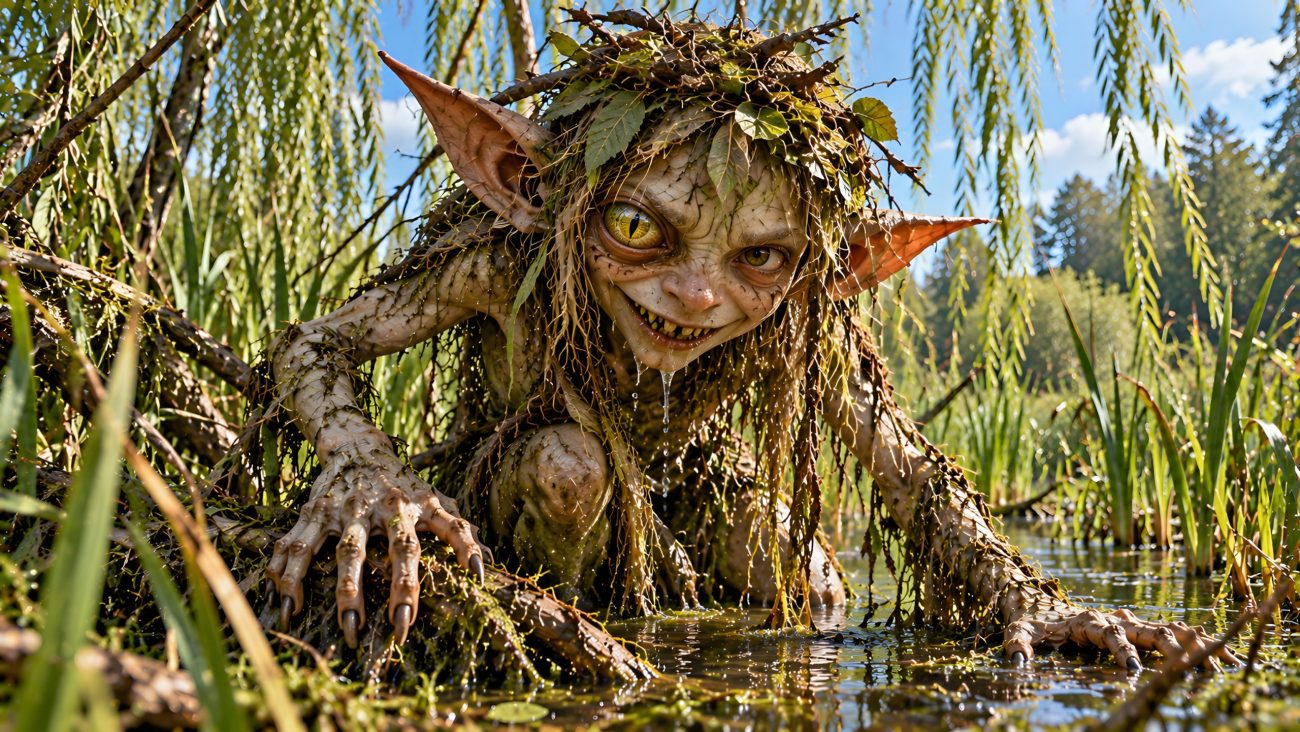
The Lozniki are small, mischievous evil spirits that live among vine bushes and willow thickets near bodies of water. They are associated with both the surface and underwater world, though they are primarily known for inhabiting dense bushes of intertwined willows. Their appearance is sometimes described as that of little devils, while other accounts portray them as ghostly, charming beings. They are closely connected with the growth and destruction of vegetation, particularly vines and willows, whose fate is intertwined with their own existence.

The Lozniki delight in causing trouble for people who venture into their territory. They may lead travellers into dangerous marshes, where the dense vegetation and treacherous ground can cause them to become trapped. The spirits sometimes enlist the help of other supernatural beings, including water spirits, swamp spirits, and the Bugnik, to drown their victims. They treat these encounters as a cruel game rather than an act of deliberate revenge, tormenting people for their own amusement. Their victims may find themselves surrounded by reeds, calamus, and tangled vines, unable to escape the watery wilderness.

Despite their malicious nature, the Lozniki are also vulnerable to the destruction of the vegetation they inhabit. Their existence is tied to the growth of the vine bushes and willows, and when these plants are destroyed, the spirits may perish along with them. In some traditions, the Lozniki are associated with the Lozovik, another spirit connected with vine growth, and are sometimes said to live beside it. Their fate remains bound to the thickets they haunt, making them guardians of a dangerous natural world in which seemingly harmless vegetation conceals mischievous and deadly supernatural beings.


Sources

“Лозники (Lozniki).” New Bestiary (Bestiary.us). Accessed October 11, 2026. https://www.bestiary.us/lozniki
Kaduk

Tradition: Belarusian Mythology, Polish Mythology
Alternative Names: Kaduk, Kaduk Spirit
Category: Forest dweller


The Myth

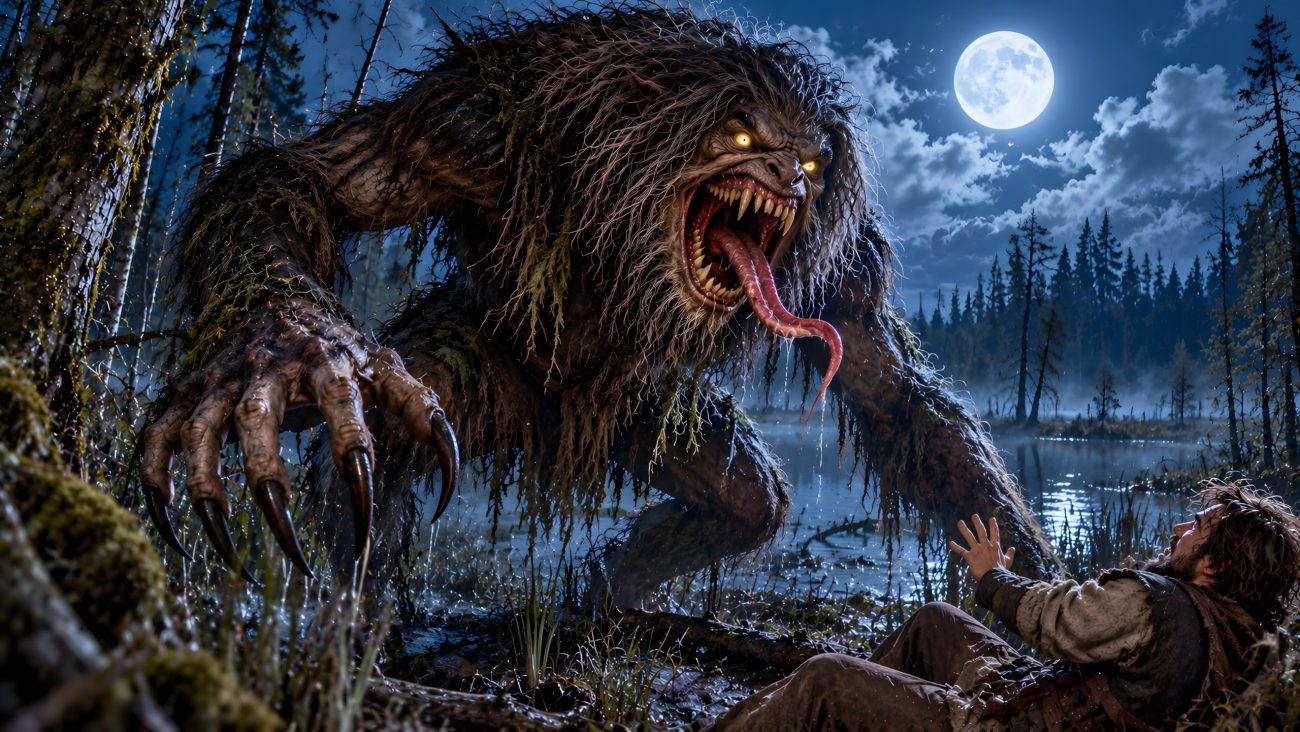
Kaduk is an ancient and terrifying spirit associated with sickness, misfortune, and seizures. It is neither fully human nor beast, but resembles a monstrous creature with a huge, shaggy head, a wide throat, and long, powerful limbs. Its enormous mouth is filled with large teeth and a long, forked tongue, while its hands end in broad, curved claws. Its body is covered in thick, dark fur, and its eyes glow ominously in the darkness. Kaduk is said to dwell in the deepest forests and in lonely swamps, where its presence brings fear and danger to those who wander into its territory.

Kaduk is considered one of the oldest and most powerful evil spirits. It can cause people to lose their way, wander aimlessly, and become trapped in swamps or dense woodland. Those who fall under its influence may experience confusion, madness, or sudden fits. The spirit is particularly associated with seizures and other afflictions that seem to strike without warning. In some accounts, Kaduk is said to ride upon a person during the night, bringing illness and misfortune until it finally departs. Its presence may be difficult to distinguish from other supernatural forces, as it often hides in the darkness or disguises itself among the natural surroundings.

Although Kaduk is feared for its malevolent power, it is also described as a spirit that punishes wrongdoing. It may target those who behave dishonestly or harm others, while sparing people who show kindness and respect. Some traditions claim that Kaduk is especially dangerous to children, whom it may frighten or torment. Its name is often invoked in curses and expressions of misfortune, and the spirit is blamed when sickness or sudden calamity strikes. Kaduk remains a dreaded presence in the forests and swamps, embodying the mysterious dangers that can overwhelm people who lose their way or fall victim to supernatural mischief.


Sources

“Kaduk.” New Bestiary (Bestiary.us). Accessed October 12, 2026. https://www.bestiary.us/kaduk


Leshy

Tradition: Russian Mythology, Polish Mythology, Ukranian Mythology, Croatian Mythology, Belarusian Mythology, Serbian Mythology
Alternative Names: Lesovik, Lesovoy, Lesnik, Leshak, Lesun, Borovoy, Gayevoy
Category: Forest Dweller


The Myth

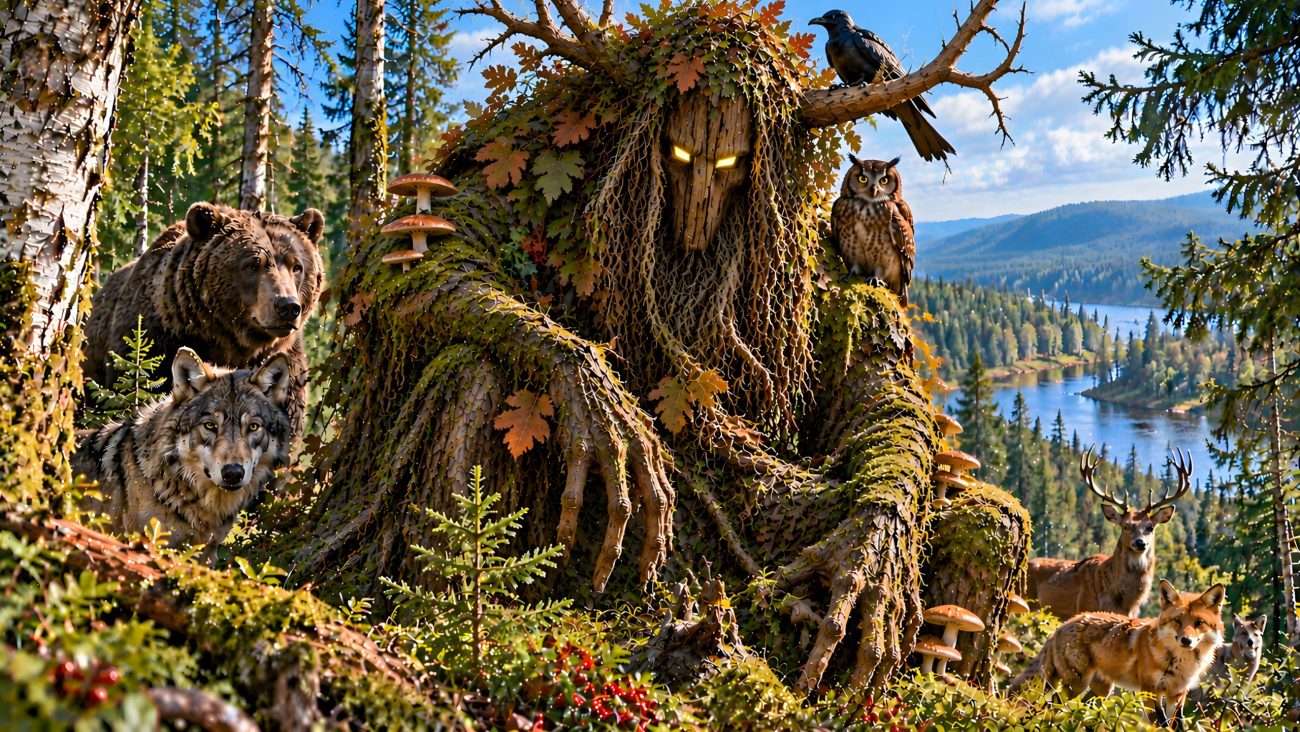
Leshy is a powerful guardian of the forest and hunting, a supernatural being whose appearance reflects the wild woodland he rules. He often takes the form of a man with long, tangled hair in shades of grey, green, or red, a thick beard, and skin resembling tree bark. His hair may look like branches, while his beard may be covered in lichen. He can also appear as a towering giant, a tiny figure no larger than a blade of grass, or an ordinary man. Some tales describe him with green eyes, blue skin, one eye, a long face, or a leg turned backwards. He may wear a wide-brimmed hat, a fur coat, a rough caftan, or enormous bast shoes, although he sometimes appears naked or takes the shape of a tree, stump, bush, mushroom, or other part of the forest.

Leshy can change his size and disguise himself as almost anyone, including a traveller’s friend, a family member, or even someone who has died. He can also transform into animals such as bears, wolves, owls, crows, horses, black cats, and goats. Sometimes he appears as a horned, goat-legged creature covered in black fur. He may travel as a whirlwind or manifest through storms, rain, fog, and powerful winds. His presence is often announced by strange sounds echoing through the trees: whistling, laughter, clapping, bellowing, singing, or the cries of animals. He can imitate familiar voices and create false sounds to confuse those who enter his domain.

Leshy delights in misleading travellers, making them lose their way in forests they know well. He may lead people in circles, conceal paths, or disguise himself as someone they trust. He can also frighten those who disturb the woodland, striking people with twigs, causing trees to split, and unleashing powerful winds. His attitude towards humans depends on how they behave towards the forest and its creatures. Although he can be dangerous and temperamental, he also protects the woodland and its animals. In some tales, he carries away children who have been mistreated by their families, taking them to the mysterious realm of forest-dwelling beings. Leshy is sometimes said to have a wife and children of his own, living hidden among the trees. He embodies the forest’s untamed power, capable of protecting its inhabitants, punishing intruders, and making anyone who enters his domain feel lost in a world beyond human control.


Sources

“Leshy.” Wikipedia: The Free Encyclopedia. Wikimedia Foundation. Accessed October 12, 2026. https://en.wikipedia.org/wiki/Leshy


Hajouki

Tradition: Belarusian Mythology
Alternative Names: Hajouki, Hajowki
Category: Forest dweller


The Myth

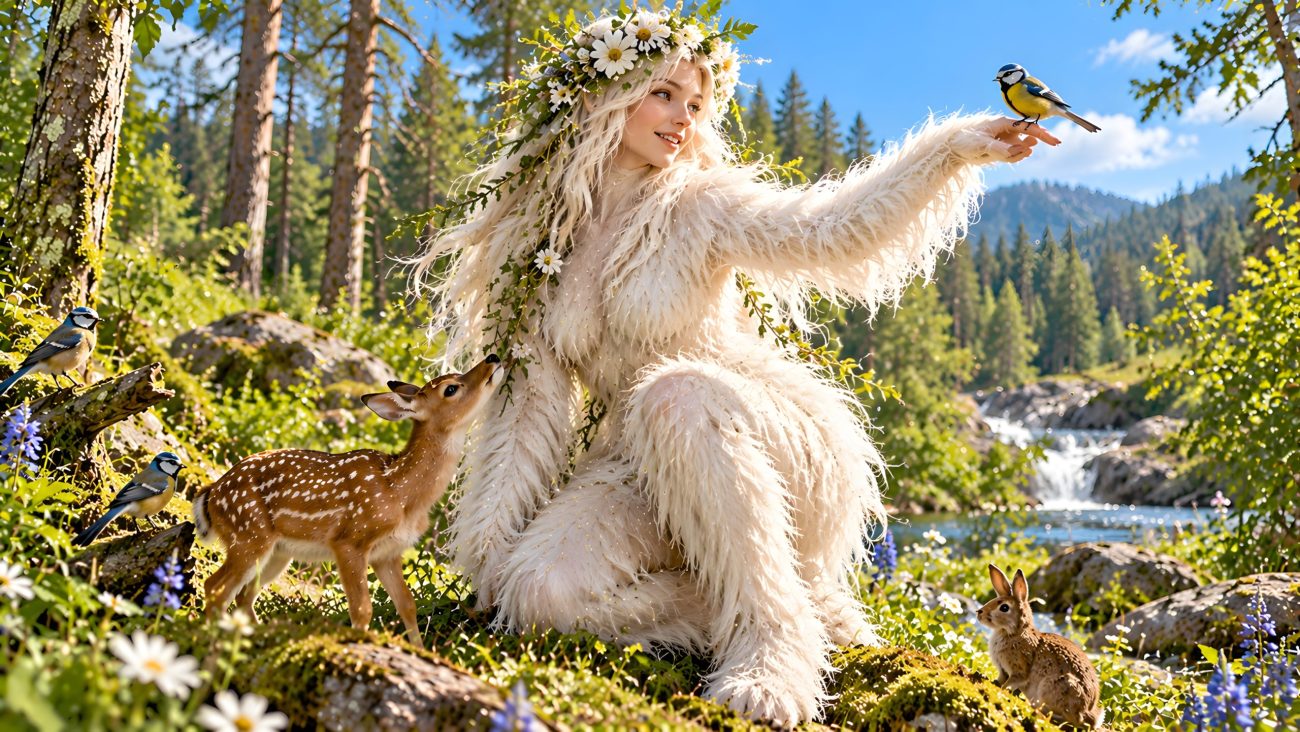
Hajouki are merry and playful woodland spirits who appear as young, beautiful girls. They are the granddaughters of Hajun and live among the trees, where they delight in nature, animals, and the beauty of the forest. They wear white garments that resemble snow in winter, and their skin and features are so delicate that they seem almost unreal. Their beauty is supernatural: anyone who sees them may find that ordinary young girls suddenly appear more beautiful by comparison.

The Hajouki love all living things and are especially fond of birds. They sometimes help people who care for nature, guiding them towards medicinal herbs and other useful plants. However, they are shy and elusive, and it is nearly impossible to catch one. If someone attempts to seize a Hajouka, she can disappear before the person reaches her. They also enjoy playing tricks on people who wander through the woods, particularly those who try to capture them.

The spirits are fond of festivities and may visit young people’s gatherings, where they watch the dancing and admire the colourful clothing and decorations. Sometimes they join in the merriment, dancing and enjoying themselves alongside humans. They are also known to appear when people build bonfires or collect healing herbs in the forest. If someone wishes to attract a Hajouka, they may try offering her a beautiful flower, but the spirit must be approached gently, for she will vanish if she feels threatened.


Sources

“Pfifar.” SAGEN.at – Traditionelle Sagen aus Österreich (Vorarlberg, Dornbirn). Reproduced by SAGEN.at. https://www.sagen.at/texte/sagen/oesterreich/vorarlberg/dornbirn/pfifar.htm


Lesavki

Tradition / Region: Belarusian Mythology
Alternate Names: Lesavkas
Category: Forest dweller


The Myth

Lesavki are described as small forest spirits in East Slavic folklore. According to some accounts, they are said to be the children of the Leshy and the Kikimora; in other versions, they are described as the Leshy’s grandfather and grandmother, reflecting differing traditions about their origin and place within the forest world.

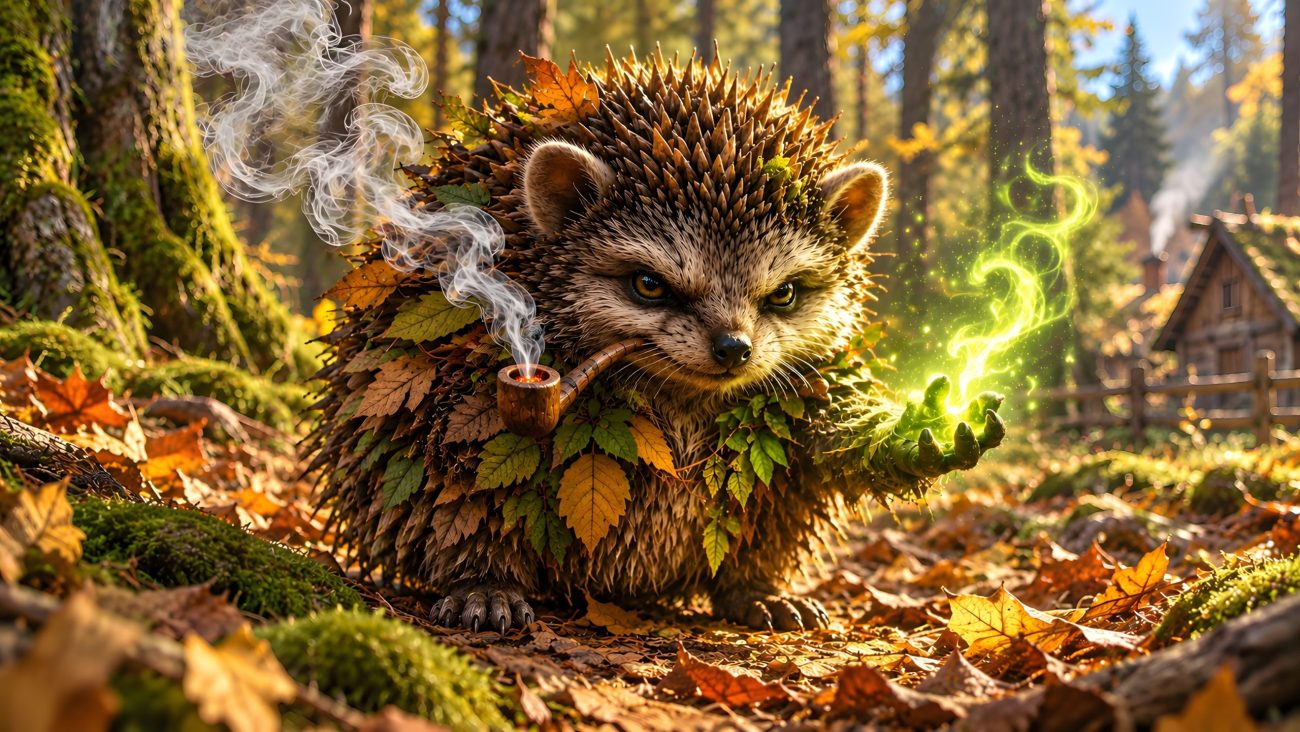
In appearance, lesavki are said to be very small, gray, and hedgehog-like, resembling little shaggy balls of hair. They live hidden among last year’s fallen leaves on the forest floor, where they are easily overlooked. Their presence is more often sensed than seen.

Their period of activity lasts from late summer until mid-autumn. During this time, lesavki are constantly in motion: they revel, dance in circles, lift leaves, rustle, and scurry about, filling the forest with quiet movement and soft, restless sounds. After exhausting themselves, they are said to wash and then fall into a long sleep, remaining dormant for an extended period.

Lesavki are known for their mischievous behavior toward humans. They may lead travelers astray, sprinkle dust onto their heads, or wrap them in cobwebs, causing confusion and disorientation in the forest. Those who wander carelessly may suddenly lose their way, unaware that lesavki are nearby, quietly playing their tricks.

Through these stories, lesavki appear as small but active spirits of the forest floor, embodying its hidden life, movement, and playful danger, and reminding humans that the woods are never truly empty or still.


Sources

Bestiary.us contributors. (n.d.). Lesavki. In Bestiary.us, from https://www.bestiary.us/Lesavki