Golden Bee

Tradition / Region: Croatian Mythology
Alternative names: Mother of Lightning
Category: Insect


The Myth

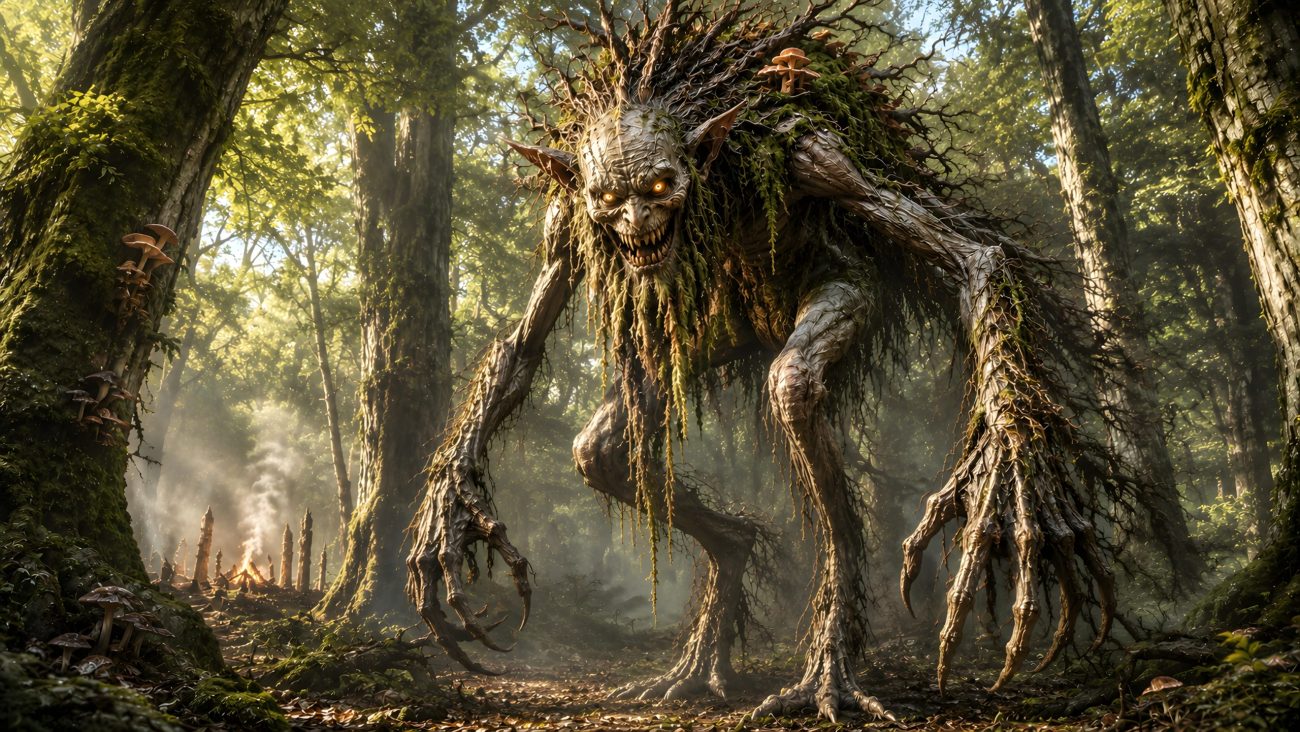
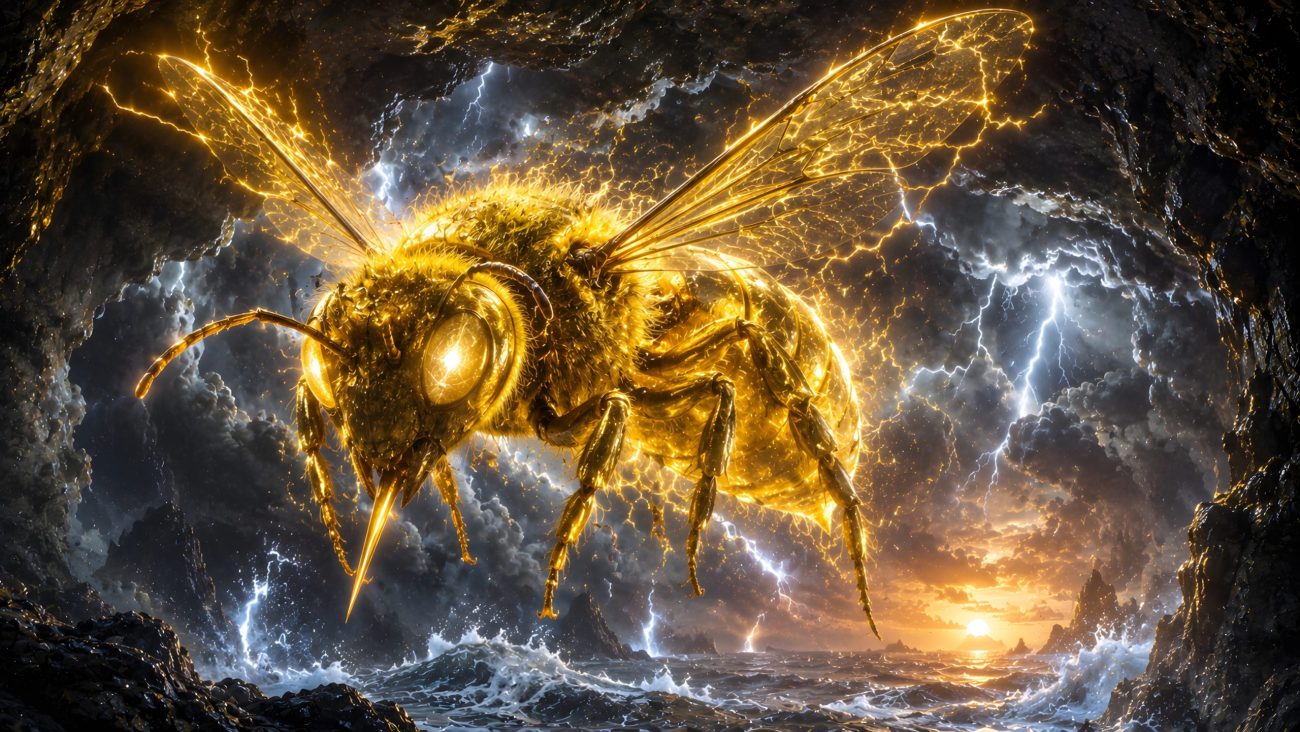
The Golden Bee was a supernatural storm-being that lived inside a cavern of clouds above the Unknown Sea. She controlled thunder and lightning, filling the sky with flashing fire and roaring storms whenever she moved. Her cavern was the third and most dangerous of the great cloud caverns.

The Golden Bee appeared during the journey of Plunk’s wife as she crossed the sea searching for the magical Bass with the golden fin. To reach the Unknown Sea, she first passed the cavern of the Mother of All Snakes, who stirred the sea and raised the waves, and then the cavern of the Mother of All Birds, who created storms by beating her enormous wings. Beyond them waited the Golden Bee.

Inside the third cavern, thunder rolled endlessly and lightning burst through the clouds as the Golden Bee flew before the entrance. Terrified but determined, the woman ripped off her loose white sleeve and threw it over the Bee, trapping her. The moment the Golden Bee was captured, the thunder stopped and the lightning vanished.

While trapped, the Golden Bee pleaded to be released and offered the woman a reward. Looking across the sea, the woman saw the silver boat of the Dawn-Maiden gliding over crimson waters with her lost child seated beside her holding a golden apple. The Golden Bee promised to reveal how the woman could reach her child and live happily with him again if she would set her free.

The woman refused because she still needed to continue through the cavern toward the Unknown Sea to save her husband. Keeping the Golden Bee trapped, she safely passed through the storm cavern and continued her journey across the dark waters.


Sources

Brlić-Mažuranić, I. (1924). Croatian tales of long ago (F. S. Copeland, Trans.). New York: Frederick A. Stokes Company.
Dawn-Maiden

Tradition / Region: Croatian Mythology
Alternative names: Pale Dawn-Maiden, Dawn Fairy
Category: Spirit, Nymph


The Myth

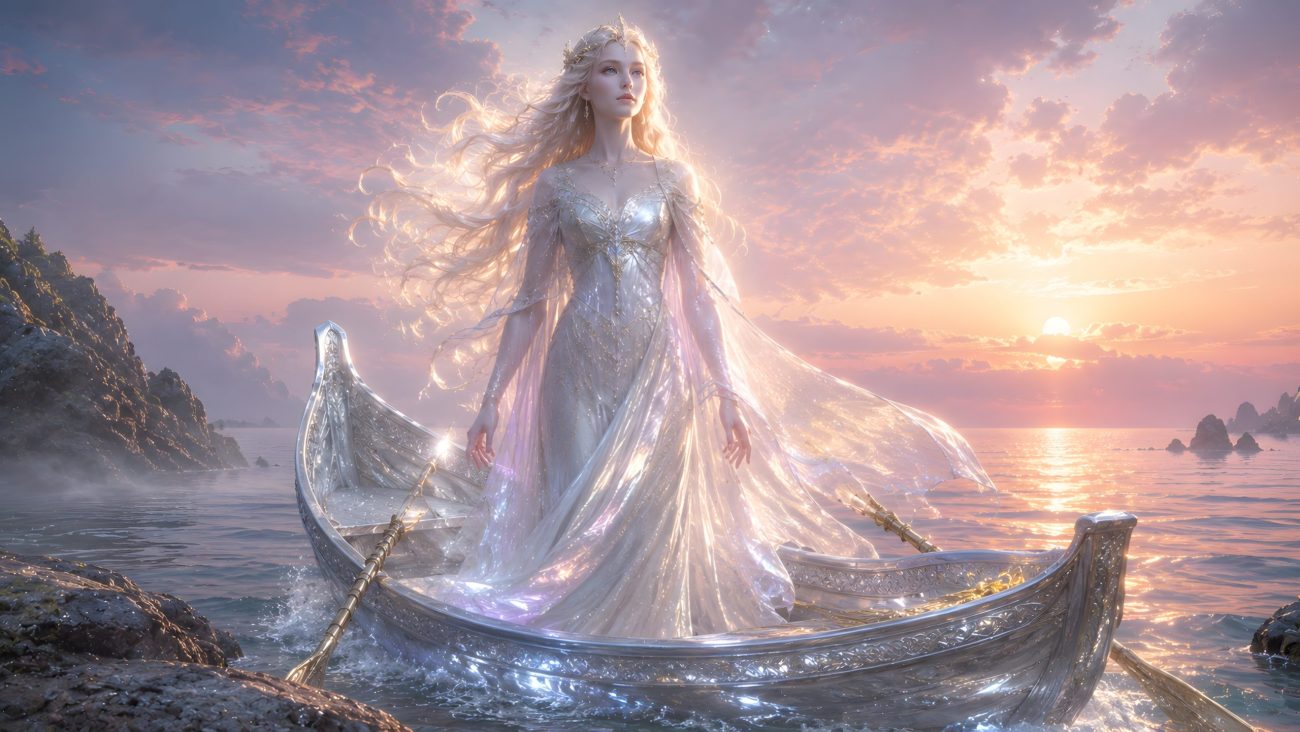
The Dawn-Maiden was a radiant supernatural being from Croatian folklore associated with dawn, mercy, destiny, and the boundary between the human world and the magical realms beneath the sea. She appeared at sunrise rising directly from the ocean in a shining silver boat with golden oars.

According to the tale of Fisherman Plunk, the Dawn-Maiden emerged after the fisherman spent three days fasting upon the sea without catching fish. By sparing the lives of the fish during those days, he unknowingly earned the favor of the spirit of dawn itself. On the third morning, as daylight began to appear, the silver vessel rose from the water carrying the Dawn-Maiden “fair as a king’s daughter.”

The Dawn-Maiden was neither cruel nor deceptive. Unlike many dangerous fairy beings in Slavic folklore, she behaved with calm patience and kindness, offering humans opportunities rather than direct riches. When Plunk complained about his miserable life, she simply told him to return home, where fate would provide what he truly needed.

Throughout the story, the Dawn-Maiden acts almost like a supernatural force of wisdom or destiny. She repeatedly gives Plunk chances to choose love, gratitude, and family over greed and selfish ambition. Yet Plunk constantly misunderstands her gifts, believing that wealth and magical treasure are more important than the humble happiness already given to him.

The Dawn-Maiden later guides Plunk toward the hidden domain of the Sea King. She reveals the path to the mysterious Isle Bountiful, a magical island overflowing with fertility and abundance. At the center of the island stood the glowing white stone called Gold-a-Fire, which illuminated both the island and the sea beneath it with an eerie pale light. There the Dawn-Maiden waited beside the blazing stone to guide travelers deeper into the supernatural world.

She also warned Plunk about the dangers of the undersea kingdom. According to the tale, three terrible powers guarded the return to the human world: one that controlled the waves, another that commanded storms, and a third that wielded lightning itself. These warnings reveal the Dawn-Maiden as a being who understands cosmic forces beyond ordinary human comprehension.

The Dawn-Maiden is deeply connected to transitional spaces — dawn instead of full day, sea horizons instead of land, and fate instead of direct intervention. She never forces events. Instead, she reveals paths while humans choose how to walk them. In this sense she resembles many ancient fairy or dawn goddess figures associated with revelation, renewal, and spiritual testing.

Her appearance reflects this liminal nature. She arrives in silence at sunrise, surrounded by silver light and gold, emerging directly from the sea as though born from the meeting of darkness and morning. The imagery connects her to hope, awakening, and the mysterious beauty of first light.

Unlike darker water spirits or dangerous fairies, the Dawn-Maiden represents benevolent supernatural wisdom. Yet her gifts contain hidden lessons. Humans who fail to understand those lessons — like Plunk — often discover too late that love, family, and peace were greater treasures than the magical wealth they desired.


Sources

Brlić-Mažuranić, I. (1924). Croatian tales of long ago (F. S. Copeland, Trans.). New York: Frederick A. Stokes Company.

Rampogusto

Tradition / Region: Croatian Mythology
Alternative names: King of the Forest Goblins
Category: Goblinoid


The Myth

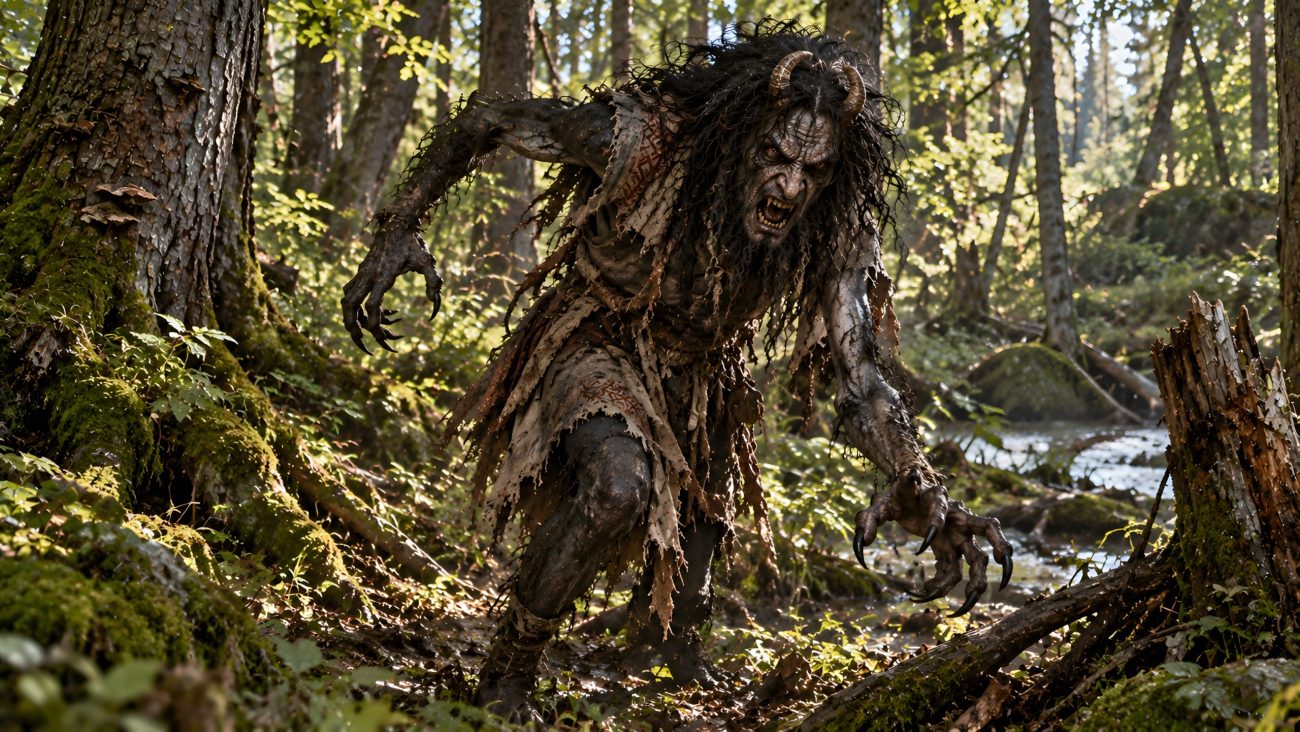
Rampogusto was a dark forest spirit from old Croatian folklore, described as the King of the Forest Goblins. He haunted deep ancient woods before sunrise, gliding silently from tree to tree through mist and darkness like a living shadow. Travelers feared the silent hour before dawn because it was believed to be the time when Rampogusto wandered most freely through the forest.

According to the tale, Rampogusto appeared in the great forest where the old man Witting lived with his three grandsons: Bluster, Careful, and Quest. The brothers were warned about the eerie silence of the woods at dawn because the goblin king loved to roam beneath the trees before the sun appeared.

Rampogusto was not simply a monster but a malicious supernatural being driven by hatred, envy, and deceit. He especially despised good and honorable people. In the story he hated the wise old Witting “as a mean scoundrel hates an upright man.” His hatred became even stronger because Witting kept a sacred eternal fire burning in the forest glade. The smoke from this holy fire tormented Rampogusto and forced him away, suggesting that sacred flame weakened evil spirits and protected humans from dark supernatural forces.

The goblin king moved almost invisibly through the woods. The tale describes him slipping from tree to tree “like a wraith of mist,” hiding high in the branches while secretly spying on humans. He listened unseen as the divine being All-Rosy revealed visions of the world and the future to Witting’s grandsons.

Unlike open monsters that attacked directly, Rampogusto preferred corruption and manipulation. After hearing All-Rosy instruct the brothers to remain loyal to their grandfather and avoid the temptations of the outside world, Rampogusto immediately began plotting to turn them against Witting. He wished to destroy the harmony of the family through deception rather than force.

In this way, Rampogusto resembles many older European forest spirits and goblin kings who represent temptation, chaos, envy, and the dangers hidden within wilderness. The dark forest itself was viewed as a place where supernatural beings moved unseen and where travelers could easily lose both their path and their judgment.

Rampogusto embodies this fear of corruption emerging from the unknown wilderness. He is a spirit of hostile nature — ancient, cunning, and hateful toward sacred order, family loyalty, and divine guidance. Unlike protective spirits connected to forests, he exists as a parasitic force that seeks to weaken human virtue and draw people away from wisdom and stability.

Though described as a goblin king, Rampogusto behaves more like a demonic forest intelligence: invisible, manipulative, difficult to confront directly, and most powerful during darkness and uncertainty before the coming of light.


Sources

Brlić-Mažuranić, I. (1924). Croatian tales of long ago (F. S. Copeland, Trans.). New York: Frederick A. Stokes Company.