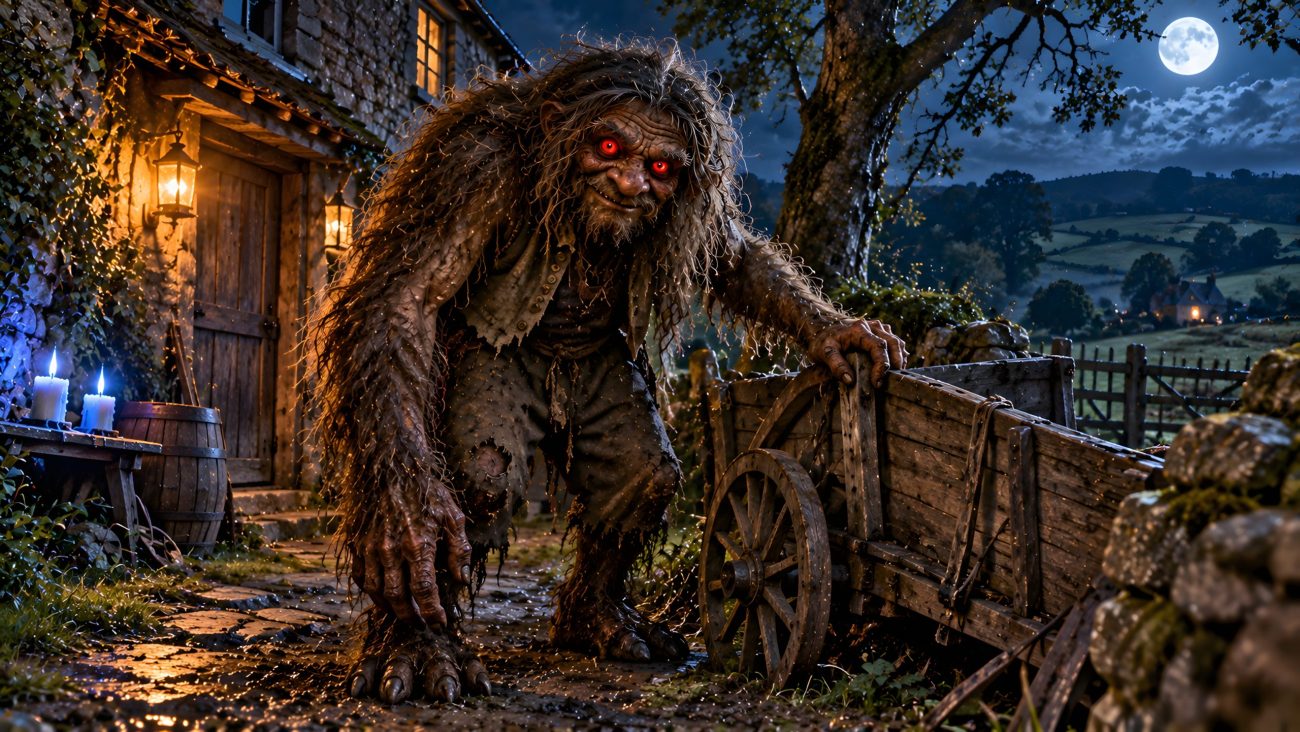
Menninkäinen

Tradition / Region: Finnish Mythology
Alternate Names: —
Category: Spirit, Goblin


The Myth

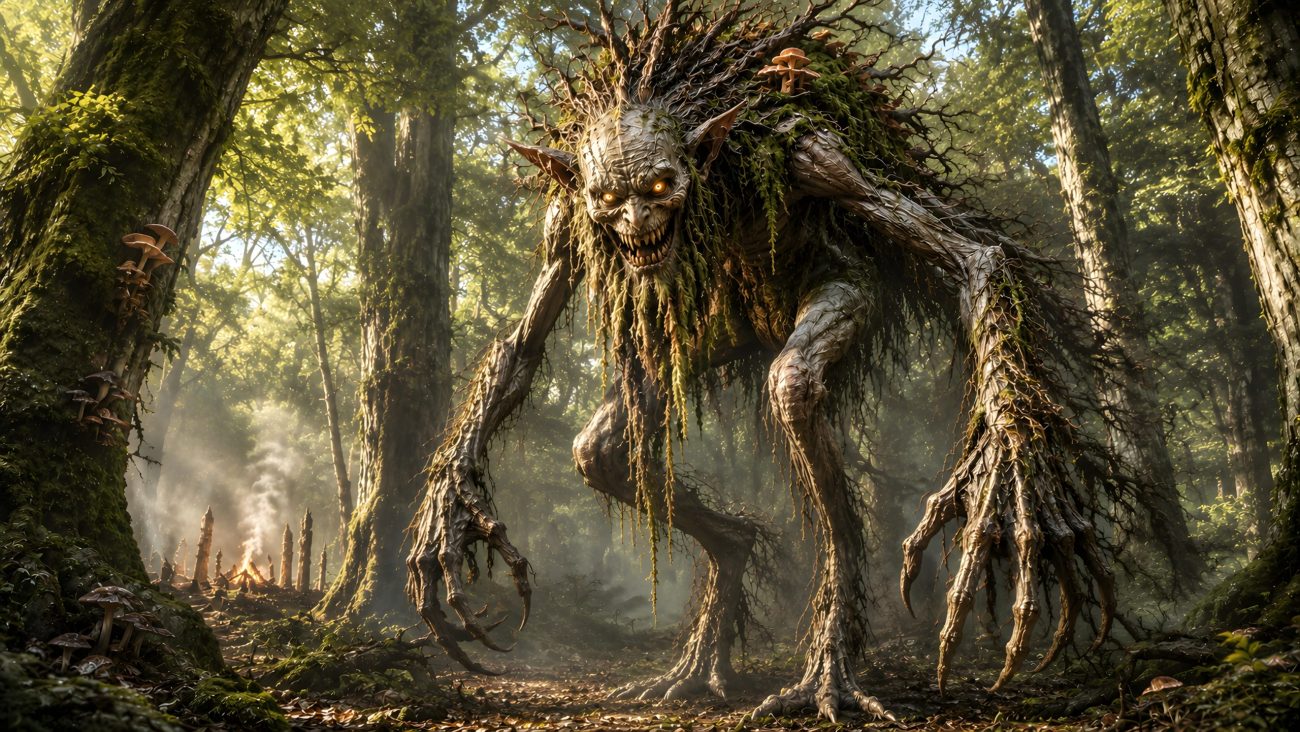
Menninkäinen are small spirit beings that dwell in isolated or hidden places. They were originally regarded as generally friendly toward humans and associated with quiet, remote environments.

Over time, their image changed, and they came to be described as goblin-like creatures. They are often linked with hidden treasures and are said to guard them, enjoying riddles, tricks, and contests of wit or dominance.

Their dwelling places vary in different traditions. Some accounts place them deep in forests and natural landscapes, while others describe them as inhabiting more unexpected locations, including human-made environments.

Despite these variations, they remain beings connected to secrecy and hidden spaces, interacting with humans through challenges, games, or encounters tied to what they guard.


Sources

Kielitoimiston sanakirja contributors. (n.d.). menninkäinen. In Kielitoimiston sanakirja, from https://www.kielitoimistonsanakirja.fi/#/mennink%C3%A4inen?searchMode=all

Wikipedia contributors. (n.d.). Menninkäinen. In Wikipedia, from https://en.wikipedia.org/wiki/Mennink%C3%A4inen


Aerico

Tradition / Region: Albanian Mythology
Alternate Names: Aërico
Category: Goblin


The Myth

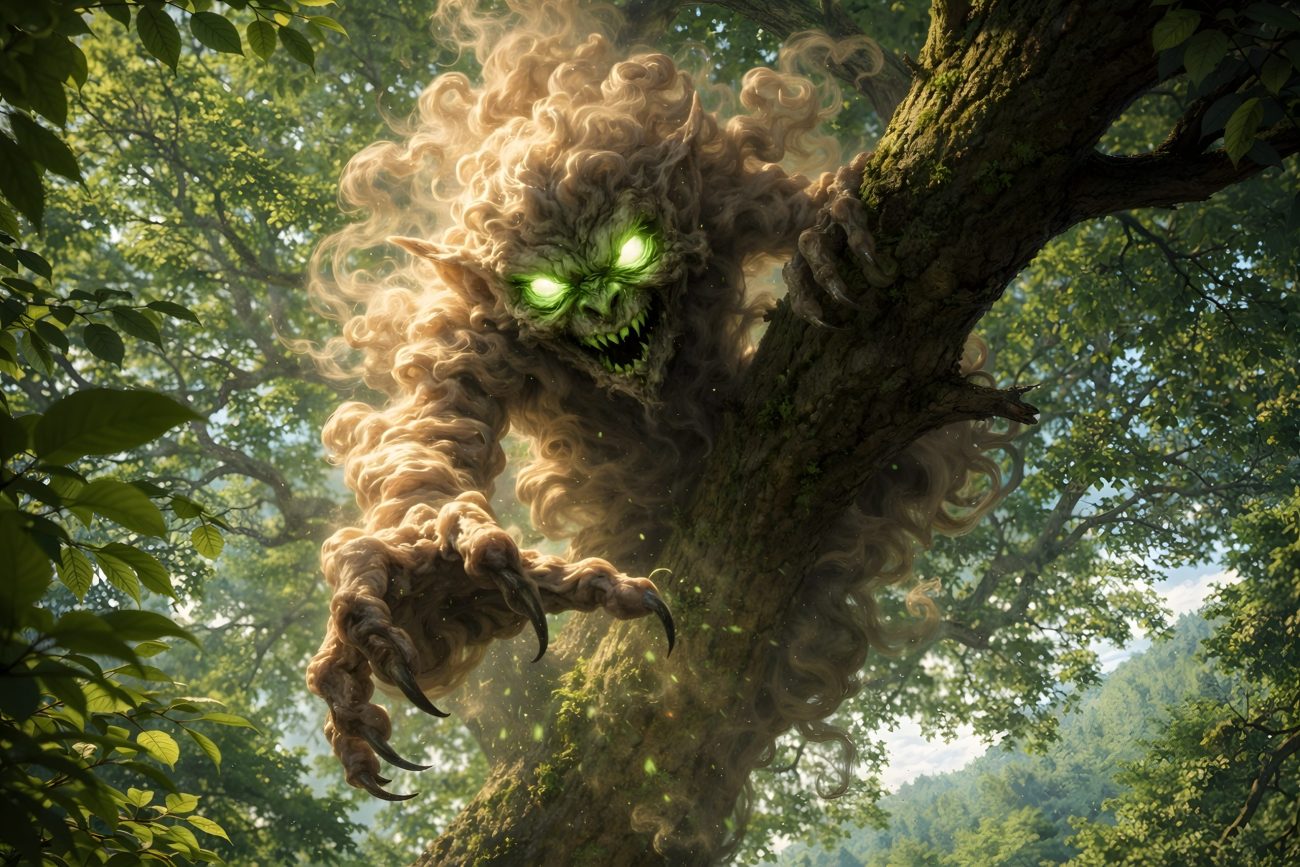
The Aerico is a solitary and malevolent goblin said to dwell in trees, particularly ancient cherry trees. It is fiercely territorial and hostile toward humans, defending its domain with harmful effects on those who come too close.

The creature inhabits old trees, favoring those that have stood for generations. It does not tolerate intrusion and reacts aggressively to any human presence near its dwelling. According to the tradition, even standing within the shadow of the tree it inhabits can bring harm. Those affected may experience swelling in their hands, feet, or other parts of the body.

The Aerico is described as deeply hostile to humans, acting without provocation simply due to proximity. Its presence is not tied to any specific narrative event but exists as a localized belief tied to particular places and trees.

In later interpretations, the physical effects attributed to the Aerico—especially swelling of limbs—have been associated with real illnesses, such as Elephantiasis. The myth itself, however, persists as part of older rural traditions, though it is now largely diminished.


Sources

fr-academic contributors. (n.d.). Aërico. In fr-academic, from https://fr-academic.com/dic.nsf/frwiki/56435


Kiddelsmehnchen of Echternach

Tradition / Region: Luxembourg Mythology
Alternate Names: Kittelsmännchen, Echternach Goblin
Category: Goblin


The Myth

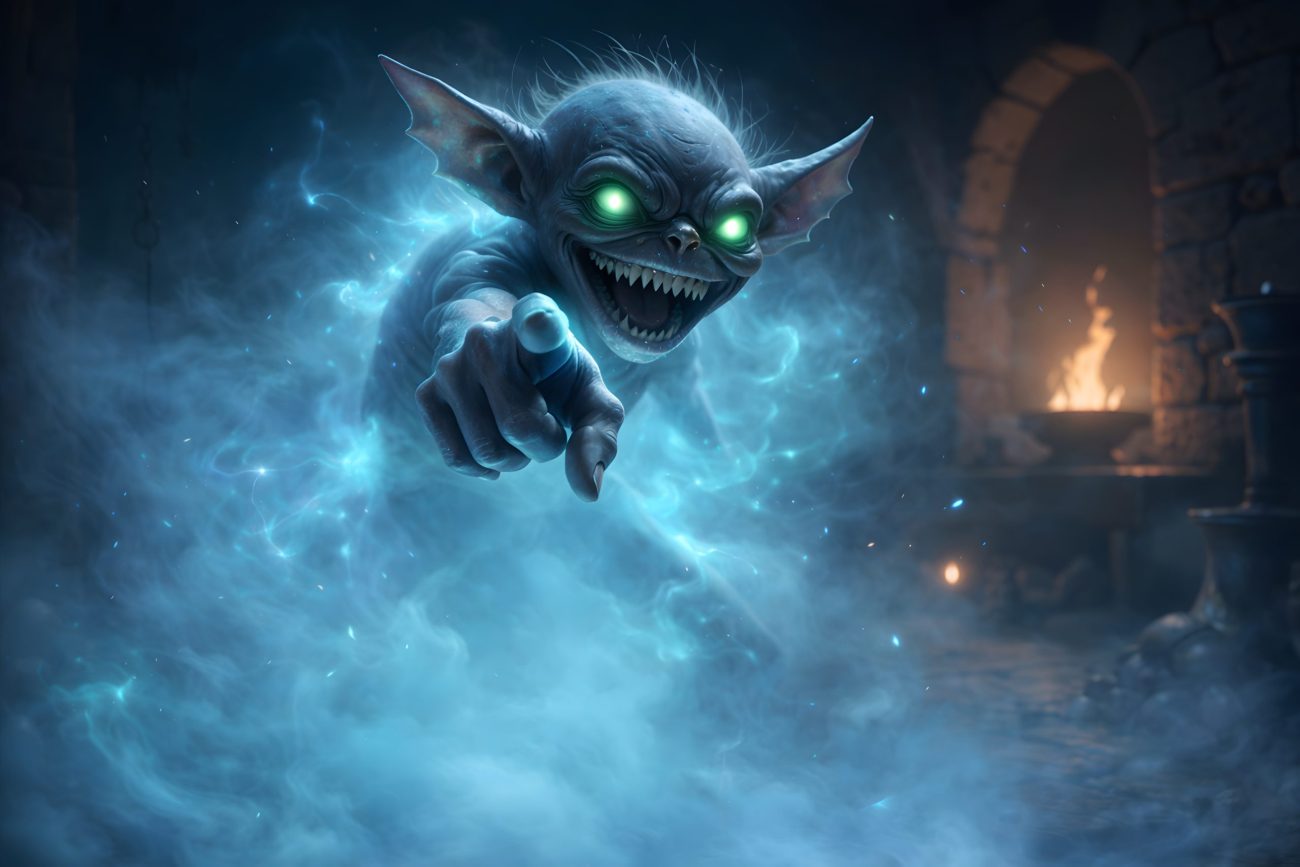
In the buildings of Echternach Abbey there once haunted a goblin known as the Kiddelsmehnchen. He was said to tease and trouble the inhabitants in many ways.

An old man who worked in an outbuilding, burning potash day and night, was often visited by the little being. While the man sat quietly beside his cauldron, praying with his face buried in his hands, the goblin would sometimes enter and begin hammering loudly on a nearby anvil. Sparks flew, the building shook with the noise, and yet the old man remained calm. After a time, the strange blacksmith would leave as silently as he had come.

The same man was sometimes tasked with guarding a nearby cloth bleaching ground at night. Once he saw someone moving about the canvas in the darkness. He called out, but received no reply, and followed the figure toward the door. Just as he reached out to seize the supposed thief, the figure vanished into thin air. Only then did he realize that the Kiddelsmehnchen had tricked him.

The goblin also frightened others in the abbey. When the porters sat quietly in the evening and the children were already in bed, the creature would cause loud clattering, banging, and cries in the corridors and stairways, as though horses and donkeys were running through the building and terrified children were calling for help. But whenever people rushed out to investigate, everything was silent and no trace could be found.

At other times the goblin would drop from the roof in the form of a barrel, causing a terrible crash. When the people gathered to see what had happened, they found nothing at all.

Thus the Kiddelsmehnchen continued to trouble the abbey with its tricks and noises, appearing and disappearing at will.


Gallery


Sources

sagen.at contributors. (n.d.). Das Kiddelsmehnchen (Kittelsmännchen) zu Echternach. In sagen.at, from https://www.sagen.at/texte/sagen/luxemburg/Kittelsmaennchen.html


Interpretive Lenses

Religious Readings
  • Christian Ascetic Deep Dive
Philosophical Readings
  • Nietzschean Deep Dive
Psychological Readings
  • Jungian Deep Dive
Esoteric Deep Dive
  • Hermetic Deep Dive
Political / Social Readings
  • Marxist Deep Dive

Engelbertchen of Ehnen

Tradition / Region: Luxembourg Mythology
Alternate Names: Engelpferdchen, The Angel Horse
Category: Goblin


The Myth

In Ehnen, in a very old house that still stands today, a goblin was once said to live. He was known as Engelbertchen, or sometimes as the Angel Horse.

At times he appeared in the form of an old man with a silver-white beard. At other times he was seen riding a small white horse. He would rush up and down the tall stone spiral staircase of the house with great speed, and the loud clattering frightened the people who lived there.

At midnight he could also sometimes be heard dragging tables or moving furniture about the house, though no one saw him doing it.

In later years, however, the disturbances ceased, and nothing more was heard of Engelbertchen.


Gallery


Sources

sagen.at contributors. (n.d.). Engelbertchen oder Engelspferdchen. In sagen.at, from https://www.sagen.at/texte/sagen/luxemburg/Engelsbertchen.html


Interpretive Lenses

Religious Readings
  • Christian Ascetic Deep Dive
Philosophical Readings
  • Nietzschean Deep Dive
Psychological Readings
  • Jungian Deep Dive
Esoteric Deep Dive
  • Hermetic Deep Dive
Political / Social Readings
  • Marxist Deep Dive

Goblin of Mamer Churchyard

Tradition / Region: Luxembourg Mythology
Alternate Names: Mamer Churchyard Goblins
Category: Goblin


The Myth

In Mamer, a gravedigger known for drunkenness and theft was once digging a grave in the churchyard on Christmas Eve. As he worked, a boy passed along the path singing. Angered by the noise, the gravedigger rushed at him and beat him.

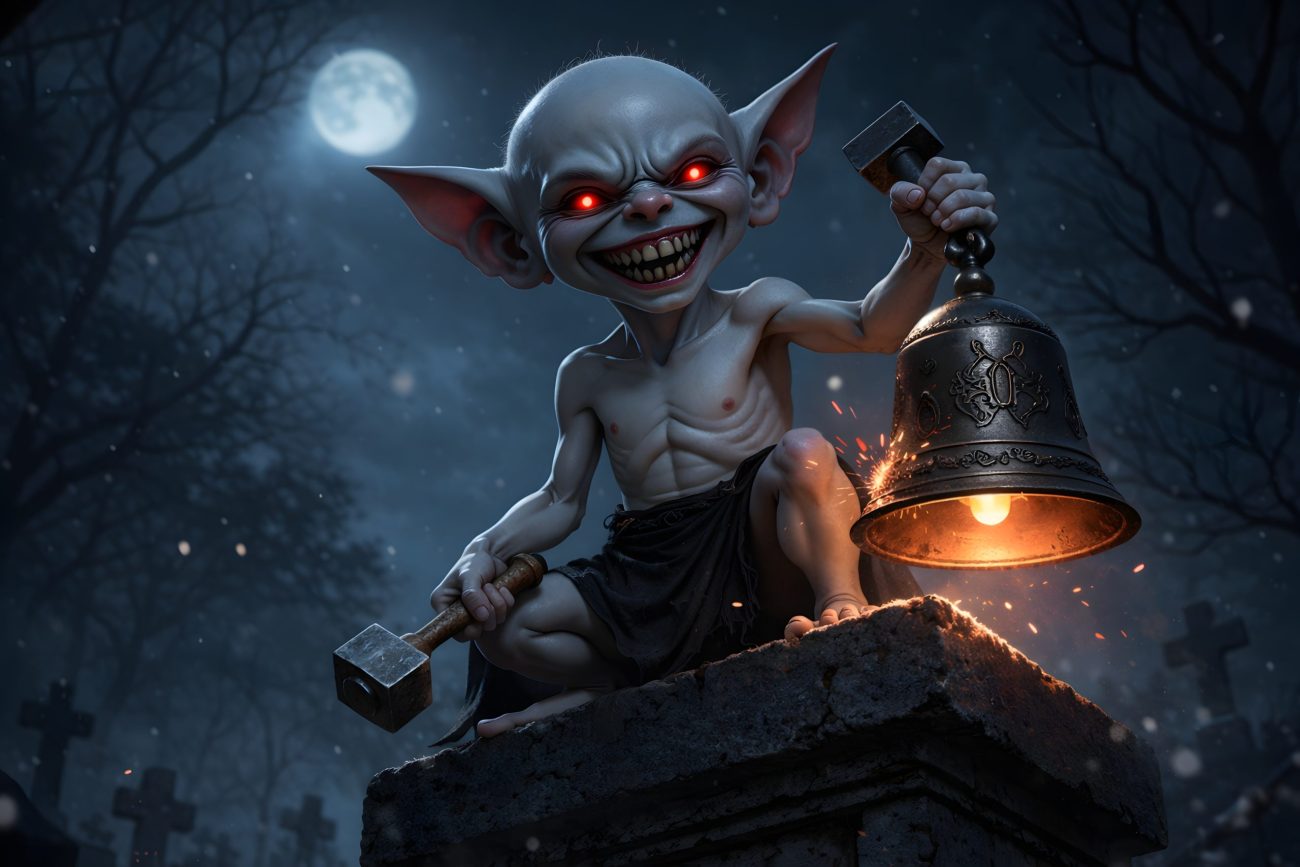
Afterward, he reached for his brandy bottle to drink. Then he noticed a little man dressed in white sitting several graves away with his tongue stuck out. Fear seized him, and he tried to leave, but the strange spirit prevented him from escaping. When he resisted, the little figure struck a metal object with a small hammer, and it rang loudly.

At once, a light appeared in the sacristy, and twelve more goblins emerged. They seized the gravedigger and forced him into an open grave, where they surrounded him. The first goblin complained of being cold, and the others brought him fire in a shovel, which he drank. They then ordered the gravedigger to drink as well. When he refused, they forced the fire into his mouth.

After this, they twisted his legs up over his back and forced his head between them. Finally, they hurled him back into the churchyard, where he lay unconscious.

The next day he fell ill, and the boils covering his body convinced him that what had happened to him in the churchyard had been no dream.


Gallery


Sources

sagen.at contributors. (n.d.). Die Kobolde auf dem Kirchhofe zu Mamer. In sagen.at, from https://www.sagen.at/texte/sagen/luxemburg/Kobolde_Mamer.html


Interpretive Lenses

Religious Readings
  • Christian Ascetic Deep Dive
Philosophical Readings
  • Nietzschean Deep Dive
Psychological Readings
  • Jungian Deep Dive
Esoteric Deep Dive
  • Hermetic Deep Dive
Political / Social Readings
  • Marxist Deep Dive

Goblin of Holzer Busch

Tradition / Region: Luxembourg Mythology
Alternate Names: Hierschermännchen, Hedemännchen
Category: Goblin


The Myth

In the Holzer Busch, between Bondorf and Holz, there was said to live a little dwarf known as the Hierschermännchen. This small being often spoke with people and would even allow them to carry him.

Another creature of the same kind was said to dwell at a place called Misère. It was known as the Hedemännchen, and people spoke of it as a similar small goblin who lived in the area.

Thus two little goblin-like beings were remembered in the region, each tied to its own place in the countryside.


Gallery


Sources

sagen.at contributors. (n.d.). Zwei Kobolde bei Bondorf. In sagen.at, from https://www.sagen.at/texte/sagen/luxemburg/Kobolde_Bondorf.html


Interpretive Lenses

Religious Readings
  • Christian Ascetic Deep Dive
Philosophical Readings
  • Nietzschean Deep Dive
Psychological Readings
  • Jungian Deep Dive
Esoteric Deep Dive
  • Hermetic Deep Dive
Political / Social Readings
  • Marxist Deep Dive

Grauwke

Tradition / Region: Dutch Mythology
Alternate Names:
Category: Gnome, Goblin


The Myth

In the countryside of Groningen, people once spoke in hushed tones of the Grauwkes, small, black gnome-like beings who lived hidden beneath hedges and thick growth. By day they remained unseen, buried deep in the roots and shadows where no one looked too closely.

At evening, when light faded and the land grew quiet, the Grauwkes emerged. They did not come to help or to trade favors, but to frighten. Shapes would move where nothing should be, soft sounds followed travelers along paths, and sudden presences made hearts race without reason. People felt watched, surrounded, or chased, though nothing could be clearly seen.

The Grauwkes were not known for grand deeds or lasting harm. Their power lay in fear itself—the unease that crept in at dusk, the sudden panic that made someone hurry home, the sense that something small and malicious lingered just out of sight.

Because of this, people avoided hedges after dark and warned children not to linger outside at night. The Grauwkes did not need to be seen to be believed in; their work was done as soon as fear took hold.


Gallery


Sources

Abe de Verteller contributors. (n.d.). Van aardmannetje tot zwarte juffer: Een lijst van Nederlandse en Vlaamse elfen en geesten. In Abe de Verteller, from https://abedeverteller.nl/van-aardmannetje-tot-zwarte-juffer-een-lijst-van-nederlandse-en-vlaamse-elfen-en-geesten/


Interpretive Lenses

Religious Readings
  • Christian Ascetic Deep Dive
Philosophical Readings
  • Nietzschean Deep Dive
Psychological Readings
  • Jungian Deep Dive
Esoteric Deep Dive
  • Hermetic Deep Dive
Political / Social Readings
  • Marxist Deep Dive
Other
  • How to Invite The Grauwkes

Annequin

Tradition / Region: French Mythology, Belgian Mythology
Alternate Names: Hannequet; Hannequin; Harliquin
Category: Fairy, Goblin, Flame


The Myth

In the folklore of the Ardennes, the annequin is a malevolent fairy creature, often described as a kind of goblin or will-o’-the-wisp. It is known above all for luring humans to their deaths. Those who encounter an annequin are said to be drawn irresistibly toward marshes and wetlands, where they become lost and drown.

The annequins are closely associated with the mesnie Hellequin, the spectral procession that roams the night sky, and through it with the figure later known as Harlequin. Their nature is restless and predatory, bound to movement, noise, and disappearance.

According to tradition, annequins gather in a round dance every Saturday night. On certain nights, they are said to pass above houses, flying through the air while emitting shrill, piercing whistles. Anyone who is surprised by their passage is believed to vanish forever, leaving no trace behind.

The annequins are said to dwell especially in wooded areas, particularly in the forests of Puilly, where their presence is marked by strange sounds, sudden lights, and the dangerous pull toward bogs and swamps. Those who follow these signs are rarely seen again.

In the legends of the Ardennes, the annequin is remembered as a being of deception and disappearance, a nocturnal spirit whose call leads not to wonder, but to death.